Epidemiology Indian Medical PG Flashcards - Medical Study Cards
Master Epidemiology with OnCourse flashcards. These spaced repetition flashcards are designed for medical students preparing for NEET PG, USMLE Step 1, USMLE Step 2, MBBS exams, and other medical licensing examinations.
Epidemiology Flashcard Deck - 308 Cards
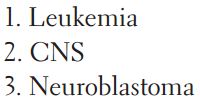
Flashcard 1: Excluding skin cancer, which of the listed three demographics count the incidence of the following cancers as their top 3 most common in the United States?
_____
Answer: Children
Flashcard 2: Validity of a Screening Test: No answer _____
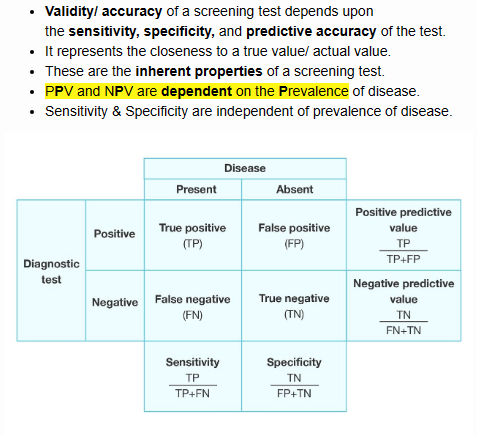
Answer: :)
Flashcard 3: golem bias
Answer:
Extra:
Flashcard 4: * Crude Birth Rate (CBR) = _____ \(\times\) _____
* Crude Death Rate (CDR) = _____ \(\times\) _____
* Annual Growth Rate = _____ = _____ in _____
* Sex Ratio = _____ = _____
* Dependency Ratio = _____
Answer: \(\frac {Number\ of\ live\ births\ during\ the\ year\ in\ particular\ area }{Estimated\ Mid-year\ population}\)
Extra: y
Flashcard 5: nested case control is a type of _____
Answer: cohort study
Extra:
Flashcard 6: types of screening are
Answer: mass screening
high risk screening
multiphasic screening
Extra:
Flashcard 7: POC of influenza is _____
Answer: 1-2 days before symptoms to 1-2 days after onset of symptoms
Extra:
Flashcard 8: primary prevention prevents _____
Answer: contrction of disease
Extra:
Flashcard 9: _____ study goes from effect to cause
Answer: case control
Extra:
Flashcard 10: incidence in exposed=50%
incidence in non exposed=10%
risk ratio=_____
Answer: 5
Extra:
Flashcard 11: demographic gap starts increasing in stage _____
Answer: 2
Extra:
Flashcard 12: bias means _____
Answer: systemic errors
Extra:
Flashcard 13: cyclical trend for rubella was _____
Answer: 6-7 years
Extra:
Flashcard 14: prevalance of any substance use disorder in india is _____%
Answer: 22.4
Extra:
Flashcard 15: 2 methods of interpretation of randomised control trial(RCT) are
Answer: intention to treat analysis
per protocol analysis
Extra:
Flashcard 16: diseases that show iceberg phenomenon
Answer: PM Jumped In Ditch To Have Ruby
Extra:
Flashcard 17: _____ was the founder of epidemiology
Answer: Fracustorius
Extra:
Flashcard 18: formula for numbers needed to treat is
Answer: 1/ARR
absolute risk reduction
*
MCQ
calulated in RCT
Extra:
Flashcard 19: typhoid cases:male_____female
Answer: >
Extra:
Flashcard 20: death rate starts decliing in _____ stage of demographic cycle
Answer: early expanding
Extra:
Flashcard 21: main difference between subclinical case and laternt case is
Answer: latent case is never a carrier
subclinical case can be a carrier
Extra:
Flashcard 22: point prevalance on april 1
Answer: 1,5,7
Extra:
Flashcard 23: presumptive screening works on _____ level of prevention
Answer: primary
Extra:
Flashcard 24: syndromic surveilance is done by _____ under integrated disease surveilance project
Answer: health workers
Extra:
Flashcard 25: cyclical trend for influenza was _____
Answer: 7-10 years
Extra:
Flashcard 26: DALY full form is _____
Answer: disability adjusted life years
Extra:
Flashcard 27: child spleen rate _____% suggests endemicity of malaria
Answer: 25-40
Extra:
Flashcard 28: diseases that dont show iceberg phenomenon
Answer: TRM
Extra:
Flashcard 29: pre test probability means _____
Answer: prevalence
Extra:
Flashcard 30: father of epidemiology
Answer: john snow
and froucastorian was founder
john M Last gave iceberg phenomenon
Extra:
Flashcard 31: census of _____ was the year of big divide
Answer: 1921
Extra:
Flashcard 32: annual blood examination rate(ABER) indicates _____
Answer: operational efficacy of NVBDCP
Extra:
Flashcard 33: _____ study goes from cause to effect
Answer: cohort
Extra:
Flashcard 34: states with maximum prevalance and incidence of AIDS are
Answer: mizoram>nagaland>meghalaya
Extra:
Flashcard 35: de _____ survey method is based on permenant residence
Answer: jure
Extra:
Flashcard 36: cluster sampling is done to _____
Answer: evaluate the health services
Extra:
Flashcard 37: _____ study is aka longitudinal prospective study
Answer: cohort
Extra:
Flashcard 38: 1 microfilaria/40 mm3 of blood can infect _____% mosquito biters
Answer: 2.6
Extra:
Flashcard 39: 5ce54378cee641398d486f0bc8c03a91-ao-3
Answer: specificity definition
Extra:
Flashcard 40: _____ bias is seen when there is long time between exposure and disease
Answer: neyman
Extra:
Flashcard 41: _____% of new TB cases show any drug resistance
Answer: 22
Extra:
Flashcard 42: post test probability means _____
Answer: postitive predictive value (PPV)
Extra:
Flashcard 43: SAR(secondary attack rate) in chicken pox is _____% in non immunised children
Answer: 90
Extra:
Flashcard 44: de4dcbb8321648c59eb0eb9463b92568-ao-1
Answer: population growth rate
Extra:
Flashcard 45: father of evidence based medicine is
Answer: David Sackett
Extra:
Flashcard 46: IP for vaccine induced measles like illness is _____
Answer: 7 days
Extra:
Flashcard 47: Malariometric Measures in Pre-eradication era:
IndexFeature
_____ ratePercentage children 2–10 years age showing enlargement of spleen
and is an Index used for measuring endemicity of malaria in a community
Average enlarged _____-_____ ratePercentage children 2–10 years age showing parasites in blood films_____ index-_____ ratePercentage infants showing parasites in blood films. Is ‘most sensitive index of recent malaria transmission’ in a locality and IFR is zero for 3 consecutive years, it is regarded as absence of malaria
transmission_____ rateIs no. of clinical malaria cases diagnosed per 100 patients attending hospitals and dispensaries
Answer: Spleen
Extra: y
Flashcard 48: * Incidence rate = _____
* Attack Rate (defined in percentage) = _____
* Secondary attack rate (%) = _____
Answer: \(\frac {No \ of \ new \ cases \ of \ specific \ disease \ occured \ during \ a\ given\ period}{Population\ at\ risk\ during\ that\ period} \times 1000\)
Extra: y
Flashcard 49: mc mode of transmission of hepatitis A is _____
Answer: faeco oral route
Extra:
Flashcard 50: latent period is time between _____
Answer: start of pathogensis and 1st sign/symptom
Extra:
Flashcard 51: disability means loss of _____
Answer: activity or action
Extra:
Flashcard 52: point prevalence on march 1
Answer: 1,2,6
Extra:
Flashcard 53: mansonia mosquito comes from _____
Answer: lakes with aquatic vegetation
Extra:
Flashcard 54: _____ study is aka correlation study
Answer: ecological
Extra:
Flashcard 55: cross sectional study determines _____
Answer: prevalence of a disease
Extra:
Flashcard 56: _____ is the largest health survey system in india
Answer: national family health survey
Extra:
Flashcard 57: _____ is the study of choice in rare/expensive investigation
Answer: nested case control
Extra:
Flashcard 58: annual parasite incidence(API) rate should be _____
Answer: <1/1000
Extra:
Flashcard 59: _____ is the unit of study in cohort study
Answer: individual
Extra:
Flashcard 60: case fatality rate formula is
Answer: an example of proportion
Extra:
Flashcard 61: de _____ survey method was based on where and when basis
Answer: facto
Extra:
Flashcard 62: afd4b1167fda4b9c995090d0ae732967-oa-2
Answer: international classification of diseases
Extra:
Flashcard 63: high false positives can be due to
Answer:
Extra:
Flashcard 64: prevalence rate of leprosy is _____
Answer: 0.67/10,000
Extra:
Flashcard 65: cyclical trend for measles in pre vaccination era was _____
Answer: 2-3 years
Extra:
Flashcard 66: types of observational studies are _____ and _____
Answer: descriptive
Extra:
Flashcard 67: demographic gap is minimum in _____ part of demographic cycle
Answer: late part of stage 5
Extra:
Flashcard 68: _____ gave the web of causation theory
Answer: McMohan
Extra:
Flashcard 69: given graph is called _____
Answer: funnel plot
Extra:
Flashcard 70: epidemic tail phenomenon is seen in _____
Answer: cholera
Extra:
Flashcard 71: best indicator to assess burden of a disease in population is _____
Answer: DALY
Extra:
Flashcard 72: deductive research applies _____ aproach
Answer: top to bottom
Extra:
Flashcard 73: this is a _____ age pyramid seen in _____ countries
Answer: broad base
Extra:
Flashcard 74: cross sectional study is associated with _____ biases
Answer: selection and observation
Extra:
Flashcard 75: 3675d56a2e7b4499a8f95928687a3c92-ao-4
Answer: sensitivity,specificity,PPV,NPV relations-MCQ AIIMS 18
Extra: ?
P for P goes down
Flashcard 76: case control study is associated with _____ bias
Answer: recall
Extra:
Flashcard 77: berksonian bias is seen in _____
Answer: hospital based case control studies
Extra:
Flashcard 78: _____ studies help in testing hypothesis
Answer: analytical
Extra:
Flashcard 79: _____ studies help in validation of hypothesis
Answer: experimental and evidence based
Extra:
Flashcard 80: known confounder is treated with _____ and _____
Answer: matching
Extra:
Flashcard 81: What equation is used to calculate specificity using the table below?
_____
Answer: Specificity = TN / (TN + FP)
Extra:
Flashcard 82: _____ is the best method to assess causality
Answer: meta analysis
Extra:
Flashcard 83: randomisation removes _____ bias
Answer: selection
Extra:
Flashcard 84: de4dcbb8321648c59eb0eb9463b92568-ao-3
Answer: population growth rate
Extra:
Flashcard 85: hookworm is considered severe public health problem when there are _____ eggs/gm of stool
Answer: >300
Extra:
Flashcard 86: death rate is very low and stable in stage _____ of demographic cycle
Answer: 5
Extra:
Flashcard 87: prevalence of RHD in 6-14 years age group is _____/1000 population
Answer: 5-7
Extra:
Flashcard 88: types of non randomised trials are
Answer: 1.pre post study
2.uncontrolled trial
3.natural experiment
Extra:
Flashcard 89: formula for PPV(positive predictive value)
Answer:
Extra:
Flashcard 90: epidemiological triangle involves
Answer: agent
host
environment
time
Extra:
Flashcard 91: infection is not carried on in different stages of devlopmental stages in trans _____ transmission
Answer: ovarian
Extra:
Flashcard 92: a cross sectional study starts with _____
Answer: total population
Extra:
Flashcard 93: odd's ratio is calculated in _____ study
Answer: case control
Extra:
Flashcard 94: 2 criterias for epidemic
Answer: >2 standard deviation(SD) of cases and
>80% of expected frequency
Extra:
Flashcard 95: secondary prevention prevents _____
Answer: complication from disease
Extra:
Flashcard 96: reproductive rates always refer to no. of _____
Answer: daughters born
Extra:
Flashcard 97: _____ is the probability that when the disease is present, the test is positive
Answer: Sensitivity
Extra:
Flashcard 98: formula for sensitivity
Answer:
Extra:
Flashcard 99: * Case Fatality Rate = _____ \(\times\) __________
* Proportional Mortality Rate due to a specific disease =_____\(\times\) __________
* Under 5 proportional Mortality rate = _____ \(\times\) __________
* 5-year Survival rate of a disease = _____\(\times\) __________
* Child Survival Rate = _____ in _____
Answer: \(\frac {Total\ no\ of\ deaths\ due\ to\ a\ particular\ disease\ }{Total\ no\ of\ cases\ due\ to\ the\ same\ disease} \)
Extra: y
Flashcard 100: _____ is the most difficult criteria to establish causal association
Answer: specificity of association
Extra:
Flashcard 101: cohort study determines _____ of a disease
Answer: incidence
Extra:
Flashcard 102: _____ is the time between primary and secondary case
Answer: serial interval
Extra:
Flashcard 103: historical controls are used in _____ trials
Answer: non randomised uncontrolled
Extra:
Flashcard 104: japanese encephallitis outbreak occurs every _____ years
Answer: 2-15
Extra:
Flashcard 105: this is a _____ age pyramid seen in _____ countries
Answer: broad belly
Extra:
Flashcard 106: unit of study in ecological study design is
Answer: population
*
MCQ
Extra:
Flashcard 107: Indices for Surveillance of Aedes Mosquitoes (For Yellow Fever..):
* Container Index = _____ \(\times\) _____
* House Index = _____ \(\times\) _____
* Breteau Index = _____ \(\times\) _____
Answer: \(\frac {No.\ of\ containers\ showing\ breeding\ of\ Aedes\ larvae\ C+} {Total\ no.\ of\ containers\ surveyed\ C}\)
Extra: y
Flashcard 108: _____ is most important for assesing causality
Answer: evidence based medicine
Extra:
Flashcard 109: grade 2 disability among new cases of leprosy is _____ per 10 lac cases
Answer: 3.61
Extra:
Flashcard 110: What equation is used to calculate odds ratio using the table below?
_____ \(=\) _____
Answer: \(OR = \frac {Odds\ of \ exposure\ in\ cases} {Odds\ of\ exposure\ in\ controls} \)
Extra: y
Flashcard 111: iceberg phenomenon was given by
Answer: John M Last
last iceberg was lost with John
Extra:
Flashcard 112: What equation is used to calculate relative risk using the table below?
RR = _____
= _____
Answer: \(\frac {Incidence\ among\ exposed\ } {Incidence\ among\ unexposed}\)
Extra: y
Flashcard 113: crude death rate of india is _____
Answer: 6.2 per 1000 MYP
Extra:
Flashcard 114: _____ survery is useful for mortality indicators
Answer: sample registration system
Extra:
Flashcard 115: S in integrated disease surveilance project(IDSP) stands for _____
Answer: syndromic surveilance
Extra:
Flashcard 116: uncontrolled trials are used for _____
Answer: assesing of public health intervention
Extra:
Flashcard 117: index case is _____
Answer: 1st case identified in a community
Extra:
Flashcard 118: national family health survey(NFHS) is conducted every _____ time
Answer: 5 years
Extra:
Flashcard 119: formula for secondary attaack rate
Answer:
Extra:
Flashcard 120: dependency ratio formula
Answer:
Extra:
Flashcard 121: _____ is the most essential criteria to establish causal relationship
Answer: temporality of association
Extra:
Flashcard 122: demographic gift is seen from stage _____ onwards
Answer: 3
Extra:
Flashcard 123: _____ is defined as "All current cases (old & new) existing at a given point of time or over a period of time in a given population.
It is of two types:
1. _____ → _____ e.g _____
2. _____ → _____ e.g _____
Answer: Prevalence
Extra: y
Flashcard 124: 5ce54378cee641398d486f0bc8c03a91-ao-6
Answer: negative predictive value
Extra: formulas of
Flashcard 125: example of propagative transmission
Answer: plague
covid
Extra:
Flashcard 126: rate is expressed in terms of _____
Answer: time
Extra:
Flashcard 127: probable case surveilance is done by _____ under integrated disease surveilance project(IDSP)
Answer: medical officer
Extra:
Flashcard 128: attrition means _____
Answer: patients lost that dont follow up
Extra:
Flashcard 129: stage _____ is ideal for a country in demographic cycle
Answer: 4
Extra:
Flashcard 130: demographic gap starts declining in stage _____
Answer: 3
Extra:
Flashcard 131: _____ differentiates GRR from NRR
Answer: age specific mortality rates(ASMR)
Extra:
Flashcard 132: prevalance of HIV in high risk groups should be _____
Answer: <5%
Extra:
Flashcard 133: kala azar is mostly seen in _____,_____,_____
Answer: UP
Extra:
Flashcard 134: _____ study gives natural history of a disease
Answer: cohort
Extra:
Flashcard 135: Incidence in exposed=50%
incidence in non exposed=10%
attributable risk=
Answer: 80%
found in cohort study
Extra:
Flashcard 136: this is a symbol of _____
Answer: integrated disease surveilance project (IDSP)
Extra:
Flashcard 137: Vaccine Efficacy = _____ \(\times \) 100%
Answer: \(\frac {Attack\ rate\ in\ unvaccinated\ population\ - \ Attack\ rate\ in\ vaccinated\ population}{Attack\ rate\ in\ unvaccinated\ population}\)
Extra: y
Flashcard 138: period prevalance between march and april
Answer: all except 4 and 9
Extra:
Flashcard 139: _____ species of sandfly is the vector for kala azar
Answer: phlebotomus argentipes
Extra:
Flashcard 140: _____ is the proxy measure for complete family size
Answer: TFR(total fertility rate)
Extra:
Flashcard 141: 1 untreated TB case can infect upto _____ cases per year
Answer: 10-12
Extra:
Flashcard 142: _____ is at the hearth of randomised control trials(RCT)
Answer: randomisation
Extra:
Flashcard 143: case control study starts with _____
Answer: diseased and non diseased population
Extra:
Flashcard 144: lead time is the time between _____
Answer: 1st possible point of diagnosis and usual point of diagnosis
Extra:
Flashcard 145: inductive research applies _____ approach
Answer: bottom to top
Extra:
Flashcard 146: _____ study is aka snapshot study
Answer: cross sectional
Extra:
Flashcard 147: mc mode of transmission of ameobiasis is _____
Answer: faeco-oral route
Extra:
Flashcard 148: primordial prevention prevents _____
Answer: emergence of risk factors
Extra:
Flashcard 149: _____ and _____ regions are involved with lymphatic filariasis
Answer: bihar belt
Extra:
Flashcard 150: types of experimental trials are _____
Answer: randomised and non randomised
Extra:
Flashcard 151: hawthorn bias means
Answer: change in attitude while under observation
**
SEEN IN COHORT STUDY
Extra:
Flashcard 152: _____ years age group is mc affected in TB
Answer: 15-45
Extra:
Flashcard 153: formula of odd's ratio is
Answer: ad/bc
aka cross production ratio
*
SUPRA
not total -but affected /non affected -NOT TOTAL
remember as logical divided by illogical
Extra:
Flashcard 154: SAR in pertusis is _____% in unimmunised
Answer: 90
Extra:
Flashcard 155: prescriptive screening works on _____ level of prevention
Answer: secondary
Extra:
Flashcard 156: P in integrated disease surveilance project(IDSP) stands for _____
Answer: probable case surveilance
Extra:
Flashcard 157: 1. Identify → _____
2. causes → _____
Answer: Tse-Tse Fly
Extra: y
Flashcard 158: _____ gave the multifactorial causation of disease
Answer: pattenhoffer
Extra:
Flashcard 159: CBNAAT test is _____% sensitive and _____% specific
Answer: 94
Extra:
Flashcard 160: microfilaria density indicates _____
Answer: intensity of infection
Extra:
Flashcard 161: What equation is used to calculate negative predictive value (NPV) using the table below?
_____
Answer: NPV = TN / (TN + FN)
Extra:
Flashcard 162: birth rate can be lower than death rate in stage _____ of demographic cycle
Answer: 5
Extra:
Flashcard 163: number needed to treat/harm is counted in _____
Answer: randomised control trial
Extra:
Flashcard 164: advantage of cross over study design is _____
Answer: no ethical problems
Extra:
Flashcard 165: * Crude Death Rate (CDR) = _____ _____
* Disease specific death rate = _____ _____
* Sex specific death rate for Males/Females = _____ \(\times\) _____
* Age specific death rate = _____ \(\times\) _____
* Period specific death rate for a Month = e.g \(Death \ rate\ for\ January\ = \) _____ \(\times\) _____ \(\times\) _____
* \(Death \ rate\ for\ 15^{th}\ week = \) _____ \(\times\) _____ \(\times\) _____
All the above given indicators are stated in the unit " _____"
Answer: \(\frac {No \ of \ deaths \ during\ the \ year\ in\ a \ particular\ geographic\ area}{Mid-year \ Population } \)
Extra: y
Flashcard 166: _____ was the first true epidemiologist
Answer: hippocrates
Extra:
Flashcard 167: _____ is the probability that when the test is positive, the disease is present
Answer: Positive predictive value
Extra:
Flashcard 168: L in integrated disease surveilance project stands for _____
Answer: laboratory surveilance
Extra:
Flashcard 169: _____ is the father of public health
Answer: cholera
Extra:
Flashcard 170: ratios calculated from cohort study are
Answer: risk ratio
attributable risk ratio
population atttibutable risk ratio
Extra:
Flashcard 171: afd4b1167fda4b9c995090d0ae732967-oa-3
Answer: international classification of diseases
Extra:
Flashcard 172: what is highly motivated researcher causing exaggerated response called ?
Answer: pygmalion bias
Extra:
Flashcard 173: secondary attack rate of mumps is _____% in non immune persons
Answer: 86
Extra:
Flashcard 174: What equation is used to calculate attributable risk using the table below?
Attributable risk (AR) = _____ \(\times\) _____
= _____
When, Incidence rate of the Total Population is given, we can also calculate the Population Attributable Risk
PAR = _____
Answer: \(\frac {Incidence\ rate\ among\ exposed\ - \ Incidence\ rate\ among\ unexposed } {Incidence\ among\ exposed } \)
Extra: y
Flashcard 175: soft tick causes which diseases
Answer: mimp mcqq-relapsing fever not by hard tick
forest me Q relapse ho rha h
endemic typhus is caused by flea
epidemic typhus is caused by louse
trench also by louse
mcq-reservoir of Q fever
mcq-not transmitted by HARD TICKS
Extra:
Flashcard 176: prevalance of blindness in india is _____%
Answer: 0.36
Extra:
Flashcard 177: population attributable risk =
Answer: calculated in cohort study
formula
Extra:
Flashcard 178: hawthorne bias is seen in _____ study
Answer: cohort
Extra:
Flashcard 179: epidemiological triad involves _____ _____ and _____
Answer: agent
Extra:
Flashcard 180: primary case is _____
Answer: the 1st case in the community
Extra:
Flashcard 181: _____ bias is associated with ecological study design
Answer: ecological fallacy
Extra:
Flashcard 182: _____ studies help in forming a hypothesis
Answer: descriptive
Extra:
Flashcard 183: _____
Answer: choropleth graph
Extra:
Flashcard 184: ANCDR(annual new case detection rate) of leprosy is _____
Answer: 0.9 per/10,000 population
Extra:
Flashcard 185: _____ bias is aka prevalance bias
Answer: neyman
Extra:
Flashcard 186: screening time is the time between _____
Answer: 1st possible point of diagnosis and critical point of diagnosis
Extra:
Flashcard 187: generation time is the time between _____
Answer: entry of organism to max. communicability of it
Extra:
Flashcard 188: positive predictive value is most affected by _____
Answer: prevalence
Extra:
Flashcard 189: average IP for kala azar is _____
Answer: 1-4 months
Extra:
Flashcard 190: CIR = (_____)/(# of people at risk for same time period) that gives you a measure of average risk
Answer: # of new cases for a specific time period
Flashcard 191: _____ is widely used for surveillance in Kala Azar
Answer: Aldehyde test of Napier
Flashcard 192: Measurement Bias and Procedure Bias differ in that the former is due to a _____ procedure and the latter is due to a procedure applied in a differential manner
Answer: flawed
Flashcard 193: The CFR is a special type of _____ that measures risk of death among those individuals with the disease
Answer: cumulative incidence rate
Flashcard 194: Assembly Bias occurs when groups of _____ assembled for prognostic study differ in ways other than prognostic factors under study
Answer: exposed and non-exposed patients
Flashcard 195: Subtypes _____ of HIV are commonly transmitted through homosexual contact and injections
Answer: B
Flashcard 196: Generalizability bias is a form of _____ that is related to the selective referral of patients to tertiary medical centers
Answer: selection bias
Flashcard 197: _____ index is used to identify the importance of hookworm infestation as a public health problem in a community.
Answer: Chandlers
Flashcard 198: Measurement bias is an error introduced while _____ where information is gathered in a systemically distorted manner
Answer: performing the study
Flashcard 199: Recall bias is an error introduced while _____ in which the awareness of the disorder alters recall by the subjects
Answer: performing the study
Flashcard 200: _____ = # of existing cases / total # of people in a population at a point in time
Answer: Prevalence
Flashcard 201: Migration (attrition) bias is a form of _____ that occurs when patients drop out of the study prematurely
Answer: selection bias
Flashcard 202: _____ studies are useful for measuring odds ratio (OR)
Answer: Case-control
Flashcard 203: When raising the cutoff point for a disease, the _____ and PPV will increase
Answer: specificity
Flashcard 204: The Mortality Rate = (_____) / (total population time at risk during T0->T1)
Answer: # of individuals who die from disease during T0->T+1
Flashcard 205: Procedure bias is an error introduced in _____ that results from different groups being treated differently
Answer: performing the study
Flashcard 206: _____ predictive value varies directly with pretest probability / prevalence
Answer: Positive
Flashcard 207: The _____ rate of a test is equal to 1 - sensitivity
Answer: false negative
Flashcard 208: Selection bias is an error introduced in _____ that occurs due to a nonrandom sampling or treatment allocation of subjects
Answer: recruiting participants
Flashcard 209: Procedure bias can be reduced by _____ and minimizing differences in groups (besides variable of intervention)
Answer: blinding
Flashcard 210: Measurement bias can be reduced by:- using a _____ group - using objective and standardized methods of data collection
Answer: placebo
Flashcard 211: A negative likelihood ratio < _____ indicates a highly sensitive test.
Answer: 0.1
Flashcard 212: Inflammatory bowel disease is more prevalent in the West, particularly in _____ and Eastern European Jews
Answer: caucasians
Flashcard 213: Randomization can be done in a stratified manner where randomization is done within _____ in order to ensure equal balance in number of treatment and control subjects throughout the study
Answer: strata
Flashcard 214: HHV-8 has a higher incidence in _____ or Mediterranean males, as well as African populations
Answer: Russian
Flashcard 215: Increased prevalence results in _____ negative predictive value
Answer: decreased
Flashcard 216: If people with a chronic disease live longer, there is _____ incidence and increased prevalence
Answer: no change in
Flashcard 217: Observer-Expectancy Bias is an error introduced _____ where the researchers belief in the efficacy of a treatment changes the outcome of treatment
Answer: performing the study
Flashcard 218: Increased prevalence results in _____ positive predictive value
Answer: increased
Flashcard 219: _____ is when an external variable truly positively or negatively impacts the observed effect of a risk factor on disease status
Answer: Effect modification
Flashcard 220: Confounding Bias can be reduced by RANDOMIZATION, but other important interventions include:- _____ of exposure groups- crossover studies- restriction of characteristics- multiple / repeated studies
Answer: Matching / Stratification
Flashcard 221: _____ is a measure of malaria incidence and calculated as (Cases in one year 1000) / Population under surveillance
Answer: Annual parasite Incidence
Flashcard 222: Migration bias can be remedied with the _____ or the Best / Worst Case analysis
Answer: 5 and 20 rule
Flashcard 223: When do you use a CIR?- when there is a _____ population that is starting at a common point in time- when an outcome can occur only once- and when disease event rates are relatively stable over time
Answer: fixed or closed
Flashcard 224: -thalassemia is most commonly seen in individuals of _____ or Mediterranean descent
Answer: African
Flashcard 225: Development of an effective treatment for disease causes _____ incidence and decreased prevalence
Answer: no change in
Flashcard 226: Selection bias, most commonly a type of _____, can be reduced via concealment
Answer: sampling bias
Flashcard 227: IDR = (_____)/(sum of time periods for all disease free individuals at risk)
Answer: # of new cases
Flashcard 228: Time elapsed from initial exposure or pathogenic insult to clinical manifestation of disease is known as:- _____ period in infectious disease - latent period in noncommunicable chronic diseases
Answer: incubation
Flashcard 229: Length time bias can be reduced via a randomized controlled trial that assigns subjects to the _____ or to no screening
Answer: screening program
Flashcard 230: Development of an effective vaccine for disease causes _____ incidence and decreased prevalence
Answer: decreased
Flashcard 231: _____ is ~ equal to the pretest probability
Answer: Prevalence
Flashcard 232: _____ = sensitivity / (1 - specificity)
Answer: Positive likelihood ratio
Flashcard 233: CIR has a range from _____ and must be accompanied by a specific time period to have any meaningful interpretation
Answer: 0-1
Flashcard 234: Type _____ poliovirus is the most common cause of endemics
Answer: 2
Flashcard 235: _____ rate = # of new cases / # of people at risk during a specified time period
Answer: Incidence
Flashcard 236: An IDR of 0 implies that a disease is _____ in a population whereas an IDR of infinity implies instantaneous, universal effect on population
Answer: not occuring
Flashcard 237: According to the SRS 2023 update, the crude birth rate and death rate in India are _____ and 6.0 respectively.
Answer: 16.9
Flashcard 238: A rate is a special type of _____ where the numerator is the # of affected individuals in a given time period and the denominator is the population at risk over the same time period
Answer: proportion
Flashcard 239: Survival Cohort Bias is a special case of _____ where a survival cohort (available patients) is used instead of a true inception cohort
Answer: assembly bias
Flashcard 240: The _____ rate is one way of measuring the virulence of the disease or infection
Answer: case fatality
Flashcard 241: Using a placebo allows you to _____ the interventions, helping reduce measurement bias
Answer: blind
Flashcard 242: An incidence rate is a special type of proportion that includes a given _____ and a population at risk
Answer: time range
Flashcard 243: An Attack Rate is a special type of _____ that is the (# of people affected)/(# of people at risk at beginning of time period)
Answer: CIR
Flashcard 244: If a treatment for a particular disease is developed that prolongs life but doesn't result in a cure... (options = incidence, prevalence, CFR, Mortality rate)- _____ is not affected- Prevalence increases, because affected live longer- CFR would depend on the stage of disease, but in general would decrease since less are likely to die during given time period- Mortality Rate in general would decrease since you would likely have less deaths in a given time period
Answer: Incidence
Flashcard 245: The sum total of _____ and curable blindness is often referred to as avoidable blindness.
Answer: preventable
Flashcard 246: Where Probability = A/B, A= _____ and B = total # at risk
Answer: # of events
Flashcard 247: The risk of genetic diseases in consanguineous marriage between first cousins is _____%.
Answer: 4-8
Flashcard 248: Based on their life cycle, _____ zoonoses are diseases that is transmitted by invertebrate hosts (after development inside) to vertebrate hosts following a period of extrinsic incubation
Answer: meta
Flashcard 249: Proportion of population showing either microfilaria in blood or symptoms of filariasis or both is called as the _____ rate
Answer: filarial endemicity
Flashcard 250: Intranasal cocaine is a risk factor for hepatitis _____
Answer: C
Flashcard 251: The main purpose of Integrated Disease Surveillance Programme (IDSP) is to detect early warning signals of _____.
Answer: outbreaks
Flashcard 252: Incidence and prevalence rates are included in _____ indicators
Answer: morbidity (mortality/morbidity)
Flashcard 253: _____ is a method of identifying the missing cases that are not on the notified cases list.
Answer: Sentinel surveillance
Flashcard 254: Surveillance indicators for AFP:Completeness of reporting- At least _____% of expected routine AFP surveillance reports should be received on time, including zero reports where no AFP cases are seen
Answer: 80
Flashcard 255: Retropharyngeal abscess is seen more commonly in _____ gender
Answer: male
Flashcard 256: Surveillance indicators for AFP:Completeness of case investigation- All AFP cases should have a full clinical and virological investigation with at least _____% of AFP cases having adequate stool specimens collected
Answer: 80
Flashcard 257: _____ is the average incidence of anopheline bites per day per person
Answer: Biting density
Flashcard 258: _____ phase must be present for disease to be considered for screening for disease control
Answer: Latent
Flashcard 259: In _____ transmission, the disease agent undergoes only developmental changes and not multiplication
Answer: Cyclo-developmental
Flashcard 260: Under RHIME model, information is collected and assignment on the cause of death as per _____ guidelines is done by two general physicians independently
Answer: ICD-10
Flashcard 261: _____ bias or prevalence-incidence bias is due to the selective survival in prevalent cases usually seen in fatal diseases.
Answer: Neyman s
Flashcard 262: _____ is the communication of a disease from one person to another by close contact.
Answer: Contagion
Flashcard 263: The _____ in the Forest plot represent single studies
Answer: rectangles
Flashcard 264: Fecal samples (2 samples) of all cases of acute flaccid paralysis should be collected atleast _____ hours apart
Answer: 24
Flashcard 265: The most common mode of transmission of HIV infection in developing countries is _____
Answer: heterosexual transmission
Flashcard 266: The secondary rate of chicken pox is _____%
Answer: 80
Flashcard 267: Calculating case fatality rate: (Total number of deaths due to a particular disease/Total number of cases due to same disease ) x _____
Answer: 100
Flashcard 268: A _____ case-control study is essentially a case-control study that is present inside a cohort study.
Answer: nested
Flashcard 269: Secondary attack rate for influenza is _____%
Answer: 5- 15
Flashcard 270: In _____ transmission, the disease agent only multiplies in the vector and there is no change in form
Answer: Propagative
Flashcard 271: In _____ transmission, the disease agent is transmitted vertically in the vector, from parent to progeny
Answer: transovarial
Flashcard 272: Fecal samples of all cases of acute flaccid paralysis are obtained (2 samples) and transported to the laboratory within _____ hours of collection
Answer: 72
Flashcard 273: _____ are carriers who transmit the disease before the onset of the illness.
Answer: Incubatory carriers
Flashcard 274: Years of potential life lost are included in _____ indicators
Answer: mortality (mortality/morbidity)
Flashcard 275: In _____ transmission, the disease agent stays with the vector from one stage of its life cycle to the next
Answer: transstadial
Flashcard 276: _____ is the average number of years an individual is expected to live free of disability if the current pattern of mortality and disability continues to apply
Answer: Active life expectancy
Flashcard 277: Airborne transmission by droplet nuclei is a method of _____ transmission of communicable diseases
Answer: indirect
Flashcard 278: The diamond in the Forest plot represents the overall _____
Answer: pooled result
Flashcard 279: RHIME model stands for:_____
Answer: Representative, Re-sampled, Routine Household Interview of Mortality with Medical Evaluation
Flashcard 280: _____ is the man-biting rate multiplied by the infective sporozoite rate
Answer: Inoculation Rate
Flashcard 281: Case fatality rate is an _____ proportion and not actual rate
Answer: incidence
Flashcard 282: Which mosquito(s) can cause JE, West Nile fever and viral arthritis?_____
Answer: Culex
Flashcard 283: _____ is defined as the proportion of clinical cases resulting in severe clinical manifestations, including death.
Answer: Virulence
Flashcard 284: _____ is the proportion of freshly-fed female Anopheline mosquitoes whose stomach contains human blood
Answer: Human Blood Index
Flashcard 285: What is the change in PPV when sensitivity/specificity increase?_____
Answer: Increases
Flashcard 286: AIDS associated with Kaposi sarcoma is also known as the _____ variant
Answer: epidemic
Flashcard 287: Surveillance indicators for AFP:Sensitivity of surveillance- At least _____ case(s) of non-polio AFP should be detected annually per 1,00,000 population aged
Answer: two
Flashcard 288: _____ is a method of removing confounding factors by restricting the study sample to only those participants with particular characteristics
Answer: Restriction
Flashcard 289: When the prevelance of trachoma in an area is <5% _____ strategy is employed
Answer: no intervention
Flashcard 290: During the year 2021-2022, India reported an ANCDR of Leprosy of _____/1 lakh population.
Answer: 5.09
Flashcard 291: Contamination of mustard oil with argemone oil can lead to _____
Answer: epidemic dropsy
Flashcard 292: Surveillance indicators for AFP:Sensitivity of surveillance- At least _____ case(s) of non-polio AFP should be detected annually per 1,00,000 population aged
Answer: one
Flashcard 293: Subtype _____ viruses are the most common form of HIV in India.
Answer: C
Flashcard 294: In _____ transmission, the disease agent changes in form and in number
Answer: Cyclo-propagative
Flashcard 295: Choledochal cyst is seen in females _____ than males.
Answer: more (less/more)
Flashcard 296: _____ is the percentage of female anophelines with sporozoites in their salivary glands
Answer: Sporozoite rate
Flashcard 297: When screening tests are used in parallel, _____ increases
Answer: sensitivity
Flashcard 298: The _____ is used for measuring the endemicity of malaria in a community.
Answer: spleen rate
Flashcard 299: The sequence of events leading to disability is - Disease -> _____ -> Disability -> _____
Answer: Impairment; Handicap
Flashcard 300: _____ bias occurs due to change in attitude or actions of the subjects when they are aware they are under observation.
Answer: Hawthorne
Flashcard 301: Duration of illness is _____ a part of the epidemiological triad
Answer: not
Flashcard 302: It is _____ possible to achieve 100% herd immunity against a certain disease.
Answer: not
Flashcard 303: A study to evaluate the effect of water fluoridation on dental health is categorized as a _____ study.
Answer: community intervention
Flashcard 304: _____ bias occurs due to differential hospital admission rates.
Answer: Berkesonian
Flashcard 305: A _____ must have properties common with the exposure and the outcome of interest.
Answer: confounding factor
Flashcard 306: Father of Public Health is the _____ disease
Answer: cholera
Flashcard 307: The R0 value of >1 indicates that the outbreak is expected to _____.
Answer: continue
Flashcard 308: _____ bias is due to selective survival in prevalent cases.
Answer: Neyman
Keywords: Epidemiology flashcards, medical flashcards, NEET PG preparation, USMLE Step 1 flashcards, Anki alternative, spaced repetition medical, OnCourse flashcards