Which of the following statements about undescended testis is true?
A 45-year-old male is diagnosed with carcinoma of the penis. Which lymph nodes should the surgeon primarily consider for potential metastasis?
A 45-year-old male presenting with penile cancer extending up to the glans penis is treated with which of the following surgical options?
A young male presents with a testicular mass on the right side. The AFP is elevated while the HCG is normal. The most appropriate next step is
All of the following are true about Nissen Fundoplication except which of the following?
Which of the following statements about hypernephroma is true?
In which of the following surgeries is monopolar cautery preferred over bipolar cautery?
A patient presents with abdominal pain. On physical examination there was abdominal guarding and tenderness. A plain erect chest X-ray reveals air under diaphragm. Probable diagnosis is
What is the most common site of injury in an underwater blast?
Not true about gas gangrene:
NEET-PG 2015 - Surgery NEET-PG Practice Questions and MCQs
Question 71: Which of the following statements about undescended testis is true?
- A. Hormonal therapy is effective
- B. More common on the right side
- C. Increased risk of malignancy (Correct Answer)
- D. Secondary sexual characteristics are universally normal
Explanation: ***Increased risk of malignancy*** - Undescended testis is associated with a **3 to 14 times increased risk** of testicular malignancy, particularly **seminoma**. - The risk remains elevated even after orchiopexy, though the procedure allows for **easier surveillance and examination**. - This is one of the **most important clinical features** of cryptorchidism and a key reason for early surgical correction. - Even a **corrected cryptorchid testis** maintains higher cancer risk compared to normally descended testes. *Secondary sexual characteristics are universally normal* - In **unilateral cryptorchidism** (90% of cases), the normally descended contralateral testis produces **adequate testosterone** for normal secondary sexual development. - However, in **bilateral cryptorchidism** or if the descended testis is functionally impaired, **testosterone deficiency** can occur, leading to delayed or abnormal sexual development. - Therefore, secondary sexual characteristics are **not universally normal** in all cases of undescended testis. *Hormonal therapy is effective* - Hormonal therapy with **hCG (human chorionic gonadotropin)** or **GnRH (gonadotropin-releasing hormone)** has **limited and inconsistent effectiveness**. - Success rates are generally **low** (10-30%), particularly for truly undescended testes (as opposed to retractile testes). - **Orchiopexy** (surgical correction) remains the **definitive treatment**, ideally performed between **6-18 months of age** to optimize fertility potential. *More common on the right side* - Undescended testis is actually **slightly more common on the left side** (~55-60%) than the right (~40-45%). - **Bilateral cryptorchidism** occurs in approximately 10-20% of cases. - There is no significant right-sided predilection.
Question 72: A 45-year-old male is diagnosed with carcinoma of the penis. Which lymph nodes should the surgeon primarily consider for potential metastasis?
- A. Inguinal lymph nodes (located in the groin region) (Correct Answer)
- B. Para-aortic lymph nodes (located near the aorta)
- C. External iliac lymph nodes (located along the external iliac vessels)
- D. Internal iliac lymph nodes (located along the internal iliac vessels)
Explanation: ***Inguinal lymph nodes (located in the groin region)*** - The lymphatic drainage of the penis primarily bypasses the internal nodal basins and drains directly to the **superficial and deep inguinal lymph nodes**. - Metastasis to these nodes is the **most common initial spread** in penile carcinoma, making them the primary targets for surgical evaluation and dissection. *Para-aortic lymph nodes (located near the aorta)* - These nodes are typically involved in more advanced or widespread metastatic disease, following initial spread to the pelvic nodes. - They are not considered the primary draining lymph nodes for penile carcinoma. *External iliac lymph nodes (located along the external iliac vessels)* - While part of the pelvic lymph node chain, the external iliac nodes are usually involved after metastasis to the inguinal nodes, or in cases of direct invasion of the pelvic floor. - They are not the first echelon of lymphatic drainage for the penis. *Internal iliac lymph nodes (located along the internal iliac vessels)* - These nodes are involved in lymphatic drainage from organs like the bladder, prostate, and rectum. - The lymphatic drainage of the penis primarily bypasses these nodes for initial metastasis.
Question 73: A 45-year-old male presenting with penile cancer extending up to the glans penis is treated with which of the following surgical options?
- A. Partial penectomy with a 2 cm margin (Correct Answer)
- B. Simple circumcision
- C. Partial penectomy with a 4 cm margin
- D. Partial penectomy with inguinal lymph node dissection
Explanation: ***Partial penectomy with a 2 cm margin*** - For **penile cancer** confined to the glans, **partial penectomy** is the standard surgical approach to achieve local control while preserving penile length. - Historically, a **2 cm tumor-free margin** was recommended as the standard of care (reflected in older guidelines and exam questions). - **Modern evidence** suggests that narrower margins of **5-8 mm** are oncologically safe with comparable local control rates, but the **2 cm margin** was the traditional teaching and remains the expected answer for this question context. *Simple circumcision* - **Simple circumcision** is indicated for benign conditions like **phimosis** or **premalignant lesions** (carcinoma in situ), not for invasive cancer. - It does not provide adequate oncological clearance for **invasive penile cancer** and carries a high risk of **local recurrence**. *Partial penectomy with a 4 cm margin* - A **4 cm margin** is excessively radical and would result in unnecessary loss of penile length and function. - Even by historical standards, this exceeds the recommended **2 cm margin** and would cause significant functional and psychological morbidity. *Partial penectomy with inguinal lymph node dissection* - **Inguinal lymph node dissection** is indicated when there is **clinical or radiological evidence of lymph node metastasis** or high-risk pathological features. - Without evidence of nodal involvement, routine prophylactic lymphadenectomy is not performed due to significant morbidity (lymphedema, wound complications). - The question does not specify nodal involvement, making this option unnecessarily aggressive.
Question 74: A young male presents with a testicular mass on the right side. The AFP is elevated while the HCG is normal. The most appropriate next step is
- A. Biopsy
- B. Orchidectomy (Correct Answer)
- C. USG
- D. Wait and Watch
Explanation: ***Radical Inguinal Orchidectomy*** - In a patient who already presents with a **testicular mass** and **elevated AFP** (suggesting non-seminomatous germ cell tumor), the most appropriate next step is **radical inguinal orchidectomy**. - This procedure is both **diagnostic and therapeutic**, providing tissue for histopathological confirmation while removing the primary tumor. - The standard management sequence is: clinical examination → scrotal USG → tumor markers → **orchidectomy** → staging imaging → further treatment based on histology and stage. - Since the mass is already identified and tumor markers are done, proceeding directly to orchidectomy is appropriate. *USG* - Scrotal **ultrasound** is typically the **first imaging modality** when a testicular mass is suspected or palpated. - However, in this scenario, the mass is already clinically identified and tumor markers (AFP) have been measured, suggesting that initial workup including USG has likely been completed. - USG would have been the appropriate answer if the question asked for the "first investigation" before tumor markers were done. *Biopsy* - Direct **biopsy** of a testicular mass is **contraindicated** due to the high risk of tumor cell spillage along the needle tract, which can alter staging and worsen prognosis. - Testicular cancer is diagnosed via **radical inguinal orchidectomy**, not biopsy. *Wait and Watch* - A **wait and watch** approach is inappropriate and dangerous in the presence of a **testicular mass with elevated AFP**, which strongly suggests malignancy (non-seminomatous germ cell tumor). - Delayed treatment can lead to disease progression, metastasis, and poorer outcomes.
Question 75: All of the following are true about Nissen Fundoplication except which of the following?
- A. It is done for GERD
- B. Upper part of stomach is plicated around the lower esophagus
- C. It is done for paraesophageal hiatus hernia
- D. Reinforcement is done only in the posterior half (Correct Answer)
Explanation: ***Reinforcement is done only in the posterior half*** - This statement is incorrect because the **Nissen fundoplication** typically involves a **360-degree wrap** of the gastric fundus around the lower esophagus. - A 360-degree wrap provides complete reinforcement to prevent reflux, unlike a partial wrap which might be used in other procedures but not a standard Nissen. *It is done for GERD* - **Nissen fundoplication** is a common surgical procedure performed to treat severe **Gastroesophageal Reflux Disease (GERD)** that is refractory to medical management. - The procedure aims to strengthen the **lower esophageal sphincter (LES)** and prevent the reflux of stomach contents into the esophagus. *Upper part of stomach is plicated around the lower esophagus* - Specifically, the **fundus** (upper part) of the stomach is wrapped around the distal esophagus to create a functional valve. - This wrap helps to reinforce the LES and prevent stomach acid from flowing back up into the esophagus. *It is done for paraesophageal hiatus hernia* - **Nissen fundoplication** is often performed concurrently with the repair of a **hiatal hernia**, especially a **paraesophageal hernia**, to anchor the stomach in its correct anatomical position and prevent recurrence. - Repair of the hernia alone may not be sufficient to prevent reflux, making the fundoplication an important additional step.
Question 76: Which of the following statements about hypernephroma is true?
- A. May present with rapidly developing varicocele
- B. Usually an adenocarcinoma
- C. Not radiosensitive (Correct Answer)
- D. Arises from the cortex, usually from a pre-existing adenoma
Explanation: ***Radiosensitive*** - Hypernephroma, or renal cell carcinoma, is typically resistant to **radiation therapy**, making this statement false. - It is generally treated with **surgery** and targeted therapies rather than radiation. *Usually adenocarcinoma* - Hypernephroma is indeed a type of **adenocarcinoma**, as it originates from the renal tubular epithelium [1]. - It is the most common form of **kidney cancer**, supporting this as a true statement. *May present with rapidly developing varicocele* - Rapidly developing **varicocele** can occur due to **renal vein obstruction** associated with renal tumors [2], so this statement is true. - Varicocele is a recognized clinical feature in renal cell carcinoma due to its anatomical relationships. *Arise from cortex usually from pre existing adenoma* - Hypernephroma does arise from the **renal cortex**, often from pre-existing renal adenomas or other lesions. - This establishes its origin, making the statement accurate. **References:** [1] Kumar V, Abbas AK, et al.. Robbins and Cotran Pathologic Basis of Disease. 9th ed. The Kidney, pp. 959-961. [2] Cross SS. Underwood's Pathology: A Clinical Approach. 6th ed. Common Clinical Problems From Diseases Of The Urinary And Male Genital Tracts, pp. 492-493.
Question 77: In which of the following surgeries is monopolar cautery preferred over bipolar cautery?
- A. Surgery around Penis
- B. Surgery of the Hip (Correct Answer)
- C. Hand Surgery
- D. Surgery around the face
Explanation: ***Surgery of the Hip*** - **Monopolar cautery** is preferred in surgeries like hip surgery where a larger area needs to be coagulated, as it provides a wider field of effect and can be more efficient for **deep tissue coagulation**. - Its mechanism relies on the current passing through the patient to a large **dispersive electrode (grounding pad)**, making it suitable for extensive tissue work. *Hand Surgery* - In **hand surgery**, delicate structures like nerves and tendons are abundant, making **bipolar cautery** safer due to its localized current flow and reduced risk of inadvertent thermal spread. - **Bipolar cautery** limits the current to a small area between the two prongs of the instrument, thus minimizing damage to surrounding tissues. *Surgery around Penis* - **Bipolar cautery** is generally preferred in sensitive areas like the penis, due to its localized effect and reduced risk of thermal injury to adjacent delicate structures. - The avoidance of current passing through the body to a grounding pad in **bipolar modality** is especially important in areas with potential for nerve damage or scarring. *Surgery around the face* - Surgically around the face often involves delicate tissues and structures where **bipolar cautery** is favored to prevent widespread thermal damage and minimize scarring or nerve injury. - The confined current path of **bipolar cautery** makes it ideal for precision work in cosmetic or reconstructive facial surgery.
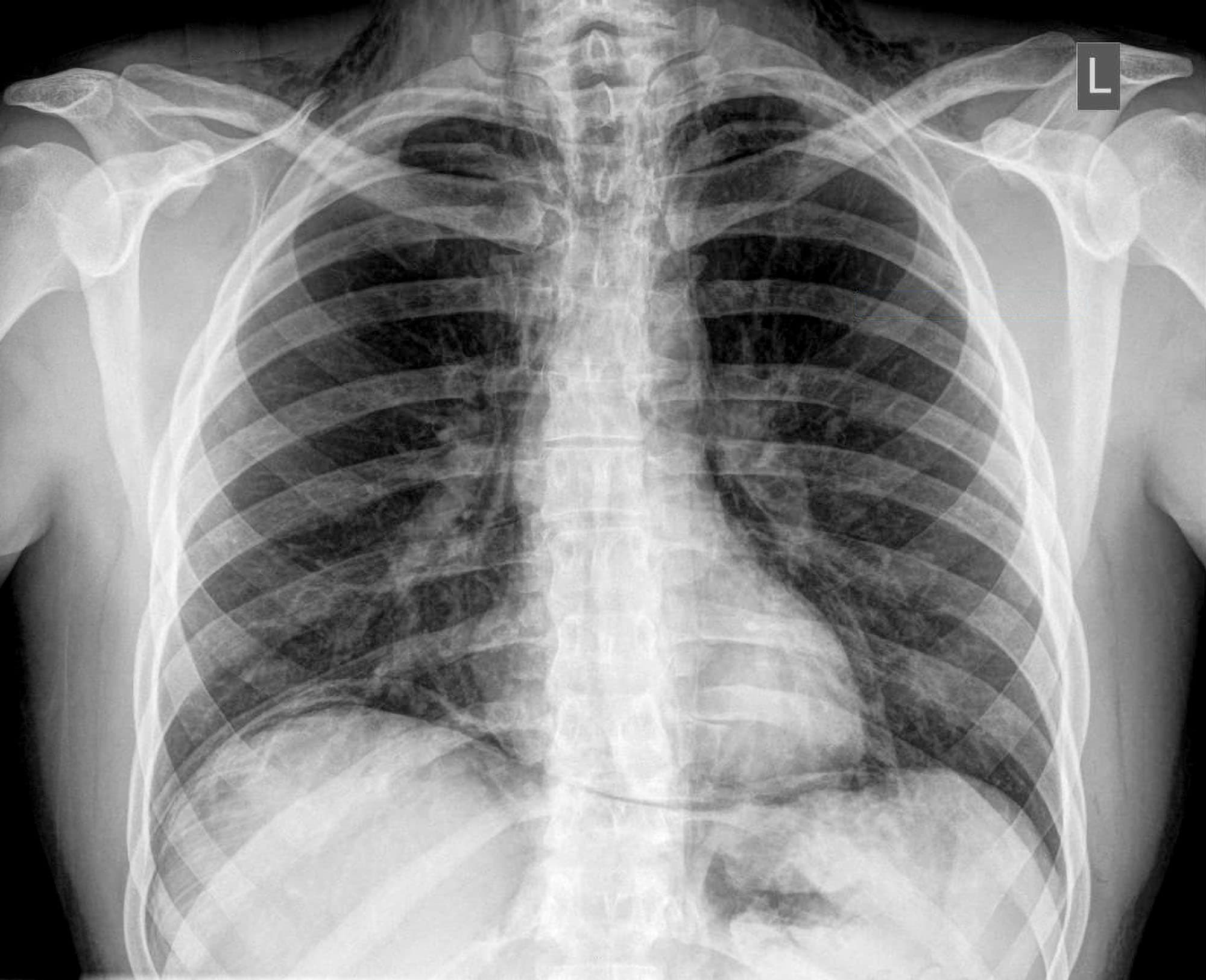
Question 78: A patient presents with abdominal pain. On physical examination there was abdominal guarding and tenderness. A plain erect chest X-ray reveals air under diaphragm. Probable diagnosis is
- A. Perforated abdominal viscus (Correct Answer)
- B. Acute myocardial infarction
- C. Aortic dissection
- D. None of the options
Explanation: ***Perforated abdominal viscus*** - The presence of **abdominal guarding** and **tenderness** indicates peritoneal irritation, while **air under the diaphragm** on an erect chest X-ray (**pneumoperitoneum**) is a classic sign of a perforated hollow abdominal organ. - This combination strongly suggests a **perforated abdominal viscus**, such as a **perforated peptic ulcer** or perforated diverticulitis, leading to the leakage of air and intestinal contents into the peritoneal cavity. *Acute myocardial infarction* - Acute myocardial infarction primarily presents with **chest pain**, radiation to the arm/jaw, and shortness of breath, not typically severe abdominal pain with guarding. - While it can cause some epigastric discomfort, it would not explain the **pneumoperitoneum** seen on the chest X-ray. *Aortic dissection* - Aortic dissection typically causes **sudden, severe tearing chest or back pain**, often radiating to the back. - There is no direct link between aortic dissection and **air under the diaphragm** unless there's a co-existing, unrelated issue, which is not suggested by the primary symptoms. *None of the options* - Given the clear clinical and radiological findings of **pneumoperitoneum** and **peritoneal signs**, a perforated abdominal viscus is the most fitting diagnosis among the choices provided. - This option is incorrect as there is a highly probable diagnosis among the given choices.
Question 79: What is the most common site of injury in an underwater blast?
- A. Lung
- B. GIT (Correct Answer)
- C. Tympanic membrane
- D. Liver
Explanation: ***GIT (Correct Answer)*** - The **gastrointestinal tract (GIT)** is the most common site of injury in an underwater blast due to the presence of air-filled organs that are highly susceptible to pressure changes. - The **rupture of hollow viscera** such as the stomach and intestines can lead to severe abdominal pain, hemorrhage, and peritonitis. - Underwater blasts transmit pressure waves efficiently through water, causing maximum damage to air-filled hollow organs. *Lung (Incorrect)* - While **pulmonary barotrauma** can occur, the lungs are less frequently injured compared to the GIT in underwater blasts unless unprotected or subjected to severe pressure. - Lung injuries may manifest as **pneumothorax**, pulmonary contusions, or air embolism. *Tympanic membrane (Incorrect)* - The **tympanic membrane** is the most frequently ruptured structure in blast injuries and highly vulnerable to pressure changes. - However, while common, it is not the most common site of **major organ damage** or life-threatening injury in an underwater blast scenario. *Liver (Incorrect)* - The **liver**, being a solid organ, is less susceptible to direct blast injury from pressure waves compared to air-filled organs. - Liver injury is more likely to result from secondary effects such as blunt trauma from impact against objects or deceleration forces.
Question 80: Not true about gas gangrene:
- A. Metronidazole is the drug of choice
- B. Cl perfringens produce heat-labile spores (Correct Answer)
- C. Most common cause is Cl perfringens
- D. Extensive necrosis of muscles
Explanation: ***Cl perfringens produce heat-labile spores*** - *Clostridium perfringens* spores are, in fact, **heat-resistant**, allowing them to survive harsh conditions and subsequently germinate into vegetative cells causing infection. - This heat resistance is a crucial factor in food poisoning outbreaks and wound infections, as spores can survive cooking temperatures. *Metronidazole is the drug of choice* - While metronidazole can be used as an adjunct, **penicillin G** is generally the primary antibiotic of choice for gas gangrene, often in combination with other agents like clindamycin. - **Surgical debridement** and **hyperbaric oxygen therapy** are also critical components of treatment, as antibiotics alone are often insufficient. *Most common cause is Cl perfringens* - **_Clostridium perfringens_** is indeed the most frequent cause of gas gangrene (clostridial myonecrosis), accounting for approximately 80-95% of cases. - This bacterium produces potent **exotoxins** that cause rapid tissue destruction and gas formation, leading to the characteristic symptoms. *Extensive necrosis of muscles* - Gas gangrene is characterized by **rapid and extensive necrosis of muscle tissue**, which is caused by the potent toxins produced by clostridial species, particularly alpha-toxin. - This muscle destruction leads to systemic toxicity, pain, and the production of gas within the tissues.