Dermatology
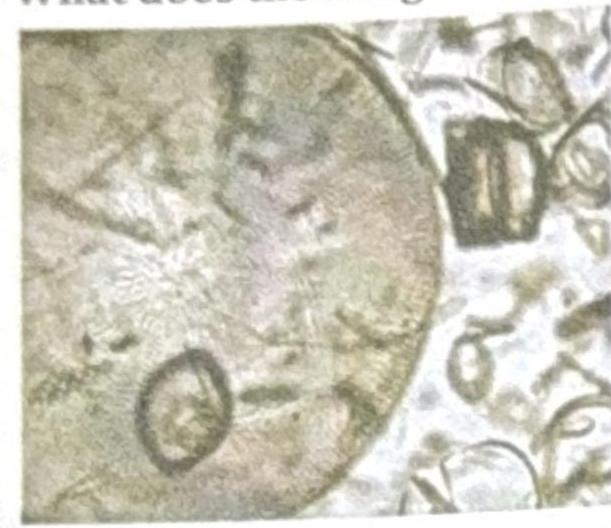
2 questionsThe skin biopsy shown below is most consistent with which of the following conditions? 

A child presents with itchy lesions and diarrhea and has been advised to follow a gluten-free diet. What is the most likely etiology of this condition?
NEET-PG 2024 - Dermatology NEET-PG Practice Questions and MCQs
Question 231: The skin biopsy shown below is most consistent with which of the following conditions? 
- A. Lichen planus (Correct Answer)
- B. Lichen nitidus
- C. Morphea
- D. Lupus erythematosus
Explanation: ***Lichen planus*** - The image shows **basal cell degeneration** (liquefaction degeneration), a **sawtooth rete ridge pattern**, and a band-like inflammatory infiltrate primarily composed of lymphocytes at the dermo-epidermal junction, which are classic histological features of **lichen planus**. - **Civatte bodies** (apoptotic keratinocytes forming colloid bodies) are typically present, resulting from keratinocyte damage at the basal layer. - These features make lichen planus the most consistent diagnosis. *Lichen nitidus* - Characterized by **"ball and claw" lesions**, which are small, localized epidermal invaginations enclosing a central infiltrate of lymphocytes and histiocytes. - The granulomatous infiltrate is more focal and circumscribed compared to the band-like pattern of lichen planus. - While both are interface dermatitides, the architectural pattern differs significantly. *Morphea* - This is a localized form of **scleroderma**, characterized by increased **collagen deposition**, thickening of the dermis, and loss of adnexal structures like hair follicles and sweat glands. - The inflammatory infiltrate is typically perivascular and interstitial, not band-like at the dermo-epidermal junction. - The image does not show features of dermal fibrosis or homogenization of collagen bundles expected in morphea. *Lupus erythematosus* - Also shows **interface dermatitis** with basal vacuolar changes and lymphocytic infiltrate. - However, lupus typically shows a **perivascular and periappendageal pattern** of infiltrate rather than the dense band-like pattern of lichen planus. - Additional features in lupus include dermal mucin deposition, thickened basement membrane (PAS-positive), and follicular plugging. - The dense, continuous band-like infiltrate and sawtooth rete ridges favor lichen planus over lupus.
Question 232: A child presents with itchy lesions and diarrhea and has been advised to follow a gluten-free diet. What is the most likely etiology of this condition?
- A. Whipple's disease
- B. Crohn's disease
- C. Dermatitis herpetiformis
- D. Celiac disease (Correct Answer)
Explanation: ***Celiac disease*** - **Celiac disease** is an autoimmune condition triggered by **gluten ingestion**, leading to small intestine damage and nutrient malabsorption. - The combination of **itchy lesions** (dermatitis herpetiformis, a skin manifestation of celiac disease), **diarrhea**, and improvement on a **gluten-free diet** are highly characteristic. - Since the question asks for the **underlying etiology**, celiac disease is the correct answer as it causes both the skin and GI manifestations. *Whipple's disease* - This is a rare systemic infection caused by the bacterium **Tropheryma whipplei**, presenting with **arthralgia, fever, malabsorption, and lymphadenopathy**. - While it can cause diarrhea and malabsorption, it is not associated with itchy skin lesions and does not respond to a gluten-free diet. *Crohn's disease* - **Crohn's disease** is a type of inflammatory bowel disease affecting any part of the GI tract, causing **abdominal pain, diarrhea, and weight loss**. - It is not associated with dermatitis herpetiformis and does not improve with a gluten-free diet (though some patients may have gluten sensitivity). *Dermatitis herpetiformis* - **Dermatitis herpetiformis** is the **cutaneous manifestation of celiac disease**, presenting as intensely itchy, vesicular lesions. - While DH explains the itchy lesions in this case, it is a **symptom/manifestation**, not the underlying **etiology**—the root cause is celiac disease itself, which produces both the intestinal damage (diarrhea) and the skin manifestations (DH).
Internal Medicine
3 questionsWhich of the following antibodies is associated with Celiac disease?
A patient is a known case of thalassemia. Which of the following viruses would be responsible for attacking progenitor cells and causing aplastic anemia?
A patient presents with respiratory distress and is diagnosed with panacinar emphysema. Which of the following is deficient?
NEET-PG 2024 - Internal Medicine NEET-PG Practice Questions and MCQs
Question 231: Which of the following antibodies is associated with Celiac disease?
- A. Anti-TTG (Tissue Transglutaminase) (Correct Answer)
- B. ANCA (Anti-Neutrophil Cytoplasmic Antibodies)
- C. ASCA (Anti-Saccharomyces cerevisiae Antibodies)
- D. Anti-gliadin
- E. Anti-EMA (Endomysial Antibodies)
Explanation: ***Anti-TTG (Tissue Transglutaminase)*** - **Anti-TTG antibodies** (especially **IgA**) are the primary serological markers for celiac disease, demonstrating high sensitivity and specificity. - These antibodies target **tissue transglutaminase**, an enzyme involved in gluten deamidation, which triggers the autoimmune response in genetically predisposed individuals. - **Anti-TTG IgA** is the **preferred initial screening test** due to its superior diagnostic accuracy and cost-effectiveness. *ANCA (Anti-Neutrophil Cytoplasmic Antibodies)* - **ANCA** are associated with **vasculitis**, such as **Granulomatosis with Polyangiitis (Wegener's)** and **Microscopic Polyangiitis**. - They are not a diagnostic marker for celiac disease, which is an autoimmune enteropathy. *ASCA (Anti-Saccharomyces cerevisiae Antibodies)* - **ASCA** are commonly found in patients with **Crohn's disease**, particularly in those with ileal involvement. - While both celiac disease and Crohn's are gastrointestinal conditions, ASCA is not a marker for celiac. *Anti-gliadin* - **Anti-gliadin antibodies (AGA)** were historically used in celiac disease diagnosis but have **lower sensitivity and specificity** compared to anti-TTG and anti-endomysial antibodies. - Modern guidelines recommend using **anti-TTG IgA** as the primary screening tool due to its superior diagnostic accuracy. *Anti-EMA (Endomysial Antibodies)* - **Anti-EMA IgA** is highly specific for celiac disease (>95% specificity) and is often used as a **confirmatory test**. - However, **anti-TTG is preferred for initial screening** because anti-EMA testing is more expensive, operator-dependent (uses immunofluorescence), and less widely available. - Anti-EMA targets the same antigen as anti-TTG (tissue transglutaminase).
Question 232: A patient is a known case of thalassemia. Which of the following viruses would be responsible for attacking progenitor cells and causing aplastic anemia?
- A. CMV (Cytomegalovirus)
- B. EBV (Epstein-Barr Virus)
- C. Parvovirus B19 (Correct Answer)
- D. Hepatitis C virus (HCV)
Explanation: ***Parvovirus B19*** - **Parvovirus B19** specifically targets and replicates in **erythroid progenitor cells** in the bone marrow, leading to a temporary halt in red blood cell production [1]. - In patients with chronic hemolytic anemias like **thalassemia**, who already have increased erythropoietic demands, this can precipitate an **aplastic crisis** or pure red cell aplasia [1], [2]. *CMV (Cytomegalovirus)* - While CMV can affect the bone marrow and lead to myelosuppression, it does not typically cause a direct **aplastic crisis** by targeting erythroid progenitors in the same way as Parvovirus B19. - CMV often presents with a wider range of symptoms including fever, hepatitis, and mononucleosis-like syndrome, and bone marrow suppression is usually multi-lineage or less severe. *EBV (Epstein-Barr Virus)* - EBV is known to cause infectious mononucleosis and can also be associated with some bone marrow disorders, but it does not primarily target **erythroid progenitor cells** to cause an aplastic crisis. - Its main target cells are **B lymphocytes**, and any bone marrow suppression is often secondary to immune dysregulation rather than direct lytic infection of stem cells. *Hepatitis C virus (HCV)* - HCV infection can lead to various hematologic manifestations, including aplastic anemia, but these are typically **immune-mediated** or associated with chronic liver disease and its complications. - HCV does not directly infect and destroy **hematopoietic progenitor cells** in the bone marrow as a primary mechanism of aplastic anemia.
Question 233: A patient presents with respiratory distress and is diagnosed with panacinar emphysema. Which of the following is deficient?
- A. Alpha-1 antitrypsin (Correct Answer)
- B. Surfactant
- C. Albumin
- D. Type II pneumocytes
Explanation: **Alpha-1 antitrypsin** * **Alpha-1 antitrypsin (A1AT) deficiency** is a genetic disorder that leads to the development of panacinar emphysema, especially in non-smokers or at a young age [1], [2]. * A1AT protects the lung tissue from destruction by **elastase** released by neutrophils; without it, this enzyme breaks down alveolar walls [1], [2]. *Surfactant* * **Surfactant** is responsible for reducing surface tension in the alveoli, preventing their collapse in the lungs. * A deficiency primarily causes **neonatal respiratory distress syndrome** or adult respiratory distress syndrome, not predominantly emphysema. *Albumin* * **Albumin** is a primary protein in plasma that maintains oncotic pressure and transports various substances in the blood. * A deficiency in albumin (e.g., in liver disease or malnutrition) typically leads to **edema** and impaired drug transport, not emphysema. *Type II pneumocytes* * **Type II pneumocytes** are responsible for producing and secreting surfactant, as well as acting as progenitor cells for Type I pneumocytes. * While abnormalities in these cells can lead to surfactant deficiency, the direct cause of genetic panacinar emphysema is the lack of protection against elastase, not a primary defect in pneumocyte number or function in this context.
Pathology
5 questionsA patient has a cerebellar mass, renal tumor, and a family history of similar conditions. Which of the following mutations is most likely present in the family?
TTF-1 (Thyroid Transcription Factor-1) immunohistochemical marker is most commonly seen in which of the following?
A 23-year-old female with a height of 4 feet has a karyotype as shown in the image below. Which among the following indicates the correct etiology?

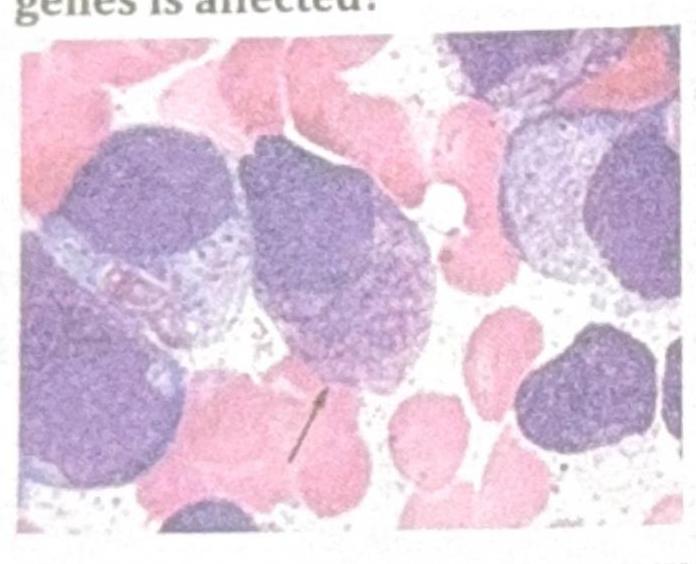
Identify the image and the disease it is associated with: 

A male patient is not responding to oxygen therapy and has been diagnosed with ARDS (Acute Respiratory Distress Syndrome). What is the role of IL-8 in ARDS?
NEET-PG 2024 - Pathology NEET-PG Practice Questions and MCQs
Question 231: A patient has a cerebellar mass, renal tumor, and a family history of similar conditions. Which of the following mutations is most likely present in the family?
- A. VHL (Correct Answer)
- B. Neurofibromatosis (NF1)
- C. Tuberous Sclerosis Complex (TSC)
- D. Li-Fraumeni syndrome
Explanation: ***VHL*** - **Von Hippel-Lindau (VHL) disease** is an inherited disorder characterized by the development of tumors and cysts in various parts of the body, including **hemangioblastomas** in the cerebellum and retina, **renal cell carcinomas**, and pheochromocytomas [1]. - The combination of a **cerebellar mass**, renal tumor, and a family history strongly points to VHL disease, which is caused by a germline mutation in the **VHL tumor suppressor gene** [1]. *Neurofibromatosis (NF1)* - **Neurofibromatosis type 1 (NF1)** typically presents with multiple neurofibromas, **café-au-lait spots**, optic pathway gliomas, and Lisch nodules in the iris. - While NF1 can cause tumors, the specific combination of a cerebellar mass and renal tumor is not typical of NF1, and the characteristic skin findings are not mentioned. *Tuberous Sclerosis Complex (TSC)* - **Tuberous Sclerosis Complex (TSC)** is characterized by the growth of benign tumors in the brain (e.g., **subependymal giant cell astrocytomas**), kidneys (e.g., **angiomyolipomas**), heart, lungs, and skin (e.g., facial angiofibromas) [2]. - While TSC can involve brain and kidney tumors, the typical brain tumors are different (astrocytomas vs. hemangioblastomas), and hemangioblastomas are not a common feature of TSC [2]. *Li-Fraumeni syndrome* - **Li-Fraumeni syndrome** is a rare inherited cancer predisposition syndrome characterized by a high risk of developing various cancers, including **sarcomas**, breast cancer, brain tumors (often astrocytomas or medulloblastomas), and adrenocortical carcinoma. - While brain tumors are part of Li-Fraumeni syndrome, renal cell carcinoma is not a primary feature, and the classic cerebellar hemangioblastoma is not typical for this syndrome. **References:** [1] Cross SS. Underwood's Pathology: A Clinical Approach. 6th ed. Common Clinical Manifestations Of Central And Peripheral Nervous System Disease, pp. 724-727. [2] Kumar V, Abbas AK, et al.. Robbins and Cotran Pathologic Basis of Disease. 9th ed. The Central Nervous System, pp. 1318-1319.
Question 232: TTF-1 (Thyroid Transcription Factor-1) immunohistochemical marker is most commonly seen in which of the following?
- A. Squamous Cell Carcinoma (SCC)
- B. Lung adenocarcinoma (Correct Answer)
- C. Large cell lung cancer
- D. Papillary thyroid carcinoma
Explanation: ***Lung adenocarcinoma*** - **TTF-1 (Thyroid Transcription Factor-1)** is a nuclear transcription factor that is highly expressed in adenocarcinomas of the lung. Positivity for TTF-1 is a key marker used in the diagnosis of primary lung adenocarcinoma, distinguishing it from other lung cancers and metastatic tumors. - While TTF-1 can also be positive in thyroid follicular and papillary carcinomas, its strong association with **lung adenocarcinoma** makes it a crucial diagnostic marker in this context, especially when differentiating between primary lung tumors and metastases or other lung cancer types. *Squamous Cell Carcinoma (SCC)* - **Squamous cell carcinoma of the lung** is generally **negative for TTF-1**. It typically expresses markers like p40 and CK5/6. - TTF-1 has very low sensitivity and specificity for squamous cell carcinoma, making it a poor choice for identifying this type of lung cancer. *Large cell lung cancer* - **Large cell lung carcinoma** is a diagnosis of exclusion and is typically **negative for TTF-1**, as well as other specific markers for adenocarcinoma or squamous cell carcinoma. - This type of cancer is characterized by large, anaplastic cells that lack features of other specific lung cancer types when viewed under a microscope. *Papillary thyroid carcinoma* - While **papillary thyroid carcinoma** is also **TTF-1 positive**, the question asks for the most common context in which TTF-1 is seen, and TTF-1 is a highly valuable marker for confirming a lung primary in the setting of lung masses. - TTF-1's utility in lung cancer diagnostics is particularly significant for differentiating primary lung adenocarcinomas from metastatic tumors and other lung cancer subtypes.
Question 233: A 23-year-old female with a height of 4 feet has a karyotype as shown in the image below. Which among the following indicates the correct etiology?
- A. Turner syndrome (Correct Answer)
- B. Klinefelter's syndrome
- C. Down syndrome
- D. Edward's syndrome
Explanation: **Turner syndrome** - The **karyotype shows 45,X**, meaning there is only one X chromosome and no second sex chromosome (Y or another X). This absence of a full second sex chromosome is the defining genetic characteristic of **Turner syndrome** [1]. - The clinical presentation of a **23-year-old female with a height of 4 feet (short stature)** is a classic sign of Turner syndrome, which results from the partial or complete monosomy of the X chromosome. Short stature in these patients is specifically linked to the haploinsufficiency of the SHOX gene [1]. *Klinefelter's syndrome* - This syndrome is characterized by the presence of an **extra X chromosome in males**, leading to a karyotype typically 47,XXY [2]. - While individuals with Klinefelter's syndrome may also have a variety of physical and developmental challenges, the patient's biological sex (female) and the specific karyotype shown **(45,X)** do not align with this condition. *Down syndrome* - Down syndrome is caused by a **trisomy of chromosome 21**, meaning there are three copies of chromosome 21 instead of the usual two [2]. - The provided karyotype clearly shows **two copies of chromosome 21** and a sex chromosome abnormality (45,X), making Down syndrome an incorrect diagnosis [1]. *Edward's syndrome* - Edward's syndrome is characterized by a **trisomy of chromosome 18**, meaning there are three copies of chromosome 18 [1]. - The presented karyotype shows **two copies of chromosome 18** and an abnormality in the sex chromosomes, ruling out Edward's syndrome. **References:** [1] Kumar V, Abbas AK, et al.. Robbins and Cotran Pathologic Basis of Disease. 9th ed. Genetic Disorders, pp. 171-177. [2] Cross SS. Underwood's Pathology: A Clinical Approach. 6th ed. (Basic Pathology) introduces the student to key general principles of pathology, both as a medical science and as a clinical activity with a vital role in patient care. Part 2 (Disease Mechanisms) provides fundamental knowledge about the cellular and molecular processes involved in diseases, providing the rationale for their treatment. Part 3 (Systematic Pathology) deals in detail with specific diseases, with emphasis on the clinically important aspects., pp. 92-93.
Question 234: Identify the image and the disease it is associated with: 
- A. Gaucher's disease (Correct Answer)
- B. Tay-Sachs disease
- C. Sandhoff's disease
- D. Fabry's disease
Explanation: ***Gaucher's disease*** - The image shows **Gaucher cells** - characteristic lipid-laden macrophages with a distinctive **"crumpled tissue paper" or "wrinkled silk" cytoplasmic appearance** and eccentric nuclei [1] - These cells are pathognomonic for **Gaucher's disease**, an **autosomal recessive lysosomal storage disorder** caused by **glucocerebrosidase deficiency** [1] - Accumulation of **glucocerebroside** in macrophages creates the characteristic morphology seen in bone marrow, spleen, and liver [1] - Caused by mutations in the *GBA* gene on chromosome 1 [1] *Tay-Sachs disease* - Autosomal recessive disorder caused by **hexosaminidase A deficiency** leading to **GM2 ganglioside accumulation** [2] - Characteristic findings include **cherry-red spot on macula** and neuronal ballooning, not the macrophage changes seen in this image [2] - Does not produce Gaucher cells *Sandhoff's disease* - Caused by deficiency of both **hexosaminidase A and B** due to *HEXB* gene mutations - Similar to Tay-Sachs with GM2 ganglioside accumulation affecting neurons - Does not produce the characteristic macrophage morphology shown in the image *Fabry's disease* - **X-linked recessive** disorder caused by **alpha-galactosidase A deficiency** - Accumulation of **globotriaosylceramide** in vascular endothelial cells - Histology may show lipid deposits in vessels and kidney, not the distinctive Gaucher cells seen here **References:** [1] Kumar V, Abbas AK, et al.. Robbins and Cotran Pathologic Basis of Disease. 9th ed. Genetic Disorders, pp. 162-163. [2] Kumar V, Abbas AK, et al.. Robbins and Cotran Pathologic Basis of Disease. 9th ed. Genetic Disorders, p. 161.
Question 235: A male patient is not responding to oxygen therapy and has been diagnosed with ARDS (Acute Respiratory Distress Syndrome). What is the role of IL-8 in ARDS?
- A. Endothelial cell activation
- B. Recruitment of neutrophils (Correct Answer)
- C. Macrophage activation
- D. Promote surfactant production
Explanation: Recruitment of neutrophils - **Interleukin-8 (IL-8)**, also known as **CXCL8**, is a powerful **chemotactic cytokine** that primarily attracts and activates neutrophils [3]. - In **ARDS**, this recruitment leads to an influx of neutrophils into the pulmonary interstitium and alveolar spaces, contributing to inflammation and lung injury [1]. *Endothelial cell activation* - While other **cytokines** and inflammatory mediators can activate **endothelial cells** in ARDS [2], IL-8's primary role is not direct endothelial activation but rather **neutrophil chemotaxis** [3]. - **Endothelial cell activation** leads to increased vascular permeability and leukocyte adherence, which is often a consequence of overall inflammation, not solely IL-8 [4]. *Macrophage activation* - **Macrophages** are activated by various stimuli and other **cytokines**, such as **TNF-alpha** and **IFN-gamma**, as part of the inflammatory response. - While macrophages produce IL-8, its main function is not to activate macrophages themselves but to attract **neutrophils**. *Promote surfactant production* - **Surfactant production** is primarily regulated by **Type II pneumocytes** and is often impaired in ARDS due to damage to these cells [1]. - IL-8 is a **pro-inflammatory cytokine** and plays no direct role in promoting surfactant synthesis; in fact, its inflammatory effects can indirectly worsen surfactant dysfunction. **References:** [1] Kumar V, Abbas AK, et al.. Robbins and Cotran Pathologic Basis of Disease. 9th ed. The Lung, p. 681. [2] Kumar V, Abbas AK, et al.. Robbins and Cotran Pathologic Basis of Disease. 9th ed. The Lung, p. 679. [3] Kumar V, Abbas AK, et al.. Robbins and Cotran Pathologic Basis of Disease. 9th ed. Inflammation and Repair, pp. 87-89. [4] Kumar V, Abbas AK, et al.. Robbins and Cotran Pathologic Basis of Disease. 9th ed. Migration in the tissues toward a chemotactic stimulus, pp. 86-87.