Anatomy
5 questionsThe covering of an omphalocele is derived from which of the following layers?
A patient presents with pain in the back of the thigh and leg after lifting heavy weights. Which spinal segment is most likely involved?
Which artery is palpated behind the medial malleolus and in front of the Achilles tendon?
Match the following nerves to their respective areas of supply to the auricle

A patient diagnosed with sciatica has tender hamstrings. Which of the following nerves supplies a hybrid muscle that is partially spared in this patient?
NEET-PG 2024 - Anatomy NEET-PG Practice Questions and MCQs
Question 121: The covering of an omphalocele is derived from which of the following layers?
- A. Amnion (Correct Answer)
- B. Chorion
- C. Mesoderm
- D. Endoderm
- E. Ectoderm
Explanation: ***Amnion*** - An **omphalocele** is a congenital abdominal wall defect where abdominal contents protrude through the umbilical ring, covered by a sac derived from the **amnion** and peritoneum. - The covering of an omphalocele defect is an intact peritoneal sac that is covered externally by **amnion**. *Chorion* - The **chorion** is the outermost membrane surrounding an embryo, providing protection and nourishment, but it does not form the covering of an omphalocele. - It works in conjunction with the decidua to form the **placenta** and has finger-like projections called villi on its outer surface. *Mesoderm* - The **mesoderm** is one of the three primary germ layers in embryonic development, giving rise to connective tissue, muscle, and blood cells. - **Fetal skin**, not the omphalocele covering, develops from the mesoderm and ectoderm. *Endoderm* - The **endoderm** is the innermost of the three primary germ layers, giving rise to the lining of the digestive tract and respiratory system. - The omphalocele covering is derived from the amnion, not the endoderm, which is involved in forming internal organs. *Ectoderm* - The **ectoderm** is the outermost of the three primary germ layers, giving rise to the nervous system, skin epidermis, and sensory organs. - While ectoderm contributes to skin development, the omphalocele sac is specifically covered by amnion, not ectodermal derivatives.
Question 122: A patient presents with pain in the back of the thigh and leg after lifting heavy weights. Which spinal segment is most likely involved?
- A. L4
- B. L5
- C. S1 (Correct Answer)
- D. S2
- E. L3
Explanation: ***S1*** - Pain radiating to the **back of the thigh and leg** after lifting heavy weights is the classic presentation of **S1 radiculopathy**, typically from L5-S1 disc herniation. - The S1 nerve root innervates the **posterior thigh via the sciatic nerve**, continues down the **posterior leg**, and extends to the **lateral foot and little toe**. - Clinical findings include diminished or absent **Achilles reflex**, weakness of **plantar flexion** (gastrocnemius/soleus), and sensory changes along the posterior leg and lateral foot. - This is the **most common** presentation of sciatica from heavy lifting. *L3* - L3 nerve root involvement typically causes pain in the **anterior and medial thigh** with weakness of **hip flexion and knee extension** (quadriceps). - The pain pattern does not match the posterior distribution described in this clinical scenario. *L4* - L4 radiculopathy presents with pain and numbness in the **medial leg and foot**, weakness of **ankle dorsiflexion** (tibialis anterior), and diminished **patellar reflex**. - The pain distribution is anteromedial, not posterior as described in this case. *L5* - L5 nerve root impingement causes pain radiating to the **lateral calf and dorsum of the foot**, weakness of **great toe extension** (extensor hallucis longus), and **foot drop**. - While L5 can cause posterior thigh pain, the classic distribution extends laterally down the leg, not primarily posterior. *S2* - S2 radiculopathy is uncommon and typically presents with **perineal/perianal pain** and **saddle anesthesia** rather than isolated posterior leg pain. - S2 contributes to bladder and bowel function; isolated S2 involvement would not present with the classic sciatica pattern described.
Question 123: Which artery is palpated behind the medial malleolus and in front of the Achilles tendon?
- A. Peroneal artery
- B. Anterior tibial artery
- C. Dorsalis pedis artery
- D. Posterior tibial artery (Correct Answer)
- E. Popliteal artery
Explanation: ***Posterior tibial artery*** - This artery is directly accessible for palpation in the **retromalleolar groove**, situated between the medial malleolus and the Achilles tendon. - It is a common site for assessing **peripheral circulation** in the foot. *Peroneal artery* - The peroneal artery is located **deep within the posterior compartment** of the leg, making it difficult to palpate at the ankle. - It primarily supplies the lateral compartment and is not typically palpable at the described location. *Anterior tibial artery* - The anterior tibial artery runs along the **anterior compartment** of the lower leg and, at the ankle, becomes the dorsalis pedis artery. - It is best palpated on the **dorsum of the foot** as the dorsalis pedis artery, not behind the medial malleolus. *Dorsalis pedis artery* - This artery is a continuation of the anterior tibial artery and is found on the **dorsum of the foot**, typically lateral to the extensor hallucis longus tendon. - While an important pulse point, it is not located behind the medial malleolus. *Popliteal artery* - The popliteal artery is located in the **popliteal fossa** behind the knee, where it can be palpated with deep pressure. - It is proximal to the ankle and divides into the anterior and posterior tibial arteries, making it anatomically distant from the medial malleolus.
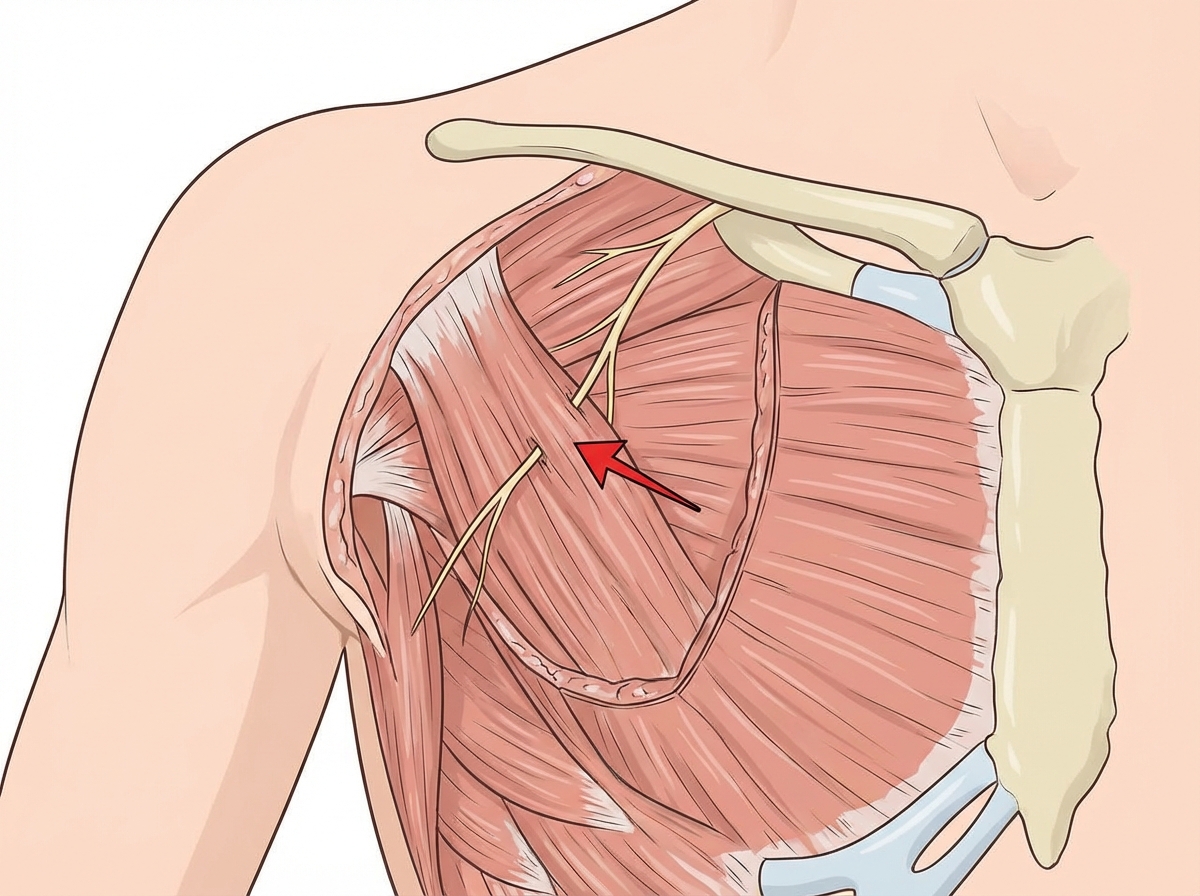
Question 124: Match the following nerves to their respective areas of supply to the auricle
- A. A - Auriculotemporal, B - Greater auricular, C - Vagus, D - Lesser occipital (Correct Answer)
- B. A - Greater auricular, B - Auriculotemporal, C - Lesser occipital, D - Vagus
- C. A - Auriculotemporal, B - Lesser occipital, C - Greater auricular, D - Vagus
- D. A - Auriculotemporal, B - Lesser occipital, C - Vagus, D - Greater auricular
- E. A - Vagus, B - Greater auricular, C - Auriculotemporal, D - Lesser occipital
Explanation: ***A - Auriculotemporal, B - Greater auricular, C - Vagus, D - Lesser occipital*** - **A points to the anterior-superior part of the auricle**, which is supplied by the **auriculotemporal nerve**, a branch of the trigeminal nerve (CN V3). - **B points to the posterolateral surface of the auricle and the lobule**, primarily supplied by the **greater auricular nerve**, a branch of the cervical plexus (C2-C3). - **C (the concha)** is innervated by the **vagus nerve** (CN X). - **D, the superior posterior part of the auricle**, is supplied by the **lesser occipital nerve** (C2-C3). *A - Auriculotemporal, B - Lesser occipital, C - Vagus, D - Greater auricular* - This option incorrectly swaps the **lesser occipital** and **greater auricular** nerve distributions. - The **greater auricular nerve** supplies the prominent posterolateral auricle (area B), not area D. *A - Vagus, B - Greater auricular, C - Auriculotemporal, D - Lesser occipital* - This option incorrectly assigns the **vagus nerve** to area A (anterosuperior auricle), which is innervated by the **auriculotemporal nerve**. - The **auriculotemporal nerve** is incorrectly placed at C; the vagus nerve primarily innervates the concha (area C). *A - Greater auricular, B - Auriculotemporal, C - Lesser occipital, D - Vagus* - This option reverses the **greater auricular** and **auriculotemporal** distributions and misplaces the vagus and lesser occipital nerves. - The **auriculotemporal nerve** supplies the anterosuperior region (A), not the posterolateral region (B). *A - Auriculotemporal, B - Lesser occipital, C - Greater auricular, D - Vagus* - This option incorrectly places the **lesser occipital nerve** at B and misidentifies the concha's innervation. - The **greater auricular nerve** supplies area B (posterolateral auricle and lobule), not the concha (C).
Question 125: A patient diagnosed with sciatica has tender hamstrings. Which of the following nerves supplies a hybrid muscle that is partially spared in this patient?
- A. Femoral
- B. Common peroneal nerve (Correct Answer)
- C. Obturator
- D. Tibial
- E. Superior gluteal
Explanation: ***Common peroneal nerve*** - The **short head of the biceps femoris** is a unique "hybrid" muscle, supplied by the **common peroneal nerve**, while the **long head** is supplied by the **tibial nerve**. - If the hamstrings are tender and sciatica is present, but this specific muscle's function is spared, it points towards the common peroneal nerve being the relevant nerve for the spared portion. *Femoral* - The **femoral nerve** primarily innervates the **anterior compartment of the thigh**, including the quadriceps femoris. - It does not supply any part of the hamstring muscles. *Obturator* - The **obturator nerve** primarily innervates the **medial compartment of the thigh**, which consists of adductor muscles. - It does not contribute to the innervation of the hamstring muscles. *Superior gluteal* - The **superior gluteal nerve** innervates the **gluteus medius**, **gluteus minimus**, and **tensor fasciae latae** muscles. - It does not supply any hamstring muscles. *Tibial* - The **tibial nerve** innervates most of the hamstring muscles (semitendinosus, semimembranosus, and the long head of the biceps femoris). - If the hamstrings are tender, involvement of the tibial nerve would likely lead to more widespread hamstring weakness rather than a partially spared scenario involving the short head of the biceps femoris.
Pediatrics
1 questionsWhat is the diagnosis based on the image shown 

NEET-PG 2024 - Pediatrics NEET-PG Practice Questions and MCQs
Question 121: What is the diagnosis based on the image shown 
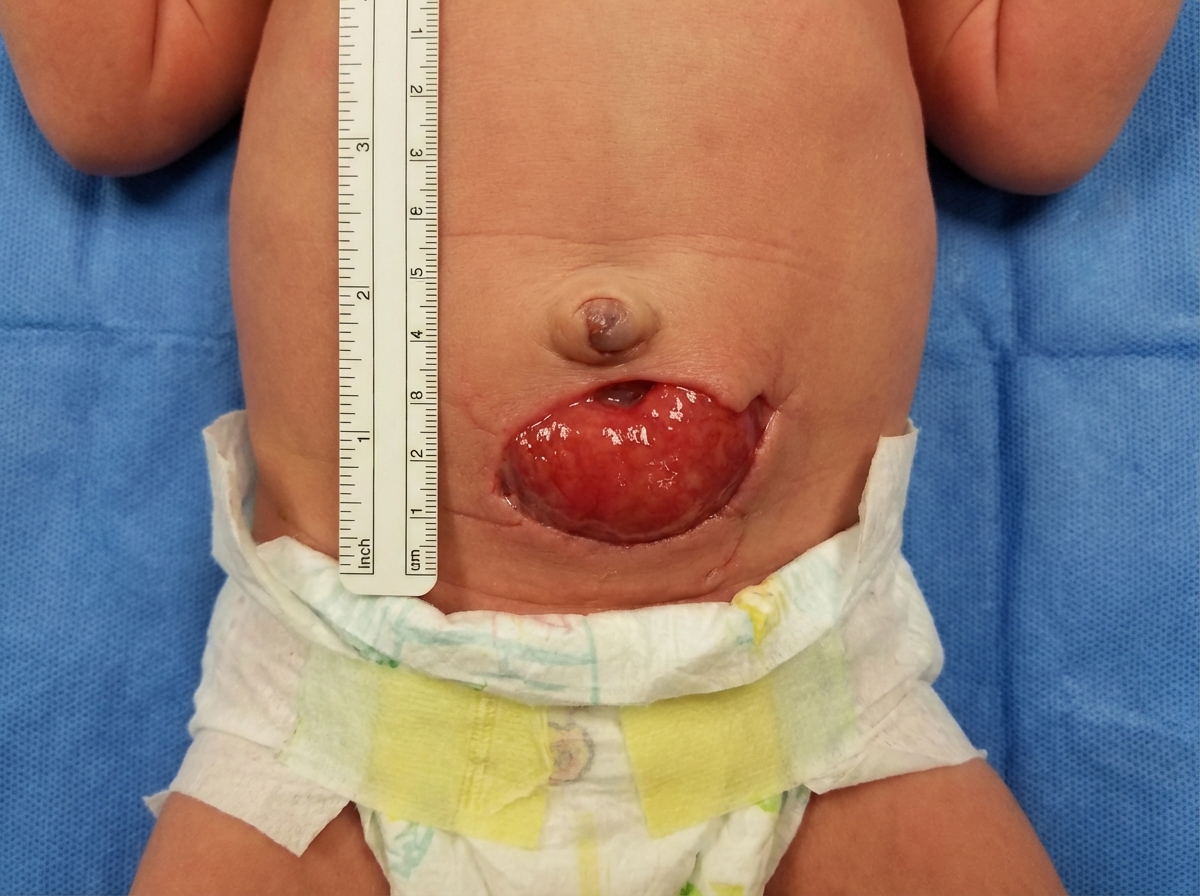
- A. Bladder exstrophy (Correct Answer)
- B. Omphalocele
- C. Umbilical hernia
- D. Gastroschisis
- E. Epispadias
Explanation: ***Bladder exstrophy*** - The image distinctly shows an **exposed urinary bladder** on the abdominal wall, a hallmark of bladder exstrophy. - This congenital anomaly results from a **failure of midline closure** of the infraumbilical abdominal wall and bladder. *Omphalocele* - An omphalocele involves protrusion of **abdominal viscera** (intestines, liver) into the base of the umbilical cord. - The herniated organs are typically **covered by a sac** composed of peritoneum and amnion, which is absent in the image. *Umbilical hernia* - An umbilical hernia is a protrusion of abdominal contents through the **umbilical ring**, but the skin remains intact and covers the defect. - The image clearly shows an **exposed organ** without skin coverage, ruling out an umbilical hernia. *Gastroschisis* - Gastroschisis involves the **evisceration of intestines** through a full-thickness abdominal wall defect, usually to the right of the umbilical cord. - Unlike the image, the defect in gastroschisis is typically **much smaller** and primarily involves the bowel, not the bladder, and there is no covering sac. *Epispadias* - Epispadias is a **urethral defect** where the urethral opening is on the dorsal (upper) surface of the penis or anterior bladder neck. - While epispadias is part of the **exstrophy-epispadias complex** and often associated with bladder exstrophy, it does not present with an **exposed bladder** on the abdominal wall as seen in the image.
Physiology
2 questionsMatch the following receptors with their correct functions: Receptors: 1. Ruffini corpuscle 2. Merkel cells 3. Pacinian corpuscle 4. Meissner's corpuscle Functions: A. Vibration B. Sustained pressure C. Stretching D. Fine touch Select the option that correctly matches each receptor (1-4) with its function (A-D).
What are the effects of a lesion in Brodmann area 22?
NEET-PG 2024 - Physiology NEET-PG Practice Questions and MCQs
Question 121: Match the following receptors with their correct functions: Receptors: 1. Ruffini corpuscle 2. Merkel cells 3. Pacinian corpuscle 4. Meissner's corpuscle Functions: A. Vibration B. Sustained pressure C. Stretching D. Fine touch Select the option that correctly matches each receptor (1-4) with its function (A-D).
- A. 1C 2D 3B 4A
- B. 1C 2B 3A 4D (Correct Answer)
- C. 1D 2C 3B 4A
- D. 1B 2A 3D 4C
Explanation: ***1C 2B 3A 4D*** - **Ruffini corpuscles** (1) detect **stretching** (C) of the skin. They are **slow-adapting Type II mechanoreceptors** located deep in the dermis, responding to sustained skin stretch and contributing to proprioception. - **Merkel cells** (2) detect **sustained pressure** (B) and fine texture discrimination. They are **slow-adapting Type I mechanoreceptors** with the highest spatial resolution, providing detailed information about touch. - **Pacinian corpuscles** (3) detect **vibration** (A), particularly high-frequency vibrations (200-300 Hz). They are **rapidly adapting receptors** with an onion-like lamellated structure located deep in the dermis and subcutaneous tissue. - **Meissner's corpuscles** (4) detect **fine touch** (D) and light pressure. They are **rapidly adapting receptors** located in dermal papillae of glabrous (hairless) skin, particularly abundant in fingertips and lips. *1C 2D 3B 4A* - Incorrectly assigns Merkel cells to fine touch (should be sustained pressure) and Pacinian corpuscles to sustained pressure (should be vibration). - Meissner's corpuscles are mismatched with vibration instead of fine touch. *1D 2C 3B 4A* - Incorrectly assigns Ruffini corpuscles to fine touch (should be stretching) and Merkel cells to stretching (should be sustained pressure). - Pacinian corpuscles are mismatched with sustained pressure (should be vibration). - Meissner's corpuscles are mismatched with vibration (should be fine touch). *1B 2A 3D 4C* - Completely incorrect matching: Ruffini to sustained pressure, Merkel to vibration, Pacinian to fine touch, and Meissner's to stretching. - Demonstrates fundamental misunderstanding of mechanoreceptor functions.
Question 122: What are the effects of a lesion in Brodmann area 22?
- A. Expressive aphasia
- B. Receptive aphasia (Correct Answer)
- C. Poor repetition of language
- D. Poor naming
Explanation: ***Receptive aphasia*** - A lesion in **Brodmann area 22**, specifically in **Wernicke's area**, leads to **receptive aphasia** (Wernicke's aphasia). - This condition is characterized by **impaired comprehension** of spoken and written language, **fluent but paraphasic speech**, and **poor repetition**. - This is the most comprehensive answer as it describes the entire clinical syndrome. *Expressive aphasia* - **Brodmann areas 44 and 45** (Broca's area) in the frontal lobe are associated with expressive aphasia (Broca's aphasia). - Patients have good comprehension but struggle to produce fluent speech, with effortful, telegraphic output. *Poor repetition of language* - While poor repetition is indeed a feature of Wernicke's aphasia, this option describes only one component of the syndrome rather than the complete clinical picture. - **Conduction aphasia** (from arcuate fasciculus lesions) is characterized by poor repetition with **relatively preserved** comprehension and fluent speech, distinguishing it from Wernicke's aphasia. - "Receptive aphasia" is the more complete answer. *Poor naming* - Difficulty with naming, or **anomia**, is a common feature across various types of aphasia, including both receptive and expressive aphasia. - It reflects disruption in language networks involving the **temporal and parietal lobes** but is not specific to Brodmann area 22 lesions.
Surgery
2 questionsA patient presents with fecal discharge from the umbilicus. What is the most likely diagnosis?
What is the diagnosis based on the image shown?
NEET-PG 2024 - Surgery NEET-PG Practice Questions and MCQs
Question 121: A patient presents with fecal discharge from the umbilicus. What is the most likely diagnosis?
- A. Urachal fistula
- B. Patent vitelline duct (Correct Answer)
- C. Omphalocele
- D. Gastroschisis
Explanation: ***Patent vitelline duct*** - **Fecal discharge from the umbilicus** indicates a persistent communication between the **ileum** and the **umbilicus** through a patent vitelline (omphalomesenteric) duct. - This congenital anomaly represents a remnant of the **omphalomesenteric duct** that **completely failed to involute**, creating a **fistulous tract** allowing intestinal contents to exit through the umbilicus. - This is the **most complete form** of vitelline duct persistence (other forms include Meckel's diverticulum, fibrous band, or umbilical polyp). *Urachal fistula* - A urachal fistula occurs when the **urachus** remains patent, creating a connection between the **bladder** and the umbilicus. - While it can result in umbilical discharge, the discharge would be **urine**, not feces. *Omphalocele* - An omphalocele is a **congenital abdominal wall defect** where abdominal contents protrude into a sac at the base of the umbilicus. - It does not involve a fistulous communication with intestines causing fecal discharge, but rather a **herniation** of organs covered by a peritoneal membrane. *Gastroschisis* - Gastroschisis is a congenital anomaly characterized by the **protrusion of abdominal organs** directly into the amniotic cavity **without a covering sac**, usually to the **right of the umbilicus**. - Like omphalocele, it's a **herniation defect** presenting at birth and does not involve an abnormal fistulous connection causing fecal discharge from the umbilicus.
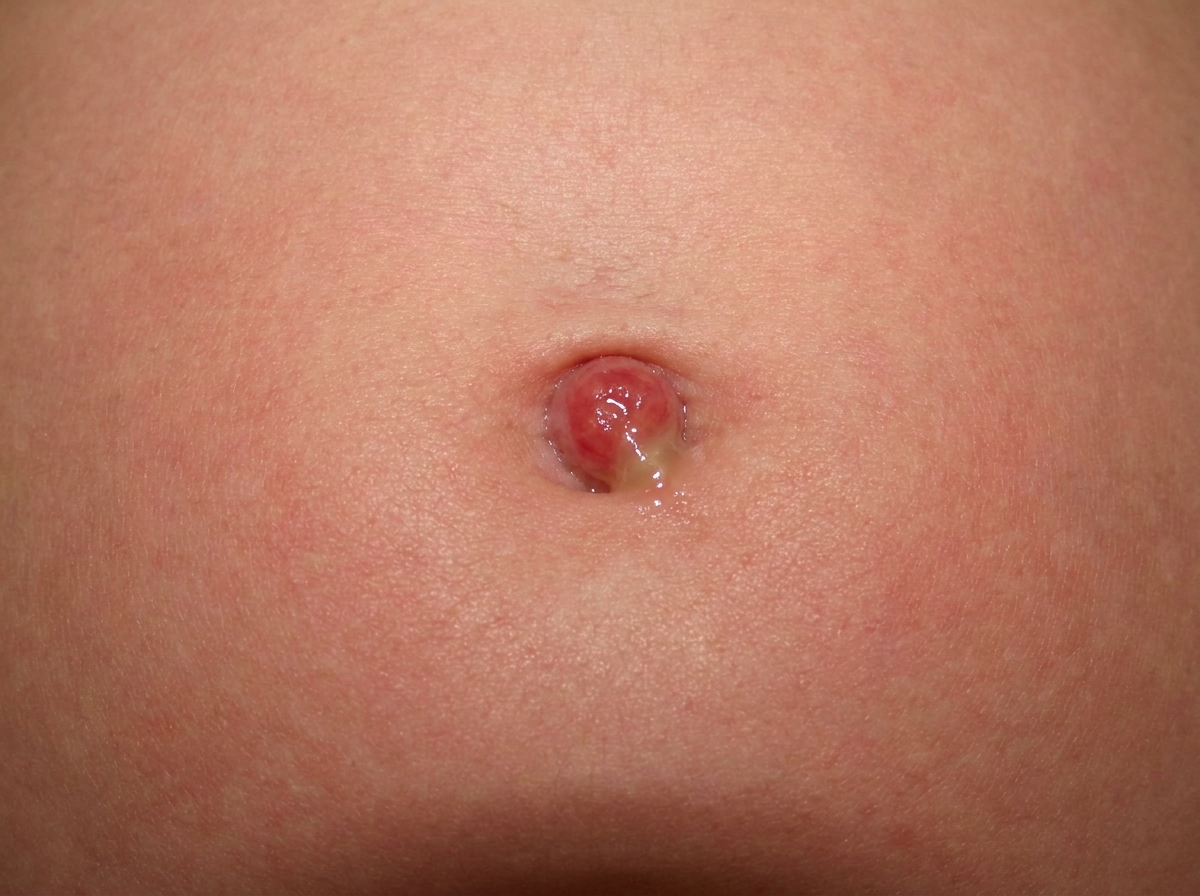
Question 122: What is the diagnosis based on the image shown?
- A. Ileal diverticulum
- B. Urachal cyst
- C. Umbilical fistula (Correct Answer)
- D. Omphalocele
Explanation: ***Umbilical fistula*** - The image shows a **patent vitelline duct (omphalomesenteric duct)**, which creates a direct connection between the umbilicus and the ileum, visible as an umbilical fistula. - This condition presents with **fecal discharge from the umbilicus** or **umbilical prolapse of intestinal mucosa**. *Ileal diverticulum* - An ileal diverticulum, such as a **Meckel's diverticulum**, is a blind pouch protruding from the ileum, usually not communicating with the umbilicus. - It would typically be noted as an **outpouching of the ileal wall**, without an external opening at the umbilicus unless complicated by rupture. *Urachal cyst* - A urachal cyst is a remnant of the **urachus**, which connects the bladder to the umbilicus during fetal development. - It would be located **between the umbilicus and the bladder** and contain urine or serous fluid, not intestinal contents. *Omphalocele* - An omphalocele is a **congenital abdominal wall defect** where abdominal organs protrude into the base of the umbilical cord. - The defect is **covered by a membrane**, and it involves herniation of abdominal contents, not a fistula with the intestine.