Anatomy
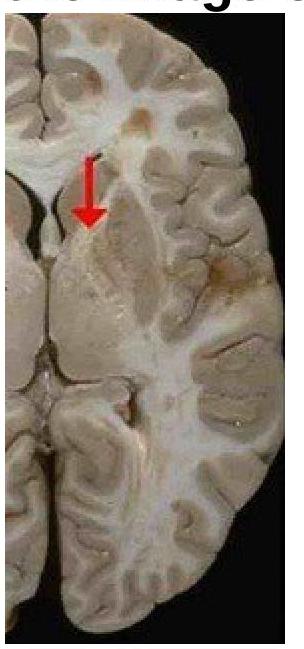
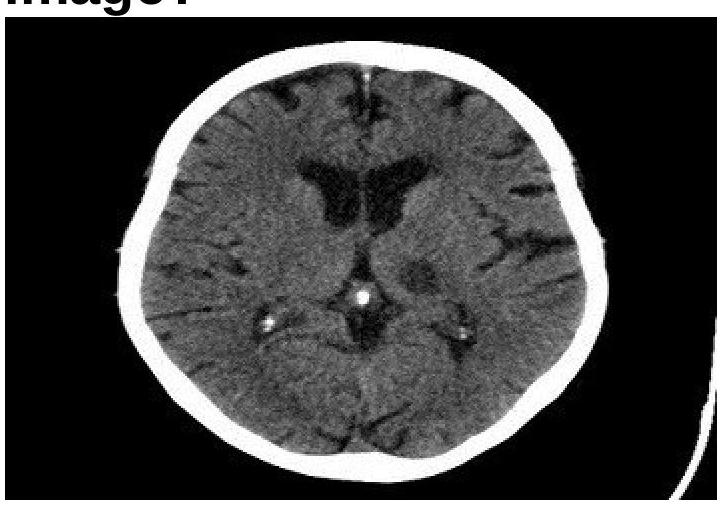
1 questionsIdentify the structure marked by a red arrow in the image.

NEET-PG 2019 - Anatomy NEET-PG Practice Questions and MCQs
Question 111: Identify the structure marked by a red arrow in the image.
- A. Great vein of Galen
- B. Pineal gland
- C. Fornix (Correct Answer)
- D. Falx cerebri
Explanation: ***Fornix*** - The **fornix** is a C-shaped bundle of nerve fibers in the brain that acts as the primary efferent (output) pathway from the hippocampus. - On an axial CT image, the fornix is typically seen as a **thin, arching structure** located above the third ventricle and below the corpus callosum, which matches the position indicated by the red arrow. *Great vein of Galen* - The **Great cerebral vein of Galen** is a large midline vein located posterior to the third ventricle and pineal gland, draining into the straight sinus. - Its position is more posterior and inferior to the structure indicated by the red arrow. *Pineal gland* - The **pineal gland** is a small, endocrine gland located in the epithalamus, posterior to the third ventricle and often calcified, appearing bright on CT scans. - While it's in the general vicinity, the red arrow points anterior and superior to where the pineal gland would typically be visualized. *Falx cerebri* - The **falx cerebri** is a large, crescent-shaped fold of dura mater that dips into the longitudinal fissure between the cerebral hemispheres. - It would appear as a linear structure in the sagittal plane or as a midline divider in some axial cuts, distinct from the deep brain structure indicated by the arrow.
Dermatology
1 questionsIdentify the condition shown in the image.

NEET-PG 2019 - Dermatology NEET-PG Practice Questions and MCQs
Question 111: Identify the condition shown in the image.
- A. Trichotillomania
- B. Tinea capitis
- C. Alopecia areata
- D. Sebaceous cyst (Correct Answer)
Explanation: ***Sebaceous cyst*** - The image indicates a **well-demarcated, raised lesion** within the scalp, covered by normal skin and surrounded by hair. This appearance is characteristic of a sebaceous cyst (also known as an epidermal or pilar cyst). - Sebaceous cysts are common, benign cysts filled with **keratin** and cellular debris, often arising from hair follicles, and are frequently found on the scalp, face, neck, and trunk. *Alopecia areata* - Alopecia areata typically presents as **smooth, circular patches of complete hair loss** without inflammation or scaling, often described as having "exclamation mark" hairs at the periphery. - The image shows a raised, somewhat erythematous lesion rather than a completely smooth patch of hair loss. *Trichotillomania* - Trichotillomania is a **hair-pulling disorder** that results in irregular patches of hair loss with hairs of varying lengths, often with stubble or broken hairs. - The patches can look bizarre and are usually characterized by hair breakage, not a well-defined raised lesion as seen here. *Tinea capitis* - Tinea capitis is a **fungal infection of the scalp** characterized by scaling, erythema, pruritus, and often broken hairs (black dots). It can also cause pustules and kerions (inflammatory boggy masses). - While it causes hair loss, the primary lesion is usually inflammatory and scaly, rather than a single, raised, non-inflammatory mass.
Forensic Medicine
1 questionsA patient with a history of breast cancer with brain metastases dies following a cerebral hemorrhage. According to standard death certification practices (WHO guidelines), what should be recorded as the immediate cause of death in Part I(a) of the death certificate?
NEET-PG 2019 - Forensic Medicine NEET-PG Practice Questions and MCQs
Question 111: A patient with a history of breast cancer with brain metastases dies following a cerebral hemorrhage. According to standard death certification practices (WHO guidelines), what should be recorded as the immediate cause of death in Part I(a) of the death certificate?
- A. Secondaries
- B. Breast Cancer (Primary)
- C. Cerebral Hemorrhage (Correct Answer)
- D. Complications of Breast Cancer
Explanation: ***Cerebral Hemorrhage*** - The **immediate cause of death** (Part I(a) of the death certificate) is the final disease, injury, or complication that directly caused death. - In this case, **cerebral hemorrhage** is the terminal event that directly resulted in death, regardless of underlying conditions. - According to WHO ICD-10 guidelines, Part I should list the causal sequence: **(a) Cerebral hemorrhage → (b) Brain metastases → (c) Breast cancer**, with cerebral hemorrhage as the immediate cause. *Breast Cancer (Primary)* - Breast cancer is the **underlying cause of death** (the disease that initiated the morbid sequence), which would be recorded in Part I(c). - While it's the most important cause from a public health perspective, it is **not the immediate cause** that directly precipitated death. - The underlying cause and immediate cause serve different purposes in mortality statistics. *Secondaries* - Brain metastases (secondaries) would be recorded as an **intermediate cause** in Part I(b) of the death certificate. - While they represent the pathological link between breast cancer and cerebral hemorrhage, they are not the **immediate** terminal event. - "Secondaries" alone is too vague without specifying the site and mechanism of death. *Complications of Breast Cancer* - This is an overly broad and **non-specific** term that doesn't identify the actual mechanism of death. - Death certificates require **specific medical conditions**, not generic categories like "complications." - While cerebral hemorrhage is indeed a complication, proper certification requires naming the specific condition.
Internal Medicine
3 questionsType of sensation lost on same side of Brown Sequard syndrome?
A patient presents with hoarseness of voice and a clinical condition as shown in the image. Identify the lesion:

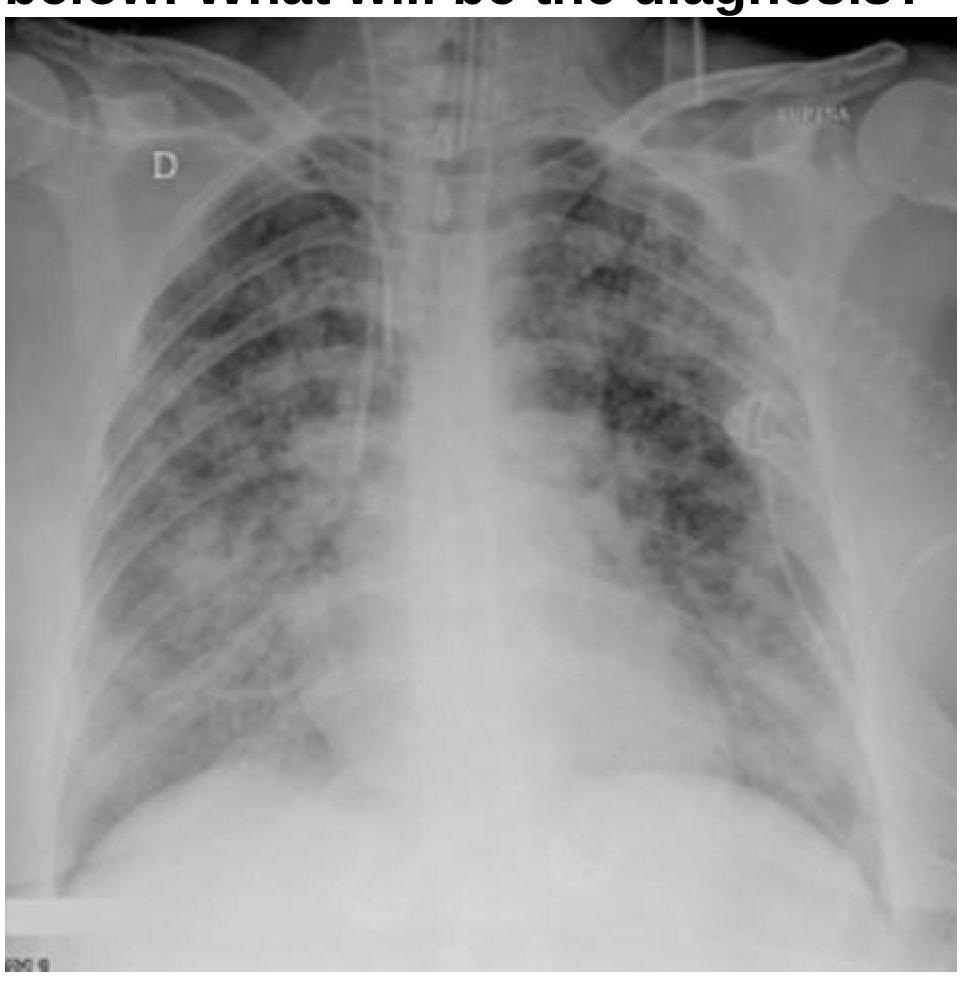
A patient with a known case of acute pancreatitis develops breathlessness and bilateral basal crepitations on day 4. What is the most likely diagnosis based on the chest radiography image?
NEET-PG 2019 - Internal Medicine NEET-PG Practice Questions and MCQs
Question 111: Type of sensation lost on same side of Brown Sequard syndrome?
- A. Loss of pain sensation
- B. Loss of touch sensation
- C. Loss of proprioception (Correct Answer)
- D. Loss of temperature sensation
Explanation: ***Loss of proprioception*** - In **Brown-Séquard syndrome**, the lesion on one side of the spinal cord interrupts the **dorsal columns** on the same side, which carry **proprioception** and vibration sense [1]. - This results in the loss of **fine touch and proprioception** ipsilateral to the lesion [1]. *Loss of pain sensation* - **Pain and temperature sensations** are carried by the **spinothalamic tracts**, which cross in the spinal cord one or two levels above their entry [1]. - Therefore, a lesion in **Brown-Séquard syndrome** typically causes a loss of pain and temperature sensation **contralateral** to the lesion, starting a few segments below the injury [1]. *Loss of touch sensation* - **Crude touch** (non-discriminative touch) is carried by the spinothalamic tract, crossing to the contralateral side. - **Fine touch** (discriminative touch) is carried by the dorsal columns, which ascend ipsilaterally and cross in the medulla, leading to ipsilateral loss of fine touch in Brown-Séquard syndrome [1]. This option is too general, as fine touch is lost but crude touch involves a different pathway. *Loss of temperature sensation* - Similar to pain sensation, **temperature sensation** is carried by the **spinothalamic tracts** and crosses over in the spinal cord [1]. - This leads to a loss of temperature sensation **contralateral** to the lesion below the level of injury in **Brown-Séquard syndrome** [1].
Question 112: A patient presents with hoarseness of voice and a clinical condition as shown in the image. Identify the lesion:
- A. Diphtheria (Correct Answer)
- B. Follicular tonsillitis
- C. Aphthous ulcer
- D. Membranous tonsillitis
Explanation: ***Diphtheria*** - The image shows a **thick, grayish-white pseudomembrane** covering the tonsils and likely extending to other parts of the pharynx, which is a classic sign of diphtheria. - **Hoarseness** indicates laryngeal involvement, a severe complication of diphtheria due to pseudomembrane formation extending to the larynx, potentially causing airway obstruction. *Follicular tonsillitis* - This condition presents with **pus-filled follicles** or spots on the tonsils, which are typically yellow or white, rather than a confluent membrane. - While it causes throat pain and fever, it generally does not lead to the formation of a **firm, adherent pseudomembrane** or significant hoarseness from laryngeal obstruction as seen in diphtheria. *Aphthous ulcer* - An aphthous ulcer is a **small, painful, shallow sore** with a white or yellowish center and a red border, typically found on the non-keratinized oral mucosa. - It does not present as a widespread, thick membranous lesion covering the tonsils and causing hoarseness. *Membranous tonsillitis* - While "membranous tonsillitis" describes the presence of a membrane on the tonsils, this term is often used generally. However, the specific characteristics in the image (thick, grayish, adherent membrane with severe symptoms like hoarseness) are pathognomonic for **diphtheria**. - Other causes of membranous tonsillitis, such as infectious mononucleosis, typically present with a less adherent membrane and often lack the severe systemic toxicity and potential for rapid airway compromise seen in diphtheria.
Question 113: A patient with a known case of acute pancreatitis develops breathlessness and bilateral basal crepitations on day 4. What is the most likely diagnosis based on the chest radiography image?
- A. Bilateral pneumonia
- B. Carcinogenic Pulmonary Embolism
- C. Lung collapse (atelectasis)
- D. Acute Respiratory Distress Syndrome (ARDS) (Correct Answer)
Explanation: ***Acute Respiratory Distress Syndrome (ARDS)*** - The chest radiograph shows **bilateral patchy infiltrates** and **diffuse alveolar opacities** consistent with ARDS, especially in the context of **acute pancreatitis** as a known risk factor. - The development of **breathlessness** and **bilateral basal crepitations** (rales) on day 4 further supports ARDS due to fluid accumulation in the lungs. *Bilateral pneumonia* - While pneumonia can cause bilateral infiltrates, the **symmetrical and widespread distribution** seen on this radiograph, combined with the context of acute pancreatitis, makes ARDS a more likely diagnosis. - Pneumonia typically presents with fever, productive cough, and lung consolidation, which are not specifically highlighted as primary symptoms over the breathlessness. *Carcinogenic Pulmonary Embolism* - Pulmonary embolism typically manifests with **sudden onset dyspnea**, pleuritic chest pain, and sometimes hemoptysis, and chest X-rays are often normal or show subtle findings like a **Westermark sign** or Hampton's hump. - The widespread bilateral infiltrates seen in the image are **not characteristic of pulmonary embolism**. *Lung collapse (atelectasis)* - Atelectasis usually appears as a ** localised area of increased opacification**, often with volume loss (e.g., tracheal deviation, elevated hemidiaphragm), and is often unilateral or segmental. - The **diffuse, bilateral, and often fluffy infiltrates** seen in this image are not consistent with typical atelectasis.
Obstetrics and Gynecology
2 questionsNuchal translucency in USG can be detected at_____weeks of gestation.
A baby born at 34 weeks gestation weighs 3kg. Which of the following conditions is this child most likely to develop in the immediate postnatal period?
NEET-PG 2019 - Obstetrics and Gynecology NEET-PG Practice Questions and MCQs
Question 111: Nuchal translucency in USG can be detected at_____weeks of gestation.
- A. 11-13 weeks (Correct Answer)
- B. 18-20 weeks
- C. 8-10 weeks
- D. 20-22 weeks
Explanation: ***11-13 weeks*** - Nuchal translucency (NT) is a **first-trimester ultrasound marker** used for screening for chromosomal abnormalities like **Down syndrome**. - The optimal window for accurate measurement is between **11 weeks 0 days and 13 weeks 6 days** of gestation, or when the crown-rump length (CRL) is between 45 mm and 84 mm. *18-20 weeks* - This period is typically dedicated to the **anomaly scan** or **mid-pregnancy scan**, which focuses on detecting structural abnormalities in the fetus. - While other markers like **nuchal fold thickness** can be assessed later, the diagnostic value of Nuchal Translucency is decreased by this time. *8-10 weeks* - At this early stage, the fetus is generally **too small** for accurate and consistent measurement of the nuchal translucency. - The nuchal translucency itself might not be fully developed or easily distinguishable for precise measurement. *20-22 weeks* - By this gestational age, the **nuchal translucency has usually resolved** or is no longer a reliable marker for chromosomal screening. - This period is well beyond the recommended window for NT measurement, making it unsuitable for this specific screening test.
Question 112: A baby born at 34 weeks gestation weighs 3kg. Which of the following conditions is this child most likely to develop in the immediate postnatal period?
- A. APH
- B. Diabetes
- C. Anemia (Correct Answer)
- D. None of the options
Explanation: ***Anemia*** - Macrosomic babies (3kg at 34 weeks is **large for gestational age**) initially develop **polycythemia** due to chronic intrauterine hypoxia and increased erythropoiesis, but this is followed by rapid **hemolysis** and breakdown of excess red blood cells after birth, leading to anemia in the immediate postnatal period. - Among the given options, **anemia** is the most appropriate answer as it represents a recognized complication of LGA babies through the **polycythemia-hemolysis cycle**, even though **hypoglycemia** is statistically the most common immediate complication. *APH* - **Antepartum hemorrhage (APH)** is a maternal obstetric complication involving bleeding before delivery, not a condition that the baby itself develops or shows. - While APH can affect fetal growth and well-being, it is not a **neonatal condition** that the child would present with after birth. *Diabetes* - Although **maternal diabetes** is the most common cause of fetal macrosomia, the newborn does not develop diabetes itself in the immediate postnatal period. - Instead, these babies are at risk for **hypoglycemia**, **respiratory distress**, and **hyperbilirubinemia** due to fetal hyperinsulinemia, but not diabetes as a presenting condition. *None of the options* - This is incorrect because **anemia** is indeed a valid condition that macrosomic babies can develop through the described polycythemia-hemolysis mechanism. - While other complications like **hypoglycemia** and **birth trauma** are more common, anemia remains a recognized sequela among LGA babies in the immediate postnatal period.
Psychiatry
1 questionsThe Confusion Assessment Method (CAM) is used for which of the following?
NEET-PG 2019 - Psychiatry NEET-PG Practice Questions and MCQs
Question 111: The Confusion Assessment Method (CAM) is used for which of the following?
- A. Schizophrenia
- B. Delirium (Correct Answer)
- C. Dementia
- D. Depression
Explanation: ***Delirium*** - The Confusion Assessment Method (CAM) is a widely used and highly sensitive and specific tool for the rapid identification of **delirium**. - It assesses for acute onset and fluctuating course, inattention, disorganized thinking, and altered level of consciousness. *Schizophrenia* - Schizophrenia is a chronic mental health disorder primarily characterized by **psychosis**, including hallucinations, delusions, and disorganized thought. - While patients with schizophrenia can experience cognitive difficulties, specialized scales like the Positive and Negative Syndrome Scale (PANSS) are used, not the CAM. *Dementia* - Dementia is a gradual and progressive decline in cognitive function, including memory, thinking, and reasoning, severe enough to interfere with daily life. - Tools like the mini-mental state examination (MMSE) or Montreal Cognitive Assessment (MoCA) are used for screening and assessing dementia, not the CAM. *Depression* - Depression is a mood disorder characterized by persistent sadness, loss of interest, and other emotional and physical symptoms. - Assessment tools like the Hamilton Depression Rating Scale (HDRS) or Patient Health Questionnaire-9 (PHQ-9) are used for depression.
Surgery
1 questionsWhat type of knot is depicted in the image?

NEET-PG 2019 - Surgery NEET-PG Practice Questions and MCQs
Question 111: What type of knot is depicted in the image?
- A. Half hitch
- B. Granny knot (Correct Answer)
- C. Surgeon’s knot
- D. Reef knot
Explanation: ***Granny knot*** - The image shows a knot where the two half-knots are tied in the **same direction** (left over right, then left over right again, or vice versa), causing it to be unstable and slip. - This instability makes it less secure than a reef knot, as the two end pieces emerge parallel but on opposite sides of the loop. - The granny knot is an **insecure knot** that should be avoided in surgery as it can spontaneously untie. *Surgeon's knot* - A surgeon's knot involves an **extra throw** (double wrap) around the first loop to increase friction and make it more secure, which is not depicted here. - It is typically used to ensure that the first throw holds tension while the second throw is being tied. *Reef knot* - A reef knot (or square knot) is formed by tying two half-knots in **opposite directions** (left over right, then right over left), which creates a flat, stable, and secure knot. - In a reef knot, the two end pieces emerge parallel and on the same side of the loop, unlike the granny knot. *Half hitch* - A half hitch is a simple overhand knot around a standing part of the rope, used as a single throw or in combination with other knots. - It is not the same as the double-throw configuration shown in the image.