Anatomy
1 questionsWhich structure doesn't pass through the parotid gland?
FMGE 2019 - Anatomy FMGE Practice Questions and MCQs
Question 151: Which structure doesn't pass through the parotid gland?
- A. Retromandibular vein
- B. Facial nerve
- C. External Carotid Artery and its branches
- D. Internal Carotid Artery (Correct Answer)
Explanation: ***Internal Carotid Artery*** - The **internal carotid artery** does not pass through the parotid gland; it is located medial to the gland. - It ascends in the neck to supply the brain and does not traverse the glandular parenchyma. *Retromandibular vein* - The retromandibular vein is formed within the parotid gland by the union of the **superficial temporal vein** and the **maxillary vein**. - It then exits the gland and divides into anterior and posterior divisions. *Facial nerve* - The **facial nerve (cranial nerve VII)** enters the posterior aspect of the parotid gland and divides into its five terminal branches within the gland. - It supplies motor innervation to the **muscles of facial expression**. *External Carotid Artery and its branches* - The **external carotid artery** passes through the parotid gland, where it gives off several important branches. - The main branches within the gland are the **maxillary artery** and the **superficial temporal artery**.
Biochemistry
1 questionsGluconeogenesis is inhibited by?
FMGE 2019 - Biochemistry FMGE Practice Questions and MCQs
Question 151: Gluconeogenesis is inhibited by?
- A. Cholecystokinin
- B. 5-alpha reductase
- C. Insulin (Correct Answer)
- D. Glucagon
Explanation: ***Insulin*** - **Insulin** is a key hormone released in response to high blood glucose, promoting glucose uptake and storage, and **inhibiting hepatic glucose production** through gluconeogenesis and glycogenolysis. - It achieves this by decreasing the transcription and activity of key gluconeogenic enzymes like **phosphoenolpyruvate carboxykinase (PEPCK)** and **glucose-6-phosphatase**. *Cholecystokinin* - **Cholecystokinin (CCK)** is a gastrointestinal hormone primarily involved in digestion, stimulating bile release and pancreatic enzyme secretion. - It does not directly regulate gluconeogenesis; its main role is related to **fat and protein digestion**. *5-alpha reductase* - **5-alpha reductase** is an enzyme involved in steroid metabolism, converting testosterone to the more potent androgen, dihydrotestosterone (DHT). - This enzyme has no direct role in the regulation of **gluconeogenesis**. *Glucagon* - **Glucagon** is a hormone that has the opposite effect of insulin, stimulating gluconeogenesis and glycogenolysis to increase blood glucose levels during fasting or hypoglycemia. - Its primary action is to **promote** hepatic glucose output, not inhibit it.
Community Medicine
1 questionsPatients are categorized on the basis of chances of survival in Disaster management:
FMGE 2019 - Community Medicine FMGE Practice Questions and MCQs
Question 151: Patients are categorized on the basis of chances of survival in Disaster management:
- A. Tagging
- B. Triage (Correct Answer)
- C. Mitigation
- D. Surge capacity
Explanation: ***Triage*** - **Triage** is the process of sorting and prioritizing patients based on the severity of their injuries and their chances of survival, especially in mass casualty incidents or disasters. - This system ensures that limited resources are allocated to maximize the number of survivors and provide the most effective care. *Tagging* - **Tagging** refers to the physical labeling of patients after they have been triaged, using color-coded tags (e.g., red for immediate, yellow for delayed, green for minor, black for expectant). - It is a result of the triage process, not the process of categorization itself. *Mitigation* - **Mitigation** involves measures taken to reduce the impact of a disaster or emergency, such as constructing earthquake-resistant buildings or developing flood control systems. - It focuses on preventing or lessening the severity of a disaster before it occurs, rather than categorizing patients. *Surge capacity* - **Surge capacity** is the ability of a healthcare system to expand its services and resources in response to an unexpected influx of patients, such as during a pandemic or mass casualty event. - It refers to the operational capability of the system, not the method of patient categorization.
ENT
1 questionsAll the following are true about Meniere's disease except?
FMGE 2019 - ENT FMGE Practice Questions and MCQs
Question 151: All the following are true about Meniere's disease except?
- A. Low frequency hearing loss
- B. Increase in endolymph
- C. Idiopathic
- D. Destroying the cochlea is mandatory (Correct Answer)
Explanation: ***Destroying the cochlea is mandatory*** - While various interventions, including **destructive procedures**, exist for Meniere's disease in severe cases refractory to medical therapy (e.g., labyrinthectomy, vestibular neurectomy), it is **not mandatory** for diagnosis or initial management. - Initial management typically involves **conservative medical treatment** to control symptoms, such as **diuretics**, low-salt diet, and symptomatic relief during attacks. *Low frequency hearing loss* - Meniere's disease typically presents with **fluctuating sensorineural hearing loss**, predominantly affecting **low frequencies** in the early stages. - This characteristic hearing loss is often associated with aural fullness and tinnitus. *Increase in endolymph* - The underlying pathology of Meniere's disease is believed to be **endolymphatic hydrops**, which is an **excessive accumulation of endolymph** in the inner ear. - This increased pressure within the endolymphatic system distorts the membranous labyrinth, leading to the classic symptoms. *Idiopathic* - Meniere's disease is generally considered **idiopathic**, meaning its specific cause is unknown. - While various theories exist regarding its etiology (e.g., viral infections, autoimmune disorders, vascular compromise), a definitive cause has not been identified.
Internal Medicine
1 questionsWhich of the following is seen in mitral stenosis?
FMGE 2019 - Internal Medicine FMGE Practice Questions and MCQs
Question 151: Which of the following is seen in mitral stenosis?
- A. None of the options
- B. Systolic murmur
- C. Diastolic murmur (Correct Answer)
- D. Loud S2
Explanation: ***Diastolic murmur*** - **Mitral stenosis** is characterized by a narrowing of the mitral valve, impeding blood flow from the left atrium to the left ventricle during **diastole**. - This turbulent flow during ventricular filling produces a characteristic **diastolic murmur**, often described as a low-pitched, rumbling sound [1], [3]. *None of the options* - This option is incorrect because **mitral stenosis** is indeed associated with a specific heart sound abnormality [1]. - The presence of a **diastolic murmur** is a hallmark physical finding in patients with mitral stenosis [1]. *Systolic murmur* - A **systolic murmur** is produced during ventricular contraction (systole), typically associated with **mitral regurgitation** or **aortic stenosis** [2]. - In **mitral stenosis**, the primary pathology is during diastole, making a systolic murmur less characteristic unless there's concomitant mitral regurgitation. *Loud S2* - A **loud S2** (second heart sound) can be heard in conditions like **pulmonary hypertension** or **systemic hypertension**. - While pulmonary hypertension can be a complication of severe **mitral stenosis** due to elevated left atrial pressure, a loud S2 is not the most direct or specific auscultatory finding for mitral stenosis itself; the distinct diastolic murmur is more characteristic [1].
Microbiology
1 questionsSmallest cestode among the following:
FMGE 2019 - Microbiology FMGE Practice Questions and MCQs
Question 151: Smallest cestode among the following:
- A. H. nana (Correct Answer)
- B. Schistosoma
- C. T. saginata
- D. T. solium
Explanation: ***H. nana*** - *Hymenolepis nana* (dwarf tapeworm) is the **smallest cestode** infecting humans, typically measuring only 15-40 mm in length. - Its small size and direct life cycle (often without an intermediate host) contribute to its ability to cause **autoinfection**. *Schistosoma* - *Schistosoma* species are **trematodes (flukes)**, not cestodes (tapeworms). - They are known for causing **schistosomiasis** and are distinct from tapeworms in morphology and life cycle. *T. saginata* - *Taenia saginata* (beef tapeworm) is one of the **largest human tapeworms**, often reaching lengths of 4-12 meters. - Its large size and characteristic **proglottids** (segments) are key identifying features. *T. Solium* - *Taenia solium* (pork tapeworm) is also a **large cestode**, measuring 2-7 meters in length. - It is clinically significant for causing **cysticercosis** if humans ingest its eggs.
Obstetrics and Gynecology
1 questionsA 35-year-old woman at 36 weeks of gestation presents with a history of 5 convulsions at home. Her BP is 170/100 mmHg. The diagnosis made by the doctor is eclampsia. What is the next management?
FMGE 2019 - Obstetrics and Gynecology FMGE Practice Questions and MCQs
Question 151: A 35-year-old woman at 36 weeks of gestation presents with a history of 5 convulsions at home. Her BP is 170/100 mmHg. The diagnosis made by the doctor is eclampsia. What is the next management?
- A. Clonidine
- B. Only Labetalol
- C. Only MgSO4
- D. MgSO4 + Labetalol (Correct Answer)
Explanation: ***MgSO4 + Labetalol*** - The patient presents with **eclampsia**, characterized by convulsions and severe hypertension (BP 170/100 mmHg) during pregnancy. Magnesium sulfate (**MgSO4**) is the **first-line treatment for preventing and managing eclamptic seizures**. - **Labetalol** is an appropriate antihypertensive for **severe hypertension in pregnancy** (BP ≥160/110 mmHg) and must be used concurrently with MgSO4 to control the high blood pressure and prevent maternal complications like stroke or placental abruption. - Both medications are required for comprehensive management of eclampsia with severe hypertension. *Clonidine* - **Clonidine** is an alpha-2 adrenergic agonist used to treat hypertension but is **not the first-line antihypertensive choice in acute eclampsia** due to potential sedative effects and slower onset compared to other agents like Labetalol, Hydralazine, or Nifedipine. - While it can lower blood pressure, it **does not address the seizure risk** in eclampsia. *Only Labetalol* - While **Labetalol** is crucial for managing severe hypertension, treating eclampsia requires both seizure control and blood pressure management. Administering only Labetalol would **fail to prevent recurrent seizures**, which is the primary life-threatening concern. - It would adequately lower blood pressure but **does not address the underlying seizure pathology** of eclampsia. *Only MgSO4* - **MgSO4** is essential for seizure prophylaxis and treatment in eclampsia. However, in this patient with a blood pressure of **170/100 mmHg (severe hypertension)**, **MgSO4 alone would not adequately control the severe hypertension**, which poses risks of maternal complications like stroke, intracerebral hemorrhage, or placental abruption. - While it prevents seizures effectively, it **does not sufficiently manage severe maternal hypertension**, requiring an additional antihypertensive agent like Labetalol.
Ophthalmology
1 questionsA 20-year-old male complains of repeated changes in glasses prescription. This is most likely caused by:
FMGE 2019 - Ophthalmology FMGE Practice Questions and MCQs
Question 151: A 20-year-old male complains of repeated changes in glasses prescription. This is most likely caused by:
- A. Keratoconus (Correct Answer)
- B. Cataract
- C. Glaucoma
- D. Pathological myopia
Explanation: ***Keratoconus*** - **Keratoconus** is a progressive disorder where the cornea thins and protrudes into a cone shape, leading to irregular astigmatism and frequent changes in glasses prescription. - This condition commonly presents in young adults and is characterized by **rapid, repeated changes** in both spherical and cylindrical components due to progressive corneal distortion. - The irregular corneal shape makes it difficult to achieve stable, satisfactory vision correction with glasses alone. *Cataract* - A **cataract** is a clouding of the eye's natural lens, which causes blurred vision, glare, and difficulty seeing at night. - While it can cause a "myopic shift" leading to prescription changes, it is more common in older individuals (>50 years) and the changes are typically slower and less frequent than in keratoconus. *Glaucoma* - **Glaucoma** is a group of eye conditions that damage the optic nerve, often due to high intraocular pressure, leading to peripheral vision loss and eventually blindness. - It does not cause changes in refractive error or require frequent updates to glasses prescriptions. - Visual changes are related to field defects, not refractive changes. *Pathological myopia* - **Pathological myopia** is a severe form of nearsightedness where the eye elongates excessively, leading to progressive increases in myopic refractive error. - While it can cause prescription changes in young adults, the progression is typically more **gradual and predictable** (mainly increasing spherical myopia) compared to the **rapid, irregular changes** seen in keratoconus. - Keratoconus is distinguished by frequent changes in astigmatism due to irregular corneal shape, whereas pathological myopia mainly affects spherical power.
Pharmacology
2 questionsWhich of the following is the chemoprophylaxis of choice in a person who is on a journey to endemic malarial region?
Therapeutic drug monitoring is done for:
FMGE 2019 - Pharmacology FMGE Practice Questions and MCQs
Question 151: Which of the following is the chemoprophylaxis of choice in a person who is on a journey to endemic malarial region?
- A. Doxycycline
- B. Mefloquine
- C. Chloroquine
- D. Atovaquone-proguanil (Correct Answer)
Explanation: ***Atovaquone-proguanil*** - **First-line choice** for malaria chemoprophylaxis in travelers to endemic regions according to WHO and CDC guidelines - Highly effective against **drug-resistant *P. falciparum***, including chloroquine and mefloquine-resistant strains - **Excellent tolerability** with minimal side effects compared to other antimalarials - **Convenient dosing schedule**: started 1-2 days before travel and continued for only **7 days after** leaving the endemic area (shorter post-travel duration than alternatives) - Well-tolerated with few contraindications, making it suitable for most travelers *Doxycycline* - Effective alternative for malaria prophylaxis as a **tetracycline antibiotic** - Provides additional protection against **leptospirosis** and traveler's diarrhea - However, associated with **photosensitivity reactions** (sunburn risk), **GI upset**, and **esophageal irritation** - Contraindicated in **pregnancy** and **children <8 years** due to effects on teeth and bone - Requires daily dosing starting 1-2 days before until **4 weeks after travel** (longer duration) *Mefloquine* - Once-weekly dosing offers convenience for long-term travelers - Effective against most *P. falciparum* strains - Major limitation: significant **neuropsychiatric side effects** including anxiety, depression, dizziness, and rarely psychosis - Contraindicated in those with **psychiatric history**, seizure disorders, or cardiac conduction abnormalities - Must be started **2-3 weeks before travel** to assess tolerance *Chloroquine* - Historically the first-line agent but now limited by widespread **chloroquine resistance** - Only effective in few remaining areas with **chloroquine-sensitive *P. vivax*** or *P. falciparum* (parts of Central America, Middle East) - Well-tolerated with once-weekly dosing - Not appropriate for most endemic malarial regions in Africa, Southeast Asia, or South America
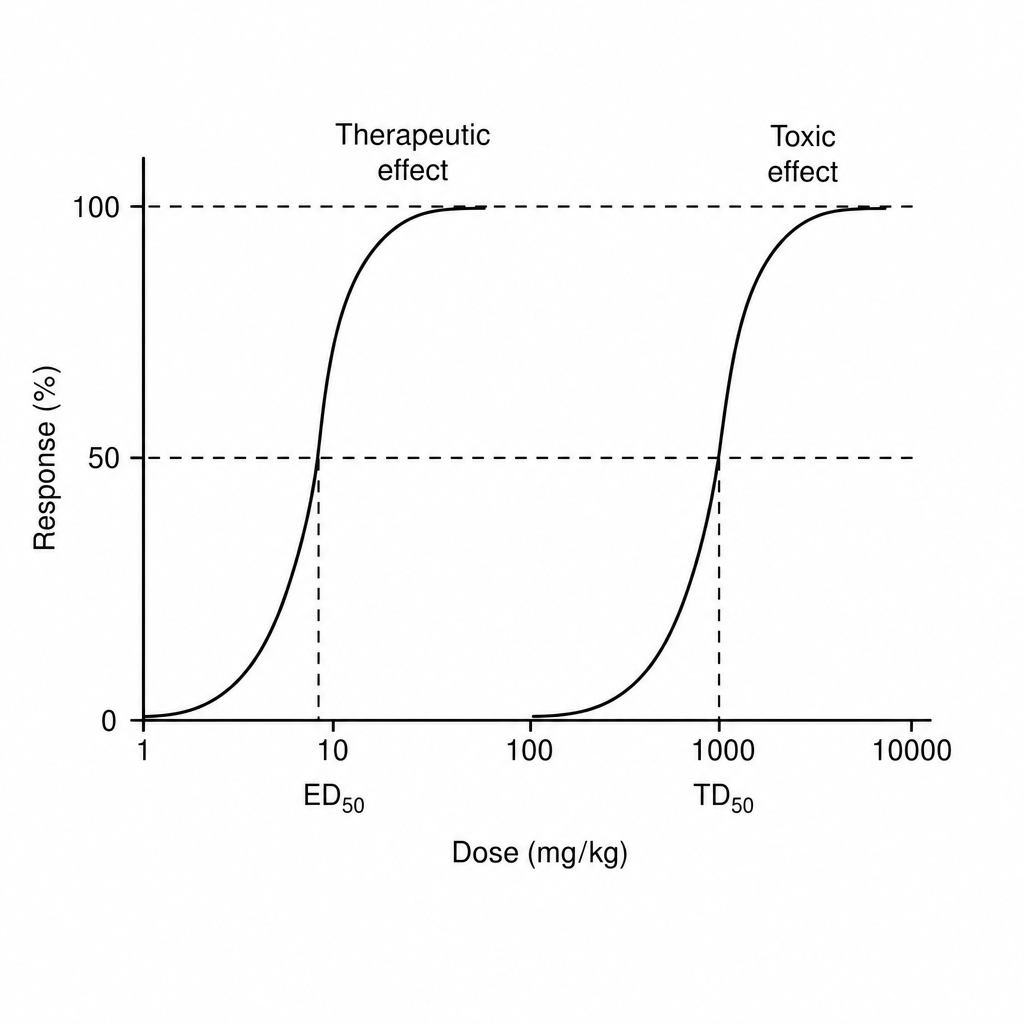
Question 152: Therapeutic drug monitoring is done for:
- A. Aspirin
- B. Heparin
- C. Phenytoin (Correct Answer)
- D. Metformin
Explanation: ***Phenytoin*** - **Phenytoin** has a **narrow therapeutic window**, meaning the difference between an effective and a toxic dose is small, necessitating close monitoring. - Its **variable absorption** and **nonlinear pharmacokinetics** (saturable metabolism) make individual dosing adjustments critical to maintain therapeutic levels and avoid toxicity. *Aspirin* - **Aspirin** is generally not monitored via plasma levels for its analgesic or antiplatelet effects, as its therapeutic effects are often observed at doses where plasma monitoring is not practical or necessary. - Its primary therapeutic use as an **antiplatelet agent** is evaluated by clinical outcomes rather than drug concentration. *Heparin* - **Heparin** is monitored using coagulation tests like **aPTT (activated partial thromboplastin time)** or anti-Xa levels to assess its anticoagulant effect, not direct drug concentration. - Therapeutic drug monitoring for heparin focuses on its **pharmacodynamic effects** on the clotting cascade rather than its absolute plasma concentration. *Metformin* - **Metformin** has a relatively **wide therapeutic index** and its efficacy is primarily measured by reductions in blood glucose and HbA1c, not by plasma drug concentrations. - It is excreted largely unchanged by the kidneys, and dose adjustments are typically made based on **renal function** and glycemic control.