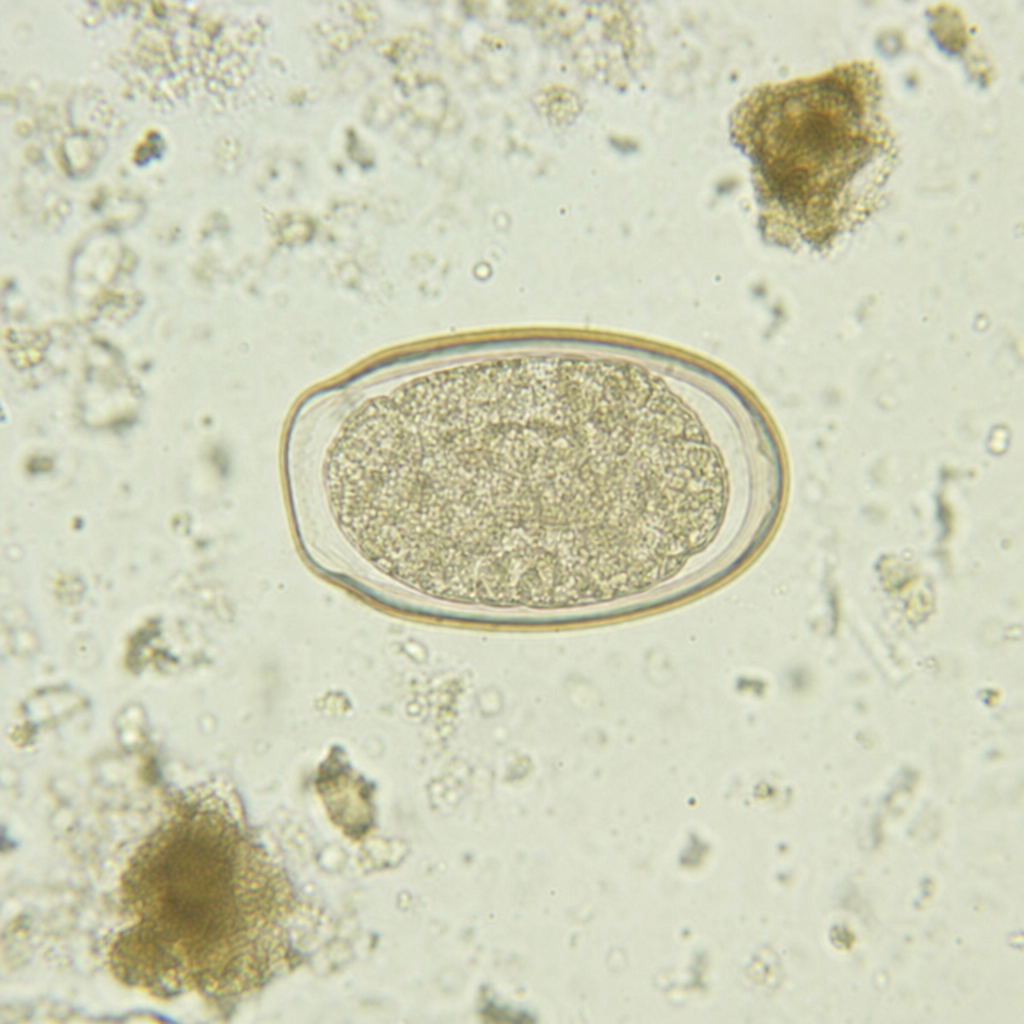
Which of the following conditions is NOT caused by Aspergillus?
Which of the following is a cause of Valley fever (desert rheumatism)?
Most common type of HPV associated with cervical cancer?
A plant prick can produce sporotrichosis. Which of the following statements about sporotrichosis is false?
Which of the following statements about viruses is false?
Which is not a DNA virus?
What is the cause of rabies in wild animals?
Which gene of the hepatitis B virus has the longest coding sequence?
Macrophage tropic strains of HIV use which co-receptor?
Prions are best killed by
NEET-PG 2013 - Microbiology NEET-PG Practice Questions and MCQs
Question 61: Which of the following conditions is NOT caused by Aspergillus?
- A. Otomycosis
- B. Dermatophytosis (Correct Answer)
- C. Allergic sinusitis
- D. Bronchopulmonary allergy
Explanation: ***Dermatophytosis*** - This condition is caused by **dermatophytes** (e.g., *Trichophyton*, *Microsporum*, *Epidermophyton*), which are a specific group of fungi that metabolize keratin. - *Aspergillus* species are generally **opportunistic molds** but do not typically cause dermatophytosis, which is a superficial fungal infection of the skin, hair, or nails. *Otomycosis* - **Otomycosis** is a fungal infection of the external ear canal, and *Aspergillus* species are a common cause, particularly *Aspergillus niger*. - It can lead to ear pain, discharge, itching, and hearing impairment. *Allergic sinusitis* - **Allergic fungal sinusitis (AFS)** is a common form of fungal sinusitis where *Aspergillus* species are significant contributors, often leading to a thick, tenacious allergic mucin. - This condition is an IgE-mediated hypersensitivity reaction to the fungal elements in the nasal and sinus cavities. *Bronchopulmonary allergy* - **Allergic bronchopulmonary aspergillosis (ABPA)** is a hypersensitivity reaction to *Aspergillus fumigatus* antigens that colonize the airways, particularly in individuals with asthma or cystic fibrosis. - It results in recurrent episodes of wheezing, cough, and transient pulmonary infiltrates, and can lead to bronchiectasis if left untreated.
Question 62: Which of the following is a cause of Valley fever (desert rheumatism)?
- A. Sporothrix
- B. Cladosporium
- C. Phialophora
- D. Coccidioides (Correct Answer)
Explanation: ***Coccidioides*** - **Valley fever**, or desert rheumatism, is caused by infection with the dimorphic fungus **Coccidioides**, primarily **Coccidioides immitis** and **Coccidioides posadasii**. - This fungus is endemic to arid and semi-arid regions, especially the **southwestern United States** and parts of Central and South America. *Sporothrix* - **Sporothrix schenckii** causes sporotrichosis, a chronic fungal infection typically involving the skin, subcutaneous tissue, and adjacent lymphatics, often through skin trauma. - It does not cause Valley fever. *Cladosporium* - **Cladosporium** species are ubiquitous molds commonly found in outdoor and indoor environments, often associated with allergic reactions and occasionally superficial infections. - They are not a cause of Valley fever. *Phialophora* - **Phialophora** species are dematiaceous fungi that can cause phaeohyphomycosis, chromoblastomycosis, and eumycetoma, which are subcutaneous or systemic fungal infections. - They are not associated with Valley fever.
Question 63: Most common type of HPV associated with cervical cancer?
- A. 6, 11
- B. 5, 8
- C. 16, 18 (Correct Answer)
- D. 6, 8
Explanation: ***16, 18*** - **HPV types 16 and 18** are considered **high-risk HPV types** and are responsible for approximately **70% of all cervical cancer cases** globally. - These types produce **oncoproteins E6 and E7** that interfere with tumor suppressor genes (p53 and Rb), leading to uncontrolled cell growth and malignancy. *6, 11* - **HPV types 6 and 11** are considered **low-risk HPV types** and are primarily associated with **genital warts (condyloma acuminata)**. - While they can cause benign lesions, they are **rarely associated with cervical cancer**. *5, 8* - **HPV types 5 and 8** are **cutaneous HPV types** primarily associated with **epidermodysplasia verruciformis**, a rare genetic condition predisposing to skin cancers. - These types affect the **skin** and are **not associated with cervical cancer**, making them incorrect for this question. *6, 8* - This combination includes **HPV 6**, which is a **low-risk type** primarily associated with genital warts. - **HPV 8** is a cutaneous type associated with skin lesions, not cervical cancer. - This pairing does not represent the most common types responsible for cervical cancer.
Question 64: A plant prick can produce sporotrichosis. Which of the following statements about sporotrichosis is false?
- A. Enlarged lymph nodes extending centripetally as a beaded chain are a characteristic finding
- B. Most cases are acquired via cutaneous inoculation
- C. It is an occupational disease of butchers, doctors (Correct Answer)
- D. Is a chronic mycotic disease that typically involves skin, subcutaneous tissue and regional lymphatics
Explanation: ***It is an occupational disease of butchers, doctors*** - Sporotrichosis is an **occupational hazard for gardeners, florists, and agricultural workers** due to exposure to decaying plant matter, not typically for butchers or doctors. - The disease is caused by **direct inoculation** of the fungus *Sporothrix schenckii* into the skin, often through a thorn prick or minor trauma. *Most cases are acquired via cutaneous inoculation* - This statement is **true** as sporotrichosis is primarily caused by **traumatic implantation** of fungal spores into the skin. - Common sources include **thorns, splinters, sphagnum moss**, and other plant materials. *Enlarged lymph nodes extending centripetally as a beaded chain are a characteristic finding* - This statement is **true** and describes the classic **lymphocutaneous sporotrichosis**, where lesions and **nodular lymphangitis** track along lymphatic channels. - The "beaded chain" appearance refers to the multiple subcutaneous nodules formed along the lymphatic vessels. *Is a chronic mycotic disease that typically involves skin, subcutaneous tissue and regional lymphatics* - This statement is **true** because sporotrichosis is a **slow-progressing fungal infection** that primarily affects the skin, the tissue just beneath the skin, and the lymphatics draining the infected area. - While systemic dissemination can occur in immunocompromised individuals, the **cutaneous and lymphocutaneous forms** are most common.
Question 65: Which of the following statements about viruses is false?
- A. Viruses contain nucleic acid.
- B. Viruses lack mitochondria.
- C. Viruses are capable of independent motility. (Correct Answer)
- D. Viruses lack ribosomes.
Explanation: ***Viruses are capable of independent motility.*** - Viruses are **acellular infectious agents** and lack the cellular machinery required for independent movement or motility. - They rely on host cell processes or environmental factors for their dissemination and entry into cells. *Viruses lack ribosomes.* - Viruses are **obligate intracellular parasites**; they lack ribosomes and other cellular organelles necessary for protein synthesis. - They hijack the host cell's ribosomes and metabolic machinery to replicate their genetic material and produce viral proteins. *Viruses lack mitochondria.* - Viruses lack mitochondria, as they are **not capable of generating their own ATP** through cellular respiration. - They depend on the host cell's energy-generating systems to provide the ATP required for their replication cycle. *Viruses contain nucleic acid.* - All viruses contain a **nucleic acid genome**, which can be either DNA or RNA. - This genetic material carries the instructions for viral replication and is enclosed within a protein coat called a **capsid**.
Question 66: Which is not a DNA virus?
- A. Rhabdovirus (Correct Answer)
- B. Poxvirus
- C. Papovavirus
- D. Parvovirus
Explanation: ***Rhabdovirus*** - Rhabdoviruses, such as the rabies virus, are characterized by their **single-stranded RNA genome** and distinctive bullet-shaped morphology. - They replicate in the cytoplasm of infected cells, using their **RNA-dependent RNA polymerase** to transcribe their genome. *Papovavirus* - Papovaviruses (now split into Papillomaviridae and Polyomaviridae) are **DNA viruses** known for causing warts and some cancers. - They possess a small, **double-stranded, circular DNA genome**. *Poxvirus* - Poxviruses are large, complex **DNA viruses** that replicate entirely within the cytoplasm of the host cell. - They have a **double-stranded DNA genome** and are notable for causing diseases like smallpox and molluscum contagiosum. *Parvovirus* - Parvoviruses are among the smallest viruses, characterized by their **single-stranded DNA genome**. - They require actively dividing host cells to replicate their **linear DNA**.
Question 67: What is the cause of rabies in wild animals?
- A. Wild-type rabies virus (Correct Answer)
- B. Laboratory passage in rabbits
- C. Fatal encephalitis within 6 days
- D. Negri bodies are not observed
Explanation: ***Wild-type rabies virus*** - Rabies in wild animals is caused by infection with the **wild-type rabies virus (Lyssavirus)**, which is maintained in specific wildlife reservoirs. - Rabies virus is a **neurotropic RNA virus** belonging to the family *Rhabdoviridae*. - This virus is transmitted through the saliva of an infected animal, typically via a **bite**. *Laboratory passage in rabbits* - **Laboratory passage in animals**, particularly rabbits, was a historical *method for attenuating the rabies virus* to develop vaccines (e.g., Pasteur's vaccine), not a cause of infection in wild animals. - Attenuated viruses are **less virulent** and do not represent the primary cause of naturally occurring rabies in wildlife. *Fatal encephalitis within 6 days* - This statement describes a **rapid progression of the disease**, which can occur, but it is a *consequence of infection*, not the cause itself. - The incubation period for rabies can vary significantly in animals, from days to months, depending on the **site of the bite** and **viral load**. *Negri bodies are not observed* - **Negri bodies** are *pathognomonic microscopic inclusions* found in the brain cells of animals infected with rabies. - Their *absence* would generally suggest that the animal does not have rabies, making this an incorrect statement about the disease's characteristics.
Question 68: Which gene of the hepatitis B virus has the longest coding sequence?
- A. P gene (Correct Answer)
- B. X gene
- C. S gene
- D. C gene
Explanation: ***P gene*** - The **P gene** (polymerase gene) encodes the viral **reverse transcriptase**, which is crucial for replicating the HBV genome. - This enzyme is very large and complex, requiring the **longest coding sequence** to accommodate all its functional domains. *X gene* - The **X gene** encodes the **HBx protein**, which is a transcriptional transactivator and plays a role in hepatocarcinogenesis. - It has a relatively **short coding sequence** compared to the P gene. *S gene* - The **S gene** encodes the **surface antigens (HBsAg)**, which are involved in viral entry and immune evasion. - It has a **shorter coding sequence** than the P gene, as it primarily codes for structural proteins. *C gene* - The **C gene** encodes the **core protein (HBcAg)**, which forms the viral nucleocapsid, and the **HBeAg**. - Its coding sequence is also **shorter** than that of the P gene, reflecting its role in structural and regulatory functions.
Question 69: Macrophage tropic strains of HIV use which co-receptor?
- A. CCR5 (Correct Answer)
- B. CXCR4
- C. CCR3
- D. CCR2
Explanation: ***CCR5*** - **Macrophage-tropic** HIV strains, also known as **R5 strains**, primarily use the **CCR5 co-receptor** to enter target cells. - These strains are typically involved in the **initial infection** and transmission of HIV. - CCR5-tropic viruses are usually the **predominant strains transmitted** during sexual transmission. *CXCR4* - **T-cell-tropic** HIV strains, or **X4 strains**, preferentially utilize the **CXCR4 co-receptor** for cell entry. - These strains are associated with a **more rapid decline in CD4+ T-cell counts** during later stages of HIV infection. - Emergence of X4 strains is linked to **disease progression**. *CCR3* - While a chemokine receptor, **CCR3** is not a primary co-receptor used by common HIV strains for entry into macrophages or T cells. - CCR3 is primarily involved in **eosinophil chemotaxis** and allergic responses. *CCR2* - **CCR2** is another chemokine receptor but is **not a major co-receptor** for HIV entry. - While some laboratory-adapted strains may show minor usage, it is not clinically significant for macrophage-tropic HIV strains.
Question 70: Prions are best killed by
- A. Incineration at high temperatures
- B. Autoclaving at 134°C (for 18 minutes) (Correct Answer)
- C. 5% formalin solution
- D. Sodium hypochlorite solution
Explanation: ***Autoclaving at 134°C (for 18 minutes)*** - **Prions** are highly resistant to conventional sterilization methods, and **autoclaving at 134°C for at least 18 minutes** is the **most effective method for sterilizing reusable medical instruments** contaminated with prions. - This high temperature and pressure protocol (WHO/CDC recommended) helps to denature the misfolded protein structure of prions, reducing their infectivity to safe levels. - **In the context of sterilization and disinfection**, this is the best practical method for surgical instruments that cannot be discarded. *Incineration at high temperatures* - **Incineration at 800-1000°C** achieves complete combustion and is **highly effective** at destroying prions. - However, incineration is used only for **single-use disposable items** and prion-contaminated waste, not for reusable surgical instruments. - In the clinical context of sterilization (implied by this topic), autoclaving is the preferred answer as it applies to reusable equipment. *Sodium hypochlorite solution* - **Sodium hypochlorite** (bleach) at **high concentrations** (20,000 ppm or 2% available chlorine) for extended contact times (1+ hours) can inactivate prions. - However, it is **corrosive to instruments**, damages tissue samples, and requires precise concentration and exposure conditions, making it less practical than autoclaving. *5% formalin solution* - Formalin is **not effective at inactivating prions**; it can actually **preserve and stabilize** prion infectivity. - Formalin cross-links proteins and preserves tissue morphology but does not reliably break down the highly stable **beta-sheet structures** characteristic of prions.