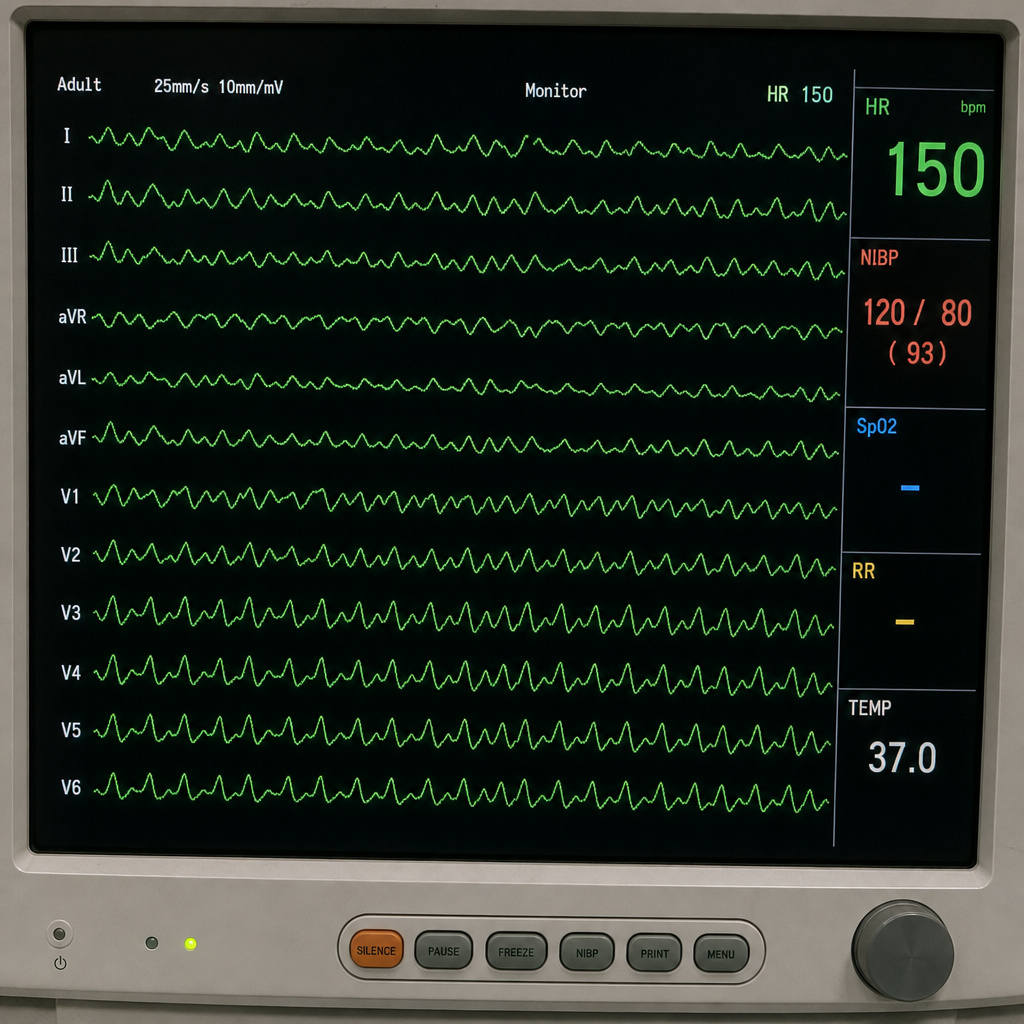
All are seen in Samters triad except?
What is the purpose of the Queckenstedt test?
Most common sinus to be involved in acute sinusitis?
Most common cause of retropharyngeal abscess in adults?
In head injury, unilateral dilatation of the pupil is seen due to?
What is the primary brain region associated with ocular bobbing?
Down-beat nystagmus is seen in lesion of ?
Down beat nystagmus is seen in?
What condition is associated with copper deposition in the cornea?
What is Reifenstein syndrome?
NEET-PG 2013 - Internal Medicine NEET-PG Practice Questions and MCQs
Question 101: All are seen in Samters triad except?
- A. Nasal polyp
- B. Aspirin sensitivity
- C. Asthma
- D. Bacterial infection (Correct Answer)
Explanation: ***Bacterial infection*** - **Samter's triad**, also known as aspirin-exacerbated respiratory disease (AERD), consists of **asthma**, **nasal polyps**, and **aspirin sensitivity** (or NSAID sensitivity) [1]. - **Bacterial infection** is not a component of Samter's triad, although patients with nasal polyps may be more prone to secondary bacterial sinusitis. *Asthma* - **Asthma** is one of the three main components of Samter's triad, typically becoming more symptomatic after aspirin ingestion [1]. - Patients experience **bronchoconstriction** and worsening respiratory symptoms. *Nasal polyp* - **Nasal polyps** are a characteristic feature of Samter's triad, often extensive and recurrent [1]. - They contribute to nasal obstruction and chronic rhinosinusitis. *Aspirin sensitivity* - **Aspirin sensitivity** (or NSAID sensitivity) is the third key component, where ingestion of aspirin or other NSAIDs triggers severe respiratory reactions [1]. - This sensitivity is due to an abnormal arachidonic acid metabolism pathway involving **leukotrienes**.
Question 102: What is the purpose of the Queckenstedt test?
- A. Spinal block (Correct Answer)
- B. Glomus tumor
- C. Otosclerosis
- D. Acoustic neuroma
Explanation: ***Spinal block*** - The Queckenstedt test was historically used to evaluate for a **spinal block**, which is an obstruction to the free flow of **cerebrospinal fluid (CSF)** in the subarachnoid space. - It involves observing the rise in **CSF pressure** in response to compression of the jugular veins; a blunted or absent rise suggests a block. *Glomus tumor* - **Glomus tumors** are usually benign and arise from glomus bodies, often presenting as painful lesions in the nail bed. - Their diagnosis is typically made through **imaging** and **biopsy**, not specific pressure tests. *Otosclerosis* - **Otosclerosis** is a condition causing progressive hearing loss due to abnormal bone growth in the middle ear. - Diagnosis involves **audiometry** and **tympanometry**, and it is unrelated to CSF flow or spinal blocks. *Acoustic neuroma* - An **acoustic neuroma** is a benign tumor of the vestibulocochlear nerve (cranial nerve VIII) that causes hearing loss, tinnitus, and balance issues. - Diagnosis relies on **MRI of the brain**, and the Queckenstedt test has no role in its evaluation.
Question 103: Most common sinus to be involved in acute sinusitis?
- A. Ethmoid
- B. Maxillary (Correct Answer)
- C. Sphenoid
- D. Frontal
Explanation: ***Maxillary*** - The **maxillary sinuses** are the largest paranasal sinuses and are the most commonly involved in acute sinusitis due to their anatomical position and drainage characteristics. - Their ostia (drainage openings) are located on the superior aspect of the sinus, which can make drainage difficult when the patient is upright, leading to stasis of secretions and increased susceptibility to infection. *Ethmoid* - The ethmoid sinuses are a group of small air cells located between the eyes and are the second most commonly infected in sinusitis. - While frequently involved, especially in children, they are not as commonly affected as the maxillary sinuses in the general adult population with acute sinusitis. *Sphenoid* - The sphenoid sinuses are located deep within the skull, behind the eyes, and are the least commonly involved in acute sinusitis. - Inflammation here can be serious due to proximity to important structures like the optic nerves and carotid arteries, but it's not the most frequent site of infection. *Frontal* - The frontal sinuses are located in the forehead and are less commonly involved in acute sinusitis compared to the maxillary and ethmoid sinuses. - Their development is not complete until adolescence, and they are typically drained via the frontonasal duct, which can become easily obstructed.
Question 104: Most common cause of retropharyngeal abscess in adults?
- A. Tonsillitis
- B. Lymphadenitis (Correct Answer)
- C. Tooth extraction
- D. TB
Explanation: ***Lymphadenitis*** - **Lymphadenitis** in the retropharyngeal space, often secondary to an upper respiratory tract infection, is the most common cause of retropharyngeal abscesses in adults. - The infection spreads from inflamed lymph nodes to form a **purulent collection** in the potential space behind the pharynx. *TB* - **Tuberculosis (TB)** can cause retropharyngeal abscesses, particularly in immunocompromised individuals or endemic areas, but it is less common than pyogenic infections [1]. - TB abscesses tend to be more **chronic** and may be associated with vertebral involvement (Pott's disease) [1]. *Tooth extraction* - While dental infections, including complications from **tooth extraction**, can lead to deep neck space infections, they are not the most common cause of retropharyngeal abscess specifically. - Infections from teeth more often spread to the **submandibular** or **parapharyngeal spaces**. *Tonsillitis* - **Tonsillitis** is a common cause of pharyngeal inflammation and can lead to peritonsillar abscesses, which are distinct from retropharyngeal abscesses. - While severe tonsillitis can occasionally spread to the retropharyngeal space, it is primarily local and less common than direct lymphatic seeding.
Question 105: In head injury, unilateral dilatation of the pupil is seen due to?
- A. Ophthalmic N. compression
- B. Trigeminal N. compression
- C. Oculomotor nerve compression (Correct Answer)
- D. None of the options
Explanation: Oculomotor nerve compression - Unilateral pupillary dilation, often referred to as a **blown pupil**, is a classic sign of **oculomotor nerve (CN III) compression** due to increased intracranial pressure, typically from a **herniating uncus** [1]. - The parasympathetic fibers responsible for pupillary constriction run on the superficial aspect of the oculomotor nerve and are thus vulnerable to extrinsic compression [1], [2]. *Ophthalmic N. compression* - The **ophthalmic nerve (CN V1)** is a sensory nerve responsible for sensation to the forehead, scalp, upper eyelid, and cornea, not pupillary control. - Compression of this nerve would cause **sensory deficits** in its distribution and potentially abolish the **corneal reflex**, but not pupillary dilation. *Trigeminal N. compression* - The **trigeminal nerve (CN V)** is primarily responsible for sensation to the face and motor control of the muscles of mastication. - Compression would lead to **facial numbness or pain** and **weakness in chewing**, with no direct impact on pupillary size. *None of the options* - This option is incorrect because oculomotor nerve compression is a well-established cause of unilateral pupillary dilation in head injuries [1].
Question 106: What is the primary brain region associated with ocular bobbing?
- A. Midbrain
- B. Pons (Correct Answer)
- C. Medulla
- D. Cerebral cortex
Explanation: Pons - **Ocular bobbing** is a characteristic eye movement disorder strongly associated with **pontine lesions**, particularly infarctions or hemorrhages affecting the tegmentum. - The pons contains critical connections for vertical gaze control within the **brainstem**, and damage here disrupts these pathways [1]. *Midbrain* - While important for eye movements, particularly **vertical gaze centers**, injuries to the midbrain typically cause disorders like Parinaud syndrome (upgaze palsy), not classic ocular bobbing. - Midbrain lesions might cause other types of nystagmus or gaze palsies but not generally the rapid downward and slow upward movement seen in bobbing. *Medulla* - The medulla primarily controls vital functions like breathing and heart rate, as well as some ocular reflexes, but is less directly involved in the generation of sustained vertical eye movements. - Damage to the medulla is more likely to cause effects like **nystagmus** (e.g., downbeat nystagmus in some cases) or other brainstem signs, rather than ocular bobbing. *Cerebral cortex* - The cerebral cortex is responsible for voluntary eye movements and integration of visual information, but it does not directly generate or control the brainstem reflexes associated with ocular bobbing [1]. - Lesions in the cortex would typically manifest as **gaze preference**, apraxia, or other higher-level visual processing deficits, not involuntary brainstem driven eye movements like bobbing.
Question 107: Down-beat nystagmus is seen in lesion of ?
- A. Cerebellum (Correct Answer)
- B. Basal ganglia
- C. Hippocampus
- D. Brainstem
Explanation: ***Cerebellum*** * **Down-beat nystagmus (DBN)** is most commonly associated with lesions in the **craniocervical junction** and **posterior fossa**, particularly affecting the **flocculonodular lobe** of the cerebellum. * The cerebellum plays a crucial role in maintaining **gaze stability** and coordinating eye movements; damage to specific cerebellar pathways can disrupt the vestibulo-ocular reflex, leading to DBN [1]. *Brainstem* * While the **brainstem** contains critical circuits for eye movements, lesions here typically result in other forms of nystagmus, such as **up-beat nystagmus** or **gaze-evoked nystagmus**, depending on the specific structures involved [1]. * Damage to brainstem nuclei or pathways controlling vertical gaze is usually indicated by different patterns of oculomotor dysfunction. *Basal ganglia* * Lesions in the **basal ganglia** are primarily associated with **movement disorders** like Parkinson's disease or Huntington's disease. * They do not typically cause primary nystagmus; any ocular abnormalities would generally be secondary to global motor control issues rather than direct involvement in oculomotor pathways. *Hippocampus* * The **hippocampus** is a key structure involved in **memory formation** and spatial navigation. * Lesions in the hippocampus cause **amnesia** and navigational deficits, but they are not directly involved in eye movement control or the generation of nystagmus.
Question 108: Down beat nystagmus is seen in?
- A. Brain stem lesions
- B. Pontine hemorrhage and other conditions
- C. Labyrinthine damage and other conditions
- D. Arnold Chiari malformation and other conditions (Correct Answer)
Explanation: ***Arnold Chiari malformation and other conditions*** - Downbeat nystagmus is a characteristic finding in Arnold-Chiari malformations, especially **Chiari type 1**, due to compression of cerebellar structures. - Other conditions associated with downbeat nystagmus include **medullary lesions**, **magnesium deficiency**, and **lithium toxicity** [1]. *Brain stem lesions* - While brainstem lesions can cause various nystagmus types, **pure downbeat nystagmus** is less commonly the primary or most specific finding compared to cerebellar involvement [1]. - **Upbeat nystagmus** and other complex nystagmus patterns are more often associated with brainstem lesions like those in the tegmentum. *Pontine hemorrhage and other conditions* - Pontine hemorrhages are more commonly associated with **ocular bobbing**, **blink reflex abnormalities**, or **horizontal gaze palsies**, rather than downbeat nystagmus. - A pontine hemorrhage would typically present with more severe neurological deficits such as **coma** or **quadriparesis**, which are not directly associated with isolated nystagmus. *Labyrinthine damage and other conditions* - **Peripheral vestibular abnormalities** from labyrinthine damage typically cause **horizontal or torsional nystagmus**, often suppressed by visual fixation. - Downbeat nystagmus is a **central vestibular sign**, indicating a problem with central vestibular processing rather than the peripheral labyrinth [1].
Question 109: What condition is associated with copper deposition in the cornea?
- A. Keratoglobus
- B. Keratoconus
- C. Siderosis
- D. Wilson's disease (Correct Answer)
Explanation: ***Wilson's disease*** - Wilson's disease is a genetic disorder of **copper metabolism** leading to excess copper accumulation in various tissues, including the cornea [1]. - This copper deposition in the posterior Descemet's membrane of the cornea forms a distinctive golden-brown or greenish-brown ring known as the **Kayser-Fleischer ring**. *Keratoconus* - This condition is characterized by progressive thinning and steepening of the cornea, causing it to bulge into a **cone-like shape**. - It primarily affects vision due to irregular astigmatism and does not involve copper deposition. *Keratoglobus* - Keratoglobus is a rare corneal ectatic disorder where the entire cornea is thinned and bulges forward, giving it a **globe-like appearance**. - It is congenital and typically runs in families, and it is not associated with copper deposition. *Siderosis* - Siderosis refers to the deposition of **iron** in various tissues, often due to chronic hemorrhage or metallic foreign bodies. - In the eye, it can occur after intraocular iron foreign bodies, leading to retinal degeneration and other ocular complications, but it does not involve copper.
Question 110: What is Reifenstein syndrome?
- A. Partial androgen insensitivity syndrome due to receptor mutation. (Correct Answer)
- B. Complete androgen insensitivity syndrome with female external genitalia
- C. 5-alpha reductase deficiency causing ambiguous genitalia
- D. Gonadal dysgenesis with streak gonads
Explanation: Partial androgen insensitivity syndrome due to receptor mutation. - **Reifenstein syndrome** is a form of **partial androgen insensitivity syndrome (PAIS)**, characterized by varying degrees of undervirilization in 46,XY individuals. [4] - It results from mutations in the **androgen receptor (AR) gene**, leading to impaired androgen signaling. [4] *Complete androgen insensitivity syndrome with female external genitalia* - This describes **complete androgen insensitivity syndrome (CAIS)**, where affected individuals are 46,XY with completely female external genitalia, normal breast development, but no uterus. [4] - Unlike Reifenstein syndrome, there are no signs of virilization. [4] *5-alpha reductase deficiency causing ambiguous genitalia* - **5-alpha reductase deficiency** impedes the conversion of testosterone to the more potent **dihydrotestosterone (DHT)**, which is crucial for external male genital development. - While it causes **ambiguous genitalia**, it's a defect in hormone metabolism, not the androgen receptor itself. *Gonadal dysgenesis with streak gonads* - **Gonadal dysgenesis** refers to conditions where the gonads (testes or ovaries) fail to develop or develop abnormally, often leading to **streak gonads**. [3] - This is a primary gonadal developmental defect, distinct from disorders of androgen action or synthesis. [1], [2]