INI-CET 2018 — Surgery
2 Previous Year Questions with Answers & Explanations
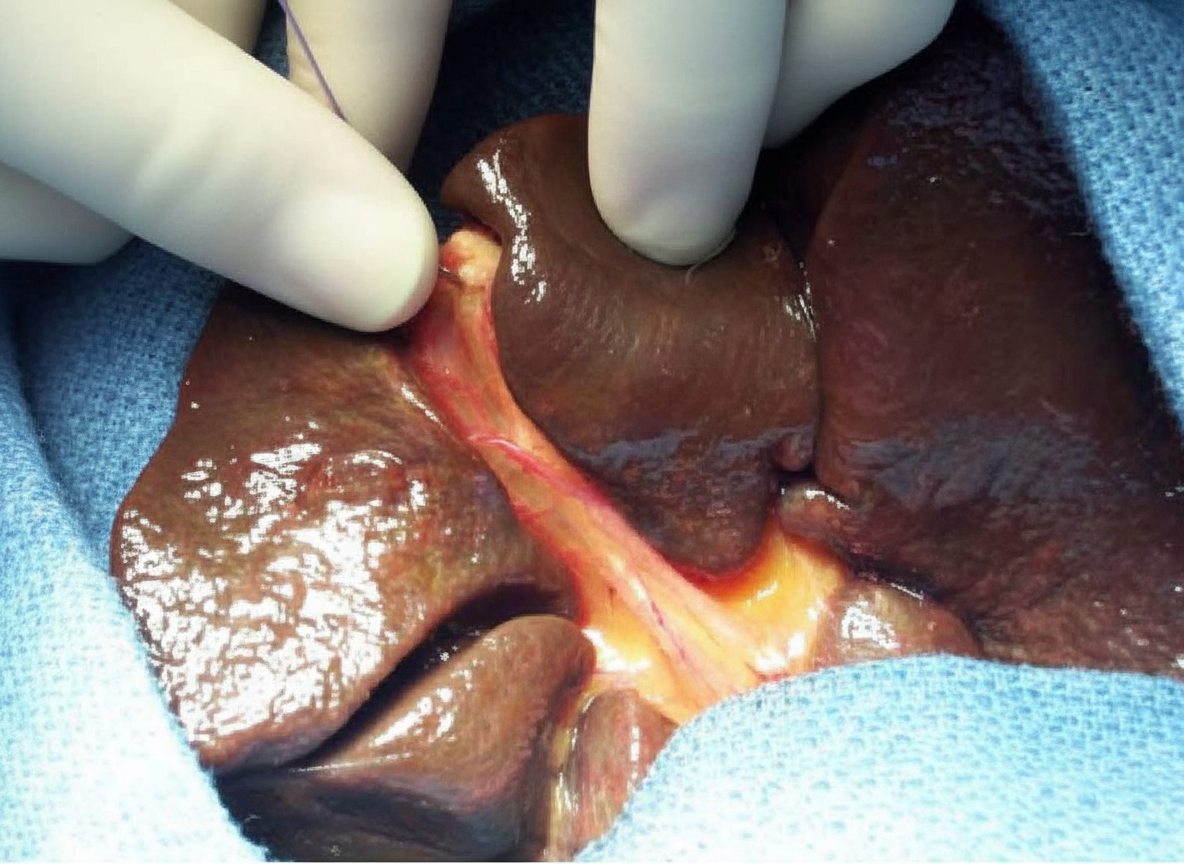
All of the following are usually associated findings in the given condition except? (AIIMS May 2018)
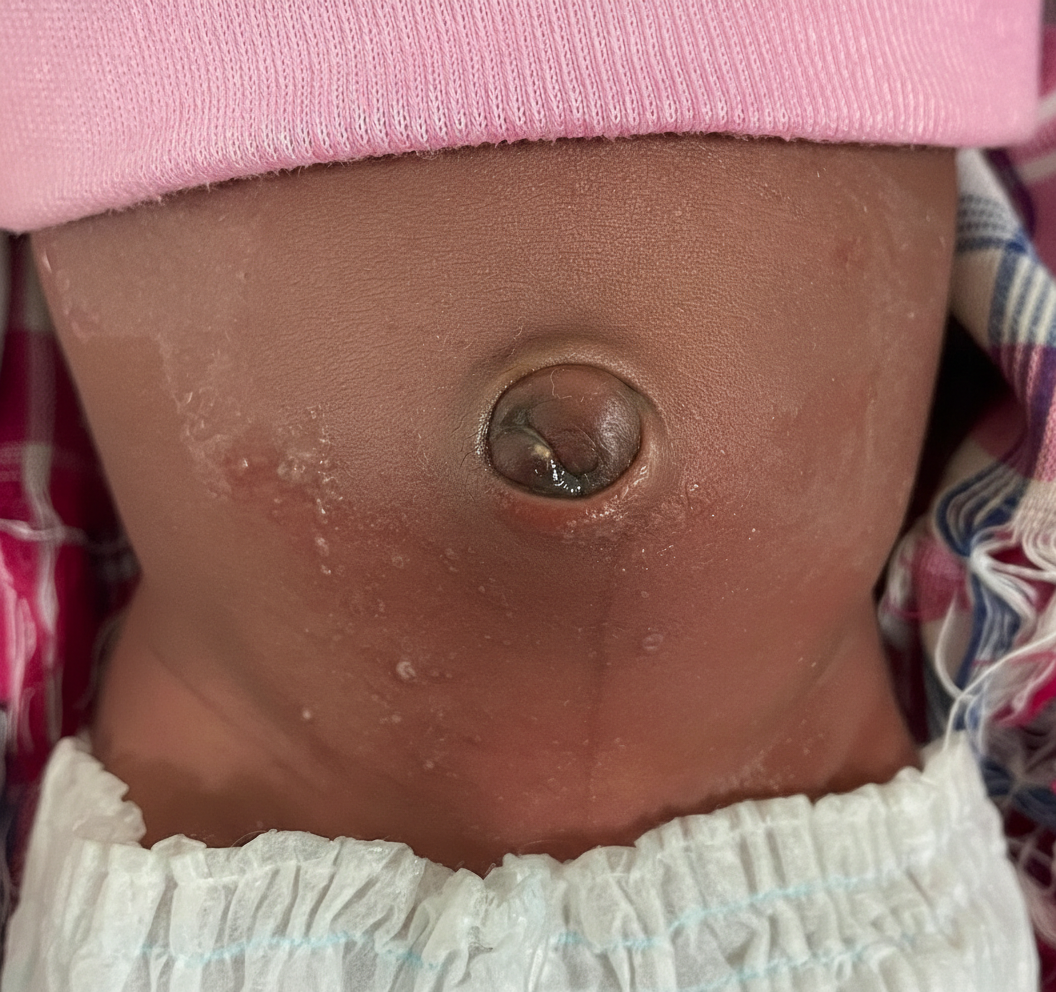
A 3-month-old child presents with umbilical discharge. The appearance is shown below. Which of the following is the next step in management of this patient? (AIIMS May 2018)
INI-CET 2018 - Surgery INI-CET Practice Questions and MCQs
Question 1: All of the following are usually associated findings in the given condition except? (AIIMS May 2018)
- A. Hepatic artery anomalies
- B. Absent kidney (Correct Answer)
- C. Malrotation of gut
- D. Polysplenia
- E. Cardiac anomalies
Explanation: ***Absent kidney*** - **Absent kidney (renal agenesis)** is not a typical associated finding in biliary atresia. - Biliary atresia primarily involves malformations of the **bile ducts** and is not directly linked to renal agenesis. - This is the correct answer to this "EXCEPT" question. *Hepatic artery anomalies* - **Hepatic artery anomalies**, such as aberrant or hypoplastic hepatic arteries, are frequently associated with biliary atresia. - These vascular malformations can contribute to the pathogenesis or progression of the disease. *Malrotation of gut* - **Intestinal malrotation** is a common abdominal anomaly found in conjunction with biliary atresia. - The altered embryological development affecting the biliary system can simultaneously impact gut rotation. *Polysplenia* - **Polysplenia**, a condition with multiple small spleens, is part of the heterotaxy syndrome often linked with biliary atresia. - This association reflects a broader developmental defect affecting left-right body axis determination. *Cardiac anomalies* - **Cardiac anomalies** are recognized associations with biliary atresia, particularly in the syndromic form. - These can include various congenital heart defects as part of the broader malformation syndrome.
Question 2: A 3-month-old child presents with umbilical discharge. The appearance is shown below. Which of the following is the next step in management of this patient? (AIIMS May 2018)
- A. MRI abdomen
- B. USG abdomen (Correct Answer)
- C. CECT
- D. Exploratory laparotomy
- E. MCUG
Explanation: ***USG abdomen*** - An **urgent ultrasound** of the abdomen is the initial step for umbilical discharge in an infant, especially with a suspected **patent omphalomesenteric duct** or **urachus**, which USG can visualize and identify. - It's a **non-invasive** and readily available method to confirm the diagnosis and assess the extent of the connection or any associated complications without exposing the infant to radiation. *MRI abdomen* - **MRI** is typically reserved for cases where **ultrasound is inconclusive** or if there is a strong suspicion of more complex anatomical abnormalities that require higher resolution imaging. - It involves **longer scan times** and may require **sedation** in infants, making it less ideal as a first-line diagnostic tool for this presentation. *CECT* - **CECT (Contrast-Enhanced Computed Tomography)** involves significant **radiation exposure**, which is generally avoided in infants unless absolutely necessary and other modalities have failed. - While it provides detailed anatomical information, the **risks of radiation** and potential need for **contrast material** make it an unsuitable initial diagnostic choice for umbilical discharge. *MCUG* - **MCUG (Micturating Cystourethrogram)** is specifically used to evaluate the **bladder and urethra** during voiding, primarily for vesicoureteral reflux or urethral abnormalities. - While it may be considered if a **patent urachus** with bladder connection is suspected, it is **not the first-line investigation** for umbilical discharge and involves **radiation exposure** and catheterization. *Exploratory laparotomy* - **Exploratory laparotomy** is a **surgical procedure** and is considered a definitive treatment or a last resort for diagnosis when other imaging modalities have been exhausted and the clinical picture remains unclear, or in cases of acute complications like **peritonitis** or **bowel obstruction**. - Performing an invasive surgery as the first step for diagnosis without prior imaging is **not standard medical practice** and carries significant risks for an infant.