Anatomy
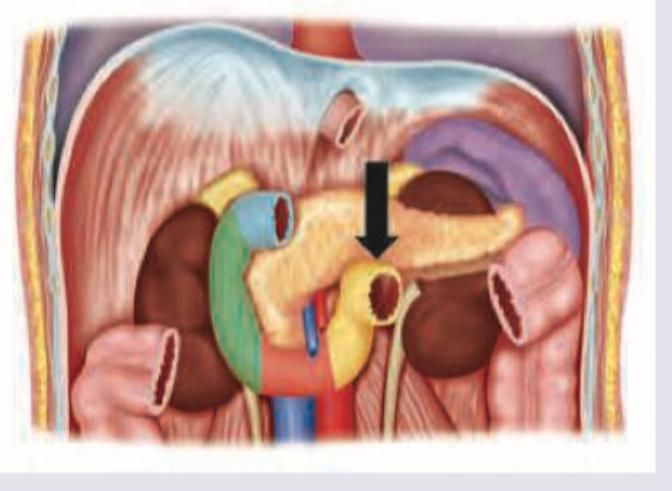
9 questionsIdentify the part of the duodenum marked below:
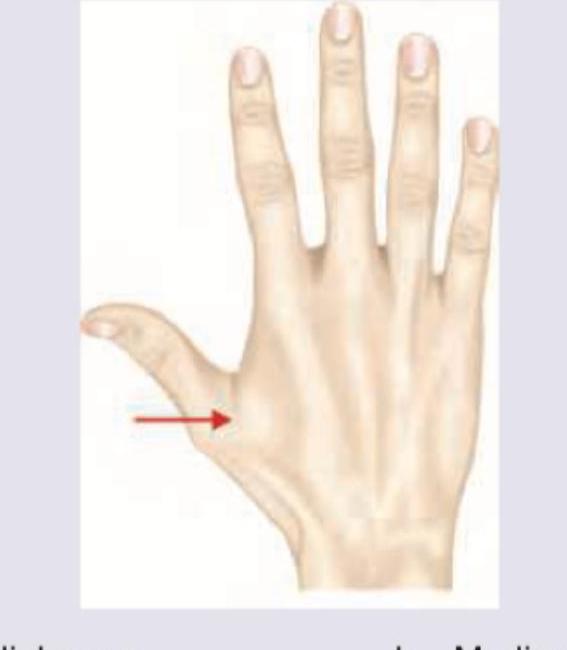
Which nerve gives sensory supply to the region marked with an arrow?
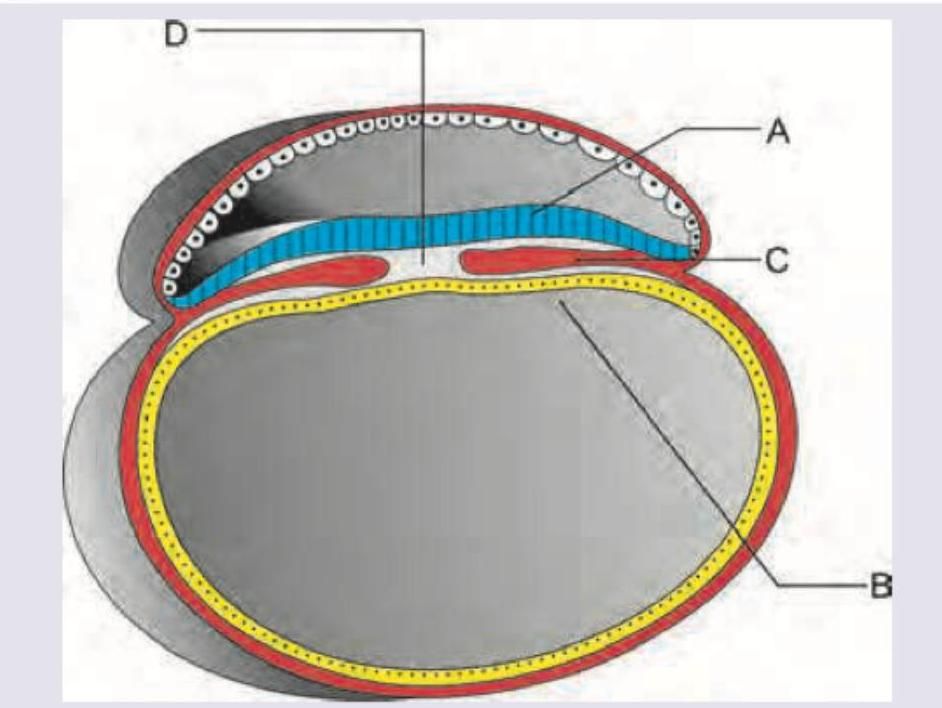
Nucleus pulposus develops from: (AIIMS May 2018)
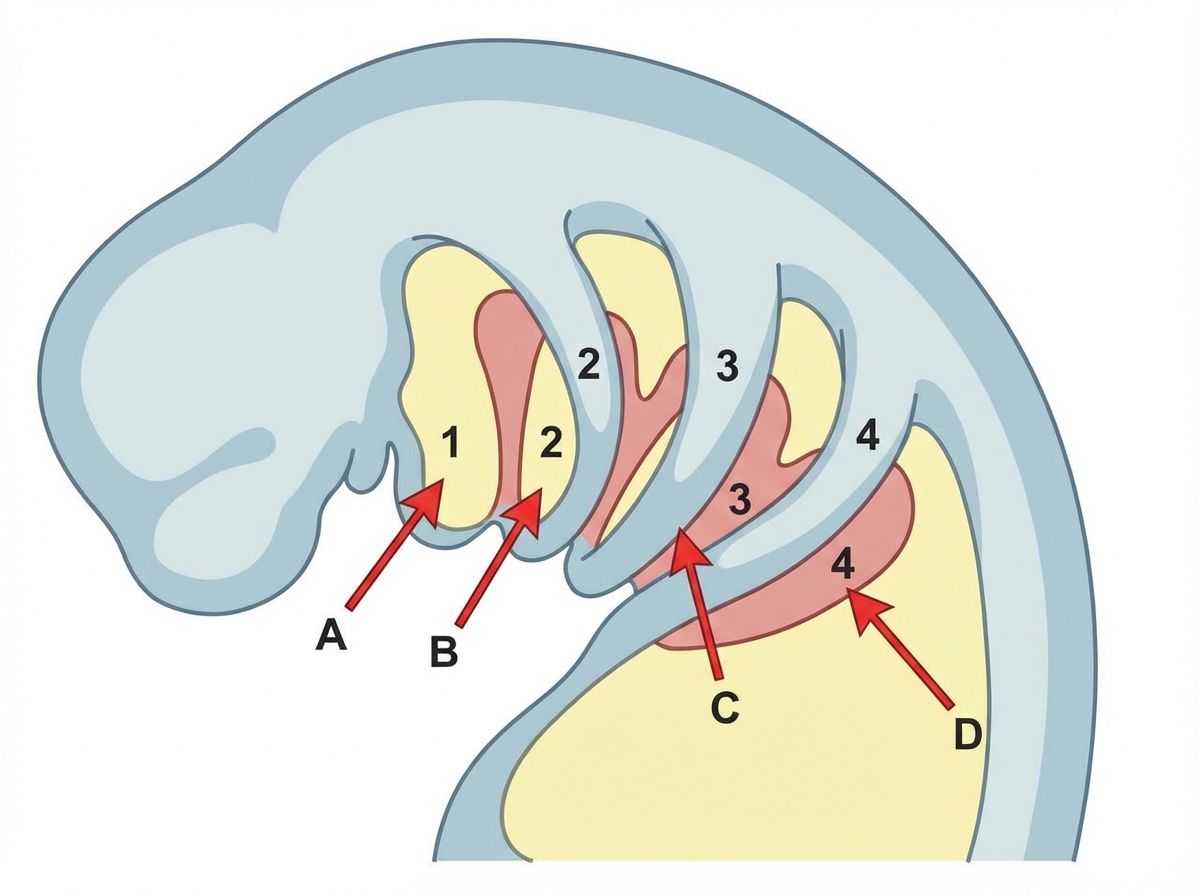
A young patient with absent thymus presents with tetany and hypoparathyroidism. Which of the following is a marked area in the picture defective in this condition?
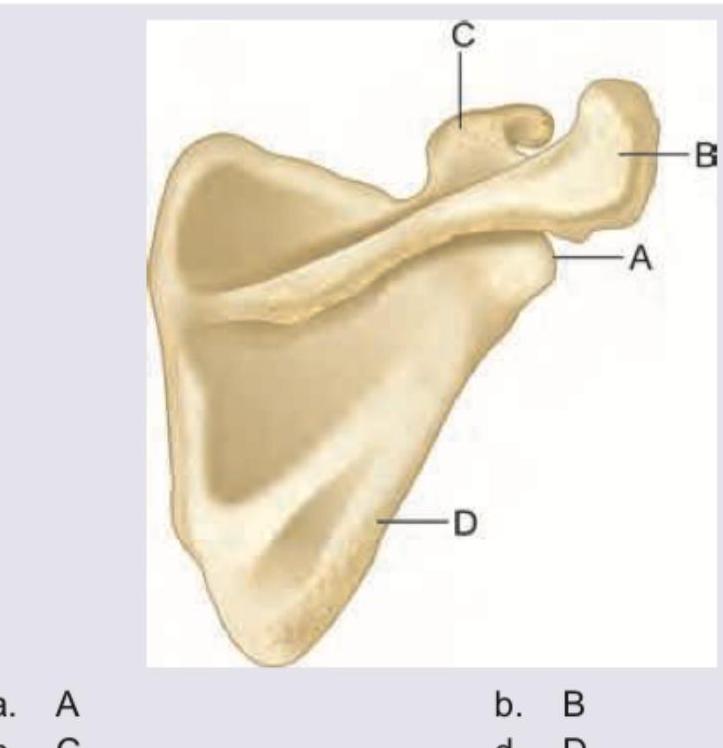
Which of the following structures of the scapula is palpable in infraclavicular fossa?
Mandibular division of trigeminal nerve passes through which of the following? (AIIMS May 2018)
The marked extraocular muscle has a cranial nerve nucleus. At what level in the brain is the nucleus located? (AIIMS May 2018)

What is the function of the muscle marked in the cut section shown below? (AIIMS May 2018)

Which structure passes through the area marked in red? (AIIMS May 2018)

INI-CET 2018 - Anatomy INI-CET Practice Questions and MCQs
Question 51: Identify the part of the duodenum marked below:
- A. 1st part
- B. 2nd part (Correct Answer)
- C. 3rd part
- D. 4th part
Explanation: ***2nd part*** - The image shows the duodenum making a C-shaped curve around the head of the pancreas. The arrow points to the descending portion which directly receives secretions. - The **major duodenal papilla**, where the common bile duct and pancreatic duct empty, is located in the posteromedial wall of the **descending (second) part of the duodenum**. *1st part* - The first part, or superior part, is the shortest and widest part of the duodenum. It ascends from the pylorus and is mostly peritoneal. - It lies superior to the head of the pancreas, unlike the segment indicated by the arrow. *3rd part* - The third part, or horizontal (inferior) part, passes horizontally to the left, anterior to the inferior vena cava and aorta. - It is located inferior to the head of the pancreas and superior mesenteric vessels. *4th part* - The fourth part, or ascending part, ascends on the left side of the aorta to the duodenojejunal flexure. - This segment is typically located to the left of the vertebral column and is continuous with the jejunum.
Question 52: Which nerve gives sensory supply to the region marked with an arrow?
- A. Radial nerve (Correct Answer)
- B. Median nerve
- C. Ulnar nerve
- D. Posterior interosseous nerve
Explanation: ***Radial nerve*** - The image shows the **dorsal (back) aspect of the hand**, specifically the region over the **anatomical snuffbox** or the dorsal part of the thumb and first web space. - The **superficial branch of the radial nerve** provides sensory innervation to this area, including the dorsal aspect of the thumb, index, and half of the middle finger, extending to the dorsal hand. *Median nerve* - The **median nerve** primarily provides sensory innervation to the **palmar aspect** of the lateral three and a half digits (thumb, index, middle, and radial half of the ring finger) and the corresponding palm. - It does not innervate the dorsal hand in the region indicated. *Ulnar nerve* - The **ulnar nerve** innervates the **medial 1.5 digits** (pinky and ulnar half of the ring finger) on both the palmar and dorsal aspects of the hand, as well as the ulnar part of the palm and dorsum of the hand. - The highlighted region is on the radial side of the hand, not the ulnar side. *Posterior interosseous nerve* - The **posterior interosseous nerve** is a **motor nerve** that innervates the muscles in the posterior compartment of the forearm. - It does **not provide sensory innervation** to any part of the hand.
Question 53: Nucleus pulposus develops from: (AIIMS May 2018)
- A. A
- B. B
- C. C (Correct Answer)
- D. D
Explanation: ***Correct Option C*** - Label C points to the **notochord**, which is the embryonic structure that the **nucleus pulposus** of the intervertebral discs develops from. - The notochord provides transient axial support during early embryonic development and induces the formation of the neural tube. - During development, most of the notochord degenerates, but remnants persist as the gelatinous core of intervertebral discs. *Incorrect Option A* - Label A indicates the **neural tube**, which develops into the **brain and spinal cord**. - It arises from the neural plate, which is induced by the underlying notochord. - The neural tube does not contribute to the intervertebral disc structure. *Incorrect Option B* - Label B represents the **secondary yolk sac**, a structure involved in early nutrient transfer and the formation of primordial germ cells. - It does not directly contribute to the formation of musculoskeletal structures like the nucleus pulposus. *Incorrect Option D* - Label D points to the **ectoderm**, the outermost germ layer, which gives rise to the epidermis, nervous system (including the neural tube), and sensory organs. - While it forms the neural tube, it does not directly form the nucleus pulposus or other mesodermal derivatives.
Question 54: A young patient with absent thymus presents with tetany and hypoparathyroidism. Which of the following is a marked area in the picture defective in this condition?
- A. B
- B. C (Correct Answer)
- C. D
- D. A
Explanation: ***C*** - The image shows the **pharyngeal arches and pouches** during embryonic development. **C** points to the **third pharyngeal pouch**, which gives rise to the **thymus** and inferior parathyroid glands. - A defect in the development of the third pharyngeal pouch would lead to an **absent or hypoplastic thymus** and **hypoparathyroidism**, causing symptoms like tetany due to hypocalcemia. This condition is known as **DiGeorge syndrome**. *A* - **A** points to the first pharyngeal pouch, which develops into the **auditory tube** and **tympanic cavity**. - Defects in the first pharyngeal pouch would primarily affect structures in the ear, not the thymus or parathyroid glands. *B* - **B** points to the fourth pharyngeal pouch, which gives rise to the **superior parathyroid glands** and the **ultimobranchial body** (parafollicular C cells of the thyroid). - While hypoparathyroidism could be involved, the primary defect in DiGeorge syndrome affects the third pouch, leading to both thymic and parathyroid issues more comprehensively. *D* - **D** points to the first pharyngeal arch, which contributes to the formation of the **mandible**, **maxilla**, and several muscles of mastication. - Defects in the first pharyngeal arch are associated with conditions like **Treacher Collins syndrome** or **Pierre Robin sequence**, which present with facial dysmorphism rather than thymic or parathyroid agenesis.
Question 55: Which of the following structures of the scapula is palpable in infraclavicular fossa?
- A. A
- B. B
- C. C (Correct Answer)
- D. D
Explanation: ***C - Coracoid Process*** - The **coracoid process** is a hook-like bony projection from the superior border of the scapula that extends anteriorly and laterally. - It is located approximately **2.5 cm below the lateral third of the clavicle** in the **infraclavicular fossa** (also called the deltopectoral triangle). - The coracoid process is the **only structure of the scapula that is palpable anteriorly** in the infraclavicular fossa, making it an important surgical landmark. - It can be felt by deep palpation in the infraclavicular region, just medial to the deltoid muscle. *A - Glenoid Cavity* - The glenoid cavity is the shallow, pear-shaped articular surface on the lateral angle of the scapula that receives the head of the humerus. - It is deeply positioned and completely covered by the humeral head and surrounding soft tissues (rotator cuff muscles, joint capsule). - It is **not palpable** from any surface location, including the infraclavicular fossa. *B - Acromion* - The acromion is the lateral continuation of the spine of the scapula, forming the highest point of the shoulder. - It articulates with the lateral end of the clavicle at the acromioclavicular joint. - The acromion is palpable at the **tip of the shoulder laterally**, not in the infraclavicular fossa which is located more medially and anteriorly. - It forms part of the superior boundary of the shoulder region, well lateral to the infraclavicular fossa. *D - Inferior Angle of Scapula* - The inferior angle is the lowest point of the scapula, located at approximately the level of the 7th rib or T7 vertebra. - It is palpable on the **posterior thoracic wall**, particularly when the arm is moved. - It is located posteriorly and inferiorly, nowhere near the anterior infraclavicular fossa.
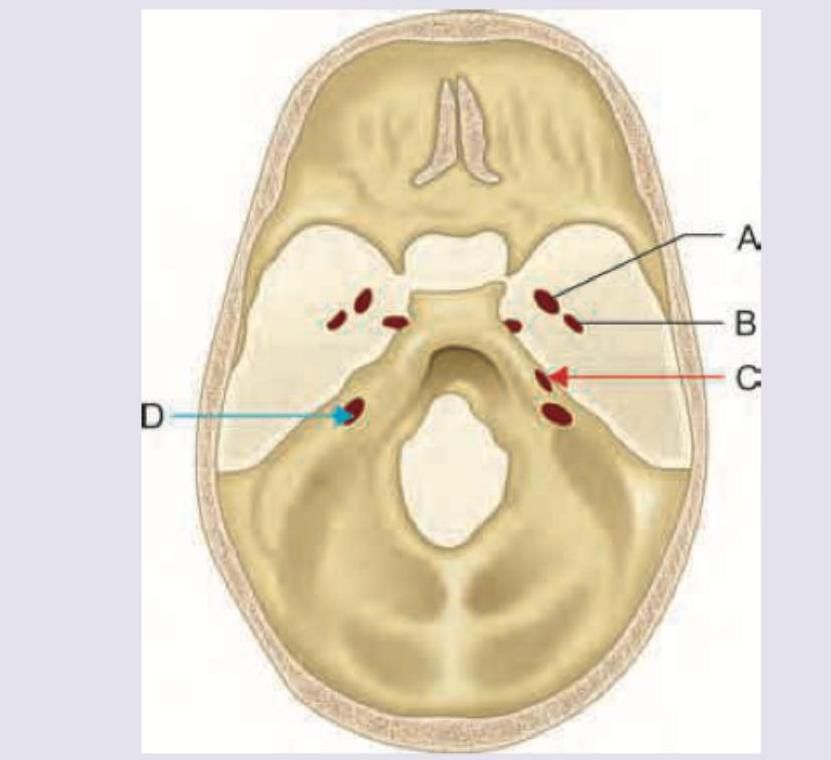
Question 56: Mandibular division of trigeminal nerve passes through which of the following? (AIIMS May 2018)
- A. A
- B. B
- C. C
- D. D (Correct Answer)
Explanation: ***D*** - The label 'D' points to the **foramen ovale**, which is the opening through which the **mandibular division of the trigeminal nerve (V3)** exits the middle cranial fossa. - The foramen ovale also transmits the **accessory meningeal artery**, **lesser petrosal nerve**, and the **emissary veins**. *A* - The label 'A' points to the **foramen rotundum**, which is primarily for the passage of the **maxillary division of the trigeminal nerve (V2)**. - The foramen rotundum is distinct from the foramen ovale and is located more anterior and medial. *B* - The label 'B' points to the **foramen spinosum**, which allows the passage of the **middle meningeal artery** and the **nervus spinosus (meningeal branch of V3)**. - While it transmits a branch of V3, it is not the main exit point for the entire mandibular division. *C* - The label 'C' points to the **foramen lacerum**, which is occupied by **cartilage** in vivo and primarily traversed by the **internal carotid artery** and its accompanying sympathetic plexus passing superiorly to it. - No major cranial nerves pass completely through it; instead, some nerves (like the greater petrosal nerve) pass over its superior surface or exit through associated canals.
Question 57: The marked extraocular muscle has a cranial nerve nucleus. At what level in the brain is the nucleus located? (AIIMS May 2018)
- A. Facial colliculus (Correct Answer)
- B. Superior colliculus
- C. Superior olivary nucleus
- D. Inferior colliculus
Explanation: ***Facial colliculus*** - The image shows the **lateral rectus muscle** (indicated by the arrow), which controls abduction of the eye. - The lateral rectus muscle is innervated by the **abducens nerve (CN VI)**, and its nucleus is located at the **facial colliculus** in the pons. - The facial colliculus is a bulge on the dorsal surface of the pons, formed by the **facial nerve (CN VII) fibers** wrapping around the **abducens nucleus (CN VI)**. - This is the only extraocular muscle whose nucleus is located at the facial colliculus. *Superior colliculus* - The superior colliculus is located in the **midbrain** and is involved in visual reflexes and saccadic eye movements. - The **oculomotor nucleus (CN III)** is located ventral to the superior colliculus in the periaqueductal gray at the level of the superior colliculus. - CN III innervates the superior rectus, inferior rectus, medial rectus, and inferior oblique muscles, but not the muscle shown in the image. *Superior olivary nucleus* - The superior olivary nucleus is located in the **pons** and is a critical component of the auditory pathway, involved in sound localization. - It has no role in the innervation of extraocular muscles. *Inferior colliculus* - The inferior colliculus is situated in the **midbrain** and is a major relay center in the auditory pathway. - The **trochlear nucleus (CN IV)** is located at the level of the inferior colliculus and innervates the superior oblique muscle. - However, the inferior colliculus itself does not contain nuclei for extraocular muscle innervation.
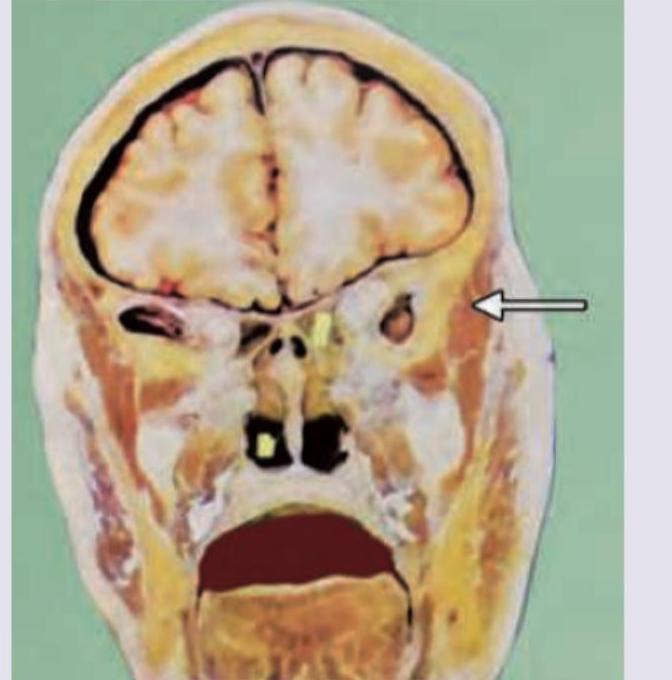
Question 58: What is the function of the muscle marked in the cut section shown below? (AIIMS May 2018)
- A. Depression (Correct Answer)
- B. Elevation
- C. Retraction
- D. All of the above
Explanation: ***Depression*** - The image shows the **lateral pterygoid muscle** in a transverse section of the head. The **inferior head** of this muscle assists in **mandibular depression** (mouth opening) when both sides contract together. - While the **primary functions** of the lateral pterygoid are **protrusion** and **lateral excursion** of the mandible, among the given options, **depression is the only function this muscle actually performs**. - The lateral pterygoid does **NOT perform elevation or retraction**, making depression the **only anatomically correct answer** from the choices provided. *Elevation* - The lateral pterygoid muscle does **NOT elevate** the mandible - this is anatomically incorrect. - **Primary elevators** of the mandible are the **masseter**, **temporalis**, and **medial pterygoid muscles** (all supplied by the mandibular division of the trigeminal nerve). *Retraction* - The lateral pterygoid muscle does **NOT retract** the mandible - it actually **protrudes** it, which is the **opposite of retraction**. - **Mandibular retraction** is primarily performed by the **posterior fibers of the temporalis muscle** and the **deep fibers of the masseter**. *All of the above* - This option is incorrect because the lateral pterygoid does **NOT perform elevation or retraction**. - The muscle's **primary functions** are **protrusion** (forward movement) and **lateral excursion** (side-to-side movement), with **assistive role in depression** (mouth opening) when both inferior heads contract simultaneously.
Question 59: Which structure passes through the area marked in red? (AIIMS May 2018)
- A. Vertebral artery (Correct Answer)
- B. Anterior inferior cerebellar artery
- C. Transverse ligament
- D. Apical ligament
Explanation: ***Vertebral artery*** - The image displays a cervical vertebra, and the red-marked area highlights the **foramen transversarium** (or transverse foramen). This foramen is a defining feature of cervical vertebrae. - The **vertebral artery** ascends through these foramina in cervical vertebrae C1-C6, providing blood supply to the brain. *Anterior inferior cerebellar artery* - The **anterior inferior cerebellar artery (AICA)** is a branch of the basilar artery and supplies parts of the cerebellum and brainstem. - It is an **intracranial vessel** and does not pass through the foramina transversaria of the cervical vertebrae. *Transverse ligament* - The **transverse ligament of the atlas** is a crucial ligament that holds the dens of the axis against the anterior arch of the atlas. - It is located **within the vertebral canal**, posterior to the dens, not within the foramen transversarium of the transverse process. *Apical ligament* - The **apical ligament** connects the apex of the dens (odontoid process) of C2 (axis) to the anterior margin of the foramen magnum. - Like the transverse ligament, it is an **intracranial ligament** associated with the craniocervical junction, not a structure passing through the foramen transversarium.
General Medicine
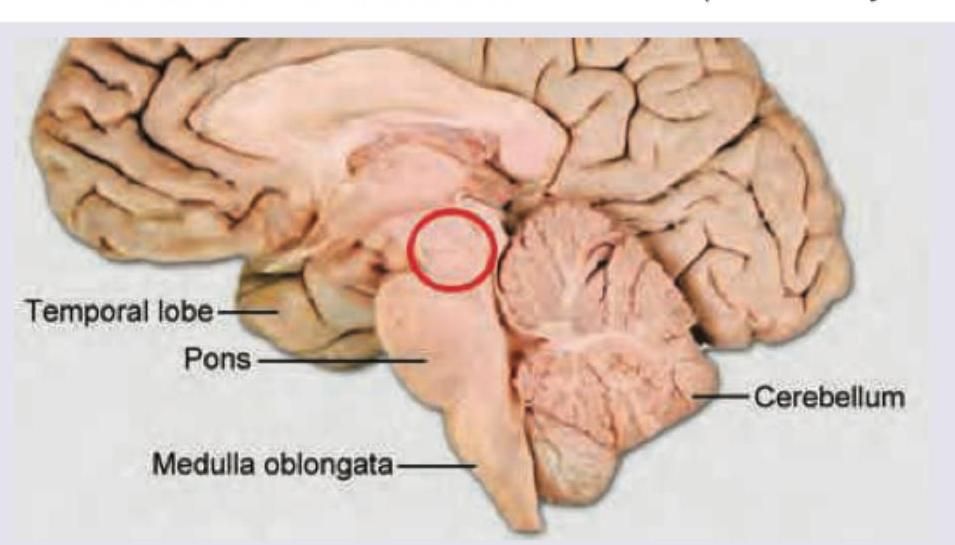
1 questionsWhich disease occurs due to involvement of the structure marked in red? (AIIMS May 2018)
INI-CET 2018 - General Medicine INI-CET Practice Questions and MCQs
Question 51: Which disease occurs due to involvement of the structure marked in red? (AIIMS May 2018)
- A. Depression
- B. Alzheimer's disease
- C. Paralysis agitans (Correct Answer)
- D. Huntington's chorea
Explanation: ***Paralysis agitans*** - The red circle points to the **substantia nigra**, a key brain structure involved in producing **dopamine**. - **Paralysis agitans**, also known as **Parkinson's disease**, is characterized by the degeneration of dopaminergic neurons in the substantia nigra, leading to motor symptoms like tremor, rigidity, and bradykinesia. *Depression* - Depression is a mood disorder associated with imbalances in various **neurotransmitters** (e.g., serotonin, norepinephrine, dopamine) and often involves brain regions such as the prefrontal cortex and limbic system, not primarily the substantia nigra. - While dopamine pathways can be implicated in motivation and reward, the primary pathology of major depression is not direct degeneration of the substantia nigra. *Alzheimer's disease* - Alzheimer's disease is a neurodegenerative disorder primarily characterized by the accumulation of **amyloid plaques** and **neurofibrillary tangles**, leading to neuronal loss and brain atrophy, particularly in the hippocampus and cerebral cortex, not the substantia nigra. - It results in progressive **memory loss** and cognitive decline, distinct from the motor symptoms seen in Parkinson's. *Huntington's chorea* - Huntington's chorea is a hereditary neurodegenerative disease caused by the degeneration of GABAergic neurons in the **striatum** (caudate and putamen). - It is characterized by **involuntary movements** (chorea), cognitive decline, and psychiatric symptoms, which result from basal ganglia dysfunction but not specifically originating from the substantia nigra.