Anatomy
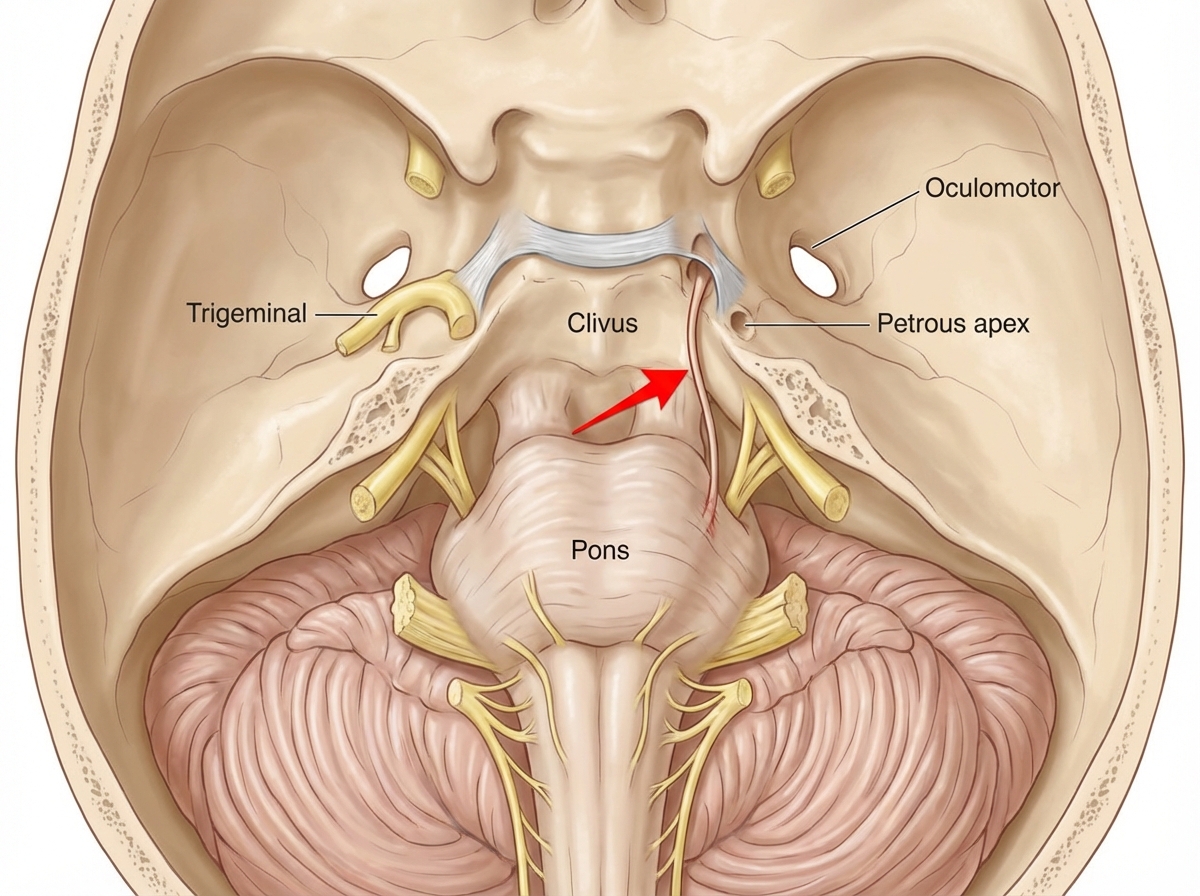
4 questionsIdentify the nerve marked with an arrow in the given section of cranial cavity.
Identify the marked layer in the given histological section.

Identify the type of connective tissue present in the area marked with the arrow.

What is the action of the muscle marked in the given image?

INI-CET 2018 - Anatomy INI-CET Practice Questions and MCQs
Question 41: Identify the nerve marked with an arrow in the given section of cranial cavity.
- A. Trochlear
- B. Trigeminal
- C. Oculomotor
- D. Abducens (Correct Answer)
- E. Facial
Explanation: ***Abducens*** - The image shows the abducens nerve passing through **Dorello's canal** on its way to the **cavernous sinus**. - Its unique path makes it susceptible to injury in cases of increased intracranial pressure, leading to **lateral rectus palsy**. *Trochlear* - The trochlear nerve is the **smallest cranial nerve** and exits the brainstem dorsally, then wraps around to the ventral side. - It innervates the **superior oblique muscle** of the eye. *Trigeminal* - The trigeminal nerve is a large cranial nerve with **three main divisions** and is responsible for sensations in the face and motor functions like chewing. - It arises more laterally from the pons and is typically seen entering the **Meckel's cave**. *Oculomotor* - The oculomotor nerve emerges from the **midbrain** and controls most of the extrinsic eye muscles and pupillary constriction. - It is usually visible superior to the abducens nerve in the **cavernous sinus**. *Facial* - The facial nerve exits the brainstem at the **cerebellopontine angle** and enters the **internal acoustic meatus** with the vestibulocochlear nerve. - It controls muscles of **facial expression** and carries taste sensation from the anterior two-thirds of the tongue.
Question 42: Identify the marked layer in the given histological section.
- A. Inner plexiform layer (Correct Answer)
- B. Outer plexiform layer
- C. Inner limiting layer
- D. Outer limiting layer
Explanation: ***Inner plexiform layer*** - The arrow points to a **synaptic layer** characterized by a dense network of **axons, dendrites**, and synapses between bipolar cells, amacrine cells, and ganglion cells. - This layer is distinguished by its **reticular appearance** and its position between the inner nuclear layer (nuclei of bipolar, amacrine, and horizontal cells) and the ganglion cell layer. *Outer plexiform layer* - This layer is located more externally in the retina, between the **outer nuclear layer** and the **inner nuclear layer**. - It is where photoreceptors (rods and cones) synapse with bipolar and horizontal cells. *Inner limiting layer* - The **innermost layer** of the retina, adjacent to the vitreous humor. - It is a thin, acellular membrane formed by the basal laminae of the Müller cells. *Outer limiting layer* - This layer is situated internally to the **photoreceptor layer** (rods and cones). - It is not a true membrane but rather a series of intercellular junctions (adherens junctions) between photoreceptor cells and Müller cells.
Question 43: Identify the type of connective tissue present in the area marked with the arrow.
- A. Loose and irregular
- B. Specialised
- C. Dense irregular (Correct Answer)
- D. Dense regular
Explanation: ***Dense irregular*** - The image shows bundles of **collagen fibers** arranged haphazardly in various directions, which is characteristic of dense irregular connective tissue. - This tissue type provides **strength and resistance to stress** from multiple directions, typical of the **dermis** of the skin or organ capsules. *Loose and irregular* - **Loose connective tissue** has a much higher proportion of ground substance and fewer, thinner, and loosely arranged fibers compared to what is shown in the image. - While it is also irregular, the **density of the collagen fibers** in the marked area is inconsistent with loose connective tissue. *Specialised* - **Specialized connective tissues** include cartilage, bone, blood, and adipose tissue, which have distinct cellular and extracellular matrix components not depicted here. - The tissue shown is primarily characterized by its fibrous composition, not specialized cells or matrix elements like those in bone or cartilage. *Dense regular* - **Dense regular connective tissue** is characterized by collagen fibers densely packed and arranged in parallel bundles, providing strength in one direction. - Examples include **tendons and ligaments**, which are not found in this arrangement beneath the epithelium as suggested by the image.
Question 44: What is the action of the muscle marked in the given image?
- A. Elevation (Correct Answer)
- B. Depression
- C. Protraction
- D. Retraction
Explanation: ***Elevation*** - The image shows a coronal section of the head, and the arrow points to the **temporalis muscle**, which is one of the primary muscles of mastication. - The main action of the temporalis muscle is to **elevate the mandible**, closing the mouth. - The **anterior and middle fibers** particularly produce elevation. *Depression* - Depression of the mandible is primarily performed by the **lateral pterygoid muscle** and the suprahyoid muscles (e.g., digastric, geniohyoid). - The temporalis muscle's fiber orientation is not consistent with mandibular depression. *Protraction* - **Protraction** (protrusion) of the mandible is primarily carried out by the **lateral pterygoid muscles** (bilateral contraction). - The temporalis muscle does not contribute significantly to protraction. *Retraction* - **Retraction** of the mandible is indeed performed by the **posterior fibers of the temporalis muscle**. - However, since the question asks about the action of the muscle as shown in the image (likely showing the entire muscle or its anterior portion), and the **primary and most prominent action** of the temporalis as a whole is **elevation**, this is the best answer.
Forensic Medicine
5 questionsThe following presentation occurs due to? (AIIMS Nov 2018)

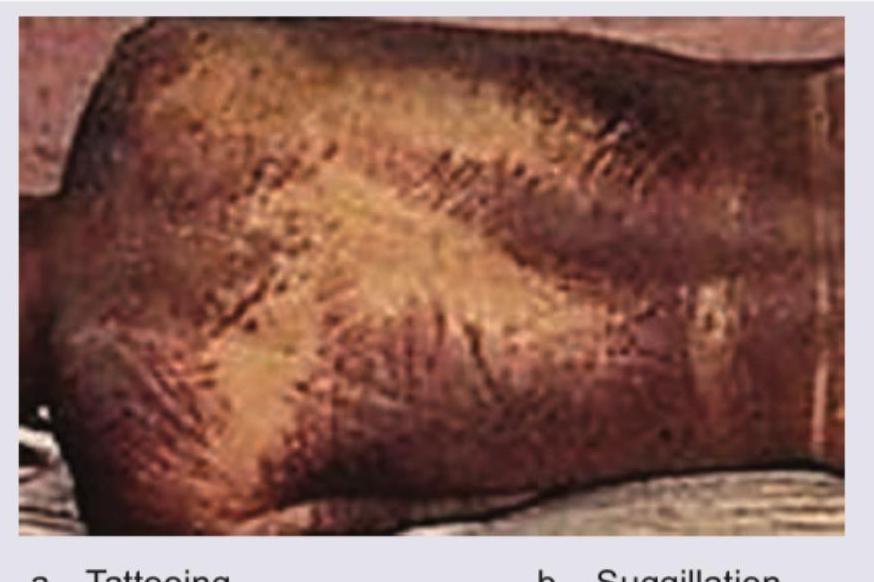
Identify the post mortem lividity of the image: (AIIMS Nov 2018)

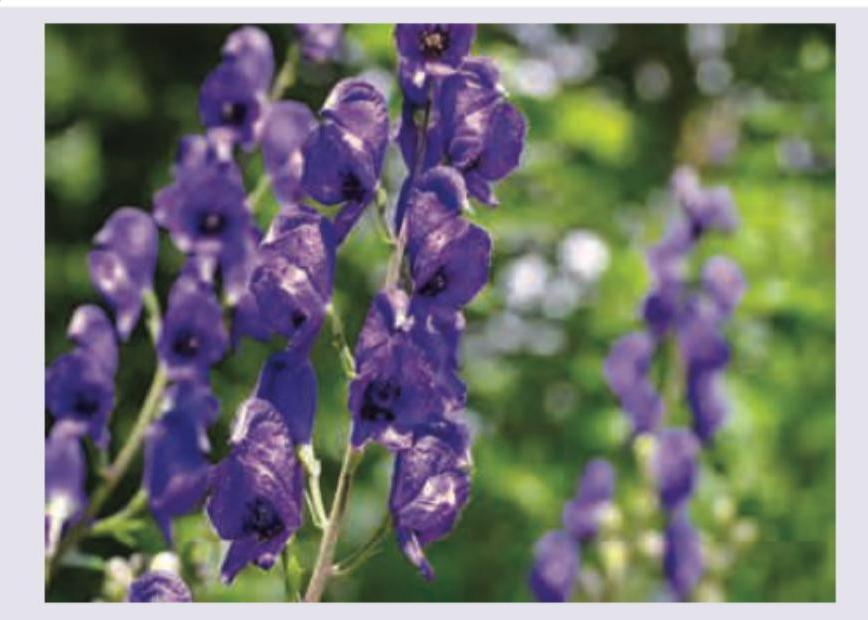
Identify the flowers shown below:

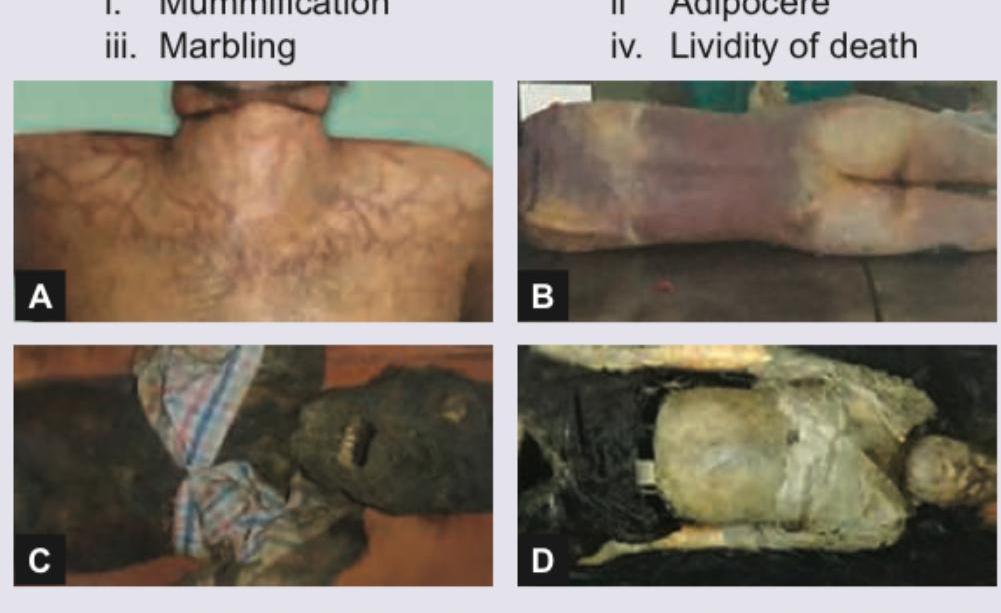
Identify the correct pair: i. Mummification ii. Adipocere iii. Marbling iv. Livor mortis

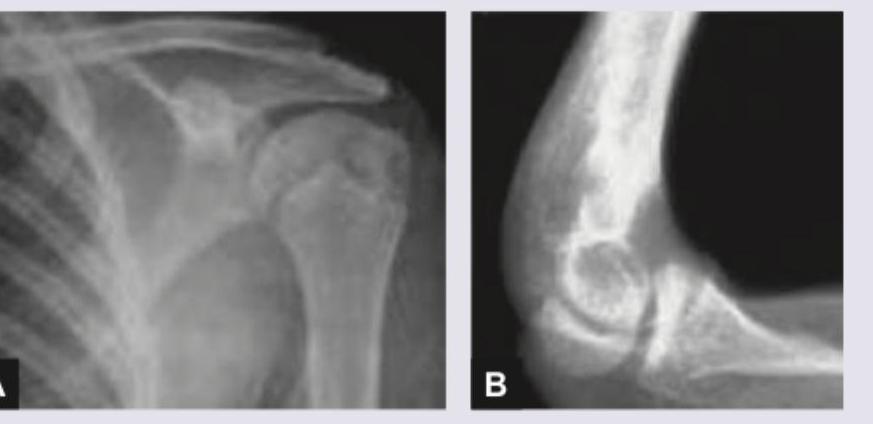
Comment on age of the male patient:

INI-CET 2018 - Forensic Medicine INI-CET Practice Questions and MCQs
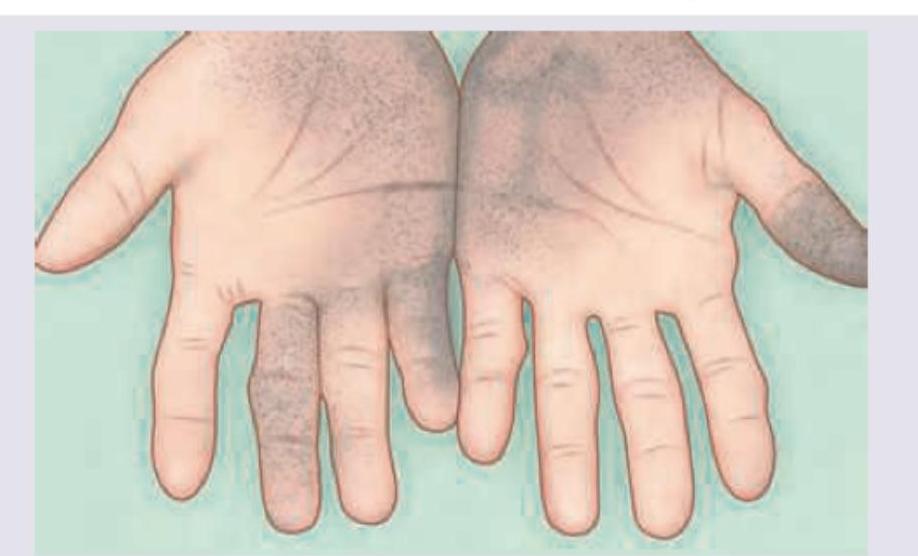
Question 41: The following presentation occurs due to? (AIIMS Nov 2018)
- A. Chronic Copper sulfate poisoning
- B. Long term ingestion of arsenic in drinking water (Correct Answer)
- C. Application of mercury ointment
- D. Application of Calotropis
Explanation: ***Long term ingestion of arsenic in drinking water*** - The image shows **hyperpigmentation and hyperkeratosis** on the palms, often described as "raindrop pigmentation" or diffuse darkening with scattered paler lesions (leukomelanosis). This is a classical dermatological manifestation of **chronic arsenic poisoning**, particularly from contaminated drinking water. - **Arsenicosis** can also cause palmar and plantar keratoses, which can progress to malignant skin lesions over time. *Chronic Copper sulfate poisoning* - Chronic copper poisoning is rare and typically affects the liver, leading to conditions like **cirrhosis** and **hepatitis**, as seen in Wilson's disease. - Skin manifestations from copper poisoning are not typically characterized by the diffuse hyperpigmentation and hyperkeratosis seen in the image. *Application of mercury ointment* - Topical mercury exposure can cause localized skin irritation, dermatitis, or systemic toxicity with features like **acrodynia** (pink disease) in children, characterized by a pink rash, irritability, and hypertension. - It does not typically lead to the described pattern of diffuse hyperpigmentation and hyperkeratosis on the palms. *Application of Calotropis* - **Calotropis** (such as *Calotropis gigantea* or *procera*) is a plant known for its toxic latex, which can cause intense local irritation, vesication, or ulceration upon skin contact. - Its effects are primarily acute irritant or allergic reactions and do not produce the chronic skin changes of hyperpigmentation and hyperkeratosis seen in the image.
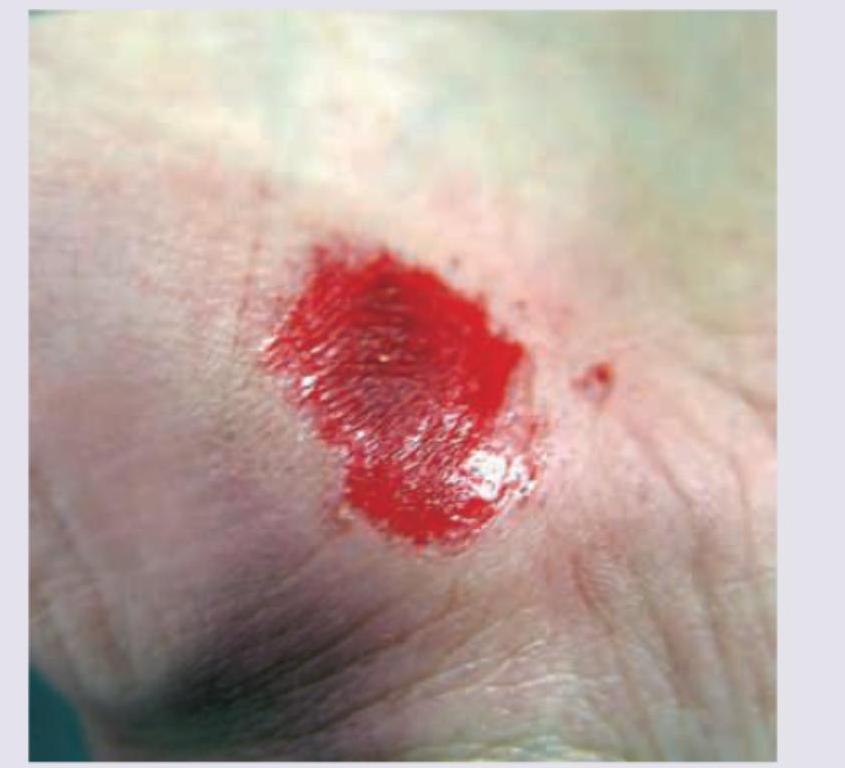
Question 42: Identify the post mortem lividity of the image: (AIIMS Nov 2018)
- A. Tattooing
- B. Suggillation (Correct Answer)
- C. Putrefaction
- D. Decomposition
Explanation: ***Suggillation*** - Suggillation refers to the extravasation of blood into the tissues due to crushing pressure or trauma, often seen in cases of severe blunt force injury, leaving **diffuse, purplish discoloration.** - In post-mortem examination, a **suggillation** can be distinguished from common **livor mortis** (lividity) by its darker color and by the fact that it is not blanchable under pressure, indicating **capillary rupture and hemorrhage** rather than just pooling of blood. *Tattooing* - Tattooing involves the insertion of **indelible ink** into the dermis of the skin, creating permanent designs. - Tattoos have distinct, often patterned, appearances and would not resemble the **irregular, deep discoloration** of lividity or hemorrhage. *Putrefaction* - Putrefaction is a later stage of decomposition, characterized by the breakdown of tissues by bacteria, producing **gases, discoloration (greenish-black), and foul odors.** - This process is distinct from the **vascular pooling** or **hemorrhage** that forms suggillation; putrefaction typically starts later (after 24-48 hours) and involves more widespread tissue destruction. *Decomposition* - Decomposition is the broader process of decay of organic matter after death, encompassing various stages like **autolysis, putrefaction, and skeletonization.** - While suggillation occurs post-mortem, it is a specific type of **post-mortem bruising** or lividity, distinct from the generalized tissue breakdown and gaseous changes seen in advanced decomposition.
Question 43: Identify the flowers shown below:
- A. Aconite (Correct Answer)
- B. Datura
- C. Nerium Odorum
- D. Cerbera Thevetia
Explanation: ***Aconite*** - The image displays characteristics consistent with **Aconite** (monkshood) flowers, which are typically **dark purple to blue** and have a distinctive **hooded shape**. - Aconite is known for its **highly toxic** alkaloids, especially **aconitine**, which can cause rapid and severe symptoms upon ingestion or skin contact. *Cerbera Thevetia* - **Cerbera Thevetia** (yellow oleander) flowers are typically **yellow or orange** and are bell-shaped, which differs significantly from the flowers shown. - Poisoning from *Cerbera Thevetia* is primarily due to **cardiac glycosides**, leading to symptoms like bradycardia, nausea, and vomiting. *Datura* - **Datura** flowers are typically **large, trumpet-shaped**, and vary in color from white to purple, but lack the distinctive hooded appearance seen in the image. - *Datura* species contain **tropane alkaloids** (e.g., scopolamine, atropine), which cause anticholinergic effects like mydriasis, delirium, and tachycardia. *Nerium Odorum* - **Nerium Odorum** (pink oleander) flowers are typically **pink, red, or white** and have a pinwheel shape with five petals, which does not match the flowers in the image. - Like *Thevetia*, *Nerium Odorum* is toxic due to **cardiac glycosides**, causing similar cardiovascular and gastrointestinal symptoms.
Question 44: Identify the correct pair: i. Mummification ii. Adipocere iii. Marbling iv. Livor mortis
- A. i-D, ii-C, iii-B, iv-A (Correct Answer)
- B. i-C, ii-D, iii-B, iv-A
- C. i-C, ii-D, iii-A, iv-B
- D. i-D, ii-A, iii-C, iv-B
Explanation: ***i-D, ii-C, iii-B, iv-A*** - Image **D** clearly shows a body exhibiting **mummification**, characterized by a dried, leathery appearance due to dehydration in dry conditions. - Image **C** depicts **adipocere**, where fatty tissues are converted into a grayish-white, greasy, or waxy substance, which can preserve body contours. - Image **B** illustrates **marbling**, which is a pattern of greenish-black discoloration along superficial veins due to the breakdown of blood by putrefactive bacteria. - Image **A** displays **lividity of death (livor mortis)**, characterized by purplish discoloration of the skin in dependent areas due to the gravitational pooling of blood after circulation ceases.
Question 45: Comment on age of the male patient:
- A. 5-7 years
- B. 12-14 years (Correct Answer)
- C. 17-19 years
- D. >25 years
Explanation: ***12-14 years*** - The radiographs show **open growth plates** (epiphyseal lines) in both the shoulder (A) and elbow (B), indicating the individual is still growing. - The presence of well-developed secondary ossification centers and significant but not fully fused physes is consistent with a male in the **mid-pubertal** range, typically observed between 12-14 years. *5-7 years* - At this age, many **secondary ossification centers** would just be appearing or still quite small, and the growth plates would be much wider and less defined than seen in the images. - The degree of skeletal maturation evident in the shoulder and elbow in the images surpasses that of a 5-7 year old. *17-19 years* - By this age, most **growth plates** in males, especially in key joints like the shoulder and elbow, would be largely **fused** or in the final stages of fusion. - The distinct open physes seen in both images rule out this age range, as significant growth is still occurring. *>25 years* - In an individual over 25 years, **all growth plates** would be completely **fused**, and there would be no visible epiphyseal lines. - The presence of clear, open growth plates in the images definitively excludes an adult age.
Orthopaedics
1 questionsIdentify the fracture given in the image given below:

INI-CET 2018 - Orthopaedics INI-CET Practice Questions and MCQs
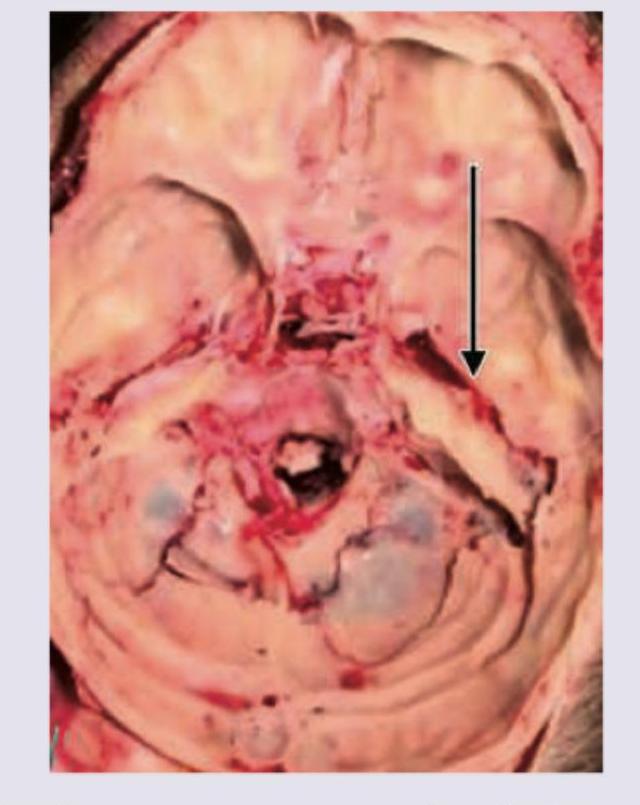
Question 41: Identify the fracture given in the image given below:
- A. Pond
- B. Gutter (Correct Answer)
- C. Hinge
- D. Comminuted
Explanation: ***Gutter*** - A **gutter fracture** involves a linear fracture with depression of the adjacent bone fragment, often forming a "gutter" or trough-like deformity, as indicated by the arrow in the image. - This type of fracture is typically caused by a **blunt impact** to the skull that causes focal indentation. *Pond* - A **pond fracture** is a type of depressed skull fracture seen in infants, characterized by a smooth, bowl-like depression without sharp edges or fragmentation, resembling an indentation from a thumb. - It results from **low velocity impact** and the skull's plasticity in infants, which is not what is seen here. *Hinge* - A **hinge fracture** is a type of basilar skull fracture that involves the skull base, often extending bilaterally through structures like the sphenoid bone, creating a "hinge" effect. - This fracture pattern usually results from **severe trauma** and is not depicted in this image, which shows a localized depression. *Comminuted* - A **comminuted fracture** is characterized by the bone breaking into three or more fragments at the site of injury. - While there is bone fragmentation in the image, the primary descriptive feature highlighted by the arrow is the **depressed trough** rather than multiple distinct pieces.