Ophthalmology
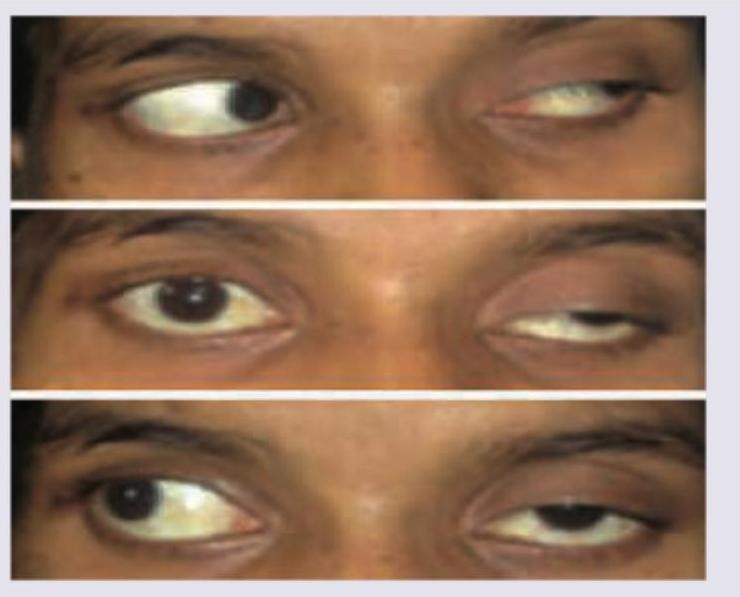
3 questionsThe given image shows which of the following conditions? (AIIMS Nov 2018)

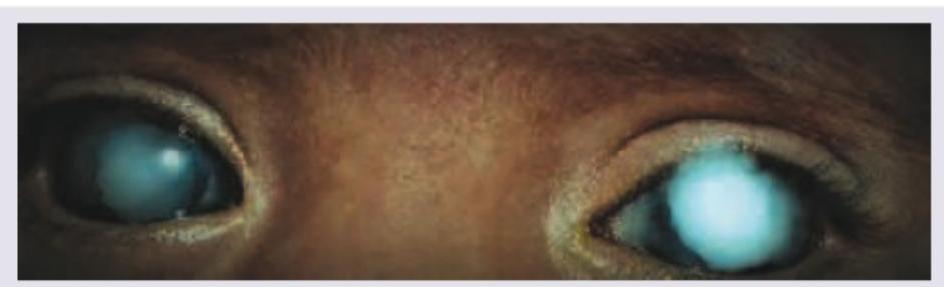
A 2-year-old child is brought with complaints of watering of eyes, photophobia and intermittently keeping eyes closed while watching TV. What may be the diagnosis? (AIIMS Nov 2018)

The following spectacle is used in? (AIIMS Nov 2018)

INI-CET 2018 - Ophthalmology INI-CET Practice Questions and MCQs
Question 21: The given image shows which of the following conditions? (AIIMS Nov 2018)
- A. Inter-nuclear ophthalmoplegia (Correct Answer)
- B. Oculomotor nerve palsy
- C. Lateral rectus palsy
- D. Trochlear nerve palsy
Explanation: ***Inter-nuclear ophthalmoplegia*** - The image shows that the **right eye** is **unable to adduct past the midline** when attempting to look left (middle image), which is a classic sign of internuclear ophthalmoplegia (INO). - The **left eye** shows **abducting nystagmus**, a common associated finding in INO due to damage to the **medial longitudinal fasciculus (MLF)**. *Oculomotor nerve palsy* - An oculomotor nerve (CN III) palsy would typically present with a **down-and-out deviation** of the affected eye, **ptosis**, and a **dilated pupil**, which are not seen here. - The patient would also have difficulty moving the eye medially, superiorly, and inferiorly, whereas here the right eye can move down and up, but not fully medially. *Lateral rectus palsy* - A lateral rectus (CN VI) palsy would cause an inability to **abduct** the affected eye and an **esotropia** (eye turning inward) at primary gaze. - The image shows impaired adduction, not abduction, of the right eye, ruling out lateral rectus palsy. *Trochlear nerve palsy* - A trochlear nerve (CN IV) palsy results in weakness of the **superior oblique muscle**, leading to **vertical diplopia**, especially when looking down and in, and a characteristic **head tilt** to compensate. - This presentation does not match the image, which primarily demonstrates a horizontal gaze abnormality with adduction deficit.
Question 22: A 2-year-old child is brought with complaints of watering of eyes, photophobia and intermittently keeping eyes closed while watching TV. What may be the diagnosis? (AIIMS Nov 2018)
- A. Congenital Glaucoma (Correct Answer)
- B. Retinoblastoma
- C. Congenital endothelial dystrophy
- D. Megalocornea
Explanation: ***Congenital Glaucoma*** - The triad of **watering of eyes (epiphora)**, **photophobia**, and **blepharospasm** (keeping eyes closed) is highly characteristic of **congenital glaucoma** in infants and young children. - The image also shows significantly enlarged and hazy corneas (buphthalmos), which are classic signs of increased intraocular pressure and corneal edema in congenital glaucoma. *Retinoblastoma* - While retinoblastoma affects children, its primary presentation is typically **leukocoria** (a white pupillary reflex) or strabismus. - It does not commonly present with watering of eyes, photophobia, or blepharospasm as prominent symptoms. *Congenital endothelial dystrophy* - Congenital endothelial dystrophy primarily causes **corneal edema** and haziness due to abnormal corneal endothelium. - While it can cause some photophobia and tearing, it generally does not present with the severe blepharospasm seen in glaucoma, and the corneal enlargement (buphthalmos) is not a feature. *Megalocornea* - Megalocornea is a condition characterized by an **enlarged cornea** but with normal intraocular pressure and clear corneas. - It is usually asymptomatic or associated with mild ametropia, and does not cause watering of eyes, photophobia, or corneal haziness.
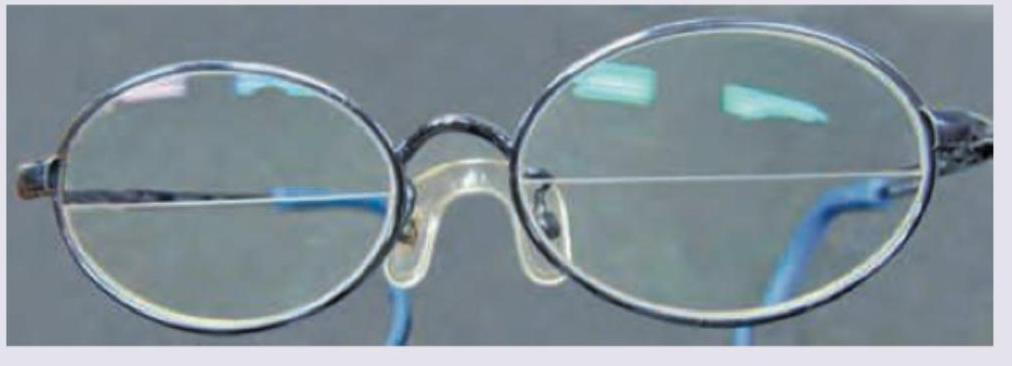
Question 23: The following spectacle is used in? (AIIMS Nov 2018)
- A. Progressive glasses for presbyopia
- B. Bifocal glasses for presbyopia (Correct Answer)
- C. Bifocals for paediatric pseudo-phakia
- D. Bifocals for adult aphakia
Explanation: ***Bifocal glasses for presbyopia*** - The image clearly shows spectacle lenses with a visible **horizontal line separating two distinct optical powers**, which is characteristic of **bifocal lenses**. - **Presbyopia** is the condition where the eye's lens loses its ability to focus on near objects, requiring a different optical correction for near vision separate from distance vision, precisely what bifocals provide. *Progressive glasses for presbyopia* - **Progressive lenses** offer a gradual change in optical power from distance to near vision without a visible dividing line, unlike the spectacles shown. - They provide a continuous range of focus, but the absence of a visible segment in progressive lenses differentiates them from bifocals. *Bifocals for paediatric pseudo-phakia* - While pediatric pseudophakia (presence of an intraocular lens in a child) might require bifocals, the question asks for the primary use of the *pictured* bifocals, which commonly address **age-related presbyopia**. - Additionally, pseudophakia itself doesn't inherently imply a need for bifocals unless there's an accommodative issue, which is more typically associated with adult presbyopia. *Bifocals for adult aphakia* - **Aphakia** is the absence of the natural lens in the eye, which requires strong corrective lenses. While bifocals can be used in aphakia to provide both distance and near correction, the pictured bifocals are a standard design most commonly associated with correcting **presbyopia** in the general population. - Aphakic corrections generally involve much higher power lenses, which might appear thicker or have different characteristics than the standard bifocal shown.
Orthopaedics
2 questionsA 10-year-old child presents with fever and wound with discharging pus from right thigh for 4 months. Given below is the X -ray of the patient. Identify the marked area:

Given is the X-ray of a 7-year-old child. Identify the deformity:

INI-CET 2018 - Orthopaedics INI-CET Practice Questions and MCQs
Question 21: A 10-year-old child presents with fever and wound with discharging pus from right thigh for 4 months. Given below is the X -ray of the patient. Identify the marked area:
- A. Sequestrum (Correct Answer)
- B. Cloacae
- C. Involucrum
- D. Woven bone
Explanation: ***Sequestrum*** - The arrow points to a dense, isolated fragment of **necrotic bone** within the bone shaft, which is a classic radiographic finding of a **sequestrum** in chronic osteomyelitis. - In chronic osteomyelitis, the host immune system attempts to wall off the infection, leading to bone necrosis and the formation of this devitalized bone fragment. *Cloacae* - A cloaca is an opening or channel in the **involucrum** (new bone formation) through which pus and necrotic debris (sequestrum) can drain from the infected bone. - The image does not clearly show an opening for drainage; rather, it highlights an internal bone fragment. *Involucrum* - The involucrum is a sheath of **new bone formation** that encapsulates the infected, necrotic bone (sequestrum) in chronic osteomyelitis. - While new bone formation is likely present, the arrow specifically indicates the denser, dead bone fragment rather than the surrounding reactive new bone. *Woven bone* - **Woven bone** is immature, rapidly formed bone, often seen during bone development, fracture healing, or in certain pathological conditions like fibrous dysplasia or Paget's disease. - The marked area is a distinct fragment of necrotic cortical bone, not indicative of diffuse woven bone formation.
Question 22: Given is the X-ray of a 7-year-old child. Identify the deformity:
- A. Coxa vara
- B. Coxa valga
- C. Perthe's disease (Correct Answer)
- D. Brodie's abscess
Explanation: ***Perthe's disease*** - The X-ray shows changes consistent with **Perthe's disease**, characterized by **avascular necrosis of the femoral head**. Findings include **flattening of the femoral head**, **sclerosis**, and potential **fragmentation**. - This condition typically affects *children between 4 and 10 years old*, matching the age of the child in the question (7 years old). *Coxa vara* - **Coxa vara** is defined by a **decreased femoral neck-shaft angle** (less than 120 degrees), leading to a more horizontal orientation of the femoral neck. - While *Perthe's disease can lead to coxa vara* as a complication, the primary pathological changes (sclerosis, flattening, fragmentation of the femoral head) are distinctive of Perthe's. *Coxa valga* - **Coxa valga** is characterized by an **increased femoral neck-shaft angle** (greater than 135-140 degrees), causing the femoral neck to be more vertical. - This is the opposite of coxa vara and is not typically associated with the radiographic findings observed in the image. *Brodie's abscess* - A **Brodie's abscess** is a **subacute or chronic osteomyelitis**, often appearing as a **well-circumscribed luncency** with a sclerotic rim, commonly found in the metaphysis of long bones. - The X-ray does not show a focal lytic lesion suggestive of an abscess; instead, it presents diffuse changes to the femoral epiphysis.
Radiology
1 questionsIdentify the lesion in a 20-year-old male whose foot X-ray is shown below:

INI-CET 2018 - Radiology INI-CET Practice Questions and MCQs
Question 21: Identify the lesion in a 20-year-old male whose foot X-ray is shown below:
- A. Ochronosis
- B. Haemophilic pseudo-tumour
- C. Pigmented villonodular synovitis
- D. Mycetoma (Correct Answer)
Explanation: ***Mycetoma*** - The X-ray image shows a **lytic lesion** with surrounding sclerosis in the calcaneus, indicated by the arrow, which is characteristic of **mycetoma**. The histological image reveals an inflammatory infiltrate with **pigmented fungal grains (brown aggregates)**, confirming the diagnosis. - Mycetoma is a chronic granulomatous infection of subcutaneous tissues, often extending to bone, particularly in the foot. Its characteristic features include **grains (colonies of microorganisms)** within the lesions. *Ochronosis* - Ochronosis would show **dark discoloration of cartilage** and connective tissues due to **homogentisic acid** deposition, leading to degenerative arthritis. This would appear on X-ray as **calcification of cartilage** (e.g., intervertebral discs, menisci) rather than focal lytic lesions with grains. - The histological image would show characteristic **ochre-colored pigment deposits**, not fungal grains. *Haemophilic pseudo-tumour* - A haemophilic pseudo-tumour is a rare complication of hemophilia, often presenting as a **large, expanding lesion** within bone or soft tissue, typically due to recurrent hemorrhage. - X-rays would reveal a **well-defined, expansile lesion** with cortical thinning or bone destruction, and histology would show features of chronic hemorrhage, fibrous tissue, and hemosiderin deposition, not fungal grains. *Pigmented villonodular synovitis* - This condition involves **proliferation of synovial tissue**, often affecting large joints like the knee or hip, leading to bone erosions and cysts. - Histology would show **hyperplastic synovium** with hemosiderin deposition, multinucleated giant cells, and lipid-laden macrophages, but not fungal grains as seen in the microscopy image.
Surgery
4 questionsWhat technique has been depicted in the image shown below?

What does the image show? (AIIMS Nov 2018)

All of the following are usually associated findings in the given condition except? (AIIMS May 2018)

A 3-month-old child presents with umbilical discharge. The appearance is shown below. Which of the following is the next step in management of this patient? (AIIMS May 2018)

INI-CET 2018 - Surgery INI-CET Practice Questions and MCQs
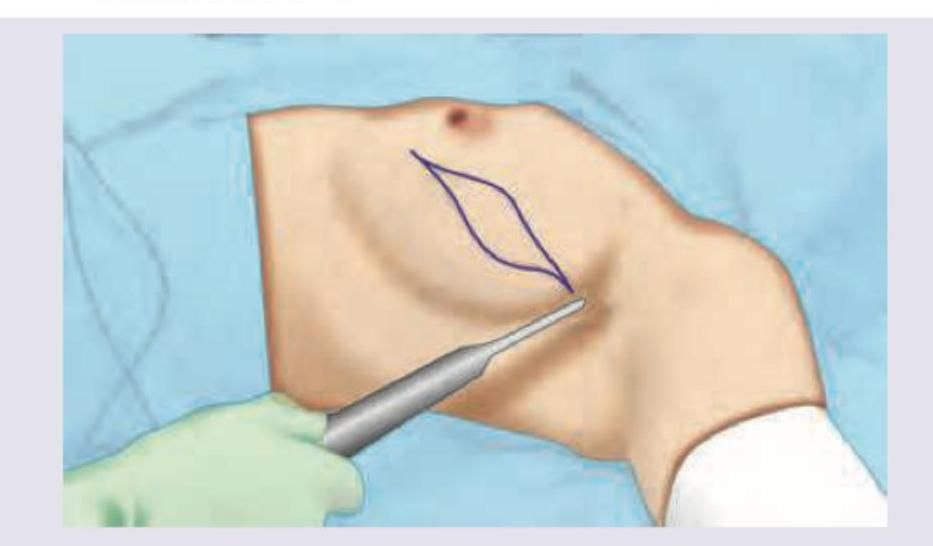
Question 21: What technique has been depicted in the image shown below?
- A. Brachytherapy
- B. USG
- C. Sentinel lymph node biopsy (Correct Answer)
- D. Lateral pectoral nerve block
Explanation: ***Sentinel lymph node biopsy*** - The image shows a **skin incision in the axilla**, which is the typical site for accessing **axillary lymph nodes for biopsy**. - A surgical instrument is poised to enter the incision, consistent with the procedure for **identifying and removing the sentinel lymph node**. *Brachytherapy* - This involves placing **radioactive sources** inside or next to the area requiring treatment, usually for cancer. - The image does not depict any radioactive sources or the specialized equipment used for brachytherapy. *USG* - **Ultrasonography (USG)** uses sound waves to create images of internal body structures. - The image shows a surgical incision and instrument, not an ultrasound transducer or screen. *Lateral pectoral nerve block* - A **nerve block** involves injecting an anesthetic close to a nerve to relieve pain or numb an area. - While it involves an injection, the image shows an incision in the axillary region, which is typically for surgical access, not solely for nerve block administration.
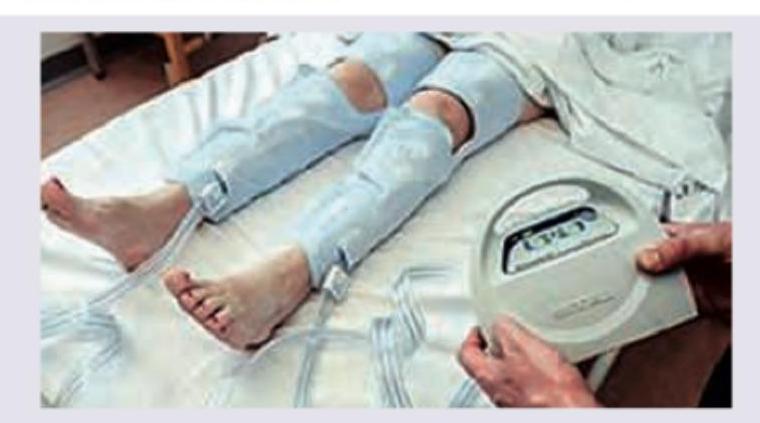
Question 22: What does the image show? (AIIMS Nov 2018)
- A. Pneumatic compression stockings (Correct Answer)
- B. Anti-shock garment
- C. Alginate dressings
- D. Compression stockings (Unna boot)
Explanation: ***Pneumatic compression stockings*** - The image clearly shows sleeves wrapped around the patient's legs, connected by **tubes to a device** that inflates and deflates these sleeves, characteristic of **intermittent pneumatic compression (IPC)**. - IPC devices are used to prevent **deep vein thrombosis (DVT)** by promoting venous blood flow through cyclical compression. *Anti-shock garment* - An anti-shock garment (e.g., **military anti-shock trousers (MAST)**) is a full-body or lower-body suit that applies circumferential pressure to the lower extremities and abdomen to auto-transfuse blood to the core organs in cases of **hypovolemic shock**. - The device in the image covers only the legs and appears to be designed for intermittent, not sustained, compression. *Alginate dressings* - **Alginate dressings** are topical wound care products derived from seaweed, used to absorb exudate from wounds. - They are used directly on wounds and do not involve mechanical devices or full limb coverage like that shown. *Compression stockings (Unna boot)* - While an Unna boot is a type of **sustained compression bandage** (paste bandage) for leg ulcers, it provides continuous, static compression and is typically left in place for days. - The device in the image is clearly an **active, intermittent mechanical system** with a pump, not a static bandage.
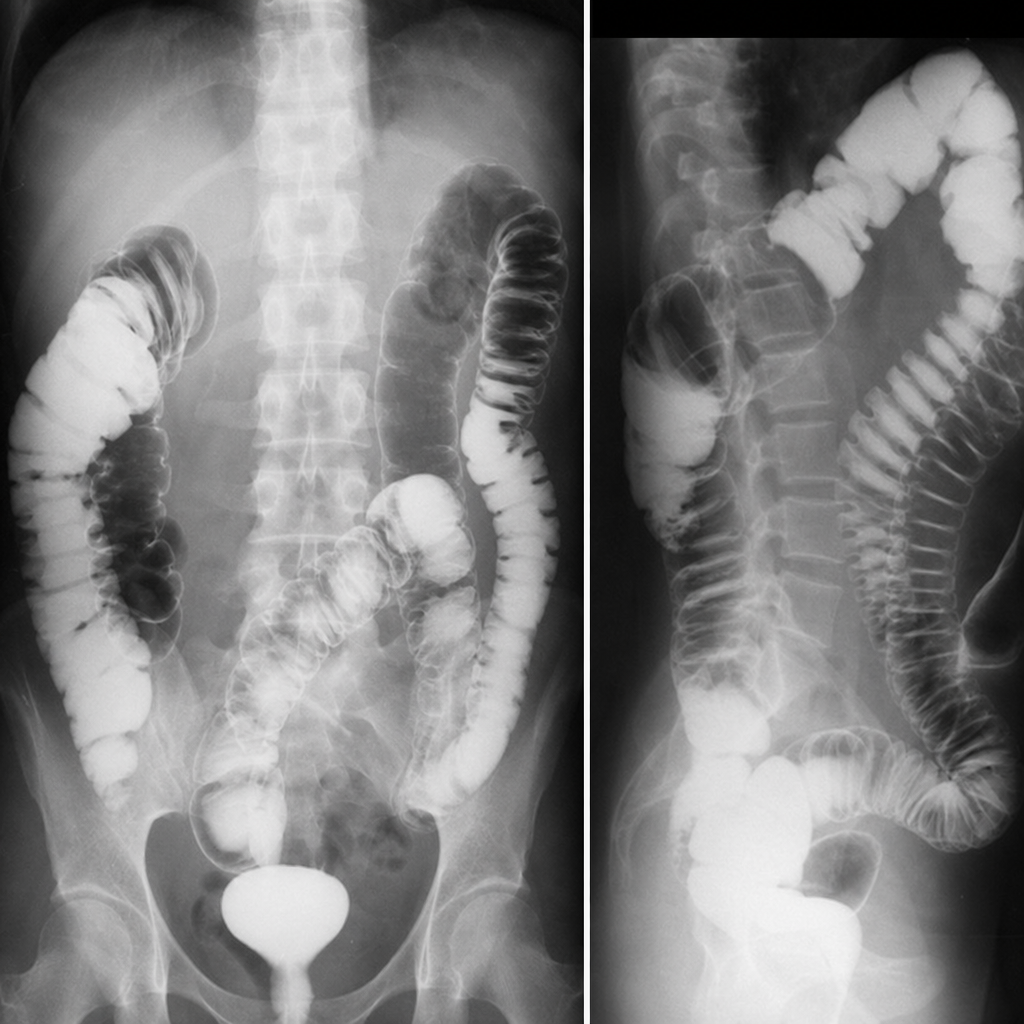
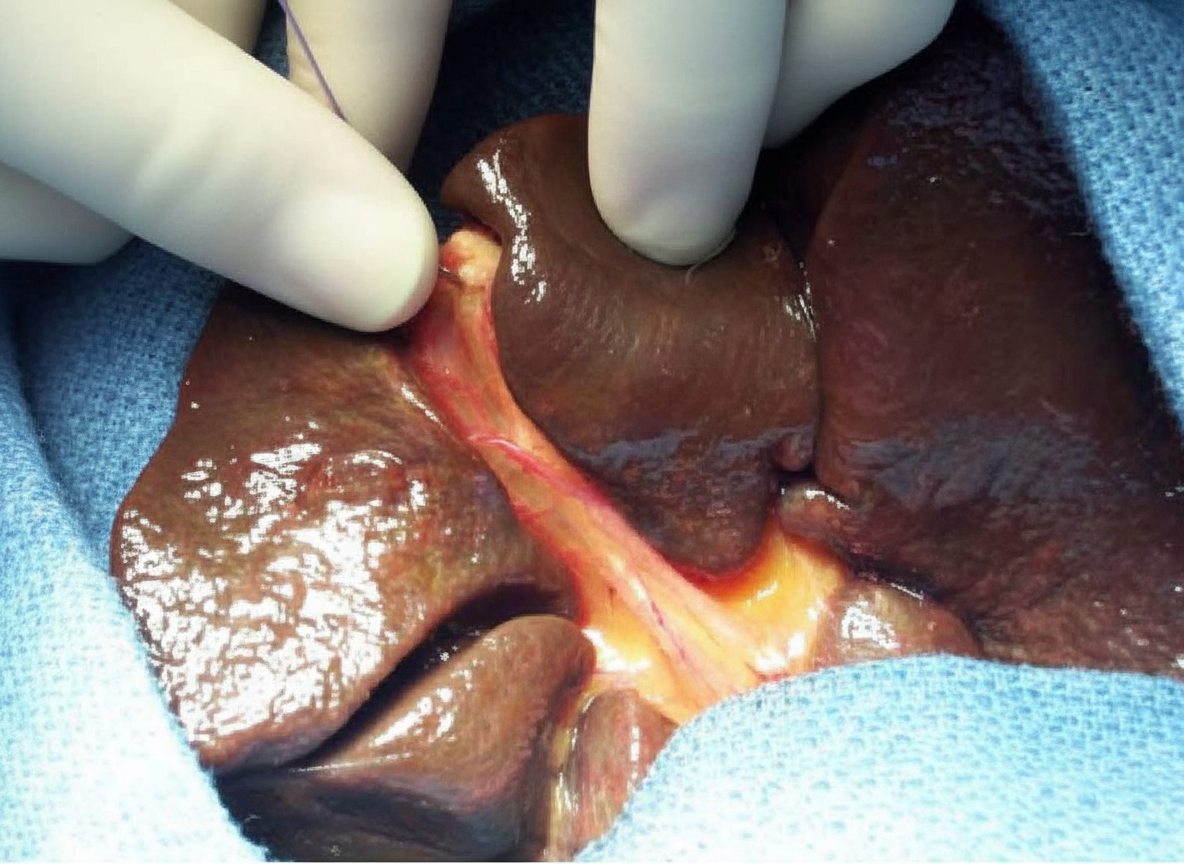
Question 23: All of the following are usually associated findings in the given condition except? (AIIMS May 2018)
- A. Hepatic artery anomalies
- B. Absent kidney (Correct Answer)
- C. Malrotation of gut
- D. Polysplenia
- E. Cardiac anomalies
Explanation: ***Absent kidney*** - **Absent kidney (renal agenesis)** is not a typical associated finding in biliary atresia. - Biliary atresia primarily involves malformations of the **bile ducts** and is not directly linked to renal agenesis. - This is the correct answer to this "EXCEPT" question. *Hepatic artery anomalies* - **Hepatic artery anomalies**, such as aberrant or hypoplastic hepatic arteries, are frequently associated with biliary atresia. - These vascular malformations can contribute to the pathogenesis or progression of the disease. *Malrotation of gut* - **Intestinal malrotation** is a common abdominal anomaly found in conjunction with biliary atresia. - The altered embryological development affecting the biliary system can simultaneously impact gut rotation. *Polysplenia* - **Polysplenia**, a condition with multiple small spleens, is part of the heterotaxy syndrome often linked with biliary atresia. - This association reflects a broader developmental defect affecting left-right body axis determination. *Cardiac anomalies* - **Cardiac anomalies** are recognized associations with biliary atresia, particularly in the syndromic form. - These can include various congenital heart defects as part of the broader malformation syndrome.
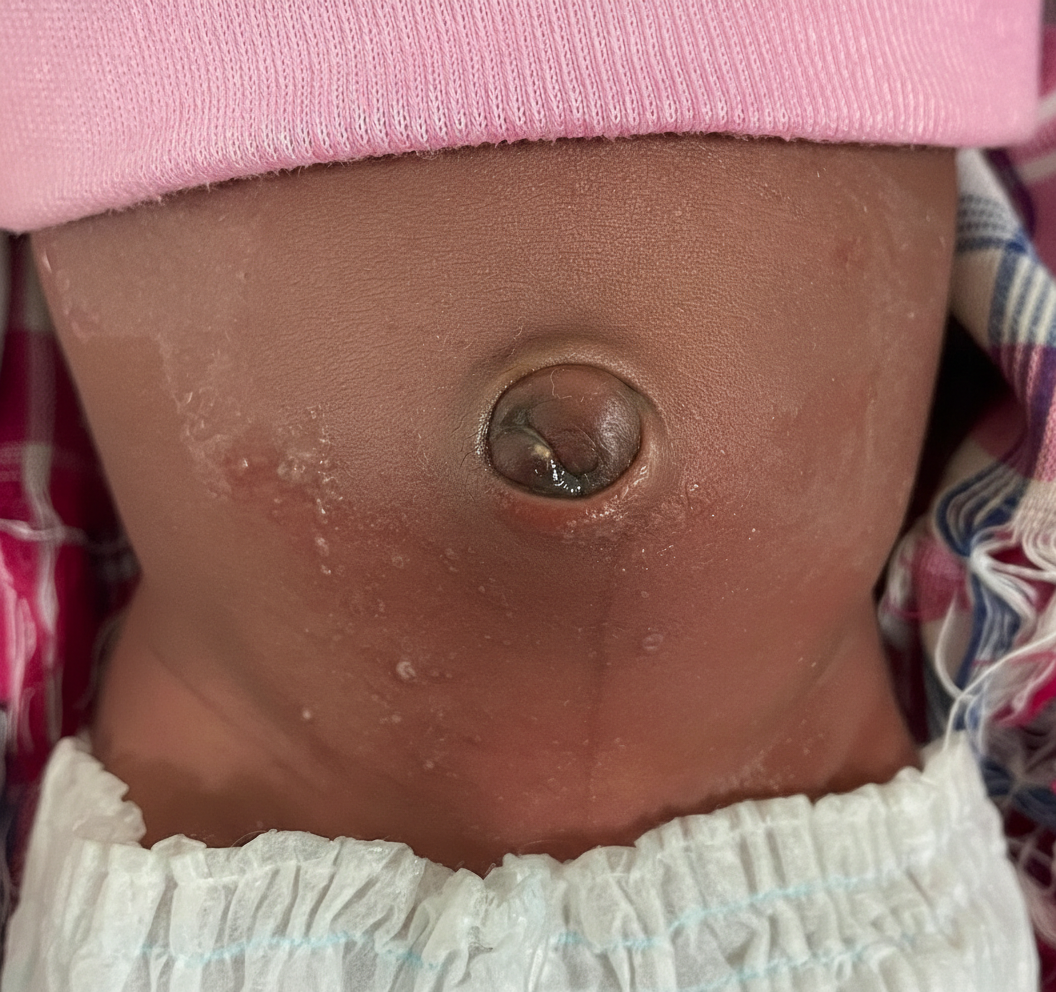
Question 24: A 3-month-old child presents with umbilical discharge. The appearance is shown below. Which of the following is the next step in management of this patient? (AIIMS May 2018)
- A. MRI abdomen
- B. USG abdomen (Correct Answer)
- C. CECT
- D. Exploratory laparotomy
- E. MCUG
Explanation: ***USG abdomen*** - An **urgent ultrasound** of the abdomen is the initial step for umbilical discharge in an infant, especially with a suspected **patent omphalomesenteric duct** or **urachus**, which USG can visualize and identify. - It's a **non-invasive** and readily available method to confirm the diagnosis and assess the extent of the connection or any associated complications without exposing the infant to radiation. *MRI abdomen* - **MRI** is typically reserved for cases where **ultrasound is inconclusive** or if there is a strong suspicion of more complex anatomical abnormalities that require higher resolution imaging. - It involves **longer scan times** and may require **sedation** in infants, making it less ideal as a first-line diagnostic tool for this presentation. *CECT* - **CECT (Contrast-Enhanced Computed Tomography)** involves significant **radiation exposure**, which is generally avoided in infants unless absolutely necessary and other modalities have failed. - While it provides detailed anatomical information, the **risks of radiation** and potential need for **contrast material** make it an unsuitable initial diagnostic choice for umbilical discharge. *MCUG* - **MCUG (Micturating Cystourethrogram)** is specifically used to evaluate the **bladder and urethra** during voiding, primarily for vesicoureteral reflux or urethral abnormalities. - While it may be considered if a **patent urachus** with bladder connection is suspected, it is **not the first-line investigation** for umbilical discharge and involves **radiation exposure** and catheterization. *Exploratory laparotomy* - **Exploratory laparotomy** is a **surgical procedure** and is considered a definitive treatment or a last resort for diagnosis when other imaging modalities have been exhausted and the clinical picture remains unclear, or in cases of acute complications like **peritonitis** or **bowel obstruction**. - Performing an invasive surgery as the first step for diagnosis without prior imaging is **not standard medical practice** and carries significant risks for an infant.