Anatomy
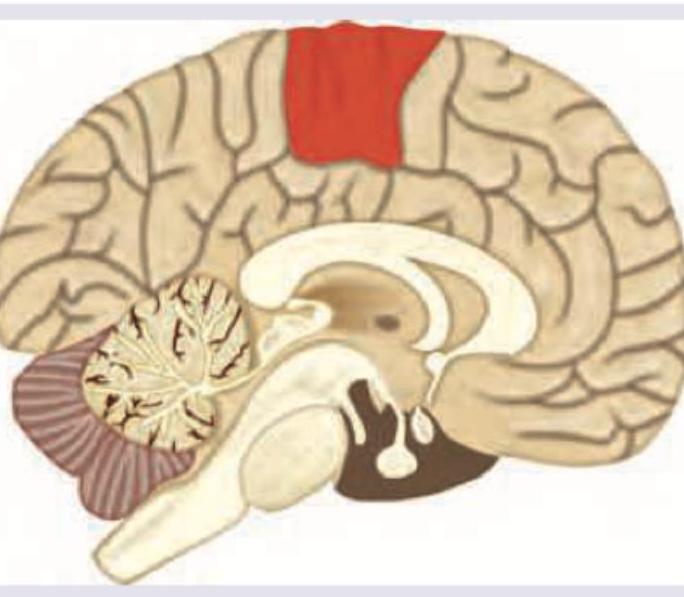
2 questionsOcclusion of blood supply of the area marked in red will lead to all of the following except:
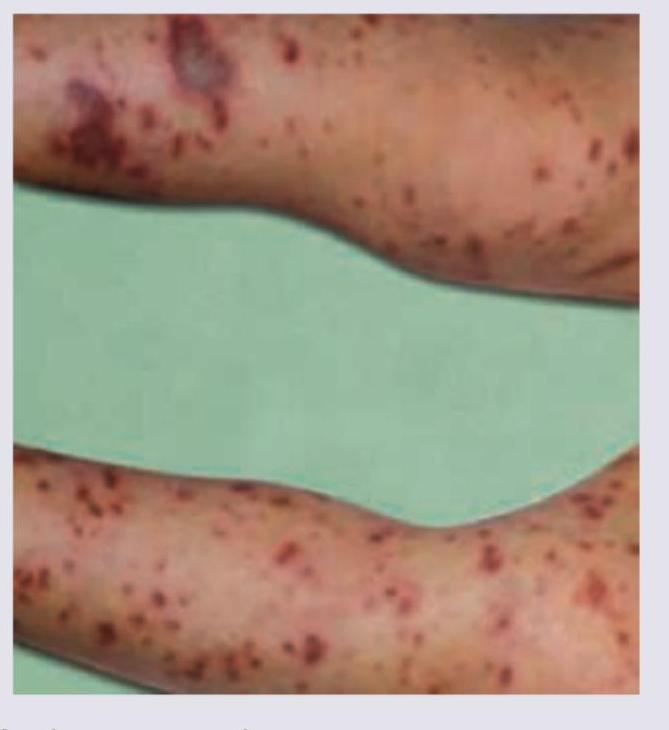
A child is brought to your OPD with rashes as shown below along with fever. Diagnosis is:

INI-CET 2018 - Anatomy INI-CET Practice Questions and MCQs
Question 11: Occlusion of blood supply of the area marked in red will lead to all of the following except:
- A. Urinary incontinence
- B. Rectal incontinence
- C. Apraxia (Constructional) (Correct Answer)
- D. Peri-anal anaesthesia
Explanation: ***Apraxia (Constructional)*** - The area marked in red represents the **medial portion of the precentral gyrus (motor cortex)** and **postcentral gyrus (sensory cortex)**, as well as the **paracentral lobule**, which are supplied by the **anterior cerebral artery (ACA)**. - Constructional apraxia is typically associated with **posterior parietal lobe lesions**, particularly in the non-dominant hemisphere, which is supplied by the posterior cerebral artery and middle cerebral artery branches, not the ACA. *Urinary incontinence* - The **paracentral lobule**, located in the area supplied by the ACA (marked in red), contains centers for **bladder control** and voluntary micturition. - Damage to this region can lead to **urinary incontinence** due to disrupted cortical control over bladder function. *Rectal incontinence* - Similar to bladder control, the **paracentral lobule** also plays a role in **voluntary bowel control**. - Ischemia in this region due to ACA occlusion can therefore result in **rectal incontinence**. *Peri-anal anaesthesia* - The **somatosensory cortex** representing the lower limbs and perineum is located in the **paracentral lobule** (postcentral gyrus part). - Occlusion of the ACA, supplying this region, can lead to **sensory deficits**, including **anaesthesia** in the peri-anal area.
Question 12: A child is brought to your OPD with rashes as shown below along with fever. Diagnosis is:
- A. Meningococcemia (Correct Answer)
- B. Dengue haemorrhagic fever
- C. Leptospirosis
- D. Scrub typhus
Explanation: ***Meningococcemia*** - The image shows a **purpuric rash** with some confluent lesions, which are highly characteristic of **meningococcemia**, especially in a child with fever. - This rash is caused by **endotoxin-mediated vascular damage**, leading to petechiae and purpura that do not blanch under pressure. *Dengue haemorrhagic fever* - While dengue can cause petechiae and purpuric rashes, it typically presents with a more generalized rash, bleeding manifestations like **epistaxis** or **gum bleeding**, and often a history of mosquito exposure. - The rash in dengue is often described as an **"islands of white in a sea of red"** pattern, which is distinct from the more widespread, darker purpuric lesions seen in the image. *Leptospirosis* - Leptospirosis can manifest with a rash, but it is typically **maculopapular** or **erythematous**, sometimes appearing petechial. However, it rarely presents with the extensive, dark purpuric lesions shown, which are indicative of widespread microvascular damage. - Other classic features include **conjunctival suffusion**, myalgia, and severe headache, often following exposure to contaminated water or animal urine. *Scrub typhus* - Scrub typhus typically presents with a **maculopapular rash** that may become generalized, often sparing the face, palms, and soles. A characteristic **eschar** at the site of the chigger bite is a key diagnostic feature. - While petechiae can occur, the widespread, dark purpuric lesions seen in the image are not typical for scrub typhus.
Dermatology
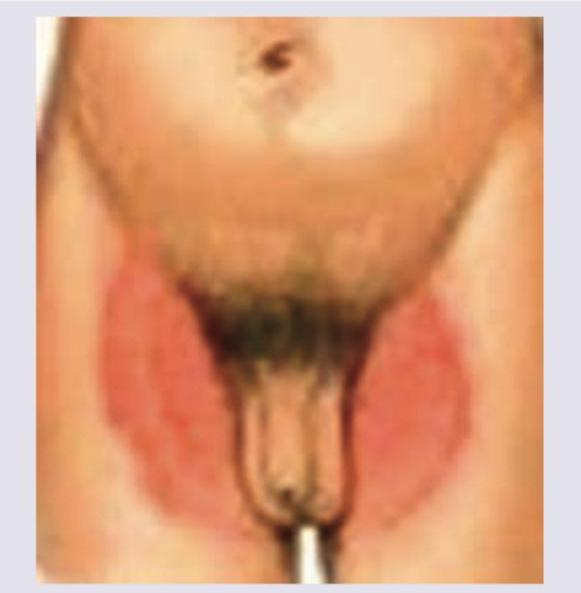
5 questionsA patient has the following rash in the groin. Which of the following cannot be a cause?

A 28-year-old lady has asymptomatic dome-shaped small lesions on the forehead for the past 2 months. She lives with her 2-year-old daughter who also is having similar lesions. What is the causative agent of these lesions?
A patient presents with 1-year history of painful nodulocystic acne as shown in the image. Which of the following is the drug of choice for this case?

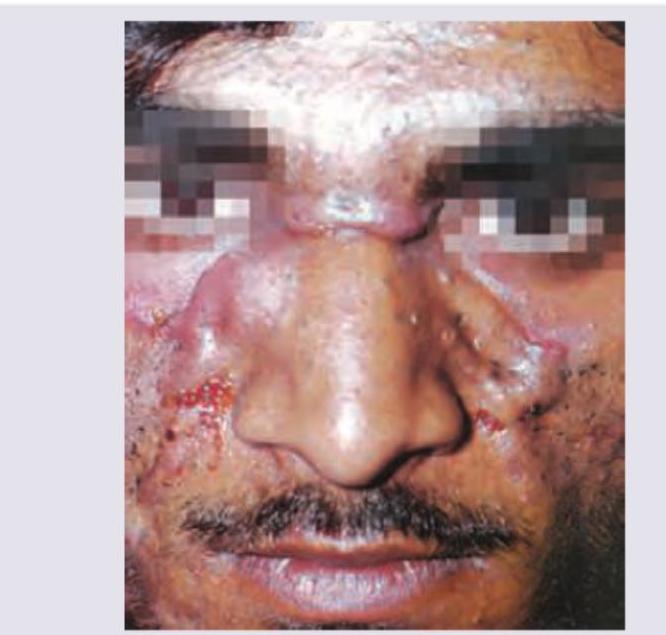
What is the best management of the case shown?

A patient presented with fever and joint pain for which she was put on NSAIDs. After 10 days she developed a skin lesion as shown in the image. Diagnosis is:

INI-CET 2018 - Dermatology INI-CET Practice Questions and MCQs
Question 11: A patient has the following rash in the groin. Which of the following cannot be a cause?
- A. Aspergillus (Correct Answer)
- B. Microsporum
- C. Epidermophyton
- D. Trichophyton
Explanation: ***Aspergillus*** - **Aspergillus** is a **mold (filamentous fungus)**, NOT a dermatophyte, and therefore **cannot cause tinea cruris** (jock itch). - Dermatophytes (Trichophyton, Microsporum, Epidermophyton) are specialized fungi that digest keratin and cause superficial skin infections with characteristic ringworm patterns. - Aspergillus typically causes invasive infections in immunocompromised patients (invasive aspergillosis), allergic bronchopulmonary aspergillosis (ABPA), or rarely deep cutaneous infections in severely immunocompromised individuals—not superficial groin rashes. - **Key distinction:** Tinea cruris = dermatophyte infection; Aspergillus = opportunistic mold *Microsporum* - **Microsporum** species are dermatophytes that CAN cause tinea cruris, though less commonly than Trichophyton and Epidermophyton. - *M. canis* is the most common species, typically causing **tinea capitis** (scalp) and **tinea corporis** (body), but can extend to the groin area. - While not the most frequent cause, it remains a possible etiology and should not be excluded. *Epidermophyton* - **Epidermophyton floccosum** is one of the **most common causes** of tinea cruris. - Presents with itchy, erythematous, scaling patches with well-defined, elevated borders in the inguinal folds. - Thrives in warm, moist environments, making the groin an ideal location. - **Classic presentation:** bilateral involvement with central clearing and advancing scaly borders. *Trichophyton* - **Trichophyton rubrum** is the **MOST common** cause of tinea cruris worldwide, followed by **T. mentagrophytes**. - Causes characteristic pruritic, erythematous, annular or serpiginous lesions with raised, scaly borders. - T. rubrum accounts for the majority of dermatophyte infections in the groin, feet, and nails.
Question 12: A 28-year-old lady has asymptomatic dome-shaped small lesions on the forehead for the past 2 months. She lives with her 2-year-old daughter who also is having similar lesions. What is the causative agent of these lesions?
- A. HSV
- B. HPV
- C. Poxvirus (Correct Answer)
- D. VZV
Explanation: ***Poxvirus*** - The description of asymptomatic, **dome-shaped small lesions** and their presence in both a mother and her young child strongly suggests **molluscum contagiosum**, which is caused by a **poxvirus**. - Molluscum contagiosum lesions are typically **umbilicated**, which often appears dome-shaped, and are highly contagious, commonly spread through close contact. *HSV* - **Herpes Simplex Virus (HSV)** typically causes clusters of **painful vesicles** on an erythematous base, which later crust over. - The lesions described are asymptomatic and dome-shaped, not vesicular or painful. *HPV* - **Human Papillomavirus (HPV)** causes **warts**, which are rough, verrucous papules or plaques, not smooth dome-shaped lesions. - While warts can spread through close contact, their morphology differs significantly from the lesions described. *VZV* - **Varicella-Zoster Virus (VZV)** causes **chickenpox** (widespread itchy vesicles) or **shingles** (painful dermatomal rash). - The lesions described do not fit the characteristic presentation of either chickenpox or shingles, as they are asymptomatic and dome-shaped.
Question 13: A patient presents with 1-year history of painful nodulocystic acne as shown in the image. Which of the following is the drug of choice for this case?
- A. Topical clindamycin
- B. Oral isotretinoin (Correct Answer)
- C. Topical adapalene
- D. Oral doxycycline
Explanation: ***Oral isotretinoin*** - This patient presents with severe **nodulocystic acne**, which is characterized by deep, painful lesions that often lead to scarring, and has been present for 1 year. Oral isotretinoin is the **drug of choice** for severe, recalcitrant nodulocystic acne due to its ability to target all four pathogenic factors of acne. - Isotretinoin reduces **sebum production**, normalizes follicular keratinization, decreases *P. acnes* colonization, and has anti-inflammatory effects, making it highly effective for severe cases. *Topical clindamycin* - **Topical clindamycin** is an antibiotic primarily used for mild to moderate inflammatory acne, particularly papules and pustules. - It is **insufficient** for severe nodulocystic acne due to its limited penetration and inability to address the deeper, more severe inflammation and scarring potential. *Topical adapalene* - **Topical adapalene** is a retinoid used for mild to moderate comedonal and inflammatory acne. It helps normalize follicular keratinization and has anti-inflammatory properties. - While effective for less severe acne, it is generally **not potent enough** to treat severe nodulocystic acne effectively, especially given its chronic nature as described. *Oral doxycycline* - **Oral doxycycline** is a systemic antibiotic used for moderate to severe inflammatory acne, primarily due to its anti-inflammatory properties and its effect on reducing *P. acnes*. - Although it can be used for severe acne, it is **less effective** than oral isotretinoin for nodulocystic acne, especially in the long-term, and does not address the underlying pathogenesis (like sebaceous gland activity) as comprehensively as isotretinoin.
Question 14: What is the best management of the case shown?
- A. Dapsone plus steroids
- B. Stop smoking and screen for cancer (Correct Answer)
- C. Vitamin supplements
- D. Antifungals for oral candidiasis
Explanation: ***Stop smoking and screen for cancer*** - The image shows **smoker's palate (nicotinic stomatitis)**, characterized by diffuse white thickening of the palatal mucosa with red dots representing inflamed salivary gland orifices. This condition is caused by **chronic heat exposure from smoking**. - While generally benign, smoker's palate indicates a high risk for other **oral cancers**, particularly those involving the lips, tongue, and floor of the mouth, necessitating smoking cessation and regular screening. *Dapsone plus steroids* - This combination is typically used for **autoimmune blistering diseases** like **dermatitis herpetiformis** or **pemphigoid**, which present with different clinical features. - Smoker's palate is not an autoimmune condition and would not respond to these treatments. *Vitamin supplements* - Vitamin supplements are not a treatment for smoker's palate, as it is a localized lesion caused by irritation from smoke. - While general nutritional support is good, it doesn't address the underlying cause or potential complications of this specific condition. *Antifungals for oral candidiasis* - **Oral candidiasis (thrush)** typically presents as removable white plaques on the oral mucosa, often associated with immunosuppression or antibiotic use. - The lesions in the image are firmly attached, non-removable, and show specific morphological changes (red dots), which are not characteristic of candidiasis.
Question 15: A patient presented with fever and joint pain for which she was put on NSAIDs. After 10 days she developed a skin lesion as shown in the image. Diagnosis is:
- A. Chikungunya
- B. Dengue
- C. Fixed drug eruption (Correct Answer)
- D. Melasma
Explanation: ***Fixed drug eruption*** - The appearance of a **well-demarcated, erythematous, and pigmented patch** on the skin, combined with a history of recent **NSAID use** and prior fever/arthralgia (suggesting possible prior exposure and sensitization to the drug), is highly characteristic of fixed drug eruption. - FDEs typically recur at the **same site(s)** upon re-exposure to the offending drug, and NSAIDs are known culprits. The lesion often heals with post-inflammatory **hyperpigmentation**. *Chikungunya* - While Chikungunya causes **fever and severe joint pain**, the rash associated with it is typically a more generalized, **maculopapular rash**, not a localized, well-demarcated lesion as seen in the image. - The onset of the skin lesion **10 days after starting NSAIDs** points more towards a drug reaction than a viral exanthem, especially with the appearance of a **pigmented patch**. *Dengue* - Dengue fever presents with **fever, joint pain, and often a rash**, but the rash is usually a generalized **macular or maculopapular eruption**, sometimes with petechiae, and is not typically a single, demarcated, post-inflammatory hyperpigmented lesion. - Similar to Chikungunya, the timing and morphology of the lesion are not typical for Dengue rash. *Melasma* - Melasma is a chronic skin condition causing **dark, discolored patches** on the face, primarily due to hormonal changes (e.g., pregnancy, birth control) or sun exposure. - It does not typically present acutely after drug ingestion with accompanying inflammation or an eruption-like morphology.
Pathology
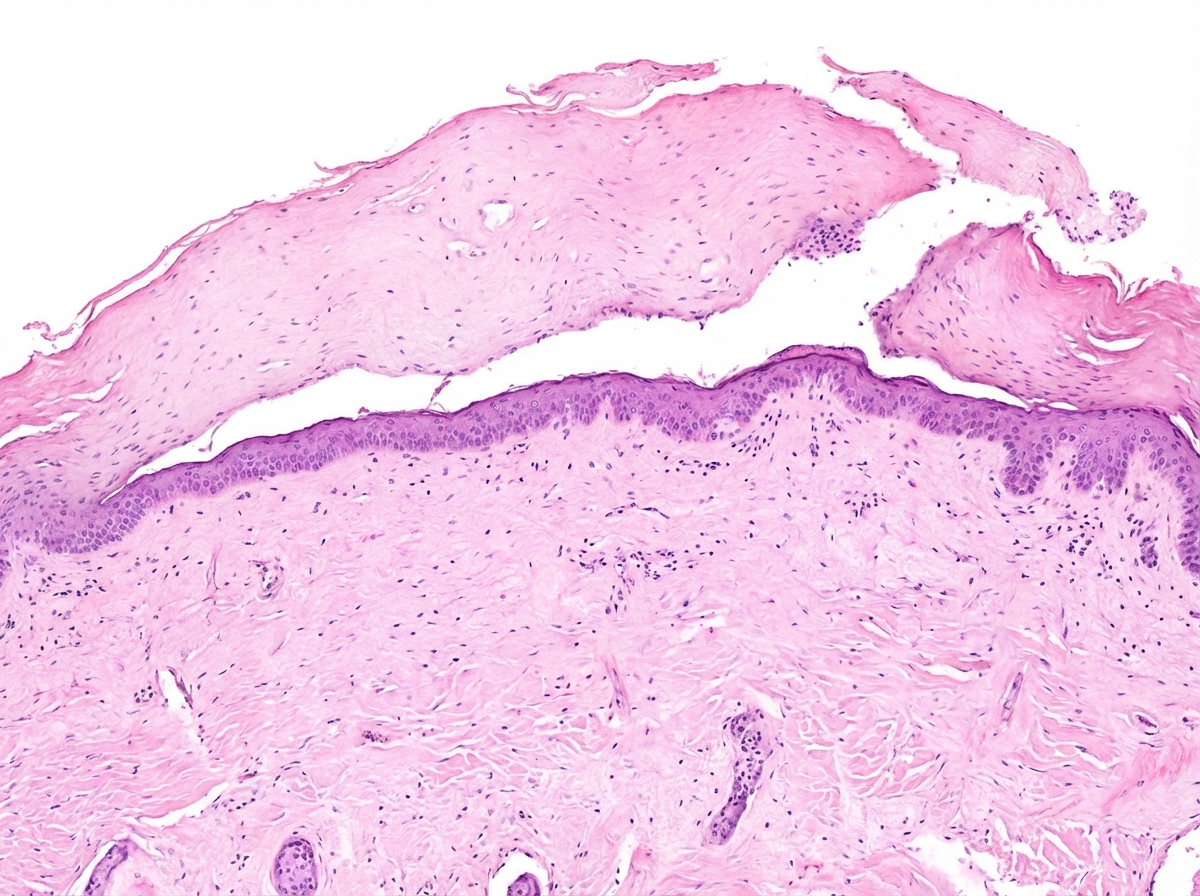
1 questionsIdentify the histopathological slide shown below:

INI-CET 2018 - Pathology INI-CET Practice Questions and MCQs
Question 11: Identify the histopathological slide shown below:
- A. Toxic epidermal necrolysis (Correct Answer)
- B. Lepromatous leprosy
- C. Pemphigus vulgaris
- D. Mycosis fungoides
- E. Bullous pemphigoid
Explanation: ***Toxic epidermal necrolysis*** - Histopathology of **Toxic Epidermal Necrolysis (TEN)** characteristically shows **full-thickness epidermal necrosis** with minimal or no dermal inflammation [1]. - This extensive epidermal death leads to the characteristic **Nikolsky's sign** and widespread skin detachment. *Lepromatous leprosy* - Histology of **lepromatous leprosy** typically reveals a large number of **acid-fast bacilli** within macrophages, forming foamy cells. - There is often a **grenz zone** (a clear zone) separating the inflammatory infiltrate from the overlying epidermis. *Pemphigus vulgaris* - **Pemphigus vulgaris** is characterized by **suprabasal acantholysis**, leading to the formation of intraepidermal blisters. - Immunofluorescence studies show a characteristic **"chicken wire" pattern** of IgG and C3 deposition on the cell surface of keratinocytes. *Mycosis fungoides* - **Mycosis fungoides** is a cutaneous T-cell lymphoma, and its histology shows an epidermotropic infiltrate of atypical lymphocytes [2]. - Characteristic findings include **Pautrier microabscesses** (collections of atypical lymphocytes in the epidermis) and cerebriform nuclei of the lymphocytes [2]. **References:** [1] Kumar V, Abbas AK, et al.. Robbins and Cotran Pathologic Basis of Disease. 9th ed. The Skin, pp. 1166-1168. [2] Cross SS. Underwood's Pathology: A Clinical Approach. 6th ed. Common Clinical Problems From Diseases Of The Urinary And Male Genital Tracts, pp. 564-565.
Radiology
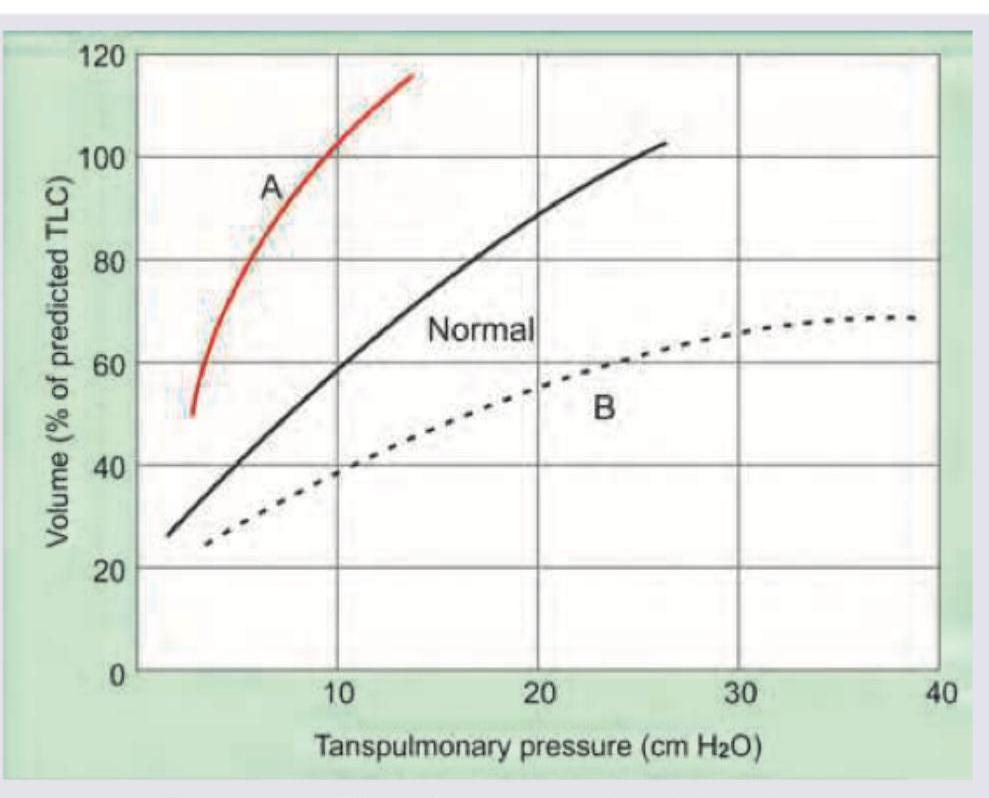
1 questionsCurve A signifies which of the following?

INI-CET 2018 - Radiology INI-CET Practice Questions and MCQs
Question 11: Curve A signifies which of the following?
- A. (a) (Correct Answer)
- B. (b)
- C. (c)
- D. (d)
Explanation: ***Option (a) - Emphysema (Curve A is correct)*** - Curve A shows a **leftward shift** compared to the normal curve on the pressure-volume diagram - For any given transpulmonary pressure, a **higher lung volume** is achieved - This indicates **increased lung compliance** - the lungs are easier to inflate - Characteristic of **emphysema**, where there is **loss of elastic recoil** due to destruction of alveolar walls and elastic tissue - In emphysema, lungs inflate easily but have difficulty deflating due to loss of elastic recoil *Option (b) - Normal* - This would represent the **baseline normal pressure-volume curve** - Serves as a reference point to compare pathological states - Shows normal lung compliance and elastic recoil *Option (c) - Pulmonary Fibrosis* - This would show a **rightward shift** on the pressure-volume curve - For any given transpulmonary pressure, a **lower lung volume** is achieved - Indicates **decreased lung compliance** - the lungs are stiffer and harder to inflate - Characteristic of **restrictive lung diseases** like pulmonary fibrosis, where excessive collagen deposition makes lungs stiff *Option (d) - Other Pathological State* - This would represent another abnormal curve pattern - Could include conditions like ARDS, pneumothorax, or other restrictive/obstructive patterns - The specific interpretation depends on the curve shown in the image
Surgery
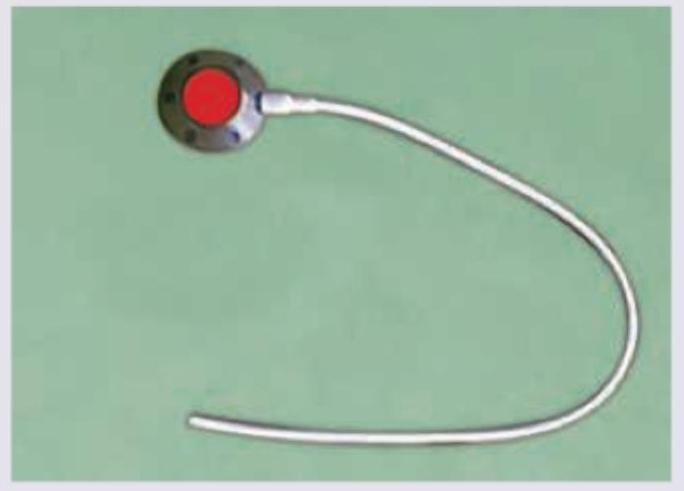
1 questionsThe following image shows:

INI-CET 2018 - Surgery INI-CET Practice Questions and MCQs
Question 11: The following image shows:
- A. Chemo-port
- B. Ommaya reservoir (Correct Answer)
- C. Peripherally inserted Central catheter
- D. Thermo-probe
Explanation: ***Ommaya reservoir*** - The image displays an **Ommaya reservoir**, characterized by a **dome-shaped port** connected to a catheter. This device is typically implanted subcutaneously on the scalp and the catheter is placed into a cerebral ventricle. - It is used for repeated access to the **cerebrospinal fluid (CSF)**, primarily for administering chemotherapy directly into the CSF or for drawing CSF samples. *Chemo-port* - A chemo-port (also known as a port-a-cath) is a central venous access device, usually implanted under the skin in the chest, with the catheter tip residing in a large central vein. - While also used for chemotherapy, its structure differs, primarily being a **subcutaneous port** with a catheter ending in the venous system, not directly in brain ventricles like an Ommaya reservoir. *Peripherally inserted Central catheter* - A PICC line is a long, thin tube inserted into a peripheral vein (usually in the arm) and advanced until the tip reaches a large vein in the chest near the heart. - It is used for long-term intravenous access but is not designed for direct access to the cerebrospinal fluid. *Thermo-probe* - A thermo-probe is a device used to measure temperature, often in a medical context for monitoring body temperature during surgery or critical care. - Its design is entirely different, typically consisting of a sensor at the tip of a flexible wire, without the distinct reservoir and catheter structure seen in the image.