Nephrology Indian Medical PG Flashcards - Medical Study Cards
Master Nephrology with OnCourse flashcards. These spaced repetition flashcards are designed for medical students preparing for NEET PG, USMLE Step 1, USMLE Step 2, MBBS exams, and other medical licensing examinations.
Nephrology Flashcard Deck - 132 Cards
Flashcard 1: Half and half nails, also called Lindsay nails are specific for _____
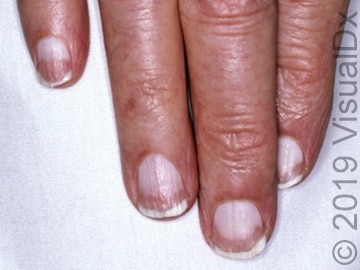
Answer: renal failure
Flashcard 2: _____ renal tubular acidosis is also known as type 1 RTA
Answer: Distal
Flashcard 3: _____ is the most common cause of nephrotic syndrome in Caucasian adults
Answer: Membranous nephropathy
Flashcard 4: Plasma potassium _____ by alkalinization in Type 2 RTA
Answer: decreases further
Flashcard 5: Plasma postassium _____ by alkalinization in Type 1 RTA
Answer: normalizes
Flashcard 6: Sodium Bicarbonate is used in the management of hyperkalemia to deal with the _____ caused by rapid cell buffering
Answer: acidosis
Flashcard 7: _____ Syndrome and Multiple Myeloma can both cause proximal (type 2) renal tubular acidosis
Answer: Fanconi
Flashcard 8: Treatment of cystine kidney stones involves _____ of urine and a low-sodium diet
Answer: alkalinization
Flashcard 9: In _____, the principal cells of the collecting duct are unresponsive to ADH due to a defect in the V2 receptor, Gs protein, or adenylyl cyclase
Answer: nephrogenic diabetes insipidus
Flashcard 10: Risk factors for nephrolithiasis include:- high _____ concentration in the urinary filtrate - low urine volume
Answer: solute
Flashcard 11: The most common kidney stone presentation is a _____ stone in a patient with hyper-calciuria and normo-calcemia
Answer: calcium oxalate
Flashcard 12: Nephritic syndrome is characterized by limited _____-uria < 3.5 g/day
Answer: protein
Flashcard 13: _____ is used for the treatment of struvite stone of kidneys.
Answer: Acetohydroxamic acid
Flashcard 14: SIADH is characterized by _____ osmolality > serum osmolality
Answer: urine
Flashcard 15: The _____ form of polycystic kidney disease typically presents in 4th or 5th decade
Answer: autosomal dominant
Flashcard 16: If the measured PCO2 _____ predicted PCO2 using Winters formula, then the metabolic acidosis has a concomitant respiratory acidosis
Answer: >
Flashcard 17: _____ is characterized by thrombocytopenia, microangiopathic hemolytic anemia, and acute renal failure
Answer: Hemolytic uremic syndrome (HUS)
Flashcard 18: IgA nephropathy typically presents during childhood with episodic gross or microscopic _____-uria or RBC casts
Answer: hemat
Flashcard 19: _____ syndrome occurs due to antibodies against the glomerular and alveolar basement membranes
Answer: Goodpasture
Flashcard 20: The cause of focal segmental glomerulosclerosis is usually idiopathic, but may be secondary to:- massive _____- interferon treatment- congenital kidney malformations that cause chronic kidney disease
Answer: obesity
Flashcard 21: _____ renal tubular acidosis is also known as type 2 RTA
Answer: Proximal
Flashcard 22: Cardiovascular/Renal_____ inhibitors slow the progression of diabetic nephropathy
Answer: ACE
Flashcard 23: Type _____ RTA also presents with hypokalemia with metabolic acidosis
Answer: 2
Flashcard 24: The consequences of _____ may be remembered using the mnemonic "MAD HUNGER": M.A: Metabolic AcidosisD: Dyslipidemia (especially increased triglycerides)H: HyperkalemiaU: Uremia N: Na+ / H2O retentionG: Growth retardation and developmental delayE: Erythropoietin failure (anemia) R: Renal osteodystrophy
Answer: renal failure
Flashcard 25: Gordon's syndrome, also referred to as Pseudohypoaldosteronism II, presents with metabolic _____ and hyperkalemia
Answer: acidosis
Flashcard 26: Patients with renal artery stenosis will present with _____ and flank bruits
Answer: abdominal
Flashcard 27: Acute interstitial nephritis is associated with _____-uria and pyruria (classically eosinophils)
Answer: hemat
Flashcard 28: _____ syndrome is a renal tubular defect characterized by a defect in the DCT (location) of the nephron
Answer: Gitelman
Flashcard 29: Chronic renal failure is most commonly caused by _____, hypertension, and glomerular disease
Answer: diabetes mellitus
Flashcard 30: Nephrotic syndrome results in _____, which manifests as pitting edema and secondary hyperaldosteronism
Answer: hypoalbuminemia
Flashcard 31: _____ is the most common cause of nephrotic syndrome in adults.
Answer: FSGS
Flashcard 32: _____ renal tubular acidosis is also known as type 4 RTA
Answer: Hyperkalemic
Flashcard 33: _____ renal tubular acidosis is associated with increased risk for calcium phosphate kidney stones
Answer: Distal
Flashcard 34: Signs of Post-Strep Glomerulonephritis include dark, "_____"-colored urine and facial edema
Answer: cola
Flashcard 35: Renal cell carcinoma rarely may present with _____-sided varicocele in males
Answer: left
Flashcard 36: A good rule of thumb for the relationship between GFR and serum creatinine is that everytime GFR _____, serum creatinine doubles
Answer: halves
Flashcard 37: IgA nephropathy typically follows a _____ or GI tract infection
Answer: respiratory
Flashcard 38: _____ diabetes insipidus is often caused by ADH receptor mutations
Answer: Nephrogenic
Flashcard 39: The hallmark of acute kidney injury is _____, often with oliguria
Answer: azotemia
Flashcard 40: The causes of _____ anion gap metabolic acidosis may be remembered with the mnemonic HARDASS: H: hyperalimentation (artificial supply of nutrition)A: Addison diseaseR: renal tubular acidosisD: diarrheaA: acetazolamideS: spironolactone S: saline infusion
Answer: normal
Flashcard 41: Chronic _____ disease can cause a secondary hyperparathyroidism syndrome known as Renal Osteodystrophy, which is characterized by bone lesions due to increased bone resorption (from elevated PTH)
Answer: renal
Flashcard 42: _____ is a renal tubular defect characterized by an autosomal recessive inherited deficiency of the enzyme 11-hydroxysteroid dehydrogenase
Answer: Syndrome of apparent mineralocorticoid excess
Flashcard 43: Less common causes of hydronephrosis include _____ fibrosis, vesicoureteral reflux, and Unilateral Renal Agenesis
Answer: retroperitoneal
Flashcard 44: Indications for acute dialysis may be remembered with the mnemonic AEIOU:A - _____E - severe Electrolyte abnormalitiesI - substance IntoxicationO - volume OverloadU - Uremic symptoms
Answer: Acidosis
Flashcard 45: Acute pyelonephritis may present with _____ in the urine +/- WBC casts
Answer: WBCs
Flashcard 46: A patient that was given a penicillin drug that has _____-creased BUN/creatinine,eosino-phils in urine and sterile pyuria most likely has interstitial nephritis
Answer: in
Flashcard 47: Falsely _____ BNP values can be seen in renal impairment, female patients and advanced age
Answer: high
Flashcard 48: During the recovery phase of acute tubular necrosis, there is increased risk for _____-kalemia and renal wasting of other electrolytes and minerals
Answer: hypo
Flashcard 49: Treatment of renal failure involves _____ or renal transplant
Answer: dialysis
Flashcard 50: Nephrotic syndrome results in _____, which increases risk of infection
Answer: hypogammaglobulinemia
Flashcard 51: In diabetics, _____ inhibitors decrease intraglomerular pressure, thus slowing glomerular basement membrane thickening
Answer: ACE
Flashcard 52: _____ glomerulonephritis may present with hemat-uria and cola / tea-colored urine
Answer: Poststreptococcal
Flashcard 53: Criteria for terminating the procedure, for electrolyte deficient media is when there is deficit of _____mL , and the patient should be evaluated for hyponatremia
Answer: 1000
Flashcard 54: Renal papillary necrosis presents with gross _____-uria and colicky flank pain
Answer: hemat
Flashcard 55: Secondary hypertension may be caused by _____, which leads to increased plasma renin and unilateral atrophy of the affected kidney
Answer: renal artery stenosis
Flashcard 56: _____ is a type of nephrotic syndrome associated with heroin abuse
Answer: Focal segmental glomerulosclerosis
Flashcard 57: After checking a patient on urinalysis, patients with _____ should be started on an ACE inhibitor, especially if they have concommitant BP > 130/80
Answer: proteinuria
Flashcard 58: Minimal change disease has a(n) _____ response to corticosteroids
Answer: excellent
Flashcard 59: Rapid correction of _____-natremia results in Osmotic Demyelination Syndrome
Answer: hypo
Flashcard 60: _____ syndrome is a renal tubular defect that affects the Na+-Cl- cotransporter
Answer: Gitelman
Flashcard 61: _____ syndrome is a group of glomerular disorders characterized by proteinuria > 3.5 g/day
Answer: Nephrotic
Flashcard 62: Renal (Diuretics) _____ diuretics may be useful in the treatment of nephrogenic diabetes insipidus
Answer: Thiazide
Flashcard 63: Risk factors for _____ kidney stones include hot/arid climates and low urine volume
Answer: uric acid
Flashcard 64: Nephritic syndrome is associated with _____ retention with consequent periorbital edema and hypertension
Answer: salt
Flashcard 65: Type _____ RTA occurs because of decreased aldosterone secretion or aldosterone resistance
Answer: 4
Flashcard 66: _____ diabetes insipidus is characterized by polyuria and polydipsia with an inability to concentrate urine due to lack of response to ADH
Answer: Nephrogenic
Flashcard 67: How does the fractional excretion of Na+ (FENa) change in prerenal azotemia? _____
Answer: Decreased
Flashcard 68: _____ incontinence is associated with increased post-void residual on catheterization or ultrasound
Answer: Overflow
Flashcard 69: Uremia, a consequence of renal failure, may cause _____ with asterixis
Answer: encephalopathy
Flashcard 70: Patients with renal osteodystrophy present with calciphylaxis, due to high serum _____ binding with Ca2+ leading to metastatic deposits and lowered serum Ca2+
Answer: phosphate
Flashcard 71: Intrarenal azotemia is less commonly due to acute _____ or acute interstitial nephritis
Answer: glomerulonephritis
Flashcard 72: In addition to thiazides, calcium oxalate kidney stones may be treated with _____ supplementation and a low-sodium diet
Answer: citrate
Flashcard 73: _____ renal tubular acidosis is characterized by a urine pH > 5.5
Answer: Distal
Flashcard 74: Azotemia typically refers to an increase in serum _____ and creatinine
Answer: BUN
Flashcard 75: _____ azotemia is due to decreased renal blood flow (e.g. cardiac failure, hypotension)
Answer: Prerenal
Flashcard 76: The most important steps in working up a metabolic alkalosis are:- determining the patient's _____ for saline responsiveness- checking the urine chloride levels
Answer: volume status
Flashcard 77: Nephrotic syndrome is associated with _____-lipidemia and hyper-cholesterolemia
Answer: hyper
Flashcard 78: Creat. clearance _____mg/dl or presence of nephrolithiasis on imaging is an indication for parathyroidectomy in patients with asymptomatic hyperparathyroidism
Answer: 400
Flashcard 79: Autosomal dominant PKD may present in young adults with _____ due to increased renin
Answer: hypertension
Flashcard 80: Acute interstitial nephritis may present with _____ and rash, days to weeks after starting a drug
Answer: fever
Flashcard 81: One consequence of renal failure is _____ and H2O retention with resulting hypertension, heart failure, and pulmonary edema
Answer: Na+
Flashcard 82: Nephrotic syndrome causes a _____-coagulable state due to loss of antithrombin III
Answer: hyper
Flashcard 83: _____ is the most common cause of nephrotic syndrome in Hispanics and African Americans (ethnicity)
Answer: Focal segmental glomerulosclerosis (FSGS)
Flashcard 84: Type 1 RTA will present with _____kalemia
Answer: hypo
Flashcard 85: _____ are characteristic ulcers seen in interstitial cystitis, especially in the late stage
Answer: Hunner ulcers
Flashcard 86: Tall peaked T waves are present when the serum potassium levels are _____ mmol/L
Answer: 5.5 6.5
Flashcard 87: The most common presenting sign of Alport syndrome is _____
Answer: hematuria
Flashcard 88: What respiratory pattern is seen in a patient of uremia?_____
Answer: Cheyne-Stokes breathing
Flashcard 89: According to KDIGO guidelines, a diagnosis of AKI is made when:urine output for > _____ consecutive hoursRise in S.Creatinine > 0.3mg/dl from baseline for Rise in S.Creatinine > 1.5*Baseline for
Answer: 6
Flashcard 90: What is the urinary pH in type 4 renal tubular acidosis?_____
Answer: Low
Flashcard 91: The screening investigation used in renovascular hypertension is _____
Answer: Captopril DTPA
Flashcard 92: Severe impairment of renal functions in the clinical setting of post-streptococcal glomerulonephritis is an indication for _____
Answer: renal biopsy
Flashcard 93: Calciphylaxis is seen in _____ stages of secondary hyperparathyroidism
Answer: late (early/late)
Flashcard 94: If the patient of diabetes mellitus (1 or 2) has type IV renal tubular acidosis, they will present with _____ excretion of ammonia in the urine
Answer: decreased
Flashcard 95: Atheroembolic kidney disease is often associated with aortic _____ and renal artery stenosis
Answer: aneurysms
Flashcard 96: Microalbuminuria is defined as a urinary albumin excretion rate of _____ mg/24 hrs.
Answer: 30 300
Flashcard 97: Which metabolic abnormalities can lead to the development of nephrogenic diabetes insipidus?_____
Answer: Hypercalcemia and hypokalemia
Flashcard 98: Estimated glomerular filtration rate (GFR) dialysis
Answer: Estimated glomerular filtration rate (GFR) dialysis
Flashcard 99: What is the most studied biomarker for renal AKI?_____
Answer: NGAL
Flashcard 100: _____ solution is useful in the treatment of Familial hypophosphatemic rickets and RTA associated rickets.
Answer: Joulie's
Flashcard 101: Which parameter is no longer recommended for diagnosing AKI?_____
Answer: GFR
Flashcard 102: Recurrent hematuria with eumorphic RBCs may be seen in which renal channelopathy?_____
Answer: Barrter's syndrome
Flashcard 103: Impaired distal acidification is seen in which type of RTA?_____
Answer: Type 1
Flashcard 104: Which organ is seen most commonly in the extra-renal manifestation of ADPKD?_____
Answer: Liver
Flashcard 105: Atheroembolic kidney disease will present with _____ complement levels
Answer: low
Flashcard 106: Patients with renal failure can develop _____ gastritis as a consequence of uremia
Answer: acute
Flashcard 107: Atheroembolic kidney disease will present with rising serum _____ and elevated ESR
Answer: creatinine
Flashcard 108: What is the urinary anion gap in type 4 renal tubular acidosis?_____
Answer: positive
Flashcard 109: Laxative abuse results in the production of _____ stones
Answer: ammonium urate
Flashcard 110: _____ refers to infection of kidneys, with characteristic gas formation within or around the kidneys
Answer: Emphysematous pyelonephritis
Flashcard 111: Most common type of RTA is?_____
Answer: Type 4 RTA
Flashcard 112: What is the next best step in mx of a patient of suspected uremic pericarditis presenting acutely?_____
Answer: Start IV fluids and arrange for ECHO
Flashcard 113: In the patients with ADPKD, _____ kidney stones are more commonly seen
Answer: uric acid
Flashcard 114: Kidney size is _____ in diabetes mellitus
Answer: enlarged (contracted/enlarged)
Flashcard 115: What is the urinary anion gap in type 1 renal tubular acidosis?_____
Answer: positive
Flashcard 116: Idiopathic _____ is one of the causes of recurrent gross hematuria
Answer: hypercalciuria/hyperuricosuria
Flashcard 117: What are the approved biomarkers for diagnosing renal AKI?_____
Answer: TIMP2 and IGF-binding protein 7
Flashcard 118: ADPKD does not usually manifest before the age of _____ years
Answer: 30
Flashcard 119: What is the most common extrarenal manifestation of ADPKD?_____
Answer: Cysts in the liver
Flashcard 120: What is the most common presenting feature of ADPKD?_____
Answer: Hypertension
Flashcard 121: What is the most common cause of RTA type 1?_____
Answer: Diminished H+ ATPase pump activity
Flashcard 122: Distal renal tubular acidosis, Medullary sponge kidney, Sarcoidosis, Hyperparathyroidism, Hyperoxaluria, all lead to _____ nephrocalcinosis
Answer: medullary
Flashcard 123: Atheroembolic kidney disease will present with transient _____ophilia
Answer: eosin
Flashcard 124: Which organ is least likely to present with extra-renal symptoms of ADPKD?_____
Answer: Lung
Flashcard 125: Contrast induced nephropathy is seen especially with _____ osmolar agents.
Answer: high (low/high)
Flashcard 126: What is the urinary pH in type 1 renal tubular acidosis?_____
Answer: High
Flashcard 127: In a case of chronic renal failure, _____ accumulates.
Answer: A2m (Amyloid protein)
Flashcard 128: Rapidly progressive disease with oliguria is _____ in PSGN.
Answer: very rare::common/rare
Flashcard 129: _____ are the cornerstone of treatment for scleroderma renal crisis.
Answer: ACE inhibitors
Flashcard 130: The sodium deficit is calculated as (target sodium concentration-current sodium concentration) x _____ x Body weight (kg).
Answer: 0.6
Flashcard 131: _____ is the most common cause of nephrotic syndrome in adults.
Answer: FSGS
Flashcard 132: _____ is the most common cause of renal failure in multiple myeloma.
Answer: Hypercalcemia
Keywords: Nephrology flashcards, medical flashcards, NEET PG preparation, USMLE Step 1 flashcards, Anki alternative, spaced repetition medical, OnCourse flashcards