How to Use Rezzy AI to Study Smarter for NEET-PG and USMLE in 2026
Master Rezzy AI's hidden features for medical exam prep. From voice mode to personalized study plans, discover how to study smarter for NEET-PG and USMLE in 2026.
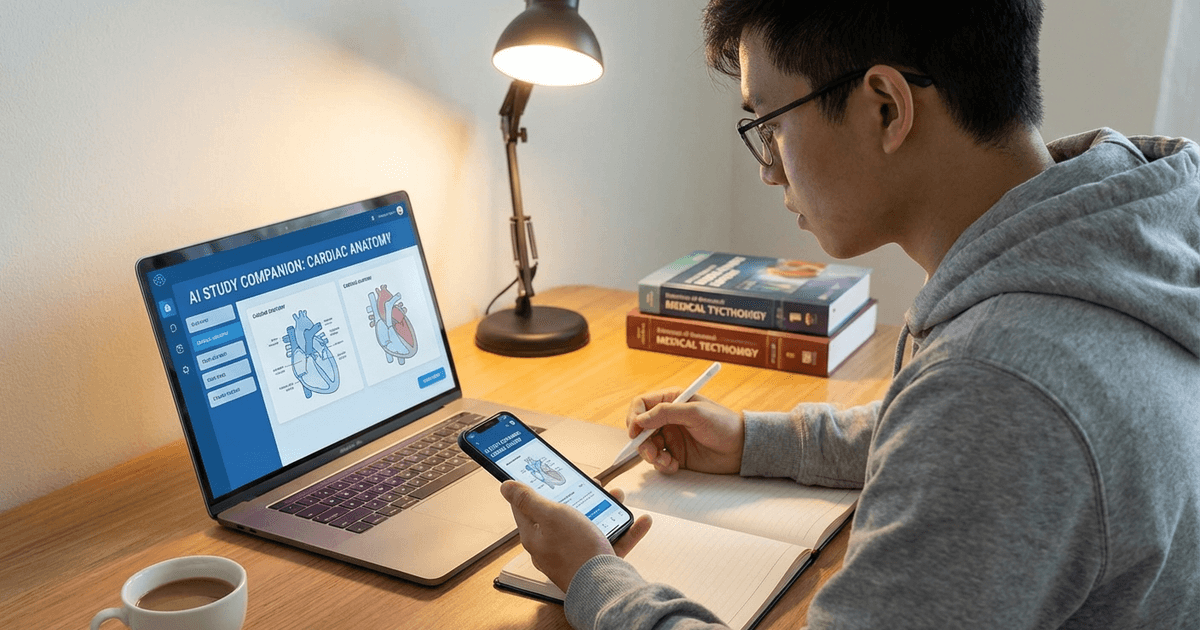
How to Use Rezzy AI to Study Smarter for NEET-PG and USMLE in 2026
Picture this: You're deep into a lesson on cardiac glycosides at 2 AM. The mechanism of action just isn't clicking, and you're starting to panic. Do you spend 20 minutes searching YouTube for a decent explanation? Text that senior who's probably asleep? Or do you just skip it and hope it doesn't show up on exam day?
If you're using Rezzy AI, you do none of those things. You simply tap the "Ask Rezzy" button right there on the lesson page, type "I don't get how digoxin increases contractility," and get an instant explanation that builds on exactly what you were just reading. No context switching. No time wasted. Just smart, targeted help when you need it most.
That's the reality for thousands of NEET-PG, USMLE, and INI-CET students who've discovered Rezzy — Oncourse's AI study companion that feels less like a chatbot and more like having a brilliant senior always available to help you push through those stuck moments.
But here's the thing: most students only scratch the surface of what Rezzy can do. They use it like Google — ask a question, get an answer, move on. They're missing the features that can actually transform how they study and perform on exam day.
Let me walk you through how to use Rezzy the smart way, with real scenarios from the actual app experience.
The Stuck Moment: Your New Study Superpower
We've all been there. You're reading about cardiac glycosides, and suddenly the text feels like it's written in Sanskrit. Your brain just hits a wall.
Here's how most students handle this:
Switch to YouTube (20 minutes lost finding a good video)
Google the concept (10 minutes lost sifting through random results)
Text a senior (who may or may not respond)
Skip it entirely (and pray it doesn't show up)
Here's how Rezzy changes this:
You're on the cardiac glycosides lesson page. You see that little "Ask Rezzy" pill floating at the bottom of your screen. You tap it.
The magic happens: Rezzy already knows you're studying cardiac glycosides. You don't need to explain context or copy-paste the lesson content. You just ask your question naturally:
"Why does digoxin cause both positive inotropy and negative chronotropy?"
"I don't get the Na-K ATPase pump inhibition part"
"What's the difference between digitoxin and digoxin again?"
Within seconds, you get an explanation that builds directly on what you were just reading. It uses the same terminology, references the same diagrams, and fills in exactly the gap that was confusing you.
The result? Instead of losing 20-30 minutes to context switching, you get unstuck in 2-3 minutes and maintain your study momentum. Over a full study session, this saves hours and keeps you in the flow state longer.
View As: The Hidden Study Mode Game-Changer
This is the Rezzy feature that most students discover by accident — and then wonder how they ever studied without it.
On any lesson page, you'll notice a small filter or view button. Tap it, and you can instantly reformat the entire lesson as:
Flowchart: Perfect for understanding processes and pathways
Table: Great for comparing drugs, diseases, or diagnostic criteria
Mnemonic: Converts key points into memorable phrases
Diagram: Visual representation of complex concepts
High-Yield Summary: Just the exam-relevant facts
Let's say you're studying the renin-angiotensin system for USMLE Step 1. The standard lesson format might be paragraphs of text. But switch to Flowchart view, and suddenly you see the entire pathway mapped out visually — from decreased blood pressure triggering renin release all the way to aldosterone's effects on the kidney.
Switch to High-Yield view when you're short on time, and you get just the facts that actually get tested: "ACE inhibitors end in -pril, ARBs end in -sartan, side effects include hyperkalemia and angioedema."
Pro tip for different study moods:
Tired brain in the evening? Use Mnemonic view for easier retention
Visual learner? Default to Diagram or Flowchart
Last-minute revision? High-Yield strips away the fluff
Need to compare multiple conditions? Table view is your friend
This isn't just about preference — it's about matching the content format to how your brain needs to process information at that moment.
Voice Mode: Your Commute Study Companion
Here's where Rezzy gets really powerful for busy medical students: full voice conversation mode.
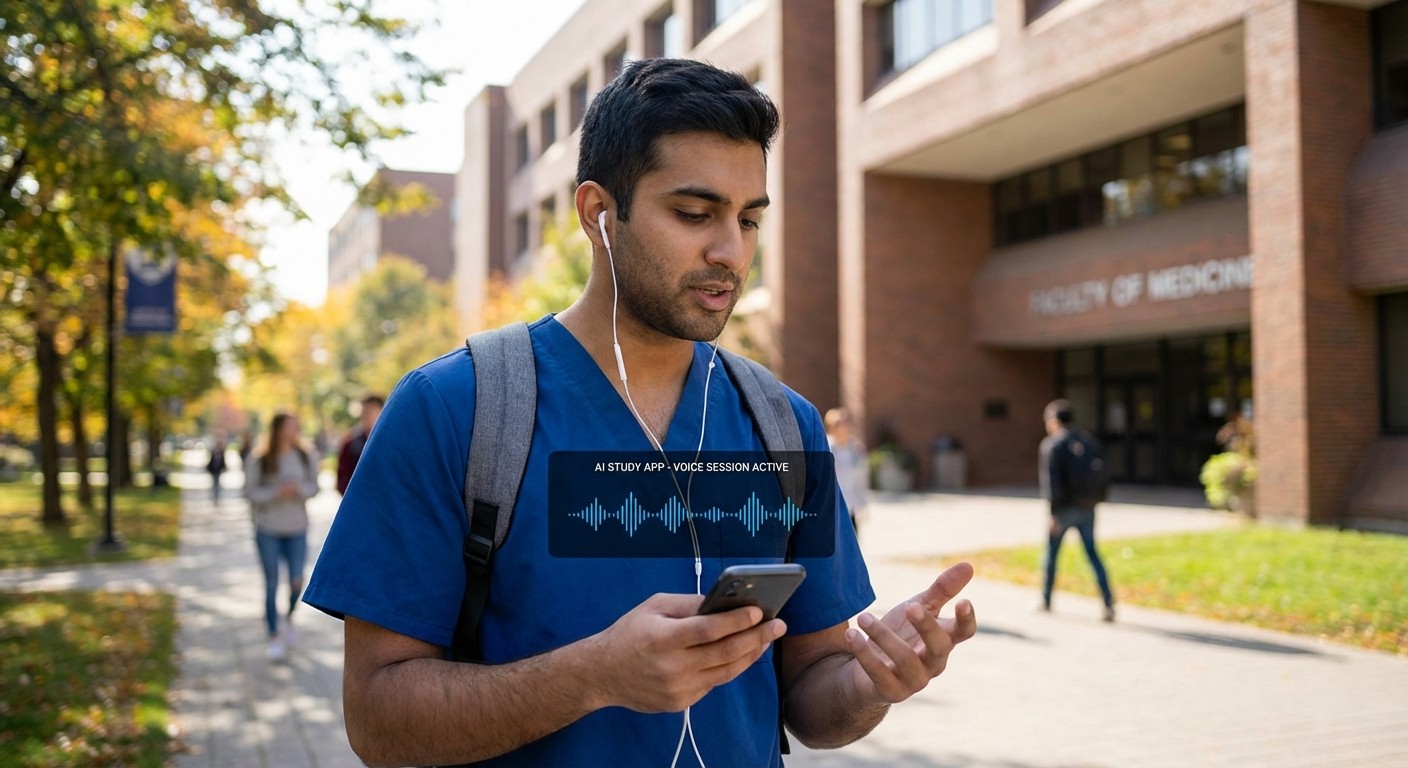
Put in your earphones, open Rezzy, hit the voice button, and you can literally have a spoken conversation with your AI tutor. Ask questions out loud, listen to explanations, and go back and forth just like you would with a human senior.
When voice mode is a game-changer: During commutes: Instead of mindlessly scrolling social media on the train, you can review pharmacology mechanisms or discuss clinical cases with Rezzy. A 30-minute commute becomes a productive study session. When your eyes are tired: After 8 hours of reading, your eyes need a break but your brain can still absorb information. Switch to voice mode and keep studying without the visual fatigue. While walking: Take Rezzy on walks around campus or your neighborhood. The physical movement can actually help with retention, and you're making use of time that would otherwise be "unproductive." For pronunciation practice: Especially helpful for international students preparing for USMLE. Practice saying drug names, disease terms, and medical concepts out loud, and Rezzy can correct your pronunciation. Real student example: "I use voice mode to review high-yield facts while walking to the library. By the time I sit down to study, I've already warmed up my brain and reviewed 20-30 key concepts. It's like a pre-study warmup that makes my actual study session more effective."
Daily Mnemonic Challenge: Active Recall Under Pressure
Every day, Rezzy presents you with a timed mnemonic challenge. You see the mnemonic clue and have to fill in the blanks — like a spelling game, but for medical facts.
Here's why this works so well:
The timer creates exam-like pressure. Instead of passively reading mnemonics, you're actively retrieving them under time pressure. This mimics the stress of actual exam conditions and strengthens your ability to recall information when it matters. Failure sticks. When you get a mnemonic wrong, your brain creates a stronger memory trace. Students often say "I failed that cranial nerves mnemonic challenge three days ago, and now I'll never forget it." Example challenge:
Mnemonic: "Some Say Marry Money, But My Brother Says Big Brains Matter More"
Time limit: 30 seconds
Your task: Fill in what each word represents for the branches of the external carotid artery.
The psychological effect: Even if you know the mnemonic, the time pressure forces your brain to work faster and creates a mini-adrenaline response. This makes the memory more vivid and easier to recall during your actual exam. Pro tip: If you fail a challenge, immediately review that topic using Rezzy's lesson links. The combination of failure + immediate learning creates one of the strongest memory patterns possible.
Personalized Daily Plan: End the Subject-Dodging Cycle
One of the biggest problems in medical exam prep is subject avoidance. You love pharmacology, so you keep studying it. You hate anatomy, so you keep postponing it. Sound familiar?
Oncourse tracks which subjects you've been studying versus which you've been avoiding. The daily plan uses this data to create a balanced study schedule that prevents you from falling behind in weak areas.
How it works:
Each day, your plan includes:
One subject you're strong in (for momentum and confidence)
One subject you've been neglecting (to prevent knowledge gaps)
Mixed practice questions from multiple subjects (for integration)
Real example: If you've studied cardiology for three days straight but haven't touched respiratory medicine in a week, tomorrow's plan might include:
1. 30 minutes of cardiology (your strong subject for confidence)
2. 45 minutes of respiratory physiology (your avoided subject)
3. 20 minutes of mixed cardio-respiratory clinical cases
Why this prevents exam failure: Most students fail not because they don't know their favorite subjects well enough, but because they have massive knowledge gaps in subjects they avoided. The personalized plan ensures you can't hide from weak areas indefinitely. The psychological benefit: You still get to study subjects you enjoy (maintaining motivation), but you're gradually strengthening weak areas without the pain of forced, all-day sessions on topics you dislike.
Context Memory: Never Lose Your Train of Thought
Here's a subtle but powerful feature: when you're having a discussion with Rezzy about a specific question or concept and you need to close the chat, Rezzy shows you a context card.
What this looks like: You're working through a complex pharmacology question about ACE inhibitors. Your phone rings, you close the app to take the call. When you come back, instead of starting from scratch, you see a context card that says: "You were discussing ACE inhibitor side effects in the context of heart failure management."
Tap the card, and you're instantly back in the exact conversation where you left off.
Why this matters for exam prep: Study session continuity: Medical concepts often require extended thinking. Being able to pick up exactly where you left off means you don't lose complex trains of thought. Question review cycles: When practicing MCQs, you can dive deep into concepts with Rezzy, then return later to reinforce the learning without having to re-explain everything. Spaced repetition support: You can mark complex topics for review and return to them days later, with Rezzy remembering the full context of your previous discussion.
Smart Integration with Oncourse's Learning Ecosystem
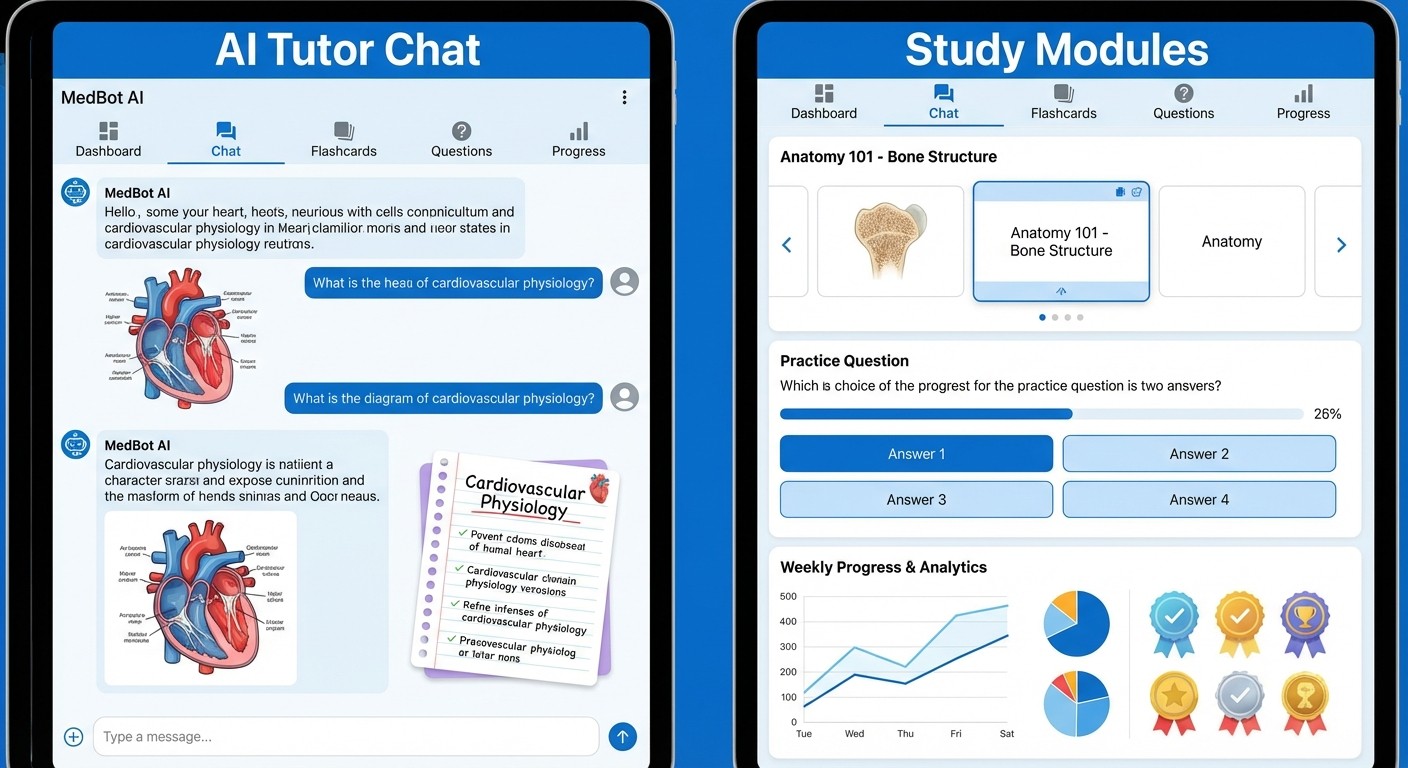
Rezzy isn't just a standalone chatbot — it's deeply integrated with Oncourse's entire learning platform. This integration is what makes it truly powerful for structured exam prep.
Seamless content flow: When studying pharmacology lessons, you can instantly jump to related practice questions or flashcards without losing your conversation context with Rezzy. Progress tracking: Rezzy knows which topics you've studied, which questions you've gotten wrong, and where you need more practice. This data informs both your daily study plan and Rezzy's responses to your questions. Exam-specific optimization: Whether you're preparing for NEET-PG, USMLE, or INI-CET, Rezzy adapts its explanations and focus areas to match your specific exam pattern and requirements.
Real Student Success Stories: How Rezzy Changes Study Outcomes
NEET-PG student, Mumbai: "I was consistently scoring 40-45% in mock tests. After using Rezzy's voice mode during my 2-hour daily commute for just one month, my scores jumped to 65-70%. The difference was that I was finally making productive use of dead time, and the active recall from voice conversations was so much stronger than passive reading." USMLE Step 1 student, IMG: "The 'View As' feature saved my Step 1 prep. I'm a visual learner but was forcing myself to read dense text. Once I discovered I could convert every lesson to flowcharts and diagrams, my comprehension and retention improved dramatically. I went from dreading pathophysiology to actually enjoying it." INI-CET student, Delhi: "The personalized daily plan was a game-changer. I used to spend entire days on subjects I already knew well and completely avoid subjects like community medicine. The forced balance in my study plan eliminated my knowledge gaps and improved my weakest subjects by 30+ marks."
Who Should Use Rezzy (And How to Get Started)
Rezzy works best for: NEET-PG aspirants who need to cover vast syllabi efficiently and want an AI tutor available 24/7 for complex medical concepts. USMLE candidates (especially IMGs) who benefit from interactive explanations and voice-based learning to improve both understanding and English fluency. INI-CET and FMGE students who need structured daily plans to balance multiple subjects and avoid knowledge gaps. Visual and auditory learners who struggle with traditional text-based resources and need content in multiple formats. Students with limited time who want to make commutes, walks, and other "dead time" productive for studying. Perfectionists who get stuck on difficult concepts and need instant clarification to maintain study momentum.
Getting Started: Your First Week with Rezzy
Day 1-2: Explore the basic chat function. Start with simple questions about topics you already know well to get comfortable with how Rezzy responds. Day 3-4: Try the "View As" feature on different types of lessons. Experiment with flowcharts for processes, tables for comparisons, and high-yield summaries for review. Day 5-6: Test voice mode during a walk or commute. Practice having actual conversations about medical topics. Week 2: Enable the daily personalized plan and commit to following it for at least two weeks to see how it balances your subject coverage. Week 3+: Use Rezzy for immediate help when stuck, daily mnemonic challenges for active recall, and context memory to maintain complex study threads.
The Bottom Line: Study Smarter, Not Just Harder
The traditional approach to medical exam prep is grinding through thousands of pages and questions, hoping everything sticks. It's exhausting, inefficient, and often leaves you with massive knowledge gaps.
Rezzy represents a smarter approach: AI-powered active learning that adapts to your learning style, fills knowledge gaps immediately when they appear, and makes previously "wasted" time productive for studying.
The students seeing the biggest improvements aren't necessarily studying more hours — they're studying more intelligently. They're getting unstuck faster, maintaining momentum longer, and actively strengthening weak areas instead of avoiding them.
Most importantly, they have a study companion that's always available, never judges them for "stupid" questions, and helps them think through complex problems instead of just providing answers.
Ready to experience smarter studying for yourself? Try Rezzy free at getoncourse.ai — no credit card required. You get access to the AI study companion, plus thousands of high-yield flashcards, practice questions, and comprehensive lessons designed specifically for NEET-PG, USMLE, and other medical entrance exams.
Join over 10,000+ medical students who've already discovered why having an AI study companion feels like having a brilliant senior always ready to help you succeed.
---
Start your free trial today and experience the difference that smart, AI-powered studying can make in your exam preparation.