USMLE Step 3 New Format Changes March 2026: Complete Guide for IMGs — New Block Structure, Software Updates & What to Expect
Complete guide to USMLE Step 3 format changes starting March 2026. Learn about new block structure, CCS updates, timing changes & IMG-specific preparation strategies.
USMLE Step 3 New Format Changes March 2026: Complete Guide for IMGs — New Block Structure, Software Updates & What to Expect
The USMLE Step 3 exam is undergoing significant format changes starting March 2026, and international medical graduates (IMGs) need to be fully prepared for these updates. With over 12,000 IMGs taking Step 3 annually, understanding these changes is crucial for your success in securing residency positions and medical licensure in the United States.
This comprehensive guide covers everything you need to know about the new USMLE Step 3 format, including updated block structures, software modifications, and strategic preparation tips specifically tailored for IMGs navigating these changes.
What's Changing in USMLE Step 3 March 2026?
The National Board of Medical Examiners (NBME) has implemented several key changes to modernize the Step 3 examination format and better assess clinical competency in today's medical practice environment.
Key Format Updates Overview
The March 2026 changes focus on three primary areas:
Block structure modifications for better time management
Enhanced clinical case simulation (CCS) interface
Updated question distribution across medical specialties
Improved accessibility features and software stability
These updates aim to create a more realistic clinical assessment while maintaining the exam's validity and reliability for IMG evaluation.
New Block Structure and Timing Changes
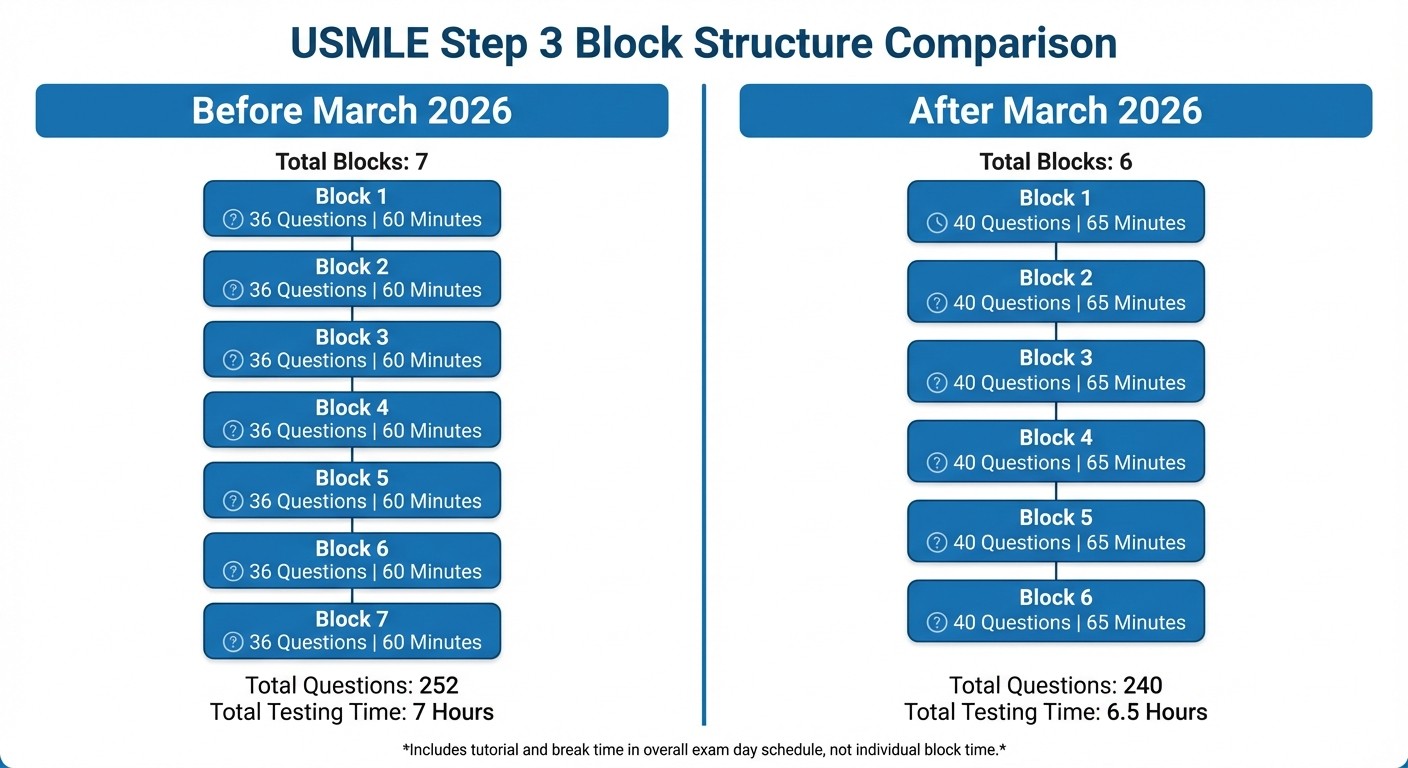
Updated Day 1 Format
The traditional Day 1 format has been restructured to optimize cognitive load and reduce exam fatigue:
Previous Format:
7 blocks of 36 questions each
60 minutes per block
Total: 252 questions
New March 2026 Format:
6 blocks of 40 questions each
65 minutes per block
Total: 240 questions
Enhanced break structure with longer intervals
Day 2 Clinical Case Simulation Updates
The CCS portion has received significant improvements:
Enhanced Features:
Updated patient simulator with more realistic clinical scenarios
Improved diagnostic testing interface
Streamlined medication ordering system
Better time tracking and progress indicators
New Case Distribution:
13 clinical cases (unchanged)
25 minutes average per case
Improved case complexity balancing
Software and Interface Updates
Prometric Testing Software Enhancements
The exam delivery platform has received comprehensive updates to improve user experience and reduce technical issues that previously affected test-takers.
New Software Features:
Faster loading times between questions and cases
Improved calculator functionality with scientific calculator options
Enhanced marking and review system for better question navigation
Better font rendering and screen resolution optimization
Reduced system crashes and improved stability
Accessibility Improvements
The March 2026 update includes significant accessibility enhancements:
Screen reader compatibility improvements
Keyboard navigation options for all interface elements
Adjustable font sizes without layout distortion
Color contrast options for visual accessibility
Extended time accommodations processing streamlined
Updated Question Distribution and Content Changes
Subject Area Rebalancing
The new format includes updated question distribution to reflect current medical practice patterns:
Medical Specialty | Previous % | New March 2026 % |
|---|---|---|
Internal Medicine | 25% | 28% |
Surgery | 20% | 18% |
Pediatrics | 15% | 16% |
Obstetrics/Gynecology | 12% | 12% |
Psychiatry | 8% | 10% |
Emergency Medicine | 10% | 8% |
Preventive Medicine | 10% | 8% |
Enhanced Clinical Vignette Complexity
Questions now feature:
Multi-step diagnostic reasoning scenarios
Integrated laboratory and imaging interpretation
Patient safety and quality improvement focus
Telemedicine and digital health considerations
Healthcare economics and resource utilization
IMG-Specific Preparation Strategies
Timeline Adjustments for March 2026
IMGs should adjust their preparation timeline to account for the new format:
6-Month Preparation Plan:
Months 1-2: Master foundational knowledge using comprehensive USMLE Step 3 lessons
Months 3-4: Focus on clinical case scenarios and practice with updated question formats
Months 5-6: Intensive practice with new block timing and CCS interface
3-Month Intensive Plan:
Month 1: Rapid content review with high-yield clinical case practice
Month 2: Simulated exams under new timing conditions
Month 3: Final review and weakness targeting
Practice Resources for New Format
Essential Preparation Tools:
Oncourse USMLE Step 3 Platform: Features updated question banks reflecting the March 2026 changes, with over 2,000 Step 3-specific questions and detailed explanations. The platform includes specialized CCS case practice and timing simulations.
Updated CCS Software: Practice with enhanced clinical case simulations that mirror the new interface
Comprehensive Question Banks: Access to questions reflecting the new distribution percentages
Timed Practice Tests: Simulations matching the 65-minute block format
Free Resources:
NBME practice materials updated for March 2026
Oncourse free tier with AI-powered study assistance
Updated clinical guidelines and practice scenarios
Common Challenges and Solutions
Technical Preparation Tips
Challenge 1: New Block Timing
Solution: Practice 65-minute question blocks consistently
Strategy: Aim for 1.6 minutes per question average
Tools: Use timed practice sessions with Oncourse platform
Challenge 2: Enhanced CCS Interface
Solution: Familiarize yourself with updated clinical workflows
Strategy: Practice systematic approaches to case management
Resources: Clinical skills development tools
Challenge 3: Updated Question Distribution
Solution: Adjust study emphasis based on new percentages
Strategy: Increase Internal Medicine and Psychiatry preparation time
Focus: Reduce Emergency Medicine study time proportionally
Mental Health and Test Anxiety
The format changes may increase anxiety for some test-takers. Consider these strategies:
Familiarization sessions with new interface before exam day
Stress management techniques specific to longer block formats
Support groups for IMGs navigating the changes together
Scoring and Results Timeline
Scoring Algorithm Updates
While the basic scoring methodology remains unchanged, some adjustments reflect the new format:
Standard setting recalibrated for 240 total questions
Pass/fail determination maintains historical standards
Score reporting timeline remains 2-4 weeks post-exam
Score Interpretation for IMGs
The March 2026 changes don't affect score interpretation for residency applications:
Passing scores maintain the same meaning for ECFMG certification
Score reports include the same detailed performance breakdowns
Residency program evaluation standards remain consistent
Registration and Scheduling Changes
New Scheduling Windows
Starting March 2026, some logistical changes affect exam scheduling:
Extended scheduling notice recommended (8-10 weeks instead of 6-8)
Limited format transition period with both old and new formats available briefly
Prometric center updates requiring advance booking
Fee Structure Updates
Exam fees remain consistent with 2025 pricing:
USMLE Step 3 fee: $895
Rescheduling fees: $90 (within permitted windows)
Late registration: Additional $90 surcharge
Technology Requirements and Preparation
System Requirements for New Software
The updated Prometric software requires:
Processor: Enhanced requirements for smoother CCS operation
Memory: Increased RAM allocation for better performance
Graphics: Improved rendering for medical images and charts
Network: More stable internet connection for real-time features
Pre-Exam Technical Checklist
Before Your Exam Date:
1. Verify your testing center has updated software
2. Confirm accommodation requests are processed
3. Review new interface tutorials provided by NBME
4. Practice with updated question formats
5. Familiarize yourself with new break procedures
Preparation Timeline and Study Schedule
12-Week Intensive Preparation Plan
Weeks 1-3: Foundation Building
Complete comprehensive content review
Focus on high-yield topics with increased weightage
Establish baseline performance with diagnostic tests
Weeks 4-6: Application and Practice
Intensive question practice with new block timing
CCS case practice with updated interface
Identify and address knowledge gaps
Weeks 7-9: Integration and Simulation
Full-length practice exams under real conditions
Timing optimization and endurance building
Advanced clinical reasoning practice
Weeks 10-12: Final Preparation
Review weak areas and high-yield facts
Final simulation exams
Mental preparation and stress management
Daily Study Schedule Recommendations
Study Block Structure (8-10 hours/day):
Morning (3 hours): Content review and note-taking
Mid-morning (2 hours): Question practice with new timing
Afternoon (2 hours): CCS case practice
Evening (1-2 hours): Review and weakness targeting
Night (30 minutes): Spaced repetition and memorization
Expert Tips for Success
Maximizing Performance with New Format
Time Management Strategies:
Develop a consistent approach to the 65-minute blocks
Practice pacing with exactly 40 questions per session
Use the enhanced marking system strategically for difficult questions
CCS Optimization:
Master the updated patient management interface
Practice systematic approaches to clinical decision-making
Understand new diagnostic testing workflows
Content Prioritization:
Focus additional study time on Internal Medicine (increased from 25% to 28%)
Strengthen Psychiatry knowledge (increased from 8% to 10%)
Maintain strong foundation in high-yield surgical topics despite reduced percentage
Common Mistakes to Avoid
Technical Pitfalls:
Not practicing with the updated interface beforehand
Underestimating the impact of new block timing
Inadequate familiarity with enhanced CCS features
Content Errors:
Studying with outdated question distribution assumptions
Neglecting the increased emphasis on patient safety and quality improvement
Insufficient practice with multi-step diagnostic reasoning
Resources and Support for IMGs
Comprehensive Study Materials
Oncourse USMLE Step 3 Platform Benefits:
Updated question bank reflecting March 2026 changes
AI-powered study assistant (Rezzy) for personalized learning
Comprehensive lesson library covering all Step 3 topics
Advanced analytics to track progress and identify weaknesses
Free tier available with premium subscription plans for full access
The platform offers specialized preparation tools designed specifically for the updated exam format, including timing simulations and enhanced clinical case practice.
Additional Recommended Resources:
NBME Practice Materials - Official practice tests updated for new format
UWorld Step 3 QBank - Updated question bank with new interface practice
AAFP Board Review Express - Family medicine focus for primary care scenarios
IMG Community Support
Online Communities:
IMG-friendly forums discussing March 2026 changes
Study groups specifically for new format preparation
Mentorship programs connecting recent Step 3 passers with current test-takers
Professional Support:
Educational consultants specializing in USMLE changes
Anxiety and stress management resources for test-taking
Technical support for navigating new software features
Conclusion: Preparing for Success in March 2026
The USMLE Step 3 format changes represent a significant evolution in medical licensure examination, designed to better assess clinical competency in modern healthcare environments. For IMGs, these changes require strategic preparation adjustments but don't fundamentally alter the pathway to US medical licensure.
Key Success Factors:
Early preparation with updated materials reflecting the March 2026 changes
Systematic practice with new block timing and enhanced CCS interface
Strategic focus on subject areas with increased emphasis (Internal Medicine, Psychiatry)
Technical familiarity with updated software and interface features
The changes ultimately aim to create a more realistic and fair assessment of clinical capabilities. IMGs who prepare systematically using updated resources and practice materials will be well-positioned for success.
Ready to start your Step 3 preparation with the latest format changes? Explore Oncourse's comprehensive USMLE Step 3 preparation platform featuring updated question banks, enhanced CCS practice, and AI-powered study assistance designed specifically for the March 2026 format changes.
Start with our free tier to experience the updated preparation tools, or upgrade to premium for unlimited access to over 2,000 Step 3 questions, comprehensive lessons, and personalized study analytics that adapt to the new exam format.