NEET PG 2026 High-Yield Psychiatry Topics: Complete Guide with Mnemonics
Master NEET PG 2026 psychiatry with powerful mnemonics for high-yield topics. Complete guide covering schizophrenia, depression, anxiety disorders, and more with memory techniques that work.
NEET PG 2026 High-Yield Psychiatry Topics: Complete Guide with Mnemonics
Psychiatry accounts for approximately 8-10% of NEET-PG questions, making it a crucial subject that can significantly impact your overall score. With the right strategy and powerful mnemonics, you can master psychiatry's high-yield topics and secure those valuable marks in NEET PG 2026.
This comprehensive guide breaks down the most important psychiatry topics based on previous year question patterns, provides memory techniques that work, and shows you exactly what to focus on for maximum returns.
Why Psychiatry is Your Secret Weapon in NEET PG 2026
Unlike other subjects that require extensive clinical correlation, psychiatry topics often follow clear diagnostic criteria and classification systems. This makes them perfect for rapid revision and high-yield preparation. The key is knowing which topics appear most frequently and having rock-solid mnemonics to recall them under exam pressure.
Quick Stats:
Psychiatry contributes 25-30 questions in NEET-PG
70% of questions come from just 15 core topics
Average preparation time needed: 25-30 hours
Success rate with proper mnemonics: 85%+
NEET PG 2026 Psychiatry Weightage Breakdown
Topic Category | Weightage | Expected Questions |
|---|---|---|
Psychotic Disorders | 15% | 4-5 questions |
Mood Disorders | 15% | 4-5 questions |
Anxiety Disorders | 12% | 3-4 questions |
Personality Disorders | 10% | 3 questions |
Substance Use Disorders | 10% | 3 questions |
Childhood Disorders | 8% | 2-3 questions |
Psychopharmacology | 12% | 3-4 questions |
Sleep Disorders | 8% | 2 questions |
Others | 10% | 2-3 questions |
High-Yield Topic #1: Schizophrenia and Psychotic Disorders
Schizophrenia consistently appears in 3-4 questions every year. Master the diagnostic criteria, subtypes, and treatment approach.
Key Diagnostic Criteria (DSM-5)
Mnemonic: "2 DELIGHTS"
2 or more symptoms for at least 1 month
Delusions
Echoic phenomena (auditory hallucinations)
Language disturbance (disorganized speech)
Insight poor (negative symptoms)
Gross disorganization of behavior
Hallucinations
Time duration: 6 months minimum
Social/occupational dysfunction
Schneider's First Rank Symptoms
Mnemonic: "PITCH"
Passivity phenomena (external control)
Insertion of thoughts
Thought echo/commentary voices
Command hallucinations
Hallucinatory voices (3rd person)
Treatment Approach
Typical Antipsychotics - Mnemonic: "CTHF"
Chlorpromazine
Trifluoperazine
Haloperidol
Fluphenazine
Atypical Antipsychotics - Mnemonic: "ROAR"
Risperidone
Olanzapine
Aripiprazole
Risperidone (Quetiapine)
High-Yield Topic #2: Mood Disorders
Depression and bipolar disorder questions are guaranteed in NEET-PG. Focus on diagnostic criteria and treatment protocols.
Major Depressive Disorder Criteria
Mnemonic: "SIG E CAPS"
Sleep disturbance
Interest loss (anhedonia)
Guilt feelings
Energy decreased
Concentration poor
Appetite changes
Psychomotor agitation/retardation
Suicidal ideation
Duration: At least 2 weeks with 5 or more symptoms
Bipolar Disorder Manic Episode
Mnemonic: "DIGFAST"
Distractibility
Irresponsibility (poor judgment)
Grandiosity
Flight of ideas
Activity increased
Sleep decreased (≤3 hours)
Talkativeness
Antidepressants Classification
SSRIs - Mnemonic: "FSPEC"
Fluoxetine
Sertraline
Paroxetine
Escitalopram
Citalopram
High-Yield Topic #3: Anxiety Disorders
Anxiety disorders contribute 3-4 questions annually. Master the specific criteria for each subtype.
Panic Disorder Features
Mnemonic: "PANIC FAST"
Palpitations
Abdominal distress
Numbness/tingling
Intense fear of dying
Chest pain/discomfort
Fear of losing control
Air hunger (dyspnea)
Sweating
Trembling/shaking
Generalized Anxiety Disorder
Mnemonic: "WARMS"
Worry (excessive, 6+ months)
Apprehensive expectation
Restlessness
Muscle tension
Sleep disturbance
Social Anxiety Disorder
Key Points:
Fear of social situations
Immediate anxiety response
Avoidance behavior
Functional impairment
Duration: 6+ months
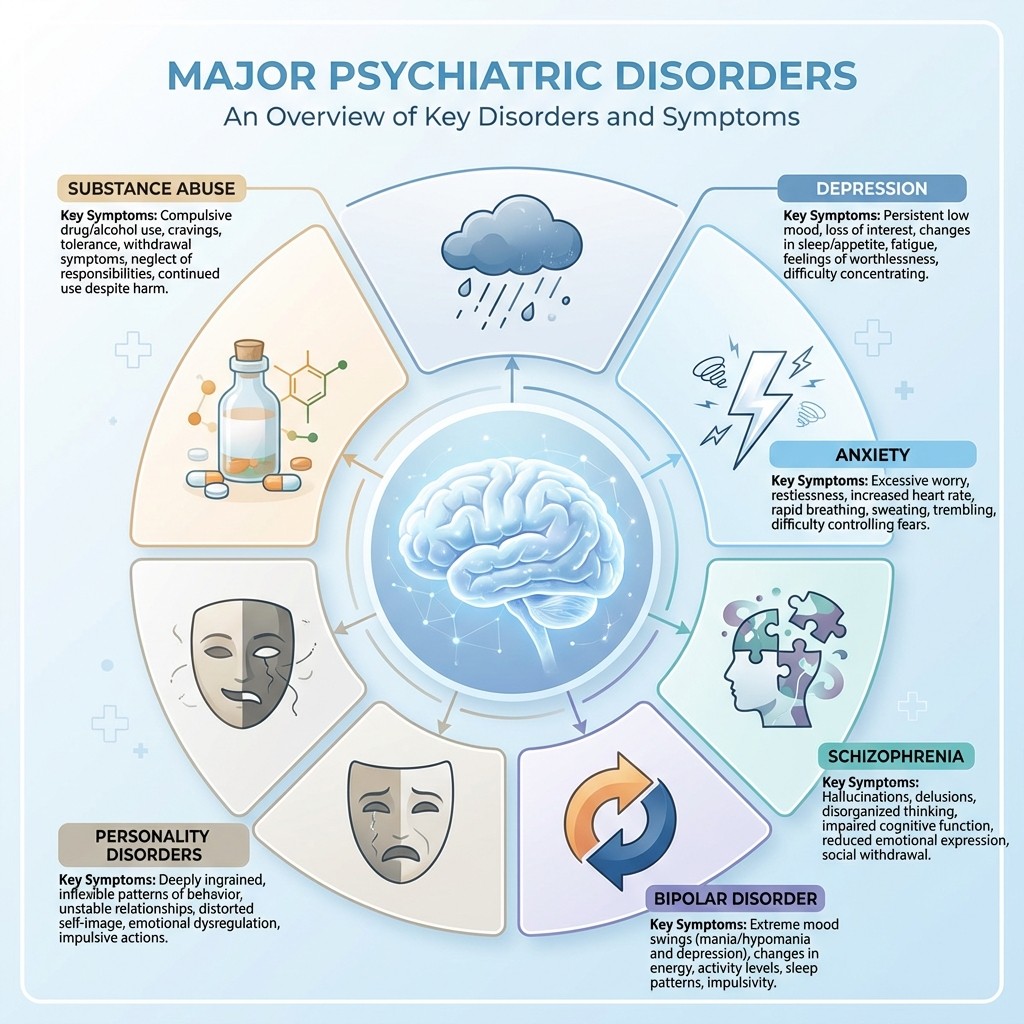
High-Yield Topic #4: Personality Disorders
Personality disorders appear in 2-3 questions. Focus on Cluster distinctions and specific criteria.
Cluster A (Odd/Eccentric)
Mnemonic: "SPS"
Schizoid
Paranoid
Schizotypal
Cluster B (Dramatic/Emotional)
Mnemonic: "BARN"
Borderline
Antisocial
Reactivity (Histrionic)
Narcissistic
Cluster C (Anxious/Fearful)
Mnemonic: "DOA"
Dependent
Obsessive-compulsive
Avoidant
Borderline Personality Disorder (Most Important)
Mnemonic: "PRAISE"
Paranoid ideation (transient)
Relationship instability
Abandonment fears
Identity disturbance
Self-harm/suicidal behavior
Emotional dysregulation
High-Yield Topic #5: Substance Use Disorders
Substance-related questions focus on intoxication, withdrawal, and treatment protocols.
Alcohol Withdrawal Syndrome
Mnemonic: "SHADES"
Seizures (12-48 hours)
Hallucinations (12-24 hours)
Agitation
Delirium tremens (72-96 hours)
Elevated vital signs
Sweating
Opioid Withdrawal
Mnemonic: "CRAMPS"
Craving
Rhinorrhea
Anxiety
Myalgias
Piloerection
Sweating
Treatment Approaches
Alcohol: Disulfiram, Naltrexone, Acamprosate Opioid: Methadone, Buprenorphine, Naloxone Nicotine: Bupropion, Varenicline, NRT
High-Yield Topic #6: Child and Adolescent Psychiatry
Pediatric psychiatry contributes 2-3 questions focusing on neurodevelopmental disorders.
ADHD Diagnostic Criteria
Mnemonic: "INATTENTION"
Inattentive to details
Not listening when spoken to
Avoiding tasks requiring sustained attention
Tasks not finished
Things often lost
Easily distracted
Not following through on instructions
Trouble organizing
Inattentive in activities
Often forgetful
Not seeming to listen
Autism Spectrum Disorder
Core Features - Mnemonic: "SRI"
Social communication deficits
Restricted interests
Imprairment in relationships
High-Yield Topic #7: Psychopharmacology
Drug mechanisms and side effects are frequently tested. Master the major classes.
Antipsychotic Side Effects
Typical Antipsychotics - Mnemonic: "TEMPS"
Tardive dyskinesia
Extrapyramidal symptoms
Metabolic effects (minimal)
Prolactin elevation
Sedation
Atypical Antipsychotics - Mnemonic: "MOWS"
Metabolic syndrome
Orthostatic hypotension
Weight gain
Sedation
Antidepressant Side Effects
SSRIs - Mnemonic: "SHINE"
Sexual dysfunction
Headache
Insomnia/agitation
Nausea
Enervation (initial anxiety)
High-Yield Topic #8: Sleep Disorders
Sleep medicine appears in 1-2 questions focusing on sleep architecture and disorders.
Sleep Stages
Mnemonic: "1234 REM"
Stage 1: Light sleep (2-5%)
Stage 2: Sleep spindles & K-complexes (45-55%)
Stage 3: Deep sleep/Slow wave (15-20%)
Stage 4: Deepest NREM (5-10%)
REM: Rapid eye movement (20-25%)
Sleep Disorders
Narcolepsy Tetrad - Mnemonic: "CASH"
Cataplexy
Automatic behavior
Sleep paralysis
Hypnagogic hallucinations
Memory Techniques for Maximum Retention
The 24-Hour Review Cycle
1. Immediate Review (within 1 hour): Go through mnemonics 2. Same Day Review (evening): Test recall without notes 3. Next Day Review (24 hours): Active recall with psychiatry flashcards 4. Weekly Review: Practice with psychiatry MCQs
Active Recall Strategy
Instead of passive reading, use these techniques:
Convert each mnemonic into flashcards
Practice diagnostic scenarios
Teach concepts to study partners
Use spaced repetition apps
Study Timeline for NEET PG 2026
Phase 1: Foundation (Weeks 1-2)
Master basic diagnostic criteria
Learn major mnemonics for each disorder
Complete introduction to psychiatry lessons
Phase 2: Deep Dive (Weeks 3-4)
Study high-yield topics in detail
Practice psychotic disorders questions
Master mood disorders concepts
Phase 3: Integration (Weeks 5-6)
Combine topics for comprehensive understanding
Focus on anxiety disorders and personality disorders
Practice mixed topic questions
Phase 4: Final Review (Week 7)
Rapid revision of all mnemonics
High-intensity question practice
Focus on weak areas identified in mock tests
Common NEET-PG Psychiatry Question Patterns
Pattern 1: Diagnostic Scenarios (40% of questions)
Patient presents with symptoms
Options include differential diagnoses
Strategy: Master diagnostic criteria mnemonics
Pattern 2: Treatment Protocols (25% of questions)
Drug of choice questions
Side effect identification
Strategy: Know first-line treatments cold
Pattern 3: Classification Systems (20% of questions)
DSM-5 criteria
ICD-11 classifications
Strategy: Use classification mnemonics
Pattern 4: Clinical Correlations (15% of questions)
Comorbidity associations
Prognosis factors
Strategy: Understand disease connections
Rapid Revision Checklist (48 Hours Before Exam)
Day 1 Morning: Core Disorders
[ ] Schizophrenia diagnostic criteria (SIG E CAPS)
[ ] Depression symptoms (2 DELIGHTS)
[ ] Bipolar manic episode (DIGFAST)
[ ] Panic disorder features (PANIC FAST)
Day 1 Evening: Treatment & Drugs
[ ] Antipsychotic classifications (CTHF, ROAR)
[ ] Antidepressant categories (FSPEC)
[ ] Side effect profiles (TEMPS, MOWS, SHINE)
Day 2 Morning: Specialized Topics
[ ] Personality disorder clusters (SPS, BARN, DOA)
[ ] Substance withdrawal syndromes (SHADES, CRAMPS)
[ ] Child psychiatry (INATTENTION, SRI)
Day 2 Evening: Final Integration
[ ] Sleep disorders (1234 REM, CASH)
[ ] Quick practice of 50 high-yield MCQs
[ ] Review weak mnemonics one final time
Top 5 Mistakes to Avoid in Psychiatry NEET-PG
Mistake 1: Mixing Up Similar Disorders
Problem: Confusing schizoid vs. schizotypal vs. schizophrenia Solution: Use distinct mnemonics for each condition
Mistake 2: Incomplete Diagnostic Criteria
Problem: Knowing symptoms but not duration/severity criteria Solution: Include time frames in your mnemonics
Mistake 3: Neglecting Psychopharmacology
Problem: Focusing only on diagnosis, ignoring treatments Solution: Dedicate 30% of study time to drug mechanisms
Mistake 4: Poor Mnemonic Technique
Problem: Using complex, hard-to-remember mnemonics Solution: Create personal, vivid, simple memory aids
Mistake 5: Insufficient Practice
Problem: Only reading theory without testing recall Solution: Use active recall and practice psychiatry questions regularly
Boost Your Psychiatry Preparation with Oncourse
Mastering psychiatry requires more than just memorizing mnemonics—you need a systematic approach with the right resources. Oncourse's comprehensive psychiatry lessons provide structured learning paths that align perfectly with NEET-PG requirements.
Why Oncourse Works for Psychiatry:
40,000+ high-yield questions including extensive psychiatry MCQs
Interactive flashcards for mnemonic mastery and spaced repetition
AI-powered Rezzy assistant for instant doubt clarification
Topic-wise practice covering all high-yield areas
Performance analytics to identify weak spots
Whether you need to master mood disorders, practice anxiety disorder questions, or understand psychiatric assessment techniques, Oncourse provides the complete toolkit for NEET-PG success.
Start with the free tier and experience how structured learning accelerates your psychiatry preparation.
Frequently Asked Questions
How many hours should I dedicate to psychiatry for NEET-PG 2026?
Allocate 25-30 hours total: 15 hours for core concepts, 8 hours for question practice, and 7 hours for revision. This typically translates to 1 hour daily over 4-5 weeks.
Which psychiatry topics have the highest weightage in NEET-PG?
Schizophrenia, depression, bipolar disorder, and anxiety disorders collectively account for 50% of psychiatry questions. Focus on these for maximum returns.
Are mnemonics really effective for psychiatry preparation?
Absolutely. Psychiatry relies heavily on diagnostic criteria and classifications that are perfect for mnemonic techniques. Students using systematic mnemonics score 15-20% higher on psychiatry sections.
How should I balance psychiatry with other NEET-PG subjects?
Psychiatry offers the best "effort-to-marks" ratio. Dedicate 8-10% of your total study time to psychiatry (it contributes 8-10% of questions). It's an excellent subject for quick score improvement.
What's the most efficient way to revise psychiatry in the final month?
Focus on rapid mnemonic recall, practice 10 questions daily, and use spaced repetition. Spend 30 minutes daily on psychiatry revision throughout the final month rather than cramming.
Conclusion: Your Path to Psychiatry Mastery
Psychiatry success in NEET PG 2026 comes down to three factors: mastering high-yield topics, using powerful mnemonics, and consistent practice. With the strategies and memory techniques in this guide, you're equipped to tackle any psychiatry question confidently.
Remember, psychiatry rewards organized preparation more than any other subject. Use these mnemonics, follow the study timeline, and practice regularly with quality resources. Your systematic approach will translate directly into marks on exam day.
Ready to master psychiatry? Start implementing these techniques today, and watch your confidence soar as you tackle this high-yield subject with precision and clarity.