Back
FMGE Pharmacology High-Yield Glossary: Key Drug Classes, Mechanisms and Mnemonics for 2026
Master FMGE pharmacology with this comprehensive glossary covering essential drug classes, mechanisms, mnemonics, and high-yield topics for 2026 exam success.
FMGE Pharmacology High-Yield Glossary: Key Drug Classes, Mechanisms and Mnemonics for 2026
Pharmacology accounts for approximately 15-20% of the FMGE examination, making it one of the highest-yielding subjects for international medical graduates. With over 1,000 drugs and countless mechanisms to master, having a systematic approach to pharmacology is crucial for FMGE success in 2026.
This comprehensive glossary covers the most frequently tested drug classes, their mechanisms of action, key side effects, and memory aids that will help you tackle pharmacology questions with confidence. Whether you're starting your FMGE preparation or looking for quick revision material, this guide consolidates the essential pharmacology knowledge you need.
Why Pharmacology is Crucial for FMGE Success
Pharmacology questions in FMGE are notorious for being detail-oriented and application-based. Unlike theoretical subjects, pharmacology requires you to understand drug mechanisms, classify medications correctly, and apply this knowledge to clinical scenarios. The 2026 FMGE pattern continues to emphasize clinical pharmacology, making it essential to master both basic and applied aspects.
Recent FMGE trends show increased focus on:
Drug interactions and contraindications
Mechanism-based questions
Clinical application scenarios
Adverse drug reactions
Pharmacokinetics and pharmacodynamics
Essential Drug Classification Framework
Understanding drug classification is the foundation of pharmacology mastery. Here's the systematic approach used by top FMGE scorers:
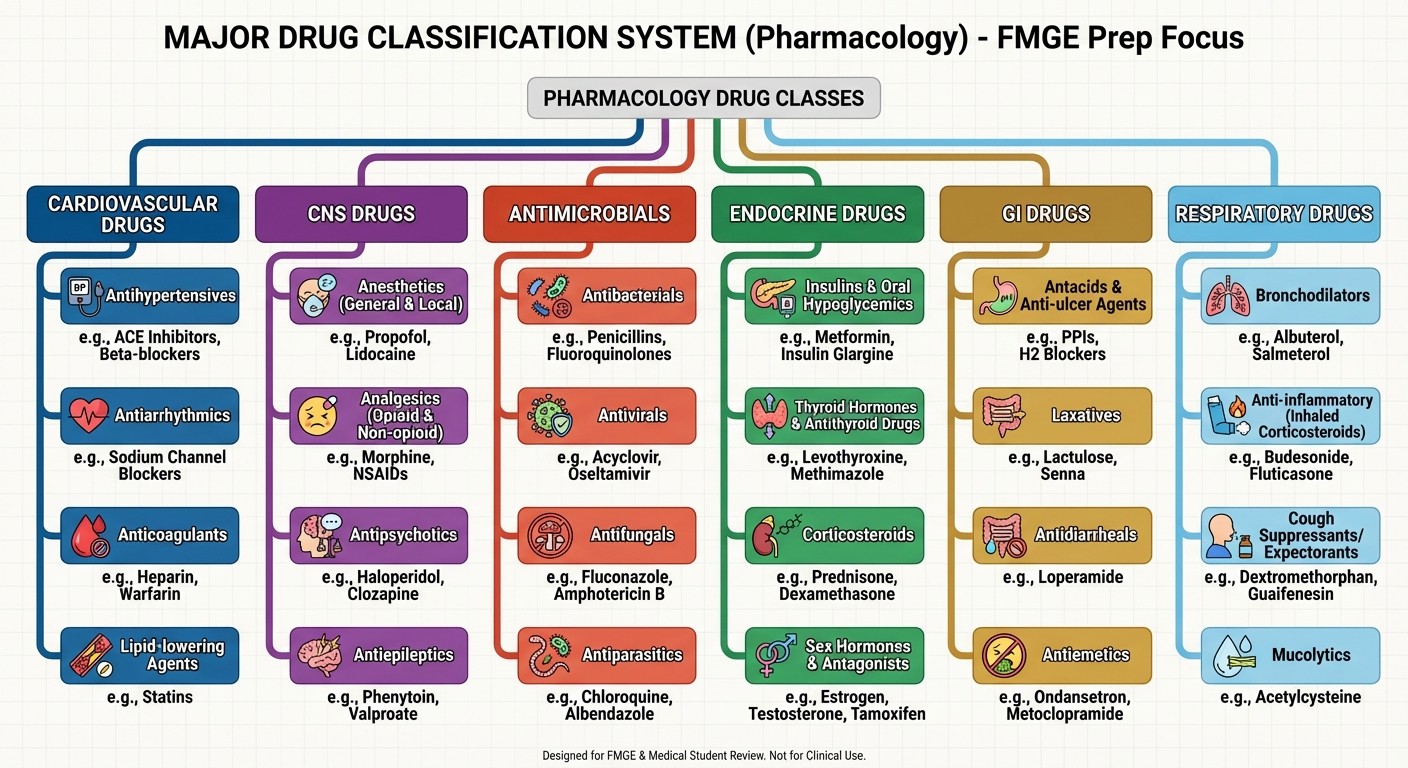
Primary Classification Systems
By Therapeutic Use:
Cardiovascular drugs
Central nervous system drugs
Antimicrobial agents
Endocrine drugs
Gastrointestinal drugs
Respiratory drugs
By Mechanism of Action:
Enzyme inhibitors
Receptor agonists/antagonists
Ion channel blockers
Membrane stabilizers
By Chemical Structure:
Beta-lactams
Quinolones
Benzodiazepines
Phenothiazines
High-Yield Drug Classes and Mechanisms
Cardiovascular Drugs
#### ACE Inhibitors
Prototype: Enalapril, Lisinopril
Mechanism: Block angiotensin-converting enzyme, reducing angiotensin II formation
Clinical Uses: Hypertension, heart failure, diabetic nephropathy
Key Side Effects: Dry cough, hyperkalemia, angioedema
Mnemonic: PECANS - Potassium elevation, Enalapril cough, Creatinine rise, Angioedema, Neutropenia, Skin rash
#### Beta-Blockers
Selective (β1): Metoprolol, Atenolol
Non-selective (β1 + β2): Propranolol
Mechanism: Block β-adrenergic receptors
Contraindications: Asthma, COPD, severe bradycardia
Mnemonic: ABCDE - Asthma contraindication, Bradycardia, COPD contraindication, Diabetes masking, Erectile dysfunction
#### Calcium Channel Blockers
Dihydropyridines: Amlodipine, Nifedipine (vascular selective)
Non-dihydropyridines: Verapamil, Diltiazem (cardiac selective)
Mechanism: Block L-type calcium channels
Side Effects: Peripheral edema, gingival hyperplasia, constipation (verapamil)
Central Nervous System Drugs
#### Antidepressants
SSRIs: Fluoxetine, Sertraline
Mechanism: Selective serotonin reuptake inhibition
Side Effects: Sexual dysfunction, GI upset, serotonin syndrome
Mnemonic: SSRI Side effects - Sexual dysfunction, Serotonin syndrome, Restlessness, Insomnia
Tricyclic Antidepressants: Amitriptyline, Imipramine Mechanism: Block reuptake of norepinephrine and serotonin Toxicity: SADMANS - Seizures, Arrhythmias, Delirium, Mydriasis, Anticholinergic effects, Nausea, Sweating
#### Antiepileptic Drugs
Phenytoin: Sodium channel blocker
Side Effects: Gingival hyperplasia, hirsutism, megaloblastic anemia
Carbamazepine: Sodium channel blocker
Side Effects: Diplopia, ataxia, hyponatremia
Valproic Acid: Multiple mechanisms
Side Effects: Hair loss, weight gain, teratogenicity
Antimicrobial Agents
#### Beta-Lactam Antibiotics
Penicillins:
Natural: Penicillin G, V
Broad-spectrum: Ampicillin, Amoxicillin
Antistaphylococcal: Methicillin, Oxacillin
Mechanism: Inhibit cell wall synthesis by binding to PBPs
Resistance: Beta-lactamase production
Cephalosporins:
1st generation: Cefazolin (Gram-positive)
2nd generation: Cefuroxime (Gram-positive + some Gram-negative)
3rd generation: Ceftriaxone (Broad spectrum)
4th generation: Cefepime (Extended spectrum)
#### Fluoroquinolones
Examples: Ciprofloxacin, Levofloxacin Mechanism: Inhibit DNA gyrase and topoisomerase IV Side Effects: Tendon rupture, photosensitivity, QT prolongation Contraindications: Pregnancy, children under 18
#### Aminoglycosides
Examples: Gentamicin, Amikacin
Mechanism: Inhibit 30S ribosomal subunit
Toxicity: Nephrotoxicity, ototoxicity
Mnemonic: MEAN toxicity - Muscle weakness, Eighth cranial nerve damage, Acute tubular necrosis, Neuromuscular blockade
Endocrine Drugs
#### Antidiabetic Medications
Metformin:
Mechanism: Decreases hepatic glucose production
Side Effects: Lactic acidosis, GI upset
Contraindications: Renal impairment, heart failure
Sulfonylureas: Glibenclamide, Gliclazide
Mechanism: Stimulate insulin release from β-cells
Side Effects: Hypoglycemia, weight gain
Insulin:
Rapid-acting: Lispro, Aspart
Short-acting: Regular insulin
Intermediate-acting: NPH
Long-acting: Glargine, Detemir
#### Thyroid Drugs
Levothyroxine: T4 replacement therapy
Methimazole: Antithyroid drug, blocks thyroid hormone synthesis
Propylthiouracil: Blocks synthesis and peripheral conversion of T4 to T3
Memory Techniques and Mnemonics
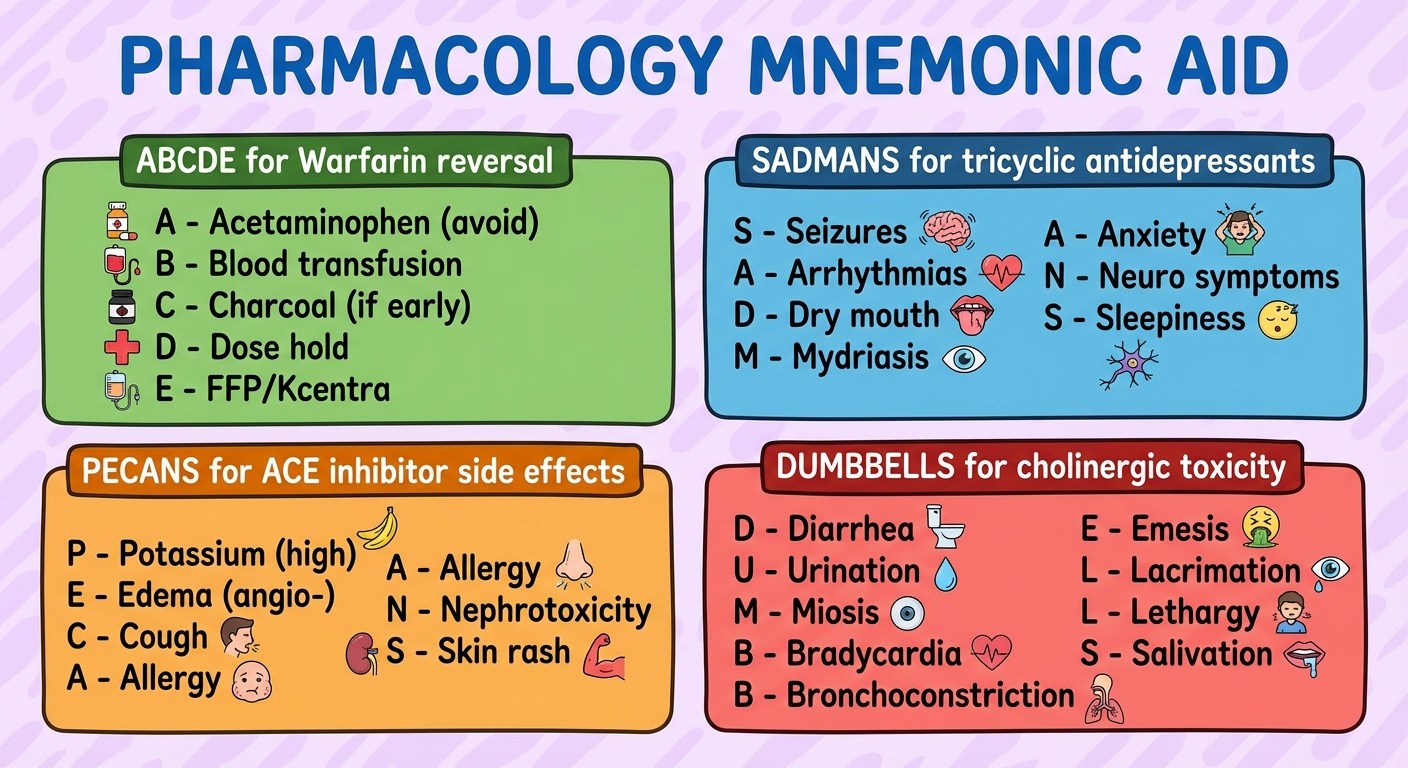
Top FMGE Pharmacology Mnemonics
Cholinergic Toxicity (DUMBBELLS):
Diarrhea
Urination
Miosis
Bronchospasm
Bradycardia
Excitation
Lacrimation
Lethargy
Salivation
Warfarin Reversal (ABCDE):
A: Assess bleeding severity
B: Blood products (FFP)
C: Charcoal (if recent ingestion)
D: Discontinue warfarin
E: Evaluate with PT/INR
P450 Inducers (GPS):
Griseofulvin
Phenytoin
Smoking
P450 Inhibitors (SICKFACES.COM):
Sodium valproate
Isoniazid
Cimetidine
Ketoconazole
Fluconazole
Alcohol (chronic)
Chloramphenicol
Erythromycin
Sulfonamides
Ciprofloxacin
Omeprazole
Metronidazole
Drug Interaction Memory Aids
Drugs that increase digoxin levels: VQAKA
Verapamil
Quinidine
Amiodarone
Ketoconazole
Atorvastatin
Drugs contraindicated with MAOIs: STOP
SSRIs
Tricyclics
Opioids (especially pethidine)
Pseudoephedrine
Clinical Application Strategies
Mechanism-Based Learning
Rather than memorizing isolated facts, focus on understanding drug mechanisms. This approach helps you:
Predict side effects from mechanisms
Understand drug interactions
Apply knowledge to new scenarios
Remember information longer
Example: If you understand that ACE inhibitors block the conversion of angiotensin I to angiotensin II, you can predict:
Increased bradykinin (causing cough)
Decreased aldosterone (causing hyperkalemia)
Reduced vasoconstriction (causing hypotension)
Practice with FMGE pharmacology questions regularly to reinforce these concepts through application.
High-Yield Topics for FMGE 2026
Based on recent exam patterns, prioritize these areas:
Most Frequently Tested Topics:
1. Cardiovascular pharmacology (25% of questions) 2. CNS drugs (20% of questions) 3. Antimicrobials (20% of questions) 4. Endocrine drugs (15% of questions) 5. General pharmacology principles (10% of questions) 6. Toxicology (10% of questions)
Emerging Areas:
Biologics and monoclonal antibodies
Targeted cancer therapy
Antiviral agents (especially for COVID-19)
Immunosuppressive drugs
Effective Study Strategies
1. Systematic Approach
Start with general pharmacology lessons to build a strong foundation before moving to specific drug classes.
2. Active Recall with Flashcards
Use pharmacology flashcards for spaced repetition learning. Focus on:
Drug names and classifications
Mechanisms of action
Key side effects
Clinical applications
3. Clinical Integration
Study drugs in the context of diseases. For example, when learning about hypertension, study all antihypertensive drug classes together rather than separately.
4. Regular Practice Testing
Take cardiovascular drugs practice questions weekly to identify knowledge gaps and improve application skills.
Common Pitfalls to Avoid
1. Memorizing Without Understanding
Don't just memorize drug lists. Focus on mechanisms, classifications, and clinical applications.
2. Ignoring Drug Interactions
FMGE frequently tests drug interactions. Pay special attention to P450 interactions and contraindications.
3. Overlooking Pharmacokinetics
Understand absorption, distribution, metabolism, and excretion principles. These concepts frequently appear in FMGE questions.
4. Neglecting Toxicology
Adverse drug reactions and poisoning management are high-yield topics often overlooked by students.
Quick Reference Tables
Essential Drug Dosages
Drug Class | Example | Standard Dose | Route |
|---|---|---|---|
ACE Inhibitors | Enalapril | 5-20 mg BID | PO |
Beta-blockers | Metoprolol | 50-100 mg BID | PO |
Diuretics | Furosemide | 20-80 mg | PO/IV |
Antibiotics | Amoxicillin | 500 mg TID | PO |
NSAIDs | Ibuprofen | 400 mg TID | PO |
Drug Administration Routes
IV: Immediate effect, 100% bioavailability
IM: Rapid absorption, avoids first-pass metabolism
SC: Slower than IM, suitable for self-administration
PO: Convenient, subject to first-pass metabolism
Sublingual: Rapid absorption, avoids first-pass metabolism
Resources for Continued Learning
Comprehensive Study Materials
Enhance your pharmacology preparation with these Oncourse resources:
Complete pharmacology lessons - In-depth coverage of all drug classes
CNS pharmacology - Detailed neuropsychiatric drug coverage
Autonomic nervous system drugs - Comprehensive ANS pharmacology
Practice Resources
General pharmacology questions - Foundation concepts testing
Diuretics practice questions - Renal pharmacology focus
Blood and coagulation drugs questions - Hematology pharmacology
Memory Enhancement Tools
Pharmacology flashcards - Spaced repetition for drug facts
ANS drugs flashcards - Autonomic pharmacology memory aids
Conclusion
Mastering FMGE pharmacology requires a systematic approach combining mechanism-based understanding, active recall, and regular practice. This glossary provides the essential framework for organizing your pharmacology knowledge effectively.
Remember that pharmacology is not about memorizing countless drug names, but understanding patterns, mechanisms, and clinical applications. Use the mnemonics and memory aids provided, but always connect them to underlying pharmacological principles.
Ready to take your FMGE pharmacology preparation to the next level? Start with Oncourse's comprehensive pharmacology study materials and practice questions designed specifically for FMGE success. With over 5,000 high-yield lessons and 40,000+ practice questions, Oncourse provides everything you need to master pharmacology and excel in your FMGE examination.
Begin your systematic pharmacology review today and build the strong foundation needed for FMGE success in 2026. The key to pharmacology mastery lies in consistent practice, strategic memorization, and deep understanding of drug mechanisms – and with the right resources and approach, you can achieve the score you need to practice medicine in India.