How to Study Pediatrics for NEET PG 2026: Complete Checklist + High-Yield Topics
Master pediatrics for NEET PG 2026 with this complete study guide. Get high-yield topics checklist, weightage analysis, and proven strategies to score 35+ marks in pediatrics.
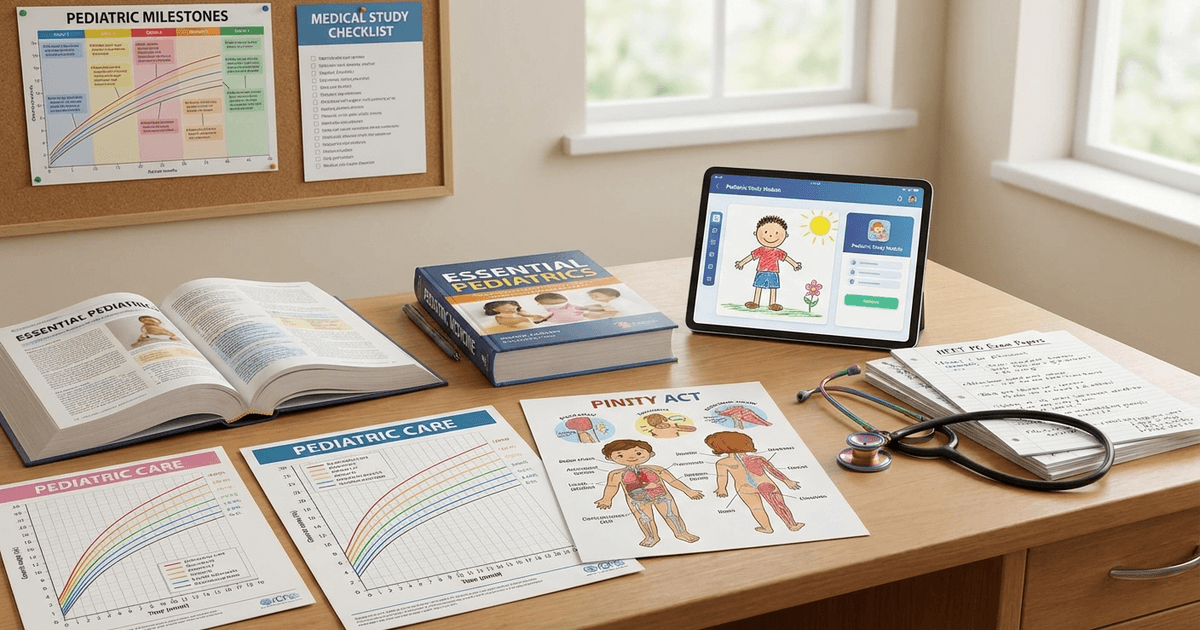
How to Study Pediatrics for NEET PG 2026: Complete Checklist + High-Yield Topics
Pediatrics accounts for 15-20% of NEET PG questions, making it the fourth highest-weighted subject after Internal Medicine, Surgery, and Obstetrics & Gynecology. With 35-40 questions expected in NEET PG 2026, mastering pediatrics can boost your rank by 300-500 positions. Yet many students struggle with pediatrics due to its vast syllabus spanning growth, development, and multiple organ systems.
This complete guide provides you with the exact high-yield topics, weightage analysis, and proven study strategies that helped top NEET PG rankers excel in pediatrics. Whether you're starting your preparation or in the final months of revision, this checklist will maximize your pediatrics score efficiently.
Why Pediatrics is Crucial for NEET PG Success
Pediatrics offers several unique advantages that smart NEET PG toppers leverage:
High predictability: 75% of pediatrics questions come from just 12 high-yield topics, making it one of the most predictable subjects in NEET PG. Clinical correlation overlap: Pediatric concepts directly overlap with Internal Medicine, Obstetrics, Surgery, and Emergency Medicine, giving you bonus marks across subjects. Factual recall advantage: Unlike Surgery's procedural complexity, pediatrics relies heavily on factual recall, milestone recognition, and standard protocols—perfect for efficient memorization techniques. Image-based questions: 30% of pediatrics questions include clinical images, growth charts, or milestone assessments, which are easier to crack with focused practice.
NEET PG Pediatrics Weightage Analysis 2026
Based on analysis of NEET PG papers from 2019-2025, here's the exact subspecialty-wise distribution:
Subspecialty | Weightage | Expected Questions | Priority Level |
|---|---|---|---|
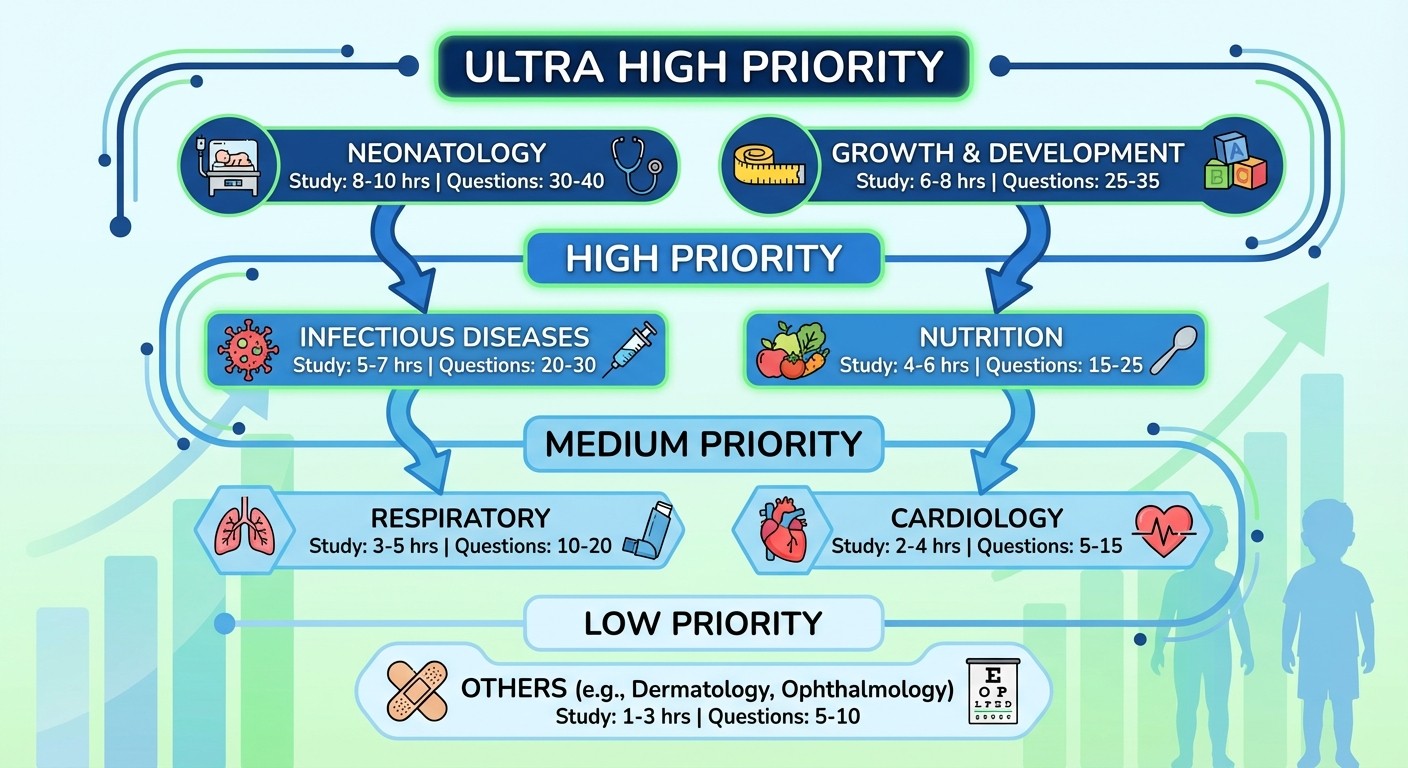
Neonatology | 25% | 9-10 | Ultra High |
Growth & Development | 20% | 7-8 | Ultra High |
Infectious Diseases | 15% | 5-6 | High |
Pediatric Nutrition | 12% | 4-5 | High |
Respiratory Diseases | 8% | 3 | Medium |
Cardiology | 8% | 3 | Medium |
Gastroenterology | 7% | 2-3 | Medium |
Nephrology | 5% | 2 | Low |
Strategic insight: The top 4 subspecialties (Neonatology through Pediatric Nutrition) account for 72% of all pediatrics questions. Master these first for maximum impact.
Complete High-Yield Topics Checklist
Neonatology (Ultra High Priority) - 9-10 Questions
Must-Know Topics (Study First):
[ ] Preterm complications (RDS, BPD, NEC, IVH)
[ ] Birth injuries and trauma
[ ] Neonatal infections (sepsis, TORCH)
[ ] Hyperbilirubinemia (physiologic vs pathologic)
[ ] Congenital malformations (neural tube defects, congenital heart disease)
[ ] Neonatal resuscitation (NRP guidelines)
Important Topics (Study Second):
[ ] Feeding difficulties and failure to thrive
[ ] Neonatal seizures and hypoglycemia
[ ] Temperature regulation disorders
[ ] Apgar scoring and assessment
Practice with neonatology questions and master concepts using neonatology flashcards for quick revision.
Growth & Development (Ultra High Priority) - 7-8 Questions
Must-Know Topics:
[ ] Normal growth patterns and WHO growth charts
[ ] Developmental milestones (motor, language, social)
[ ] Growth disorders (short stature, tall stature)
[ ] Puberty disorders (precocious, delayed)
[ ] Developmental delay and cerebral palsy
[ ] Growth assessment and percentiles
Important Topics:
[ ] Behavioral development and autism spectrum
[ ] Learning disabilities and ADHD
[ ] Adolescent health issues
Master growth patterns with our comprehensive growth and development lessons and test your knowledge with practice MCQs.
Infectious Diseases (High Priority) - 5-6 Questions
Must-Know Topics:
[ ] Vaccination schedule and contraindications
[ ] Respiratory tract infections (pneumonia, bronchiolitis)
[ ] Gastrointestinal infections (gastroenteritis, hepatitis)
[ ] CNS infections (meningitis, encephalitis)
[ ] Skin infections and exanthems
[ ] Tuberculosis in children
Important Topics:
[ ] UTI in children
[ ] Sepsis and shock
[ ] Kawasaki disease
[ ] Rheumatic fever
Strengthen your infectious diseases knowledge through pediatric infectious disease lessons and practice with targeted MCQ questions.
Pediatric Nutrition (High Priority) - 4-5 Questions
Must-Know Topics:
[ ] Breastfeeding and complementary feeding
[ ] Protein-energy malnutrition (marasmus, kwashiorkor)
[ ] Vitamin deficiencies (A, D, B12, folate)
[ ] Mineral deficiencies (iron, zinc, calcium)
[ ] Obesity in children
[ ] Failure to thrive
Important Topics:
[ ] Food allergies and intolerances
[ ] Nutritional requirements by age
[ ] Feeding problems in special conditions
Access comprehensive pediatric nutrition lessons and practice with nutrition-focused questions.
Medium Priority Topics (Study After Mastering High-Priority)
Respiratory Diseases - 3 Questions
[ ] Asthma in children (management protocols)
[ ] Cystic fibrosis
[ ] Pneumonia types and treatment
[ ] Wheezing disorders
Cardiology - 3 Questions
[ ] Congenital heart diseases (acyanotic vs cyanotic)
[ ] Heart failure in children
[ ] Rheumatic heart disease
[ ] Kawasaki disease cardiac complications
Gastroenterology - 2-3 Questions
[ ] Gastroesophageal reflux disease
[ ] Inflammatory bowel disease
[ ] Liver diseases in children
[ ] Chronic diarrhea
Explore detailed content for these topics through pediatric cardiology lessons, respiratory disease lessons, and gastroenterology lessons.
90-Day Pediatrics Study Plan
Phase 1: Foundation Building (Days 1-30)
Week 1-2: Neonatology & Growth Development
Study 2-3 topics daily from ultra high-priority list
Complete 50+ MCQs daily focusing on these areas
Create visual charts for growth percentiles and milestones
Week 3-4: Infectious Diseases & Nutrition
Focus on vaccination schedules and nutritional disorders
Practice image-based questions extensively
Memorize standard treatment protocols
Phase 2: Comprehensive Coverage (Days 31-60)
Week 5-6: Medium Priority Topics
Cover respiratory, cardiology, and gastroenterology
Integrate with internal medicine concepts
Practice multisystem case scenarios
Week 7-8: Revision and Practice
Complete topic-wise mock tests
Identify weak areas and revisit
Start mixed pediatrics question practice
Phase 3: Mastery and Speed (Days 61-90)
Week 9-10: Advanced Topics and Integration
Cover remaining low-priority topics
Focus on pediatric emergencies and critical care
Practice time-bound section tests
Week 11-12: Final Revision
Daily review of high-yield facts
Image-based question practice
Mock test analysis and error review
Smart Study Techniques for Pediatrics
1. The Milestone Memory Method
Create visual timelines for developmental milestones using:
Motor skills: Rolling (4-6 months), sitting (6-8 months), walking (12-15 months)
Language: First words (12 months), two-word phrases (24 months)
Social: Social smile (6-8 weeks), stranger anxiety (8-10 months)
2. Growth Chart Mastery
Practice reading WHO growth charts daily:
Understand percentiles vs z-scores
Identify concerning growth patterns
Memorize key cutoffs for malnutrition
3. Image-Based Learning
Since 30% of pediatrics questions include images:
Study syndromic features and dysmorphology
Practice X-ray and ECG interpretation in children
Memorize rash patterns and distributions
4. Protocol-Based Preparation
Memorize standard protocols for:
Neonatal resuscitation (NRP)
Immunization schedules (IAP recommendations)
Feeding guidelines (WHO/UNICEF)
Emergency management algorithms
Essential Resources and Study Materials
Primary Resources
1. Oncourse Pediatrics Module: Access comprehensive pediatrics lessons covering all 18 subspecialties with 13 detailed lessons each 2. IAP Textbook of Pediatrics (6th Edition) - For detailed reading 3. Nelson's Essentials - Quick reference for clinical points
Practice Resources
1. Oncourse Question Bank: Practice with pediatrics MCQs covering all high-yield topics 2. Oncourse Flashcards: Use pediatrics flashcards for quick revision and spaced repetition 3. Previous year NEET PG papers - Focus on 2019-2025 questions
Digital Tools
Growth chart apps for percentile calculations
Immunization reminder apps for schedule memorization
Medical calculators for pediatric dosing
How Long Should You Study Pediatrics?
For 12-month preparation: Allocate 6-8 weeks total (2 weeks intensive study + 4-6 weeks revision cycles) For 6-month preparation: Allocate 4-5 weeks total (2 weeks intensive + 2-3 weeks revision) For 3-month preparation: Allocate 2-3 weeks focusing only on ultra high-priority topics Daily time allocation: 2-3 hours during intensive study phase, 1 hour during revision phase
Common Pediatrics Preparation Mistakes to Avoid
1. Equal Time Distribution Error
Mistake: Spending equal time on all pediatric subspecialties Solution: Follow the weighted priority system - spend 60% of time on ultra high-priority topics
2. Neglecting Visual Elements
Mistake: Focusing only on theoretical knowledge Solution: Practice growth charts, milestone assessments, and clinical images daily
3. Memorization Without Understanding
Mistake: Cramming facts without clinical correlation Solution: Connect each fact to clinical scenarios and case presentations
4. Skipping Neonatology
Mistake: Leaving neonatology for later due to complexity Solution: Start with neonatology as it has the highest weightage and predictable pattern
Final Month Revision Strategy
Week 1-2: Rapid Review
Complete all high-yield flashcards daily
Solve 100+ mixed pediatrics MCQs daily
Review image-based questions collection
Week 3-4: Mock Tests and Analysis
Take full-length mock tests
Analyze pediatrics performance separately
Revise weak topics identified in tests
Last Week: Fact Consolidation
Review one-liner facts and mnemonics
Practice growth chart interpretation
Revise immunization schedule and milestones
Track Your Progress: Pediatrics Preparation Checklist
Knowledge Checkpoints:
[ ] Can recall all developmental milestones accurately
[ ] Can interpret growth charts and identify abnormal patterns
[ ] Know complete immunization schedule with contraindications
[ ] Can diagnose common neonatal conditions from clinical presentations
[ ] Understand nutritional disorders and their management
Practice Benchmarks:
[ ] Achieving 75%+ accuracy in neonatology questions
[ ] Scoring 70%+ in growth and development MCQs
[ ] Completing 2000+ pediatrics questions with analysis
[ ] Solving image-based questions in under 60 seconds
Speed Targets:
[ ] Answering pediatrics MCQs in 45-60 seconds average
[ ] Completing 40-question pediatrics mock in 35 minutes
[ ] Quick recall of high-yield facts within 10 seconds
Integration with Other Subjects
Pediatrics concepts overlap significantly with other NEET PG subjects:
With Internal Medicine: Congenital heart diseases, genetic disorders, metabolic conditions With Surgery: Pediatric surgical conditions, trauma management With Obstetrics: Neonatal care, birth complications, maternal-fetal medicine With ENT: Pediatric otitis media, hearing disorders With Ophthalmology: Pediatric visual development, congenital eye disorders
Study these overlapping topics together to reinforce learning and save time.
Using Technology for Efficient Pediatrics Preparation
Oncourse AI-Powered Learning
Oncourse offers the most comprehensive digital pediatrics preparation with:
40,000+ high-yield questions including pediatrics-specific MCQs
5,000+ detailed lessons covering all pediatric subspecialties
AI-powered spaced repetition through flashcards
Personalized study plans based on your weak areas
The platform's Rezzy AI tutor can answer your pediatrics doubts instantly and provide personalized study recommendations based on your performance patterns.
Mobile Learning Benefits
Study during commute with mobile flashcards
Practice questions during short breaks
Access growth charts and reference materials anywhere
Voice-based learning for auditory learners
Success Stories: How Toppers Mastered Pediatrics
Dr. Priya (AIR 47, NEET PG 2025): "I focused 70% of my pediatrics time on just neonatology and growth development. This strategy alone got me 32/40 pediatrics questions correct." Dr. Rahul (AIR 89, NEET PG 2025): "Using Oncourse's pediatrics flashcards for spaced repetition helped me memorize all developmental milestones perfectly. Visual learning was game-changing for pediatrics." Dr. Sneha (AIR 156, NEET PG 2025): "I integrated pediatrics study with internal medicine. Studying congenital heart diseases and genetic disorders together saved me 3 weeks of preparation time."
Conclusion: Your Path to Pediatrics Excellence
Mastering pediatrics for NEET PG 2026 is not about covering everything—it's about strategic prioritization and efficient execution. By focusing on the top 4 subspecialties that contribute 72% of questions, you can achieve excellent results with focused effort.
Remember the key success factors:
1. Prioritize ruthlessly: Ultra high-priority topics first
2. Practice visually: Growth charts, milestones, and clinical images
3. Integrate smartly: Connect with other subject concepts
4. Revise systematically: Use spaced repetition and active recall
Start your pediatrics preparation today with Oncourse's comprehensive pediatrics module. With over 234 detailed lessons, thousands of practice questions, and AI-powered personalization, you have everything needed to excel in pediatrics and boost your NEET PG rank significantly.
Your pediatrics mastery journey begins now—make every question count toward your dream residency!