Back
How to Study Physiology for USMLE Step 1: High-Yield Systems, Concepts, and What Actually Shows Up in 2026
Master physiology for USMLE Step 1 with this comprehensive guide covering high-yield cardiovascular, renal, respiratory, endocrine, and neurophysiology concepts that actually appear on test day.
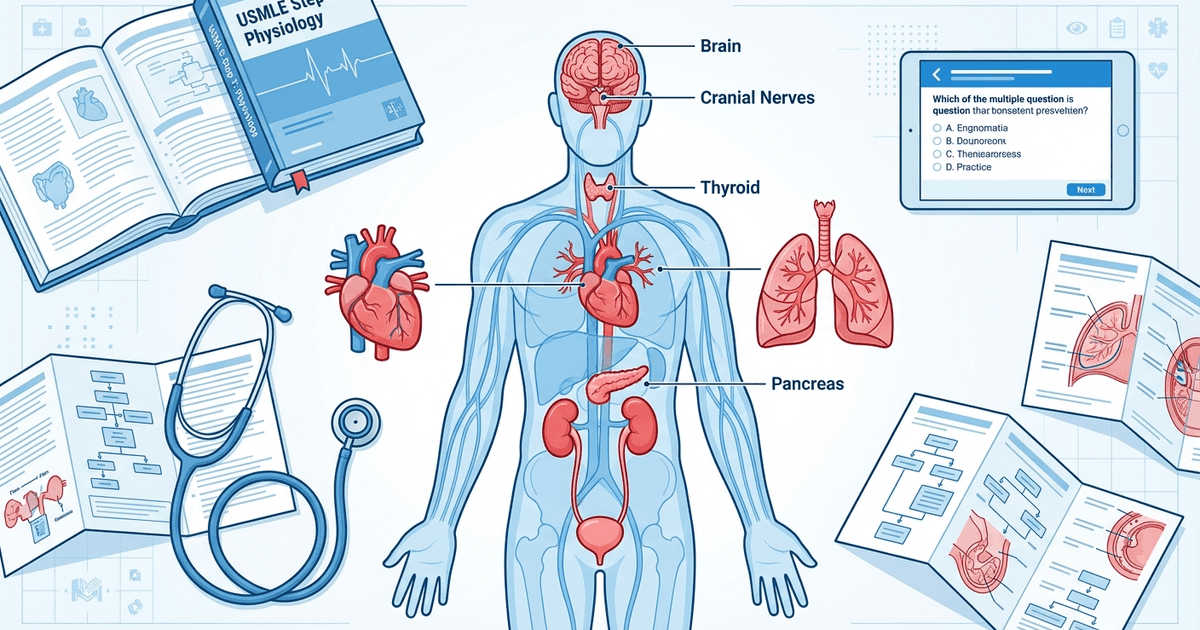
How to Study Physiology for USMLE Step 1: High-Yield Systems, Concepts, and What Actually Shows Up in 2026
Physiology forms the backbone of USMLE Step 1 success. Every clinical vignette, pathophysiology question, and pharmacology mechanism builds on a solid understanding of normal physiological processes. As someone who scored in the 90th percentile on Step 1, I can tell you that mastering physiology isn't just about memorizing facts—it's about understanding the intricate connections between organ systems that the NBME loves to test.
The 2026 USMLE Step 1 continues to emphasize clinical application over pure recall, making physiological understanding more critical than ever. Questions now integrate multiple systems, requiring you to think like a physician rather than a student cramming for an exam. This comprehensive guide breaks down the high-yield physiology systems, reveals what actually shows up on test day, and provides a strategic approach to mastering this foundational subject.
Why Physiology Is Your Step 1 Foundation
Physiology represents approximately 25-30% of USMLE Step 1 content, making it the largest single subject tested. But its influence extends far beyond that percentage—physiological principles underpin virtually every other topic:
Pathology questions require understanding normal function before abnormal
Pharmacology mechanisms build on receptor physiology and signal transduction
Clinical vignettes often hinge on physiological compensatory mechanisms
Laboratory interpretation demands knowledge of normal physiological ranges and regulation
The NBME designs questions that test physiological reasoning rather than isolated facts. A typical question might present a patient with heart failure and ask about compensatory mechanisms—requiring integration of cardiovascular, renal, and endocrine physiology.
The 5 High-Yield Physiology Systems for USMLE Step 1
1. Cardiovascular Physiology: The Most Tested System
Cardiovascular physiology consistently appears in 20-25% of physiology questions on Step 1. The NBME focuses heavily on integration and clinical application rather than isolated facts.
High-Yield Topics:
Cardiac cycle and pressure-volume loops: Understanding preload, afterload, and contractility changes
Cardiac output regulation: Frank-Starling mechanism, sympathetic/parasympathetic effects
Blood pressure control: Baroreceptor reflex, RAAS system, autoregulation
ECG physiology: Action potential correlations, not just interpretation
Vascular resistance: Poiseuille's law applications in pathophysiology
Common Question Patterns:
Compensation mechanisms in heart failure or shock
Effects of medications on cardiac output and blood pressure
Pressure-volume loop changes in various disease states
Integration with renal physiology in fluid balance
Master cardiovascular physiology with Oncourse's comprehensive cardiac cycle lessons, practice questions, and targeted flashcards that focus on the exact concepts tested on Step 1.
2. Renal Physiology: Integration and Acid-Base Balance
Renal physiology questions often integrate with cardiovascular and endocrine systems, making this a high-yield area for complex, multi-system questions.
High-Yield Topics:
Glomerular filtration: Autoregulation, filtration fraction, clearance calculations
Tubular transport: Na+/K+ handling, diuretic mechanisms of action
Acid-base physiology: Compensation mechanisms, anion gap interpretation
Volume regulation: ADH, aldosterone, atrial natriuretic peptide
Electrolyte balance: Ca2+, PO4-, Mg2+ regulation
Common Question Patterns:
Acid-base disorders with compensation
Diuretic effects on electrolyte balance
Kidney response to volume depletion or overload
Integration with endocrine hormones (PTH, calcitonin, vitamin D)
Strengthen your renal physiology foundation with Oncourse's glomerular filtration lessons, practice MCQs, and spaced repetition flashcards designed to reinforce complex concepts.
3. Respiratory Physiology: Gas Exchange and Control
Respiratory physiology on Step 1 focuses heavily on gas exchange mechanics and the integration with cardiovascular and renal systems for acid-base balance.
High-Yield Topics:
Ventilation-perfusion matching: V/Q ratios in health and disease
Gas transport: Oxygen-hemoglobin dissociation curve, CO2 transport
Control of breathing: Central and peripheral chemoreceptors
Lung mechanics: Compliance, resistance, pressure relationships
Acid-base integration: Respiratory compensation for metabolic disorders
Common Question Patterns:
V/Q mismatch scenarios and compensations
Oxygen saturation changes at different altitudes or disease states
Respiratory response to acid-base disturbances
Effects of lung disease on gas exchange
Explore respiratory physiology through Oncourse's gas exchange lessons, targeted questions, and comprehensive flashcards that cover high-yield respiratory concepts.
4. Endocrine Physiology: Feedback Loops and Integration
Endocrine physiology is extensively tested because hormonal systems integrate with virtually every other organ system, making it perfect for complex vignettes.
High-Yield Topics:
Hypothalamic-pituitary axis: Feedback mechanisms, hormone regulation
Thyroid physiology: T3/T4 synthesis, transport, regulation
Adrenal function: Cortisol, aldosterone, catecholamines
Pancreatic endocrine: Insulin/glucagon regulation, glucose homeostasis
Calcium homeostasis: PTH, vitamin D, calcitonin interactions
Common Question Patterns:
Feedback loop disruptions and compensations
Hormone interactions in stress responses
Integration with metabolic pathways
Clinical correlation with hormone excess or deficiency
Master endocrine physiology with Oncourse's detailed endocrine system lessons, practice questions, and flashcards covering all major hormonal systems.
5. Neurophysiology: Action Potentials and Synaptic Transmission
While neurophysiology comprises a smaller percentage of direct questions, understanding these concepts is crucial for pharmacology and pathology integration.
High-Yield Topics:
Action potential physiology: Ion channels, propagation, refractory periods
Synaptic transmission: Neurotransmitter release, receptor types
Autonomic nervous system: Sympathetic/parasympathetic effects on organs
Neuromuscular junction: ACh release, muscle contraction coupling
Signal transduction: Second messenger systems, receptor pharmacology
Common Question Patterns:
Drug effects on neurotransmission
Autonomic effects on organ systems
Ion channel disorders and their consequences
Integration with cardiovascular and respiratory control
Build your neurophysiology knowledge with Oncourse's synaptic transmission lessons, practice questions, and flashcards focusing on action potentials and neurotransmission.
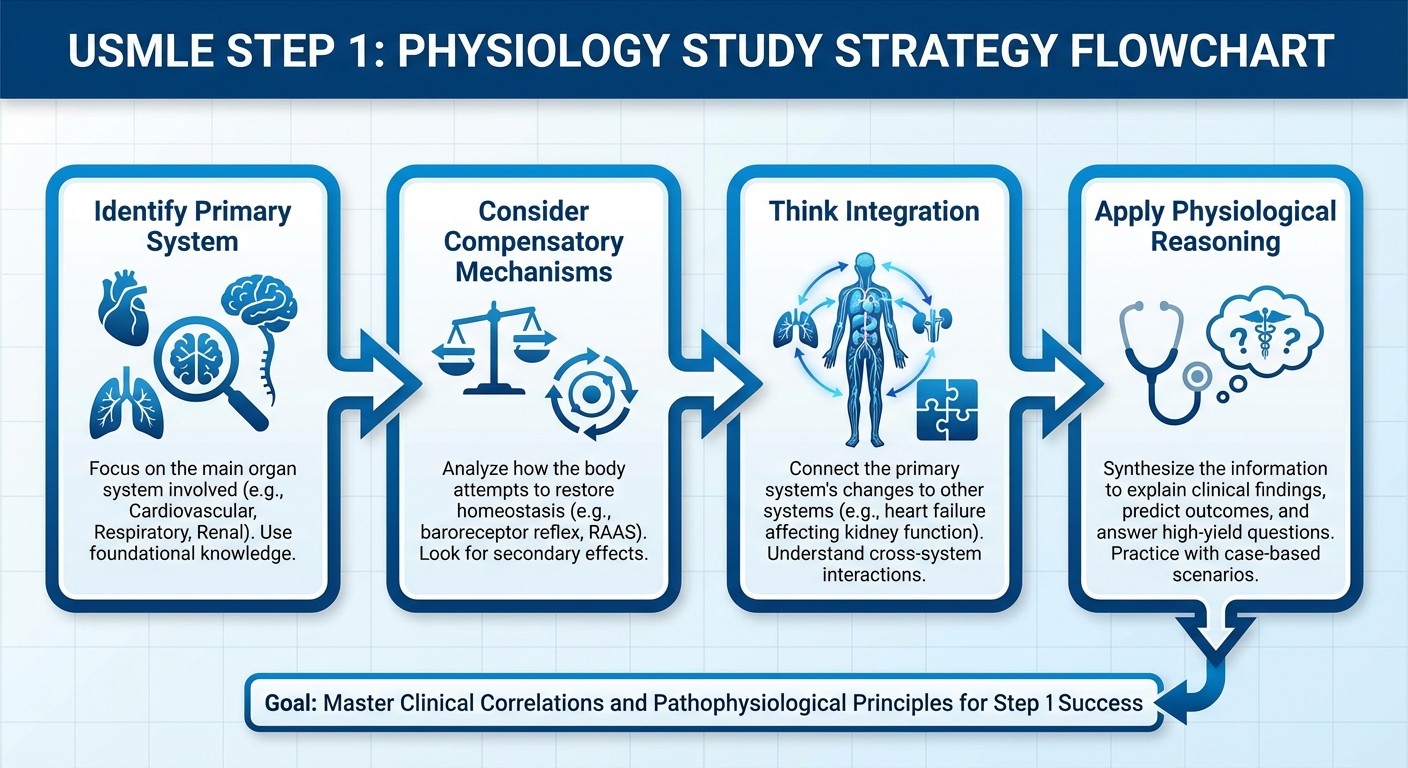
How to Approach Clinical Application Questions
The 2026 USMLE Step 1 emphasizes clinical reasoning over factual recall. Here's how to tackle physiology-based clinical vignettes:
1. Identify the Primary System
Start by determining which physiological system is primarily affected. Look for key phrases:
"Shortness of breath" or "chest pain" → Cardiovascular/Respiratory
"Changes in urination" or "electrolyte abnormalities" → Renal
"Fatigue" with metabolic changes → Endocrine
2. Consider Compensatory Mechanisms
The NBME loves testing compensatory responses:
Cardiovascular: Baroreceptor reflexes, Frank-Starling mechanism
Renal: RAAS activation, acid-base compensation
Respiratory: Chemoreceptor responses, V/Q matching
Endocrine: Feedback loop adjustments
3. Think Integration, Not Isolation
Modern Step 1 questions require understanding how systems work together:
Heart failure affects renal function and fluid balance
Respiratory acidosis triggers renal compensation
Endocrine disorders impact cardiovascular and metabolic function
4. Use Physiological Reasoning
Don't just memorize—understand the "why" behind physiological processes. This approach helps with unfamiliar scenarios that test the same underlying principles.
Best Physiology Resources for USMLE Step 1 Success
Primary Textbooks
Costanzo Physiology remains the gold standard for Step 1 preparation. It's comprehensive yet concise, with excellent clinical correlations. Focus on chapters covering the five high-yield systems outlined above. Guyton and Hall provides more detailed explanations but can be overwhelming. Use it for clarification of complex concepts rather than primary reading.
Question Banks and Practice Resources
Active learning through practice questions is crucial for physiology mastery. The key is finding resources that provide detailed explanations for both correct and incorrect answer choices.
Oncourse AI stands out as the premier platform for USMLE Step 1 physiology preparation, offering:
Adaptive question bank with 40,000+ high-yield questions targeting physiology weak spots
AI-powered explanations that connect physiological concepts to clinical applications
Personalized learning paths that adjust to your performance in specific physiology topics
Integrated lessons, questions, and flashcards covering all major organ systems
Real-time progress tracking to identify areas needing additional focus
The platform's AI technology analyzes your performance patterns and identifies physiological concepts you haven't mastered, creating a personalized study plan that maximizes your preparation efficiency.
Additional Resources
First Aid for the USMLE Step 1: Excellent for review and high-yield facts
Pathoma: While focused on pathology, provides excellent physiological foundations
Board Review Series (BRS) Physiology: Concise review with good practice questions
Creating Your Physiology Study Schedule
Phase 1: Foundation Building (Weeks 1-4)
Read through Costanzo Physiology systematically
Focus on understanding concepts rather than memorization
Use Oncourse's comprehensive physiology lessons for each organ system
Complete end-of-chapter questions to test understanding
Phase 2: Active Practice (Weeks 5-8)
Begin daily question practice using Oncourse's adaptive question bank
Review incorrect answers thoroughly, understanding the physiological reasoning
Use spaced repetition with Oncourse's physiology flashcards
Integrate knowledge across organ systems
Phase 3: Integration and Review (Weeks 9-12)
Focus on complex, multi-system integration questions
Practice with timed question sets
Review high-yield concepts using First Aid and Oncourse's review materials
Identify and strengthen remaining weak areas
Common Physiology Mistakes to Avoid
1. Memorizing Without Understanding
Don't just memorize normal values—understand why they exist and what happens when they change. For example, don't just memorize that normal cardiac output is 5 L/min; understand how preload, afterload, and contractility affect this value.
2. Studying Systems in Isolation
Physiology questions increasingly test integration between systems. Always consider how changes in one system affect others.
3. Neglecting Clinical Correlations
Pure physiology questions are rare on modern Step 1. Every physiological concept should be tied to clinical implications and pathophysiology.
4. Insufficient Practice with Calculations
Practice physiological calculations regularly: cardiac output, renal clearance, oxygen content, and acid-base compensation. These commonly appear on Step 1.
Using AI to Enhance Your Physiology Preparation
Modern AI tools can significantly enhance physiology learning when used strategically. Oncourse's Rezzy AI offers several advantages for physiology preparation:
Personalized Learning Paths
The AI analyzes your performance across different physiology topics and creates customized study plans focusing on your weak areas. This prevents wasted time on concepts you've already mastered.
Intelligent Question Selection
Rather than random practice, the AI selects questions based on your learning curve, gradually increasing complexity as your understanding improves.
Concept Reinforcement
When you miss physiology questions, Rezzy AI identifies the underlying concepts and provides additional practice in those specific areas.
Learn more about maximizing AI for medical exam preparation in our guide on how to use Rezzy AI to study smarter.
Final Recommendations: What Actually Shows Up on Test Day
Based on recent Step 1 experiences and NBME patterns, prioritize these physiology areas:
Highest Yield (Study First)
1. Cardiovascular physiology: Cardiac output, blood pressure regulation, shock physiology 2. Acid-base physiology: Compensation mechanisms, anion gap disorders 3. Renal regulation: Volume control, electrolyte balance, diuretic effects 4. Endocrine feedback loops: Especially thyroid, adrenal, and glucose homeostasis
High Yield (Study Second)
1. Respiratory gas exchange: V/Q matching, oxygen transport 2. Autonomic nervous system: Effects on organ systems 3. Calcium homeostasis: PTH, vitamin D, bone metabolism 4. Neurophysiology: Action potentials, synaptic transmission
Moderate Yield (Review)
1. GI physiology: Basic secretion and motility 2. Reproductive physiology: Hormone cycles, basic regulation 3. Special senses: Basic transduction mechanisms
Remember, success in USMLE Step 1 physiology comes from understanding principles and their clinical applications, not memorizing isolated facts. The exam rewards students who can reason through physiological problems and understand how normal processes become disrupted in disease.
Conclusion: Your Path to Physiology Mastery
Mastering physiology for USMLE Step 1 requires a strategic approach that emphasizes understanding over memorization, integration over isolation, and clinical application over pure theory. The five high-yield systems—cardiovascular, renal, respiratory, endocrine, and neurophysiology—form the foundation for success not just on Step 1, but throughout your medical career.
The 2026 USMLE Step 1 continues to evolve toward clinical reasoning and integration, making a solid physiology foundation more critical than ever. By focusing on the high-yield concepts outlined in this guide, using effective study resources, and practicing with adaptive question banks, you'll build the physiological reasoning skills essential for Step 1 success.
Remember that physiology is not just another subject to conquer—it's the foundation that makes pathology logical, pharmacology predictable, and clinical medicine understandable. Invest the time to truly understand these concepts, and you'll find that many other Step 1 topics become much more manageable.
Ready to transform your physiology preparation? Download Oncourse AI today and experience personalized, AI-powered learning that adapts to your needs. With our comprehensive lesson library, adaptive question bank, and intelligent spaced repetition system, you'll master the physiological concepts that matter most for USMLE Step 1 success. Join thousands of medical students who've already discovered the power of AI-enhanced learning—your future self will thank you.