Back
High-Yield OBGYN Topics for NEET PG 2026: Complete Subject-wise Guide
Master high-yield OBGYN topics for NEET PG 2026 with this comprehensive subject-wise guide. Covers weightage, clinical scenarios, study strategies, and revision tips for maximum scores.
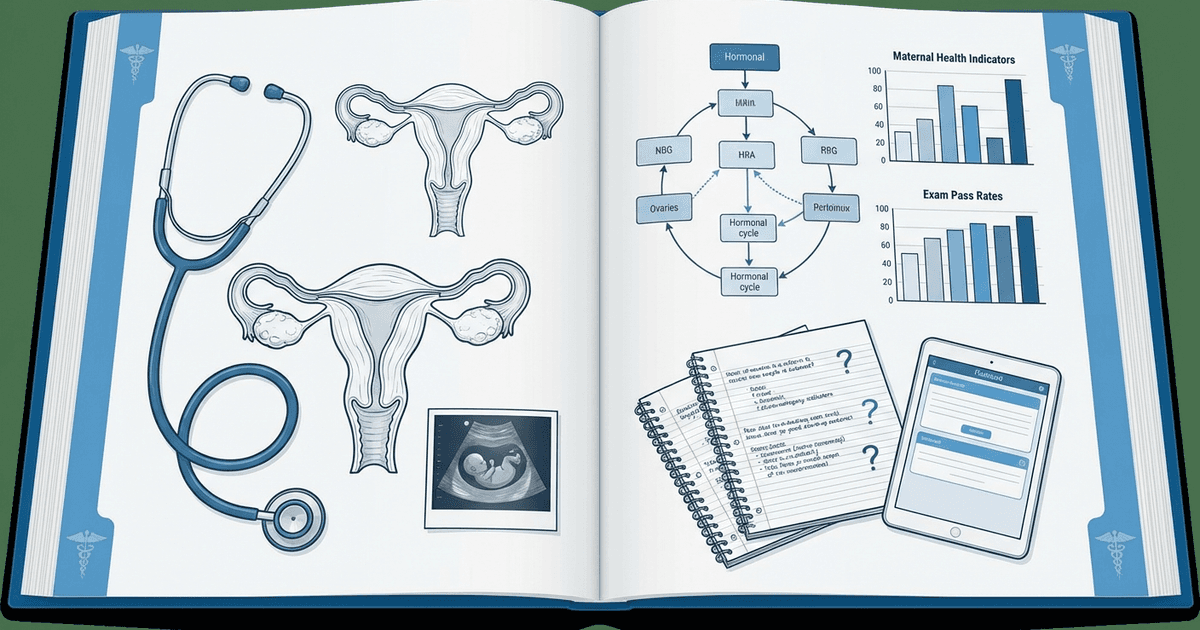
High-Yield OBGYN Topics for NEET PG 2026: Complete Subject-wise Guide
Obstetrics and Gynecology (OBGYN) consistently ranks among the highest-scoring subjects in NEET PG, contributing approximately 15-20 questions to the exam. With strategic preparation focusing on high-yield topics, OBGYN can become your gateway to securing those crucial extra marks that make the difference between your dream seat and a missed opportunity.
This comprehensive guide breaks down the most important OBGYN topics for NEET PG 2026, organized by weightage and frequency of appearance in previous years. Whether you're starting your preparation or in the final revision phase, this subject-wise breakdown will help you prioritize your study time effectively.
Why OBGYN is Crucial for NEET PG Success
OBGYN offers one of the best return-on-investment ratios among all NEET PG subjects. Unlike subjects with vast theoretical content, OBGYN focuses heavily on clinical scenarios, making it possible to score consistently with targeted preparation. The subject combines factual recall with clinical application, testing both your memory and reasoning skills.
Recent NEET PG patterns show that OBGYN questions are increasingly scenario-based, focusing on practical management decisions rather than pure theory. This shift makes it essential to understand concepts deeply rather than relying solely on rote memorization.
High-Yield Topics in Obstetrics
1. Antenatal Care and High-Risk Pregnancy (Weightage: 25-30%)
Essential Topics:
Antenatal care protocols and investigations
High-risk pregnancy identification and management
Gestational diabetes and hypertensive disorders
TORCH infections during pregnancy
Rh incompatibility and hemolytic disease
Key Focus Areas:
Timeline of routine antenatal investigations
Management of pregnancy-induced hypertension (PIH)
Screening protocols for gestational diabetes
Prevention strategies for neural tube defects
Immunization schedules during pregnancy
The prenatal care lessons on Oncourse provide comprehensive coverage of antenatal protocols with clinical case discussions that mirror NEET PG question patterns.
2. Labor and Delivery Management (Weightage: 20-25%)
Critical Topics:
Normal labor progression and stages
Fetal heart rate monitoring and interpretation
Cesarean section indications and techniques
Instrumental deliveries (forceps and vacuum)
Emergency obstetric care
Must-Know Concepts:
Partograph interpretation and usage
Bishop's score and cervical ripening
Shoulder dystocia management
Cord prolapse emergency management
Post-term pregnancy complications
Practice with labor and delivery questions helps reinforce decision-making skills crucial for clinical scenario questions.
3. Pregnancy Complications (Weightage: 20-25%)
High-Yield Areas:
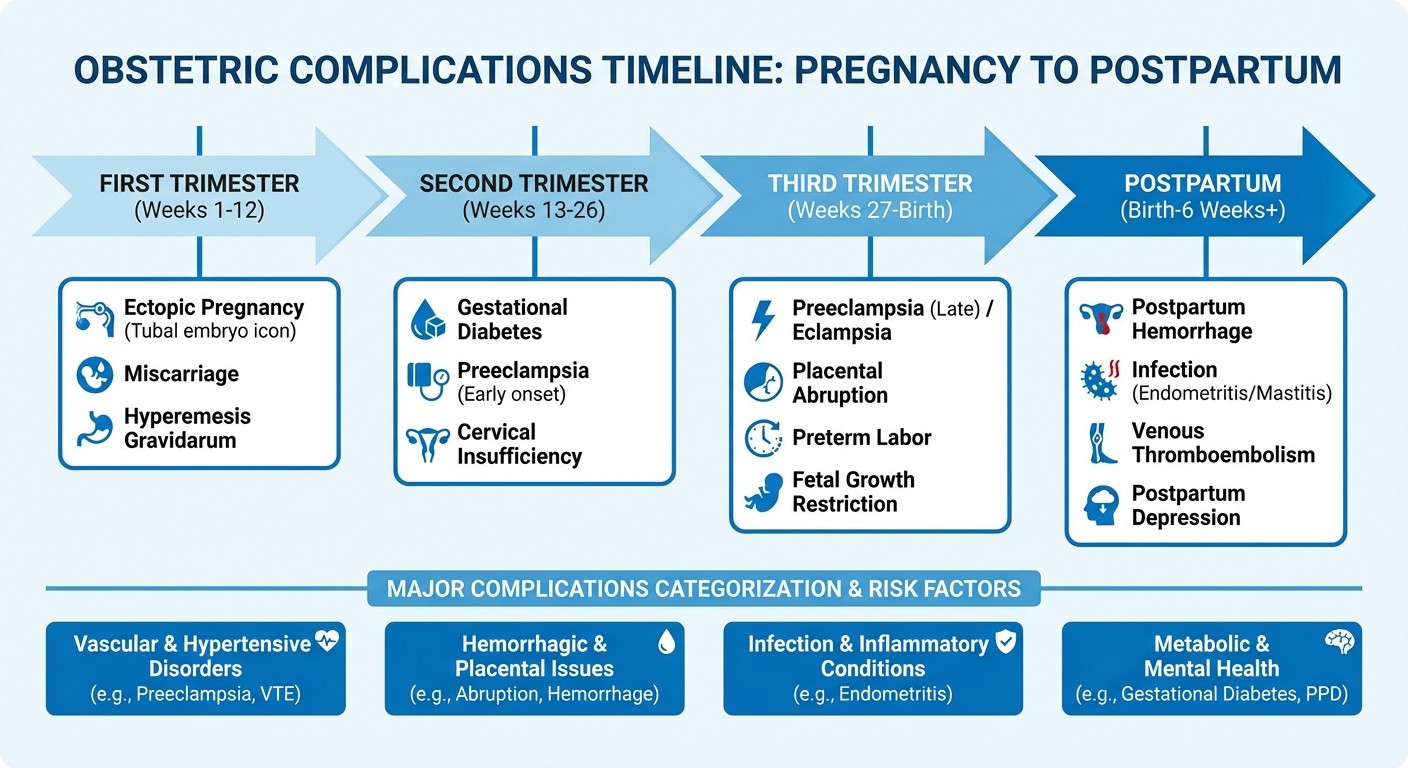
Antepartum hemorrhage (placenta previa, abruption)
Preterm labor and PROM
Multiple pregnancies complications
Ectopic pregnancy diagnosis and management
Abortion types and management
Clinical Pearls:
Differential diagnosis of antepartum bleeding
Management of preterm rupture of membranes
Twin-to-twin transfusion syndrome
Medical vs. surgical management of ectopic pregnancy
Incomplete abortion vs. missed abortion differentiation
4. Postpartum Care and Complications (Weightage: 15-20%)
Essential Knowledge:
Normal puerperium changes
Postpartum hemorrhage management
Puerperal sepsis and endometritis
Breastfeeding counseling and problems
Family planning in postpartum period
Master these concepts through postpartum care flashcards for quick revision before the exam.
High-Yield Topics in Gynecology
1. Menstrual Disorders and Abnormal Uterine Bleeding (Weightage: 25-30%)
Core Topics:
PALM-COEIN classification of AUB
Amenorrhea evaluation (primary and secondary)
Dysmenorrhea management
Premenstrual syndrome and PMDD
Menorrhagia and metrorrhagia differentiation
Clinical Applications:
Hormonal evaluation in amenorrhea
Medical vs. surgical management of menorrhagia
Endometrial biopsy indications
Oral contraceptive pill effects on menstruation
PCOS diagnostic criteria and management
The menstrual disorders lessons provide detailed coverage of hormonal pathways and management algorithms.
2. Reproductive Endocrinology and Infertility (Weightage: 20-25%)
Essential Areas:
Infertility evaluation (male and female factors)
Assisted reproductive technologies (ART)
Polycystic ovary syndrome (PCOS)
Endometriosis diagnosis and management
Ovulation induction protocols
Key Concepts:
HSG interpretation and indications
Semen analysis parameters
IVF vs. IUI indications
Laparoscopy in infertility workup
Ovarian reserve testing
Strengthen your understanding with fertility and infertility practice questions.
3. Gynecologic Oncology (Weightage: 15-20%)
High-Yield Topics:
Cervical cancer screening and staging
Ovarian cancer presentation and management
Endometrial cancer risk factors
Gestational trophoblastic disease
Vulvar and vaginal cancers
Clinical Focus:
Pap smear interpretation and follow-up
FIGO staging systems
Tumor markers in gynecologic cancers
Radiation therapy indications
Palliative care considerations
4. Contraception and Family Planning (Weightage: 10-15%)
Important Topics:
Hormonal contraceptives mechanisms and side effects
Intrauterine device (IUD) insertion and complications
Emergency contraception protocols
Sterilization procedures
Natural family planning methods
Access comprehensive contraception and family planning resources to understand mechanism of action and contraindications.
5. Pediatric and Adolescent Gynecology (Weightage: 10-15%)
Key Areas:
Congenital anomalies of reproductive tract
Precocious puberty evaluation
Delayed puberty workup
Sexual abuse evaluation
Adolescent contraception counseling
High-Yield Clinical Scenarios and Case-Based Questions
NEET PG 2026 continues to emphasize clinical reasoning through case-based questions. Here are the most frequently tested scenarios:
Obstetrics Scenarios
1. Antepartum bleeding evaluation: Patient presentation with bleeding in different trimesters 2. Fetal distress management: CTG interpretation and immediate management steps 3. Preterm labor prevention: Tocolytic therapy and steroid administration 4. Emergency cesarean indications: Absolute vs. relative contraindications 5. Shoulder dystocia management: Step-by-step emergency protocols
Gynecology Scenarios
1. Amenorrhea workup: Systematic evaluation based on clinical presentation 2. Pelvic mass evaluation: Imaging interpretation and management approach 3. Abnormal Pap smear follow-up: Colposcopy indications and management 4. PCOS diagnosis: Clinical and biochemical criteria application 5. Postmenopausal bleeding: Immediate evaluation and cancer screening
Subject-wise Weightage Distribution Table
Topic Category | Approximate Questions | Priority Level |
|---|---|---|
Antenatal Care & High-Risk Pregnancy | 4-5 questions | Very High |
Labor & Delivery | 3-4 questions | Very High |
Pregnancy Complications | 3-4 questions | High |
Menstrual Disorders | 3-4 questions | Very High |
Reproductive Endocrinology | 2-3 questions | High |
Gynecologic Oncology | 2-3 questions | High |
Postpartum Care | 1-2 questions | Medium |
Contraception | 1-2 questions | Medium |
Pediatric Gynecology | 1 question | Low |
Effective Study Strategies for OBGYN
1. Systematic Topic Coverage
Start with high-weightage topics and gradually move to lower-yield areas. Use the comprehensive OBGYN lessons as your primary resource for concept building.
2. Case-Based Learning
Focus extensively on clinical scenarios rather than isolated facts. Each topic should be understood in the context of patient presentation, diagnosis, and management.
3. Regular Practice Testing
Solve OBGYN practice questions daily to reinforce concepts and improve speed. Aim for 20-25 questions per day from this subject.
4. Visual Learning Integration
Use flowcharts and algorithms for management protocols. Create visual mnemonics for drug dosages and investigation timelines.
5. Spaced Repetition Technique
Implement OBGYN flashcards for efficient retention of facts and figures. Review cards daily with increasing intervals for optimal memory consolidation.
Common Mistakes to Avoid in OBGYN Preparation
1. Neglecting Recent Guidelines Updates
OBGYN guidelines change frequently. Ensure you're studying the most current protocols for antenatal care, cancer screening, and contraception methods.
2. Over-emphasizing Rare Conditions
While exotic conditions are academically interesting, focus your time on common clinical presentations that frequently appear in NEET PG.
3. Ignoring Drug Dosages and Timelines
OBGYN heavily tests specific drug dosages, investigation timelines, and treatment protocols. These details are non-negotiable for scoring well.
4. Weak Anatomy Foundation
Many gynecologic questions require solid understanding of pelvic anatomy. Don't skip anatomical diagrams and spatial relationships.
5. Inadequate Integration with Other Subjects
OBGYN frequently integrates with anatomy, physiology, and pharmacology. Understand hormone pathways and drug mechanisms thoroughly.
Last-Minute Revision Strategy
4 Weeks Before Exam
Complete all high-yield topics
Solve previous year questions topic-wise
Create concise notes for quick revision
2 Weeks Before Exam
Focus on weak areas identified through practice tests
Review emergency protocols and management algorithms
Memorize drug dosages and investigation timelines
1 Week Before Exam
Quick revision using OBGYN flashcards
Solve mixed practice questions
Review high-yield facts and mnemonics
Day Before Exam
Light revision of formulas and classifications
Avoid new topics
Focus on confidence-building activities
Technology-Enhanced OBGYN Preparation
Modern NEET PG preparation benefits significantly from technology integration. Platforms like Oncourse offer AI-powered learning experiences that adapt to your knowledge gaps and learning pace.
Key features that enhance OBGYN preparation:
Personalized study plans based on your performance analytics
Spaced repetition algorithms for optimal retention
Clinical scenario simulations for practical application
Performance tracking to identify improvement areas
Expert-curated content aligned with current exam patterns
The platform's free tier provides access to essential study materials, while premium features unlock unlimited practice questions and advanced AI tutoring capabilities.
Integration with Comprehensive NEET PG Strategy
OBGYN preparation shouldn't exist in isolation. Integrate it with your overall NEET PG strategy by:
1. Balancing with other high-yield subjects like Medicine and Surgery
2. Cross-referencing anatomical concepts with other systems
3. Connecting pharmacological principles across subjects
4. Using common investigation protocols as revision anchors
5. Practicing multidisciplinary case scenarios
For comprehensive NEET PG preparation strategies, explore proven study techniques that have helped thousands of students achieve their target ranks.
Final Tips for OBGYN Success
1. Prioritize understanding over memorization - Clinical reasoning beats rote learning
2. Practice daily calculation problems - Drug dosages, gestational age calculations, and BMI computations
3. Master emergency protocols - These are frequently tested and highly scorable
4. Stay updated with current guidelines - Recent changes often appear in exams
5. Develop speed through consistent practice - OBGYN questions should be solved quickly to save time for other subjects
Remember, OBGYN success in NEET PG comes from consistent, focused preparation combined with regular practice testing. The subject rewards systematic study with reliable scoring opportunities that can significantly boost your overall rank.
Your success in NEET PG 2026 depends not just on what you study, but how efficiently you study it. Focus on high-yield topics, practice regularly, and maintain consistent revision schedules. With the right strategy and resources, OBGYN can become one of your strongest subjects in the exam.