Back
INI-CET 2026 Pharmacology High-Yield Guide: Problem-Solving Strategies and Memory Mnemonics
Master INI-CET 2026 pharmacology with proven problem-solving strategies, high-yield mnemonics, and memory techniques. Complete guide for medical exam success.
INI-CET 2026 Pharmacology High-Yield Guide: Problem-Solving Strategies and Memory Mnemonics
Pharmacology forms the backbone of clinical medicine and constitutes approximately 15-20% of INI-CET questions. With over 3,000 drugs to potentially remember, the key to success lies not in rote memorization but in strategic learning approaches that emphasize high-yield concepts, effective mnemonics, and proven problem-solving techniques.
This comprehensive guide will transform your pharmacology preparation for INI-CET 2026, providing you with battle-tested strategies used by thousands of successful candidates.
Understanding INI-CET 2026 Pharmacology Pattern
INI-CET pharmacology questions typically follow predictable patterns that reward strategic preparation over exhaustive memorization. The exam emphasizes clinical pharmacology, drug interactions, mechanisms of action, and adverse effects rather than chemical structures or synthesis pathways.
High-frequency question types include:
Mechanism of action questions (35% of pharmacology section)
Drug interactions and contraindications (25%)
Adverse effects and toxicity (20%)
Clinical applications and therapeutic uses (15%)
Pharmacokinetics and dosing (5%)
Understanding this distribution allows you to prioritize your study time effectively. Focus 70% of your pharmacology preparation on mechanisms, interactions, and adverse effects.
High-Yield Drug Categories for INI-CET 2026
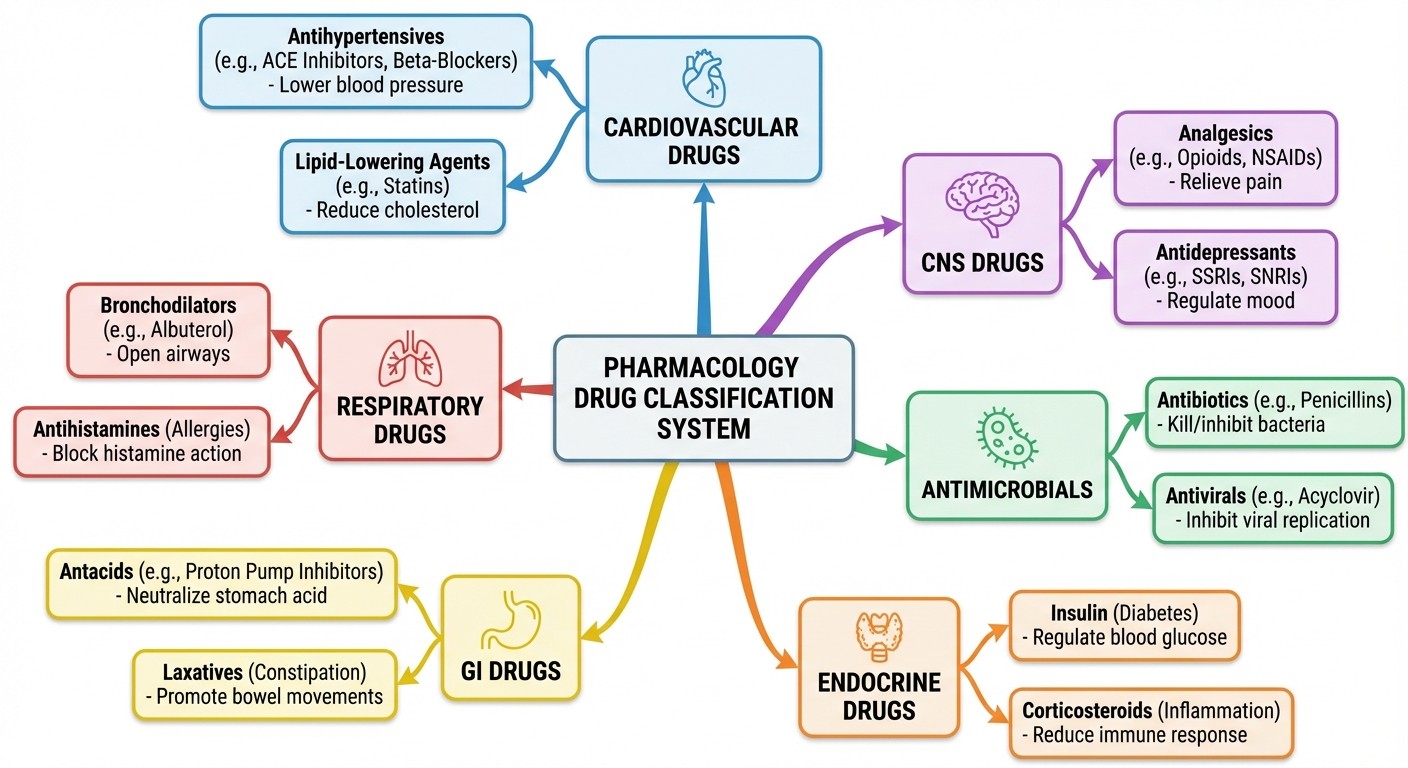
Cardiovascular Drugs (High Priority)
Cardiovascular pharmacology consistently yields 3-4 questions per INI-CET paper. Master these drug classes:
ACE Inhibitors and ARBs
Mechanism: RAAS system inhibition
High-yield drugs: Lisinopril, Losartan
Key adverse effects: Hyperkalemia, angioedema
Contraindications: Pregnancy, bilateral renal artery stenosis
Beta Blockers
Mnemonic for cardioselective beta blockers: "BEAM" (Bisoprolol, Esmolol, Atenolol, Metoprolol)
Non-selective: Propranolol, Nadolol
Key distinction: Cardioselective β1 blockers safe in asthma/COPD
Calcium Channel Blockers
Dihydropyridines (amlodipine, nifedipine): Peripheral vasodilation
Non-dihydropyridines (verapamil, diltiazem): Cardiac effects
Mnemonic: "DHP = Decreased Peripheral resistance"
CNS Drugs (Moderate Priority)
Focus on antiepileptics, antipsychotics, and antidepressants for maximum yield.
Antiepileptics
Broad spectrum: Valproate, Levetiracetam, Lamotrigine
Mnemonic for enzyme inducers: "PC BRAS" (Phenytoin, Carbamazepine, Barbiturates, Rifampin, Alcohol chronic, St. John's wort)
Valproate contraindication: Pregnancy (neural tube defects)
Antipsychotics
Typical vs. Atypical distinction crucial
High-yield adverse effects: EPS, tardive dyskinesia, metabolic syndrome
Atypical agents: Lower EPS risk, higher metabolic risk
Antimicrobials (High Priority)
Antimicrobial questions often integrate with microbiology and infectious diseases.
Beta-lactams
Mechanism: Cell wall synthesis inhibition
Penicillins, Cephalosporins, Carbapenems, Monobactams
Key resistance mechanisms: Beta-lactamase production
Fluoroquinolones
Mechanism: DNA gyrase inhibition
Contraindications: Pregnancy, children (cartilage damage)
Black box warning: Tendon rupture, peripheral neuropathy
Aminoglycosides
Mnemonic: "GNATS" (Gentamicin, Neomycin, Amikacin, Tobramycin, Streptomycin)
Toxicities: Nephrotoxicity, ototoxicity (8th cranial nerve)
Endocrine Drugs (Moderate Priority)
Diabetes Medications
Metformin: First-line, contraindicated in renal failure
Sulfonylureas: Risk of hypoglycemia
SGLT-2 inhibitors: Risk of DKA, UTIs
GLP-1 agonists: Weight loss benefit
Thyroid Drugs
Methimazole vs. PTU in pregnancy (PTU preferred first trimester)
Levothyroxine dosing considerations
Memory Techniques and Mnemonics
The PHARMA Method
Pharmacology success requires High-yield Associations using Repeated Mnemonics and Active recall. This systematic approach ensures long-term retention.
Drug Name Mnemonics
ACE Inhibitors (all end in -pril):
"HELP" - Lisinopril Helps Lower Pressure
ARBs (all end in -sartan):
"LOSERS Can't Beat My Awesome Team"
(Losartan, Candesartan, Olmesartan, Valsartan, Irbesartan, Telmisartan)
Statins (all end in -statin):
"FLAPS" (Fluvastatin, Lovastatin, Atorvastatin, Pravastatin, Simvastatin)
Mechanism-Based Memory Techniques
RAAS System Blockade:
"ACE the RAAS" - Remember the cascade:
Angiotensinogen → (Renin) → Angiotensin I → (ACE) → Angiotensin II → (AT1 receptor)
ACE inhibitors block the enzyme
ARBs block the receptor
Beta Blocker Selectivity:
"Beta-1 Selective Agents Beat Hearts Selectively"
Remember: β1 = Heart, β2 = Lungs
Cardioselective agents safer in respiratory disease
Side Effect Memory Patterns
ACE Inhibitor Side Effects - "HACK":
Hyperkalemia
Angioedema
Cough (dry)
Kidney dysfunction
Aminoglycoside Toxicity - "8th N' Kidney":
8th cranial nerve toxicity (hearing loss)
Nephrotoxicity
Kidney monitoring essential
Problem-Solving Strategies
The DEDUCE Method for Pharmacology Questions
Determine the clinical scenario Establish the drug class needed Differentiate between options Understand contraindications Consider drug interactions Evaluate the best answer
Question Type Strategies
Mechanism of Action Questions:
1. Identify the physiological pathway affected
2. Determine whether inhibition or activation is desired
3. Match the drug to its specific molecular target
4. Eliminate options that work through different mechanisms
Drug Interaction Questions:
1. Identify enzyme inducers vs. inhibitors
2. Consider drugs that compete for the same receptors
3. Look for additive or synergistic effects
4. Remember clinically significant combinations
Adverse Effect Questions:
1. Connect the mechanism to predictable side effects
2. Distinguish dose-dependent from idiosyncratic reactions
3. Consider organ-specific toxicities
4. Remember black box warnings and contraindications
Clinical Integration Approach
Always think: "How does this drug work in real patients?"
Example Approach:
For a hypertensive diabetic patient:
1. Consider ACE inhibitors (renoprotective)
2. Avoid beta blockers that mask hypoglycemia
3. Be cautious with thiazides (hyperglycemia risk)
4. Monitor for drug interactions with diabetic medications
High-Yield Study Resources and Techniques
Active Recall Strategies
Flashcard Optimization:
Create cards with clinical scenarios rather than isolated facts. For example:
Front: "55-year-old diabetic with hypertension needs BP control. Which medication provides renal protection?"
Back: "ACE inhibitor (lisinopril) - blocks RAAS, reduces proteinuria, slows diabetic nephropathy"
Spaced Repetition Schedule:
Day 1: Learn new concepts
Day 3: First review
Day 7: Second review
Day 21: Third review
Day 60: Long-term retention check
Practice Question Strategies
Question Bank Approach:
1. Attempt questions by system, not randomly
2. Review explanations for both correct and incorrect answers
3. Create error logs for pattern recognition
4. Focus on high-yield topics that appear frequently
Integration with Other Subjects
Pharmacology + Pathology:
Link drug mechanisms to disease pathophysiology. Understanding why a drug works helps predict its effects and side effects.
Pharmacology + Medicine:
Connect drug choices to clinical guidelines and treatment algorithms. This integration appears frequently in INI-CET scenario-based questions.
Advanced Memory Techniques
The Story Method
Create memorable stories linking drug names, mechanisms, and effects:
Beta Blocker Story:
"Mr. BEAM (Bisoprolol, Esmolol, Atenolol, Metoprolol) selectively worked on his heart (β1) but avoided the lungs (β2), making him safe for his asthmatic friend to be around."
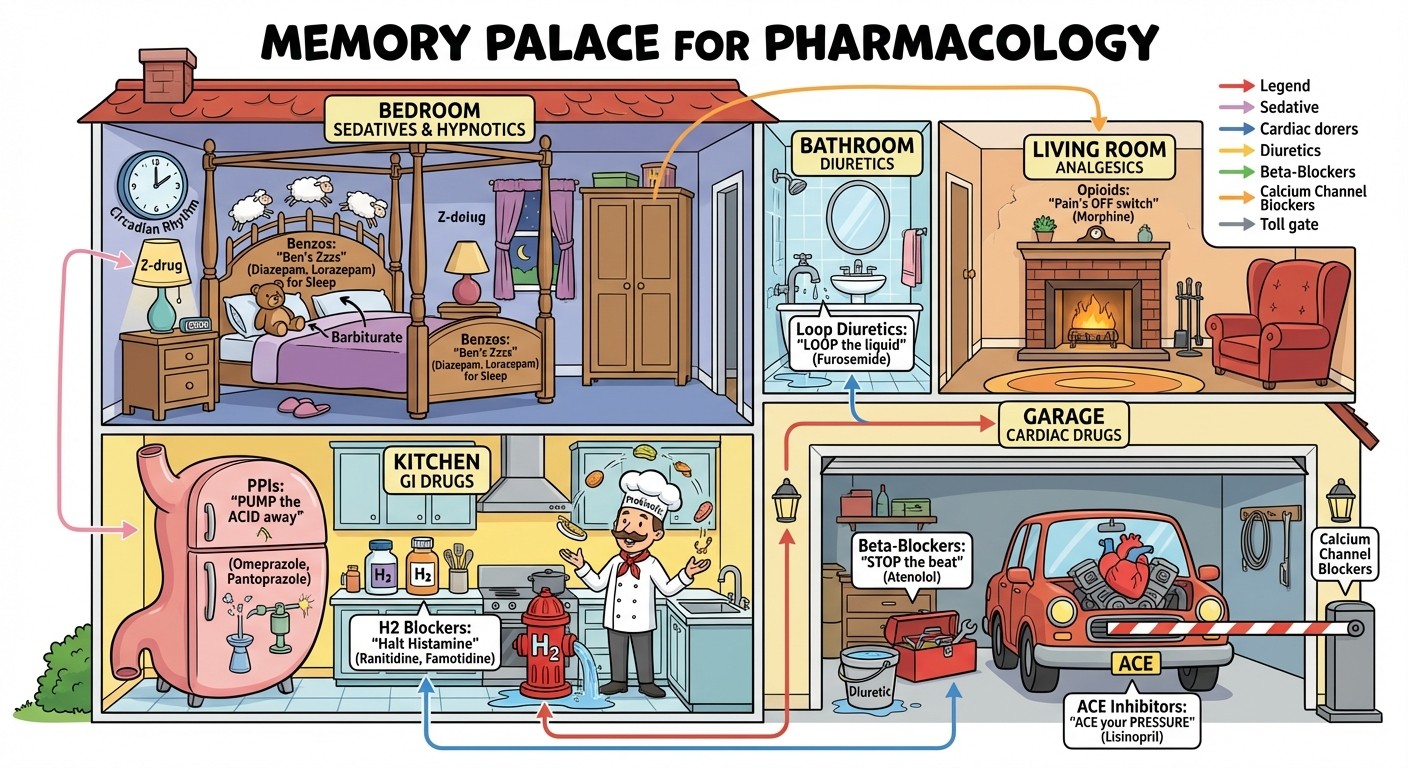
Visual Memory Palaces
Assign drug categories to familiar locations:
Kitchen: GI drugs (acid suppressors by the sink, antiemetics by the stove)
Bedroom: Sedatives and sleep aids
Living Room: Cardiovascular drugs (central to the house = central to circulation)
Garage: Emergency drugs (epinephrine, atropine)
Pattern Recognition
Drug Naming Patterns:
Beta blockers often end in "-lol" (propranolol, metoprolol)
ACE inhibitors end in "-pril" (lisinopril, enalapril)
ARBs end in "-sartan" (losartan, valsartan)
Proton pump inhibitors end in "-prazole" (omeprazole, lansoprazole)
Common Pitfalls and How to Avoid Them
Overgeneralization Trap
Mistake: Assuming all drugs in a class have identical properties Solution: Learn key differences within drug classes
Example: Not all beta blockers are the same - some are cardioselective, others have intrinsic sympathomimetic activity
Mechanism Confusion
Mistake: Memorizing effects without understanding mechanisms Solution: Always connect mechanism → effect → clinical use → side effects
Example: ACE inhibitors block angiotensin II formation → vasodilation → BP reduction → useful in hypertension, but causes cough due to bradykinin accumulation
Dosing Obsession
Mistake: Focusing on exact dosing for exams Solution: INI-CET rarely asks specific doses; focus on concepts like "start low, go slow" for elderly patients or "loading dose required" for drugs with long half-lives
Final Preparation Strategy
Last Month Before INI-CET 2026
Week 1-2: Consolidation
Review high-yield mnemonics daily
Practice mixed pharmacology questions
Focus on weak areas identified through practice tests
Week 3: Integration
Solve integrated questions combining pharmacology with other subjects
Review drug interactions and contraindications
Practice time management with timed sections
Week 4: Maintenance
Light review of mnemonics
Focus on confidence-building
Avoid learning new concepts
Exam Day Strategy
During the Exam:
1. Read pharmacology questions carefully for clinical context
2. Eliminate obviously wrong answers first
3. Use mnemonics when stuck between two options
4. Don't spend excessive time on any single question
5. Trust your preparation and first instinct
Remember, pharmacology success in INI-CET 2026 comes from understanding patterns, not memorizing isolated facts. Use these strategies consistently, and you'll find pharmacology becoming one of your strongest subjects rather than a source of anxiety.
The key to mastering pharmacology lies in connecting mechanisms to clinical applications while using proven memory techniques to ensure long-term retention. With systematic preparation using these strategies, you'll approach pharmacology questions with confidence and accuracy on exam day.
Enhance Your Pharmacology Preparation with Oncourse
To maximize your INI-CET 2026 pharmacology success, consider leveraging comprehensive study resources that integrate these memory techniques with extensive practice questions.
Explore Oncourse's INI-CET preparation course which offers over 5,000 high-yield lessons, 40,000+ practice questions, and AI-powered flashcards specifically designed for Indian medical entrance exams. The platform's spaced repetition algorithm ensures you review pharmacology concepts at optimal intervals for long-term retention.
Practice with cardiovascular pharmacology questions and master the concepts using interactive flashcards. For comprehensive understanding, dive deep into clinical pharmacology lessons that connect drug mechanisms to real-world clinical scenarios.
With a free tier available and 4.8+ rating from over 10,000 medical students, Oncourse provides the structured approach needed to transform pharmacology from a challenging subject into your competitive advantage for INI-CET 2026.