Back
INI-CET 2026 Pharmacology High-Yield Guide: Problem-Solving Strategies and Memory Mnemonics
Master INI-CET 2026 pharmacology with proven strategies, memory mnemonics, and problem-solving techniques. Complete high-yield guide for medical exam success.
INI-CET 2026 Pharmacology High-Yield Guide: Problem-Solving Strategies and Memory Mnemonics
Pharmacology forms 15-20% of INI-CET questions and can make or break your rank. With over 3,000 drugs to potentially remember, success lies in strategic learning that emphasizes high-yield concepts, effective mnemonics, and proven problem-solving techniques.
This comprehensive guide transforms your pharmacology preparation for INI-CET 2026 with battle-tested strategies used by successful candidates.
Understanding INI-CET Pharmacology Pattern
INI-CET pharmacology questions follow predictable patterns that reward strategic preparation over exhaustive memorization. The exam emphasizes clinical pharmacology, drug interactions, mechanisms of action, and adverse effects.
High-frequency question types:
Mechanism of action questions (35%)
Drug interactions and contraindications (25%)
Adverse effects and toxicity (20%)
Clinical applications and therapeutic uses (15%)
Pharmacokinetics and dosing (5%)
Focus 70% of your preparation on mechanisms, interactions, and adverse effects for maximum efficiency.
High-Yield Drug Categories
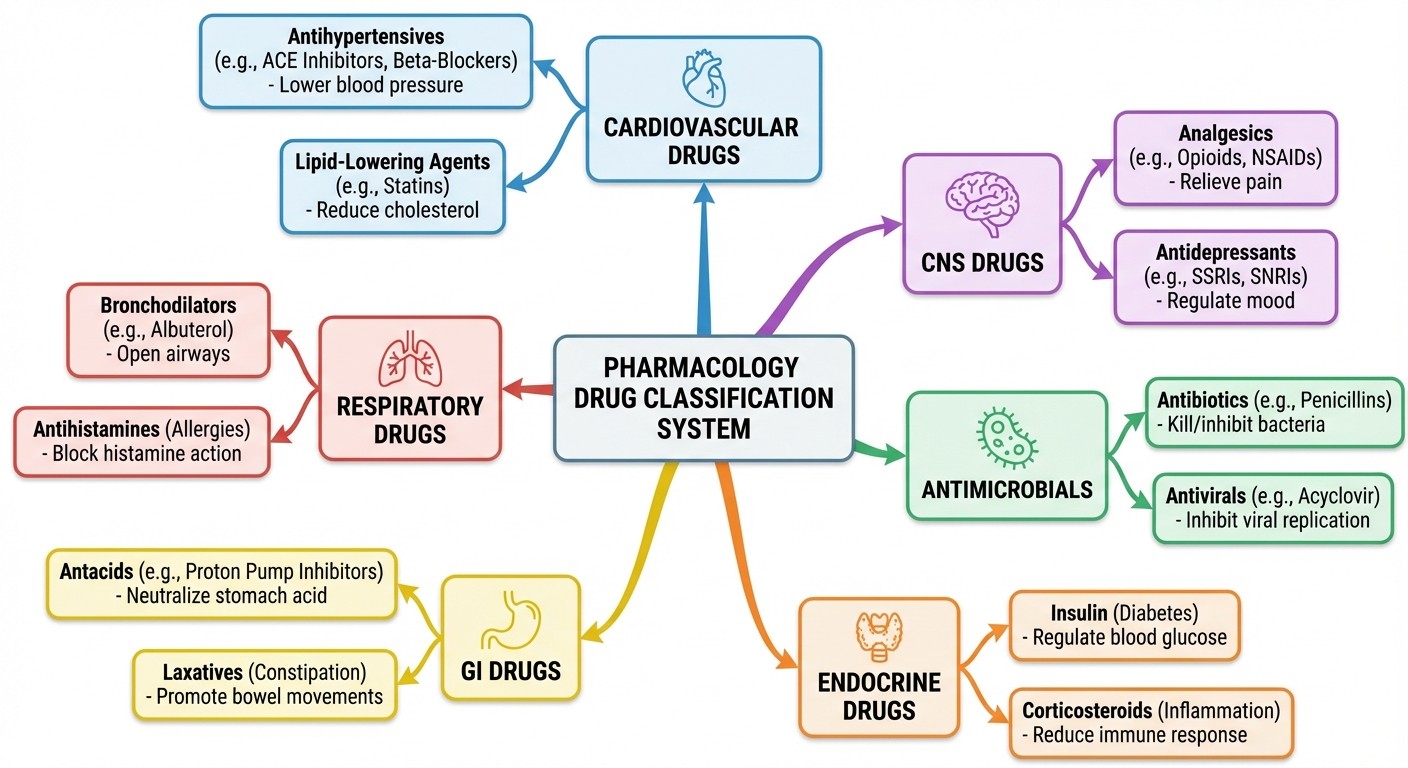
Cardiovascular Drugs (High Priority)
Cardiovascular pharmacology yields 3-4 questions per paper. Master these classes:
ACE Inhibitors
Mechanism: RAAS system inhibition
High-yield drugs: Lisinopril, Enalapril
Key adverse effects: Hyperkalemia, angioedema, dry cough
Mnemonic for side effects: "HACK" (Hyperkalemia, Angioedema, Cough, Kidney dysfunction)
Beta Blockers
Cardioselective mnemonic: "BEAM" (Bisoprolol, Esmolol, Atenolol, Metoprolol)
Remember: β1 = Heart, β2 = Lungs
Cardioselective agents safer in asthma/COPD
ARBs
All end in "-sartan"
Mnemonic: "LOSERS Can't Beat My Team" (Losartan, Candesartan, Olmesartan, Valsartan, Irbesartan, Telmisartan)
Advantage over ACE inhibitors: No cough
CNS Drugs (Moderate Priority)
Antiepileptics
Broad spectrum: Valproate, Levetiracetam, Lamotrigine
Enzyme inducers: "PC BRAS" (Phenytoin, Carbamazepine, Barbiturates, Rifampin, Alcohol chronic, St. John's wort)
Valproate: Contraindicated in pregnancy (neural tube defects)
Antipsychotics
Typical vs. Atypical distinction crucial
Typical: Higher EPS risk
Atypical: Lower EPS, higher metabolic risk
Antimicrobials (High Priority)
Beta-lactams
Mechanism: Cell wall synthesis inhibition
Classes: Penicillins, Cephalosporins, Carbapenems, Monobactams
Resistance: Beta-lactamase production
Aminoglycosides
Mnemonic: "GNATS" (Gentamicin, Neomycin, Amikacin, Tobramycin, Streptomycin)
Toxicities: "8th N' Kidney" (8th cranial nerve + Nephrotoxicity)
Fluoroquinolones
Mechanism: DNA gyrase inhibition
Contraindications: Pregnancy, children (cartilage damage)
Black box warnings: Tendon rupture, peripheral neuropathy
Endocrine Drugs
Diabetes Medications
Metformin: First-line, avoid in renal failure
Sulfonylureas: Hypoglycemia risk
SGLT-2 inhibitors: DKA and UTI risk
Memory Techniques and Mnemonics
The PHARMA Method
Pharmacology success requires High-yield Associations using Repeated Mnemonics and Active recall.
Drug Name Pattern Recognition
Common Endings:
Beta blockers: "-lol" (propranolol, metoprolol)
ACE inhibitors: "-pril" (lisinopril, enalapril)
ARBs: "-sartan" (losartan, valsartan)
PPIs: "-prazole" (omeprazole, lansoprazole)
Statins: "-statin" (atorvastatin, simvastatin)
Mechanism-Based Memory
RAAS System Blockade:
"ACE the RAAS cascade"
Angiotensinogen → (Renin) → Angiotensin I → (ACE) → Angiotensin II → (AT1 receptor)
Drug Selectivity:
"Beta-1 Beats Hearts, Beta-2 Breathes Lungs"
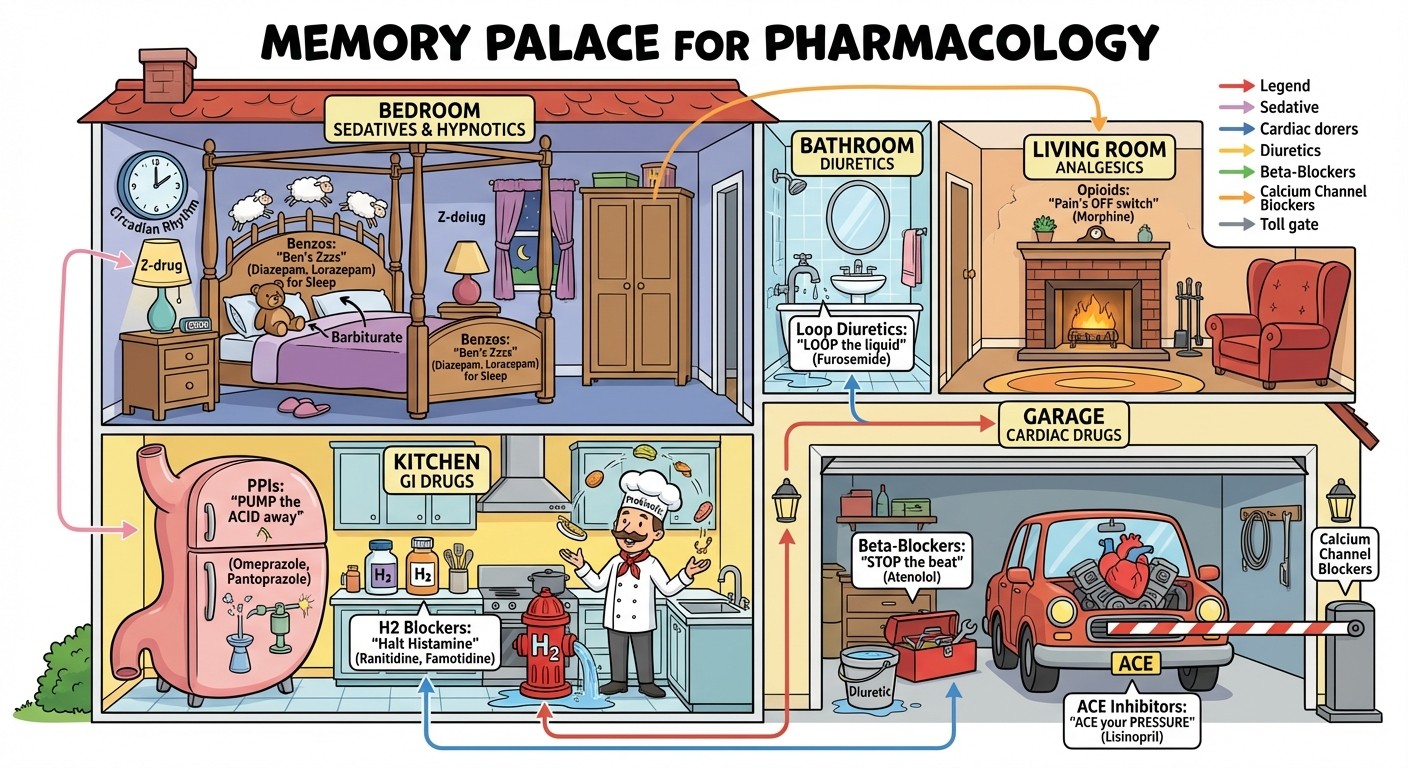
Visual Memory Palace Technique
Assign drug categories to locations:
Kitchen: GI drugs (PPIs by sink, antiemetics by stove)
Bedroom: Sedatives and hypnotics
Living Room: Cardiovascular drugs (central circulation)
Garage: Emergency drugs (epinephrine, atropine)
Problem-Solving Strategies
The DEDUCE Method
Determine the clinical scenario Establish the drug class needed Differentiate between options Understand contraindications Consider drug interactions Evaluate the best answer
Question Type Approaches
Mechanism Questions:
1. Identify affected pathway
2. Determine inhibition vs. activation needed
3. Match drug to molecular target
4. Eliminate different mechanisms
Interaction Questions:
1. Identify enzyme inducers vs. inhibitors
2. Look for receptor competition
3. Consider additive effects
4. Remember significant combinations
Adverse Effect Questions:
1. Connect mechanism to predictable effects
2. Distinguish dose-dependent vs. idiosyncratic
3. Consider organ-specific toxicities
4. Remember contraindications
Clinical Integration
Think: "How does this work in real patients?"
Example: Hypertensive diabetic
1. ACE inhibitors (renoprotective)
2. Avoid beta blockers (mask hypoglycemia)
3. Caution with thiazides (hyperglycemia)
4. Monitor drug interactions
Study Techniques for Maximum Retention
Active Recall with Clinical Scenarios
Create flashcards with cases:
Front: "55-year-old diabetic with HTN needs renal protection"
Back: "ACE inhibitor - blocks RAAS, reduces proteinuria"
Spaced Repetition Schedule
Day 1: Learn concepts
Day 3: First review
Day 7: Second review
Day 21: Third review
Day 60: Long-term check
Integration Strategy
Pharmacology + Pathology: Link mechanisms to disease pathophysiology Pharmacology + Medicine: Connect to clinical guidelines
Common Pitfalls to Avoid
Overgeneralization
Mistake: All drugs in class are identical Solution: Learn key differences within classes
Mechanism Confusion
Mistake: Memorizing without understanding Solution: Connect mechanism → effect → use → side effects
Dosing Obsession
Solution: Focus on concepts, not exact doses
Final Month Strategy
Weeks 1-2: Consolidation
Daily mnemonic review
Mixed practice questions
Target weak areas
Week 3: Integration
Multi-subject questions
Drug interactions focus
Time management practice
Week 4: Maintenance
Light mnemonic review
Confidence building
Avoid new concepts
Exam Day Tips
1. Read for clinical context
2. Eliminate wrong answers first
3. Use mnemonics when uncertain
4. Manage time effectively
5. Trust your preparation
Enhance Your Preparation with Oncourse
Transform your INI-CET pharmacology preparation with comprehensive resources that integrate these proven techniques.
Explore Oncourse's Resources:
INI-CET preparation course with 5,000+ lessons and 40,000+ questions
Master concepts with pharmacology flashcards
Study comprehensive clinical pharmacology lessons
With AI-powered spaced repetition and a free tier available, Oncourse helps 10,000+ medical students master pharmacology through strategic, evidence-based learning approaches.
Success in INI-CET 2026 pharmacology comes from understanding patterns and using proven memory techniques. Apply these strategies consistently to transform pharmacology from a challenging subject into your competitive advantage.