Which of the following antitussives is known to cause hallucinations?
Which of the following drugs used in the management of pulmonary hypertension acts by inhibiting the phosphodiesterase enzyme?
What is the drug of choice for acute severe asthma?
Which drug used in bronchial asthma requires therapeutic drug monitoring?
What is the therapeutic blood range of theophylline in micrograms per liter?
Which of the following drugs can be administered by the subcutaneous route?
A woman taking cetirizine for allergic rhinitis complains of excessive sleepiness. Which of the following is the best alternative with minimal sedative effect?
Benralizumab acts on which receptor?
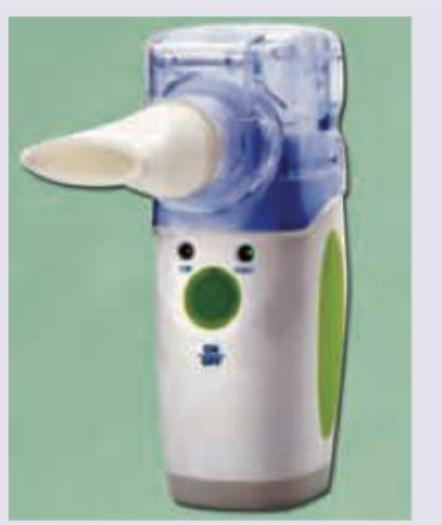
The image given below shows a portable battery device called ultrasonic nebulizer for salbutamol delivery. All are correct about the device except:
Consider the following steps for using a metered dose inhaler (MDI) : I. Incline the head backward to minimize oropharyngeal deposition II. Remove the cap and shake the inhaler III. Breathe out gently and place the mouthpiece into the mouth IV. Hold the breath for 10 seconds V. Simultaneously, begin a slow deep inspiration, depress the canister and continue to inhale Which one of the following is the correct sequence of using MDI?
Explanation: ### Explanation **Correct Option: B. Dextromethorphan** Dextromethorphan is a synthetic non-opioid derivative of levorphanol. While it acts on the medullary cough center to raise the cough threshold, it does not act on classical opioid receptors (mu or kappa) at therapeutic doses. However, at high doses (overdose or recreational use), it acts as an **NMDA receptor antagonist**, similar to Ketamine and Phencyclidine (PCP). This antagonism leads to dissociative effects, euphoria, and **hallucinations**. **Analysis of Incorrect Options:** * **A. Morphine:** While morphine is a potent opioid that suppresses cough, its primary side effects are sedation, respiratory depression, and constipation. It is rarely used as a first-line antitussive due to its high addiction potential. * **C. Diphenhydramine:** This is a first-generation H1-antihistamine used for cough due to its anticholinergic properties. Its main side effects are sedation, dry mouth, and urinary retention, rather than hallucinations. * **D. Aprepitant:** This is a Neurokinin-1 (NK1) receptor antagonist used primarily as an antiemetic for chemotherapy-induced nausea and vomiting (CINV). It is not classified as a standard antitussive. **High-Yield Clinical Pearls for NEET-PG:** * **Mechanism of Action:** Dextromethorphan suppresses the cough center in the medulla oblongata. * **Safety Profile:** Unlike codeine, it does not cause constipation or significant respiratory depression at standard doses and has low addictive potential. * **Contraindication:** It should not be given to patients on **MAO inhibitors**, as it can precipitate **Serotonin Syndrome** (due to inhibition of serotonin reuptake). * **Metabolism:** It is metabolized by the enzyme **CYP2D6**. Genetic polymorphism in this enzyme can lead to varied drug responses.
Explanation: **Explanation:** **Sildenafil** is the correct answer because it is a potent and selective inhibitor of **Phosphodiesterase-5 (PDE-5)**. In the pulmonary vasculature, PDE-5 is responsible for the degradation of cyclic Guanosine Monophosphate (cGMP). By inhibiting this enzyme, Sildenafil increases intracellular cGMP levels, which leads to nitric oxide-mediated smooth muscle relaxation and potent vasodilation of the pulmonary arteries, thereby reducing pulmonary artery pressure. **Analysis of Incorrect Options:** * **A. Epoprostenol:** This is a synthetic **Prostacyclin (PGI2) analogue**. It acts by binding to IP receptors to increase cAMP, causing direct vasodilation and inhibition of platelet aggregation. * **B. Bosentan:** This is a dual **Endothelin Receptor Antagonist (ERA)**. It blocks both $ET_A$ and $ET_B$ receptors, preventing the potent vasoconstrictive effects of endothelin-1. * **C. Nifedipine:** This is a **Calcium Channel Blocker (CCB)**. It is used only in a small subset of pulmonary hypertension patients who show a positive "vasoreactivity test" during right heart catheterization. **NEET-PG High-Yield Pearls:** * **Tadalafil** is another PDE-5 inhibitor used in PAH; it has a longer half-life than Sildenafil. * **Riociguat** is a "Soluble Guanylate Cyclase (sGC) Stimulator" often confused with PDE-5 inhibitors; it increases cGMP production directly rather than preventing its breakdown. * **Drug of Choice (DOC):** While treatment is individualized, PDE-5 inhibitors are often first-line oral agents for WHO Group 1 PAH. * **Contraindication:** Never co-administer PDE-5 inhibitors with **Nitrates**, as this can lead to life-threatening hypotension due to synergistic increases in cGMP.
Explanation: **Explanation:** **Short-acting beta-2 agonists (SABA)**, such as Salbutamol (Albuterol), are the drugs of choice for acute severe asthma because they provide rapid bronchodilation. They act by stimulating $\beta_2$ receptors on bronchial smooth muscle, leading to increased intracellular cAMP and immediate muscle relaxation. Their rapid onset of action (within 5 minutes) is critical for reversing acute bronchospasm and improving airflow. **Analysis of Incorrect Options:** * **Long-acting beta-2 agonists (LABA):** Drugs like Salmeterol have a slow onset of action and are used for maintenance therapy, not acute relief. Using them alone in acute asthma is contraindicated as it does not provide immediate relief and can increase mortality. * **Oral theophylline:** This has a narrow therapeutic index and a slow onset of action. It is much less effective than SABAs and carries a high risk of toxicity (arrhythmias, seizures), making it a second or third-line add-on therapy. * **Inhaled ipratropium bromide:** While this anticholinergic is often added to SABAs in the emergency department (synergistic effect), it is not the first-line drug of choice because its bronchodilatory effect is slower and less potent than SABAs. **NEET-PG High-Yield Pearls:** * **Route of choice:** Inhalation (MDI with spacer or Nebulization) is preferred over systemic routes to minimize side effects like tremors and tachycardia. * **Status Asthmaticus:** If a patient is refractory to SABA, the next steps include systemic corticosteroids (Hydrocortisone/Prednisolone) and IV Magnesium Sulfate. * **Side Effects of SABA:** Muscle tremors (most common), tachycardia, and **hypokalemia** (due to shift of $K^+$ into cells).
Explanation: **Explanation:** **Theophylline** is the correct answer because it has a **narrow therapeutic index** (10–20 µg/mL). Therapeutic Drug Monitoring (TDM) is essential because its metabolism is highly variable and follows saturation kinetics at higher doses. Small increases in dose can lead to disproportionate rises in plasma concentration, resulting in severe toxicity (seizures, arrhythmias, and persistent vomiting). Furthermore, its clearance is affected by numerous factors like smoking, liver disease, and drugs that inhibit or induce CYP1A2 enzymes. **Why other options are incorrect:** * **Cromoglycate:** This is a mast cell stabilizer used prophylactically. It is poorly absorbed systemically and is usually administered via inhalation, making systemic toxicity and the need for TDM non-existent. * **Salmeterol:** A Long-Acting Beta-2 Agonist (LABA) used via inhalation. It has a wide safety margin, and its effects are monitored clinically (peak flow/symptoms) rather than by plasma levels. * **Terbutaline:** A Short-Acting Beta-2 Agonist (SABA). While it can be given systemically in emergencies, it does not require TDM as its side effects (tremors, tachycardia) are easily monitored clinically. **High-Yield Clinical Pearls for NEET-PG:** * **Therapeutic Range:** 10–20 µg/mL (Bronchodilation); >20 µg/mL (Toxicity). * **Mechanism:** Inhibits Phosphodiesterase (PDE III & IV), increasing cAMP; also acts as an Adenosine receptor antagonist. * **Drug Interactions:** Cimetidine, Erythromycin, and Ciprofloxacin **increase** theophylline levels (enzyme inhibitors), while Phenytoin and Rifampicin **decrease** them (enzyme inducers). * **Antidote for Toxicity:** There is no specific pharmacological antagonist; management involves gastric lavage, activated charcoal, and hemodialysis in severe cases.
Explanation: **Explanation:** Theophylline is a methylxanthine derivative used in the treatment of bronchial asthma and COPD. It works primarily by inhibiting phosphodiesterase (PDE), leading to increased cAMP levels, and by antagonizing adenosine receptors, resulting in bronchodilation. **1. Why Option D (10-20 µg/mL) is Correct:** Theophylline has a **narrow therapeutic index**, meaning the margin between a therapeutic dose and a toxic dose is very small. The established therapeutic range for optimal bronchodilation with minimal side effects is **10-20 µg/mL** (or mg/L). * *Note:* Recent guidelines often suggest a lower range (5-15 µg/mL) to further reduce toxicity, but 10-20 µg/mL remains the standard "textbook" answer for competitive exams like NEET-PG. **2. Why Other Options are Incorrect:** * **0-5 µg/mL (Option A):** This concentration is sub-therapeutic; it is generally insufficient to produce significant bronchodilation. * **15-25 µg/mL (Option C):** While there is an overlap, concentrations above 20 µg/mL are associated with a high incidence of toxicity. **3. High-Yield Clinical Pearls for NEET-PG:** * **Toxicity Profile:** * **>20 µg/mL:** GI upset (nausea, vomiting), restlessness, and insomnia. * **>30 µg/mL:** Serious toxicities including **cardiac arrhythmias** and **intractable seizures** (theophylline-induced seizures are often resistant to standard anticonvulsants). * **Metabolism:** It follows **First-order kinetics** at therapeutic levels but shifts to **Zero-order kinetics** at higher concentrations (saturation kinetics). * **Drug Interactions:** * *Levels increased by:* Enzyme inhibitors like Cimetidine, Erythromycin, and Ciprofloxacin. * *Levels decreased by:* Enzyme inducers like Phenytoin, Rifampicin, and smoking. * **Mechanism:** Non-selective PDE inhibition and Adenosine (A1/A2) receptor antagonism.
Explanation: **Explanation:** **Terbutaline** is a selective $\beta_2$-agonist used primarily in the management of asthma and COPD. It is unique among the options because it is the only $\beta_2$-agonist available in the United States and India for **subcutaneous (SC) administration**. 1. **Why Terbutaline is correct:** While most $\beta_2$-agonists are administered via inhalation to minimize systemic side effects, Terbutaline can be given subcutaneously (0.25 mg) in emergency settings, such as **Status Asthmaticus**, when inhaled therapy is not feasible or effective. It is also used off-label as a tocolytic to inhibit premature uterine contractions. 2. **Why other options are incorrect:** * **Albuterol (Salbutamol):** Though the most common SABA, it is administered via inhalation (MDI/nebulization) or orally. In emergencies, it can be given intravenously (IV) in some regions, but not SC. * **Metaproterenol (Orciprenaline):** This is a less selective $\beta$-agonist available in oral and inhaled forms. It is rarely used now due to significant $\beta_1$ cardiac side effects. * **Pirbuterol:** This is an inhaled selective $\beta_2$-agonist with a chemical structure similar to Albuterol, available only as a breath-actuated aerosol. **High-Yield Clinical Pearls for NEET-PG:** * **Emergency Use:** SC Terbutaline is indicated when a patient has severe bronchospasm and is unable to move enough air to utilize a nebulizer or MDI. * **Tocolysis:** Terbutaline relaxes uterine smooth muscle; however, its use is limited to 48–72 hours due to risks of maternal pulmonary edema and tachycardia. * **Side Effects:** Systemic administration (SC/Oral) significantly increases the risk of skeletal muscle tremors (most common), hypokalemia, and palpitations.
Explanation: ***Fexofenadine***- It is a second-generation H1 antihistamine that has the **lowest lipophilicity** and is actively transported out of the central nervous system (CNS) by the **P-glycoprotein** pump.- This mechanism results in **minimal to virtually no sedative effects**, making it the best non-sedating alternative to cetirizine.*Hydroxyzine*- This is a first-generation H1 antihistamine that easily crosses the **blood-brain barrier** (BBB).- It is known for its significant **sedative** and **anxiolytic properties**, and would worsen the patient's complaint of excessive sleepiness.*Diphenhydramine*- As a highly lipophilic, first-generation antihistamine, it exhibits profound CNS penetration and causes profound **drowsiness** and cognitive impairment.- It also possesses potent **anticholinergic effects**, which contribute significantly to various side effects but not lack of sedation.*Promethazine*- This drug is a first-generation antihistamine known for its **strong antiemetic** and highly **sedative** properties.- It is structurally related to phenothiazine antipsychotics and would likely cause **more severe sleepiness** than cetirizine.
Explanation: ***IL 5***- Benralizumab is a monoclonal antibody that specifically targets the **alpha subunit (IL-5Rα) of the Interleukin-5 Receptor** [1].- By blocking this receptor, it facilitates the depletion of **eosinophils** via **antibody-dependent cell-mediated cytotoxicity (ADCC)**, crucial for treating severe eosinophilic asthma [1].*IL4*- IL-4 is a key mediator of **Type 2 inflammation** often targeted by drugs like **Dupilumab**, which inhibits both IL-4 and **IL-13 signaling**.- Targeting IL-4 is generally aimed at reducing IgE production and overall Th2 response, a different mechanism than the eosinophil depletion mechanism of Benralizumab.*IL1*- IL-1 is a potent **pro-inflammatory cytokine** primarily associated with **autoinflammatory diseases** and targeted by agents like **Anakinra** (IL-1 receptor antagonist).- It is not the primary or specific therapeutic target in severe eosinophilic asthma, which involves Th2 mechanisms and eosinophil recruitment.*TNF alpha*- **TNF-alpha** is a major systemic inflammatory cytokine targeted by biological agents like **Infliximab** and **Etanercept** used in conditions such as **Rheumatoid Arthritis** and **Crohn’s disease**.- While inflammation is involved in asthma, TNF-alpha antagonists are not the standard specific treatment for severe eosinophilic asthma.
Explanation: ***Advantage of using all anti-asthma formulations*** **(CORRECT - This is the EXCEPTION/False statement)** - Ultrasonic nebulizers are typically **not suitable for all anti-asthma formulations**, particularly those containing **proteins or suspensions**, as the high-frequency vibrations can **denature or alter their efficacy**. - Medications like **cromolyn sodium, budesonide (suspension), and dornase alfa** are generally not recommended for use with ultrasonic nebulizers due to potential degradation. - This is a **major limitation** of ultrasonic nebulizers compared to jet nebulizers. *Operates on piezoelectric crystal vibrations* **(True statement)** - Ultrasonic nebulizers **use a piezoelectric crystal** to convert electrical energy into **high-frequency ultrasonic waves (1-3 MHz)**. - These waves cause the medication solution to **vibrate at a high frequency**, creating an aerosol of fine droplets (1-5 μm). *Little patient coordination required* **(True statement)** - Nebulizers, including ultrasonic types, deliver medication over a **longer period (5-15 minutes)**, allowing patients to simply **breathe normally through a mouthpiece or mask**. - This design is particularly beneficial for patients who have difficulty with the **coordinated inspiration and actuation** required for metered-dose inhalers (MDIs). *Quiet and portable* **(True statement)** - Ultrasonic nebulizers are generally **quieter** than jet nebulizers, as they do not rely on a compressor to generate airflow. - Their **compact size and often battery-operated design** make them highly portable, facilitating use outside the home.
Explanation: ***II, III, I, V, IV*** - The correct sequence for using an MDI starts with **preparing the inhaler** (shaking it and removing the cap), followed by **proper positioning** and **breathing technique** to maximize drug delivery. - After preparing and positioning, the patient should inhale deeply while actuating the device, then **hold their breath** to allow for drug deposition. - **Note:** In standard MDI technique, the head should be in a **neutral or slightly upright position**, not inclined backward. Inclining the head backward would actually **increase** oropharyngeal deposition, contrary to what step I suggests. However, given the options provided in this question, this is the correct sequence. *III, II, I, V, IV* - This sequence incorrectly places **removing the cap and shaking the inhaler** (II) after beginning to breathe out and placing the mouthpiece (III), which means the inhaler isn't properly prepared before use. - The MDI needs to be shaken well before each use to ensure the medication is evenly distributed and delivered at the correct dose. *II, I, IV, III, V* - This sequence incorrectly places **holding the breath for 10 seconds** (IV) before placing the mouthpiece into the mouth and inhaling (III and V). - The breath hold should occur *after* inhalation to maximize drug deposition in the lungs. *III, I, II, IV, V* - This sequence places **removing the cap and shaking the inhaler** (II) very late, after preparing to breathe and inclining the head, which is incorrect. - The inhaler must be properly shaken *before* it is placed in the mouth and activated to ensure proper medication delivery.
Bronchodilators
Practice Questions
Corticosteroids in Respiratory Disorders
Practice Questions
Anti-inflammatory Respiratory Agents
Practice Questions
Mast Cell Stabilizers
Practice Questions
Leukotriene Modifiers
Practice Questions
Antitussives and Expectorants
Practice Questions
Nasal Decongestants
Practice Questions
Pulmonary Surfactants
Practice Questions
Drugs for Pulmonary Hypertension
Practice Questions
Oxygen Therapy
Practice Questions
Get full access to all questions, explanations, and performance tracking.
Start For Free