
Zoonotic Diseases — MCQs

On this page
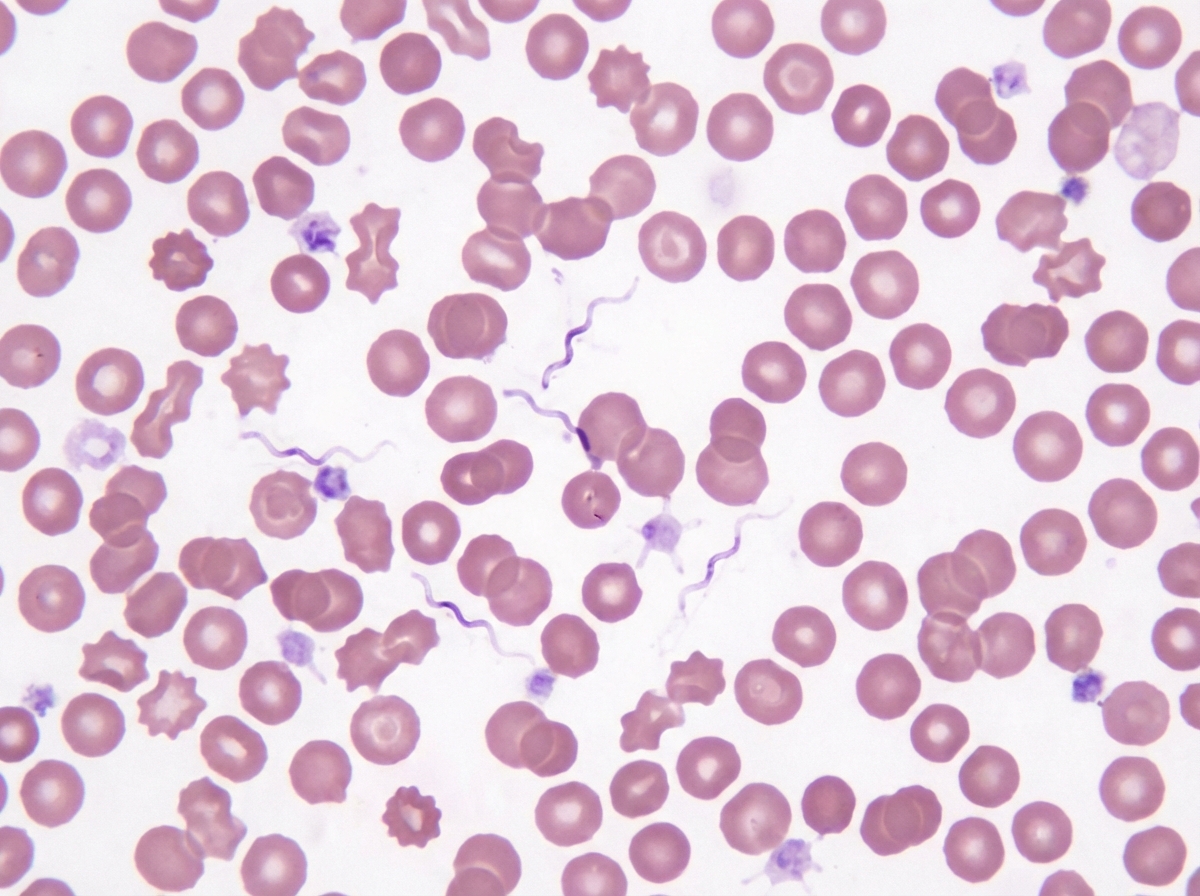
Peripheral blood smear of a patient with relapse of a fever seven days after remittance is shown. Which vectors may transmit classic relapsing fever Borrelia as a group?
Which disease is transmitted by the Ixodid tick?
Haverhill fever is caused by which bacterium?
Which of the following is NOT considered a hemorrhagic viral fever?
Which of the following statements is true about endemic typhus?
All of the following are true about Epidemic typhus except?
A 35-year-old woman presented with swelling and pain of her left wrist of ten days' duration. Twelve days prior, she was bitten on the left hand by her pet cat. Two days after the bite, she developed pain, redness, and swelling of her hand. On examination, she had mild fever, an erythematous left wrist and thenar eminence, and reduced range of motion of her fingers. Her white blood cell count was 13,000/ml, with a marked increase in the percentage of immature granulocytes. Gram stain of the wrist fluid was performed. What is the most likely cause?
A veterinary doctor had pyrexia of unknown origin. His blood culture in special laboratory media was positive for gram-negative short bacilli which were oxidase positive. Which one of the following is the likely organism grown in culture?
All of the following statements about non-typhoidal Salmonella are true, except?
A 9-year-old child presents with enlarged, painful axillary lymph nodes and an inflamed lesion on the forearm surrounding a small scratch. Laboratory examination of aspirated pus from the lymph node reveals many pleomorphic, rod-shaped bacteria on Warthin-Starry silver impregnation stain. What is the most likely causative organism?
Practice by Chapter
Principles of Zoonotic Transmission
Practice Questions
Viral Zoonoses
Practice Questions
Bacterial Zoonoses
Practice Questions
Parasitic Zoonoses
Practice Questions
Vector-Borne Zoonoses
Practice Questions
Foodborne Zoonoses
Practice Questions
Emerging Zoonotic Diseases
Practice Questions
One Health Approach to Zoonoses
Practice Questions
Prevention and Control of Zoonoses
Practice Questions
Occupational Exposure to Zoonoses
Practice Questions
Wildlife Reservoirs of Zoonotic Pathogens
Practice Questions
Global Impact of Zoonotic Diseases
Practice Questions
Want unlimited practice?
Get full access to all questions, explanations, and performance tracking.
Scan to download app