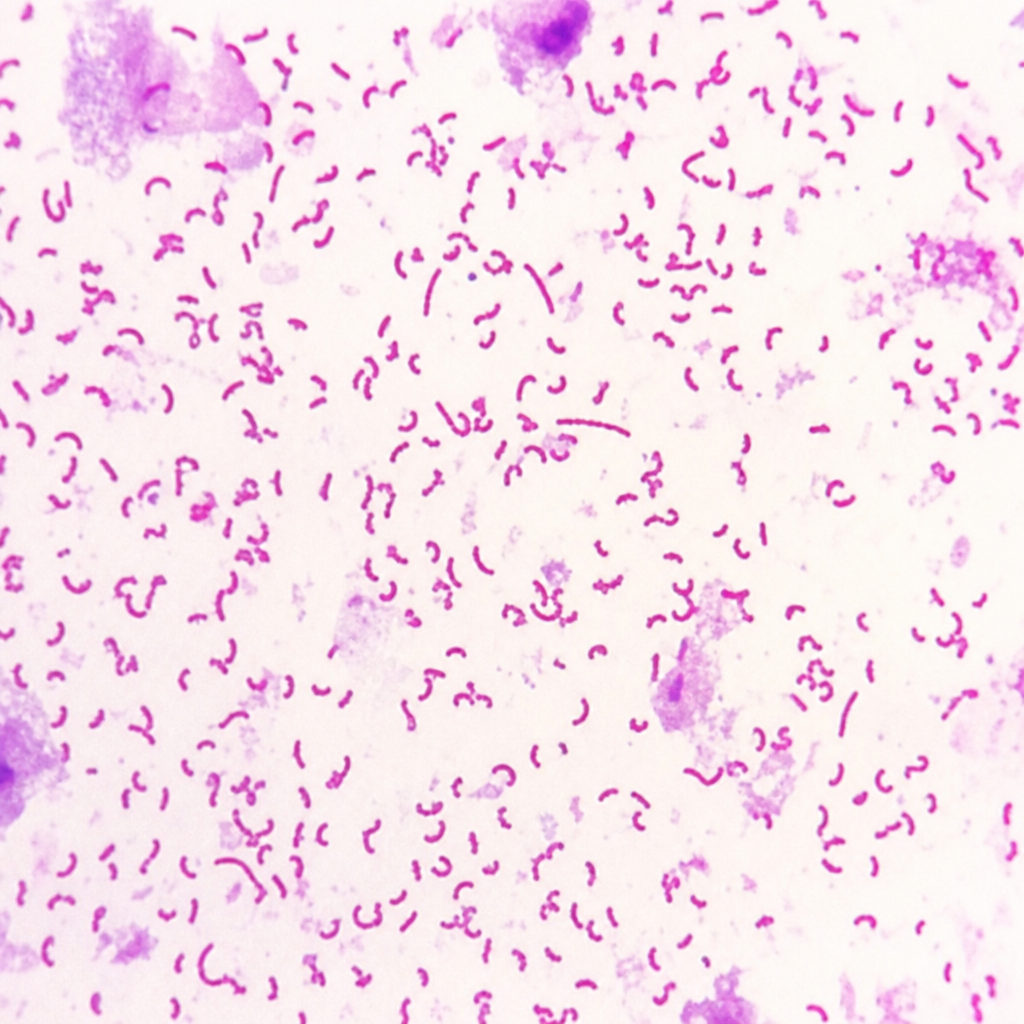
Which of the following organisms cannot be cultured?
Gonococcus is
Which of the following is a non-motile Clostridium species?
A patient presented with pyrexia of unknown origin. Blood culture in special laboratory media was positive for gram-negative coccobacilli which were oxidase positive. Which one of the following is the likely organism grown in culture?
What is the investigation of choice for detecting syphilis in a patient after two courses of complete therapy?
The Lancefield classification of bacteria is based on which of the following cellular structures?
Which is a selective medium for Pseudomonas?
Streptococcus mutans produces an adhesive polymer from sucrose, known as what?
Which one of the following factors released by heating a suspension of sheep erythrocytes is required for the growth of Haemophilus Influenzae in chocolate agar?
Cetrimide agar is used to isolate which of the following bacteria?
Explanation: **Explanation:** The correct answer is **Pneumocystis jiroveci**. **1. Why Pneumocystis jiroveci is correct:** *Pneumocystis jiroveci* (formerly *P. carinii*) is an atypical fungus that lacks ergosterol in its cell membrane. It is considered **obligate to the human host** and, despite numerous attempts, **cannot be grown in routine laboratory culture media** (axenic culture). Diagnosis relies heavily on microscopic visualization using special stains (Gomori Methenamine Silver or Direct Fluorescent Antibody) from clinical samples like Bronchoalveolar Lavage (BAL). **2. Why the other options are incorrect:** * **Klebsiella rhinoscleromatis (Option A):** This is a subspecies of *K. pneumoniae* that causes Rhinoscleroma (chronic granulomatous infection of the nose). It **can be cultured** on standard media like Blood Agar or MacConkey agar, appearing as large, mucoid colonies. * **Klebsiella ozaenae (Option B):** Associated with atrophic rhinitis (ozena), this organism is also **culturable** on routine laboratory media. * **Klebsiella granulomatis (Option C):** Formerly known as *Calymmatobacterium granulomatis*, it causes Granuloma Inguinale (Donovanosis). While it is **difficult to culture** and does not grow on routine agar, it can be grown in **yolk sacs of embryonated eggs** or specialized co-culture systems. In clinical practice, it is diagnosed by identifying "Donovan bodies" in tissue smears. **Clinical Pearls for NEET-PG:** * **Non-culturable organisms (High-Yield):** *Mycobacterium leprae*, *Treponema pallidum*, and *Pneumocystis jiroveci*. * **Pneumocystis prophylaxis:** Indicated in HIV patients when CD4 count falls below **200 cells/mm³**. Drug of choice: **TMP-SMX**. * **Stain of choice:** Gomori Methenamine Silver (GMS) shows "crushed ping-pong ball" appearance of cysts.
Explanation: ### Explanation **Correct Answer: C. Intracytoplasmic gram-negative coccus** *Neisseria gonorrhoeae* (Gonococcus) is the causative agent of gonorrhea. Morphologically, it is a **Gram-negative diplococcus** with adjacent sides flattened, giving it a characteristic **kidney or coffee-bean shape**. In clinical specimens, particularly acute purulent urethral discharge, Gonococci are predominantly found **intracytoplasmic** (inside polymorphonuclear leukocytes/neutrophils). While they can exist extracellularly, their presence within the cytoplasm of neutrophils is a diagnostic hallmark used in bedside Gram staining. #### Analysis of Incorrect Options: * **Options A, B, and D (Gram-positive):** These are incorrect because *Neisseria* species are Gram-negative. They possess a thin peptidoglycan layer and an outer membrane containing Lipooligosaccharide (LOS), causing them to stain pink/red, not purple. * **Option D (Intranuclear):** Pathogenic bacteria do not typically reside within the nucleus of host cells; they are found either in the extracellular space or within the cytoplasm/vacuoles. #### NEET-PG High-Yield Pearls: * **Culture Media:** It is highly fastidious. Use **Thayer-Martin Medium** (Selective) or **Chocolate Agar** (Non-selective). * **Biochemical Test:** It is **Oxidase positive** and **Catalase positive**. It ferments only **Glucose** (mnemonic: **G**onococcus for **G**lucose; **M**eningococcus for **M**altose and **G**lucose). * **Virulence Factor:** The **Pili** are the most important virulence factor for initial attachment to mucosal surfaces and exhibit high antigenic variation. * **Clinical Presentation:** In males, it causes acute urethritis; in females, it can lead to Pelvic Inflammatory Disease (PID) and Fitz-Hugh-Curtis syndrome. In neonates, it causes **Ophthalmia neonatorum** (prevented with erythromycin ointment).
Explanation: **Explanation:** The genus *Clostridium* consists of Gram-positive, anaerobic, spore-forming bacilli. A defining characteristic of most Clostridia is that they are motile via **peritrichous flagella**. However, **Clostridium perfringens** is a notable exception to this rule. **1. Why Clostridium perfringens is correct:** *Clostridium perfringens* (formerly *C. welchii*) is characteristically **non-motile**. In the laboratory, this is demonstrated by its growth pattern in semi-solid agar (e.g., Mannitol Motility Medium), where growth remains restricted to the line of inoculation. It is also distinguished by being **capsulated**, a feature not commonly found in other pathogenic Clostridia. **2. Why the other options are incorrect:** * **Clostridium novyi (Option B):** Highly motile and causes gas gangrene (Type A) and infectious necrotic hepatitis in animals (Type B). * **Clostridium botulinum (Option C):** Motile via peritrichous flagella; it is the causative agent of botulism. * **Clostridium difficile (Option D):** Motile and known for causing pseudomembranous colitis following antibiotic use. **High-Yield NEET-PG Pearls for *C. perfringens*:** * **Morphology:** Described as "box-car" shaped bacilli; it is the only pathogenic Clostridium that is **non-motile** and **capsulated**. * **Culture:** Shows a characteristic **"Double Zone of Hemolysis"** on blood agar (inner zone of complete hemolysis due to theta toxin; outer zone of incomplete hemolysis due to alpha toxin/lecithinase). * **Biochemical Test:** **Nagler’s Reaction** is used for rapid detection of lecithinase activity. * **Clinical:** Most common cause of **Gas Gangrene** (clostridial myonecrosis) and a frequent cause of food poisoning.
Explanation: ### Explanation **Correct Option: D. Brucella spp.** The clinical presentation of Pyrexia of Unknown Origin (PUO) combined with the laboratory findings of **Gram-negative coccobacilli** that are **oxidase positive** strongly points toward *Brucella*. * **Microbiology:** *Brucella* are small, aerobic, non-motile, Gram-negative coccobacilli. They are catalase and oxidase positive. * **Culture:** They are fastidious and require "special laboratory media" (e.g., Castaneda’s biphasic medium) for growth. Blood culture is the gold standard for diagnosing Brucellosis, especially during the febrile phase. **Analysis of Incorrect Options:** * **A. Pasteurella spp.:** While these are Gram-negative coccobacilli and oxidase positive, they are typically associated with animal bites (cats/dogs) and cause cellulitis or abscesses rather than classic PUO. They show characteristic bipolar staining ("safety-pin appearance"). * **B. Francisella spp.:** *Francisella tularensis* causes Tularemia. Although it is a Gram-negative coccobacillus, it is **oxidase negative**. It also requires cysteine-enriched media (like BCYE) for growth. * **C. Bartonella spp.:** These are Gram-negative bacilli but are typically **oxidase negative**. They are associated with Cat Scratch Disease or Trench Fever, not the classic undulant fever pattern of PUO seen in Brucellosis. **NEET-PG High-Yield Pearls:** * **Undulant Fever:** The classic temperature pattern associated with Brucellosis. * **Castaneda’s Medium:** The specific biphasic medium used to reduce the risk of laboratory-acquired infections (a significant hazard with *Brucella*). * **Rose Bengal Plate Test (RBPT):** A rapid screening test for Brucellosis. * **Standard Agglutination Test (SAT):** Detects antibodies; a titer of 1:160 or more is significant. * **Drug of Choice:** Doxycycline + Rifampicin (or Streptomycin).
Explanation: ### Explanation The correct answer is **Venereal Disease Research Laboratory test (VDRL)**. **Why VDRL is the Investigation of Choice:** In syphilis, diagnostic tests are categorized into **Treponemal** (specific) and **Non-treponemal** (non-specific) tests. * **Non-treponemal tests (VDRL, RPR):** These measure antibodies against cardiolipin-lecithin-cholesterol antigen. Their primary clinical utility lies in **monitoring the response to treatment**. Following successful therapy, VDRL titers decline and eventually become negative (seroreversion). Therefore, to assess if a patient is cured or needs further management after two courses of therapy, VDRL is used to check for a four-fold decrease in titer. * **Treponemal tests (FTA-ABS, TPHA):** These detect antibodies against *T. pallidum* itself. These antibodies usually remain positive for life (**"Treponemal memory"**), regardless of treatment. Thus, they cannot distinguish between an active infection and a past, successfully treated infection. **Analysis of Incorrect Options:** * **FTA-ABS (Option A):** As a treponemal test, it remains positive for years after treatment. It is used for confirmation of diagnosis, not for monitoring cure. * **TPI (Option C):** This is the "gold standard" for specificity but is technically demanding and obsolete in routine practice. Like FTA-ABS, it remains positive post-treatment. * **Dark Ground Microscopy (Option D):** This is used for the immediate diagnosis of primary syphilis by visualizing motile spirochetes from chancre fluid. It has no role in monitoring treatment response. **NEET-PG High-Yield Pearls:** * **Prozone Phenomenon:** Can cause false-negative VDRL results in secondary syphilis due to very high antibody titers; solved by diluting the serum. * **Biological False Positive (BFP):** Conditions like SLE, Leprosy, Malaria, and pregnancy can cause false-positive VDRL results. * **Treatment Monitoring:** A **four-fold drop** in VDRL titer (e.g., from 1:32 to 1:8) indicates adequate treatment.
Explanation: The **Lancefield classification** is a serological method used to categorize **Catalase-negative, Coagulase-negative Gram-positive cocci** (primarily the genus *Streptococcus*). ### **Explanation of the Correct Answer** The classification is based on the **group-specific C-carbohydrate antigen** (also known as the C-substance) located in the bacterial cell wall. This antigen is extracted using acid or enzymes and identified using specific antisera. Based on this, Streptococci are divided into groups **A to V** (excluding I and J). * **Group A:** *Streptococcus pyogenes* * **Group B:** *Streptococcus agalactiae* * **Group D:** *Enterococcus* and *S. bovis* ### **Why Other Options are Incorrect** * **A. M protein:** This is a major virulence factor of Group A Streptococci (GAS). While it is used for **Griffith typing** (dividing GAS into over 100 types), it is not the basis for the Lancefield classification. * **C. Cell wall peptidoglycan:** This provides structural integrity to almost all bacteria but lacks the serological specificity required for Lancefield grouping. * **D. T-protein:** This is an acid-labile surface protein used as an epidemiological marker for typing *S. pyogenes*, but it does not determine the Lancefield group. ### **High-Yield Clinical Pearls for NEET-PG** * **Exceptions:** *Streptococcus pneumoniae* and Viridans group streptococci (e.g., *S. mutans*) do not possess the Lancefield group antigen and are therefore **non-groupable**. * **Bacitracin Sensitivity:** Used to presumptively identify Group A (*S. pyogenes* is sensitive). * **CAMP Test:** Used to identify Group B (*S. agalactiae* is positive). * **Bile Esculin Hydrolysis:** Characteristic of Group D organisms.
Explanation: **Explanation:** **Cetrimide agar** is the specific selective medium used for the isolation of *Pseudomonas aeruginosa*. The underlying mechanism involves **Cetrimide (cetyltrimethylammonium bromide)**, a quaternary ammonium compound that acts as a selective agent. It inhibits the growth of most other bacteria (including other Gram-negative bacilli and Gram-positive cocci) by acting as a detergent, while *Pseudomonas* species are resistant to its inhibitory effects. Furthermore, this medium enhances the production of bacterial pigments like **pyocyanin** (blue-green) and **pyoverdin** (fluorescent yellow-green), aiding in visual identification. **Analysis of Incorrect Options:** * **Skirrow’s medium:** A selective medium used for **Campylobacter jejuni**. It contains vancomycin, polymyxin B, and trimethoprim to inhibit normal fecal flora. * **Regan-Lowe medium:** The gold standard transport and enrichment medium for **Bordetella pertussis**. It contains charcoal and cephalexin. * **Ashdown’s medium:** A selective culture medium containing crystal violet and gentamicin, specifically used for the isolation of **Burkholderia pseudomallei** (the causative agent of Melioidosis). **High-Yield Clinical Pearls for NEET-PG:** * *Pseudomonas aeruginosa* is a non-fermenter that produces a characteristic **fruity/grape-like odor** due to aminoacetophenone. * It is **Oxidase positive** and **Catalase positive**. * In patients with **Cystic Fibrosis**, *Pseudomonas* often adopts a **mucoid phenotype** due to alginate production. * It is a common cause of **Ecthyma gangrenosum** in neutropenic patients and "hot tub folliculitis."
Explanation: **Explanation:** *Streptococcus mutans*, a primary causative agent of dental caries, utilizes the enzyme **glucosyltransferase** to metabolize dietary sucrose. This enzyme breaks down sucrose into glucose and fructose, subsequently polymerizing the glucose units into high-molecular-weight polysaccharides called **Glucans** (specifically water-insoluble **mutans**). These glucans act as a sticky, adhesive matrix that allows the bacteria to adhere firmly to the tooth enamel and promotes the formation of dental plaque (biofilm). **Analysis of Options:** * **A & D. Levans/Polyfructans:** These are polymers of **fructose**. While *S. mutans* can produce levans using the enzyme fructosyltransferase, they are water-soluble and serve primarily as a reserve energy source rather than the primary adhesive polymer for plaque formation. * **B. Lectins:** These are carbohydrate-binding proteins found in various organisms (like plants or viruses) that facilitate cell-to-cell adhesion, but they are not the extracellular polymers produced from sucrose by *S. mutans*. **High-Yield Facts for NEET-PG:** * **Dental Caries Mechanism:** *S. mutans* ferments dietary sugars to produce **lactic acid**, which demineralizes tooth enamel (the hardest substance in the body). * **Virulence Factors:** The ability to produce **insoluble glucans** and **acidogenicity** (acid production) are the two most critical virulence factors of *S. mutans*. * **Infective Endocarditis:** *S. mutans* belongs to the **Viridans group streptococci**, which are the most common cause of subacute bacterial endocarditis (SBE) following dental procedures.
Explanation: ### Explanation *Haemophilus influenzae* is a fastidious organism that requires two specific growth factors found in blood: **Factor X (Hemin)** and **Factor V (NAD)**. **Why Option B is Correct:** While sheep blood agar contains both factors, Factor V (NAD) is trapped inside the erythrocytes. Furthermore, sheep blood contains **NADases** (enzymes) that can inactivate Factor V. Heating the blood to approximately 75–80°C to create **Chocolate Agar** serves two purposes: 1. It lyses the red blood cells, **releasing NAD (Factor V)** into the medium. 2. It inactivates the heat-labile NADases, ensuring the NAD remains available for the bacteria. Therefore, the specific factor released and made available by heating is NAD. **Analysis of Incorrect Options:** * **A & C (Hemin/Hemoglobin):** Factor X (Hemin) is derived from hemoglobin. While essential for *H. influenzae*, it is heat-stable and already available in basic blood agar; heating is not specifically required to "release" it for growth in the same way it is for NAD. * **D (Hemolysin):** This is an exotoxin produced by certain bacteria to lyse RBCs; it is not a growth factor required by *Haemophilus*. **High-Yield NEET-PG Pearls:** * **Satellitism:** *H. influenzae* can grow on sheep blood agar near colonies of *Staphylococcus aureus* because *S. aureus* produces NAD as a metabolic byproduct. * **Culture Media:** Chocolate agar is the medium of choice. For selective isolation, **Levinthal’s medium** or **Fildes’ agar** can be used. * **Species Differentiation:** *H. influenzae* requires both X and V; *H. parainfluenzae* requires only V; *H. ducreyi* (Chancroid) requires only X.
Explanation: **Explanation:** **Cetrimide agar** is a highly selective and differential medium specifically designed for the isolation of ***Pseudomonas aeruginosa***. **Why Pseudomonas is correct:** The primary selective agent in this medium is **Cetrimide** (cetyltrimethylammonium bromide), a quaternary ammonium detergent. It acts as a selective inhibitor by damaging the cytoplasmic membranes of most other bacteria (both Gram-positive and Gram-negative) while *Pseudomonas aeruginosa* remains resistant. Furthermore, the medium contains magnesium chloride and potassium sulfate, which enhance the production of the characteristic fluorescent pigments **pyocyanin** (blue-green) and **pyoverdin** (yellow-green), aiding in visual identification. **Why other options are incorrect:** * **Clostridium perfringens & Clostridium tetani:** These are obligate anaerobes. They require specialized anaerobic media (like Robertson’s Cooked Meat broth or Neomycin Blood Agar) and would not grow on Cetrimide agar, which is used aerobically. * **Klebsiella:** As a member of the Enterobacteriaceae family, its growth is typically inhibited by the Cetrimide detergent. *Klebsiella* is usually isolated on MacConkey agar, where it forms large, mucoid, pink colonies. **High-Yield Clinical Pearls for NEET-PG:** * **King’s Medium:** Another medium used to enhance pigment production in *Pseudomonas*. * **Smell:** *Pseudomonas* cultures have a characteristic **fruity or grape-like odor** (due to aminoacetophenone). * **Oxidase Test:** *Pseudomonas* is **Oxidase positive**, a key feature to differentiate it from Enterobacteriaceae. * **Clinical Association:** It is a leading cause of nosocomial infections, especially in burn patients and those with cystic fibrosis.
Staphylococci
Practice Questions
Streptococci and Enterococci
Practice Questions
Neisseria and Moraxella
Practice Questions
Corynebacterium and Listeria
Practice Questions
Bacillus and Clostridium
Practice Questions
Enterobacteriaceae
Practice Questions
Vibrio, Aeromonas, and Plesiomonas
Practice Questions
Pseudomonas and Related Bacteria
Practice Questions
Haemophilus and HACEK Group
Practice Questions
Bordetella and Brucella
Practice Questions
Mycobacteria
Practice Questions
Spirochetes
Practice Questions
Get full access to all questions, explanations, and performance tracking.
Start For Free