A 60-year-old man is diagnosed to be suffering from Legionnaires' disease after attending a conference. How did he acquire the disease?
Which organism has a specific affinity for growing around prostheses?
A pregnant woman tested positive for VDRL but negative for specific treponemal tests. Interpret these results.
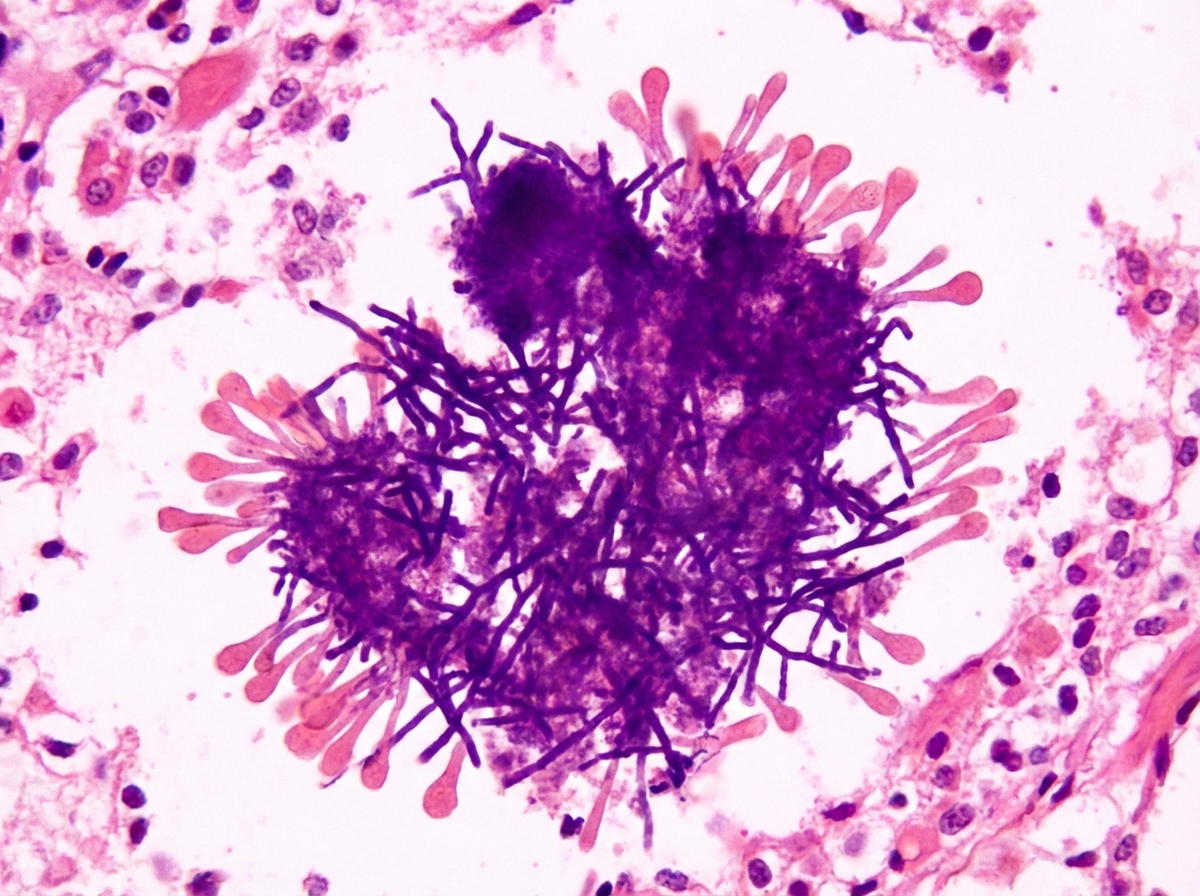
Which of the following statements regarding Actinomycosis is false?
A patient presents with diarrhea, arthritis, fever, abdominal cramps, nausea, and vomiting, along with finger swelling. Which of the following organisms is most likely responsible for these symptoms?
What organism causes the "malignant pustule"?
Which of the following is NOT an importance of the lepromin test?
Which bacterium exhibits darting motility?
A child has a respiratory infection with a membrane over the peritonsillar area. A swab was taken from the local area. What is the appropriate culture media for this specimen?
Naegler's reaction is due to which toxin of Clostridium perfringens?
Explanation: **Explanation:** **Legionnaires' disease** is caused by *Legionella pneumophila*, a Gram-negative aerobic bacillus typically found in natural and man-made aquatic environments. **Why Option B is correct:** The primary mode of transmission for *Legionella* is the **inhalation of contaminated aerosols** (fine water mists) or the aspiration of contaminated water. In this scenario, the conference setting points toward a common-source outbreak. *Legionella* thrives in man-made water systems such as **cooling towers of air-conditioning systems**, humidifiers, and whirlpool spas. When these systems are not properly maintained, the bacteria multiply and are dispersed into the air, leading to infection in susceptible individuals. **Why the other options are incorrect:** * **Option A:** There is **no human-to-human transmission** of Legionnaires' disease. Therefore, chronic carriers do not exist as a source of infection for others. * **Option C:** *Legionella* is not a vector-borne disease; mosquitoes do not play a role in its life cycle or transmission. * **Option D:** Fomite transmission (like sharing towels) is not a recognized route for *Legionella*, as the organism must be aerosolized and reach the lower respiratory tract to cause pneumonia. **High-Yield Clinical Pearls for NEET-PG:** * **Culture Media:** Requires **BCYE (Buffered Charcoal Yeast Extract) agar** supplemented with L-cysteine and iron. * **Diagnosis:** The **Urinary Antigen Test** is the most common rapid diagnostic method (detects Serogroup 1). * **Clinical Features:** Characterized by atypical pneumonia, high fever, and often associated with **hyponatremia** and gastrointestinal symptoms (diarrhea). * **Staining:** Poorly visualized on Gram stain; **Silver stains** (e.g., Dieterle stain) are preferred. * **Treatment:** Macrolides (Azithromycin) or Respiratory Fluoroquinolones (Levofloxacin).
Explanation: **Explanation:** The correct answer is **Staphylococcus epidermidis**. This organism is a Coagulase-Negative Staphylococcus (CoNS) and a major component of the normal skin flora. Its primary virulence factor is the ability to produce an extracellular polysaccharide matrix known as **biofilm (slime layer)**. This biofilm allows the bacteria to adhere strongly to foreign bodies such as prosthetic heart valves, orthopedic implants, cerebrospinal fluid shunts, and intravenous catheters. Once the biofilm is formed, the bacteria are protected from the host's immune response and systemic antibiotics, making these infections notoriously difficult to treat without removing the prosthesis. **Analysis of Incorrect Options:** * **Staphylococcus aureus:** While a common cause of acute postoperative wound infections and osteomyelitis, it is more commonly associated with toxin-mediated diseases and abscess formation rather than a specific affinity for prosthetic adherence via biofilm. * **Streptococcus pyogenes (Group A Strep):** Primarily causes skin and soft tissue infections (cellulitis, impetigo) and non-suppurative sequelae (ARF, PSGN). It does not typically colonize prosthetic hardware. * **Enterococcus faecalis:** A common cause of UTIs and subacute bacterial endocarditis, but it is not the primary organism associated with initial prosthetic colonization compared to CoNS. **High-Yield Clinical Pearls for NEET-PG:** * **S. epidermidis** is the #1 cause of prosthetic valve endocarditis (PVE) and infections of indwelling catheters. * **Novobiocin Sensitivity:** S. epidermidis is sensitive to Novobiocin, distinguishing it from *S. saprophyticus* (which is resistant). * **Treatment:** Due to high rates of methicillin resistance (MRSE), **Vancomycin** is often the drug of choice for these infections.
Explanation: **Explanation:** The diagnosis of Syphilis relies on a two-step serological approach: **Non-treponemal tests** (VDRL, RPR) for screening and **Treponemal tests** (FTA-ABS, TPHA) for confirmation. 1. **Why the correct answer is right:** VDRL detects non-specific anti-cardiolipin antibodies. Since cardiolipin is a normal component of human mitochondrial membranes, these tests can be positive in conditions other than syphilis. A **Biological False Positive (BFP)** is defined as a positive non-treponemal test (VDRL/RPR) with a negative specific treponemal test. Pregnancy is a classic physiological cause of BFP due to altered immune responses and cross-reacting antibodies. 2. **Why incorrect options are wrong:** * **Option A:** Syphilis can only be confirmed if both VDRL and a specific treponemal test (like TPHA) are positive. * **Option C:** A false negative occurs when a patient has the disease but the test is negative (e.g., the **Prozone phenomenon** in secondary syphilis due to antibody excess). * **Option D:** Non-pathogenic treponemes (commensals in the mouth/genitals) do not typically cause a positive VDRL; they are more likely to interfere with specific treponemal tests if absorption steps are skipped. **High-Yield Clinical Pearls for NEET-PG:** * **Causes of BFP (Mnemonic: P-A-S-S-P-O-R-T):** **P**regnancy, **A**cute infections (Malaria, IM), **S**LE (and other autoimmune diseases), **S**cleroderma, **P**olysystemic diseases, **O**ld age, **R**ecreational drug use, **T**uberculosis. * **Prozone Phenomenon:** If VDRL is negative but syphilis is strongly suspected, dilute the serum to avoid antibody excess. * **VDRL** is the test of choice for monitoring treatment response (titers fall after successful therapy) and for diagnosing **Neurosyphilis** (using CSF).
Explanation: **Explanation:** Actinomycosis is a chronic, granulomatous infection characterized by the formation of multiple abscesses and sinus tracts. **Why Option C is the correct (false) statement:** Contrary to the statement, *Actinomyces* species **can be cultured**, although it is notoriously difficult. They are **obligate anaerobes** (or microaerophilic) and require specific enriched media, such as Brain Heart Infusion (BHI) agar or blood agar. Growth is slow, often taking 7–14 days. A classic diagnostic feature in culture is the appearance of **"molar tooth" colonies** on agar. **Analysis of other options:** * **Option A (True):** Microscopic examination of crushed granules or pus reveals Gram-positive, non-acid-fast, branching **thin filaments**. * **Option B (True):** *Actinomyces israelii* is the most common causative agent of human actinomycosis. It is a commensal of the oral cavity, gastrointestinal tract, and female genital tract. * **Option C (True):** The hallmark of the disease is the presence of **"Sulfur granules"** in the discharging pus. These are actually microcolonies of the bacteria surrounded by inflammatory cells (Splendore-Hoeppli phenomenon). **NEET-PG High-Yield Pearls:** * **Lumpy Jaw:** The most common clinical presentation is cervicofacial actinomycosis, often following dental trauma or poor oral hygiene. * **IUD Association:** Pelvic actinomycosis is frequently associated with long-term use of Intrauterine Contraceptive Devices. * **Staining:** They are Gram-positive but, unlike *Nocardia*, they are **not** acid-fast (Modified Ziehl-Neelsen negative). * **Treatment:** High-dose **Penicillin G** is the drug of choice, often required for a prolonged duration.
Explanation: **Explanation:** The clinical presentation of diarrhea, fever, and abdominal cramps followed by **arthritis** and **finger swelling** (dactylitis) points towards a post-infectious inflammatory complication. **Why Campylobacter is the Correct Answer:** *Campylobacter jejuni* is the most common cause of bacterial gastroenteritis worldwide. It is uniquely associated with several post-infectious sequelae due to **molecular mimicry**. While it is famously linked to Guillain-Barré Syndrome (GBS), it is also a frequent trigger for **Reactive Arthritis** (formerly Reiter’s Syndrome). The "finger swelling" described is a classic sign of **dactylitis** ("sausage digits"), which is a hallmark of reactive arthritis following a gastrointestinal infection. **Why Other Options are Incorrect:** * **Shigella:** While *Shigella flexneri* can cause reactive arthritis, *Campylobacter* is statistically more common and more frequently associated with the specific constellation of systemic symptoms and dactylitis in recent clinical vignettes. * **Yersinia:** *Yersinia enterocolitica* can cause "pseudo-appendicitis" and reactive arthritis, but it is less common than *Campylobacter* and typically presents with prominent mesenteric lymphadenitis. * **E. coli:** Most strains (like ETEC or EHEC) cause acute diarrhea but are not typically associated with post-infectious reactive arthritis or dactylitis. **NEET-PG High-Yield Pearls:** * **Morphology:** *Campylobacter* is a Gram-negative, "comma" or "S-shaped" rod with "seagull-wing" appearance. * **Motility:** Shows characteristic **darting motility**. * **Culture:** Requires special media (Skirrow’s/Butzler’s) and is **microaerophilic** (grows best at 42°C). * **Complications:** 1. Guillain-Barré Syndrome (most common trigger), 2. Reactive Arthritis, 3. HUS (rare).
Explanation: **Explanation:** **1. Why Bacillus anthracis is correct:** The term **"Malignant Pustule"** is a clinical misnomer for **Cutaneous Anthrax**, caused by *Bacillus anthracis*. Despite the name, it is neither malignant (cancerous) nor a true pustule (as it contains serosanguinous fluid rather than pus). It begins as a painless papule that evolves into a vesicle and eventually ruptures to form a characteristic **painless, black necrotic eschar** surrounded by significant non-pitting edema. The lesion is caused by the action of the **Lethal Toxin (LT)** and **Edema Toxin (ET)** produced by the bacteria. **2. Why the other options are incorrect:** * **Leishmania:** Causes "Oriental Sore" or "Delhi Boil," which presents as a chronic ulcerative lesion, but it is not referred to as a malignant pustule. * **Basal Cell Carcinoma (BCC):** Often called a "Rodent Ulcer." While it is a true malignancy, it presents as a pearly papule with telangiectasia, not an acute infectious eschar. * **Pyoderma:** This is a general term for purulent skin infections (like impetigo or folliculitis) usually caused by *Staphylococcus aureus* or *Streptococcus pyogenes*. These are typically painful and contain true pus. **3. NEET-PG High-Yield Pearls:** * **Microscopy:** *B. anthracis* shows a characteristic **"Bamboo stick"** appearance (Gram-positive bacilli in chains). * **Culture:** Produces **"Medusa head"** colonies on agar. * **Virulence Factors:** It has a unique **polypeptide capsule** (made of D-glutamic acid) and a tripartite toxin (Protective Antigen, Edema Factor, and Lethal Factor). * **Occupational Hazard:** Known as **"Hide-porter’s disease"** because it is transmitted via contact with infected animal products (spores).
Explanation: The **Lepromin Test** is a delayed hypersensitivity reaction (Type IV) used to assess the cell-mediated immunity (CMI) of an individual against *Mycobacterium leprae*. It is **not a diagnostic test** because it can be positive in healthy individuals or those with tuberculosis. ### Why Option A is the Correct Answer (The "NOT" factor) The statement "It has only epidemiological significance" is incorrect. While the test can show the prevalence of immunity in a population, its primary clinical utility lies in **classification and prognosis** of the disease in patients already diagnosed with leprosy. Unlike the Mantoux test for TB, it is not used to screen for infection. ### Explanation of Incorrect Options * **Option B (Prognostic value):** It is highly prognostic. A positive test (Mitsuda reaction) indicates strong CMI and a shift toward the self-limiting Tuberculoid pole (good prognosis). A negative test indicates poor CMI and a shift toward the progressive Lepromatous pole (poor prognosis). * **Option C (Immunity status):** The test directly measures the patient's ability to mount a T-cell response against lepra bacilli. * **Option D (Differentiation):** It helps categorize the Ridley-Jopling scale. **Tuberculoid (TT)** patients are strongly Lepromin positive, while **Lepromatous (LL)** patients are consistently Lepromin negative. ### NEET-PG High-Yield Pearls * **Two Reactions:** 1. **Fernandez Reaction:** Early (48 hours), indicates past exposure. 2. **Mitsuda Reaction:** Late (3–4 weeks), indicates CMI status (more clinically relevant). * **Antigen used:** Lepromin A (refined from armadillo-derived bacilli) or Lepromin H (human-derived). * **Key Rule:** Lepromin test is **Positive in TT** and **Negative in LL**. * **Diagnostic Gold Standard:** Skin smear (Slit-skin smear) or biopsy, NOT the lepromin test.
Explanation: **Explanation:** The correct answer is **Campylobacter**. Motility is a key diagnostic feature in bacteriology, often characterized by specific patterns under hanging drop preparation or dark-ground microscopy. **1. Why Campylobacter is correct:** *Campylobacter jejuni* (and *Vibrio cholerae*) exhibits a characteristic **"darting motility."** This rapid, purposeful movement is due to the presence of a single polar flagellum (monotrichous). Under the microscope, these bacteria appear to "dart" across the field of vision. Morphologically, they are described as "comma-shaped" or "seagull-wing" shaped, Gram-negative bacilli. **2. Analysis of Incorrect Options:** * **Listeria monocytogenes:** Exhibits **"tumbling motility"** at 25°C (room temperature) but is non-motile at 37°C. This is a classic NEET-PG favorite. * **Borrelia:** As a spirochete, it exhibits **corkscrew motility** (flexion-extension and rotation) facilitated by endoflagella (axial filaments) located in the periplasmic space. * **Mycoplasma:** These organisms lack a cell wall and are generally **non-motile**. However, some species (like *M. pneumoniae*) show a unique "gliding motility" on surfaces, but never darting motility. **3. High-Yield Clinical Pearls for NEET-PG:** * **Darting Motility:** *Vibrio cholerae* and *Campylobacter*. * **Tumbling Motility:** *Listeria monocytogenes*. * **Swarming Motility:** *Proteus mirabilis*, *Clostridium tetani*, and *Bacillus subtilis*. * **Stately Motility:** *Bacillus anthracis* (actually non-motile, but *B. cereus* shows stately movement). * **Falling Leaf Motility:** *Giardia lamblia* (Parasitology). * **Corkscrew/Lashing Motility:** *Treponema pallidum* and *Borrelia*.
Explanation: **Explanation:** The clinical presentation of a respiratory infection with a **pseudomembrane** over the peritonsillar area is a classic hallmark of **Diphtheria**, caused by *Corynebacterium diphtheriae*. **Why Blood Tellurite Media is correct:** Potassium tellurite agar (e.g., Hoyle’s medium or McLeod’s medium) is the **selective medium** of choice for *C. diphtheriae*. The tellurite inhibits the growth of most normal upper respiratory flora and is reduced by the diphtheria bacilli to metallic tellurium, resulting in characteristic **black or greyish-black colonies**. This allows for the isolation and identification of the pathogen from a mixed swab. **Analysis of Incorrect Options:** * **A. Löwenstein-Jensen (LJ) media:** This is the standard solid medium used for the cultivation of *Mycobacterium tuberculosis*. * **C. Cary Blair medium:** This is a transport medium used primarily for fecal specimens to preserve enteric pathogens like *Vibrio cholerae* and *Salmonella*. * **D. Loeffler serum slope:** While used for *C. diphtheriae*, it is an **enriched/nise medium**, not a selective one. It is used for rapid growth (6-8 hours) and to enhance the development of characteristic **metachromatic granules** (Volutin/Babes-Ernst granules), but Blood Tellurite is preferred for primary isolation from a local swab. **NEET-PG High-Yield Pearls:** * **Morphology:** Gram-positive, non-motile bacilli showing "Chinese letter" or cuneiform arrangement. * **Stains:** Albert’s stain is used to visualize metachromatic granules (green bacilli with bluish-black granules). * **Virulence Test:** The **Elek’s gel precipitation test** is the gold standard for detecting toxin production (toxigenicity). * **Schick Test:** Used to determine the immune status of an individual against diphtheria.
Explanation: **Explanation:** **Naegler’s reaction** is a biochemical test used for the rapid identification of *Clostridium perfringens*. The reaction is positive due to the action of **Alpha (α) toxin**, which is the most important lethal toxin produced by all strains of *C. perfringens*. 1. **Mechanism of Alpha Toxin:** Alpha toxin is a **phospholipase C (lecithinase)**. When *C. perfringens* is grown on Egg Yolk Agar (EYA), the alpha toxin hydrolyzes the lecithin present in the egg yolk into insoluble diglycerides. This results in an **opaque, whitish halo** around the colonies. The reaction is confirmed as specific to the alpha toxin if the opalescence is inhibited by adding *C. perfringens* antitoxin to one half of the plate (Nagler’s inhibition test). 2. **Analysis of Incorrect Options:** * **Epsilon (ε) toxin:** A potent enterotoxin and neurotoxin primarily responsible for enterotoxemia in livestock; it does not possess lecithinase activity. * **Kappa (κ) toxin:** A collagenase that aids in the spread of infection by breaking down connective tissue. * **Delta (δ) toxin:** An oxygen-labile hemolysin (similar to Streptolysin O) that acts as a cytotoxin. **High-Yield Clinical Pearls for NEET-PG:** * **Gas Gangrene:** Alpha toxin is the primary mediator of myonecrosis (gas gangrene) by causing cell membrane lysis and tissue destruction. * **Target Hemolysis:** On blood agar, *C. perfringens* produces a characteristic **double zone of hemolysis**: an inner zone of complete hemolysis (Theta toxin) and an outer zone of incomplete hemolysis (Alpha toxin). * **Stormy Fermentation:** In litmus milk media, *C. perfringens* produces heavy gas, breaking the curd into fragments—a classic diagnostic feature.
Staphylococci
Practice Questions
Streptococci and Enterococci
Practice Questions
Neisseria and Moraxella
Practice Questions
Corynebacterium and Listeria
Practice Questions
Bacillus and Clostridium
Practice Questions
Enterobacteriaceae
Practice Questions
Vibrio, Aeromonas, and Plesiomonas
Practice Questions
Pseudomonas and Related Bacteria
Practice Questions
Haemophilus and HACEK Group
Practice Questions
Bordetella and Brucella
Practice Questions
Mycobacteria
Practice Questions
Spirochetes
Practice Questions
Get full access to all questions, explanations, and performance tracking.
Start For Free