Verocytotoxin has been isolated in individuals suffering from Hemolytic Uremic Syndrome in their:
What is the normal bacterial count in the duodenum per gram?
A 33-year-old woman presents with a painful, swollen right knee one week after her menstrual period. She recently started a new relationship. What is the most likely causative organism and its characteristic?
Which of the following is known as Panton-Valentine toxin?
Which bacterial species is protective or beneficial to the host?
Which of the following is not a zoonosis?
Bacillus anthracis toxin exerts its action through all of the following mechanisms except:
A boy presents with a skin ulcer on his leg. Bacterial culture from the ulcer reveals beta-hemolysis. Cultures from school children with sore throats, taken some days prior, also revealed beta-hemolysis. What is the most likely similarity between the organisms causing these two conditions?
Leprosy bacillus is cultured using which of the following media?
What is the most common and serious cause of infection by Pseudomonas seen in patients?
Explanation: **Explanation:** The correct answer is **Feces (Option C)**. **Medical Concept:** Hemolytic Uremic Syndrome (HUS) is most commonly caused by **Enterohemorrhagic *Escherichia coli* (EHEC)**, specifically the **O157:H7** strain. These bacteria produce **Verocytotoxins** (also known as Shiga-like toxins, Stx1 and Stx2). These toxins are produced locally within the gastrointestinal tract after the bacteria colonize the intestinal mucosa. While the toxin eventually enters the bloodstream to cause systemic damage (targeting renal glomerular endothelium), the toxin itself is primarily isolated and detected in the **feces** of the patient during the acute diarrheal phase. **Analysis of Incorrect Options:** * **A. Blood:** Although the toxin travels through the blood to reach the kidneys, it is rapidly bound to receptors (Gb3) on endothelial cells. Free verocytotoxin is rarely detectable in blood samples; diagnosis is instead confirmed by finding the toxin or the organism in the stool. * **B. Tissues:** While the toxin causes damage to renal and vascular tissues, routine diagnostic isolation for HUS focuses on the source of production (the gut). * **D. Saliva:** EHEC is a foodborne pathogen transmitted via the feco-oral route; the toxin is not secreted or isolated from saliva. **High-Yield Clinical Pearls for NEET-PG:** * **Triad of HUS:** Microangiopathic hemolytic anemia, Thrombocytopenia, and Acute Renal Failure. * **Mechanism:** Verocytotoxin inhibits protein synthesis by damaging the **28S ribosomal RNA** (60S subunit). * **Diagnosis:** Stool culture on **Sorbitol MacConkey (SMAC) agar**; EHEC O157:H7 appears as colorless colonies because it is a **non-sorbitol fermenter**. * **Management Tip:** Antibiotics are generally avoided in EHEC infections as they may trigger increased toxin release, worsening the risk of HUS.
Explanation: **Explanation:** The distribution of normal flora in the gastrointestinal tract follows a distinct gradient, increasing significantly from the stomach to the colon. **Why 10⁵ per gram is correct:** The proximal small intestine, specifically the **duodenum**, maintains a relatively low bacterial count, typically ranging from **10³ to 10⁵ organisms per gram** of contents. This low concentration is maintained by several protective mechanisms: the high acidity of gastric juice entering from the stomach, the rapid peristaltic movement of the small bowel, and the antibacterial properties of bile and pancreatic secretions. The predominant flora here are Gram-positive aerobic bacteria like *Lactobacilli* and *Enterococci*. **Why the other options are incorrect:** * **10⁷ per gram (Option B):** This count is more characteristic of the **distal ileum**, which serves as a transition zone between the sparse flora of the upper gut and the dense flora of the colon. * **10¹⁰ to 10¹² per gram (Options C & D):** These extremely high concentrations are found in the **large intestine (colon)**. The colon is the most heavily colonized region of the body, where anaerobes (like *Bacteroides*) outnumber aerobes by a ratio of 1000:1. **High-Yield Clinical Pearls for NEET-PG:** * **SIBO (Small Intestinal Bacterial Overgrowth):** Diagnosed when the bacterial count in the proximal small intestine exceeds **>10⁵ CFU/mL**. * **Sterile Sites:** Under normal physiological conditions, the esophagus and stomach are virtually sterile or contain transient organisms (<10³/mL) due to acid. * **Dominant Species:** The most abundant bacteria in the entire GI tract are **anaerobes** (specifically *Bacteroides fragilis*), not *E. coli*.
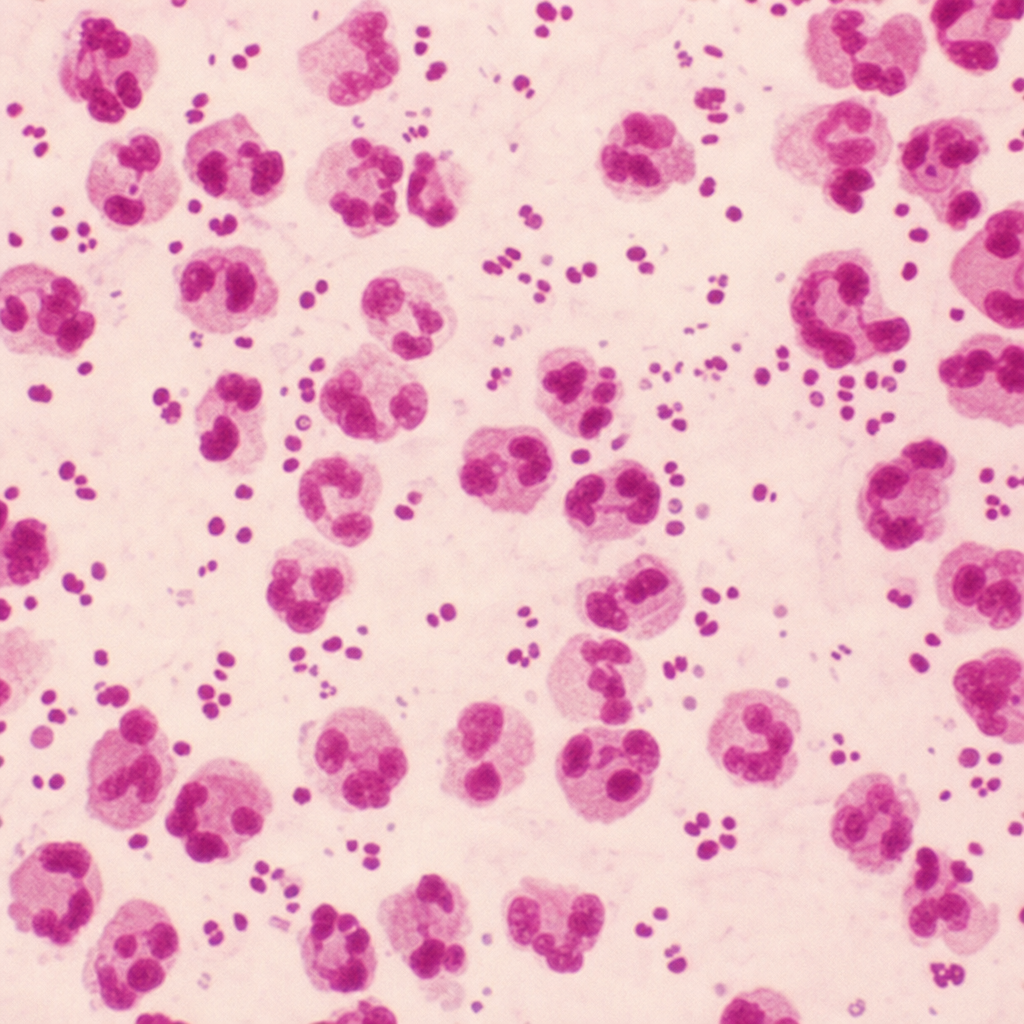
Explanation: ### Explanation **Clinical Diagnosis:** The patient presents with **Disseminated Gonococcal Infection (DGI)**, specifically the monoarticular septic arthritis form. The clinical clues—a young, sexually active adult with a painful, swollen joint following menstruation—are classic for *Neisseria gonorrhoeae*. In females, menstruation facilitates the ascending spread of the bacteria from the cervix to the bloodstream. **Why the Correct Answer is Right:** *Neisseria gonorrhoeae* is a Gram-negative diplococcus characterized by its ability to survive and replicate within **polymorphonuclear leukocytes (neutrophils)**. On a Gram stain of synovial fluid or urethral discharge, the presence of **intracellular Gram-negative diplococci** is a pathognomonic finding. This intracellular survival helps the organism evade the host immune response. **Analysis of Incorrect Options:** * **Option A (Hyphae and spores):** Describes fungi (e.g., *Candida*). While *Candida* can cause arthritis, it is rare and does not correlate with the menstrual cycle or sexual history provided. * **Option C (Unable to synthesize ATP):** Refers to *Chlamydia trachomatis*. While *Chlamydia* is a common co-infection in STIs, it is an obligate intracellular parasite that cannot produce its own ATP. It typically causes Reactive Arthritis (Reiter’s Syndrome), which is immune-mediated rather than a direct septic infection of the joint. * **Option D (Lacks a true cell wall):** Refers to *Mycoplasma* or *Ureaplasma*. These do not typically present as acute monoarticular septic arthritis in this clinical context. **NEET-PG High-Yield Pearls:** * **Thayer-Martin Medium:** The selective medium of choice for isolating *N. gonorrhoeae* (contains Vancomycin, Colistin, and Nystatin). * **Virulence Factor:** The **Pili** are essential for initial attachment to mucosal surfaces and exhibit high antigenic variation. * **DGI Triad:** Tenosynovitis, dermatitis (painless pustules), and polyarthralgia; or localized septic arthritis. * **Deficiency Link:** Patients with **late complement component deficiencies (C5-C9)** are at a significantly higher risk for recurrent Neisserial infections.
Explanation: ### Explanation **Panton-Valentine Leucocidin (PVL)** is a potent pore-forming cytotoxin produced by certain strains of ***Staphylococcus aureus***. It specifically targets and destroys human polymorphonuclear leukocytes (neutrophils) and macrophages by creating pores in their cell membranes, leading to cell lysis and tissue necrosis. #### Why Option A is Correct: PVL is a synergistic, two-component toxin (composed of LukS-PV and LukF-PV subunits). It is a hallmark of **Community-Acquired Methicillin-Resistant *S. aureus* (CA-MRSA)**. Clinically, it is strongly associated with severe skin and soft tissue infections (like recurrent furunculosis) and life-threatening **necrotizing pneumonia**. #### Why Other Options are Incorrect: * **Option B:** Alpha toxin of *Clostridium perfringens* is a **Lecithinase** (Phospholipase C). It is the primary mediator of gas gangrene (myonecrosis) and works by splitting lecithin in cell membranes, causing massive hemolysis and tissue destruction. * **Option C:** *Staphylococcus pyogenes* (Group A Streptococcus) produces **DNase (Streptodornase)**, which liquefies thick pus by degrading DNA. However, the classic "Panton-Valentine" nomenclature is exclusive to the staphylococcal leucocidin. #### High-Yield Clinical Pearls for NEET-PG: * **Genetic Basis:** PVL is encoded by genes carried on a **bacteriophage** (phiSLT). * **Diagnostic Clue:** If a clinical vignette describes a young, otherwise healthy patient with rapidly progressing hemorrhagic pneumonia following a flu-like illness, think **PVL-positive CA-MRSA**. * **Other Staph Toxins:** Do not confuse PVL with **Alpha-hemolysin** (the major cytotoxic agent of *S. aureus*) or **TSST-1** (the superantigen causing Toxic Shock Syndrome).
Explanation: **Explanation:** The correct answer is **Streptococcus sanguis** (Option A). This question focuses on the microbial ecology of the oral cavity and the distinction between commensal (protective) flora and periodontopathogens. **Why Streptococcus sanguis is correct:** *Streptococcus sanguis* is a primary colonizer of the dental biofilm and is considered a **beneficial/commensal** organism. It maintains oral health by producing **Hydrogen Peroxide ($H_2O_2$)**, which inhibits the growth of periodontal pathogens like *Aggregatibacter actinomycetemcomitans* and cariogenic bacteria like *Streptococcus mutans*. A high ratio of *S. sanguis* to pathogens is clinically associated with periodontal health. **Why the other options are incorrect:** * **B. Porphyromonas gingivalis:** A key member of the "Red Complex" (the most severe group of periodontal pathogens). It produces gingipains (proteases) that destroy host tissue. * **C. Treponema denticola:** Another "Red Complex" member. It is a highly motile anaerobe associated with chronic periodontitis and Acute Necrotizing Ulcerative Gingivitis (ANUG). * **D. Spirochetes:** This is a broad group that includes *T. denticola*. In the oral cavity, an increase in spirochete population is a hallmark of active periodontal disease and tissue destruction. **NEET-PG High-Yield Pearls:** 1. **Socransky’s Complexes:** Bacteria in the mouth are categorized by color. **Red Complex** (*P. gingivalis, T. denticola, Tannerella forsythia*) are the most virulent. 2. **Viridans Group:** *S. sanguis* belongs to the Viridans group of Streptococci. While protective in the mouth, it is a leading cause of **Subacute Bacterial Endocarditis (SABE)** if it enters the bloodstream (e.g., after dental procedures). 3. **Antagonism:** The "Sanguis-Mutans" balance is a classic example of bacterial antagonism; *S. sanguis* prevents dental caries by suppressing *S. mutans*.
Explanation: **Explanation:** A **zoonosis** is defined as an infection or infectious disease transmissible under natural conditions from vertebrate animals to humans. **Why Amoebiasis is the correct answer:** Amoebiasis, caused by *Entamoeba histolytica*, is an **anthroponosis**. The primary reservoir of infection is the human case or carrier (specifically the "cyst passer"). Transmission occurs via the fecal-oral route from human to human. While some animals can be experimentally infected, they do not play a role in the natural maintenance or transmission of the disease to humans. **Analysis of incorrect options:** * **Leptospirosis:** A classic zoonosis caused by *Leptospira interrogans*. Humans are accidental hosts, usually infected through contact with water contaminated by the urine of reservoir animals like rats (rodents). * **Rabies:** A viral zoonosis transmitted to humans through the bite or scratch of an infected animal (most commonly dogs in India, but also bats, monkeys, and cats). * **Hydatid Disease:** Caused by *Echinococcus granulosus*. It is a cyclozoonosis where the life cycle requires more than one vertebrate host (Dogs as definitive hosts and sheep/cattle as intermediate hosts). Humans are accidental "dead-end" hosts. **High-Yield Clinical Pearls for NEET-PG:** * **Anthroponoses:** Diseases where the reservoir is exclusively human (e.g., Amoebiasis, Typhoid, Cholera, Polio, Measles). * **Reverse Zoonosis (Zooanthroponosis):** Diseases transmitted from humans to animals (e.g., Human tuberculosis to cattle). * **Most common zoonosis in India:** Brucellosis is often cited as a major underdiagnosed bacterial zoonosis, while Rabies remains the most fatal. * **Leptospirosis** is often associated with occupational exposure (sewer workers, rice field workers) and post-monsoon outbreaks.
Explanation: **Explanation:** *Bacillus anthracis* produces a tripartite exotoxin consisting of three components: **Protective Antigen (PA)**, **Edema Factor (EF)**, and **Lethal Factor (LF)**. The correct answer is **D (Increased cGMP levels)** because none of these components utilize cGMP as a second messenger. 1. **Edema Factor (EF):** This is a calcium-calmodulin-dependent adenylate cyclase. It directly increases intracellular **cAMP levels** (Option A), leading to massive edema and inhibition of neutrophil function. 2. **Lethal Factor (LF):** This is a zinc-dependent metalloprotease that cleaves Mitogen-Activated Protein Kinase Kinases (MAPKK). This action **stimulates macrophages** (Option B) to release pro-inflammatory cytokines, specifically **TNF-alpha** and IL-1 beta (Option C), which are responsible for the systemic shock and death seen in anthrax. 3. **Protective Antigen (PA):** This acts as the "B" subunit (binding component), facilitating the entry of EF and LF into the host cells. **Why Option D is correct:** Increased cGMP levels are characteristic of toxins produced by *Vibrio cholerae* (ST-like toxin), Heat-Stable (ST) toxin of *E. coli*, and Nitric Oxide. *B. anthracis* exclusively utilizes the cAMP pathway and MAPKK cleavage. **High-Yield Clinical Pearls for NEET-PG:** * **Medusa Head Appearance:** Characteristic morphology on agar. * **McFadyean’s Reaction:** Used to visualize the polypeptide (D-glutamate) capsule using polychrome methylene blue. * **Pustule Maligne:** The characteristic painless black eschar of cutaneous anthrax. * **Woolsorter’s Disease:** Inhalational anthrax showing mediastinal widening on X-ray.
Explanation: **Explanation** The clinical presentation describes two different infections: a skin infection (impetigo/pyoderma) and a sore throat (pharyngitis). Both are classically caused by **Group A Streptococcus (GAS)**, also known as *Streptococcus pyogenes*. **1. Why Option C is Correct:** *Streptococcus pyogenes* is characterized by **Lancefield grouping**, which classifies Streptococci based on the **C-carbohydrate antigen** found in their cell wall. All strains of *S. pyogenes* belong to Group A. Therefore, regardless of whether the strain causes a skin infection or a throat infection, they will both possess the **identical C-carbohydrate antigen**. **2. Why Other Options are Incorrect:** * **Option A:** The *mecA* gene is associated with Methicillin-resistant *Staphylococcus aureus* (MRSA), not Streptococcus. * **Option B:** The **M protein** is the major virulence factor of GAS. However, there are over 100 different serotypes of M protein. Specific "nephritogenic" strains (e.g., types 49, 12) cause skin infections, while different types typically cause pharyngitis. They are rarely identical in different clinical sites. * **Option D:** Strains are categorized by their M-protein and T-antigen. Usually, "throat strains" and "skin strains" are distinct populations with different genetic makeups and preferred niches. **Clinical Pearls for NEET-PG:** * **Post-Streptococcal Sequelae:** Pharyngitis can lead to both Rheumatic Fever and Post-Streptococcal Glomerulonephritis (PSGN). However, **skin infections (impetigo) only lead to PSGN**, never Rheumatic Fever. * **ASO Titre:** Useful for diagnosing prior pharyngitis but often **negative/low in skin infections** because skin lipids inhibit streptolysin O. Anti-DNase B is the preferred test for skin-related sequelae. * **Bacitracin Sensitivity:** GAS is uniquely sensitive to low-dose bacitracin, a key lab identification feature.
Explanation: ### Explanation **Correct Answer: D. None of the above** **1. Why "None of the above" is correct:** *Mycobacterium leprae* (Hansen’s bacillus) is an **obligate intracellular pathogen** that has never been successfully grown on artificial/synthetic culture media or cell-free systems. This is because it lacks several essential genes for independent metabolism. * **Alternative Cultivation:** Since it cannot be grown in vitro, it is cultivated in vivo using animal models: * **Footpads of mice:** Used for testing drug sensitivity (Shepard’s technique). * **Nine-banded armadillos:** Used to produce large quantities of bacilli for research and lepromin antigen production due to their low body temperature and high susceptibility. **2. Analysis of Incorrect Options:** * **A. Bordet Gengou medium:** This is a potato-blood-glycerol agar used specifically for the primary isolation of ***Bordetella pertussis*** (Whooping cough). * **B. LJ (Lowenstein-Jensen) medium:** This is the standard egg-based solid medium used for the cultivation of ***Mycobacterium tuberculosis*** and other Non-Tuberculous Mycobacteria (NTM). * **C. Loeffler's serum slope:** This is an enriched medium used primarily for the rapid growth of ***Corynebacterium diphtheriae***, helping to demonstrate its characteristic morphology and metachromatic granules. **3. NEET-PG Clinical Pearls:** * **Generation Time:** *M. leprae* is the slowest-growing human pathogen, with a doubling time of approximately **12–14 days**. * **Temperature Preference:** It grows best at **30°C**, which explains its predilection for cooler body parts like the skin, nose, and peripheral nerves. * **Staining:** It is Acid-Fast (Ziehl-Neelsen stain) but **less acid-fast** than *M. tuberculosis*; hence, 5% sulfuric acid is used for decolorization instead of 20%.
Explanation: **Explanation:** *Pseudomonas aeruginosa* is a quintessential opportunistic pathogen. In the context of the NEET-PG exam, it is most famously associated with **burn wound infections**. **1. Why Burns is the Correct Answer:** Burn patients lose the primary physical barrier of the skin, creating a moist, nutrient-rich environment ideal for *Pseudomonas* colonization. The organism produces various virulence factors, such as **Exotoxin A** (which inhibits protein synthesis) and **Elastase**, which facilitate tissue destruction and invasion. *Pseudomonas* is the leading cause of septicemia and mortality in burn victims, often characterized by a distinct "fruity/sweet" odor and blue-green pus (due to pyocyanin and pyoverdin pigments). **2. Analysis of Incorrect Options:** * **Neutropenia:** While *Pseudomonas* is a critical cause of "Febrile Neutropenia" and can lead to *Ecthyma Gangrenosum*, it is statistically less common as a primary site of infection compared to the ubiquitous colonization seen in burn units. * **Catheterization:** *Pseudomonas* is a common cause of Catheter-Associated Urinary Tract Infections (CAUTI), but these are generally less "serious" or life-threatening compared to the fulminant sepsis seen in major burn injuries. **3. High-Yield Clinical Pearls for NEET-PG:** * **Culture:** Grows on MacConkey agar as **Non-Lactose Fermenting (NLF)** colonies. * **Biochemicals:** Oxidase positive, Catalase positive, and Motile (polar flagella). * **Cystic Fibrosis:** *Pseudomonas* is the most common cause of chronic pulmonary infections in these patients (mucoid phenotype). * **Hot Tub Folliculitis:** A common community-acquired skin infection caused by *Pseudomonas*. * **Drug of Choice:** Typically includes Antipseudomonal penicillins (Piperacillin-Tazobactam), Ceftazidime, or Carbapenems.
Staphylococci
Practice Questions
Streptococci and Enterococci
Practice Questions
Neisseria and Moraxella
Practice Questions
Corynebacterium and Listeria
Practice Questions
Bacillus and Clostridium
Practice Questions
Enterobacteriaceae
Practice Questions
Vibrio, Aeromonas, and Plesiomonas
Practice Questions
Pseudomonas and Related Bacteria
Practice Questions
Haemophilus and HACEK Group
Practice Questions
Bordetella and Brucella
Practice Questions
Mycobacteria
Practice Questions
Spirochetes
Practice Questions
Get full access to all questions, explanations, and performance tracking.
Start For Free