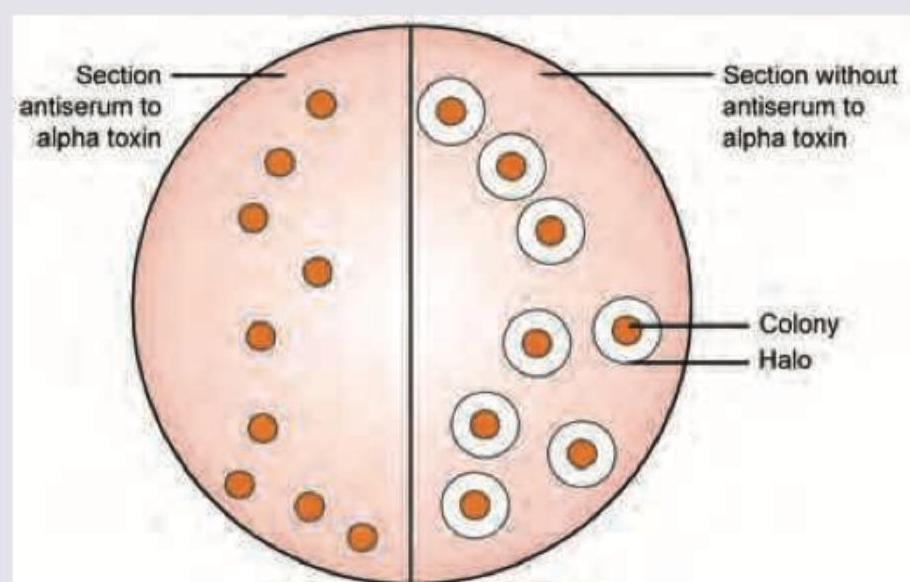
What is the following pattern seen with *Clostridium perfringens* called?
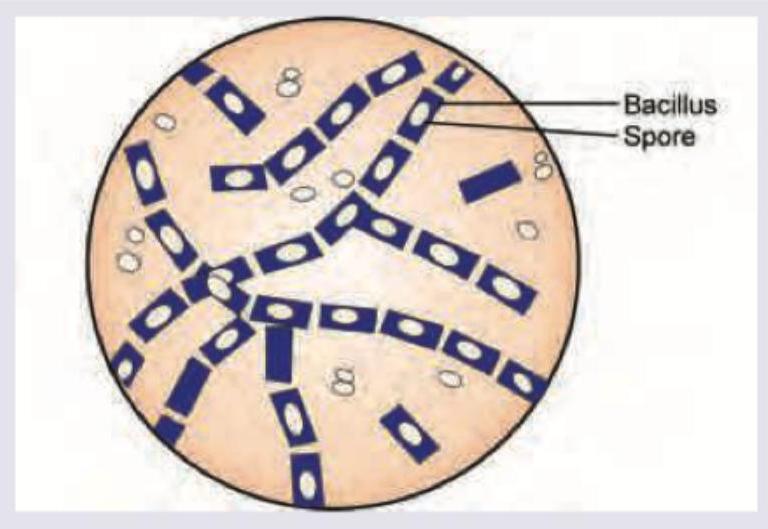
All of the following are caused by the organism shown except:
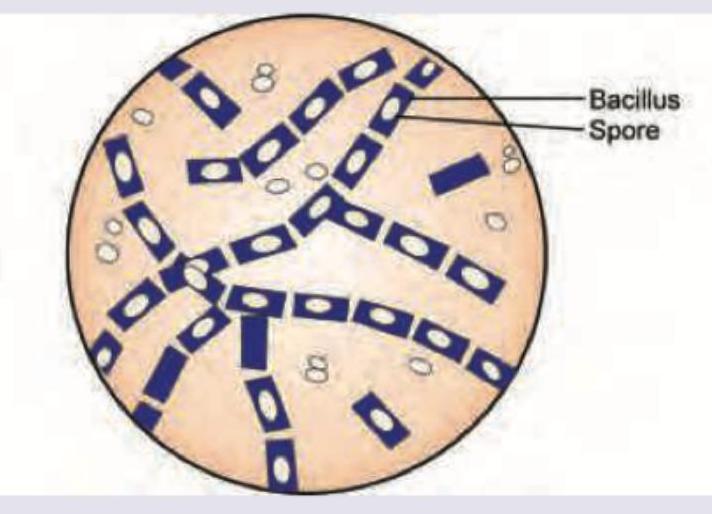
All are true about the bacteria shown except:
All are true about the bacteria shown in the figure except:
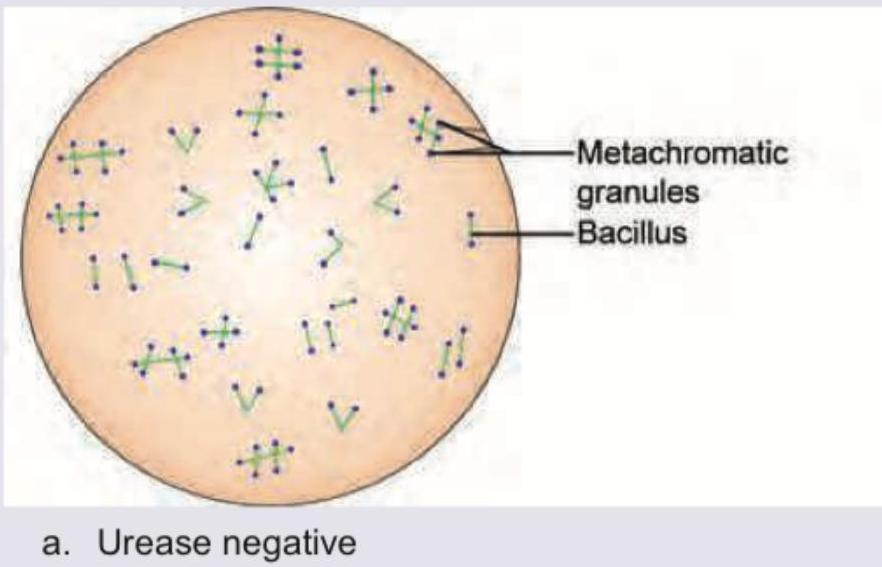
All are true about the bacteria shown in the figure except: (Recent NEET Pattern 2016-17)
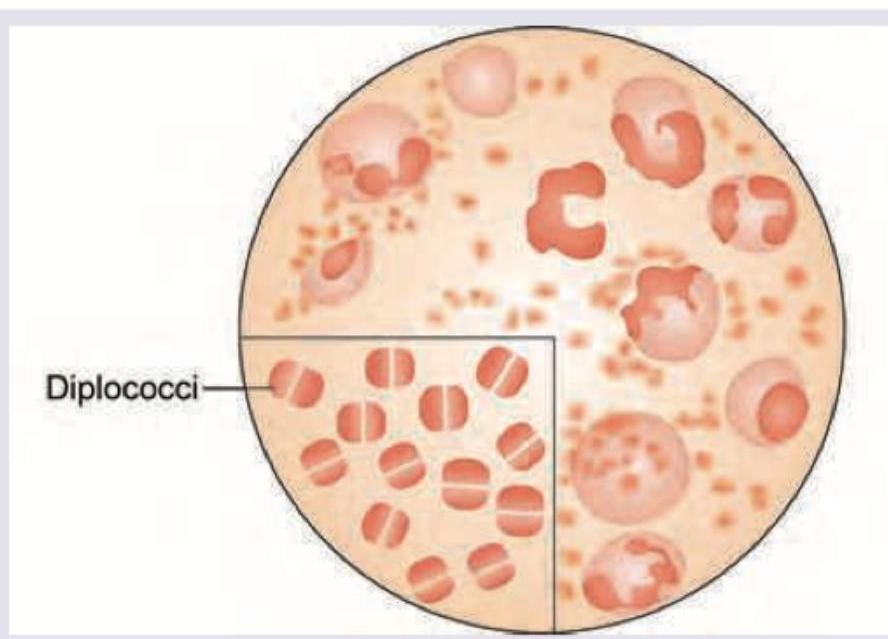
All are true about the bacteria shown below except:
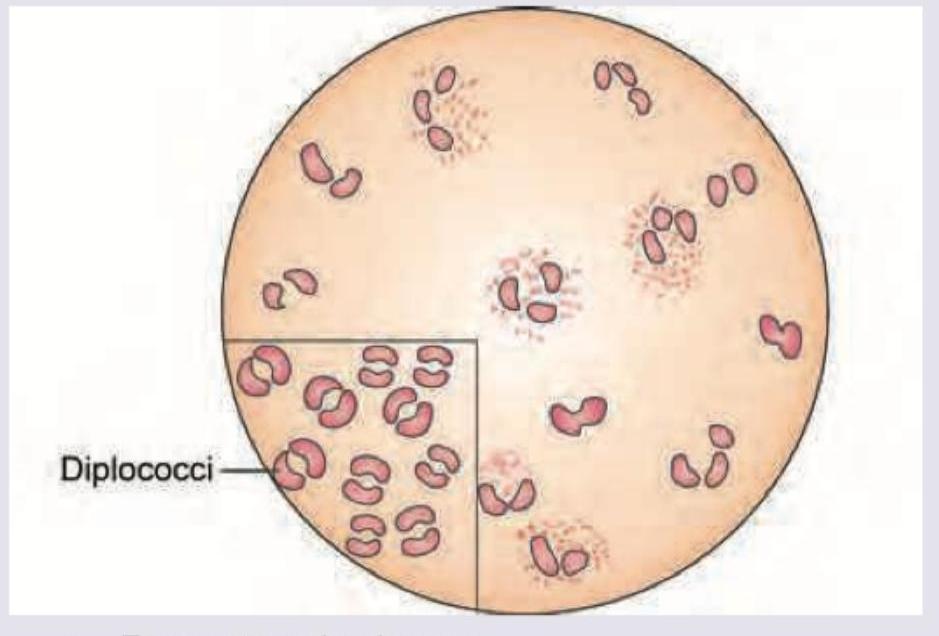
A 2-year-old child presents with fever for 5 days and fast breathing. On examination breath sounds are reduced in left infra-axillary areas and left inframammary areas. CXR was performed and pleural tap was done. Gram stain of pus drained in pleural tap shows: (Recent NEET Pattern 2016-17)
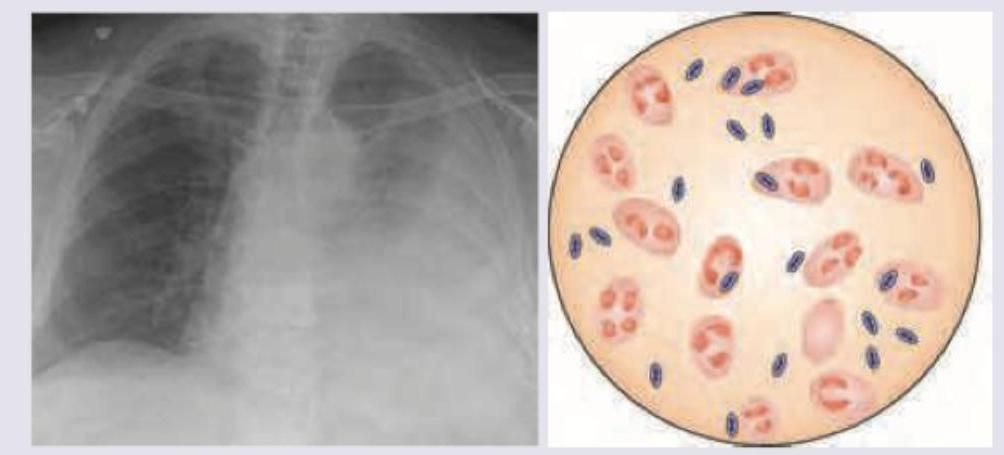
All are true about the bacteria shown below except:
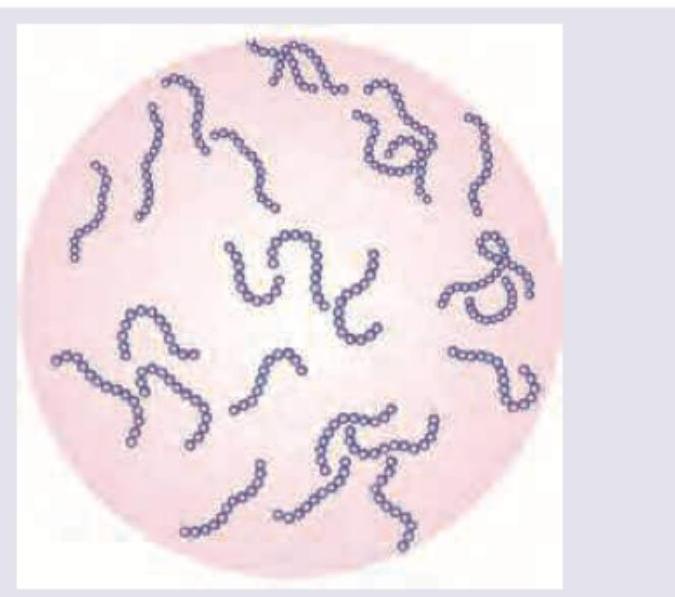
All of the following toxins are produced by the organisms shown below except:
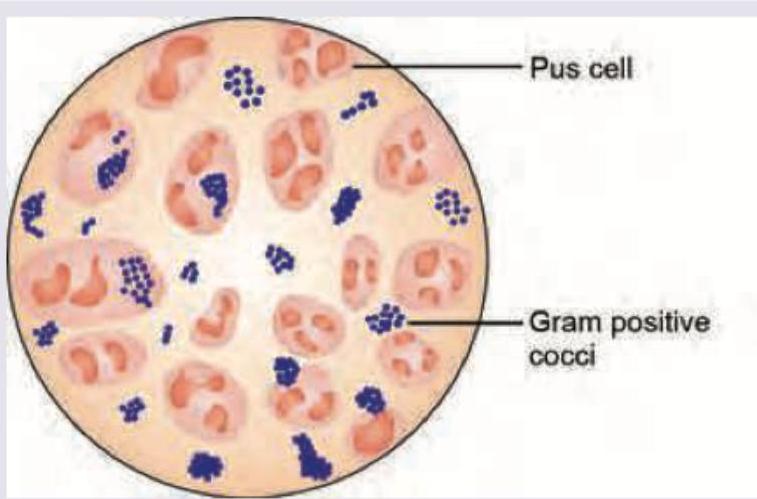
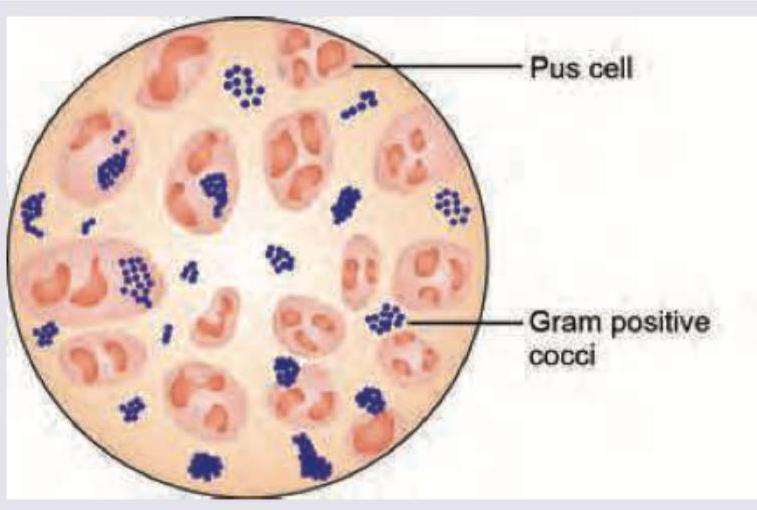
All are true about bacteria shown in the smear of pus below, except:
Explanation: ***Nagler's reaction*** - This test identifies the production of **alpha-toxin (lecithinase)** by *Clostridium perfringens*, which hydrolyzes lecithin in egg yolk agar, resulting in a **turbid halo** around the colonies. - The image shows a clear zone of inhibition (no halo) where antiserum to alpha toxin is present, confirming that the halo formation in the other section is due to the alpha toxin. *Reverse CAMP test* - The **reverse CAMP test** is used to identify *Clostridium perfringens* but involves its synergistic hemolytic effect with Group B *Streptococcus*, not the lecithinase activity directly shown here. - In this test, *Clostridium perfringens* produces an enzyme that inhibits the hemolytic activity of *Streptococcus agalactiae*, resulting in an arrow-headed zone of *no hemolysis*. *Stormy clot reaction* - The **stormy clot** is a characteristic fermentation reaction seen with *Clostridium perfringens* in **litmus milk media**, where the bacteria ferment lactose, produce gas, and coagulate the casein. - This reaction involves milk coagulation and gas production, not the lecithinase activity on egg yolk agar. *CAMP test* - The **CAMP test** detects the synergistic hemolysis between *Staphylococcus aureus* and Group B *Streptococcus (Streptococcus agalactiae)*. - It results in an **arrowhead-shaped zone of complete hemolysis** when both organisms are cultured perpendicular to each other on blood agar.
Explanation: ***Meningitis*** - The image shows **Gram-positive rods** with **spores**, characteristic of *Clostridium perfringens*. - *Clostridium perfringens* is **not a recognized cause of meningitis** in standard clinical practice. - While clostridial infections can occur in various body sites, meningitis is not among the typical clinical presentations of *C. perfringens*. - CNS infections by anaerobes typically involve other organisms like *Bacteroides* species or *Clostridium* species other than *C. perfringens*. *Hemorrhagic diarrhea* - *Clostridium perfringens* Type C causes **necrotizing enteritis (pigbel disease)** characterized by **hemorrhagic diarrhea**, particularly in areas with poor sanitation. - *C. perfringens* Type A causes **food poisoning** with watery diarrhea and abdominal cramps. - Enteritis necroticans presents with severe abdominal pain, bloody diarrhea, and can be fatal. *Pneumonia* - *Clostridium perfringens* can rarely cause **necrotizing pneumonia**, usually following aspiration or in immunocompromised patients. - This presents with rapid tissue destruction and gas formation in lung tissue. *Myonecrosis* - *Clostridium perfringens* is the **most common cause** of **gas gangrene** or **clostridial myonecrosis**. - Characterized by rapid muscle destruction due to **alpha-toxin** (lecithinase), producing gas in tissues and causing severe systemic toxicity.
Explanation: ***Inverted fir tree appearance in gelatin stab*** - While *Bacillus anthracis* does **liquefy gelatin**, the classic **"inverted fir tree" pattern** is NOT characteristic of this organism. - This distinctive growth pattern is more commonly associated with other **Bacillus species** like *B. subtilis*, making this statement FALSE about *B. anthracis*. *Bamboo stick appearance* - This is a **TRUE** characteristic of *Bacillus anthracis* seen in **Gram stains** of clinical specimens. - The large, rod-shaped bacteria arranged in chains create the distinctive **"bamboo stick" or "box-car" appearance**. *McFadyean's reaction with giemsa stain* - This is a **TRUE** and specific diagnostic test for *Bacillus anthracis* using **polychrome methylene blue** or Giemsa stain. - The test demonstrates the presence of **capsules** around the bacilli, appearing as purplish halos around blue-stained bacteria. *PLET is selective medium* - This is **TRUE** - **PLET (Polymyxin-Lysozyme-EDTA-Thallous acetate)** medium is specifically designed for *B. anthracis* isolation. - The selective agents inhibit **contaminant growth** while allowing selective cultivation of *B. anthracis* from clinical samples.
Explanation: ***Urease positive*** - The image depicts **Corynebacterium diphtheriae**, characterized by **metachromatic granules** and its bacillary (rod) shape, often showing V or L formations. - *Corynebacterium diphtheriae* is **urease negative**, not positive, making this statement false and the correct answer to this "except" question. *Pyrazinamidase test positive* - *Corynebacterium diphtheriae* is **pyrazinamidase positive**, an important biochemical characteristic used in its identification. - This enzyme activity distinguishes it from other *Corynebacterium* species like *C. pseudodiphtheriticum* and *C. ulcerans*. *C. gravis has daisy head colony* - The **mitis** and **gravis** biotypes are distinct strains of *Corynebacterium diphtheriae*, with *C. gravis* characterized by its distinctive **"daisy head" colony morphology** on tellurite medium. - This irregular growth pattern is a known characteristic feature of *C. diphtheriae* biotype gravis. *Heat labile toxin has affinity for myocardium* - The **diphtheria toxin** produced by *C. diphtheriae* is indeed **heat-labile** and has strong affinity for various tissues, particularly the **myocardium** and nerve cells. - This tissue affinity leads to serious complications such as **myocarditis** and neurological deficits in diphtheria patients.
Explanation: ***Resistant to heat, alteration in pH and disinfectants*** - The bacteria shown in the figure are **Gram-negative diplococci**, characteristic of **Neisseria gonorrhoeae** or **Neisseria meningitidis**. These bacteria are known to be **sensitive to drying, heat, cold, and disinfectants**, not resistant. - Their delicate nature makes them difficult to cultivate outside specific laboratory conditions and contributes to their typical mode of transmission through close contact. *Commensal in the upper respiratory tract of humans* - **Neisseria meningitidis**, a type of diplococci shown and inferred, is a common **commensal** in the nasopharynx of up to 10% of the population. - This colonization can be entirely asymptomatic, but it also serves as a reservoir for potential invasive disease. *Kovac's method results in the formation of a deep purple color* - **Neisseria** species are **oxidase-positive**, meaning they produce cytochrome c oxidase. - The **Kovac's oxidase test** uses N,N,N',N'-tetramethyl-p-phenylenediamine dihydrochloride, which, in the presence of cytochrome c oxidase, gets oxidized to a **deep purple color**. *Nonhemolytic, gray translucent colonies* - Both *Neisseria gonorrhoeae* and *Neisseria meningitidis* typically form **nonhemolytic** colonies on blood agar. - The colonies are often described as **grayish-white or translucent** with smooth edges, especially after 24-48 hours of incubation.
Explanation: ***T3 and T4 are pilated virulent forms*** - This statement is **FALSE** and is therefore the correct answer to this EXCEPT question. - *Neisseria gonorrhoeae* types **T1 and T2** (colony types) are the **virulent, pilated forms** that are capable of adhering to host cells and causing infection. - Types **T3 and T4** are **non-pilated, avirulent forms** that have lost their adhesive capabilities and are not infectious. - Pili are critical virulence factors that enable bacterial attachment to mucosal epithelial cells. *Ferments only glucose* - This statement is TRUE about *N. gonorrhoeae*. - *N. gonorrhoeae* ferments glucose but **does not ferment maltose, sucrose, or lactose**. - This specific fermentation pattern differentiates it from *N. meningitidis* (which ferments both glucose and maltose). - This biochemical test is crucial for laboratory identification. *Water-can perineum* - This statement is TRUE about complications of *N. gonorrhoeae*. - "Water-can perineum" describes severe, destructive perineal gangrene associated with neglected or chronic gonococcal infections in males. - This represents extensive local tissue destruction from untreated infection. *Fitz-Hugh Curtis syndrome* - This statement is TRUE about *N. gonorrhoeae* complications. - **Fitz-Hugh-Curtis syndrome** is perihepatitis (inflammation of liver capsule and adjacent peritoneum) occurring as a complication of **pelvic inflammatory disease (PID)**. - Commonly caused by *N. gonorrhoeae* or *Chlamydia trachomatis*. - Presents with right upper quadrant pain and characteristic "violin string" adhesions between liver capsule and peritoneum.
Explanation: ***Pneumococcus*** - The image provided shows **Gram-positive diplococci**, a classic morphology for *Streptococcus pneumoniae* (Pneumococcus). These bacteria are often seen in pairs or short chains. - *Streptococcus pneumoniae* is the **most common bacterial cause of community-acquired pneumonia** and associated empyema, especially in children. The clinical presentation of fever and fast breathing, with reduced breath sounds and a large pleural effusion seen on CXR (suggesting empyema), is highly consistent with pneumococcal infection. *Meningococcus* - *Neisseria meningitidis* (Meningococcus) is a **Gram-negative diplococcus**, whereas the morphology depicted in the Gram stain is **Gram-positive**, ruling out meningococcus. - Additionally, meningococcus primarily causes **meningitis** and bloodstream infections, not typically empyema in this clinical setting. *Staphylococcus* - *Staphylococcus* species are Gram-positive cocci that typically arrange in **clusters**, resembling grape-like formations, which is not what is shown in the image. - Although *Staphylococcus aureus* can cause empyema, especially after influenza or in healthcare-associated infections, its characteristic arrangement on Gram stain would be different. *Enterococcus* - *Enterococcus* species are Gram-positive cocci that typically form **chains** or **pairs**, similar to streptococci but often distinguishable by specific biochemical tests. - Although enterococci can cause infections, they are **less common causes of community-acquired empyema** in children compared to pneumococci. The morphology in the image, showing distinct diplococci, is most consistent with pneumococci.
Explanation: ***Streptolysin S is an oxygen labile hemolysin*** *(EXCEPT - This is FALSE)* - **Streptolysin S** is an **oxygen-stable hemolysin**, meaning its activity is not destroyed by oxygen exposure. - The oxygen-labile hemolysin produced by *Streptococcus pyogenes* (Group A Strep) is **Streptolysin O**. *Gram-positive cocci in chains* - The image clearly depicts **spherical bacteria** arranged in **chains**, which is characteristic morphology for *Streptococcus* species, including *Streptococcus pyogenes*. - *Streptococcus pyogenes* are also known to be **Gram-positive**, which is a fundamental classification feature. *Pike's media is a transport media* - **Pike's media** (or Pike's broth) is a selective enrichment **transport medium** specifically designed for the isolation of **Group A Streptococcus** (GAS), like *Streptococcus pyogenes*, from throat swabs. - It helps in maintaining the viability of fragile *Streptococcus pyogenes* while inhibiting the growth of commensal flora during transport. *Streptodornase DNAse depolymerizes the viscous DNA* - **Streptodornase** (or deoxyribonuclease B, DNase B) is an **exotoxin** produced by *Streptococcus pyogenes*. - It functions to **depolymerize cellular DNA** released from lysed host cells, reducing the viscosity of exudates and facilitating bacterial spread through tissues.
Explanation: ***Serum opacity factor*** - The image shows Gram-positive cocci in clusters, characteristic of **Staphylococcus aureus**. - **Serum opacity factor** is a virulence factor produced by **Streptococcus pyogenes**, not Staphylococcus aureus. *Leukocidin* - **Leukocidin** is a cytotoxic protein produced by **Staphylococcus aureus** that targets and destroys phagocytic cells (leukocytes), contributing to pus formation. - The image depicts numerous **pus cells** along with Gram-positive cocci, consistent with a _S. aureus_ infection. *TSST-1* - **Toxic Shock Syndrome Toxin-1 (TSST-1)** is a superantigen produced by certain strains of **Staphylococcus aureus**. - It causes **toxic shock syndrome**, a severe systemic inflammatory response. *ETA and ETB* - **Exfoliative toxins A (ETA)** and **B (ETB)** are proteases produced by **Staphylococcus aureus**. - These toxins are responsible for **Staphylococcal scalded skin syndrome (SSSS)**, causing epidermal sloughing.
Explanation: The image shows **Gram-positive cocci** arranged in clusters, which is characteristic of *Staphylococcus aureus*. Many pus cells (neutrophils) are also seen, indicating an inflammatory response, consistent with a bacterial infection. ***Most strains are inhibited in presence of 5 % NaCl*** - *Staphylococcus aureus* is known to be **halophilic**, meaning it **grows well** in the presence of high salt concentrations (e.g., 7.5% NaCl), which distinguishes it from many other bacteria. - Therefore, the statement that it is 'inhibited in the presence of 5% NaCl' is **incorrect**. *Produce black colonies on potassium tellurite blood agar* - *Staphylococcus aureus* **reduces tellurite** to metallic tellurium, resulting in the production of **black colonies** on potassium tellurite blood agar. - This is a characteristic feature used in the identification of *Staphylococcus aureus*, particularly on media like Baird-Parker agar. *Liquefy gelatin* - *Staphylococcus aureus* produces the enzyme **gelatinase**, which **hydrolyzes gelatin**, causing it to liquefy. - This is a biochemical characteristic used to differentiate *Staphylococcus aureus* from certain other staphylococcal species. *Seen in Job syndrome* - **Job syndrome** (Hyper-IgE syndrome) is characterized by recurrent severe **Staphylococcal infections** of the skin and lungs. - Patients with Job syndrome have impaired neutrophil chemotaxis and elevated IgE levels, making them highly susceptible to *Staphylococcus aureus* infections.
Staphylococci
Practice Questions
Streptococci and Enterococci
Practice Questions
Neisseria and Moraxella
Practice Questions
Corynebacterium and Listeria
Practice Questions
Bacillus and Clostridium
Practice Questions
Enterobacteriaceae
Practice Questions
Vibrio, Aeromonas, and Plesiomonas
Practice Questions
Pseudomonas and Related Bacteria
Practice Questions
Haemophilus and HACEK Group
Practice Questions
Bordetella and Brucella
Practice Questions
Mycobacteria
Practice Questions
Spirochetes
Practice Questions
Get full access to all questions, explanations, and performance tracking.
Start For Free