Neutrophilic granulomatous mastitis is caused by which of the following organisms?
Group A Streptococcus is the most common cause of bacterial pharyngitis in school-aged children. Which of the following bacterial components is primarily responsible for its attachment to fibronectin on the epithelial lining of the pharynx?
A patient presents with a history of chronic meningitis. Laboratory findings show Gram-positive, filamentous branching bacteria, Positive ZN stain, Growth on paraffin bait culture. Which of the following is the most likely causative organism?
Identify the program as given in the image:

Identify the symbol as given in the image:

What does the given image show?

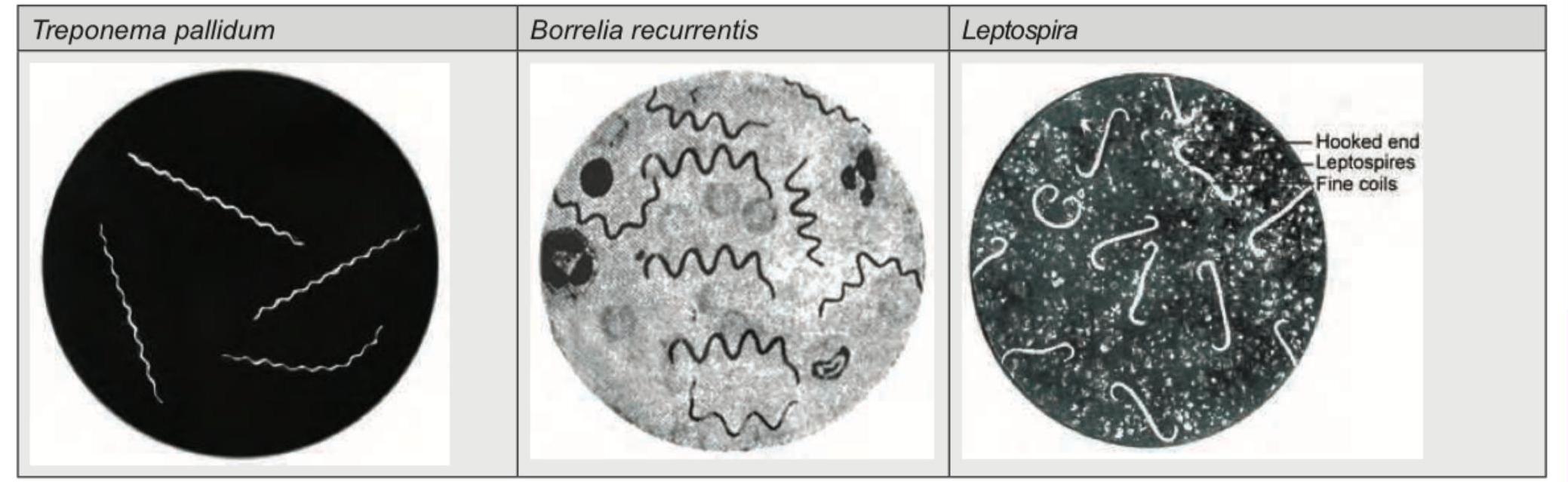
The image shows a spirochete. Which of the following typically has 5-8 regular spirals with hooked ends?
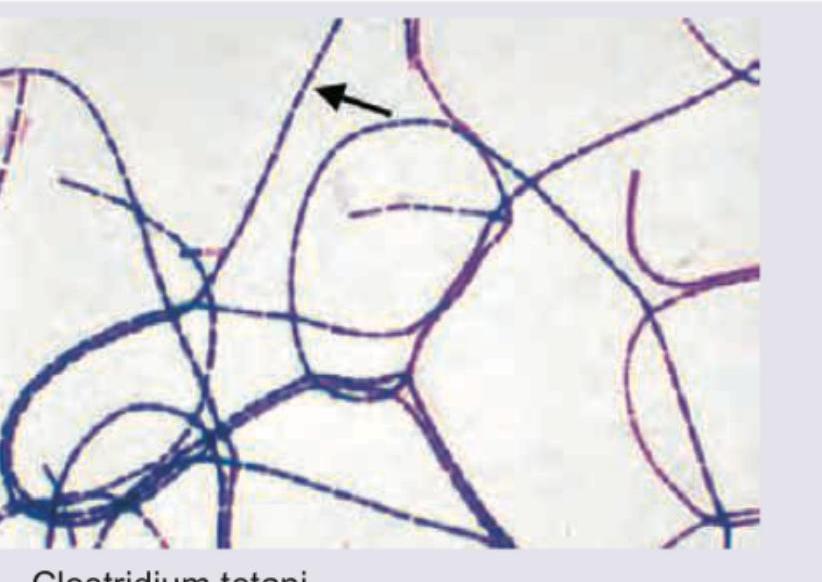
The arrow points to the presence of which bacteria?
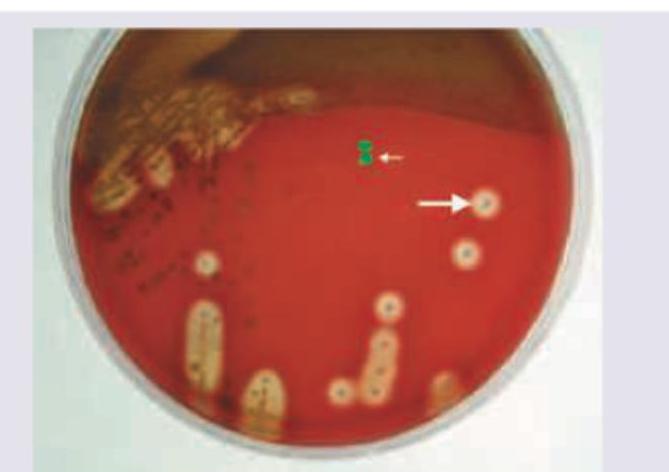
Which is the correct description of the colony plate?
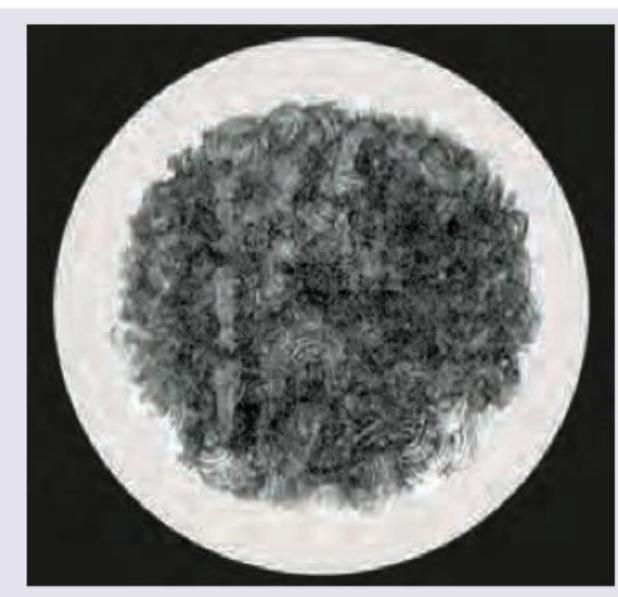
What is incorrect about the bacteria causing the following colonies? (Recent NEET Pattern 2016-17)
Explanation: ***Corynebacterium kroppenstedtii*** - This organism is the most commonly identified cause of **idiopathic granulomatous mastitis (IGM)**, specifically the subtype characterized by **neutrophilic microabscesses** adjacent to **non-caseating granulomas**. - It is a **lipophilic diphtheroid** often isolated from breast aspirates or biopsies of patients with **chronic, relapsing breast inflammation**. *Corynebacterium minutissimum* - This bacterium is primarily associated with **erythrasma**, a superficial skin infection presenting as reddish-brown patches, especially in intertriginous areas. - It is generally not involved in causing deep-seated, chronic granulomatous inflammation or abscess formation within the breast parenchyma. *Mycobacterium tuberculosis* - *M. tuberculosis* causes **tuberculous mastitis**, which is histologically defined by the presence of **caseating granulomas** and large areas of necrosis. - This differs from neutrophilic granulomatous mastitis, which features predominantly **non-caseating granulomas** mixed with neutrophils and microabscesses. *Staphylococcus aureus* - *S. aureus* is the leading cause of **acute mastitis** and **breast abscesses**, characterized by rapid onset, pain, fever, and abundant acute inflammatory cells (pus). - It is typically associated with acute suppurative changes, not the chronic, indolent, granulomatous tissue reaction found in neutrophilic granulomatous mastitis.
Explanation: ***Lipoteichoic acid*** - **Lipoteichoic acid (LTA)**, along with the **M protein**, serves as a key adhesin for Group A Streptococcus, mediating attachment by binding to **fibronectin** receptors on pharyngeal epithelial cells. - This adherence mechanism is essential for the initial colonization and subsequent establishment of **streptococcal pharyngitis**. *Lipoprotein* - **Lipoproteins** are structurally diverse cell components, but they are not recognized as the primary molecular component mediating the specific attachment of GAS to **fibronectin**. - They often reside in the cell membrane and typically function in **nutrient transport** or signaling pathways. *Capsule* - The **hyaluronic acid capsule** of Group A Streptococcus mainly functions as an **anti-phagocytic factor** against host immune cells, preventing ingestion. - While important for virulence, it is not the molecule that directly facilitates initial adherence to the **fibronectin** layer of the host epithelium. *Flagella* - **Flagella** are organelles primarily responsible for **bacterial motility** (movement). - *Streptococcus pyogenes* (Group A Streptococcus) is a **non-motile** organism and therefore lacks flagella.
Explanation: ***Nocardia asteroides*** - This organism is characterized by **Gram-positive, filamentous, branching bacteria** which are also typically **weakly acid-fast** (Positive ZN stain), differentiating it from Actinomyces. - The ability to utilize paraffin as a sole carbon source and grow on **paraffin bait culture** is a classical diagnostic method specifically employed for identifying **Nocardia** species, fitting the clinical picture of chronic meningitis (Nocardiosis). *Actinomyces israelii* - Although it is a **Gram-positive, filamentous, branching bacterium**, *Actinomyces* is strictly **anaerobic** and is typically **non-acid fast** (ZN negative), which contradicts the lab finding. - It commonly causes chronic suppurative infections like lumpy jaw, often involving **sulfur granules**, and is not diagnosed via paraffin culture methods. *Mycobacterium tuberculosis* - This organism is a major cause of **chronic meningitis** and is **strongly acid-fast** (ZN positive), but its morphology is that of a simple rod (**bacillus**), not a **filamentous branching** structure. - It requires specific media like **Lowenstein-Jensen (LJ) medium** for culture and is not known to grow on paraffin bait. *Cryptococcus neoformans* - This is an encapsulated **yeast (fungus)**, not a bacterium, and therefore does not show **filamentous branching** or Gram-positive bacterial morphology. - Diagnosis is typically made via **India ink stain** or detection of **Cryptococcal antigen** in CSF, not ZN staining or paraffin bait culture.
Explanation: ***National Family Planning Program*** - The image prominently features a **family unit** (parents and a child) under a stylized **sun**, which is a widely recognized symbol for the **National Family Planning Program** in India. - This symbol communicates the program's focus on **planned families** and the well-being of the family as a whole, often associated with concepts of **limited family size** and **maternal/child health**. *National Immunization Program* - This program uses symbols like syringes, vaccines, or protective shields, not family imagery. - Focuses on vaccination schedules and disease prevention through immunization. *Integrated Child Development Services (ICDS)* - ICDS logo typically features children or a mother-child pair with educational/nutritional elements. - While family-focused, it emphasizes child development, nutrition, and preschool education rather than family planning. *National Health Mission* - NHM uses broader health system symbols and does not have this specific family-under-sun iconography. - Encompasses multiple health programs but doesn't use this distinctive family planning symbol.
Explanation: ***HIV/AIDS*** - The **red ribbon** is an internationally recognized symbol of **awareness and solidarity** for people living with HIV/AIDS. - It is worn to visually express compassion for people with AIDS and their caregivers, and to support the prevention of further HIV infection. *Malaria* - The **red cross** on a white background is the traditional symbol for **medical care and humanitarian aid**, not specifically malaria. - While malaria is a significant global health issue, it does not have the red ribbon as its primary symbol. *Leprosy* - There is no universally recognized specific ribbon color or symbol for **leprosy awareness**, unlike the red ribbon for HIV/AIDS. - Awareness campaigns for leprosy often use different designs or general health symbols. *Tuberculosis* - The **Red Cross double bar** or **Cross of Lorraine** is sometimes associated with tuberculosis campaigns, especially in the past. - The red ribbon is not the symbol for tuberculosis.
Explanation: ***Scatter diagram*** - A scatter diagram displays individual data points using **Cartesian coordinates**, where each point represents the values of two different variables, which are 'Weight' and 'Height' in this image. - It is used to observe the **relationship or correlation** between two quantitative variables. *Histogram* - A **histogram** is used to represent the **distribution of a single numerical variable**, divided into bins, and shows the frequency of data points falling into each bin. - This image clearly plots individual points for two variables, not frequency distributions within bins.
Explanation: ***Leptospira*** - *Leptospira* are characterized by their **fine, closely wound spirals** and notably **hooked ends**, typically having 5-8 such tight coils. - They are highly motile and responsible for **leptospirosis**, an infection transmitted through contact with infected animal urine. *Treponema pallidum* - *Treponema pallidum* has **tightly coiled**, regular spirals but generally **lacks the hooked ends** characteristic of *Leptospira*. - This bacterium is the causative agent of **syphilis**, a sexually transmitted infection. *Borrelia* - *Borrelia* species are known for their **loosely coiled**, irregular spirals, which are distinct from the fine and regular coils of *Leptospira*. - They are responsible for diseases like **Lyme disease** (*Borrelia burgdorferi*) and **relapsing fever** (*Borrelia recurrentis*). *Campylobacter* - *Campylobacter* are **spiral-shaped** or **curved rods**, but they are much shorter and have fewer, looser turns than the spirochetes mentioned, not typically described with 5-8 regular spirals. - They are primarily associated with **gastroenteritis** and are not classified as spirochetes.
Explanation: ***Clostridium tetani*** - The image displays **long, filamentous bacteria** with **terminal spores**, giving them a classic "tennis racket" or "drumstick" appearance, which is characteristic of *Clostridium tetani*. - *Clostridium tetani* is a **Gram-positive, anaerobic bacillus** known for producing spores, especially in unfavorable conditions. *Streptococcus bovis* - *Streptococcus bovis* (now reclassified as *Streptococcus gallolyticus*) typically appears as **Gram-positive cocci** in chains, rather than long rods with terminal spores. - It is associated with **bacteremia**, endocarditis, and colon cancer, and its morphology does not match the image. *Hemophilus influenzae* - *Hemophilus influenzae* is a **Gram-negative coccobacillus** that can appear as short rods or cocci, often pleomorphic, and does not form spores or long filaments. - This bacterium is a common cause of respiratory infections, otitis media, and meningitis. *Bacillus cereus* - *Bacillus cereus* is a **Gram-positive rod** that forms spores, but these spores are typically **central or subterminal** and do not give the distinctive "tennis racket" morphology seen with *Clostridium tetani*. - It is known for causing **food poisoning** due to enterotoxin production.
Explanation: ***Short arrow: Gamma hemolysis, Long arrow: Beta hemolysis*** - The **short arrow** points to an area with no change in the surrounding blood agar, indicating **gamma hemolysis**, where no lysis of red blood cells occurs. - The **long arrow** points to a clear zone around the colony, signifying **beta hemolysis**, which is complete lysis of red blood cells. *Short arrow: Alpha hemolysis, Long arrow: Beta hemolysis* - The short arrow points to an area with **no hemolysis (gamma hemolysis)**, not partial hemolysis (alpha hemolysis). - While the long arrow correctly points to beta hemolysis, the short arrow's description is incorrect. *Long arrow: Alpha hemolysis, Short arrow: Gamma hemolysis* - The long arrow points to a zone of **complete clearing (beta hemolysis)**, not partial greening (alpha hemolysis). - The short arrow correctly points to gamma hemolysis, but the long arrow's description is incorrect. *Long arrow: Gamma hemolysis, Short arrow: Alpha hemolysis* - The long arrow indicates **complete hemolysis (beta hemolysis)**, not a lack of hemolysis (gamma hemolysis). - The short arrow points to **no hemolysis (gamma hemolysis)**, not partial hemolysis (alpha hemolysis).
Explanation: ***Carbon dioxide promotes sporulation*** - This statement is incorrect because **carbon dioxide inhibits sporulation** and promotes the vegetative state of *Bacillus anthracis*. - **Bicarbonate** (often added as sodium bicarbonate) is required for the expression of the capsule in vivo, but not for sporulation. *Medusa head colony* - This is a characteristic appearance of **Bacillus anthracis colonies** on blood agar, often described as having curled margins and irregular projections. - The image provided clearly shows this **distinct morphology**. *Bamboo Rod appearance* - This describes the typical morphology of **Bacillus anthracis** under microscopy, specifically showing **Gram-positive, non-motile rods** arranged in long chains. - This appearance is a key diagnostic feature of the bacteria. *Biological warfare* - *Bacillus anthracis* is a well-known agent for **biological warfare** because its spores are highly stable, easily disseminated, and can cause severe, often fatal, disease (anthrax) upon inhalation. - Its use in bioweapons programs has been documented historically.
Staphylococci
Practice Questions
Streptococci and Enterococci
Practice Questions
Neisseria and Moraxella
Practice Questions
Corynebacterium and Listeria
Practice Questions
Bacillus and Clostridium
Practice Questions
Enterobacteriaceae
Practice Questions
Vibrio, Aeromonas, and Plesiomonas
Practice Questions
Pseudomonas and Related Bacteria
Practice Questions
Haemophilus and HACEK Group
Practice Questions
Bordetella and Brucella
Practice Questions
Mycobacteria
Practice Questions
Spirochetes
Practice Questions
Get full access to all questions, explanations, and performance tracking.
Start For Free