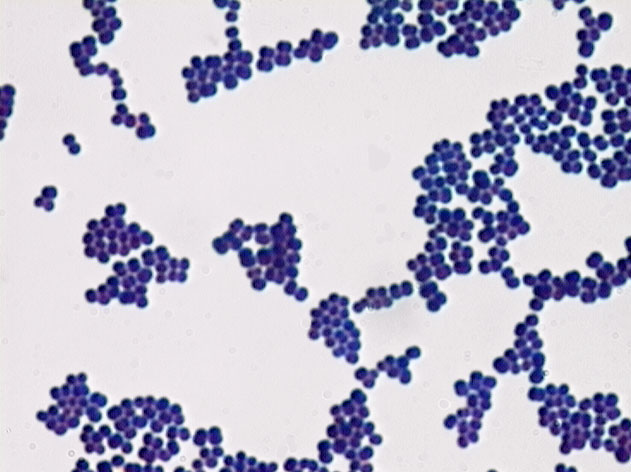
Which anaerobic bacterium is commonly found in the cervix or vagina, maintains a low pH, and protects against other bacterial infections?
What is the duration of infectivity for a patient with diphtheria?
Which of the following microorganisms does NOT possess a cell wall?
Which of the following is a capnophilic bacteria?
Which Salmonella species is known to cause prolonged septicemia?
Which of the following is the dead-end host for humans?
What is the most sensitive non-invasive test for the diagnosis of Helicobacter pylori infection?
All the following strains of Proteus are used in the Weil-Felix reaction EXCEPT?
Which of the following organisms commonly cause ascending urinary tract infections?
Gram staining of the sputum of patients with pneumonia is diagnostic for all these pathogens, EXCEPT:
Explanation: **Explanation:** **1. Why Lactobacilli is Correct:** *Lactobacillus* species (primarily *L. acidophilus*) are the predominant commensal flora of the healthy adult vagina. They play a crucial protective role by fermenting glycogen (released from vaginal epithelial cells under the influence of estrogen) into **lactic acid**. This process maintains a **low vaginal pH (3.8–4.5)**, which inhibits the overgrowth of pathogenic bacteria. Additionally, they produce hydrogen peroxide ($H_2O_2$) and bacteriocins, further protecting the vaginal niche. **2. Why Incorrect Options are Wrong:** * **Gardnerella vaginalis:** This is a facultative anaerobe associated with **Bacterial Vaginosis (BV)**. In BV, *Lactobacilli* decrease, the pH rises (>4.5), and *Gardnerella* overgrows, leading to a thin, fishy-smelling discharge. * **Mobiluncus:** These are anaerobic, Gram-curved rods. Like *Gardnerella*, they are markers of dysbiosis (Bacterial Vaginosis) rather than protective commensals. * **Clostridium:** While anaerobic, *Clostridium* species (like *C. perfringens*) are not part of the normal protective flora and are instead associated with severe infections like gas gangrene or post-abortal sepsis. **3. NEET-PG High-Yield Pearls:** * **Döderlein's Bacilli:** Another name for vaginal *Lactobacilli*. * **Amsel’s Criteria:** Used to diagnose Bacterial Vaginosis (requires 3 of 4): 1. Thin discharge, 2. pH >4.5, 3. Positive Whiff test (KOH), 4. **Clue cells** on microscopy. * **Nugent Scoring:** The gold standard for diagnosing BV based on Gram stain morphotypes (loss of Gram-positive rods/Lactobacilli). * **Estrogen Connection:** Vaginal colonization by *Lactobacilli* begins at puberty due to increased glycogen deposition in the vaginal epithelium.
Explanation: **Explanation:** The duration of infectivity in Diphtheria (*Corynebacterium diphtheriae*) is a critical epidemiological concept. In untreated cases, patients are typically infectious for **2 to 4 weeks (approximately 15 days)** from the onset of symptoms. 1. **Why Option D is correct:** The bacilli persist in the throat or nasopharyngeal secretions of an untreated patient for about 14–15 days. However, with modern antibiotic therapy (Penicillin or Erythromycin), the patient usually becomes non-infectious within 24 to 48 hours. For exam purposes, the standard "natural" period of communicability is cited as 15 days. 2. **Why other options are incorrect:** * **Option A & B:** Infectivity in Diphtheria is determined by the presence of the bacilli in the respiratory tract, not by the resolution of clinical symptoms like cough or fever. A patient may become afebrile but still harbor and shed the bacteria. * **Option C:** Diphtheria is an acute infection. While a small percentage of patients (2-5%) may become chronic carriers, the infection is not lifelong. **High-Yield Clinical Pearls for NEET-PG:** * **Case Definition of Clearance:** A patient is considered non-infectious only after **two consecutive negative cultures** taken 24 hours apart from the nose and throat, starting at least 24 hours after stopping antibiotics. * **Schick Test:** Used to demonstrate the immune status of an individual (susceptibility). * **Löffler's Serum Slope:** The rapid culture medium of choice (growth in 6-8 hours). * **Albert’s Stain:** Used to visualize metachromatic granules (Volutin/Babes-Ernst granules). * **Treatment Priority:** Anti-Diphtheritic Serum (ADS) must be given immediately to neutralize unbound toxin; antibiotics are secondary to stop further toxin production and spread.
Explanation: **Explanation:** The correct answer is **Mycoplasma pneumoniae**. **1. Why Mycoplasma pneumoniae is correct:** The defining characteristic of the genus *Mycoplasma* is the **complete absence of a peptidoglycan cell wall**. Instead, their cell membrane contains **sterols** (lipoproteins), which provide structural integrity and osmotic stability. Because they lack a cell wall, they are naturally resistant to beta-lactam antibiotics (like Penicillins and Cephalosporins) which target cell wall synthesis. They are also pleomorphic (cannot be classified as cocci or bacilli) and are the smallest free-living microorganisms. **2. Why the other options are incorrect:** * **Staphylococcus aureus (Option A):** A Gram-positive coccus with a thick peptidoglycan cell wall containing teichoic acid. * **Pseudomonas aeruginosa (Option B):** A Gram-negative bacillus with a thin peptidoglycan layer and an outer membrane. * **Corynebacterium diphtheriae (Option C):** A Gram-positive bacillus with a cell wall containing mycolic acids (though shorter than those in Mycobacteria). **3. High-Yield Clinical Pearls for NEET-PG:** * **Culture:** *Mycoplasma* requires enriched media containing serum (source of sterols). On solid media (PPLO agar), they produce characteristic **"Fried Egg" colonies**. * **Clinical Presentation:** It is a leading cause of **Primary Atypical Pneumonia** ("Walking Pneumonia"). * **Diagnosis:** Associated with **Cold Agglutinins** (IgM antibodies against I-antigen on RBCs). * **Treatment:** Since they lack a cell wall, use protein synthesis inhibitors like **Macrolides** (Azithromycin) or Tetracyclines (Doxycycline). * **L-forms vs. Mycoplasma:** L-forms are bacteria that *usually* have a cell wall but have lost it due to antibiotics or enzymes; *Mycoplasma* **never** has a cell wall.
Explanation: ### Explanation **Correct Option: D. Haemophilus influenzae** **Concept:** Capnophilic bacteria are microorganisms that thrive in high concentrations of carbon dioxide ($CO_2$), typically requiring **5–10% $CO_2$** for optimal growth. *Haemophilus influenzae* is a classic example of a capnophilic, fastidious organism. It requires specific growth factors—**Factor V (NAD)** and **Factor X (Hemin)**—found in Chocolate Agar, and its growth is significantly enhanced in a $CO_2$-enriched environment (often provided via a candle jar). **Analysis of Incorrect Options:** * **A. Staphylococcus aureus:** This is a **facultative anaerobe**. While it can grow in the presence or absence of oxygen, it does not have a specific requirement for elevated $CO_2$ levels. * **B. Mycobacterium:** *Mycobacterium tuberculosis* is an **obligate aerobe**. It requires a high oxygen environment for growth, which is why it primarily affects the well-aerated upper lobes of the lungs. * **C. Clostridium:** This genus consists of **obligate anaerobes**. They cannot grow in the presence of oxygen and do not require $CO_2$ enrichment; rather, they require a reduced environment (e.g., Robertson’s Cooked Meat media). **NEET-PG High-Yield Pearls:** * **Other Capnophiles:** Remember the mnemonic **"HACEK"** organisms (*Haemophilus, Aggregatibacter, Cardiobacterium, Eikenella, Kingella*), *Neisseria gonorrhoeae*, *Neisseria meningitidis*, and *Streptococcus pneumoniae*. * **Satellitism:** *H. influenzae* shows the "Satellite phenomenon" when grown near *S. aureus* on blood agar, as *S. aureus* synthesizes Factor V. * **Culture:** Chocolate agar is the medium of choice because heating blood releases Factors X and V and inactivates V-factor inhibitors.
Explanation: **Explanation:** The genus *Salmonella* is broadly categorized into typhoidal and non-typhoidal strains. While most non-typhoidal *Salmonella* (NTS) cause self-limiting gastroenteritis, **Salmonella cholerae-suis** is uniquely characterized by its high invasiveness and tendency to cause **prolonged septicemia** with minimal or absent gastrointestinal symptoms. **1. Why S. cholerae-suis is correct:** Unlike other NTS species, *S. cholerae-suis* has a predilection for invading the bloodstream. It frequently leads to sustained bacteremia and focal extra-intestinal infections (such as osteomyelitis, mycotic aneurysms, or septic arthritis). In clinical presentations, fever is prominent, but diarrhea is often absent, making "septiceamic type" its classic description. **2. Why the other options are incorrect:** * **S. enteritidis & S. typhimurium:** These are the most common causes of *Salmonella* food poisoning (gastroenteritis). While they can cause bacteremia in immunocompromised patients (e.g., HIV/AIDS), their primary clinical manifestation is localized to the GI tract. * **S. typhi:** This is the causative agent of Enteric Fever (Typhoid). While it involves a bacteremic phase (especially in the first week), the clinical course is defined as a multi-systemic illness involving the GALT (gut-associated lymphoid tissue), rather than being classified primarily as a "prolonged septicemic" strain in the same context as the highly invasive *S. cholerae-suis*. **NEET-PG High-Yield Pearls:** * **Blood Culture:** Most sensitive during the 1st week of Typhoid fever. * **Widal Test:** Becomes positive only after the 1st week (usually by the end of the 2nd week). * **Carrier State:** *S. typhi* persists in the **gallbladder**, whereas *S. paratyphi* persists in the **biliary tract**. * **Rose Spots:** Classic physical sign seen in the 2nd week of Enteric fever.
Explanation: ### Explanation **Concept of a Dead-End Host** A **dead-end host** (or incidental host) is an organism from which an infectious agent cannot be transmitted to another susceptible host. This usually occurs because the pathogen does not reach high enough concentrations in the blood (viremia/bacteremia) or is not excreted in a way that allows further transmission. **Why Tetanus is the Correct Answer** *Clostridium tetani* is an anaerobic, spore-forming bacterium found in soil. Humans acquire tetanus through the contamination of wounds with these spores. Once the bacteria produce the **tetanospasmin** toxin, it causes clinical disease. However, the infection is **not communicable** from person to person. The bacteria remain localized in the wound and are not shed or transmitted further, making the human a dead-end host. **Analysis of Incorrect Options** * **Kyasanur Forest Disease (KFD):** While humans are often considered incidental hosts for KFD (transmitted via tick bites), the question asks for the most definitive example among the choices. In many epidemiological contexts, Tetanus is the classic "textbook" example of a non-communicable bacterial disease where the host cannot transmit the agent. * **HIV:** Humans are the **primary reservoir** and definitive hosts for HIV. It is highly communicable through blood, sexual contact, and vertical transmission. **High-Yield Clinical Pearls for NEET-PG** * **Other Dead-End Host Examples:** Rabies (humans), Japanese Encephalitis (humans), and Hydatid disease (humans). * **Tetanus Toxin:** Tetanospasmin acts by blocking the release of inhibitory neurotransmitters (**GABA and Glycine**) from Renshaw cells in the spinal cord, leading to spastic paralysis. * **Non-Communicable Diseases:** Always remember that Tetanus is the only major vaccine-preventable disease that is **not** contagious.
Explanation: **Explanation:** The diagnosis of *Helicobacter pylori* is categorized into **invasive** (requiring endoscopy) and **non-invasive** methods. **Why Urea Breath Test (UBT) is the correct answer:** The **Urea Breath Test** is considered the **most sensitive and specific non-invasive test** for diagnosing active *H. pylori* infection. It relies on the organism's potent **urease enzyme**. The patient ingests urea labeled with a carbon isotope ($^{13}C$ or $^{14}C$). If *H. pylori* is present, urease splits the urea into ammonia and labeled $CO_2$, which is then detected in the exhaled breath. It is also the preferred test to confirm **eradication** after treatment. **Analysis of Incorrect Options:** * **A & B (Rapid Urease Test & Gastric Biopsy):** While highly accurate, these are **invasive** tests because they require an upper GI endoscopy to obtain a tissue sample. The Rapid Urease Test (RUT) is the "invasive test of choice." * **D (ELISA for Antibodies):** Serology detects IgG antibodies. Its main drawback is that it cannot distinguish between a past and current infection, as antibodies remain in the system long after the bacteria are cleared. Thus, it is not used to confirm eradication. **High-Yield Clinical Pearls for NEET-PG:** * **Gold Standard:** Culture is the gold standard for diagnosis (100% specific) but is technically difficult. * **Stool Antigen Test:** Another highly sensitive non-invasive test, often used in children. * **False Negatives:** For both UBT and RUT, patients must stop **Proton Pump Inhibitors (PPIs)** for 2 weeks and **Antibiotics/Bismuth** for 4 weeks prior to testing to avoid false-negative results. * **Microscopy:** *H. pylori* appears as "seagull-wing" shaped Gram-negative bacilli.
Explanation: ### Explanation The **Weil-Felix reaction** is a heterophile agglutination test used for the presumptive diagnosis of Rickettsial infections. It relies on a cross-reaction between antibodies produced against Rickettsial antigens and the somatic (O) antigens of specific non-motile strains of **Proteus vulgaris** and **Proteus mirabilis**. **Why OX O is the Correct Answer:** The strains used in the Weil-Felix reaction are specific **non-motile (O)** variants. While the antigens are derived from the "O" (somatic) part of the bacteria, there is no specific strain designated as "**OX O**" used in the test. The nomenclature "OX" refers to the X-strains of Proteus, and the specific variants are 2, 19, and K. **Analysis of Other Options:** * **OX 19 (P. vulgaris):** Strongly positive in Epidemic and Endemic typhus; also reacts in Spotted fever group. * **OX 2 (P. vulgaris):** Reacts strongly in the Spotted fever group (alongside OX 19). * **OX K (P. mirabilis):** Specifically used for the diagnosis of **Scrub Typhus** (caused by *Orientia tsutsugamushi*). **High-Yield Clinical Pearls for NEET-PG:** * **Scrub Typhus:** Only OX K is positive; OX 19 and OX 2 are negative. * **Q Fever:** The Weil-Felix test is **negative** (No cross-reacting Proteus antigen exists for *Coxiella burnetii*). * **Rickettsialpox:** The Weil-Felix test is **negative**. * **Limitations:** The test lacks high sensitivity and specificity; definitive diagnosis is now preferred via IFA (Immunofluorescence Assay) or PCR. * **Memory Aid:** "K" for **K**asai (Scrub) — OX **K** is for Scrub Typhus.
Explanation: ### Explanation **1. Understanding the Concept: Ascending vs. Hematogenous UTI** Urinary tract infections (UTIs) occur via two primary routes: * **Ascending Route (Most Common):** Microorganisms from the fecal flora colonize the periurethral area and migrate upward through the urethra into the bladder (cystitis) and potentially the kidneys (pyelonephritis). This is the typical pathway for enteric Gram-negative rods and certain Gram-positive cocci. * **Hematogenous (Descending) Route:** Microorganisms reach the kidneys via the bloodstream from a distant site of infection. **2. Why Option B is Correct** * **E. coli:** The most common cause of UTI (approx. 80%). It possesses **P-pili** (fimbriae) that allow it to adhere to uroepithelial cells, facilitating its ascent. * **Klebsiella:** A common Gram-negative member of the intestinal flora frequently associated with nosocomial and complicated UTIs. * **Enterococcus:** A Gram-positive intestinal commensal often implicated in UTIs, especially in patients with urinary tract instrumentation or catheterization. **3. Why Other Options are Incorrect** * **Salmonella (Options A & D):** While *Salmonella Typhi* can be shed in the urine (chronic carriers), it typically reaches the kidneys via the **hematogenous route** during systemic bacteremia, not by ascending the urethra. * **Mycobacterium tuberculosis (Options A & C):** Renal tuberculosis is almost always a result of **hematogenous spread** from a primary pulmonary focus. It is a classic example of a descending infection. **4. NEET-PG High-Yield Pearls** * **Most common cause of UTI:** *E. coli* (Uropathogenic E. coli - UPEC). * **Most common cause in sexually active young females:** *Staphylococcus saprophyticus*. * **Urease-positive organisms:** *Proteus* and *Klebsiella* increase urinary pH, predisposed to **Struvite (Staghorn) calculi**. * **Hematogenous spreaders:** *S. aureus*, *M. tuberculosis*, and *Salmonella*.
Explanation: **Explanation:** The correct answer is **Coxiella burnetii** because it is an **obligate intracellular pathogen** that does not stain with conventional Gram stain. It is the causative agent of Q fever and requires specialized staining techniques like **Gimenez stain** or detection via serology and PCR. **Why the other options are incorrect:** * **S. pneumoniae:** This is the most common cause of community-acquired pneumonia. Gram stain is diagnostic, typically showing **Gram-positive lancet-shaped diplococci** surrounded by a non-staining capsule. * **S. aureus:** Gram stain is highly effective for diagnosis, revealing **Gram-positive cocci in grape-like clusters**. It is a common cause of post-viral (e.g., post-influenza) pneumonia. * **Gram-negative bacteria:** Pathogens like *Klebsiella pneumoniae* (showing "plump" rods with a prominent capsule) or *Pseudomonas* are easily identified as **Gram-negative bacilli** on sputum microscopy, guiding immediate empirical antibiotic therapy. **High-Yield Clinical Pearls for NEET-PG:** * **Atypical Pneumonia:** Pathogens like *Coxiella burnetii*, *Mycoplasma pneumoniae* (no cell wall), and *Legionella* (stains poorly) are not visualized on routine Gram stain. * **Q Fever:** Associated with exposure to livestock (cattle, sheep, goats). It can present as pneumonia or hepatitis. * **Sputum Quality:** For a sputum Gram stain to be "diagnostic" or valid, it must show **>25 PMNs and <10 epithelial cells** per low-power field (Bartlett's criteria). * **Special Stains:** Remember **Gimenez or Macchiavello stains** for *Rickettsia* and *Coxiella*.
Staphylococci
Practice Questions
Streptococci and Enterococci
Practice Questions
Neisseria and Moraxella
Practice Questions
Corynebacterium and Listeria
Practice Questions
Bacillus and Clostridium
Practice Questions
Enterobacteriaceae
Practice Questions
Vibrio, Aeromonas, and Plesiomonas
Practice Questions
Pseudomonas and Related Bacteria
Practice Questions
Haemophilus and HACEK Group
Practice Questions
Bordetella and Brucella
Practice Questions
Mycobacteria
Practice Questions
Spirochetes
Practice Questions
Get full access to all questions, explanations, and performance tracking.
Start For Free