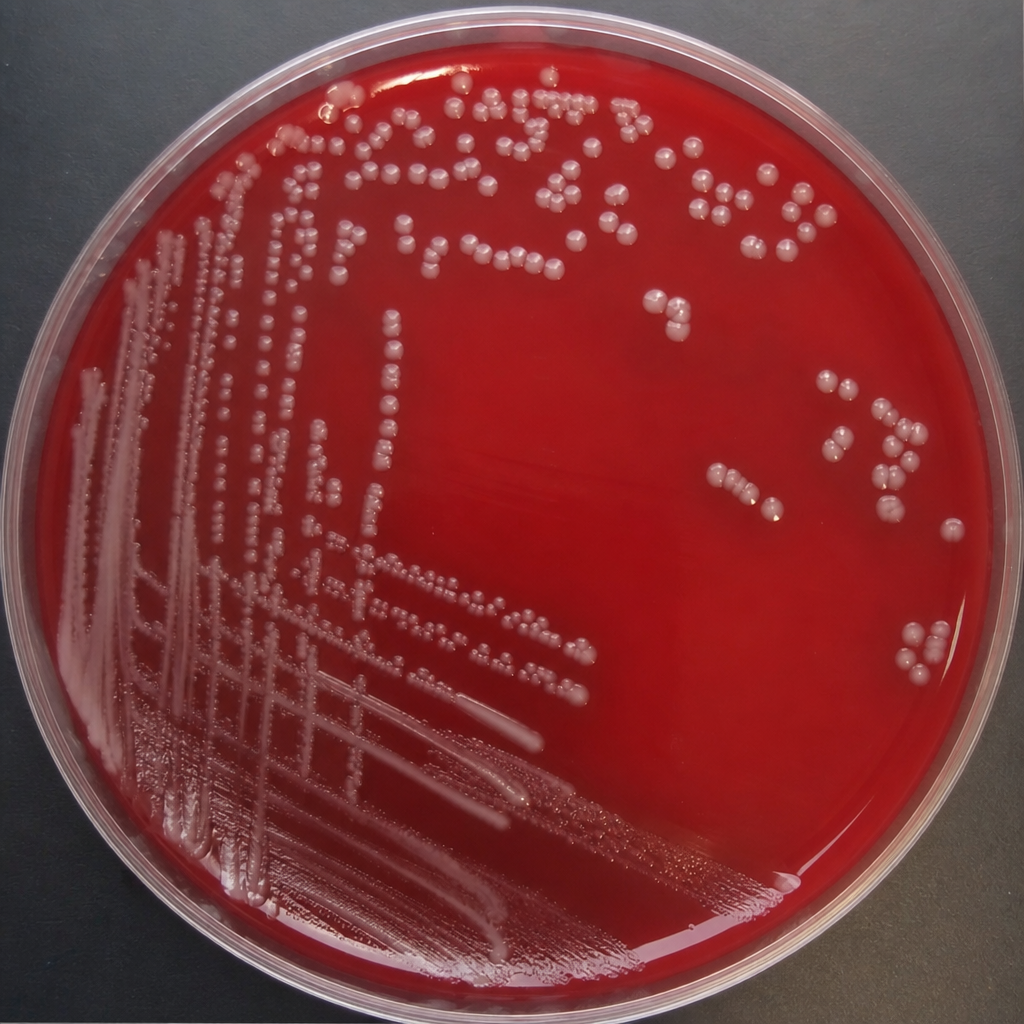
Pantone valentine toxin produced by Staphylococcus is an example for which of the following?
Which of the following differentiates Streptococcus and Pneumococcus, except?
Electron microscopic examination of the bacterial flora of necrotising ulcerative gingivitis indicates the presence of microorganisms within non-necrotic tissues in advance of other bacteria. What are the organisms involved?
Typhoid fever in the first week of illness is best diagnosed by which method?
Which of the following is true regarding the 8th pandemic of cholera?
What is the principle behind the use of Robeson cooked meat broth?
Haemophilus influenzae has been isolated from the CSF of a two-year-old boy suffering from meningitis. The strain is beta-lactamase producing and resistant to chloramphenicol. What is the most appropriate antimicrobial in this situation?
True about Legionella?
What is the reaction shown in the illustration?

Which in vitro test is used to determine the virulence of pneumococcus?
Explanation: **Explanation:** **Panton-Valentine Leukocidin (PVL)** is a potent exotoxin produced by certain strains of *Staphylococcus aureus*. It belongs to the category of **Superantigens**. 1. **Why it is a Superantigen:** Unlike conventional antigens that are processed and presented in the MHC-II groove to specific T-cells (stimulating <0.01% of T-cells), superantigens bind **directly and non-specifically** to the outer surface of the MHC-II molecule and the Vβ region of the T-cell receptor (TCR). This results in a massive, polyclonal activation of up to 20% of the body's T-cells, leading to a "cytokine storm" (massive release of IL-1, IL-2, TNF-α, and IFN-γ). 2. **Analysis of Incorrect Options:** * **Simple Antigen:** These require processing by Antigen Presenting Cells (APCs) and stimulate a specific, limited immune response. * **Hapten:** These are small, non-immunogenic molecules that only elicit an immune response when attached to a large carrier protein. * **Immunoglobulin:** These are antibodies produced by B-cells to neutralize antigens, not toxins produced by bacteria. **High-Yield Clinical Pearls for NEET-PG:** * **PVL Association:** It is a hallmark of **Community-Acquired MRSA (CA-MRSA)**. * **Clinical Presentation:** PVL causes leukocyte destruction and tissue necrosis. It is strongly associated with **severe necrotizing pneumonia** and recurrent **furunculosis** (skin abscesses). * **Other Staphylococcal Superantigens:** Toxic Shock Syndrome Toxin-1 (TSST-1) and Staphylococcal Enterotoxins (causing food poisoning) are also classic examples. * **Mechanism:** PVL is a pore-forming toxin that specifically targets polymorphonuclear leukocytes (neutrophils).
Explanation: This question tests your ability to distinguish between **Streptococcus pneumoniae (Pneumococcus)** and other **Viridans group Streptococci**, as both are catalase-negative, Gram-positive cocci that show alpha-hemolysis on blood agar. ### **Why Gram Staining is the Correct Answer** Gram staining **cannot** differentiate between the two because both organisms are **Gram-positive cocci**. While they have different morphological arrangements—Pneumococci are typically "lanceolate-shaped" diplococci and Streptococci appear in chains—the staining property itself (retaining the crystal violet dye) is identical. Therefore, it is not a differentiating factor. ### **Analysis of Incorrect Options (Differentiating Factors)** * **Bile Salt Solubility:** This is the gold standard biochemical test. **Pneumococci are bile soluble** (the colonies lyse and the solution clears), whereas other Streptococci are bile insoluble. * **Growth Characteristics (Optochin Sensitivity):** Pneumococcus is **sensitive** to Optochin (ethylhydrocupreine hydrochloride), showing a zone of inhibition, while Viridans Streptococci are **resistant**. * **Inulin Fermentation:** Pneumococcus has the specific ability to **ferment inulin**, producing acid (turning litmus paper red), while Viridans Streptococci do not. ### **High-Yield Clinical Pearls for NEET-PG** * **Quellung Reaction:** This is the "Capsular Swelling" test used specifically for *S. pneumoniae* identification. * **Capsule:** Pneumococcus is encapsulated (polysaccharide), making it a major cause of lobar pneumonia, meningitis, and otitis media. Viridans Streptococci are generally non-encapsulated. * **Mnemonic for Pneumococcus:** **B**ile soluble, **O**ptochin sensitive, **L**anceolate shape, **I**nulin fermenter (**BOLI**).
Explanation: **Explanation:** The correct answer is **Spirochetes**. **Medical Concept:** Necrotizing Ulcerative Gingivitis (NUG), also known as Vincent’s Infection or "Trench Mouth," is characterized by a specific microbial complex. Electron microscopic studies (notably by Listgarten) have demonstrated that the disease process is driven by the invasion of connective tissue by microorganisms. Specifically, **Spirochetes** (such as *Treponema* species) are found in the "deepest" zone of the lesion. They are observed within healthy, non-necrotic tissues, penetrating significantly ahead of other bacteria and the advancing front of necrosis. This invasive capability is a hallmark of the pathogenesis of NUG. **Analysis of Incorrect Options:** * **Cocci:** While various Gram-positive and Gram-negative cocci are present in the superficial debris and necrotic zones of NUG, they do not exhibit the deep tissue-invasive properties seen with spirochetes. * **Bacteriophages:** These are viruses that infect bacteria. They are not primary etiologic agents or invasive flora in periodontal disease. * **Filamentous rods:** Organisms like *Fusobacterium nucleatum* are part of the "fuso-spirochetal" complex associated with NUG. However, they are typically located in the more superficial necrotic layers and do not precede spirochetes into healthy tissue. **High-Yield Pearls for NEET-PG:** * **The Fuso-spirochetal Complex:** NUG is classically associated with *Borrelia vincentii* and *Fusobacterium fusiformis*. * **Listgarten’s Zones:** In NUG, four zones are described: (1) Bacterial zone, (2) Neutrophil-rich zone, (3) Necrotic zone, and (4) **Zone of Spirochetal Infiltration** (the deepest layer). * **Clinical Triad:** NUG is identified by "punched-out" interdental papillae, pain, and bleeding. * **Predisposing Factors:** Stress, smoking, and immunosuppression (HIV/AIDS).
Explanation: ### Explanation The diagnosis of Typhoid (Enteric) fever, caused by *Salmonella Typhi*, follows a predictable chronological pattern based on the pathogenesis of the disease. **1. Why Blood Culture is Correct:** During the **first week** of illness, the bacteria undergo primary multiplication in the lymphoid tissue and then enter the bloodstream (primary bacteremia). Therefore, **blood culture** is the gold standard and the most sensitive method (70–90% positivity) during the first 7–10 days. It remains the definitive diagnostic tool before the immune system begins to clear the bacteremia. **2. Why Other Options are Incorrect:** * **Antigen Detection:** While rapid, these tests (like detecting Vi antigen) lack the sensitivity and specificity of cultures and are not the primary diagnostic choice in clinical practice. * **Stool Culture:** Bacteria are excreted in feces more reliably during the **second and third weeks** as they are shed from the Peyer's patches into the intestinal lumen. * **Urine Culture:** This becomes positive only during the **third and fourth weeks** due to transient bacteremic seeding of the kidneys. It is the least sensitive method. **3. Clinical Pearls for NEET-PG:** To remember the sequence of specimen positivity, use the mnemonic **BASU**: * **B** – **B**lood Culture (**1st week**) – *Highest yield early on.* * **A** – **A**ntibody Test/Widal (**2nd week**) – *Significant titers appear after day 7.* * **S** – **S**tool Culture (**3rd week**) – *Useful for detecting carriers.* * **U** – **U**rine Culture (**4th week**) – *Late stage diagnosis.* **High-Yield Note:** **Bone marrow culture** is the overall most sensitive method (up to 95%) and remains positive even after the initiation of antibiotics, but blood culture is the "best" initial clinical investigation.
Explanation: **Explanation:** The **8th pandemic of Cholera** is a significant topic in public health and microbiology, characterized by the emergence of a new serogroup of *Vibrio cholerae*. **1. Why the correct answer is right:** The 8th pandemic began in **1992** in **Bangladesh** (specifically in the coastal areas of the Bay of Bengal). Unlike the previous seven pandemics caused by the O1 serogroup, this pandemic was caused by the **O139 strain** (also known as the Bengal strain). It spread rapidly across Southeast Asia, marking the first time a non-O1 strain caused epidemic cholera. **2. Analysis of Incorrect Options:** * **Option A (Originated in 2012):** Incorrect. The 8th pandemic originated in late 1992. * **Option C (Due to O139 El Tor):** Incorrect. While it is caused by **O139**, the term "El Tor" specifically refers to a biotype of the **O1 serogroup** (responsible for the 7th pandemic). O139 is a distinct serogroup derived from the O1 El Tor backbone but lacks the O1 antigen. * **Option D (Low attack rate):** Incorrect. The O139 strain is characterized by a **high attack rate** and the ability to cause severe disease in adults who were previously immune to O1 strains, as there is no cross-protection between O1 and O139. **High-Yield Facts for NEET-PG:** * **7th Pandemic:** Caused by *V. cholerae* O1, biotype **El Tor** (Started in Indonesia, 1961). * **O139 Characteristics:** It possesses a **capsule** (unlike O1), which contributes to its virulence and ability to cause bacteremia occasionally. * **Diagnosis:** O139 does not agglutinate with O1 antiserum. It requires specific O139 antiserum for identification. * **Current Status:** The 7th pandemic (O1 El Tor) is still ongoing globally, while O139 has remained largely confined to Asia.
Explanation: **Explanation:** **Robertson’s Cooked Meat (RCM) Broth** is the most widely used fluid medium for the cultivation of anaerobic bacteria, particularly *Clostridium* species. **1. Why Option C is Correct:** The principle of RCM broth lies in its ability to create an anaerobic environment. The medium contains chopped heart muscle (meat), which contains **unsaturated fatty acids** and **reducing substances** (like glutathione and cysteine). These substances undergo auto-oxidation to consume and utilize the dissolved oxygen in the medium, thereby lowering the oxidation-reduction (Eh) potential. This creates a strictly anaerobic environment at the bottom of the tube, allowing obligate anaerobes to grow. **2. Why Other Options are Incorrect:** * **Option A:** Meat does not possess antibacterial properties to kill other bacteria. While it provides nutrients, it does not act as a selective inhibitory agent. * **Option B:** While anaerobes do utilize the nutrients (amino acids and peptides) provided by the meat for growth, this is a nutritional function, not the primary "principle" that enables anaerobic cultivation. **3. High-Yield Clinical Pearls for NEET-PG:** * **Indication of Proteolysis:** RCM is used to differentiate Clostridia. * **Proteolytic organisms** (e.g., *C. tetani*): Turn the meat **black** and produce a foul smell (due to H₂S and ammonia). * **Saccharolytic organisms** (e.g., *C. perfringens*): Turn the meat **pink** (due to acid production). * **Storage:** It is an excellent medium for the long-term preservation of stock cultures. * **Pre-use Tip:** Always boil the medium before use to drive off any dissolved oxygen.
Explanation: ### Explanation **Correct Answer: C. Third-generation cephalosporin** The drug of choice for *Haemophilus influenzae* meningitis is a **third-generation cephalosporin** (such as Ceftriaxone or Cefotaxime). These agents are preferred because they exhibit excellent penetration into the cerebrospinal fluid (CSF) and are highly bactericidal against *H. influenzae*. In this clinical scenario, the strain is **beta-lactamase producing**, which renders Ampicillin ineffective (as beta-lactamase cleaves the penicillin ring). Furthermore, the strain is **resistant to Chloramphenicol**, which was historically used as an alternative. Third-generation cephalosporins remain stable against most beta-lactamases produced by *H. influenzae*, making them the definitive treatment. **Why other options are incorrect:** * **A. Trimethoprim-sulphamethoxazole:** While used for respiratory infections (like otitis media), it has poor CSF penetration and high rates of resistance, making it unsuitable for meningitis. * **B. Ciprofloxacin:** Fluoroquinolones are generally avoided as first-line therapy for pediatric meningitis due to potential concerns regarding cartilage toxicity and the availability of superior alternatives. * **D. Vancomycin:** This is highly effective against Gram-positive organisms (like MRSA or *S. pneumoniae*), but *H. influenzae* is a **Gram-negative coccobacillus**; Vancomycin has no activity against Gram-negative bacteria. --- ### High-Yield Clinical Pearls for NEET-PG * **Culture Requirements:** *H. influenzae* requires **Factor V (NAD)** and **Factor X (Hemin)** for growth. It grows on **Chocolate Agar** but not on Blood Agar (unless "Satellitism" occurs around *S. aureus*). * **Capsular Type:** Type **b** (Hib) is the most virulent strain causing meningitis in children. * **Prophylaxis:** **Rifampicin** is used for chemoprophylaxis in close contacts of a patient with *H. influenzae* meningitis. * **Quellung Reaction:** This can be used for rapid identification of the capsule.
Explanation: **Explanation:** **Legionella pneumophila** is a fastidious, Gram-negative aerobic bacillus that requires specific growth conditions, making it a high-yield topic for NEET-PG. 1. **Why Option C is Correct:** Legionella cannot grow on routine laboratory media (like Blood or MacConkey agar). It requires **L-cysteine** and **iron** for growth. **BCYE (Buffered Charcoal Yeast Extract) agar** is the specific medium used. The charcoal serves to detoxify the medium by absorbing fatty acids and peroxides, while yeast extract provides the necessary nutrients. It is considered a specialized/selective medium for the isolation of Legionella from clinical samples. 2. **Why Other Options are Incorrect:** * **Option A:** Legionella is **fastidious**, not simple. It will not grow on simple media because it lacks the ability to synthesize essential amino acids like L-cysteine. * **Option B:** Legionella species are **motile** via one or more polar or lateral flagella. * **Option D:** Legionella is **non-capsulated**. It is, however, an intracellular pathogen that survives inside alveolar macrophages by inhibiting phagosome-lysosome fusion. **High-Yield Clinical Pearls for NEET-PG:** * **Staining:** Poorly visualized on Gram stain; **Silver stains (Dieterle stain)** are preferred. * **Transmission:** Inhalation of aerosols from contaminated water sources (AC cooling towers, showers, nebulizers). No person-to-person transmission. * **Clinical Features:** Causes **Legionnaires' disease** (severe pneumonia with diarrhea and hyponatremia) and **Pontiac fever** (mild, flu-like illness). * **Diagnosis:** **Urinary Antigen Test** is the rapid test of choice (detects Serogroup 1). * **Treatment:** Macrolides (Azithromycin) or Fluoroquinolones (Levofloxacin).
Explanation: ***Pneumococcus*** - Shows positive **quellung reaction** with capsular swelling when exposed to specific antisera, which is pathognomonic for *Streptococcus pneumoniae*. - Demonstrates **optochin sensitivity** and **bile solubility**, distinguishing it from other alpha-hemolytic streptococci. *Group F Streptococcus* - Shows **negative quellung reaction** as it lacks the polysaccharide capsule characteristic of pneumococci. - Exhibits **optochin resistance** and **bile insolubility**, differentiating it from *S. pneumoniae*. *Staphylococcus* - **Catalase positive** organism that would not demonstrate capsular swelling in the quellung reaction. - Shows **gram-positive cocci in clusters** morphologically, unlike the diplococci arrangement of pneumococci. *Enterococcus* - Displays **negative quellung reaction** and **optochin resistance**, ruling out pneumococcal identification. - Shows **bile-esculin positive** reaction and **growth in 6.5% NaCl**, which are distinguishing features from pneumococci.
Explanation: **Explanation:** **1. Why Option A is Correct:** *Streptococcus pneumoniae* (Pneumococcus) is highly pathogenic to mice. The standard method to determine its virulence is **intraperitoneal inoculation in mice**. When a virulent strain is injected, the mouse typically develops fatal septicaemia within 24–48 hours. The organism can then be recovered in pure culture from the mouse's heart blood. This test is also historically used for the "Mouse Toxigenicity Test" to isolate pneumococci from contaminated samples like sputum, as the mouse's body acts as a selective filter. **2. Why Other Options are Incorrect:** * **B. Rat tail inoculation:** This is not a standard diagnostic or virulence test for any major human pathogen. * **C. Mouse foot pad inoculation:** This is the specific method used for the cultivation and drug sensitivity testing of ***Mycobacterium leprae***, as it cannot be grown on artificial media. * **D. Armadillo inoculation:** Nine-banded armadillos are used for the large-scale cultivation of ***Mycobacterium leprae*** because of their low core body temperature, which favors the growth of the leprosy bacillus. **3. High-Yield Clinical Pearls for NEET-PG:** * **Capsule:** The polysaccharide capsule is the most important virulence factor of *S. pneumoniae*. Non-capsulated strains are avirulent. * **Quellung Reaction:** This is the "gold standard" for serotyping pneumococci based on capsular swelling. * **Bile Solubility:** Pneumococci are bile soluble (due to intracellular autolysins), which distinguishes them from *Viridans streptococci*. * **Optochin Sensitivity:** Pneumococci are sensitive to Optochin (ethylhydrocupreine hydrochloride), another key differentiating feature.
Staphylococci
Practice Questions
Streptococci and Enterococci
Practice Questions
Neisseria and Moraxella
Practice Questions
Corynebacterium and Listeria
Practice Questions
Bacillus and Clostridium
Practice Questions
Enterobacteriaceae
Practice Questions
Vibrio, Aeromonas, and Plesiomonas
Practice Questions
Pseudomonas and Related Bacteria
Practice Questions
Haemophilus and HACEK Group
Practice Questions
Bordetella and Brucella
Practice Questions
Mycobacteria
Practice Questions
Spirochetes
Practice Questions
Get full access to all questions, explanations, and performance tracking.
Start For Free