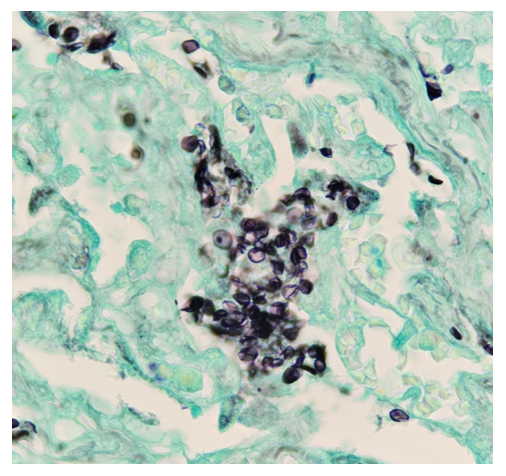
Griffith typing is performed for which bacterium?
Gonococci have affinity for which of the following tissues?
Streptococcal glomerulonephritis is best diagnosed by:
Which human infection spreads through urine?
Miyagawa corpuscles are characteristic of which disease?
Which of the following is an obligate aerobe?
Gas gangrene is caused by all the following organisms EXCEPT:
A patient presented with vomiting after consuming fried rice. What is the most likely causative organism?
A 65-year-old male presents with a rapid onset fever, chest pain, and cough with rusty-yellow sputum. A Gram stain of a sputum sample contained many polymorphonuclear leukocytes and extracellular gram-positive diplococci. Biochemical reactions revealed the organism was bile soluble, optochin sensitive, and fermented inulin. Which of the following is the most likely pathogen?
Which of the following is NOT true about cholerae?
Explanation: **Explanation:** **Griffith typing** is a serological method used for the classification of **Streptococcus pyogenes (Group A Streptococcus)**. It is based on the presence of the **M protein**, which is the primary virulence factor of the organism. This typing method uses a slide agglutination technique to categorize strains into different "Griffith types" based on surface protein antigens. * **Why Streptococcus is correct:** While Lancefield grouping (based on C-carbohydrate antigen) classifies Streptococci into groups A-V, Griffith typing provides a more granular sub-typing of Group A Streptococci by targeting the M protein. This is clinically significant because certain M types are associated with specific post-streptococcal sequelae (e.g., M types 1, 3, 12 with Glomerulonephritis). * **Why other options are incorrect:** * **Staphylococcus:** Classified primarily by Coagulase production and Phage typing. * **Meningococcus (N. meningitidis):** Classified into serogroups based on capsular polysaccharides (A, B, C, W-135, Y). * **Gonococcus (N. gonorrhoeae):** Classified via auxotyping or serotyping based on Protein I (Por protein), but Griffith typing is not used. **High-Yield Clinical Pearls for NEET-PG:** * **M Protein:** The most important virulence factor of *S. pyogenes*; it is anti-phagocytic and acts by inhibiting the alternate complement pathway. * **Lancefield vs. Griffith:** Remember: **L**ancefield = **C**-carbohydrate (Group); **G**riffith = **M**-protein (Type). * **Molecular Gold Standard:** Today, Griffith typing has been largely replaced by **emm typing**, which involves sequencing the gene (*emm* gene) that codes for the M protein.
Explanation: **Explanation:** *Neisseria gonorrhoeae* (Gonococcus) exhibits a specific tissue tropism for **columnar and cuboidal epithelium**. It primarily infects the mucous membranes of the urogenital tract, rectum, and conjunctiva. **1. Why Option B is Correct:** The **epithelium of the urethra** (specifically the columnar epithelium) is the primary site of infection in both males and females. Gonococci utilize specialized **pili** and **Opa proteins** to adhere to these non-ciliated columnar cells. Once attached, the bacteria trigger parasite-specified endocytosis, allowing them to enter the cells and multiply, leading to the characteristic purulent discharge. **2. Why Other Options are Incorrect:** * **Vaginal Mucosa (Option A):** In adult females, the vagina is lined by **stratified squamous epithelium**, which is resistant to gonococcal infection. Gonococcal vaginitis is generally only seen in prepubertal girls (vulvovaginitis) where the vaginal mucosa is thinner and not yet cornified. In adult women, the primary site of infection is the **endocervix** (columnar epithelium). * **Testis (Option C):** While Gonococci can cause ascending infections leading to epididymitis, they do not have a primary affinity for testicular tissue itself. **High-Yield Clinical Pearls for NEET-PG:** * **Site of Infection:** The most common site in females is the **endocervix**; in males, it is the **anterior urethra**. * **Virulence Factor:** The **Pilus** is the most important virulence factor for initial attachment and preventing phagocytosis. * **Transport Media:** Use **Amies or Stuart’s medium** if a delay is expected; otherwise, inoculate directly onto **Thayer-Martin medium** (selective). * **Gold Standard Diagnosis:** Culture remains the gold standard, but **NAAT (Nucleic Acid Amplification Test)** is the preferred screening method due to high sensitivity.
Explanation: **Explanation:** Post-Streptococcal Glomerulonephritis (PSGN) is a non-suppurative complication of *Streptococcus pyogenes* (Group A Streptococcus) infection. The diagnosis relies on evidence of a preceding infection, as the clinical symptoms appear after a latent period. **Why Anti-DNAse B is the correct answer:** While PSGN can follow both pharyngitis and skin infections (impetigo/pyoderma), the **Anti-DNAse B titre** is the most reliable marker. It is consistently elevated in both respiratory and skin-associated PSGN. In cases of pyoderma-associated glomerulonephritis, the ASO response is often weak or absent because skin lipids inhibit the streptolysin O antigen; therefore, Anti-DNAse B becomes the diagnostic test of choice. **Analysis of Incorrect Options:** * **ASO Titre:** This is the standard test for Acute Rheumatic Fever (ARF) and post-pharyngeal PSGN. However, it is unreliable for skin infections, making it less "best" overall than Anti-DNAse B for glomerulonephritis. * **Hyaluronidase Titre:** While this antibody rises in streptococcal infections, it is less sensitive and less commonly used in clinical practice compared to DNAse B. * **Culture:** By the time PSGN manifests (1–3 weeks post-infection), the initial bacteria have usually been cleared by the immune system. Cultures are typically negative and do not help in diagnosing the immunologic complication. **High-Yield Clinical Pearls for NEET-PG:** * **Latent Period:** 1–2 weeks after pharyngitis; 3–6 weeks after skin infection. * **C3 Levels:** Characteristically **low** in the acute phase of PSGN (returns to normal in 6–8 weeks). * **Lumpy-Bumpy Appearance:** Immunofluorescence shows granular deposits of IgG and C3 on the glomerular basement membrane. * **Most sensitive test:** The "Streptozyme test" (screens for five different antibodies) is highly sensitive but Anti-DNAse B remains the specific gold standard for post-skin infection sequelae.
Explanation: **Explanation:** **Leptospirosis** is a zoonotic disease caused by the spirochete *Leptospira interrogans*. The bacteria colonize the **renal tubules** of maintenance hosts (primarily rats and dogs) and are shed in their **urine**. Human infection occurs through direct contact with infected urine or, more commonly, through water and soil contaminated with it. The spirochetes enter the human body through skin abrasions or mucous membranes. In severe cases (Weil’s disease), the bacteria can cause renal failure and jaundice, and the organism can be isolated from **human urine** during the second week of the illness. **Why the other options are incorrect:** * **Legionella:** Spread via **inhalation** of contaminated aerosols from water systems (e.g., AC cooling towers). It is not transmitted through urine. * **Plague (*Yersinia pestis*):** Primarily transmitted via the **bite of infected rat fleas** (Bubonic) or through **respiratory droplets** (Pneumonic). * **Diphtheria (*Corynebacterium diphtheriae*):** Spread through **respiratory droplets** or direct contact with skin lesions (Cutaneous diphtheria). **High-Yield Clinical Pearls for NEET-PG:** * **Occupational Hazard:** Common in sewage workers, farmers, and veterinarians. * **Biphasic Illness:** Consists of an initial septicemic phase (fever, conjunctival suffusion) followed by an immune phase (meningitis, uveitis). * **Weil’s Disease:** A severe triad of jaundice, renal failure, and hemorrhage. * **Diagnosis:** Gold standard is the **Microscopic Agglutination Test (MAT)**. Culture media used is **EMJH medium** or Fletcher's medium.
Explanation: **Explanation:** The correct answer is **Lymphogranuloma venereum (LGV)**. **1. Why Lymphogranuloma venereum is correct:** LGV is caused by *Chlamydia trachomatis* (serotypes L1, L2, and L3). Chlamydiae are obligate intracellular bacteria that undergo a unique life cycle involving Elementary Bodies (infectious) and Reticulate Bodies (replicative). During this cycle, they form large, basophilic intracytoplasmic inclusion bodies. In the case of LGV, these specific inclusions are historically termed **Miyagawa corpuscles**. They represent clusters of the organism within the host cell cytoplasm. **2. Why other options are incorrect:** * **Psittacosis:** Caused by *Chlamydia psittaci*. While it also forms inclusion bodies (Levinthal-Cole-Lillie bodies), the term Miyagawa corpuscles is specifically associated with LGV. * **Malaria:** Characterized by intra-erythrocytic stages (ring forms, schizonts, gametocytes) and **Maurer’s dots** or **Schuffner’s dots**, not Miyagawa corpuscles. * **Rabies:** The pathognomonic finding in Rabies is the **Negri body**, which is an eosinophilic intracytoplasmic inclusion body found in pyramidal cells of the hippocampus and Purkinje cells of the cerebellum. **3. High-Yield Clinical Pearls for NEET-PG:** * **LGV Clinical Triad:** Primary lesion (painless papule/ulcer), Lymphadenopathy (painful "buboes"), and the **Groove sign** (inguinal ligament dividing enlarged lymph nodes). * **Other Chlamydial Inclusions:** * *C. trachomatis* (Trachoma): **Halberstaedter-Prowazek bodies**. * *C. psittaci*: **Levinthal-Cole-Lillie (LCL) bodies**. * **Diagnosis:** Frei’s test (delayed hypersensitivity skin test) was used historically, but NAAT is now the gold standard.
Explanation: **Explanation:** The classification of bacteria based on their oxygen requirements is a high-yield topic in NEET-PG. **1. Why Pseudomonas aeruginosa is correct:** *Pseudomonas aeruginosa* is a classic example of an **obligate aerobe**. These organisms lack the machinery for fermentation and rely exclusively on aerobic respiration (oxidative phosphorylation) for energy production. They use oxygen as the final electron acceptor in the electron transport chain. This characteristic explains why *Pseudomonas* frequently causes pulmonary infections in patients with cystic fibrosis and is often found in well-oxygenated environments like the surface of burn wounds. **2. Why the other options are incorrect:** * **E. coli and Proteus (Options B & C):** These belong to the family *Enterobacteriaceae*. Most members of this family are **facultative anaerobes**. They prefer oxygen for aerobic respiration but can switch to fermentation or anaerobic respiration when oxygen is absent. * **C. diphtheriae (Option D):** *Corynebacterium diphtheriae* is also a **facultative anaerobe**. While it grows best under aerobic conditions, it is capable of surviving and growing in the absence of oxygen. **Clinical Pearls for NEET-PG:** * **Mnemonic for Oblate Aerobes:** "**N**agging **P**ests **M**ust **B**reathe" (**N**ocardia, **P**seudomonas, **M**ycobacterium tuberculosis, and **B**acillus). * **Biochemical Key:** *Pseudomonas* is **Oxidase positive**, which helps distinguish it from the Oxidase-negative *Enterobacteriaceae*. * **Culture:** *Pseudomonas* produces a characteristic fruity (grape-like) odor and blue-green pigment (Pyocyanin/Pyoverdin) on nutrient agar.
Explanation: **Explanation:** Gas gangrene, or **clostridial myonecrosis**, is a life-threatening muscle infection typically caused by anaerobic, spore-forming, Gram-positive bacilli. The pathogenesis involves the production of potent exotoxins (like Alpha toxin) that cause tissue necrosis and gas formation. **Why Clostridium sporogenes is the correct answer:** While *C. sporogenes* is often found in polymicrobial wound infections alongside other Clostridia, it is considered **non-pathogenic** or a "commensal" in this context. It lacks the lethal necrotizing toxins required to initiate gas gangrene. Its primary role in a wound is proteolytic (breaking down dead tissue), which often contributes to the foul odor, but it cannot cause myonecrosis on its own. **Analysis of incorrect options (Organisms that DO cause Gas Gangrene):** * **Clostridium perfringens (Option C):** The most common cause (80–90% of cases). It produces **Alpha toxin (Lecithinase)**, which destroys cell membranes. * **Clostridium novyi (Option B):** The second most common cause; it produces highly lethal toxins and is often associated with soil-contaminated injuries. * **Clostridium histolyticum (Option A):** A potent producer of collagenases and proteases that literally "dissolve" tissue, leading to rapid spread of the infection. **NEET-PG High-Yield Pearls:** * **Incubation Period:** Very short (usually <24 hours). * **Diagnosis:** Primarily clinical. Microscopy shows "Box-car" shaped Gram-positive bacilli with a **notable absence of inflammatory cells** (due to toxins lysing leucocytes). * **Nagler’s Reaction:** Used to identify *C. perfringens* by detecting lecithinase activity on egg yolk agar. * **Treatment:** Surgical debridement is the mainstay, along with Penicillin and Hyperbaric Oxygen.
Explanation: **Explanation:** The clinical presentation of vomiting shortly after consuming **fried rice** is a classic "textbook" scenario for **Bacillus cereus** food poisoning. **Why Bacillus cereus is correct:** * *B. cereus* produces two types of toxins. The **emetic (vomiting) type** is associated with starchy foods like rice. * When rice is cooked and left at room temperature, heat-resistant spores germinate. If the rice is briefly "flash-fried" before serving, the **preformed, heat-stable toxin (cereulide)** is not destroyed. * Because the toxin is preformed, the incubation period is very short (**1–6 hours**), primarily manifesting as nausea and vomiting. **Why the other options are incorrect:** * **Staphylococcus aureus:** Also causes rapid-onset vomiting (1–6 hours) via a preformed enterotoxin, but it is classically associated with **creamy foods** (custards, mayonnaise, potato salad) or processed meats, not fried rice. * **Vibrio cholerae:** Causes "rice-water stools" (profuse watery diarrhea), not primary vomiting. It has a longer incubation period (1–3 days) and is transmitted via contaminated water or seafood. * **Salmonella:** Typically presents with inflammatory diarrhea, fever, and abdominal cramps. The incubation period is longer (12–72 hours) as it requires bacterial multiplication in the gut. **High-Yield Clinical Pearls for NEET-PG:** 1. **B. cereus (Emetic type):** Associated with rice; incubation <6 hours; heat-stable toxin. 2. **B. cereus (Diarrheal type):** Associated with meat/vegetables; incubation 8–16 hours; heat-labile toxin (produced in vivo). 3. **Nagler Reaction:** Used to identify *B. cereus* and *C. perfringens* (detects lecithinase activity). 4. **Culture:** On **MYP (Mannitol Egg Yolk Polymyxin) agar**, *B. cereus* produces large, pinkish colonies with a zone of lecithin hydrolysis.
Explanation: ### Explanation **1. Why Streptococcus pneumoniae is correct:** The clinical presentation of rapid-onset fever, chest pain, and **rusty-colored sputum** is a classic hallmark of lobar pneumonia caused by *Streptococcus pneumoniae*. The Gram stain findings of **Gram-positive diplococci** (lancet-shaped) and PMNs further support this. The definitive identification relies on three key biochemical markers mentioned in the question: * **Bile solubility:** *S. pneumoniae* possesses autolytic enzymes (amidases) that are activated by bile salts, leading to colony lysis. * **Optochin sensitivity:** It is inhibited by optochin (ethylhydrocupreine hydrochloride), unlike other alpha-hemolytic streptococci. * **Inulin fermentation:** It is the only streptococcus that ferments inulin. **2. Why the other options are incorrect:** * **Enterococcus faecium & E. faecalis:** These are Gram-positive cocci in pairs/short chains but are **bile-esculin positive** and grow in **6.5% NaCl**. They are bile-insoluble and optochin-resistant. Clinically, they usually cause UTIs or endocarditis, not primary lobar pneumonia. * **Streptococcus pyogenes (Group A Strep):** These appear as Gram-positive cocci in **chains** (not diplococci) and are **beta-hemolytic**. They are **Bacitracin sensitive** and PYR positive. They typically cause pharyngitis or skin infections. **3. NEET-PG High-Yield Pearls:** * **Quellung Reaction:** Swelling of the capsule when treated with specific antiserum; the gold standard for serotyping *S. pneumoniae*. * **Virulence Factor:** The **polysaccharide capsule** is the most important virulence factor (anti-phagocytic). * **Culture:** Shows "draughtsman" or "checkerboard" appearance due to central autolysis of older colonies on blood agar. * **Vaccines:** PPV-23 (T-cell independent) and PCV-13 (T-cell dependent/Conjugate).
Explanation: **Explanation:** The correct answer is **D**. While infection with *Vibrio cholerae* O1 induces an immune response, the protection is primarily mediated by **secretory IgA (sIgA)** on the mucosal surface of the intestine, rather than systemic serum antibodies. Furthermore, antibodies against the **O-antigen (lipopolysaccharide)** are serotype-specific; therefore, antibodies to O1 do not provide cross-protection against the O139 strain, which can also cause epidemic cholera. **Analysis of other options:** * **Option A (Incubation period):** This is a **true** statement. The incubation period of cholera is characteristically short, typically ranging from a few hours to 5 days (commonly 2–3 days), leading to rapid outbreaks. * **Option B (Isotonic diarrhea):** This is **true**. The cholera toxin (CT) triggers a massive secretion of electrolytes (Na+, K+, Cl-, HCO3-) and water into the intestinal lumen. The resulting "rice-water stool" is isotonic with plasma, though it contains higher concentrations of potassium and bicarbonate. * **Option C (Cholera toxin):** This is **true**. The pathogenesis is entirely toxin-mediated. The B-subunit binds to GM1 ganglioside receptors, while the A-subunit increases intracellular **cAMP**, leading to the inhibition of sodium absorption and active secretion of chloride. **NEET-PG High-Yield Pearls:** * **Gold Standard Diagnosis:** Stool culture on **TCBS (Thiosulfate Citrate Bile Salts Sucrose) agar**, where it forms yellow colonies. * **Transport Media:** Venkatraman-Ramakrishnan (VR) medium or Cary-Blair medium. * **Microscopy:** Characterized by **"darting motility"** which is inhibited by specific antisera (Pfeiffer's phenomenon). * **Treatment Priority:** Aggressive rehydration is the mainstay; Doxycycline is the drug of choice to reduce the duration of shedding.
Staphylococci
Practice Questions
Streptococci and Enterococci
Practice Questions
Neisseria and Moraxella
Practice Questions
Corynebacterium and Listeria
Practice Questions
Bacillus and Clostridium
Practice Questions
Enterobacteriaceae
Practice Questions
Vibrio, Aeromonas, and Plesiomonas
Practice Questions
Pseudomonas and Related Bacteria
Practice Questions
Haemophilus and HACEK Group
Practice Questions
Bordetella and Brucella
Practice Questions
Mycobacteria
Practice Questions
Spirochetes
Practice Questions
Get full access to all questions, explanations, and performance tracking.
Start For Free