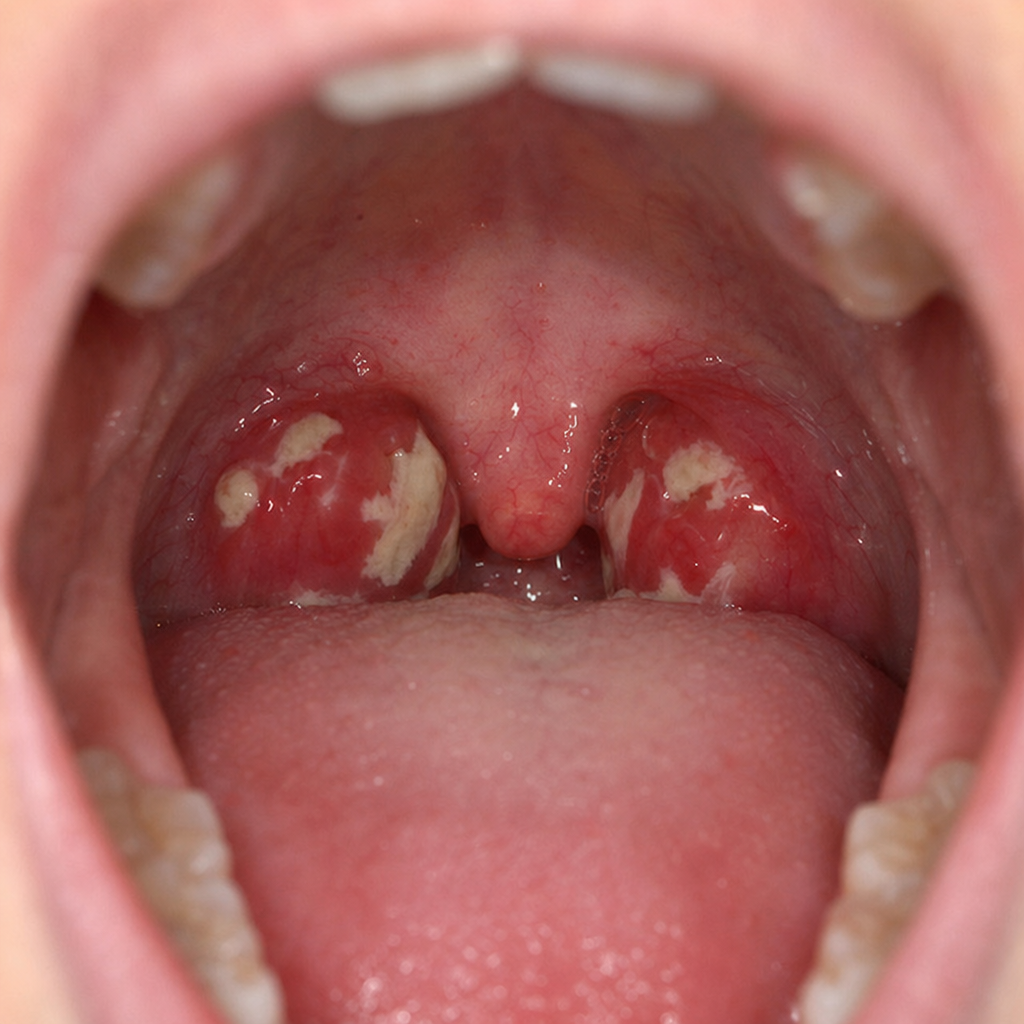
Superoxol test is positive in which organism?
Inclusion bodies are characteristically seen in infections caused by which of the following organisms?
Which organism produces diarrhea via a preformed toxin?
Which of the following is true regarding Mycobacterium tuberculosis?
Botulinum toxin acts by which mechanism?
Which infection causes acute febrile illness with jaundice and conjunctivitis?
Which of the following is NOT included in the HACEK group of organisms that cause infective endocarditis?
Burkholderia cepacia is infrequently seen in:
Which bacterium is implicated in dental caries?
What is the most commonly performed test for serodiagnosis of syphilis?
Explanation: **Explanation:** The **Superoxol test** is a rapid biochemical test used primarily for the presumptive identification of *Neisseria gonorrhoeae*. It is essentially a modified catalase test that utilizes a **30% hydrogen peroxide ($H_2O_2$)** solution instead of the standard 3% used for most bacteria. 1. **Why Option A is Correct:** * *Neisseria gonorrhoeae* possesses a very high concentration of the catalase enzyme. When 30% $H_2O_2$ is applied to a colony, it results in **immediate, vigorous bubbling** (effervescence). This strong positive reaction is diagnostic for *N. gonorrhoeae*. 2. **Why Options B and C are Incorrect:** * **Neisseria meningitidis:** Most strains show a weak or delayed reaction, or are completely negative with 30% $H_2O_2$. * **Neisseria lactamica:** This commensal organism typically gives a negative or very weak reaction. * While all *Neisseria* species are catalase-positive (using 3% $H_2O_2$), only *N. gonorrhoeae* consistently produces the brisk reaction required for a positive **Superoxol** test. **High-Yield Clinical Pearls for NEET-PG:** * **Specimen of Choice:** In males, urethral discharge; in females, the endocervix is the preferred site for *N. gonorrhoeae* culture. * **Culture Media:** Thayer-Martin Medium (Selective) or Chocolate Agar (Non-selective). * **Gram Stain:** Gram-negative "kidney-bean" shaped diplococci, often found within polymorphonuclear leukocytes (intracellular). * **Biochemical Profile:** *N. gonorrhoeae* ferments **Glucose only**, whereas *N. meningitidis* ferments both **Glucose and Maltose**. * **Drug of Choice:** Ceftriaxone (due to widespread penicillin resistance/PPNG strains).
Explanation: **Explanation:** The correct answer is **Chlamydia**. Inclusion bodies are a hallmark of Chlamydia infections due to its unique biphasic life cycle. As an obligate intracellular bacterium, Chlamydia enters the host cell as an **Elementary Body (EB)** and transforms into a **Reticulate Body (RB)** within a membrane-bound vacuole. This vacuole, filled with replicating RBs and newly formed EBs, is termed an **inclusion body**. These can be visualized under a microscope using Giemsa, Castaneda, or Machiavello stains (e.g., Halberstaedter-Prowazek inclusions in *C. trachomatis*). **Why other options are incorrect:** * **Rickettsiae:** While also obligate intracellular pathogens, they typically escape the endosome and multiply freely in the cytoplasm or nucleus (except *Coxiella*) without forming large, distinct inclusion bodies. * **Mycoplasma:** These are extracellular bacteria that lack a cell wall. They attach to the surface of respiratory or urogenital epithelium but do not replicate inside the cell to form inclusions. * **Helicobacter pylori:** This is a spiral-shaped, extracellular, gram-negative rod that colonizes the gastric mucosa. It does not have an intracellular life cycle. **High-Yield NEET-PG Pearls:** * **Staining:** Chlamydial inclusions are best seen with **Giemsa stain** (purple/blue). * **Iodine Staining:** Only *C. trachomatis* inclusions contain glycogen and stain brown with **Lugol’s Iodine**; *C. psittaci* and *C. pneumoniae* do not. * **LCL Bodies:** Large inclusions seen in Psittacosis are also known as Levinthal-Cole-Lillie (LCL) bodies. * **Elementary Body (EB):** Infectious, extracellular, non-metabolic. * **Reticulate Body (RB):** Non-infectious, intracellular, metabolically active (replicative form).
Explanation: **Explanation:** The correct answer is **Staphylococcus aureus**. This question tests the distinction between food poisoning caused by **preformed toxins** (intoxication) versus toxins produced after colonization (infection). **1. Why Staphylococcus is correct:** *Staphylococcus aureus* produces heat-stable **enterotoxins** (Types A-E) directly in contaminated food (typically protein-rich foods like custard, cream, or processed meats) left at room temperature. When ingested, these preformed toxins act as **superantigens**, stimulating the vagus nerve and the vomiting center in the brain. Because the toxin is already present, the incubation period is very short (**1–6 hours**), and the primary symptoms are projectile vomiting and watery diarrhea. **2. Why the other options are incorrect:** * **Vibrio cholerae:** Produces **Cholera toxin** (an AB toxin) only *after* the bacteria colonize the small intestine. It is not preformed in food. * **Salmonella:** Causes diarrhea through direct mucosal invasion and an inflammatory response (infection), not a preformed toxin. * **Escherichia coli:** Enterotoxigenic E. coli (ETEC) produces toxins (LT/ST) in the gut after ingestion and colonization. **NEET-PG High-Yield Pearls:** * **Shortest Incubation Period:** *S. aureus* (1–6 hrs) and *Bacillus cereus* (emetic type, 1–5 hrs) are the two classic causes of diarrhea via preformed toxins. * **Heat Stability:** Staphylococcal enterotoxin is heat-stable (resists boiling for 30 minutes), meaning reheating food does not prevent the illness. * **Mechanism:** It acts as a superantigen, leading to massive cytokine release. * **Clinical Clue:** Look for "picnics," "creamy salads," or "rapid onset" in the clinical stem.
Explanation: **Explanation:** *Mycobacterium tuberculosis* (MTB) is a slow-growing, acid-fast bacillus with distinct biochemical properties used for laboratory identification. **Why Option D is Correct:** MTB lacks the enzyme **nicotinamidase**, which normally converts nicotinic acid (niacin) to nicotinamide. Consequently, niacin accumulates in the culture medium. When tested with cyanogen bromide and aniline, a positive result (canary yellow color) is a hallmark biochemical marker for identifying *M. tuberculosis*. **Analysis of Incorrect Options:** * **Option A:** MTB is a slow grower. It typically takes **2–8 weeks** to produce visible "rough, tough, and buff" colonies on Lowenstein-Jensen (LJ) media. Rapid growers (Runyon Group IV) produce colonies in <7 days. * **Option B:** MTB is **Acid-Fast**. Due to the high mycolic acid content in its cell wall, it resists decolorization by strong acids. It requires **25% sulfuric acid** (Ziehl-Neelsen stain) for decolorization; it is NOT decolorized by the 20% concentration used in the procedure. * **Option C:** MTB is an **Obligate Aerobe**, not facultative. This explains its predilection for the well-oxygenated upper lobes of the lungs. **NEET-PG High-Yield Pearls:** * **Nitrate Reduction Test:** MTB is positive (differentiates it from *M. bovis*, which is negative). * **Culture Media:** LJ medium (egg-based) is the gold standard; Middlebrook (agar-based) is faster; **MGIT** (Liquid culture) is the fastest automated method. * **Microscopy:** Fluorescent staining with **Auramine-Rhodamine** is more sensitive than ZN staining for screening. * **Cord Factor:** Correlates with virulence; causes bacilli to grow in parallel serpentine chains.
Explanation: **Explanation:** **Mechanism of Action:** *Clostridium botulinum* produces a potent neurotoxin that causes flaccid paralysis. The toxin acts at the **presynaptic neuromuscular junction**. It is a zinc-dependent endopeptidase that cleaves **SNARE proteins** (such as synaptobrevin, SNAP-25, and syntaxin). These proteins are essential for the fusion of synaptic vesicles with the neuronal membrane. By preventing this fusion, the toxin effectively **inhibits the release of Acetylcholine (ACh)** into the synaptic cleft. **Analysis of Options:** * **Option A (Uptake inhibition):** This is the mechanism of drugs like cocaine (inhibiting norepinephrine reuptake) or SSRIs. It does not apply to Botulinum toxin. * **Option C (Synthesis inhibition):** The toxin does not interfere with the production of Acetylcholine within the neuron; it only prevents its exit. * **Option D (Breakdown inhibition):** This describes the mechanism of Acetylcholinesterase inhibitors (e.g., Neostigmine, Organophosphates), which increase ACh levels in the synapse. **High-Yield NEET-PG Pearls:** * **Botulinum vs. Tetanus:** While both cleave SNARE proteins, **Tetanus toxin** (Tetanospasmin) travels via retrograde axonal transport to inhibit the release of **inhibitory neurotransmitters (GABA/Glycine)** in the spinal cord, leading to spastic paralysis. * **Clinical Presentation:** Characterized by the "4 Ds": Diplopia, Dysphonia, Dysarthria, and Dysphagia, followed by symmetric descending flaccid paralysis. * **Infant Botulism:** Associated with **honey** consumption (ingestion of spores), leading to "Floppy Baby Syndrome." * **Therapeutic Uses:** Used in conditions like Achalasia cardia, Blepharospasm, Strabismus, and for cosmetic purposes (Botox).
Explanation: ### Explanation **Correct Option: A. Leptospirosis** Leptospirosis, caused by the spirochete *Leptospira interrogans*, typically presents in two phases. The initial **septicemic phase** is characterized by high-grade fever, headache, and myalgia. A hallmark clinical sign is **conjunctival suffusion** (redness without inflammatory exudate). In severe cases, known as **Weil’s Disease**, the infection progresses to an icteric phase involving hepatic dysfunction (jaundice), renal failure, and hemorrhages. The combination of fever, jaundice, and conjunctival suffusion is a classic diagnostic triad for this condition. **Why Incorrect Options are Wrong:** * **B. Malaria:** While it causes acute febrile illness and jaundice (due to hemolysis), it does not typically present with conjunctival suffusion. Splenomegaly is a more prominent feature. * **C. Pertussis:** Also known as "Whooping Cough," this is a respiratory infection characterized by paroxysmal coughing fits and an inspiratory "whoop." It does not cause jaundice. * **D. Typhoid:** Caused by *Salmonella Typhi*, it presents with "step-ladder" fever, bradycardia (Faget's sign), and abdominal symptoms. Jaundice is rare and usually signifies a complication rather than a primary feature. **High-Yield Clinical Pearls for NEET-PG:** * **Transmission:** Contact with water or soil contaminated by the urine of infected rodents (occupational hazard for farmers/sewer workers). * **Diagnosis:** **Microscopic Agglutination Test (MAT)** is the gold standard. Dark-field microscopy can visualize the "question mark" shaped spirochetes. * **Treatment:** Doxycycline is the drug of choice for prophylaxis and mild cases; IV Penicillin G is used for severe cases. * **Culture:** Grown on specialized media like **EMJH** or **Fletcher’s medium**.
Explanation: **Explanation:** The **HACEK group** consists of a collection of fastidious, slow-growing Gram-negative bacilli that are part of the normal oropharyngeal flora. They are a well-known cause of culture-negative infective endocarditis (IE), accounting for approximately 1–3% of all cases. **Why Corynebacterium is the correct answer:** **Corynebacterium** is a Gram-positive bacillus. While certain species (like *C. diphtheriae* or *C. jeikeium*) can cause infections, they are not part of the HACEK mnemonic. The "C" in HACEK specifically stands for **Cardiobacterium hominis**. **Analysis of incorrect options:** * **Haemophilus (A):** Represents the **'H'** in HACEK. Specifically, species like *H. parainfluenzae* and *H. aphrophilus* (now *Aggregatibacter*) are involved. * **Aggregatibacter (B):** Represents the **'A'**. This genus includes *A. actinomycetemcomitans* (formerly *Actinobacillus*) and *A. aphrophilus*. * **Eikenella (D):** Represents the **'E'**. *Eikenella corrodens* is often associated with human bite wounds and "clenched fist" injuries, in addition to endocarditis. **High-Yield Clinical Pearls for NEET-PG:** 1. **Mnemonic:** * **H:** *Haemophilus* species * **A:** *Aggregatibacter* species * **C:** *Cardiobacterium hominis* * **E:** *Eikenella corrodens* * **K:** *Kingella kingae* 2. **Clinical Presentation:** HACEK organisms typically cause **subacute** endocarditis, often characterized by large vegetations and a higher risk of systemic embolization. 3. **Culture:** They are "fastidious," meaning they require 5–10% CO₂ and may take 7–14 days to grow (though modern automated systems like BACTEC usually detect them within 5 days). 4. **Treatment:** Ceftriaxone is generally the drug of choice due to increasing beta-lactamase production in these species.
Explanation: **Explanation:** *Burkholderia cepacia* complex (BCC) is a group of catalase-producing, non-lactose fermenting, Gram-negative bacilli. The primary reason **Air** is the correct answer is that *B. cepacia* is an environmental saprophyte that thrives in **moist environments**. It lacks the structural adaptations (like spores) to survive desiccation in the air for extended periods. **Why the other options are incorrect:** * **Soil and Plants (B & C):** These are the natural primary reservoirs. *B. cepacia* is a potent "rhizosphere" bacterium, meaning it lives in close association with plant roots and soil, often used in agriculture for its antifungal properties and ability to degrade pollutants (bioremediation). * **Pools/Water (A):** BCC has a high affinity for water and can survive even in nutrient-poor aqueous environments. It is notorious for contaminating medical solutions, disinfectants (like chlorhexidine), and respiratory equipment in hospital settings. **Clinical Pearls for NEET-PG:** 1. **Cystic Fibrosis (CF):** BCC is a dreaded pathogen in CF patients, leading to "Cepacia Syndrome"—a rapid, fatal necrotizing pneumonia and septicemia. 2. **Person-to-Person Transmission:** Unlike many environmental bacteria, BCC can spread via social contact between CF patients, leading to strict "cohorting" (segregation) in clinics. 3. **Intrinsic Resistance:** It is naturally resistant to many antibiotics, including aminoglycosides and polymyxins (Colistin). 4. **Drug of Choice:** Trimethoprim-sulfamethoxazole (Co-trimoxazole) is generally the preferred treatment. 5. **CGD Connection:** It is a common cause of life-threatening infections in patients with Chronic Granulomatous Disease.
Explanation: **Explanation:** **Streptococcus mutans** is the primary etiological agent of dental caries. The underlying medical concept involves its ability to metabolize dietary sucrose into **extracellular polysaccharides (glucans)** using the enzyme glucosyltransferase. These glucans allow the bacteria to adhere firmly to the tooth enamel, forming a biofilm known as **dental plaque**. Once attached, *S. mutans* ferments carbohydrates to produce **lactic acid**, which lowers the local pH below 5.5, leading to the demineralization of the tooth enamel and subsequent cavity formation. **Analysis of Incorrect Options:** * **B. Pneumococci (Streptococcus pneumoniae):** These are alpha-hemolytic, bile-soluble, encapsulated cocci primarily responsible for community-acquired pneumonia, meningitis, and otitis media, not dental infections. * **C. Streptococcus pyogenes (Group A Strep):** This is a beta-hemolytic bacterium known for causing pharyngitis, impetigo, and non-suppurative complications like Rheumatic Fever and Glomerulonephritis. * **D. Staphylococcus aureus:** A catalase-positive, coagulase-positive coccus associated with pyogenic infections (abscesses), osteomyelitis, and food poisoning, but it does not play a role in the initiation of dental caries. **High-Yield Clinical Pearls for NEET-PG:** * **Viridans Group Streptococci (VGS):** *S. mutans* belongs to this group. Another important member is **S. sanguinis**, which is often the first colonizer of the tooth surface. * **Infective Endocarditis:** VGS (including *S. mutans*) are the most common cause of subacute bacterial endocarditis (SBE) following dental procedures. * **Lactobacillus:** While *S. mutans* initiates the cavity, *Lactobacillus* species are often associated with the progression of deep dentinal caries.
Explanation: **Explanation:** The **VDRL (Venereal Disease Research Laboratory)** test is the most commonly performed screening test for the serodiagnosis of syphilis. It is a **non-specific (non-treponemal)** test that detects **reagin antibodies** (IgM and IgG) produced against cardiolipin-lecithin-cholesterol antigen. Its popularity in clinical practice stems from its low cost, rapid results, and high sensitivity during the secondary stage of syphilis. **Analysis of Options:** * **VDRL (Correct):** It is the standard screening tool. Because it is a flocculation test, it can be used for both qualitative and quantitative (titre) assessment, making it ideal for monitoring treatment response. * **TPHA (Treponema Pallidum Hemagglutination Assay):** This is a **specific (treponemal)** test. While highly specific, it is generally used as a confirmatory test after a reactive screening result, rather than the initial common screening tool. * **Wassermann Test:** This was the first complement fixation test for syphilis. It is now obsolete and has been replaced by modern flocculation tests like VDRL and RPR. * **TPT:** This is not a standard acronym for a primary syphilis diagnostic test in the context of common serology. **High-Yield Clinical Pearls for NEET-PG:** 1. **CSF Examination:** VDRL is the only serological test recommended for the diagnosis of **Neurosyphilis** using CSF. 2. **Prozone Phenomenon:** False negatives can occur in secondary syphilis due to very high antibody titers; this is corrected by diluting the serum. 3. **Biological False Positives (BFP):** Conditions like SLE, leprosy, malaria, and pregnancy can cause false-positive VDRL results. 4. **Treatment Monitoring:** A four-fold drop in VDRL titer indicates successful treatment.
Staphylococci
Practice Questions
Streptococci and Enterococci
Practice Questions
Neisseria and Moraxella
Practice Questions
Corynebacterium and Listeria
Practice Questions
Bacillus and Clostridium
Practice Questions
Enterobacteriaceae
Practice Questions
Vibrio, Aeromonas, and Plesiomonas
Practice Questions
Pseudomonas and Related Bacteria
Practice Questions
Haemophilus and HACEK Group
Practice Questions
Bordetella and Brucella
Practice Questions
Mycobacteria
Practice Questions
Spirochetes
Practice Questions
Get full access to all questions, explanations, and performance tracking.
Start For Free