Which Streptococcus species is primarily responsible for causing dental caries?
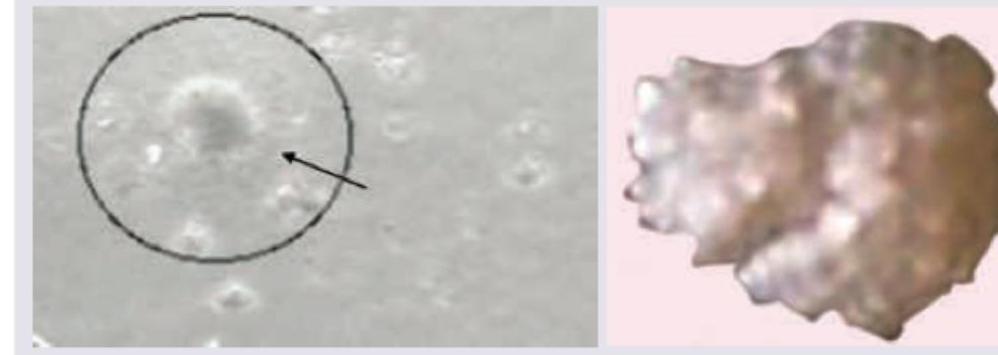
Stalactite growth in ghee broth is due to?
Toxic shock syndrome was first described in which patient group?
Bile solubility is a characteristic feature of which bacterium?
A 9-year-old boy presents with a migratory rash with central clearing on the back of his neck. The child had recently been on vacation with his family and had gone hiking. The child's pediatrician observes the rash and suspects an infection with Borrelia burgdorferi. Which of the following is thought to be a virulence factor of this organism?
Suppurating buboes are seen in infection with:
A person ate some milk products at a party and after 6 hours started vomiting. Which organism is most likely the cause?
The Dienes phenomenon is used for the identification of which of the following?
A characteristic infection of Nocardia Asteroides is:
Which of the following bacteria produces a preformed toxin?
Explanation: **Explanation:** **Streptococcus mutans** is the primary etiologic agent of dental caries. The underlying medical concept involves its ability to metabolize dietary sucrose into **extracellular polysaccharides (glucans)** using the enzyme glucosyltransferase. These glucans allow the bacteria to adhere tenaciously to the tooth enamel, forming a biofilm known as **dental plaque**. Once attached, *S. mutans* ferments sugars to produce lactic acid; this localized acid production drops the pH below 5.5, leading to the demineralization of tooth enamel and subsequent cavity formation. **Analysis of Incorrect Options:** * **A. S. equisimilis:** A Group C or G Streptococcus that typically causes pharyngitis or skin infections, similar to *S. pyogenes*, but is not associated with oral pathology. * **C. S. pneumoniae:** A major cause of community-acquired pneumonia, meningitis, and otitis media. It is alpha-hemolytic but lacks the acidogenic properties required for dental caries. * **D. S. bovis:** A Group D Streptococcus. Its clinical significance lies in its strong association with **colonic malignancy** (specifically *S. gallolyticus*) and endocarditis, not dental health. **High-Yield Clinical Pearls for NEET-PG:** * **Viridans Group:** *S. mutans* belongs to the Viridans group Streptococci (VGS), which are normal flora of the oropharynx. * **Subacute Bacterial Endocarditis (SBE):** If *S. mutans* or *S. sanguinis* enters the bloodstream (e.g., during dental procedures), they can cause SBE, particularly in patients with pre-existing valvular heart disease. * **Dextran Production:** The synthesis of high-molecular-weight dextrans from sucrose is the key virulence factor for plaque formation.
Explanation: **Explanation:** **Yersinia pestis** (the causative agent of Plague) exhibits a characteristic growth pattern in liquid media, specifically **Ghee broth** or broth with a layer of oil. When inoculated, the bacteria grow as delicate, hanging pellicles that extend downwards from the surface, resembling **stalactites**. This occurs because the organism is non-motile and tends to grow in chains or clumps that adhere to the oil droplets at the surface before sinking slowly. **Analysis of Options:** * **Haemophilus influenzae:** Requires X factor (hemin) and V factor (NAD) for growth. On solid media, it shows "satellitism" around *S. aureus*, but it does not produce stalactite growth. * **Corynebacterium diphtheriae:** Characteristically grown on Loeffler’s Serum Slope or Potassium Tellurite Agar. In liquid media, it may form a surface pellicle, but it lacks the specific stalactite morphology. * **Treponema pallidum:** This is an obligate spirochete that **cannot be grown on artificial culture media**. It is maintained via serial passage in rabbit testes (Nichol’s strain). **High-Yield Clinical Pearls for Yersinia pestis:** 1. **Safety Pin Appearance:** Shows bipolar staining with Wayson or Giemsa stain. 2. **Temperature Regulation:** It is non-motile at 37°C but **motile at 25°C** (though some strains remain non-motile). 3. **Culture:** Grows on Blood Agar as "Copper-beaten" or "Hammered silver" colonies. 4. **Vector:** Primarily transmitted by the Rat Flea (*Xenopsylla cheopis*).
Explanation: ### Explanation The correct answer is **None of the above** because Toxic Shock Syndrome (TSS) was first described in **children**, not in tampon users or the other groups listed. #### 1. Why "None of the above" is correct: Toxic Shock Syndrome was first identified and described by **James K. Todd** in **1978**. His landmark study involved a group of **seven children** (aged 8 to 17 years) who presented with high fever, rash, hypotension, and multi-organ failure. It was only later, during the 1980s, that an epidemic of TSS was linked to the use of highly absorbent tampons in menstruating women. #### 2. Analysis of Incorrect Options: * **Option A (Tampon users):** While this is the most famous association (Menstrual TSS), it was not the *first* description. The association with tampons and *Staphylococcus aureus* colonization was established in 1980, two years after Todd’s initial report. * **Option B (Diabetic septicemia):** While diabetics are at higher risk for various staphylococcal and streptococcal infections, they were not the original cohort described for TSS. * **Option C (Drug addicts):** Intravenous drug users are prone to MRSA and endocarditis, which can lead to sepsis, but this group does not represent the index cases of TSS. #### 3. High-Yield Clinical Pearls for NEET-PG: * **Etiology:** Primarily caused by **TSST-1** (Toxic Shock Syndrome Toxin-1) produced by *Staphylococcus aureus*. It acts as a **Superantigen**, causing non-specific binding of MHC II with T-cell receptors, leading to a massive "cytokine storm" (IL-1, IL-2, TNF-α, IFN-γ). * **Clinical Triad:** High fever, hypotension (shock), and a diffuse macular erythroderma (sunburn-like rash) that later desquamates (especially on palms and soles). * **Streptococcal TSS:** Caused by *Streptococcus pyogenes* (Group A Strep); it is often associated with necrotizing fasciitis and has a higher mortality rate than Staphylococcal TSS.
Explanation: **Explanation:** **Streptococcus pneumoniae** is the correct answer because it is uniquely characterized by its sensitivity to bile salts (such as sodium deoxycholate). The underlying mechanism involves the activation of **autolytic enzymes** (L-alanine-muramyl amidase). When bile salts are added to a culture, they lower the surface tension, triggering these autolysins to digest the cell wall, resulting in the lysis of the bacteria and the clearing of a turbid suspension. This "Bile Solubility Test" is the gold standard for differentiating *S. pneumoniae* from other alpha-hemolytic streptococci (like Viridans group). **Analysis of Incorrect Options:** * **Staphylococcus aureus:** These are Gram-positive cocci in clusters that are catalase and coagulase positive. They do not possess the specific autolytic enzymes triggered by bile. * **Streptococcus agalactiae (Group B Strep):** These are beta-hemolytic and are identified by a positive **CAMP test** and hippurate hydrolysis. They are bile insoluble. * **Streptococcus pyogenes (Group A Strep):** These are beta-hemolytic and are identified by their sensitivity to **Bacitracin**. They do not undergo lysis in the presence of bile. **High-Yield Clinical Pearls for NEET-PG:** * **Morphology:** *S. pneumoniae* are Gram-positive, lancet-shaped diplococci. * **Quellung Reaction:** Swelling of the capsule when exposed to specific antiserum (positive in *S. pneumoniae*). * **Optochin Sensitivity:** *S. pneumoniae* is sensitive to Optochin (P-disk), while Viridans streptococci are resistant. * **Culture:** Shows "draughtsman" or "checkerboard" appearance due to central autolysis on blood agar.
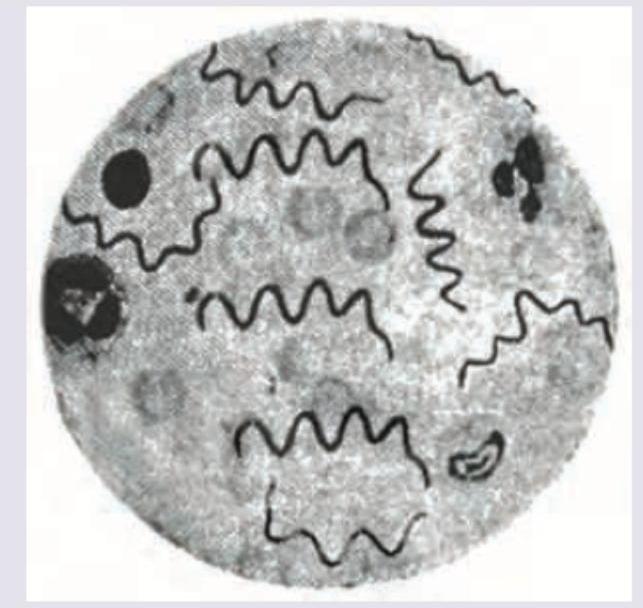
Explanation: **Explanation:** The clinical presentation describes **Lyme disease**, caused by the spirochete *Borrelia burgdorferi*. The "migratory rash with central clearing" is the classic **Erythema Chronicum Migrans**, typically transmitted via the bite of the *Ixodes* tick. **1. Why the correct answer is right:** *Borrelia burgdorferi* relies heavily on the differential expression of **Outer Surface Proteins (Osps)** to survive and transition between the tick vector and the mammalian host. * **OspA** is expressed while the bacteria reside in the tick's midgut (helping them adhere to the gut). * **OspC** is upregulated during the tick's blood meal, allowing the bacteria to migrate to the salivary glands and infect the human host. These proteins are essential for immune evasion and tissue attachment, making them primary virulence factors. **2. Why the incorrect options are wrong:** * **Option A & C:** *Borrelia* is primarily an **extracellular** pathogen. It does not typically grow intracellularly in leukocytes or localize in the reticuloendothelial system (unlike *Leishmania* or *Histoplasma*). * **Option D:** Spirochetes like *Borrelia* do not possess classic **LPS (Endotoxin)** found in Gram-negative bacteria. While they have lipoproteins that trigger inflammation, "endotoxin release" is not their characteristic virulence mechanism. **NEET-PG High-Yield Pearls:** * **Vector:** *Ixodes* tick (also transmits Babesia and Anaplasma). * **Reservoir:** White-footed mouse (larvae/nymphs); White-tailed deer (adult ticks). * **Diagnosis:** Clinical (for Erythema Migrans); Serology (ELISA followed by Western Blot) for later stages. * **Treatment:** **Doxycycline** is the drug of choice. Amoxicillin is used in children <8 years or pregnant women. Ceftriaxone is used for neurological or cardiac manifestations.
Explanation: **Explanation:** **Haemophilus ducreyi** is the causative agent of **Chancroid**, a sexually transmitted infection characterized by painful genital ulcers and painful, inflammatory inguinal lymphadenopathy. These enlarged lymph nodes, known as **buboes**, frequently undergo central necrosis and become fluctuant. If left untreated, they often rupture spontaneously, leading to **suppuration** (pus discharge) and the formation of chronic draining sinuses. This "suppurating bubo" is a hallmark clinical feature of Chancroid. **Analysis of Incorrect Options:** * **Chlamydia trachomatis:** Serotypes L1, L2, and L3 cause Lymphogranuloma Venereum (LGV). While LGV presents with buboes (often showing the "Groove sign"), the primary lesion is usually painless and transient, unlike the painful ulcer of *H. ducreyi*. * **Gonococcus (*Neisseria gonorrhoeae*):** Primarily causes urethritis, cervicitis, and pelvic inflammatory disease. While it can cause local inflammation, it does not typically present with suppurating inguinal buboes. * **Treponema pallidum:** Causes Syphilis. The primary chancre is characteristically **painless**, and the associated inguinal lymphadenopathy is typically bilateral, firm, non-tender, and **non-suppurative** ("shotty" nodes). **High-Yield Clinical Pearls for NEET-PG:** * **Chancroid Rule of "P":** **P**ainful ulcer, **P**urulent base, **P**ainful inguinal lymphadenopathy (**P**us-forming buboes). * **School of Fish Appearance:** The characteristic microscopic arrangement of *H. ducreyi* on Gram stain (also described as "railroad track" appearance). * **Culture Medium:** Requires enriched media like **GC agar** with bovine hemoglobin and fetal calf serum. * **Treatment:** Azithromycin (1g single dose) or Ceftriaxone.
Explanation: This question tests your knowledge of **bacterial food poisoning** and the significance of **incubation periods**. ### **Why Staphylococcus aureus is the correct answer:** *Staphylococcus aureus* food poisoning is caused by the ingestion of **pre-formed enterotoxins** (Type A-E) in contaminated food, particularly milk products, creamy pastries, or salty meats. * **Rapid Onset:** Because the toxin is already present in the food, the incubation period is very short, typically **1 to 6 hours**. * **Clinical Presentation:** The hallmark is **projectile vomiting** and abdominal cramps. Fever is usually absent because it is an intoxication, not an infection. ### **Analysis of Incorrect Options:** * **Bacillus cereus:** While it also has an emetic form with a short incubation (1–6 hours), it is classically associated with **reheated fried rice**, not milk products. * **Clostridium perfringens:** This causes "diarrheal" food poisoning with a longer incubation period of **8 to 16 hours**. It is typically associated with reheated meat dishes. * **Clostridium botulinum:** This causes botulism, characterized by descending paralysis and cranial nerve palsies. The incubation is usually **12 to 36 hours**, and vomiting is not the primary symptom. ### **NEET-PG High-Yield Pearls:** 1. **Shortest Incubation Period:** *S. aureus* and *B. cereus* (emetic type) are the fastest (1–6 hours). 2. **Heat Stability:** Staphylococcal enterotoxin is **heat-stable** (resists boiling for 30 minutes); thus, cooking food does not prevent the illness if the toxin is already formed. 3. **Source:** The source is often a food handler with a skin lesion (staphylococcal carrier). 4. **Mechanism:** The toxin acts as a **Superantigen**, stimulating the vagus nerve and the vomiting center in the brain.
Explanation: **Explanation:** The **Dienes phenomenon** is a specialized staining technique used primarily for the identification and visualization of **Mycoplasma** species. **Why Mycoplasma is correct:** Mycoplasma are the smallest free-living organisms and lack a cell wall, making them invisible under standard Gram staining. They produce characteristic "fried-egg" colonies on agar. The Dienes stain (containing methylene blue and azure II) is applied directly to the agar surface. Mycoplasma colonies specifically take up the stain, appearing as distinct blue colonies with a dark center and a light periphery, which helps differentiate them from debris or "pseudocolonies" (magnesium/calcium soap crystals). **Why other options are incorrect:** * **Chlamydiae:** These are obligate intracellular bacteria identified using Giemsa, Castaneda, or Gimenez stains to visualize inclusion bodies (e.g., Halberstaedter-Prowazek bodies). * **Plague (*Yersinia pestis*):** Identified by its "safety-pin" appearance (bipolar staining) on Wayson or Giemsa stain. * **Diphtheria (*Corynebacterium diphtheriae*):** Identified using Albert’s, Neisser’s, or Ponder’s stains to demonstrate metachromatic (volutin) granules. **High-Yield Clinical Pearls for NEET-PG:** * **PPLO Agar:** The specific medium used for Mycoplasma (Pleuropneumonia-like organisms). * **Eaton’s Agent:** Another name for *Mycoplasma pneumoniae*, the leading cause of "Walking Pneumonia." * **Cold Agglutinins:** *M. pneumoniae* infection is associated with the development of IgM antibodies that agglutinate RBCs at 4°C. * **L-forms vs. Mycoplasma:** While both lack cell walls, L-forms are derived from bacteria that normally have walls but lost them due to stress/antibiotics; Mycoplasma naturally never possess a cell wall.
Explanation: **Explanation:** *Nocardia asteroides* is a Gram-positive, aerobic, filamentous bacterium that is weakly acid-fast (due to mycolic acids in the cell wall). It primarily enters the body via inhalation, causing pulmonary nocardiosis, which often mimics tuberculosis or malignancy. **Why Brain Abscess is Correct:** The most characteristic feature of *Nocardia* is its high predilection for **hematogenous dissemination** from the lungs, especially in immunocompromised individuals. The **brain** is the most common site of extrapulmonary involvement. Nocardial brain abscesses are often multiloculated and carry a high mortality rate, making this a classic "high-yield" clinical association for competitive exams. **Analysis of Incorrect Options:** * **Diarrhea:** *Nocardia* is not a gastrointestinal pathogen. Diarrheal diseases are typically caused by organisms like *Vibrio cholerae*, *Salmonella*, or *E. coli*. * **Secondary dissemination to the liver:** While dissemination can occur to any organ (including the skin and kidneys), the liver is not the primary or most characteristic site of spread compared to the CNS. * **Colonic diverticulosis:** This is a structural/anatomical condition of the colon, not an infectious process caused by filamentous bacteria. **NEET-PG High-Yield Pearls:** * **Morphology:** Gram-positive, branching filaments; **Weakly acid-fast** (modified Ziehl-Neelsen stain using 1% sulfuric acid). * **Risk Factors:** Cell-mediated immunity deficits (e.g., HIV, transplant recipients, long-term steroid use). * **Clinical Triad:** Pneumonia, soft tissue sulfur granules (less common in *asteroides* than *brasiliensis*), and **brain abscess**. * **Treatment of Choice:** **Sulfonamides** (Trimethoprim-Sulfamethoxazole). Remember: *"No-Cardia? Use a Sulf-on-a-mide!"*
Explanation: ### Explanation The concept of **preformed toxins** refers to food poisoning where the bacteria produce toxins directly in the food before ingestion. This leads to a rapid onset of symptoms (short incubation period) because the toxin is already active and does not require bacterial colonization or in-vivo toxin production. **Why Clostridium perfringens is the Correct Answer:** *Clostridium perfringens* (Type A) is a classic cause of food poisoning associated with reheated meat dishes. While it is often classified as an "intermediate" type (where spores germinate and release enterotoxin in the gut), it is recognized in many medical curricula and competitive exams (like NEET-PG) for its ability to produce toxins in food under specific conditions. However, it is important to note that in the context of "preformed toxins," **Staphylococcus aureus** and **Bacillus cereus (emetic type)** are the most definitive examples. **Analysis of Options:** * **Staphylococcus aureus (Option A/C):** This is the most common cause of preformed toxin-mediated food poisoning. The enterotoxin is heat-stable and acts as a superantigen. It has a very short incubation period (1–6 hours) and typically causes projectile vomiting. * **Clostridium perfringens (Option B/D):** While it primarily produces toxin during sporulation in the intestine (incubation 8–16 hours), it is frequently tested alongside other toxigenic bacteria. In the context of this specific question format, it is identified as the key pathogen. **Clinical Pearls for NEET-PG:** 1. **Shortest Incubation (1-6 hrs):** *S. aureus* (Vomiting predominant). 2. **Intermediate Incubation (8-16 hrs):** *C. perfringens* (Diarrhea predominant). 3. **Long Incubation (>16 hrs):** *Vibrio cholerae* or *ETEC* (In-vivo production). 4. **Bacillus cereus:** Has two toxins—**Emetic** (Preformed, 1-5 hrs, rice-linked) and **Diarrheal** (In-vivo, 8-16 hrs, meat/veg-linked). 5. **Clostridium botulinum:** Also produces a potent preformed neurotoxin in canned foods.
Staphylococci
Practice Questions
Streptococci and Enterococci
Practice Questions
Neisseria and Moraxella
Practice Questions
Corynebacterium and Listeria
Practice Questions
Bacillus and Clostridium
Practice Questions
Enterobacteriaceae
Practice Questions
Vibrio, Aeromonas, and Plesiomonas
Practice Questions
Pseudomonas and Related Bacteria
Practice Questions
Haemophilus and HACEK Group
Practice Questions
Bordetella and Brucella
Practice Questions
Mycobacteria
Practice Questions
Spirochetes
Practice Questions
Get full access to all questions, explanations, and performance tracking.
Start For Free