Infection with which of the following bacteria is associated with non-invasive diarrhea?
Which bacterium, other than Vibrio cholerae, possesses flagellar motility?
Waterhouse-Friderichsen syndrome is caused by which of the following organisms?
Toxic shock syndrome is caused by which type of toxin?
Which of the following is true about Campylobacter jejuni?
A patient with diarrhea has a fecal smear that is negative for leukocytes. The patient's diarrhea is most likely caused by what?
Stalactite growth is by:
What is the characteristic morphological arrangement of Staphylococcus bacteria?
Staphylococcus aureus is a normal inhabitant of which location?
A child presents with fever and lymphadenopathy. On examination, a grey membrane is seen over the left tonsil. Which of the following media is used for the definitive diagnosis of the causative organism?
Explanation: ### Explanation The correct answer is **Bacillus cereus**. **1. Why Bacillus cereus is correct:** Diarrhea is broadly classified into **invasive** (inflammatory/bloody) and **non-invasive** (secretory/watery). Non-invasive diarrhea is typically caused by **pre-formed toxins** or enterotoxins that act on the intestinal mucosa without causing tissue destruction or invasion. * *Bacillus cereus* produces two distinct clinical syndromes: the **emetic type** (due to a heat-stable toxin) and the **diarrheal type** (due to a heat-labile enterotoxin). * The diarrheal toxin stimulates the adenylate cyclase-cAMP system in the intestinal epithelial cells, leading to fluid secretion into the lumen without mucosal invasion. **2. Why the other options are incorrect:** * **Shigella:** A classic invasive pathogen. It invades the colonic mucosa via M cells and uses "actin tails" for cell-to-cell spread, causing inflammatory diarrhea (dysentery) with blood and mucus. * **Salmonella:** Most species (like *S. enteritidis*) invade the intestinal epithelium and lamina propria, triggering an inflammatory response and potential systemic spread. * **Yersinia enterocolitica:** This is an invasive organism that typically involves the terminal ileum and Peyer’s patches. It often presents with mesenteric lymphadenitis, mimicking acute appendicitis (pseudoappendicitis). **3. High-Yield Clinical Pearls for NEET-PG:** * **B. cereus Emetic type:** Associated with **reheated fried rice**; incubation period < 6 hours. * **B. cereus Diarrheal type:** Associated with **meat and vegetables**; incubation period > 6 hours. * **Non-invasive pathogens (Secretory):** *Vibrio cholerae*, ETEC, *Staphylococcus aureus*, and *B. cereus*. * **Invasive pathogens (Inflammatory):** *Shigella*, *Salmonella*, *Campylobacter*, EIEC, and *Yersinia*.
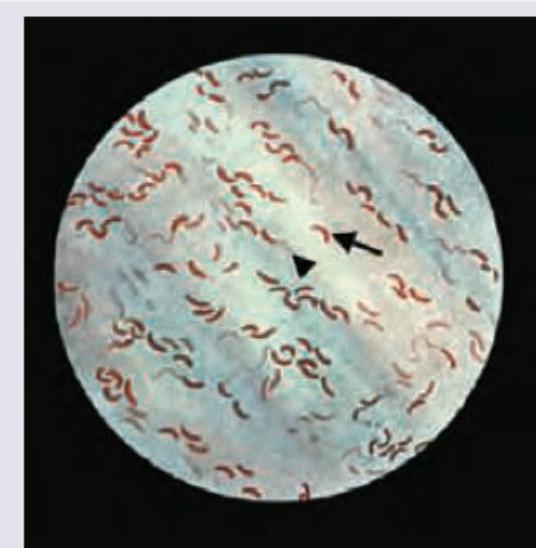
Explanation: **Explanation:** The correct answer is **Campylobacter jejuni**. Bacterial motility is primarily mediated by flagella, and identifying specific patterns of motility is a high-yield topic for NEET-PG. **1. Why Campylobacter jejuni is correct:** *Campylobacter jejuni* is a Gram-negative, curved (comma or S-shaped) rod. It possesses a single polar flagellum at one or both ends, which gives it a characteristic **"darting motility"** (similar to *Vibrio cholerae*). This motility is a crucial virulence factor, allowing the bacteria to penetrate the thick mucus layer of the gastrointestinal tract. **2. Why the other options are incorrect:** * **Shigella:** All species of *Shigella* are **non-motile**. They lack flagella. In the laboratory, they are identified by their lack of movement in semi-solid agar. * **Pneumococcus (*Streptococcus pneumoniae*):** This is a Gram-positive coccus. Almost all medically important cocci are **non-motile**. * **Bacillus anthracis:** While many species in the *Bacillus* genus are motile (e.g., *B. cereus*), *B. anthracis* is a notable exception. It is **non-motile**, a key feature used to differentiate it from "anthracoid" bacilli. **High-Yield Clinical Pearls for NEET-PG:** * **Vibrio cholerae:** Exhibits "darting motility" (liquid) or "swarming" (solid media). * **Listeria monocytogenes:** Shows "tumbling motility" at 25°C but is non-motile at 37°C. * **Proteus species:** Famous for "swarming motility" on blood agar. * **Salmonella Typhi:** Exhibits "stately motility." * **Trichomonas vaginalis:** A parasite (not bacteria) that also shows "twitching/jerky motility."
Explanation: **Explanation:** **Waterhouse-Friderichsen Syndrome (WFS)** is a catastrophic complication of severe septicemia characterized by **acute adrenal insufficiency** due to massive bilateral adrenal hemorrhage. **Why Neisseria meningitidis is correct:** While various pathogens can cause WFS, **Neisseria meningitidis** (Meningococcus) is the most common and classic causative agent. The pathogenesis involves severe **meningococcemia** leading to Disseminated Intravascular Coagulation (DIC), widespread petechiae/purpura, and profound septic shock. The adrenal hemorrhage is thought to result from destructive DIC within the adrenal microvasculature or direct bacterial invasion, leading to primary adrenal failure. **Why the other options are incorrect:** * **Streptococcus pyogenes:** Can cause Toxic Shock-Like Syndrome and necrotizing fasciitis, but is not the classic cause of bilateral adrenal hemorrhage. * **Clostridium perfringens:** Primarily associated with gas gangrene and food poisoning; it causes hemolysis but not typically WFS. * **Staphylococcus aureus:** A common cause of sepsis and Toxic Shock Syndrome (TSS), but WFS is specifically linked to the endotoxin-mediated vascular collapse seen in Gram-negative meningococcemia. **High-Yield Clinical Pearls for NEET-PG:** * **Clinical Triad:** Shock, widespread purpura (purpura fulminans), and acute adrenal insufficiency. * **Diagnosis:** Characterized by low cortisol levels and electrolyte imbalances (hyponatremia, hyperkalemia). * **Microscopy:** *N. meningitidis* appears as Gram-negative kidney bean-shaped diplococci. * **Other Causes:** Though rare, *Haemophilus influenzae*, *Pseudomonas*, and *S. pneumoniae* can also trigger WFS. * **Treatment:** Requires urgent IV antibiotics (Ceftriaxone) and aggressive fluid resuscitation with stress-dose corticosteroids.
Explanation: Toxic Shock Syndrome (TSS) is a life-threatening multisystem illness primarily caused by specific strains of *Staphylococcus aureus* and *Streptococcus pyogenes*. **Explanation of the Correct Answer:** The correct answer is **Exotoxin**. TSS is mediated by specific exotoxins known as **Superantigens**. The most common is **TSST-1** (Toxic Shock Syndrome Toxin-1) produced by *S. aureus*. Unlike regular antigens, superantigens bypass normal immune processing and bind directly to the MHC class II molecules on antigen-presenting cells and the Vβ region of T-cell receptors. This results in the non-specific activation of up to 20% of the body's T-cells, leading to a massive "cytokine storm" (IL-1, IL-2, TNF-α, and IFN-γ), which causes high fever, hypotension, and multi-organ failure. **Why Other Options are Incorrect:** * **Endotoxin/Lipopolysaccharide (LPS):** These are synonymous. LPS is a structural component of the outer membrane of **Gram-negative** bacteria. While it can cause septic shock, TSS is specifically associated with Gram-positive exotoxins. * **Staphylococcal Protein A:** This is a virulence factor found in the cell wall of *S. aureus* that binds to the Fc portion of IgG, preventing opsonization and phagocytosis. It does not cause the systemic inflammatory response seen in TSS. **High-Yield Clinical Pearls for NEET-PG:** * **Classic Presentation:** High fever, "sunburn-like" diffuse erythematous rash that later desquamates (especially on palms and soles), and hypotension. * **Risk Factors:** Traditionally associated with highly absorbent **tampon use**, but also occurs in surgical wound infections and burns. * **Causative Toxin (Staph):** TSST-1 (encoded by a chromosomal element). * **Causative Toxin (Strep):** Pyrogenic exotoxin A and C (SpeA, SpeC).
Explanation: **Explanation:** *Campylobacter jejuni* is one of the most common causes of bacterial gastroenteritis worldwide. It is a **Gram-negative, comma or S-shaped (seagull-wing appearance)** motile bacillus that is microaerophilic and grows best at **42°C** (thermophilic). **Why Option C is Correct:** The primary reservoir for *C. jejuni* is the gastrointestinal tract of birds, especially **poultry**. Infection typically occurs via the fecal-oral route through the consumption of **undercooked chicken** or contaminated water. The incubation period is relatively long, usually **2 to 5 days**, which explains why symptoms manifest several days after exposure. **Analysis of Incorrect Options:** * **Option A:** It is a **Gram-negative** bacillus, not Gram-positive. * **Option B:** While it causes abdominal pain, it typically mimics **acute appendicitis** (pseudo-appendicitis) due to mesenteric adenitis, rather than cholecystitis. * **Option D:** *C. jejuni* is inherently resistant to penicillins. The drug of choice for severe cases is **Azithromycin** (Macrolides). Fluoroquinolones were previously used but now show high resistance rates. **High-Yield Clinical Pearls for NEET-PG:** * **Morphology:** Described as "Seagull-wing" appearance; shows **"darting motility"** on hanging drop preparation. * **Culture Media:** Requires selective media like **Skirrow’s medium** or **Butzler’s medium**. * **Complications:** It is the most common antecedent infection associated with **Guillain-Barré Syndrome (GBS)** due to molecular mimicry between bacterial lipooligosaccharides and human gangliosides. It is also associated with **Reactive Arthritis**.
Explanation: **Explanation:** The presence or absence of fecal leukocytes is a critical diagnostic marker in differentiating the pathophysiology of infectious diarrhea. **1. Why Enterotoxigenic *Escherichia coli* (ETEC) is correct:** ETEC is the classic cause of **secretory (watery) diarrhea**. Its pathogenesis involves the production of enterotoxins (Heat-labile/LT and Heat-stable/ST) that stimulate intestinal secretion of water and electrolytes without causing histological damage to the mucosa. Because there is **no mucosal invasion or inflammation**, no inflammatory cells (leukocytes) are recruited into the intestinal lumen. This results in a "bland" stool smear. **2. Why the other options are incorrect:** * **Shigellosis & Campylobacter enteritis:** These are **invasive/inflammatory** pathogens. They invade the intestinal epithelium and produce cytotoxins, leading to cell death and an intense inflammatory response. This typically results in dysentery (blood and mucus) with a high count of fecal polymorphonuclear leukocytes (neutrophils). * **Typhoid fever:** While primarily a systemic illness, *Salmonella Typhi* involves the invasion of Peyer’s patches. Fecal smears in enteric fever typically show a predominance of **mononuclear cells (macrophages/lymphocytes)** rather than being negative for leukocytes. **Clinical Pearls for NEET-PG:** * **Fecal Leukocytes Present:** *Shigella, Salmonella, Campylobacter, EIEC, Clostridium difficile, Yersinia.* * **Fecal Leukocytes Absent:** *ETEC, Vibrio cholerae*, Viruses (Rotavirus, Norovirus), and Parasites (*Giardia, Cryptosporidium*). * **High-Yield Mnemonic:** ETEC = **E**laborates **T**oxins (Secretory), whereas *Shigella/Campylobacter* = **I**nvade (Inflammatory). * ETEC is the most common cause of **Traveler’s Diarrhea**.
Explanation: **Explanation:** **Correct Option: A (Yersinia)** The term **"Stalactite growth"** is a classic laboratory characteristic of *Yersinia pestis* (the causative agent of Plague). When *Y. pestis* is grown in a liquid medium (nutrient broth) containing a layer of oil or ghee on the surface, the bacteria grow downwards from the oil droplets in the form of hanging, icicle-like projections. This occurs because the organism is non-motile and prefers the interface for initial attachment. **Analysis of Incorrect Options:** * **B. Mycoplasma:** These organisms are known for their **"Fried egg" appearance** on solid agar (PPLO agar) due to the central part of the colony growing into the medium. * **C. Diphtheria:** *Corynebacterium diphtheriae* shows specific growth on **Löffler's serum slope** (rapid growth) and **Potassium Tellurite agar**, where it forms black/grey colonies. It does not exhibit stalactite growth. * **D. Clostridia:** These are obligate anaerobes. *C. perfringens* is famous for **"Stormy fermentation"** in litmus milk and **"Target hemolysis"** (double zone) on blood agar. **High-Yield Clinical Pearls for NEET-PG:** * **Yersinia pestis Morphology:** Shows characteristic **"Safety pin appearance"** (bi-polar staining) with Wayson or Giemsa stain. * **Temperature Sensitivity:** It is optimally motile at 25°C but **non-motile at 37°C** (the temperature of the human body). * **Virulence Factors:** Look for **Fraction 1 (F1) capsular antigen** and **V and W antigens**, which are essential for resisting phagocytosis. * **Public Health:** It is a potential bioterrorism agent and is transmitted by the rat flea (*Xenopsylla cheopis*).
Explanation: ### Explanation **Correct Answer: C. Found in grape-like clusters** **Underlying Medical Concept:** The term *Staphylococcus* is derived from the Greek words *staphyle* (bunch of grapes) and *kokkos* (berry). This characteristic arrangement occurs because staphylococci divide in **three successive planes** that are at right angles to each other, and the daughter cells remain in close proximity rather than separating. This results in the classic irregular, grape-like clusters seen on Gram stain. **Analysis of Incorrect Options:** * **A. Gram negative:** Staphylococci are **Gram-positive** cocci. They possess a thick peptidoglycan layer in their cell wall that retains the crystal violet dye, appearing purple under a microscope. * **B. Tend to form chains:** This is the characteristic arrangement of **Streptococci**. Unlike Staphylococci, Streptococci divide in a **single plane**, resulting in pairs or chains. * **D. Associated with dental caries:** While various bacteria inhabit the oral cavity, **Streptococcus mutans** (a viridans group streptococcus) is the primary organism associated with dental caries, not Staphylococcus. **NEET-PG High-Yield Pearls:** * **Catalase Test:** All Staphylococci are **Catalase positive**, which distinguishes them from Streptococci (Catalase negative). * **Coagulase Test:** *Staphylococcus aureus* is **Coagulase positive**, while other species like *S. epidermidis* and *S. saprophyticus* are Coagulase-negative Staphylococci (CoNS). * **Culture:** They grow readily on ordinary media (Nutrient Agar) forming golden-yellow colonies (*S. aureus*) or white colonies (*S. albus*). * **Selective Media:** **Mannitol Salt Agar (MSA)** is used to isolate *S. aureus*, which ferments mannitol to produce yellow colonies.
Explanation: **Explanation:** *Staphylococcus aureus* is a Gram-positive coccus that is a common commensal of the human body. The primary reservoir and most frequent site of colonization for *S. aureus* is the **anterior nares (nose)**. Approximately 20–30% of the healthy population are persistent nasal carriers, while about 60% are intermittent carriers. **Analysis of Options:** * **B. Nose (Correct):** The moist squamous epithelium of the anterior nares is the ecological niche where *S. aureus* adheres most effectively via microbial surface components recognizing adhesive matrix molecules (MSCRAMMs). * **A. Throat:** While *S. aureus* can be found in the oropharynx, it is less common than in the nose. The throat is more typically associated with *Streptococcus pyogenes* or *Viridans streptococci*. * **C. Skin:** Although *S. aureus* is a common cause of skin infections, it is generally considered a transient colonizer of the skin (except in moist areas like the axilla or perineum). The predominant resident skin flora are Coagulase-negative Staphylococci (e.g., *S. epidermidis*). * **D. Gastrointestinal Tract:** The GI tract is primarily colonized by Anaerobes and Enterobacteriaceae. *S. aureus* is not a normal inhabitant here, though it can cause food poisoning via preformed enterotoxins. **NEET-PG High-Yield Pearls:** * **Healthcare Workers:** Nasal carriage rates are significantly higher in healthcare professionals, making them potential vectors for MRSA (Methicillin-resistant *S. aureus*) in hospital settings. * **Decolonization:** To prevent surgical site infections in known carriers, **Mupirocin** nasal ointment is the drug of choice for decolonization. * **Screening:** Nasal swabs are the standard screening method to identify MRSA carriers in ICUs.
Explanation: **Explanation:** The clinical presentation of fever, lymphadenopathy (bull-neck appearance), and a greyish-white adherent pseudomembrane over the tonsils is classic for **Diphtheria**, caused by *Corynebacterium diphtheriae*. **1. Why Potassium Tellurite Agar (PTA) is correct:** PTA is the **selective medium** of choice for the definitive isolation of *C. diphtheriae*. The organism reduces potassium tellurite to metallic tellurium, resulting in characteristic **black or greyish-black colonies**. This allows for the differentiation of *C. diphtheriae* from other oropharyngeal flora, which is essential for a definitive diagnosis. **2. Why the other options are incorrect:** * **Loffler’s Serum Slope:** This is an **enrichment medium**. While it allows for rapid growth (6–8 hours) and enhances the development of characteristic **metachromatic granules** (Volutin/Babes-Ernst granules), it is not selective. It is used for presumptive diagnosis, not definitive isolation. * **Chocolate Agar:** This is a non-selective, enriched medium used primarily for fastidious organisms like *Haemophilus influenzae* and *Neisseria*. It does not inhibit commensal flora or provide differential features for *C. diphtheriae*. * **Tinsdale Agar:** While this is a selective and differential medium that produces black colonies with a brown halo, it is technically a modification of tellurite media. In standard NEET-PG contexts, **Potassium Tellurite Agar** remains the primary answer for the standard selective medium used in diagnosis. **Clinical Pearls for NEET-PG:** * **Morphology:** Gram-positive, non-motile, club-shaped bacilli arranged in "Chinese letter" or cuneiform patterns. * **Stains:** Albert’s, Neisser’s, or Ponder’s stain are used to visualize metachromatic granules. * **Toxin Detection:** The **Elek’s Gel Precipitation Test** is the gold standard for detecting toxin production (virulence). * **Culture:** Always remember: Loffler’s = Fastest growth; Tellurite = Selective/Black colonies.
Staphylococci
Practice Questions
Streptococci and Enterococci
Practice Questions
Neisseria and Moraxella
Practice Questions
Corynebacterium and Listeria
Practice Questions
Bacillus and Clostridium
Practice Questions
Enterobacteriaceae
Practice Questions
Vibrio, Aeromonas, and Plesiomonas
Practice Questions
Pseudomonas and Related Bacteria
Practice Questions
Haemophilus and HACEK Group
Practice Questions
Bordetella and Brucella
Practice Questions
Mycobacteria
Practice Questions
Spirochetes
Practice Questions
Get full access to all questions, explanations, and performance tracking.
Start For Free