Toxigenicity of tetanus is determined using which animal?
What is the infectious form of Chlamydia?
Which of the following conditions is NOT typically caused by non-typable Haemophilus influenzae?
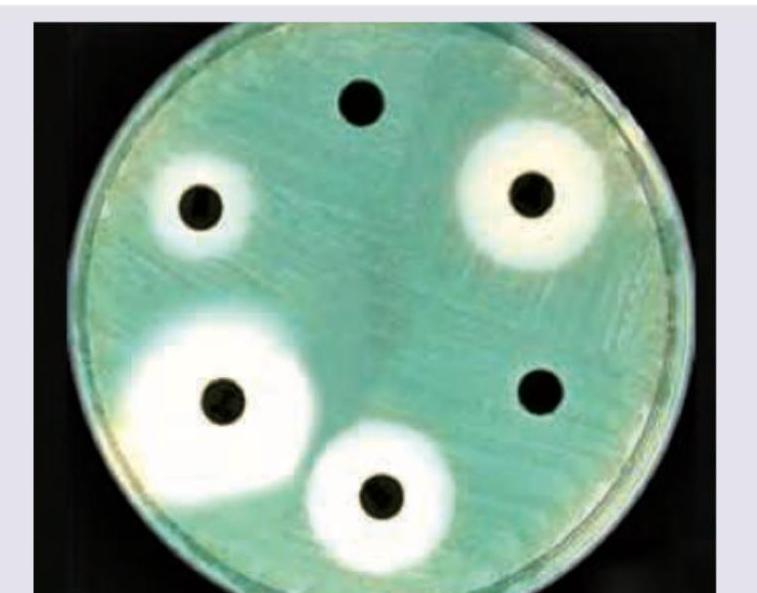
An organism grown on agar shows green coloured colonies; which is the likely organism?
Which of the following statements is NOT true about Nocardia?
Which of the following species of Brucella tends to produce a more acute and aggressive presentation?
A 25-year-old patient with cystic fibrosis asks about the disease. Which of the following is majorly associated with chronic airway infection in cystic fibrosis?
Which of the following is a true statement regarding non-coagulase-producing staphylococci?
What is true about E. coli?
What is the selective agent for Mycobacteria in Löwenstein-Jensen medium?
Explanation: **Explanation:** The toxigenicity of *Clostridium tetani* is determined through an **in-vivo pathogenicity test** known as the **Mouse Inoculation Test**. **Why Mouse is the Correct Answer:** Mice are highly susceptible to the tetanus toxin (tetanospasmin). In this test, a 0.2 ml broth culture of the isolate is injected subcutaneously into the root of the tail of a mouse. If the strain is toxigenic, the mouse develops **"Ascending Tetanus"** within 12–24 hours. Symptoms begin in the tail and the limb nearest to the injection site, eventually progressing to the other limbs and causing death. To confirm the specificity, a control mouse is protected with tetanus antitoxin before the injection; if the protected mouse survives while the test mouse dies, toxigenicity is confirmed. **Analysis of Incorrect Options:** * **Rabbit:** While used in some immunological studies, they are not the standard model for tetanus toxigenicity. * **Horse:** Horses are extremely sensitive to tetanus and were historically used for the commercial production of anti-tetanus serum (ATS), but they are not used for routine laboratory toxigenicity testing due to size and cost. * **Guinea pig:** This is the animal of choice for testing the toxigenicity of ***Corynebacterium diphtheriae*** (Elek’s test is in-vitro, but Guinea pig inoculation is the in-vivo method). **High-Yield Clinical Pearls for NEET-PG:** * **Tetanospasmin:** An exotoxin (AB toxin) that acts by blocking the release of inhibitory neurotransmitters (**GABA and Glycine**) from Renshaw cells in the spinal cord. * **Mode of Action:** Cleaves **SNARE proteins** (Synaptobrevin). * **Nagler’s Reaction:** Used for *C. perfringens* (detects Lecithinase/Alpha toxin), not *C. tetani*. * **Culture:** *C. tetani* shows a characteristic **"swarming growth"** on blood agar and has a **"drumstick appearance"** (terminal spores) on microscopy.
Explanation: **Explanation:** *Chlamydia* species are obligate intracellular bacteria characterized by a unique dimorphic life cycle consisting of two distinct forms: the **Elementary Body (EB)** and the **Reticulate Body (RB)**. **Why Option A is correct:** The **Elementary Body (EB)** is the **infectious form**. It is small, metabolically inactive, and spore-like. Its rigid outer membrane (rich in disulfide-bonded proteins) allows it to survive extracellularly as it travels from one host cell to another. It attaches to and enters host cells via receptor-mediated endocytosis. **Why the other options are incorrect:** * **Option C (Reticulate Body):** This is the **non-infectious, intracellular, reproductive form**. Once the EB enters the cell, it reorganizes into a larger RB. The RB is metabolically active and undergoes binary fission within the host cell phagosome (inclusion body) before condensing back into EBs for release. * **Option B (Koplik spot):** This is a clinical sign associated with **Measles (Rubeola)**, appearing as small white spots on the buccal mucosa. It has no association with the life cycle of Chlamydia. **High-Yield Clinical Pearls for NEET-PG:** * **Mnemonic:** **E**lementary body = **E**nters the cell (Infectious); **R**eticulate body = **R**eplicates (Metabolic). * *Chlamydia* cannot synthesize its own ATP, hence it is termed an **"energy parasite."** * **Staining:** They are Gram-negative but poorly visualized; **Giemsa stain** or Direct Fluorescent Antibody (DFA) is preferred to see inclusion bodies. * **Drug of Choice:** Azithromycin (single dose) or Doxycycline.
Explanation: **Explanation:** The pathogenicity of *Haemophilus influenzae* is primarily determined by the presence or absence of a polysaccharide capsule. **1. Why Meningitis is the correct answer:** Meningitis, along with other invasive diseases like epiglottitis and septic arthritis, is almost exclusively caused by **encapsulated** strains, specifically **Serotype b (Hib)**. The polyribosylribitol phosphate (PRP) capsule allows the bacteria to resist phagocytosis and enter the bloodstream (bacteremia), which is a prerequisite for crossing the blood-brain barrier. **Non-typable *H. influenzae* (NTHi)** lacks this capsule, making it significantly less invasive and rarely a cause of meningitis. **2. Analysis of incorrect options:** * **Otitis Media:** NTHi is one of the most common causes of localized mucosal infections. It spreads via direct extension along the Eustachian tube. * **Pneumonia:** While Hib can cause pneumonia in children, NTHi is a major cause of community-acquired pneumonia and acute exacerbations of COPD in adults. * **Puerperal Infection:** NTHi is a recognized, though less common, cause of neonatal sepsis and maternal puerperal infections, often colonizing the female genital tract. **High-Yield Clinical Pearls for NEET-PG:** * **Vaccination:** The Hib vaccine targets the **type b capsule**; therefore, it has significantly reduced the incidence of meningitis but has **no effect** on the incidence of otitis media or sinusitis caused by NTHi. * **Culture:** *H. influenzae* requires **Factor V (NAD)** and **Factor X (Hemin)** for growth. It shows the **"Satellite Phenomenon"** when grown near *Staphylococcus aureus* on blood agar. * **Drug of Choice:** Ceftriaxone for meningitis; Amoxicillin-Clavulanate for mucosal infections (due to beta-lactamase production in NTHi).
Explanation: ### Explanation **Correct Answer: C. Pseudomonas** The characteristic green color of **Pseudomonas aeruginosa** colonies is due to the production of water-soluble pigments. The most significant pigment is **Pyocyanin** (blue-green), which is unique to this organism. Other pigments include **Pyoverdin** (fluorescent yellow-green), Pyorubin (red), and Pyomelanin (brown/black). These pigments are best visualized on non-synthetic media like Nutrient Agar or specialized media like **King’s Medium**. **Analysis of Incorrect Options:** * **A. Staphylococcus:** Typically produces golden-yellow colonies (*S. aureus*) or white colonies (*S. epidermidis*) on Nutrient Agar. It is a Gram-positive coccus in clusters. * **B. E. coli:** On MacConkey agar, it produces bright pink, lactose-fermenting colonies. On Eosin Methylene Blue (EMB) agar, it shows a characteristic **metallic green sheen**, but the colonies themselves are not green on standard agar. * **C. Peptostreptococcus:** These are anaerobic Gram-positive cocci. They typically produce small, grey-white, non-pigmented colonies on blood agar under anaerobic conditions. **High-Yield Clinical Pearls for NEET-PG:** * **Odor:** *Pseudomonas* produces a characteristic **fruity, grape-like, or corn-tortilla odor** in culture. * **Biochemicals:** It is **Oxidase positive** and a non-fermenter (Catalase positive). * **Clinical Significance:** It is a leading cause of nosocomial infections, particularly in burn patients (blue-green pus), cystic fibrosis (mucoid strains), and "hot tub" folliculitis. * **E. coli vs. Pseudomonas:** Do not confuse the "metallic green sheen" of *E. coli* on EMB agar with the "green pigment" of *Pseudomonas* on Nutrient agar.
Explanation: **Explanation:** *Nocardia* species are Gram-positive, branching filamentous bacteria that are ubiquitous in soil. Understanding their unique characteristics is crucial for differentiating them from similar organisms like *Actinomyces*. **Why Option D is the correct answer (The False Statement):** The drug of choice for Nocardiosis is **Trimethoprim-Sulfamethoxazole (TMP-SMX)**, not Penicillin. *Nocardia* is typically resistant to penicillin. In contrast, Penicillin is the drug of choice for *Actinomyces*, making this a classic "distractor" pair in NEET-PG questions. For severe or CNS involvement, Amikacin or Carbapenems may be added. **Analysis of Incorrect Options (True Statements):** * **Option A:** Inhalation is the primary route of infection, making **pneumonia** (pulmonary nocardiosis) the most common clinical presentation, especially in immunocompromised patients. It can subsequently disseminate to the brain, causing abscesses. * **Option B:** *Nocardia* is an **obligate aerobe**. This distinguishes it from *Actinomyces*, which is strictly anaerobic. * **Option C:** *Nocardia* possesses mycolic acids in its cell wall, making it **weakly acid-fast**. It is visualized using the **Modified Kinyoun stain** (using 1% sulfuric acid as a decolorizer instead of the 20% used for *M. tuberculosis*). **High-Yield Clinical Pearls for NEET-PG:** * **Morphology:** Gram-positive, "beaded" branching filaments. * **Culture:** Grows on routine media (SDA, Blood Agar) but is slow-growing; colonies often have a "wrinkled" or "popcorn" appearance with an earthy odor. * **Triad of Nocardiosis:** Pneumonia, brain abscess, and skin lesions (in immunocompromised hosts). * **Cutaneous Nocardiosis:** *N. brasiliensis* is the most common cause of Mycetoma (Madura foot) in certain regions.
Explanation: **Explanation:** Brucellosis is a zoonotic infection caused by small, Gram-negative coccobacilli. While all species cause a similar clinical syndrome (undulant fever, arthralgia, and hepatosplenomegaly), their virulence and severity vary significantly based on the species. **Why B. melitensis is correct:** **Brucella melitensis** (found in goats and sheep) is the most virulent and common species causing human brucellosis worldwide. It is associated with a **more acute, severe, and aggressive clinical presentation**, often leading to higher rates of complications like osteomyelitis and endocarditis. Its high pathogenicity is attributed to its ability to evade the host immune system more effectively than other species. **Analysis of Incorrect Options:** * **B. suis (Pigs):** This species is the second most virulent. It tends to cause a chronic infection characterized by **suppurative (abscess-forming) lesions** in organs like the liver and spleen. * **B. abortus (Cattle):** This is the most widespread species but generally causes a **milder, more insidious** disease with fewer complications compared to *B. melitensis*. * **B. canis (Dogs):** This species is the least common cause of human infection and typically results in a **mild or subclinical** illness. **High-Yield Clinical Pearls for NEET-PG:** * **Gold Standard Diagnosis:** Bone marrow culture (more sensitive than blood culture). * **Standard Serology:** Standard Agglutination Test (SAT); a titer of >1:160 is significant. * **Castaneda’s Medium:** A specialized biphasic medium used for blood cultures to reduce the risk of laboratory-acquired infections. * **Treatment:** The WHO recommends **Rifampicin + Doxycycline** for 6 weeks. For neurobrucellosis or endocarditis, a triple regimen including an Aminoglycoside is used.
Explanation: **Explanation:** **Pseudomonas aeruginosa** is the most significant pathogen associated with chronic airway infections in patients with Cystic Fibrosis (CF). The underlying pathophysiology involves a defect in the CFTR protein, leading to thick, dehydrated mucus. In this environment, *P. aeruginosa* undergoes a **phenotypic switch** to a **mucoid phenotype** characterized by the overproduction of **alginate** (an exopolysaccharide). This biofilm formation protects the bacteria from host immune responses and antibiotics, leading to progressive bronchiectasis and respiratory failure. **Analysis of Incorrect Options:** * **Options A & B (P. fluorescens and P. putida):** These are low-virulence environmental saprophytes. While they can occasionally cause opportunistic infections (e.g., related to contaminated medical devices or blood transfusions), they are not primary pathogens in CF lung disease. * **Option D (Burkholderia pseudomallei):** This is the causative agent of **Melioidosis**. While its relative, *Burkholderia cepacia* complex, is a feared pathogen in CF (associated with "Cepacia syndrome"), *B. pseudomallei* is not a standard colonizer in CF patients. **High-Yield Clinical Pearls for NEET-PG:** * **Age-wise Colonization:** In early childhood, *Staphylococcus aureus* and *Haemophilus influenzae* are common. By adulthood, **Pseudomonas aeruginosa** becomes the dominant pathogen (>60-80% of patients). * **Virulence Factor:** The **mucoid strain** (alginate production) is the hallmark of chronic CF infection. * **Quorum Sensing:** This mechanism regulates biofilm formation and virulence gene expression in *Pseudomonas*. * **Other CF Pathogens:** *Burkholderia cepacia* (associated with rapid decline), *Stenotrophomonas maltophilia*, and *Aspergillus fumigatus*.
Explanation: ### Explanation **1. Why Option B is Correct:** Non-coagulase-producing staphylococci, collectively known as **Coagulase-Negative Staphylococci (CoNS)**, are the most common cause of infections related to **indwelling medical devices** (e.g., prosthetic heart valves, orthopedic implants, and central venous catheters). Their primary virulence factor is the ability to produce a **biofilm (slime layer)**. This extracellular polysaccharide matrix allows them to adhere to plastic and metal surfaces, protecting the bacteria from both the host’s immune system and antibiotic penetration. **2. Why the Other Options are Incorrect:** * **Option A:** While CoNS are part of the normal skin flora, they are **opportunistic pathogens**. They are the leading cause of nosocomial bacteremia, especially in immunocompromised patients and neonates. * **Option C:** Scarlet fever is caused by **Group A Streptococcus (*Streptococcus pyogenes*)** via the production of erythrogenic toxins, not by staphylococci. * **Option D:** Both coagulase-positive (*S. aureus*) and coagulase-negative staphylococci appear as **Gram-positive cocci in clusters**. They cannot be differentiated by Gram stain; the **Coagulase test** is the definitive biochemical method to distinguish them. **3. NEET-PG High-Yield Pearls:** * ***Staphylococcus epidermidis***: The most common CoNS isolated from prosthetic valve endocarditis and CSF shunts. * ***Staphylococcus saprophyticus***: A specific CoNS that is a common cause of **UTIs in young, sexually active females** ("honeymoon cystitis"). It is uniquely identified by its **resistance to Novobiocin**. * **Novobiocin Sensitivity Test**: Used to differentiate CoNS. *S. epidermidis* is sensitive, while *S. saprophyticus* is resistant. * **Treatment**: Most CoNS are resistant to penicillin and methicillin (MRSE); **Vancomycin** is often the drug of choice.
Explanation: ### Explanation **Correct Option: C** In the majority of cases (approximately 80–90%), **Urinary Tract Infections (UTIs)** caused by *E. coli* are **monomicrobial**, involving a single serotype at any given time. These are typically Uropathogenic *E. coli* (UPEC) characterized by specific virulence factors like P-pili, which allow adherence to the uroepithelium. Recurrent infections are usually due to a different serotype or a relapse of the original strain. **Analysis of Incorrect Options:** * **Option A:** The **Sereny Test** (instillation of the organism into a guinea pig's eye to check for keratoconjunctivitis) is used to diagnose **Enteroinvasive *E. coli* (EIEC)** and *Shigella*, not ETEC. ETEC is diagnosed by detecting toxins (LT/ST) via ELISA or PCR. * **Option B:** **EPEC** causes "infantile diarrhea" through an **attachment and effacement (A/E) lesion** (mediated by the *eae* gene). It is **non-invasive** and does not produce toxins. EIEC is the strain that is enteroinvasive, mimicking bacillary dysentery. * **Option D:** While *E. coli* can infect burns, the **most common** causative organism in burn wound infections is ***Pseudomonas aeruginosa***, followed closely by *Staphylococcus aureus*. **High-Yield Clinical Pearls for NEET-PG:** * **Most common cause of UTI:** *E. coli* (UPEC). * **Enterohemorrhagic *E. coli* (EHEC):** Most common serotype is **O157:H7**. It causes Hemolytic Uremic Syndrome (HUS) and does not ferment sorbitol (identified on Sorbitol MacConkey Agar). * **Traveler’s Diarrhea:** Most commonly caused by **ETEC**. * **IMViC Reactions for *E. coli*:** Indole (+), Methyl Red (+), Voges-Proskauer (-), Citrate (-). [Mnemonic: **++--**]
Explanation: **Explanation:** Löwenstein-Jensen (LJ) medium is the traditional solid egg-based medium used for the cultivation of *Mycobacterium tuberculosis*. **Why Malachite Green is the Correct Answer:** The primary challenge in culturing Mycobacteria from clinical samples (like sputum) is their slow growth rate. Faster-growing commensal bacteria and fungi would easily overgrow the culture before Mycobacteria can colonize. **Malachite green** is added as a selective inhibitory agent. It inhibits the growth of most Gram-positive and Gram-negative bacteria, ensuring that the medium remains selective for the growth of acid-fast bacilli (AFB). **Analysis of Incorrect Options:** * **Methylene blue (A):** This is a counterstain used in the Ziehl-Neelsen (ZN) staining technique, not a selective agent in LJ medium. * **Mineral salt solution (C):** This provides essential nutrients (potassium, magnesium) for growth but does not possess inhibitory properties. * **Glycerol (D):** This acts as a carbon source and growth promoter. While it enhances the growth of *M. tuberculosis*, it is actually inhibitory to *M. bovis* (which prefers sodium pyruvate). **NEET-PG High-Yield Pearls:** * **Sterilization:** LJ medium is sterilized by **inspissation** (heating at 80-85°C for 45 minutes on three successive days) to solidify the egg proteins without coagulating them excessively. * **Growth Appearance:** *M. tuberculosis* produces "rough, tough, and buff" (non-pigmented, cream-colored) colonies. * **Incubation:** It takes 2–8 weeks for visible growth; cultures are generally discarded as negative only after 8 weeks. * **Modifications:** For *M. bovis*, glycerol is replaced with **sodium pyruvate**.
Staphylococci
Practice Questions
Streptococci and Enterococci
Practice Questions
Neisseria and Moraxella
Practice Questions
Corynebacterium and Listeria
Practice Questions
Bacillus and Clostridium
Practice Questions
Enterobacteriaceae
Practice Questions
Vibrio, Aeromonas, and Plesiomonas
Practice Questions
Pseudomonas and Related Bacteria
Practice Questions
Haemophilus and HACEK Group
Practice Questions
Bordetella and Brucella
Practice Questions
Mycobacteria
Practice Questions
Spirochetes
Practice Questions
Get full access to all questions, explanations, and performance tracking.
Start For Free