
Neurology — MCQs

On this page
A patient presents with unilateral painful ophthalmoplegia. Imaging revealed an enlargement of the cavernous sinus on the affected side. What is the likely diagnosis?
The conus medullaris syndrome differs from the cauda equina syndrome in that the former shows which of the following?
A 50-year-old right-handed female presented with right-sided hemiparesis, sensory loss, and right homonymous hemianopia. Neurological examination revealed dysarthria, global aphasia, alexia, agraphia, acalculia, and apraxia. Which artery is most likely involved in this condition?
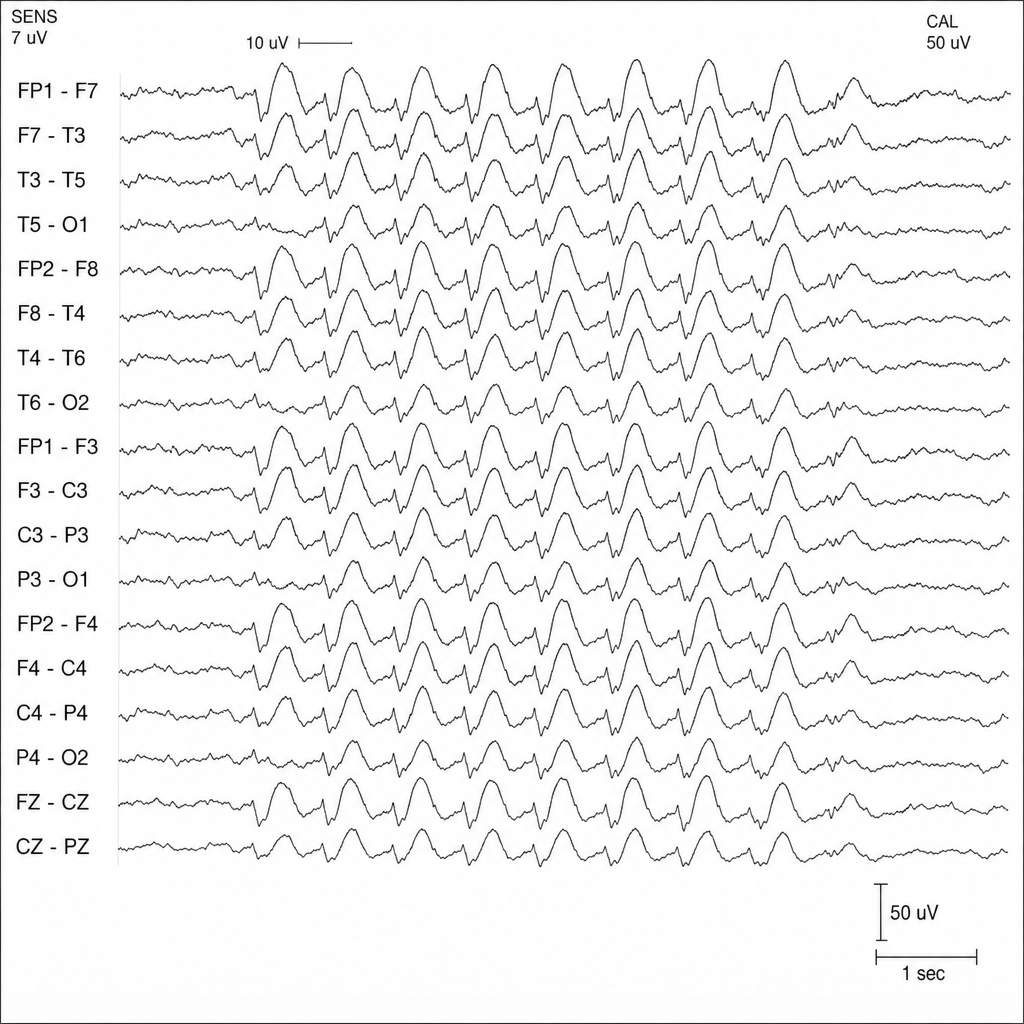
A 68-year-old man presents with a 3-month history of rapidly progressive dementia, myoclonus, and startle-induced jerks. EEG shows generalized periodic sharp-wave complexes occurring at a frequency of 0.5–2 Hz against a background of diffuse slowing. Which of the following conditions is most characteristically associated with this EEG pattern?
A 30-year-old female presents with headache and transient obscurations of her vision. On examination, no focal neurological deficit was seen. Which one of the following would you start her on?
Right internal carotid artery stenosis leads to all except?
Which of the following statements is FALSE regarding Parkinsonism developing in individuals over 70 years of age?
Which one of the following is not a useful drug for the initial management of status epilepticus?
A 32-year-old patient presents with decreased pain and temperature sensation in the upper extremities, atrophy of the intrinsic muscles of the hand, and brisk deep tendon reflexes in the upper extremities. What is your diagnosis?
A 45-year-old chronic alcoholic presents with confusion, ataxia, ophthalmoplegia, and peripheral neuropathy. What is the most likely diagnosis?
Practice by Chapter
Cerebrovascular Diseases
Practice Questions
Seizure Disorders and Epilepsy
Practice Questions
Headache Disorders
Practice Questions
Movement Disorders
Practice Questions
Demyelinating Diseases
Practice Questions
Neurodegenerative Disorders
Practice Questions
Neuromuscular Junction Disorders
Practice Questions
Peripheral Neuropathies
Practice Questions
CNS Infections
Practice Questions
Neuro-oncology
Practice Questions
Dementia and Cognitive Disorders
Practice Questions
Neurological Emergencies
Practice Questions
Want unlimited practice?
Get full access to all questions, explanations, and performance tracking.
Scan to download app