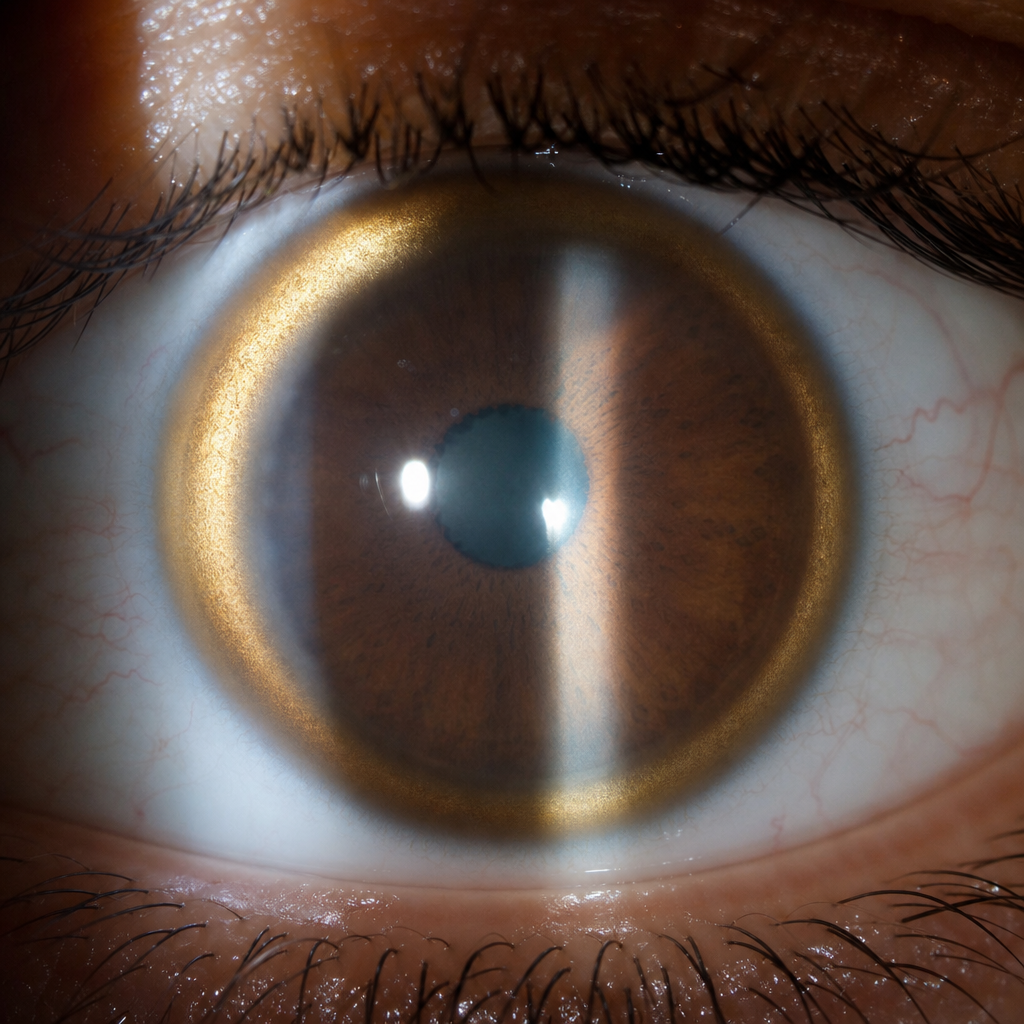
Which of the following is NOT a recognized association?
Which of the following diseases is autosomal dominant?
In an Autosomal Recessive (AR) disorder, if one parent is normal, the other is a carrier, and the child is affected, what is the underlying genetic reason for this observation?
A 19-year-old man has recurrent attacks of gastrointestinal colic and swelling of his face and legs. There is no relationship of the attacks to any foods or activity. His father has a similar syndrome. Which of the following is the most likely cause of death in this disease?
A particular genetic disorder appears in three consecutive generations of a family without any sex predilection. It was also noticed that phenotypically normal family members were having healthy offspring. What is the pattern of inheritance of this disorder?
Type of hereditary hemorrhagic telangiectasia commonly associated with ALK-1 mutation is:
A newly described neurologic disorder affects multiple family members across three generations. In the first generation, two sisters and one brother are affected. In the second generation, all children of the first-generation sisters are affected, but none of the descendants of the first-generation son. In the third generation, all children of the affected second-generation women are affected, but none of the descendants of the second-generation men. What is the most likely mode of inheritance?
A family pedigree reveals first- and second-generation female relatives with premature menopause and male relatives with a progressive neurodegenerative disorder starting by their sixth decade. There are more males than females exhibiting mental retardation from childhood by the fourth generation. Genetic analysis of affected persons reveals CGG repeat expansions in a gene encoding for a protein that binds mRNA transcripts in neurons and shuttles them to the synapses. An abnormality involving which of the following organs is most likely to be present in affected males?
A 28-year-old man presents with lenticonus and end-stage renal disease (ESRD). His maternal uncle also died of a similar illness. What is the most likely diagnosis?
Which of the following is NOT an autosomal dominant disorder?
Explanation: This question tests your ability to distinguish between classic clinical associations and the specific pathophysiology of metabolic disorders. **Explanation of the Correct Answer (D):** While it may seem counterintuitive, **Homocystinuria** is actually strongly associated with thromboembolic events, including **recurrent deep vein thrombosis (DVT)**, pulmonary embolism, and strokes [1]. The question asks for the "NOT a recognized association," but in many standardized exams (including NEET-PG), this specific question often appears with a "trick" or a typo in the source material. However, medically speaking, Homocystinuria **is** a major risk factor for DVT due to endothelial damage and activation of the coagulation cascade. If this option is marked as the "correct" answer (the non-association), it is likely because the other options represent more "classic" pathognomonic neurological/hematological pairings, or it refers to the fact that Homocystinuria is primarily a metabolic/structural defect (Marfanoid habitus, ectopia lentis) rather than a primary hematological disorder. **Analysis of Incorrect Options:** * **A. Abetalipoproteinemia and acanthocytosis:** This is a classic association. Deficiency of Apolipoprotein B leads to malabsorption of lipids and vitamin E, causing RBC membrane defects that manifest as **acanthocytes (spur cells)**. * **B. Refsum's disease and cerebellar ataxia:** Refsum’s is a peroxisomal disorder (phytanic acid storage). The clinical tetrad includes **cerebellar ataxia**, retinitis pigmentosa, peripheral neuropathy, and sensorineural deafness. * **C. Friedreich's ataxia and Spinocerebellar ataxia:** Friedreich’s is the most common hereditary ataxia. It involves degeneration of the **spinocerebellar tracts**, dorsal columns, and pyramidal tracts due to GAA triplet repeats in the Frataxin gene [2]. **NEET-PG High-Yield Pearls:** * **Homocystinuria:** Remember the "3 Ms": **M**arfanoid habitus, **M**ental retardation, and **M**ural thrombi (Vascular thrombosis) [1]. * **Acanthocytes** are seen in: Abetalipoproteinemia, McLeod syndrome, and severe liver disease. * **Refsum’s Disease Treatment:** Avoidance of chlorophyll-containing foods (green leafy vegetables) and ruminant fats to reduce phytanic acid.
Explanation: The correct answer is **Tuberous Sclerosis (D)**. This multisystem disorder follows an **autosomal dominant (AD)** inheritance pattern. It is caused by mutations in the **TSC1** (Hamartin, Chromosome 9) or **TSC2** (Tuberin, Chromosome 16) genes. These genes act as tumor suppressors; their loss leads to the development of benign tumors (hamartomas) in various organs [1]. **Why the other options are incorrect:** * **Albinism (A):** Most forms, including Oculocutaneous Albinism, are **autosomal recessive (AR)**. It involves a defect in melanin synthesis, commonly due to a deficiency in the enzyme tyrosinase. * **Sickle Cell Anemia (B):** This is a classic **autosomal recessive** hemoglobinopathy caused by a point mutation in the $eta$-globin gene on Chromosome 11. * **Thalassemia (C):** Both $\alpha$ and $\beta$-thalassemias are **autosomal recessive** conditions characterized by reduced or absent synthesis of globin chains [2]. **High-Yield Clinical Pearls for NEET-PG:** * **Vogt’s Triad:** The classic (though not always present) presentation of Tuberous Sclerosis includes **Adenoma sebaceum** (facial angiofibromas), **Seizures**, and **Mental retardation**. * **Dermatological markers:** Look for **Ash-leaf spots** (hypopigmented macules—earliest sign), **Shagreen patches** (connective tissue nevi), and **Periungual fibromas** (Koenen tumors). * **Systemic involvement:** Cardiac rhabdomyomas (often regress), Renal Angiomyolipomas (AML), and Giant Cell Astrocytomas (SEGA). * **Mnemonic for AD disorders:** "Very Powerful DOMINANT" (Von Willebrand, Polycystic Kidney, Dystrophia Myotonica, Osteogenesis Imperfecta, Marfan, Intermittent Porphyria, Noonan, **Achondroplasia/Anticipation**, Neurofibromatosis, **Tuberous Sclerosis**).
Explanation: In a standard **Autosomal Recessive (AR)** inheritance pattern, an affected child must inherit one mutant allele from each parent (both parents must be carriers or affected). In this scenario, one parent is a carrier (Aa) and the other is normal (AA). Statistically, it is impossible for the child to be affected (aa) through Mendelian inheritance. The correct answer is **Uniparental Disomy (UPD)**. This occurs when an individual inherits two copies of a chromosome (or part of a chromosome) from one parent and no copy from the other. If the carrier parent (Aa) undergoes a nondisjunction event followed by "trisomy rescue," the child may end up with two copies of the parent's mutant allele (aa), leading to the expression of the recessive disease despite having one genetically normal parent [1]. **Analysis of Incorrect Options:** * **Germline Mosaicism:** This occurs when a mutation is present in the gonads but not the somatic cells. It typically explains how two phenotypically normal parents have multiple children with an **Autosomal Dominant** condition (e.g., Osteogenesis Imperfecta). * **Genomic Imprinting:** This refers to the epigenetic marking of genes where expression depends on the parent of origin (e.g., Prader-Willi/Angelman syndromes) [1]. While UPD is a mechanism for imprinting disorders, imprinting itself does not explain the inheritance of a classic AR trait from a single carrier. * **Incomplete Penetrance:** This means an individual carries the genotype but does not express the phenotype. It explains why a disease "skips a generation," not how a child inherits two mutant alleles from one carrier. **High-Yield Clinical Pearls for NEET-PG:** * **Cystic Fibrosis:** UPD is a classic "exception" to Mendelian rules often tested via cases of Cystic Fibrosis where only one parent is a carrier. * **Isodisomy vs. Heterodisomy:** Isodisomy (meiosis II error) leads to AR diseases because the two chromosomes are identical. Heterodisomy (meiosis I error) involves different homologs from the same parent. * **Prader-Willi Syndrome:** Frequently caused by maternal UPD of chromosome 15 (missing the paternal contribution).
Explanation: ### Explanation **Diagnosis: Hereditary Angioedema (HAE)** The clinical presentation of recurrent gastrointestinal colic, facial/peripheral swelling, and a positive family history (autosomal dominant inheritance) in a young adult is classic for **Hereditary Angioedema**. This condition is caused by a deficiency or dysfunction of the **C1 esterase inhibitor**, leading to the overproduction of **bradykinin**, a potent vasodilator that increases vascular permeability. **Why "Edema of the glottis" is correct:** The most life-threatening complication of HAE is **laryngeal edema** (edema of the glottis) [1]. Unlike common allergic reactions, HAE does not respond to antihistamines or corticosteroids. If the swelling involves the upper airway, it can lead to rapid asphyxiation and death [1]. Airway management is the priority during acute attacks. **Why other options are incorrect:** * **Anaphylactic shock reaction:** While HAE mimics anaphylaxis clinically, it is **not** IgE-mediated. There is no hypotension (shock), urticaria (hives), or pruritus, which are hallmarks of anaphylaxis. * **An unrelated condition:** Untreated HAE carries a significant mortality rate (up to 30%) specifically due to airway obstruction; thus, death is directly related to the disease. * **Overtreatment:** While medications have side effects, the primary cause of mortality in these patients is the disease pathology itself (asphyxia), not the treatment. **Clinical Pearls for NEET-PG:** * **Inheritance:** Autosomal Dominant. * **Pathophysiology:** Low C1 esterase inhibitor → Unregulated activation of the kallikrein-kinin system → High **Bradykinin**. * **Screening Test:** Low **C4 levels** (even between attacks). * **Treatment:** * *Acute:* C1 inhibitor concentrate, Ecallantide (kallikrein inhibitor), or Icatibant (bradykinin B2 receptor antagonist). * *Prophylaxis:* Danazol (stanozolol) or Tranexamic acid. * **Key Distinction:** HAE is characterized by the **absence of urticaria and itching** [1].
Explanation: ### Explanation The correct answer is **Autosomal Dominant (AD)**. This conclusion is based on three key inheritance patterns described in the clinical vignette: 1. **Vertical Transmission:** The disorder appears in three consecutive generations. This "vertical" pattern is a hallmark of AD inheritance, where the disease does not skip generations. 2. **No Sex Predilection:** The disorder affects males and females equally, indicating an **Autosomal** rather than a sex-linked (X-linked) pattern. 3. **Lack of Carrier State:** The fact that phenotypically normal family members have healthy offspring confirms that the trait is dominant. In AD disorders, individuals who do not express the phenotype (aa) do not carry the pathological allele and therefore cannot pass it to their children. [1] #### Why other options are incorrect: * **Autosomal Recessive:** Typically shows a **horizontal inheritance** pattern (affecting siblings). It often skips generations, and phenotypically normal parents can be carriers (Aa) and produce affected offspring. * **Mitochondrial Inheritance:** This follows a **maternal inheritance** pattern. An affected mother passes the trait to *all* her children, but an affected father passes it to *none*. * **Uniparental Disomy (UPD):** This occurs when a person receives two copies of a chromosome from one parent and none from the other (e.g., Prader-Willi or Angelman syndromes). #### High-Yield Clinical Pearls for NEET-PG: * **AD Rule of 50:** An affected individual (Aa) has a **50% chance** of passing the trait to each offspring. * **Exceptions to AD rules:** Always look for terms like **Incomplete Penetrance** (has the gene but not the disease) and **Variable Expressivity** (different severity in the same family). [1] * **Structural vs. Metabolic:** Most AD disorders involve **structural proteins** (e.g., Marfan syndrome, Achondroplasia), whereas most AR disorders involve **enzyme deficiencies**. [2]
Explanation: Explanation: Hereditary Hemorrhagic Telangiectasia (HHT), also known as **Osler-Weber-Rendu syndrome**, is an autosomal dominant disorder characterized by vascular malformations. The classification is based on the specific genetic mutation involved in the transforming growth factor-beta (TGF-β) signaling pathway. * **Why Option B is Correct:** **HHT Type 2** is caused by a mutation in the **ACVRL1 gene**, which encodes the **Activin receptor-like kinase 1 (ALK-1)** protein. Clinically, Type 2 is often associated with a higher incidence of hepatic involvement (liver arteriovenous malformations) and a slightly later onset compared to Type 1. * **Why Other Options are Incorrect:** * **Option A (Type 1):** This is caused by a mutation in the **ENG gene**, which encodes **Endoglin**. Type 1 is more frequently associated with pulmonary and cerebral arteriovenous malformations (AVMs). * **Option C (Type 3):** This is linked to mutations on **Chromosome 5**, though the specific gene is less frequently tested. * **Option D (Type 4):** This is linked to mutations on **Chromosome 7**. * *Note:* There is also a Juvenile Polyposis/HHT overlap syndrome caused by **SMAD4** mutations. **NEET-PG High-Yield Pearls:** 1. **Clinical Triad:** Epistaxis (most common presenting symptom), telangiectasias (skin/mucous membranes), and visceral AVMs (lung, liver, brain). 2. **Diagnosis:** Based on the **Curacao Criteria** (Epistaxis, Telangiectasia, Visceral lesions, and Family history). 3. **Complications:** Paradoxical embolism or brain abscess (due to right-to-left shunting in pulmonary AVMs) and iron deficiency anemia due to chronic GI bleeding.
Explanation: ### Explanation **Correct Option: C. Mitochondrial Inheritance** The hallmark of **Mitochondrial (Matrilineal) Inheritance** is that the trait is transmitted **only through females** to all of their offspring (both sons and daughters) [1], while affected males never transmit the disorder to their children. In this scenario: 1. **First Generation:** Sisters passed it to all their children; the brother passed it to none. 2. **Second/Third Generation:** Only affected females continued the transmission. This pattern occurs because mitochondria are inherited exclusively from the maternal oocyte; sperm mitochondria are degraded upon fertilization. **Why other options are incorrect:** * **Autosomal Dominant (A):** An affected father would have a 50% chance of passing the trait to his children. Here, the first-generation son had zero affected descendants. [2] * **Autosomal Recessive (B):** This usually skips generations and requires both parents to carry the allele. It does not explain why transmission is strictly tied to the mother’s gender. * **X-linked Dominant (D):** An affected father would pass the trait to **all** of his daughters (as they must receive his X chromosome) but none of his sons. In this case, the father passed it to no one. **High-Yield Clinical Pearls for NEET-PG:** * **Heteroplasmy:** The presence of a mixture of wild-type and mutant mitochondrial DNA within a cell. This explains the **variable expressivity** (severity) seen in mitochondrial diseases. * **High-Energy Tissues:** These disorders primarily affect the CNS, skeletal muscle, and heart (e.g., MELAS, MERRF, Leber’s Hereditary Optic Neuropathy). [1] * **Key Rule:** If a question shows "Affected Mother → All children affected" and "Affected Father → No children affected," always choose Mitochondrial. [1]
Explanation: ### Explanation The clinical scenario describes **Fragile X Syndrome (FXS)** and its associated premutation syndromes, caused by a **CGG trinucleotide repeat expansion** in the **FMR1 gene** (Xq27.3). This gene encodes the **FMRP protein**, which regulates mRNA transport to synapses. **Why Testis is Correct:** The hallmark physical finding in post-pubertal males with Fragile X Syndrome is **macroorchidism** (enlarged testes). This occurs due to an increase in interstitial fluid and connective tissue. The pedigree also highlights the "anticipation" and "premutation" phenotypes: * **Premature Menopause:** Known as Fragile X-associated Primary Ovarian Insufficiency (FXPOI) in female premutation carriers (55–200 repeats). * **Neurodegenerative Disorder:** Known as Fragile X-associated Tremor/Ataxia Syndrome (FXTAS) in older male premutation carriers. * **Mental Retardation:** The full mutation (>200 repeats) leads to transcriptional silencing of FMR1, causing the classic intellectual disability syndrome [2]. **Why Incorrect Options are Wrong:** * **Adrenal/Pituitary:** While FXS involves the hypothalamic-pituitary-gonadal axis [3], there are no characteristic structural or functional abnormalities of the adrenal or pituitary glands associated with FMR1 mutations. * **Pancreas:** Pancreatic pathology is not a feature of Fragile X. Diabetes or exocrine insufficiency is not linked to CGG repeat expansions. **High-Yield Clinical Pearls for NEET-PG:** * **Inheritance:** X-linked Dominant with variable expressivity (due to Lyonization in females). * **Cytogenetics:** Seen as a "break" or "fragile site" at the end of the X chromosome when cultured in folate-deficient medium. * **Physical Features:** Long face, large everted ears, prominent jaw (prognathism), and mitral valve prolapse. * **Behavioral:** Most common inherited cause of intellectual disability and a leading genetic cause of Autism [1].
Explanation: ### Explanation **Correct Option: D. Alport Syndrome** Alport syndrome is a hereditary type IV collagen disorder caused by mutations in the *COL4A3*, *COL4A4*, or *COL4A5* genes [1]. This leads to structural abnormalities in the basement membranes of the kidney, eye, and cochlea [1]. * **Clinical Triad:** The classic presentation includes **hereditary nephritis** (progressing to ESRD), **sensorineural hearing loss**, and **ocular abnormalities**. * **Pathognomonic Sign:** **Anterior lenticonus** (conical protrusion of the lens surface) is virtually pathognomonic for Alport syndrome. * **Inheritance:** The most common form (85%) is **X-linked dominant** (*COL4A5*). The mention of a maternal uncle with similar symptoms strongly suggests an X-linked inheritance pattern. --- ### Why Other Options are Incorrect: * **A & B (ARPKD/ADPKD):** While both cause ESRD, they typically present with enlarged, cystic kidneys and extra-renal manifestations like hepatic cysts (ADPKD) or hepatic fibrosis (ARPKD) [2]. They are not associated with lenticonus or sensorineural deafness. * **C (Oxalosis):** Primary hyperoxaluria leads to nephrocalcinosis and systemic oxalate deposition (affecting bones and heart), but it does not cause the specific ocular finding of lenticonus. --- ### High-Yield Clinical Pearls for NEET-PG: 1. **Electron Microscopy (EM):** The gold standard for diagnosis; shows characteristic **"Basket-weave appearance"** due to irregular thinning and thickening of the Glomerular Basement Membrane (GBM) [1]. 2. **Ocular Findings:** Anterior lenticonus and "dot-and-fleck" retinopathy. 3. **Genetics:** X-linked Dominant is the most common; however, Autosomal Recessive and Dominant forms also exist. 4. **Post-Transplant Complication:** Patients with Alport syndrome who undergo renal transplant may develop **Anti-GBM disease** (Goodpasture-like syndrome) because their immune system recognizes the type IV collagen in the new kidney as foreign.
Explanation: The correct answer is **Alkaptonuria** because it is an **Autosomal Recessive (AR)** disorder, whereas the other options are Autosomal Dominant (AD). **1. Why Alkaptonuria is the correct answer:** Alkaptonuria is a rare metabolic disorder caused by a deficiency of the enzyme **homogentisate 1,2-dioxygenase**. This leads to the accumulation of homogentisic acid. It follows an autosomal recessive inheritance pattern. Classically, most enzyme deficiencies in metabolic pathways are AR, while structural protein defects are often AD. **2. Analysis of Incorrect Options (AD Disorders):** * **Hereditary Spherocytosis:** A common hemolytic anemia caused by defects in red cell membrane proteins (like spectrin or ankyrin). It is inherited in an **Autosomal Dominant** pattern in 75% of cases. * **Osteogenesis Imperfecta (OI):** Most common types (Type I and Type IV) are **Autosomal Dominant**, resulting from mutations in the COL1A1 or COL1A2 genes affecting Type 1 collagen. * **Gardner Syndrome:** This is a variant of Familial Adenomatous Polyposis (FAP) characterized by colonic polyps, osteomas, and soft tissue tumors. It is inherited in an **Autosomal Dominant** fashion (APC gene mutation). **Clinical Pearls for NEET-PG:** * **Alkaptonuria Triad:** 1. Fresh urine that turns **black** on standing (alkalinization); 2. **Ochronosis** (blue-black pigmentation of cartilage/sclera); 3. Large joint **arthritis**. * **Mnemonic for AD disorders:** "Very Powerful DOMINANT Mother" (**V**on Willebrand, **P**olyposis/PCKD, **D**ystrophia myotonica, **O**steogenesis imperfecta, **M**arfan, **I**ntermittent porphyria, **N**eurofibromatosis, **A**chondroplasia [1], **N**oonan, **T**uberous sclerosis). * **Rule of Thumb:** Most structural/receptor protein defects are AD [1]; most enzyme deficiencies are AR (Exceptions: Hunter syndrome and Fabry disease are X-linked recessive).
Principles of Medical Genetics
Practice Questions
Genetic Testing and Counseling
Practice Questions
Single Gene Disorders
Practice Questions
Chromosomal Disorders
Practice Questions
Mitochondrial Diseases
Practice Questions
Pharmacogenomics
Practice Questions
Cancer Genetics
Practice Questions
Genetics of Common Diseases
Practice Questions
Epigenetics and Disease
Practice Questions
Genetic Basis of Developmental Disorders
Practice Questions
Ethical Issues in Medical Genetics
Practice Questions
Gene Therapy and Precision Medicine
Practice Questions
Get full access to all questions, explanations, and performance tracking.
Start For Free