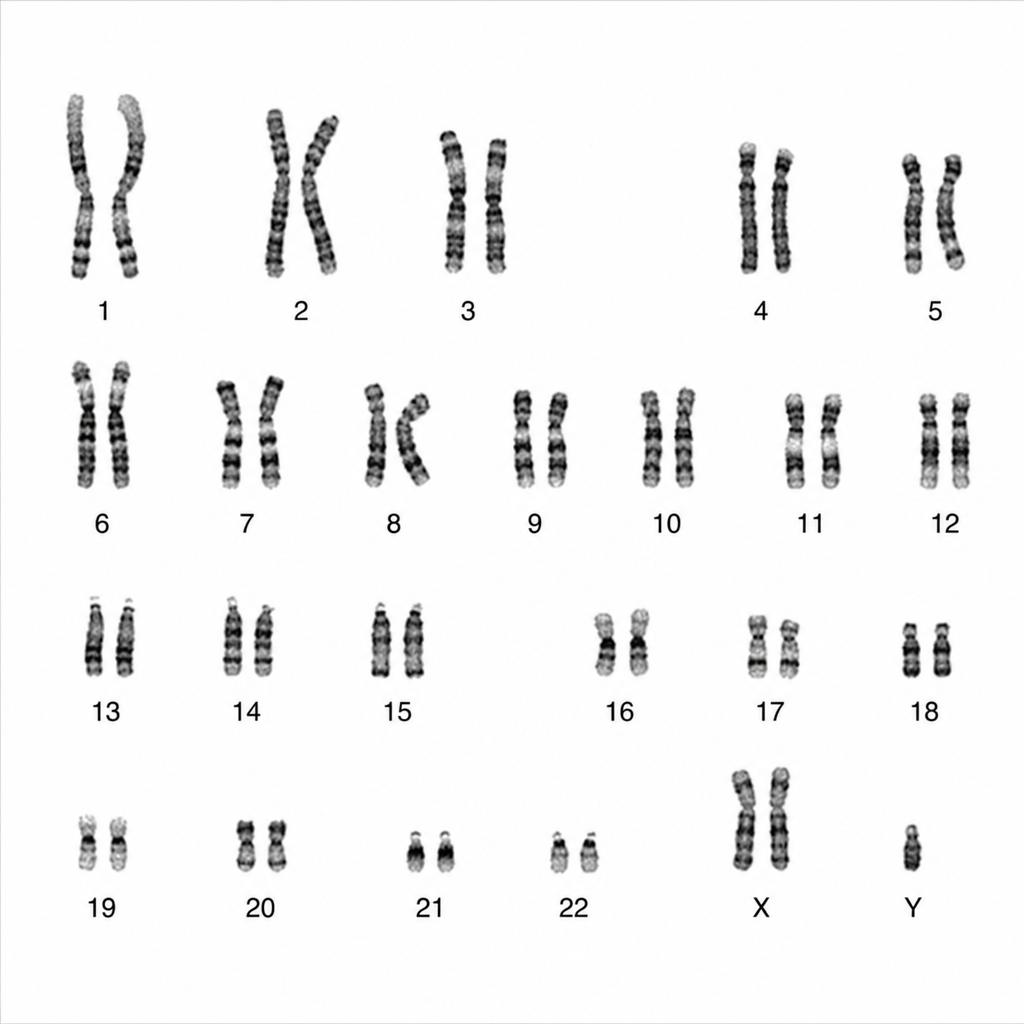
If both parents have Achondroplasia, what are their chances of having a child without Achondroplasia?
Which of the following is an autosomal dominant disorder?
A 12-year-old girl presents with tremors and emotional lability, and has golden-brown discoloration in Descemet's membrane. What is the most likely diagnosis?
All of the following are intracerebellar nuclei except?
Which of the following is true regarding Turner syndrome?
DNA analysis can be performed on cells from all of the following sources EXCEPT:
Which of the following conditions has multifactorial inheritance?
Miliary mottling of the lung is seen in all of the following conditions except?
Williams syndrome is an autosomal dominant disorder characterized by all of the following features, except?
Which of the following genes is not related to pheochromocytoma associated syndromes?
Explanation: **Explanation:** **1. Understanding the Correct Answer (B - 25%):** Achondroplasia is an **Autosomal Dominant (AD)** disorder caused by a gain-of-function mutation in the **FGFR3 gene** [1]. In clinical practice, almost all surviving individuals with Achondroplasia are **heterozygous (Aa)**. This is because the homozygous state (AA) is **lethal** in utero or the early neonatal period. When two heterozygous parents (Aa x Aa) conceive, the Mendelian inheritance pattern is: * **25% AA:** Homozygous dominant (Lethal/Stillborn) * **50% Aa:** Heterozygous (Affected with Achondroplasia) * **25% aa:** Homozygous recessive (**Normal stature/Without Achondroplasia**) Therefore, there is a 1 in 4 (25%) chance of having a child with a normal phenotype. **2. Why Other Options are Incorrect:** * **A (0%):** Incorrect because the parents are heterozygous; they both carry the recessive "normal" allele (a). * **C (50%):** This is the probability of having a surviving child with Achondroplasia (Aa). * **D (100%):** This would only occur if both parents were homozygous recessive (aa), which is not the case here. **3. NEET-PG High-Yield Clinical Pearls:** * **Most Common Cause:** Mutation in **FGFR3** (Fibroblast Growth Factor Receptor 3) on Chromosome 4p [1]. * **Inheritance:** 80% of cases are due to **de novo mutations**, strongly associated with **advanced paternal age** [1]. * **Key Feature:** It is the most common cause of disproportionate short stature (rhizomelic shortening) [1]. * **Radiology:** Look for "trident hand," narrowed interpedicular distance in the lumbar spine, and a "champagne glass" pelvis. * **Lethality:** Always remember that **homozygous Achondroplasia is a lethal skeletal dysplasia**, characterized by severe pulmonary hypoplasia.
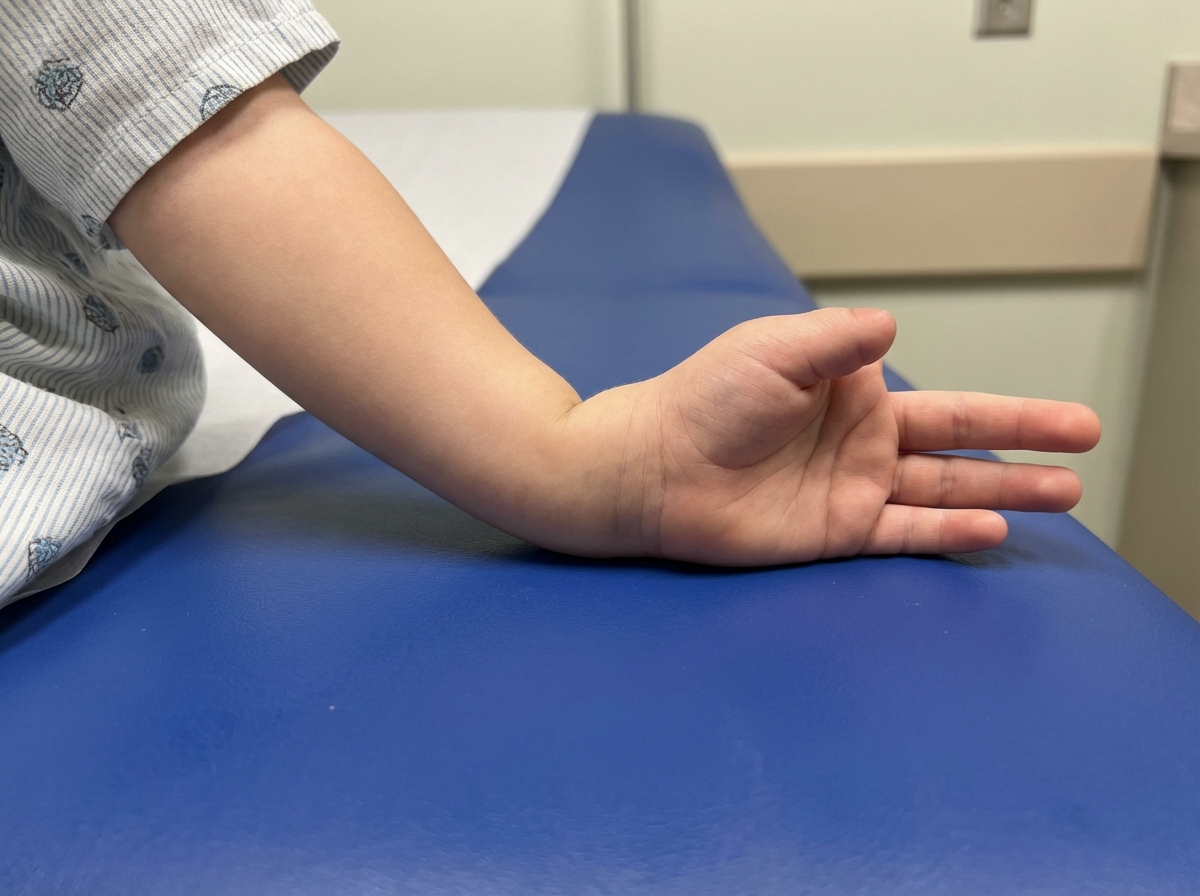
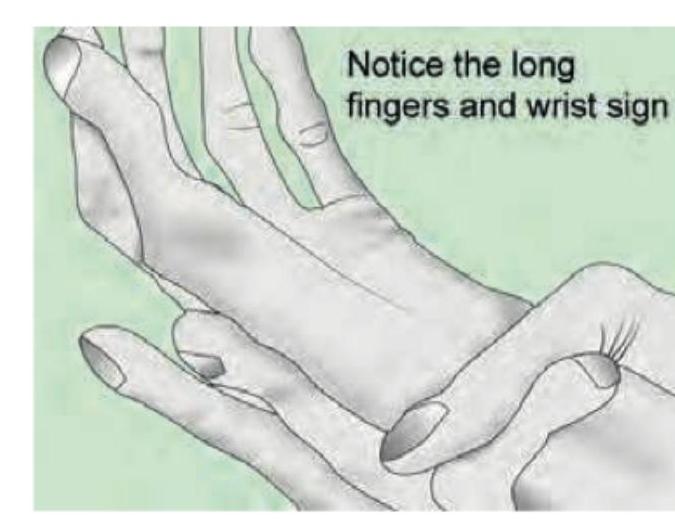
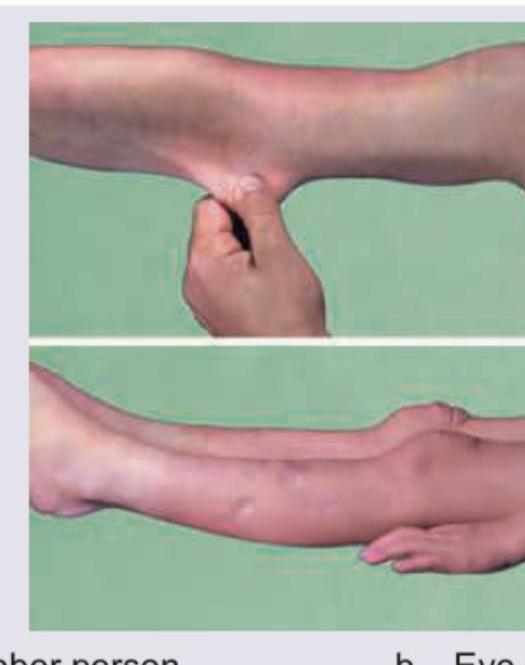
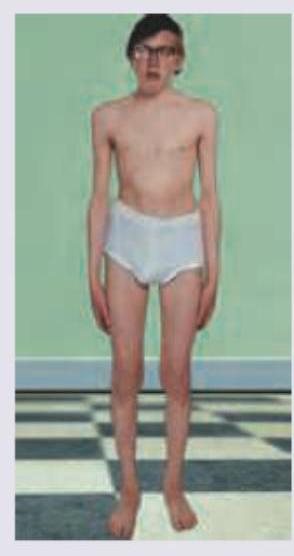
Explanation: The explanation with [1], inline citations added **Marfan syndrome** is the correct answer as it is a classic example of an **Autosomal Dominant (AD)** disorder. It is caused by a mutation in the **FBN1 gene** on chromosome 15, which encodes **Fibrillin-1**, a glycoprotein essential for the structural integrity of the extracellular matrix and the regulation of TGF-β signaling. **Analysis of Incorrect Options:** * **Wilson’s Disease:** This is an **Autosomal Recessive (AR)** disorder involving a mutation in the *ATP7B* gene on chromosome 13, leading to impaired copper transport and toxic accumulation in the liver and brain. * **Ataxia Telangiectasia:** This is an **Autosomal Recessive (AR)** genomic instability syndrome caused by mutations in the *ATM* gene, characterized by cerebellar ataxia, telangiectasias, and immune deficiency. * **G-6-PD Deficiency:** This is an **X-linked Recessive** enzymopathy. It primarily affects males, leading to episodic hemolytic anemia triggered by oxidative stress (e.g., fava beans, drugs like Primaquine). **NEET-PG High-Yield Pearls:** * **Marfan Syndrome Clinical Triad:** Skeletal (arachnodactyly, pectus excavatum), Ocular (**Ectopia lentis – typically upward/superolateral subluxation** [1]), and Cardiovascular (Aortic root dilation, **Aortic Dissection**, and Mitral Valve Prolapse [1]). * **Dominant Negative Effect:** Marfan syndrome often exhibits this genetic principle, where the mutated fibrillin protein interferes with the function of the normal protein produced from the wild-type allele. * **Rule of Thumb:** Most structural protein defects are Autosomal Dominant [1], while most enzyme deficiencies are Autosomal Recessive (G-6-PD being a notable X-linked exception).
Explanation: **Explanation:** The clinical presentation of a young patient with neurological symptoms (tremors, emotional lability) [1] and the pathognomonic **Kayser-Fleischer (KF) rings** (golden-brown discoloration in Descemet’s membrane) is a classic description of **Wilson’s Disease (Hepatolenticular Degeneration).** **Why Wilson’s Disease is Correct:** Wilson’s disease is an autosomal recessive disorder caused by a mutation in the **ATP7B gene** on chromosome 13. This leads to impaired biliary copper excretion and failure to incorporate copper into ceruloplasmin [1]. Excess copper deposits in the: * **Liver:** Causing cirrhosis or chronic hepatitis [1]. * **Brain (Basal Ganglia):** Leading to extrapyramidal symptoms like tremors, dystonia, and psychiatric issues (emotional lability) [1]. * **Eye:** Depositing in the **Descemet’s membrane** of the cornea to form KF rings. **Why Other Options are Incorrect:** * **Fabry’s Disease:** An X-linked lysosomal storage disorder characterized by angiokeratomas, peripheral neuropathy, and renal failure. The ocular finding is **cornea verticillata** (vortex keratopathy), not KF rings. * **Glycogen Storage Disease (GSD):** Typically presents with hypoglycemia, hepatomegaly, and growth retardation. It does not cause copper deposition in the cornea. * **Acute Rheumatic Fever:** While it can cause Sydenham’s chorea (involuntary movements), it is associated with streptococcal infection, carditis, and migratory polyarthritis, but never corneal rings. **High-Yield NEET-PG Pearls:** * **Best Initial Test:** Serum Ceruloplasmin (decreased <20 mg/dL). * **Gold Standard Diagnosis:** Liver biopsy (increased copper content >250 μg/g dry weight). * **Most Sensitive Test:** 24-hour urinary copper excretion (increased). * **Treatment of Choice:** Chelating agents like **D-Penicillamine** or Trientine; Zinc is used for maintenance/asymptomatic patients.
Explanation: **Explanation:** The cerebellum contains four pairs of deep nuclei embedded within its white matter. These nuclei are the primary output centers of the cerebellum. The correct answer is **Red nucleus** because it is located in the **midbrain (tegmentum)**, not within the cerebellum itself, although it is functionally connected to it via the cerebellorubral pathway. **The four deep cerebellar nuclei (from lateral to medial) are:** 1. **Dentate nucleus (Option A):** The largest and most lateral nucleus. it receives input from the cerebrocerebellum and is involved in planning and initiation of voluntary movements. 2. **Emboliform nucleus:** (Not listed in options) Located medially to the dentate. 3. **Globose nucleus (Option C):** Located between the emboliform and fastigial nuclei. Together, the emboliform and globose nuclei are referred to as the **nucleus interpositus**. 4. **Fastigial nucleus (Option B):** The most medial nucleus, associated with the vestibulocerebellum; it regulates balance and eye movements. **High-Yield Clinical Pearls for NEET-PG:** * **Mnemonic:** To remember the nuclei from lateral to medial: **"Don't Eat Greasy Foods"** (**D**entate, **E**mboliform, **G**lobose, **F**astigial). * **Functional Anatomy:** The **Dentate nucleus** is frequently involved in "intention tremors." * **Red Nucleus Pathology:** Lesions of the red nucleus or its tracts can lead to **Benedikt’s syndrome** (ipsilateral CN III palsy and contralateral tremors/ataxia). * **Phylogeny:** The Fastigial nucleus is the oldest (archicerebellum), while the Dentate is the newest (neocerebellum).
Explanation: **Explanation:** Turner syndrome is a chromosomal disorder in females characterized by the complete or partial absence of one X chromosome (**45,X karyotype**) [1], [5]. It is the most common cause of primary amenorrhea [2]. **Why Option C is Correct:** Cardiovascular malformations are present in approximately 30-50% of patients [5]. The most characteristic vascular abnormality is **Coarctation of the Aorta**, specifically the **pre-ductal (infantile) type**. Other common cardiac findings include a **Bicuspid Aortic Valve** (the most common overall cardiac anomaly) and aortic root dilatation, which increases the risk of aortic dissection. **Analysis of Incorrect Options:** * **Option A & D:** Turner syndrome occurs in phenotypic females [1]. The presence of a Y chromosome or testes would indicate a different disorder of sexual development (such as Klinefelter syndrome or Swyer syndrome). In Turner syndrome, ovaries undergo premature apoptosis, leading to **"streak ovaries"** [3] and a lack of estrogen. * **Option B:** This describes **Klinefelter Syndrome (47,XXY)**. Patients with Turner syndrome are characterized by **short stature** [1] (due to the loss of the *SHOX* gene) rather than tall stature [4], and they possess female external genitalia, not testes. **High-Yield Clinical Pearls for NEET-PG:** * **Physical Findings:** Webbed neck (cystic hygroma remnant), low posterior hairline, shield chest (widely spaced nipples), and cubitus valgus. * **Renal Anomaly:** **Horseshoe kidney** is the most common renal finding. * **Endocrine:** Elevated FSH/LH (hypergonadotropic hypogonadism) [2] and increased risk of hypothyroidism. * **Lymphedema:** Congenital lymphedema of hands and feet is a classic neonatal presentation.
Explanation: The fundamental requirement for DNA analysis is the presence of a **nucleus** containing genomic DNA. **Why Fibroblast is the "Correct" (Except) Answer in this context:** While fibroblasts do contain a nucleus and DNA, this question is a classic "best fit" or "source-based" MCQ often found in older medical entrance patterns. In clinical practice, DNA analysis is performed on cells that are easily accessible or relevant to the diagnostic procedure. **Monocytes, Lymphocytes, and Amnion cells** are standard, direct sources for DNA extraction in hematology and prenatal diagnosis [1]. Fibroblasts, however, are typically embedded in the connective tissue matrix; they are not a primary source for routine DNA analysis unless a **skin biopsy** is performed and the cells are subsequently grown in a **tissue culture**. Therefore, compared to the other options which are readily available "free" cells, fibroblasts are the least conventional source for routine DNA testing [2, 3]. **Analysis of Other Options:** * **Monocytes & Lymphocytes:** These are nucleated white blood cells (WBCs). Since mature Red Blood Cells (RBCs) and Platelets lack nuclei, the WBC fraction of a peripheral blood sample is the primary source of DNA for genetic testing [1, 2]. * **Amnion Cells:** These are fetal cells found in the amniotic fluid. They are the gold standard source for prenatal genetic diagnosis (Amniocentesis) to detect chromosomal abnormalities like Down Syndrome. **NEET-PG High-Yield Pearls:** * **Mature RBCs and Platelets** cannot be used for DNA analysis because they lack a nucleus. * **Reticulocytes** contain RNA but no nuclear DNA. * **Barr Body** (Inactivated X chromosome) is best visualized in the neutrophils (as a drumstick appearance) or buccal mucosal smears. * For **Karyotyping**, cells must be arrested in **Metaphase** using Colchicine.
Explanation: ### Explanation The correct answer is **D. All of the above**. **Multifactorial inheritance** (also known as polygenic inheritance) refers to conditions caused by the complex interaction of **multiple genes** and **environmental factors** [1]. Unlike Mendelian disorders, these do not follow a single-gene inheritance pattern but often exhibit a "threshold effect." 1. **Congenital Heart Disease (CHD):** Most isolated cases of CHD (like VSD or ASD) are multifactorial. While some are linked to chromosomal anomalies (e.g., Down syndrome), the majority result from a combination of genetic predisposition and maternal environmental triggers (e.g., rubella, diabetes, or drug exposure) [2]. 2. **Cleft Lip and Palate:** This is a classic example of a multifactorial developmental defect. The risk of recurrence in siblings is higher than the general population but much lower than the 25–50% seen in Mendelian traits. 3. **Hypertension:** Essential hypertension is a prototypical "lifestyle" disease where polygenic susceptibility (renin-angiotensin system variants) interacts with environmental factors like high salt intake, obesity, and stress. **Why other options are not "incorrect":** In this "All of the above" format, options A, B, and C are all valid examples of multifactorial inheritance. Selecting only one would be incomplete. --- ### High-Yield Clinical Pearls for NEET-PG * **The Threshold Model:** Multifactorial traits often follow a "Bell Curve" in the population. Clinical disease only manifests when an individual crosses a specific "threshold" of genetic and environmental liability [1]. * **Recurrence Risk:** In multifactorial disorders, the risk of recurrence increases with the number of affected family members and the severity of the malformation. * **Common Examples:** Other high-yield multifactorial conditions include **Type 2 Diabetes Mellitus, Pyloric Stenosis, Neural Tube Defects, and Schizophrenia.** [1] * **Edwards’ Criterion:** The recurrence risk for first-degree relatives in multifactorial inheritance is approximately the square root of the population prevalence ($\sqrt{p}$).
Explanation: The term **"Miliary mottling"** refers to the presence of numerous small, discrete, rounded opacities (usually 1–3 mm in diameter) distributed throughout both lung fields, resembling millet seeds. **Why Silicosis is the correct answer:** While Silicosis is a fibrotic lung disease that presents with nodular opacities, these nodules are typically larger (3–5 mm), more well-defined, and show a distinct **upper zone predominance** [1]. In advanced stages, these nodules coalesce to form Progressive Massive Fibrosis (PMF) [1]. Therefore, it is classically distinguished from the fine, uniform "miliary" pattern seen in the other conditions. **Analysis of other options:** * **Tuberculosis:** Miliary TB is the classic cause of this pattern, resulting from the hematogenous spread of *Mycobacterium tuberculosis*. * **Haemosiderosis:** Specifically, Idiopathic Pulmonary Haemosiderosis or secondary haemosiderosis (due to chronic venous congestion in Mitral Stenosis) presents with fine miliary mottling due to iron-laden macrophages in the alveoli. * **Aspergillosis:** Disseminated invasive aspergillosis in immunocompromised patients can occasionally present with a miliary distribution of fungal micro-abscesses. **NEET-PG High-Yield Pearls:** 1. **Eggshell Calcification:** A classic radiological sign of Silicosis (hilar lymph node calcification). 2. **Snowstorm Appearance:** Often used interchangeably with miliary mottling; also seen in **Metastatic deposits** (e.g., Thyroid, Renal Cell Carcinoma, Melanoma). 3. **Differential for Miliary Mottling (Mnemonic: SHIT):** **S**arcoidosis/Silicosis (rarely), **H**istoplasmosis/Haemosiderosis, **I**nfections (TB, Viral pneumonia), **T**umors (Mets). 4. **Note:** While some texts mention "miliary silicosis," in the context of standard MCQ exams, Silicosis is the "odd one out" compared to the classic hematogenous spread seen in TB and Haemosiderosis.
Explanation: **Explanation:** Williams syndrome (also known as Williams-Beuren syndrome) is a rare multisystemic neurodevelopmental disorder caused by a microdeletion on **chromosome 7q11.23**, which includes the **elastin (ELN) gene**. **Why Option C is the correct answer:** The hallmark cardiovascular lesion in Williams syndrome is **Supravalvular Aortic Stenosis (SVAS)**, not subvalvular. This occurs due to elastin deficiency, leading to thickening and narrowing of the ascending aorta above the sinuses of Valsalva. Subvalvular aortic stenosis is more commonly associated with conditions like HOCM or discrete subaortic membranes. **Analysis of Incorrect Options:** * **A. Hypercalcemia:** Idiopathic infantile hypercalcemia is a classic feature. It is usually transient but can lead to irritability and nephrocalcinosis in infancy. * **B. Mental retardation:** Most patients have mild to moderate intellectual disability. Interestingly, they often possess a "cocktail party personality," characterized by extreme friendliness, high social drive, and well-developed verbal skills despite a low IQ. * **D. Elfin facies:** This describes the characteristic dysmorphic features, including a broad forehead, periorbital puffiness, stellate iris pattern, depressed nasal bridge, long philtrum, and wide mouth with full lips. **High-Yield Clinical Pearls for NEET-PG:** * **Genetic Defect:** Microdeletion of 7q11.23 (detected via FISH). * **Cardiac:** Supravalvular aortic stenosis and Peripheral Pulmonary Artery Stenosis (PPS). * **Personality:** Hypersociability and "Cocktail party" speech. * **Endocrine:** Hypercalcemia and hypothyroidism. * **Mnemonic:** "Williams" are **7** (Chr 7) **Friendly Elves** (Facies/Personality) with **High Calcium** and **Narrow Aortas** (SVAS).
Explanation: Explanation: Pheochromocytoma is a catecholamine-secreting tumor of the adrenal medulla. Approximately 30-40% of cases are associated with hereditary germline mutations. Why AIRE gene is the correct answer: The AIRE (Autoimmune Regulator) gene is located on chromosome 21. Mutations in this gene lead to Autoimmune Polyendocrine Syndrome Type 1 (APS-1), also known as APECED. APS-1 is classically characterized by the triad of chronic mucocutaneous candidiasis, hypoparathyroidism, and adrenal insufficiency (Addison’s disease). It has no association with pheochromocytoma. Why the other options are incorrect: * NF-1 gene: Mutations cause Neurofibromatosis Type 1. About 1-5% of NF-1 patients develop pheochromocytoma, usually presenting in adulthood. * RET proto-oncogene: Mutations lead to Multiple Endocrine Neoplasia Type 2 (MEN 2A and 2B). Pheochromocytoma occurs in approximately 50% of these patients and is often bilateral. * VHL gene: Mutations cause Von Hippel-Lindau syndrome. Pheochromocytoma (often Type 2 VHL) is a major component, alongside hemangioblastomas and renal cell carcinoma. High-Yield Clinical Pearls for NEET-PG: 1. Rule of 10s (Traditional): 10% bilateral, 10% malignant, 10% pediatric, 10% extra-adrenal (Paraganglioma). Note: Modern genetics shows up to 35% are hereditary. 2. SDHx Mutations: Mutations in Succinate Dehydrogenase (SDHB, SDHD) are high-yield causes of familial paragangliomas and pheochromocytomas. SDHB carries the highest risk of malignancy. 3. Diagnosis: Best initial screening test is Plasma free metanephrines; most sensitive imaging is MRI (shows "light bulb" appearance on T2).
Principles of Medical Genetics
Practice Questions
Genetic Testing and Counseling
Practice Questions
Single Gene Disorders
Practice Questions
Chromosomal Disorders
Practice Questions
Mitochondrial Diseases
Practice Questions
Pharmacogenomics
Practice Questions
Cancer Genetics
Practice Questions
Genetics of Common Diseases
Practice Questions
Epigenetics and Disease
Practice Questions
Genetic Basis of Developmental Disorders
Practice Questions
Ethical Issues in Medical Genetics
Practice Questions
Gene Therapy and Precision Medicine
Practice Questions
Get full access to all questions, explanations, and performance tracking.
Start For Free