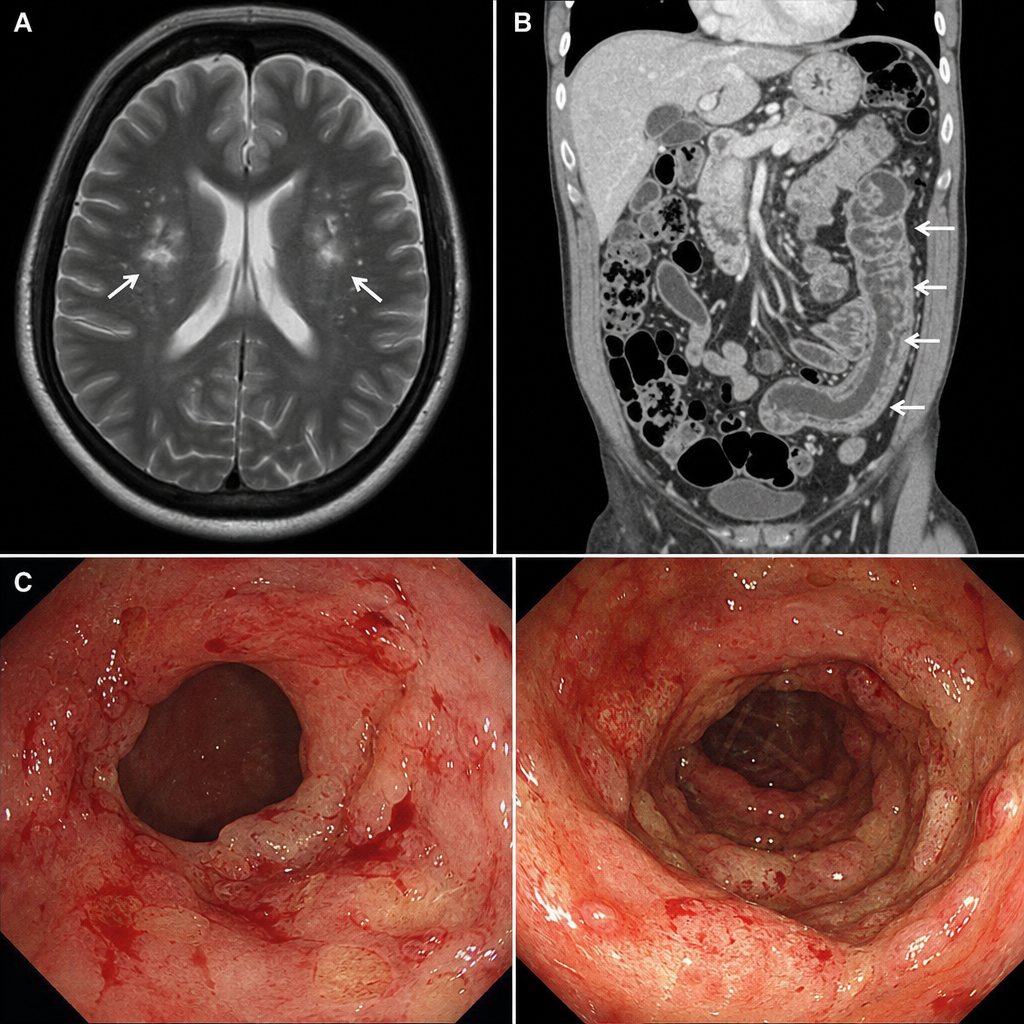
Which of the following conditions is inherited as an autosomal recessive trait?
Which of the following is a Y-linked disease?
Kartagener syndrome is associated with which of the following conditions?
What is the genetic abnormality in fragile X-syndrome?
Which one of the following conditions is not autosomal recessive?
Which of the following is true of Klinefelter's syndrome?
A female married to a normal male has a father with vitamin D resistant rickets. What are the chances that her children will be colour blind?
Which of the following is not a channelopathy?
Which of the following is NOT a single gene disorder?
All of the following are seen in a patient with cystic fibrosis except?
Explanation: **Explanation:** The correct answer is **Hemochromatosis**. Hereditary Hemochromatosis (specifically Type 1, involving the *HFE* gene on Chromosome 6) is a classic example of an **autosomal recessive (AR)** disorder [2]. It is characterized by excessive intestinal iron absorption leading to iron overload in organs like the liver, heart, and pancreas [2], [3]. **Analysis of Options:** * **Hemochromatosis (Correct):** Most cases are due to the C282Y mutation in the *HFE* gene [3]. It follows an AR pattern, meaning an individual must inherit two defective alleles to manifest the disease (though penetrance is variable) [2]. * **Achondroplasia:** This is the most common cause of short-limb dwarfism and is inherited as **Autosomal Dominant (AD)** [1]. It involves a gain-of-function mutation in the *FGFR3* gene. * **Tuberous Sclerosis:** A neurocutaneous syndrome (TSC1/TSC2 mutations) inherited in an **Autosomal Dominant** fashion, though many cases arise from *de novo* mutations. * **Osteogenesis Imperfecta:** Most common types (Type I-IV) are inherited as **Autosomal Dominant** traits, resulting from mutations in *COL1A1* or *COL1A2* genes affecting Type 1 collagen. **High-Yield Clinical Pearls for NEET-PG:** 1. **Mnemonic for AR disorders:** "Many Chronic Hospital Fits Are Really Bad" (Metabolic, Cystic fibrosis, Hemochromatosis, Friedreich ataxia, Alkaptonuria, Sickle cell, Beta-thalassemia). 2. **Hemochromatosis Triad:** "Bronze Diabetes" (Hyperpigmentation, Diabetes Mellitus, and Cirrhosis) [2]. 3. **Achondroplasia Fact:** 80% of cases are due to new mutations associated with **advanced paternal age**. 4. **Rule of Thumb:** Most structural protein defects are AD, while most enzyme deficiencies are AR.
Explanation: **Explanation:** **Leri-Weil Dyschondrosteosis (LWD)** is the correct answer because it is inherited in a **pseudoautosomal dominant** manner. It is caused by mutations or deletions of the **SHOX gene**, located in the pseudoautosomal regions (PAR1) of the **X and Y chromosomes**. Because the gene is present on both sex chromosomes, it can be transmitted from father to son (Y-linked transmission), distinguishing it from classic X-linked disorders. Clinically, LWD is characterized by short stature, mesomelic shortening of limbs, and the **Madelung deformity** of the wrist. **Analysis of Incorrect Options:** * **Adrenoleukodystrophy (ALD):** This is an **X-linked recessive** peroxisomal disorder caused by a mutation in the *ABCD1* gene, leading to the accumulation of very-long-chain fatty acids (VLCFA). * **Fabry Disease:** This is an **X-linked recessive** lysosomal storage disorder caused by a deficiency of **alpha-galactosidase A**, leading to accumulation of globotriaosylceramide. * **Diabetes Insipidus (DI):** Congenital Nephrogenic DI is most commonly inherited as an **X-linked recessive** trait (mutation in the *AVPR2* gene). While autosomal forms exist, it is not Y-linked. [1] **NEET-PG High-Yield Pearls:** 1. **Pseudoautosomal Regions (PAR):** These are homologous sequences on the tips of X and Y chromosomes that allow them to pair and recombine during meiosis. Genes here (like *SHOX*) do not follow traditional sex-linked inheritance patterns. 2. **Pure Y-linked (Holandric) Traits:** These are rare. Classic examples include **Swyer syndrome** (SRY gene mutations) and **Hypertrichosis pinnae** (though the latter is debated). 3. **Madelung Deformity:** A hallmark of Leri-Weil syndrome, involving dorsal dislocation of the ulna and bowing of the radius.
Explanation: **Explanation:** **Kartagener Syndrome** is a subset of **Primary Ciliary Dyskinesia (PCD)**, characterized by the clinical triad of **Situs Inversus, Bronchiectasis, and Chronic Sinusitis**. The underlying pathophysiology involves a genetic defect in the **dynein arms** of cilia and flagella, leading to impaired motility. The disease is progressive when associated with ciliary dysfunction and eventually causes respiratory failure [1]. **Why Asthenozoospermia is Correct:** The tail of a spermatozoon is a modified flagellum with an axonemal structure (9+2 microtubule arrangement) identical to respiratory cilia. In Kartagener syndrome, the defect in the dynein arms results in **immotile spermatozoa**. While the sperm count is typically normal, the lack of motility—termed **Asthenozoospermia**—leads to male infertility. **Analysis of Incorrect Options:** * **Oligospermia (A):** This refers to a low sperm count. In Kartagener syndrome, sperm production (spermatogenesis) in the testes is usually normal; the issue is purely functional (motility). * **Blockage of the epididymis (B):** Obstructive azoospermia due to epididymal blockage is characteristic of **Young’s Syndrome**, not Kartagener syndrome. While both present with bronchiectasis, the mechanism of infertility differs. * **Undescended testes (D):** Also known as cryptorchidism, this is a developmental failure of testicular descent and has no pathological association with ciliary dynein defects. **NEET-PG High-Yield Pearls:** * **Inheritance:** Autosomal Recessive. * **The Triad:** Situs inversus (due to failure of ciliary signaling during embryonic nodal rotation), Bronchiectasis, and Sinusitis. * **Diagnosis:** Screening via **Nasal Nitric Oxide** levels (low in PCD); definitive diagnosis via Electron Microscopy (showing absent dynein arms) or Genetic testing. * **Female Infertility:** Can also occur due to impaired ciliary movement in the fallopian tubes, increasing the risk of ectopic pregnancy.
Explanation: Fragile X Syndrome is the most common cause of inherited intellectual disability and the most common monogenic cause of autism. **Why Option A is correct:** The condition is a classic example of a **Trinucleotide Repeat Disorder** [1]. It is caused by the expansion of a **CGG repeat** in the 5' untranslated region of the **FMR1 gene** located on the X chromosome (Xq27.3) [1]. * **Normal:** < 55 repeats. * **Premutation:** 55–200 repeats (associated with FXTAS and POI). * **Full Mutation:** > 200 repeats. This expansion leads to hypermethylation of the promoter region, silencing the gene and resulting in a deficiency of the Fragile X Mental Retardation Protein (FMRP), which is essential for neural development. **Why other options are incorrect:** * **Option B (Point mutation):** While point mutations can occur in the FMR1 gene, they account for <1% of cases. The hallmark of the syndrome is the triplet expansion. * **Option C (Not inheritable):** This is incorrect; it follows an **X-linked dominant** inheritance pattern with variable expressivity and reduced penetrance in females. * **Option D (Deletion):** Large deletions of the FMR1 gene are rare causes. The primary mechanism is expansion, not loss of a chromosomal segment [1]. **High-Yield Clinical Pearls for NEET-PG:** * **Anticipation:** The disease severity increases and age of onset decreases in successive generations (occurs during maternal meiosis). * **Clinical Triad:** Long face with a prominent jaw (prognathism), large everted ears, and **macro-orchidism** (post-pubertal). * **Cytogenetics:** When cells are cultured in a folate-deficient medium, the X chromosome shows a "fragile site" (breakage) at the distal end of the long arm. * **Diagnosis:** PCR (for small expansions) and **Southern Blot** (to confirm full mutations and methylation status).
Explanation: **Explanation:** The correct answer is **Neurofibromatosis**, as it follows an **Autosomal Dominant (AD)** inheritance pattern, whereas the other listed conditions are Autosomal Recessive (AR). **1. Why Neurofibromatosis is the correct answer:** Neurofibromatosis (both Type 1 and Type 2) is a classic example of an Autosomal Dominant disorder. * **NF1 (von Recklinghausen disease):** Caused by a mutation in the *NF1* gene on **Chromosome 17** (encodes Neurofibromin). * **NF2:** Caused by a mutation in the *NF2* gene on **Chromosome 22** (encodes Merlin). A key feature of NF is **100% penetrance** but **variable expressivity**, meaning everyone with the gene will show symptoms, but the severity varies widely. **2. Analysis of Incorrect Options (AR Disorders):** * **Cystic Fibrosis:** The most common lethal AR disorder in Caucasians, caused by a mutation in the *CFTR* gene on Chromosome 7. * **Wilson’s Disease:** An AR disorder of copper metabolism due to mutations in the *ATP7B* gene on Chromosome 13. * **Hemochromatosis:** Most commonly an AR disorder (HFE gene mutation on Chromosome 6) leading to iron overload. **3. NEET-PG High-Yield Clinical Pearls:** * **Mnemonic for AR:** "Most enzyme deficiencies are AR" (except Hunter syndrome and Fabry disease). * **Mnemonic for AD:** "Structural protein defects are usually AD" (e.g., Marfan, Achondroplasia, NF). * **NF1 Clinical Triad:** Café-au-lait spots, Lisch nodules (iris hamartomas), and Neurofibromas. * **NF2 Clinical Hallmark:** Bilateral Acoustic Neuromas (Vestibular Schwannomas) [1].
Explanation: **Explanation:** **Klinefelter Syndrome (KS)** is the most common sex chromosome disorder in males, typically characterized by the presence of an extra X chromosome. 1. **Chromosome Pattern (Option A):** The classic karyotype is **47, XXY**, occurring due to meiotic non-disjunction of sex chromosomes [1]. While mosaicism (e.g., 46,XY/47,XXY) can occur, 47,XXY is the hallmark of the syndrome [2]. 2. **Mental Retardation (Option B):** While many individuals have normal intelligence, there is a statistically significant association with **cognitive impairment**, learning disabilities (especially verbal skills), and behavioral issues [1]. The degree of intellectual disability often increases with the number of additional X chromosomes (e.g., 48,XXXY). 3. **Hypogonadism (Option C):** This is a core clinical feature. KS is a form of **hypergonadotropic hypogonadism** [3]. Fibrosis and hyalinization of the seminiferous tubules lead to small, firm testes, azoospermia (infertility), and decreased testosterone levels, which in turn causes elevated LH and FSH levels [1]. Since all three statements accurately describe the clinical and genetic profile of the syndrome, **Option D** is the correct answer. **High-Yield Clinical Pearls for NEET-PG:** * **Physical Findings:** Tall stature (increased lower segment length), gynecomastia, female-type hair distribution, and high-pitched voice [1]. * **Biochemical Profile:** ↓ Testosterone, ↑ FSH, ↑ LH, and ↑ Estradiol [1]. * **Associated Risks:** Increased risk of **Breast Cancer** (20 times higher than normal males), Germ cell tumors (Mediastinal), and Systemic Lupus Erythematosus (SLE) [3]. * **Histology:** Characterized by Leydig cell hyperplasia (pseudohyperplasia) and hyalinization of tubules [1].
Explanation: **Explanation:** The core of this question lies in identifying the inheritance patterns of the two conditions mentioned: **Vitamin D Resistant Rickets (VDRR)** and **Color Blindness**. Both are **X-linked** disorders. 1. **Inheritance Pattern:** VDRR is an X-linked Dominant (XLD) condition, while Color Blindness is X-linked Recessive (XLR). 2. **Genotype Determination:** The female’s father has VDRR. Since he is male ($X^D Y$), he must pass his only X chromosome (carrying the disease gene) to all his daughters. Therefore, the female is a **carrier/affected** for VDRR. 3. **The "Trick":** In genetics questions, if two different X-linked traits are discussed in the same lineage without specifying otherwise, they are often linked on the same chromosome. However, the question asks for the probability of **Color Blindness** specifically. 4. **The Calculation:** The female is a carrier for Color Blindness ($X^C X$). She is married to a normal male ($XY$). * **Daughters:** 50% normal ($XX$), 50% carriers ($X^C X$). * **Sons:** 50% normal ($XY$), 50% color blind ($X^C Y$). * **Total Children:** Out of all possible offspring, 50% (the sons) have a 50% chance, and daughters have a 0% chance of phenotype expression. However, in NEET-PG, if the mother is a carrier for an XLR trait, the standard probability for
Explanation: **Explanation:** **Channelopathies** are a group of heterogeneous disorders caused by mutations in genes encoding ion channel proteins or their interacting proteins. These defects disrupt the flow of ions (like Na+, K+, Cl-, or Ca2+) across cell membranes. **Why Tay-Sachs Disease is the Correct Answer:** Tay-Sachs disease is **not** a channelopathy; it is a **Lysosomal Storage Disorder**. It is caused by a deficiency of the enzyme **Hexosaminidase A**, leading to the toxic accumulation of **GM2 gangliosides** in neurons. It typically presents with neurodegeneration, developmental delay, and a characteristic "cherry-red spot" on the macula. **Analysis of Incorrect Options (Channelopathies):** * **Cystic Fibrosis:** Caused by mutations in the **CFTR gene**, which encodes a cAMP-regulated **chloride channel**. It is one of the most common fatal genetic channelopathies. * **Liddle’s Syndrome:** An autosomal dominant condition involving a "gain-of-function" mutation in the **ENaC (Epithelial Sodium Channel)** in the renal collecting ducts, leading to hypertension and hypokalemia. * **Hypokalemic Periodic Paralysis:** Most commonly caused by mutations in the **CACNA1S** (Calcium channel) or **SCN4A** (Sodium channel) genes in skeletal muscle [1]. **NEET-PG High-Yield Pearls:** * **Cardiac Channelopathies:** Long QT Syndrome (K+ channel), Brugada Syndrome (Na+ channel). * **Neurological Channelopathies:** Familial Hemiplegic Migraine, Episodic Ataxia. * **Endocrine Channelopathy:** Neonatal Diabetes/PHHI (K-ATP channels). * **Tay-Sachs Mnemonic:** "A **Gang** of **Six** (**Hex**) **S**mall (**S**achs) **Lycans** (**Lysosomal**)." (GM2 Ganglioside, Hexosaminidase A, Lysosomal).
Explanation: **Explanation:** The distinction between single-gene (monogenic) disorders and chromosomal microdeletion syndromes is a high-yield concept for NEET-PG [2]. **Why William’s Syndrome is the correct answer:** Unlike the other options, **William’s Syndrome** is not caused by a mutation in a single gene. It is a **microdeletion syndrome** caused by a contiguous gene deletion on the long arm of **chromosome 7 (7q11.23)** [2]. This deletion involves approximately 26–28 genes, including the *ELN* (elastin) gene. Because it involves the loss of multiple neighboring genes rather than a single point mutation or triplet repeat, it is classified as a chromosomal disorder. **Why the other options are incorrect:** * **Hemochromatosis (Option A):** An autosomal recessive single-gene disorder, most commonly due to a mutation in the **HFE gene** (C282Y or H63D). * **Cystic Fibrosis (Option B):** A classic autosomal recessive single-gene disorder caused by mutations in the **CFTR gene** on chromosome 7. * **Huntington’s Disease (Option D):** An autosomal dominant single-gene disorder caused by a **CAG trinucleotide repeat expansion** in the *HTT* gene on chromosome 4. **Clinical Pearls for NEET-PG:** * **William’s Syndrome Triad:** "Elfin" facies, Intellectual disability (with "cocktail party" personality/extreme loquacity), and Cardiovascular defects (most commonly **Supravalvular Aortic Stenosis**) [1]. * **Diagnosis:** The gold standard for detecting microdeletions like William’s is **FISH** (Fluorescence In Situ Hybridization) or Chromosomal Microarray [2]. * **Metabolic association:** Idiopathic **infantile hypercalcemia** is a characteristic feature of William’s syndrome.
Explanation: Explanation: Cystic Fibrosis (CF) is an autosomal recessive disorder caused by mutations in the **CFTR gene**, leading to defective chloride transport across epithelial membranes [1]. **Why Metabolic Acidosis is the Correct Answer (The "Except"):** Patients with CF do **not** develop metabolic acidosis; instead, they are prone to **Metabolic Alkalosis**. This occurs due to excessive loss of sodium and chloride in sweat (the "salty baby" syndrome). To compensate for the loss of chloride, the kidneys increase the reabsorption of bicarbonate and excrete hydrogen ions, leading to a state known as **Pseudo-Bartter Syndrome** (hypokalemic, hypochloremic metabolic alkalosis). **Analysis of Incorrect Options:** * **A. Hypochloremia:** This is a classic finding. The defective CFTR protein prevents chloride reabsorption in sweat ducts, leading to high chloride concentration in sweat and low serum chloride levels [1]. * **C. Recurrent Pneumonias:** Thick, viscid mucus in the airways impairs mucociliary clearance, leading to chronic colonization by pathogens like *Staphylococcus aureus* (in childhood) and *Pseudomonas aeruginosa* (in adults) [1]. * **D. Steatorrhoea:** Pancreatic insufficiency occurs in ~85% of patients. Blocked pancreatic ducts lead to a deficiency of digestive enzymes, resulting in fat malabsorption and foul-smelling, oily stools. **NEET-PG High-Yield Pearls:** * **Diagnosis:** Sweat Chloride test (Gold Standard) > 60 mEq/L. * **Most Common Mutation:** ΔF508 (Class II mutation - protein misfolding) [1]. * **Infertility:** 95% of males are infertile due to **Congenital Bilateral Absence of Vas Deferens (CBAVD)**; spermatogenesis is usually normal. * **Newborn Screening:** Measurement of **Immunoreactive Trypsinogen (IRT)**.
Principles of Medical Genetics
Practice Questions
Genetic Testing and Counseling
Practice Questions
Single Gene Disorders
Practice Questions
Chromosomal Disorders
Practice Questions
Mitochondrial Diseases
Practice Questions
Pharmacogenomics
Practice Questions
Cancer Genetics
Practice Questions
Genetics of Common Diseases
Practice Questions
Epigenetics and Disease
Practice Questions
Genetic Basis of Developmental Disorders
Practice Questions
Ethical Issues in Medical Genetics
Practice Questions
Gene Therapy and Precision Medicine
Practice Questions
Get full access to all questions, explanations, and performance tracking.
Start For Free