A 40-year-old male presents with recurrent nasal polyps and asthma. Which additional condition should be screened for in this patient?
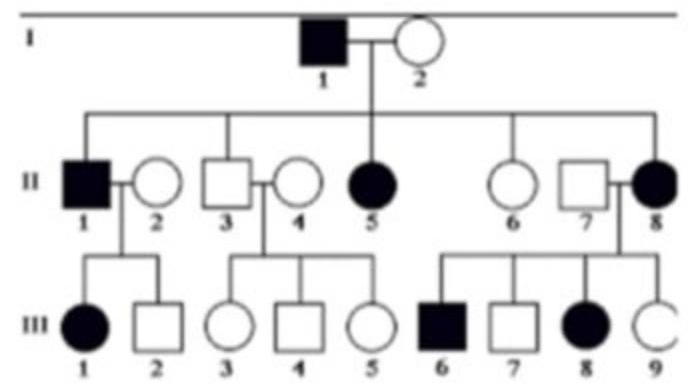
25-year-old man presents for a routine physical examination. The patient is tall and on examination, he was found to have an early diastolic murmur. His family pedigree is given below (image attached). Which of the following is the mode of inheritance by which the disease is likely to be transmitted?
In Turner's syndrome, which of the following is NOT typically observed?
Which of the following statements about Von Hippel-Lindau (VHL) syndrome is true?
Gene associated with the development of Peutz-Jeghers syndrome is?
Which of the following is NOT a feature of Abetalipoproteinemia?
Which one of the following statements is correct regarding chronic granulomatous disease (CGD)?
Following genetic counselling in a family for Familial polyposis coli (FPC), what is the next appropriate screening test for at-risk individuals?
A 25-year-old man presents for a routine physical examination. He is tall and has an early diastolic murmur on examination. Based on the clinical findings, which of the following is the most likely mode of inheritance for the condition?
Which karyotype is commonly associated with true hermaphroditism?
Explanation: The combination of **nasal polyps**, **asthma**, and **aspirin sensitivity (or NSAID-exacerbated respiratory disease)** defines Samter's triad, also known as aspirin-exacerbated respiratory disease (AERD) [1]. This condition involves an abnormal arachidonic acid metabolism leading to increased leukotriene production, which exacerbates respiratory symptoms. The classical aspirin-sensitive patient often presents in middle age with asthma, rhinosinusitis, and nasal polyps [1]. *Cystic fibrosis* - While **nasal polyps** can be a feature of **cystic fibrosis (CF)**, especially in children, the primary concern in adults with recurrent polyps and asthma is less likely to be CF without other typical systemic manifestations (e.g., recurrent lung infections, pancreatic insufficiency). - Confirmation of CF requires sweat chloride testing or genetic analysis for **CFTR mutations**. *Allergic fungal sinusitis* - This condition is characterized by **nasal polyps** and asthma-like symptoms, driven by an allergic reaction to fungal elements in the sinuses. - However, it is a specific diagnosis within rhinosinusitis and doesn't encompass the broad spectrum of respiratory hypersensitivity seen in Samter's triad (especially the aspirin sensitivity component). *Vasomotor rhinitis* - **Vasomotor rhinitis** primarily involves **non-allergic rhinitis** symptoms such as nasal congestion, runny nose, and sneezing, often triggered by irritants or temperature changes. - It typically does not involve **nasal polyps** or is associated with **asthma**, and certainly not with aspirin sensitivity.
Explanation: ***Autosomal Dominant*** - The pedigree shows that the disease appears in every generation, and affected individuals have at least one affected parent (e.g., I-1 passes it to II-1, II-5, II-8). This pattern is characteristic of **dominant inheritance**. - Both males and females are affected, and affected fathers can pass the trait to their sons (e.g., I-1 to II-1), ruling out X-linked inheritance and supporting an **autosomal dominant** mode. *Autosomal Recessive* - In autosomal recessive inheritance, affected individuals typically have **unaffected parents** (who are carriers), and the disease often skips generations. This is not observed in the provided pedigree. - While both males and females can be affected, the presence of affected individuals in every generation and vertical transmission makes recessive inheritance unlikely. *X-Linked Recessive* - X-linked recessive disorders typically show more affected males than females, and affected fathers **cannot pass the trait to their sons**. The pedigree clearly shows affected females and father-to-son transmission (I-1 to II-1 and potentially II-8 to III-6), ruling out this pattern. - Also, all daughters of an affected father would be carriers, and some an affected mother would have affected offspring. *X-Linked Dominant* - In X-linked dominant inheritance, all daughters of an affected father would be affected, and there is no male-to-male transmission. - The pedigree shows instances where affected fathers (like I-1) have unaffected daughters (e.g., II-2, II-4, II-6, II-7), and affected mothers (II-5, II-8) have unaffected children, which contradicts X-linked dominant inheritance.
Explanation: ***Mental retardation*** - While there may be some **cognitive difficulties**, severe mental retardation is **not a typical feature** of Turner's syndrome. - Individuals with Turner's syndrome generally have **normal intelligence**, though they may experience challenges in areas like spatial perception. *Short stature* - This is a **classic and almost universal finding** in Turner's syndrome, often one of the first features to be noted [1]. - It results from the **haploinsufficiency of genes** on the X chromosome, particularly the SHOX gene [1]. *Widely spaced nipple* - Often referred to as **shield chest**, this is a characteristic physical finding due to the **broad chest** and increased inter-nipple distance. - This feature, along with other dysmorphic traits, contributes to the distinctive phenotype. *Webbed neck* - A **short, broad neck with redundant skin folds** (webbing) is a common manifestation of Turner's syndrome. - This **lymphatic abnormality** is often present from birth and is a key diagnostic clue.
Explanation: ***Regular screening for clear cell carcinoma of the kidneys is essential.*** - **VHL syndrome** is strongly associated with an increased risk of developing **clear cell renal cell carcinoma**, making regular screening crucial for early detection and management [1]. - Due to the high penetrance of kidney tumors, including renal cysts and carcinomas, frequent imaging surveillance is a cornerstone of management for affected individuals. *It is an autosomal recessive condition.* - **VHL syndrome** is an **autosomal dominant** inherited disorder, meaning only one copy of the mutated gene is sufficient to cause the condition. - This inheritance pattern distinguishes it from recessive disorders that require two affected copies of a gene. *Central nervous system involvement is rare.* - **Hemangioblastomas**, particularly in the **cerebellum**, **brainstem**, and **spinal cord**, are characteristic features of VHL syndrome and are common. - In fact, CNS involvement, especially hemangioblastomas, is one of the most frequently observed clinical manifestations. *The VHL gene acts as a growth promoter.* - The **VHL gene** is a **tumor suppressor gene**, meaning its normal function is to regulate cell growth and prevent tumor formation. - When mutated, the dysfunctional VHL protein can no longer suppress tumor growth, leading to the development of various tumors associated with the syndrome.
Explanation: ***STK11*** - **Peutz-Jeghers syndrome (PJS)** is an autosomal dominant disorder caused by a germline mutation in the **STK11 (serine/threonine kinase 11)** gene. - The STK11 gene acts as a **tumor suppressor**, and its inactivation leads to the characteristic hamartomatous polyps and increased cancer risk seen in PJS [1]. *PTEN* - Mutations in the **PTEN gene** are associated with **Cowden syndrome**, another hereditary polyposis syndrome. - Cowden syndrome is characterized by hamartomatous polyps, mucocutaneous lesions, and an increased risk of breast, thyroid, and endometrial cancers. *KRAS* - The **KRAS gene** is a proto-oncogene frequently mutated in various cancers, including colorectal cancer, but it is not directly associated with the primary genetic defect of Peutz-Jeghers syndrome. - **KRAS mutations** are often found in sporadic colorectal cancers and can influence response to certain therapies. *BRCA 1* - The **BRCA1 gene** is a well-known tumor suppressor gene primarily associated with an increased risk of hereditary breast and ovarian cancers. - It plays a crucial role in DNA repair and is not directly involved in the pathogenesis of Peutz-Jeghers syndrome.
Explanation: Elevated plasma apolipoprotein B levels - **Abetalipoproteinemia** is characterized by the **absence** or extremely **low levels** of apolipoprotein B due to a defect in microsomal triglyceride transfer protein (MTP). - This genetic disorder prevents the assembly and secretion of **chylomicrons**, **VLDL**, and **LDL**, all of which contain apolipoprotein B. *Plasma levels of cholesterol and triglyceride are extremely low* - This is a direct consequence of the inability to form and secrete lipoproteins such as **chylomicrons** (transport dietary triglycerides) and **VLDL/LDL** (transport endogenous lipids and cholesterol). - The lack of these lipoproteins results in **malabsorption of fats** and fat-soluble vitamins, contributing to the low plasma lipid levels. *Manifest in early childhood with diarrhea* - **Fat malabsorption** due to the absence of chylomicrons leads to **steatorrhea** (fatty stools), which is often observed as chronic diarrhea in infancy. - Failure to thrive and abdominal distension are also common early GI symptoms. *Progressive pigmented retinopathy seen* - This is a neurological and ocular manifestation resulting from severe **deficiency of fat-soluble vitamins**, particularly **vitamin A and E** [1]. - **Vitamin A deficiency** contributes to poor vision and **retinopathy**, while **vitamin E deficiency** leads to progressive neurological symptoms like ataxia and peripheral neuropathy [1].
Explanation: Reviewing the mechanisms of Chronic Granulomatous Disease (CGD): ***Recurrent infections with catalase-positive organisms are common in this disease.*** - Chronic Granulomatous Disease (CGD) involves a defect in **NADPH oxidase**, impairing the generation of **reactive oxygen species** essential for killing certain bacteria and fungi. - Patients with CGD are particularly susceptible to infections by **catalase-positive organisms** (e.g., *Staphylococcus aureus, Burkholderia cepacia, Serratia marcescens, Nocardia, Aspergillus*) because these organisms neutralize the small amounts of hydrogen peroxide that CGD phagocytes might produce [1]. *It is characterized by abnormal bacterial killing.* - This statement is partially correct but less specific; while CGD does involve abnormal bacterial killing, the most defining characteristic is the **recurrent infections with catalase-positive organisms** due to the specific enzymatic defect. - The defect in **NADPH oxidase** leads to impaired production of **superoxide radicals**, which are crucial for the respiratory burst and subsequent microbial killing [1]. *Nitrobluetetrazolium test is useful for screening* - The **nitroblue tetrazolium (NBT) test** was historically used to diagnose CGD by assessing the production of superoxide, but it has largely been replaced by the more accurate and quantitative **dihydrorhodamine (DHR) flow cytometry test**. - While helpful in the past, DHR flow cytometry is now the preferred screening and diagnostic tool for CGD. *It is an X-linked recessive disease.* - While the most common form of CGD (approximately 70% of cases) is **X-linked recessive** (due to mutations in the *CYBB* gene encoding gp91phox), CGD can also be inherited in an **autosomal recessive** manner. - This autosomal recessive form is caused by mutations in other genes coding for NADPH oxidase components (e.g., *NCF1, NCF2, CYBA*).
Explanation: Colonoscopy - **Colonoscopy** is the gold standard for screening individuals at risk for **Familial Adenomatous Polyposis (FAP)**, also known as Familial Polyposis Coli (FPC), as it allows for visualization of the entire colon and removal of polyps [1]. - Screening typically begins in **early adolescence (10-12 years)** due to the high risk of developing multiple adenomatous polyps and subsequent colorectal cancer [1]. Flexible sigmoidoscopy - While useful for inspecting the lower colon, a **flexible sigmoidoscopy** does not visualize the entire colon, which is essential for FAP given that polyps can occur throughout the large bowel [3]. - It would miss polyps in the **proximal colon**, leading to an inadequate assessment of cancer risk in FAP patients [1]. Occult blood in stools - Testing for **occult blood in stools** is a general screening tool for colorectal cancer but is not sensitive enough for FAP, where the goal is to detect and remove polyps before they become malignant. - A negative result does not rule out the presence of **adenomatous polyps**, which are the hallmark of FAP. APC gene - **APC gene** testing is used for **genetic diagnosis** to identify individuals who carry the FAP mutation, but it is not a screening test for adenomatous polyps or cancer themselves [2]. - Once a family member is identified with the APC gene mutation, subsequent surveillance for polyps requires direct visualization methods like colonoscopy [1].
Explanation: ### AD - The combination of **tall stature** and an **early diastolic murmur** is highly suggestive of **Marfan syndrome**, which is inherited in an **autosomal dominant** pattern [1]. - This mode of inheritance means that only one copy of the mutated gene (FBN1) is sufficient to cause the disorder [1]. ### AR - **Autosomal recessive** disorders typically require two copies of a mutated gene for the condition to manifest, and patients are often born to unaffected carriers. - Marfan syndrome does not follow this inheritance pattern [1]. ### XLR - **X-linked recessive** disorders primarily affect males, with females usually being carriers or less severely affected. - While Marfan syndrome can affect both sexes, its inheritance pattern is not linked to the X chromosome. ### XLD - **X-linked dominant** disorders are passed from fathers to all daughters but not to sons, and from mothers to half of their children regardless of sex. - This pattern is not consistent with the genetic transmission of Marfan syndrome.
Explanation: ***46,XX*** - While various karyotypes can be associated with **true hermaphroditism**, the majority of cases (approximately 60-70%) present with a **46,XX karyotype** [1]. - This karyotype indicates the presence of **XX chromosomes**, typically associated with females, but in true hermaphroditism, both ovarian and testicular tissue are present [1]. *45,X (Turner syndrome)* - This karyotype is classically associated with **Turner syndrome**, characterized by the absence of one X chromosome [2]. - Individuals with Turner syndrome are typically phenotypically female but experience **gonadal dysgenesis**, leading to streak gonads and infertility, not the presence of both ovarian and testicular tissue [2]. *47,XY,+9* - This karyotype indicates an extra copy of chromosome 9 in an individual who is otherwise karyotypically male (XY). - This is a rare chromosomal abnormality that can lead to a variety of developmental issues and birth defects, but it is **not typically associated with true hermaphroditism**. *47,XXX* - This karyotype is known as **Triple X syndrome** or **Trisomy X**, where an individual has three X chromosomes [3]. - Individuals with Triple X syndrome are phenotypically female and often have mild or no clinical symptoms, though some may experience learning difficulties or fertility issues; it does **not involve the development of both ovarian and testicular tissue** [3].
Principles of Medical Genetics
Practice Questions
Genetic Testing and Counseling
Practice Questions
Single Gene Disorders
Practice Questions
Chromosomal Disorders
Practice Questions
Mitochondrial Diseases
Practice Questions
Pharmacogenomics
Practice Questions
Cancer Genetics
Practice Questions
Genetics of Common Diseases
Practice Questions
Epigenetics and Disease
Practice Questions
Genetic Basis of Developmental Disorders
Practice Questions
Ethical Issues in Medical Genetics
Practice Questions
Gene Therapy and Precision Medicine
Practice Questions
Get full access to all questions, explanations, and performance tracking.
Start For Free