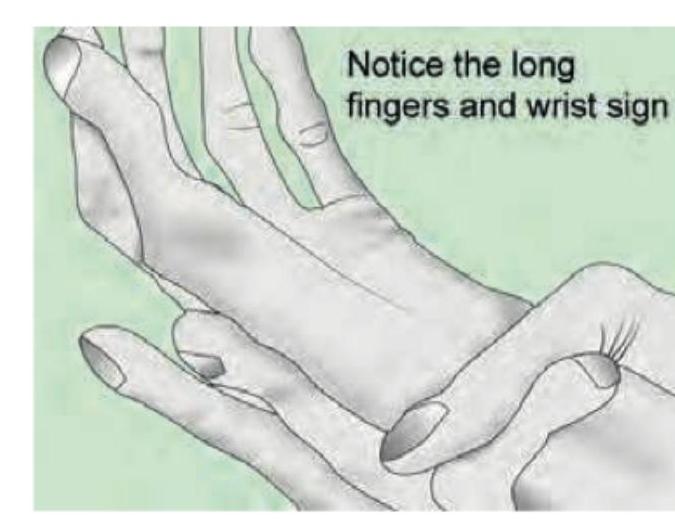
A patient has a long arm span, hypermobile joints and ectopia lentis. What is the defective protein?
Genetic testing for BRCA 1/BRCA 2 is indicated for all of the following except:
Which gene would you test if the patient has a family history of breast and ovarian cancer?
The pedigree diagram of a family is shown below. Affected individuals present with progressive external ophthalmoplegia, pigmentary retinopathy, and cardiac conduction defects. Based on the pedigree and clinical features, what is the most likely diagnosis?
A patient presents with orange-colored tonsils. Laboratory investigations reveal triglyceride level of 140 mg/dL and HDL cholesterol of 5 mg/dL. What is the most likely diagnosis?
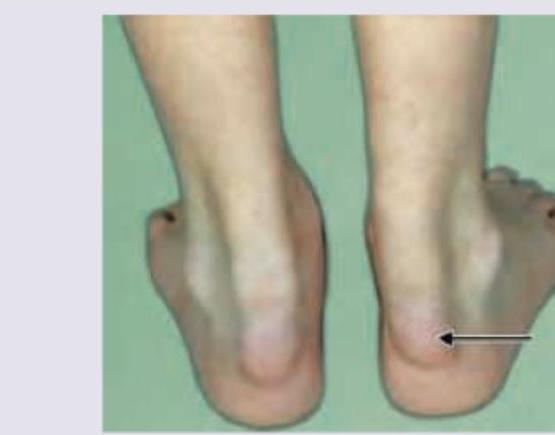
A patient has a family history positive for premature coronary artery disease. All are true about the disease shown in the image, except?
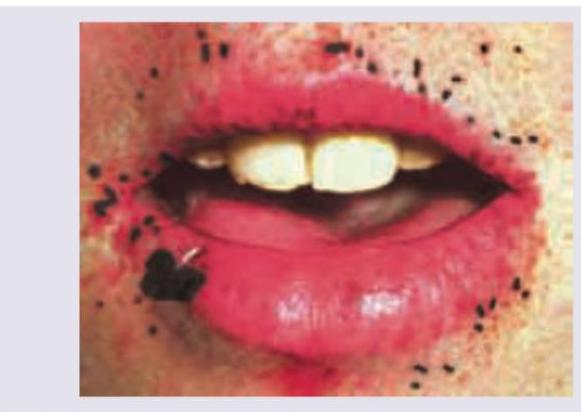
A 32-year-old woman with a history of multiple hamartomas scattered throughout the small intestine presents to a physician for follow-up. All are true about her diagnosis except?
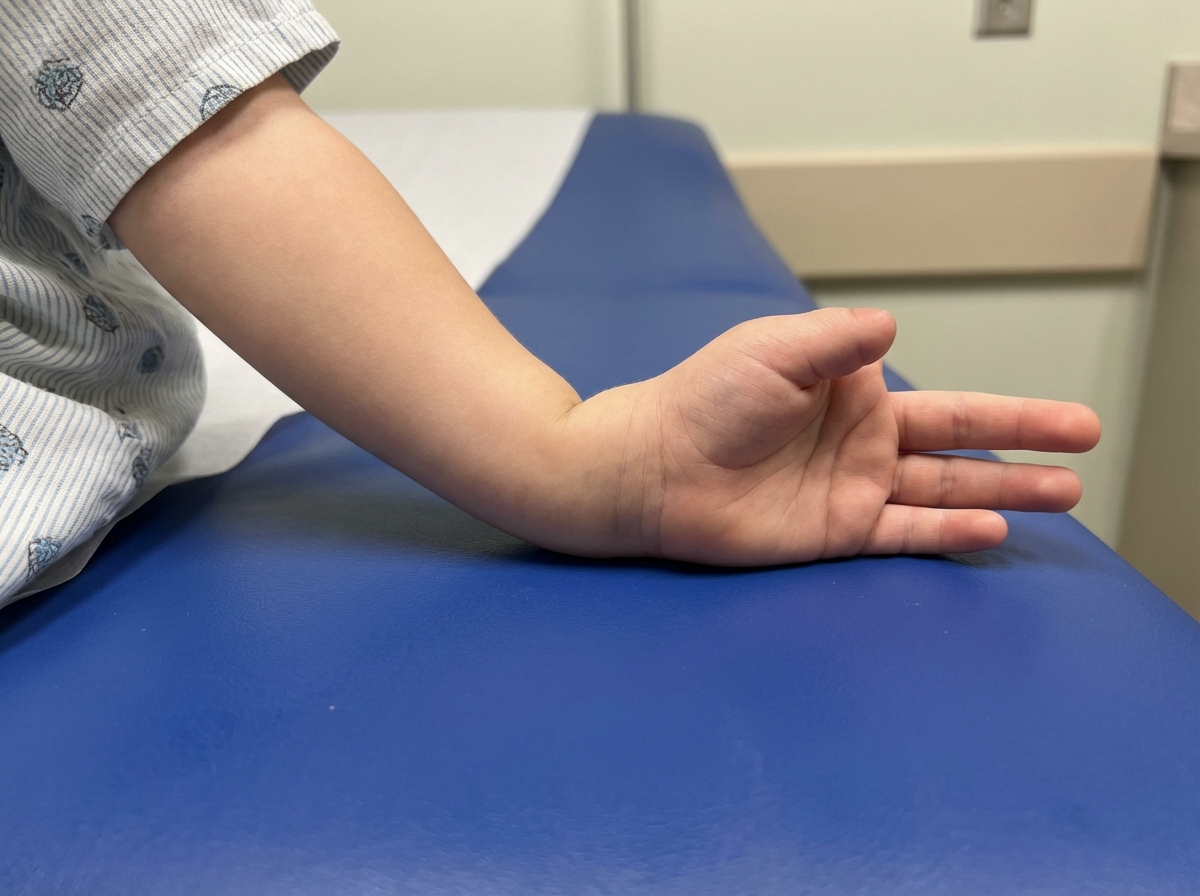
The child is having skeletal abnormality in arms and hands. Which possible heart disease is seen in this condition?
The image reveals hyper-extensible skin seen with Ehlers-Danlos syndrome. Which of the following is commonly seen in Marfan syndrome?
The image shows a tall patient with positive urine nitroprusside test diagnostic of Homocystinuria. Which of the following is true regarding Homocystinuria compared to Marfan's syndrome?
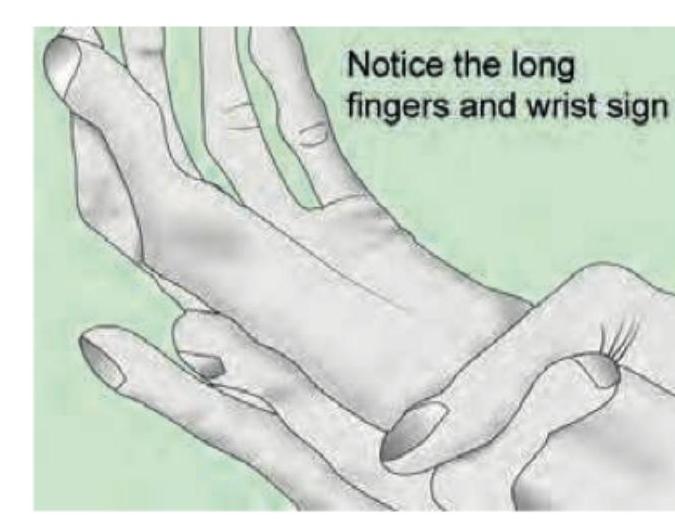
Explanation: ***Fibrillin-1***- **Marfan syndrome**, characterized by a **long arm span (arachnodactyly)**, **joint hypermobility**, and superiorly displaced **ectopia lentis (hypermobile lens)**, results from mutations in the *FBN1* gene, which codes for **Fibrillin-1**.- **Fibrillin-1** is a critical component of connective tissue **microfibrils** found in the suspensory ligaments of the eye, periosteum, and aortic media, explaining the systemic clinical manifestations.*Collagen*- Defects in **Collagen** (e.g., Type I, III, or V) are associated with **Osteogenesis Imperfecta** (brittle bones) or **Ehlers-Danlos syndrome** (severe skin and joint hyperlaxity) [1].- While Ehlers-Danlos syndrome can cause joint hypermobility, the classic combination with **ectopia lentis** strongly differentiates Marfan syndrome from primary collagenopathies [1].*Elastin*- Mutations in the **Elastin** gene (ELN) are primarily linked to conditions like **Williams syndrome**, which typically presents with **supravalvular aortic stenosis** and characteristic facial features [2].- **Elastin** provides rubber-like properties to tissues, but its primary defect does not explain the specific loss of structural integrity leading to superiorly displaced **ectopia lentis** seen in Marfan syndrome [2].*Keratin*- **Keratin** proteins are intermediate filaments crucial for mechanical stability in **epithelial cells** (skin, hair, nails).- Defects in keratin primarily cause **epidermolysis bullosa** or various forms of **ichthyosis** (skin blistering/scaling), and do not lead to the systemic skeletal or ocular connective tissue anomalies observed here.
Explanation: ***Breast cancer diagnosed in a postmenopausal female >50 years of age***- Genetic testing for **BRCA1/BRCA2** is typically focused on younger onset (<50 years), those with **triple-negative tumors**, or individuals with a significant family history, irrespective of age [1].- For individuals diagnosed at age **50 or older**, testing is generally not indicated *solely* based on age unless other high-risk factors like specific tumor pathology or **Ashkenazi Jewish ancestry** are present.*Male breast cancer*- **Male breast cancer** is a strong indication for **BRCA** testing, irrespective of age of onset, as approximately 10–20% of cases are linked to **BRCA mutations**, primarily **BRCA2**.- **BRCA2** mutations confer a significantly elevated lifetime risk of breast cancer in men, establishing genetic screening as standard practice.*Bilateral breast cancer*- A personal history of **bilateral breast cancer** (cancer occurring in both breasts) is a major criterion for **BRCA** testing because it suggests a strong underlying systemic risk or genetic predisposition [1].- Developing two separate primary breast cancers is highly characteristic of inherited cancer predisposition syndromes involving **BRCA1/BRCA2** mutations [2].*Breast and ovarian cancer*- A personal history of both **breast cancer** and **ovarian cancer** (or a strong family history involving both) is a near-absolute indication for genetic testing.- These two cancers are the hallmark cancers strongly associated with **BRCA1/BRCA2** mutations [2], especially **BRCA1**, which increases the risk of high-grade serous **ovarian cancer** substantially.
Explanation: ***BRCA1/2*** - Mutations in **BRCA1** and **BRCA2** genes are responsible for the majority of hereditary breast and ovarian cancer syndromes (*Hereditary Breast and Ovarian Cancer syndrome*). [1] - Testing these genes is the standard procedure when a patient presents with a strong family history of both breast and ovarian cancers, as they are **tumor suppressor genes** involved in DNA repair. [1] ***P53*** - Mutations in the **TP53** gene are associated with **Li-Fraumeni syndrome**, which increases the risk for a wide spectrum of cancers, including breast cancer, sarcomas, brain tumors, and adrenocortical carcinoma. - While breast cancer is a component, Li-Fraumeni is less specifically linked to the combined presentation of breast and ovarian cancer compared to BRCA mutations. ***PTEN*** - Mutations in the **PTEN** gene cause **Cowden syndrome**, characterized by multiple hamartomas and an increased risk of breast, thyroid, and endometrial cancers. - Ovarian cancer is a less prominent feature of Cowden syndrome, making it a secondary consideration after BRCA testing. ***CDH1*** - Mutations in the **CDH1** gene (which encodes **E-cadherin**) are primarily associated with **Hereditary Diffuse Gastric Cancer (HDGC)**. - These mutations also confer an increased risk for **lobular breast cancer**, but they are not the primary drivers for a syndrome involving both significant breast and ovarian cancer risk.
Explanation: ***Kearns-Sayre Syndrome*** * Kearns-Sayre Syndrome (KSS) is a **mitochondrial disorder** caused by large-scale deletions in **mtDNA** (mtDNA deletion syndrome). * The classic triad of KSS is **progressive external ophthalmoplegia (PEO)**, **pigmentary retinopathy**, and onset before age 20, often associated with **cardiac conduction defects** and cerebellar ataxia, matching the clinical presentation. *Duchenne Muscular Dystrophy* * DMD is an **X-linked recessive** disorder, which would show mother-to-son transmission, but not father-to-son transmission. The pedigree shows affected males having affected children (both male and female), inconsistent with X-linked inheritance. * The primary features are **progressive proximal muscle weakness** and Gower's sign, not the characteristic ophthalmoplegia, retinopathy, and heart block of KSS. *Friedreich Ataxia* * Friedreich ataxia is an **autosomal recessive** disorder, which would typically skip generations and mainly present in siblings of unaffected parents. This is inconsistent with the clear mother-to-child transmission seen in the pedigree. * The key features are **ataxia**, **dysarthria**, and **loss of vibratory sense**, not primarily ophthalmoplegia and pigmentary retinopathy. *Myotonic Dystrophy* * Myotonic dystrophy (DM1) is an **autosomal dominant** disorder, consistent with the vertical transmission, but the genetic defect is an **unstable trinucleotide repeat (CTG)**. While it can involve **cardiac conduction defects**, the primary clinical feature is **myotonia** (inability to quickly relax muscles) and facial weakness. * The absence of myotonia and the distinct presentation of PEO and pigmentary retinopathy make KSS a better fit than myotonic dystrophy.
Explanation: ***Tangier disease*** - This condition is a rare genetic disorder characterized by a mutation in the **ATP-binding cassette transporter A1 (ABCA1)** gene, leading to accelerated catabolism of HDL. - The clinical hallmarks are extremely low **HDL cholesterol** (often < 5 mg/dL) and the accumulation of cholesterol esters in macrophages, resulting in enlarged, characteristic **orange-colored tonsils** [1]. *Familial hypercholesterolemia* - Caused by defects in the **LDL receptor** or ApoB, resulting in severely elevated **LDL cholesterol** levels and premature atherosclerosis [1]. - It typically presents with tendon xanthomas and arcus senilis, but does not cause extremely low HDL or visible changes in the tonsils. *Type I hyperlipoproteinemia* - This type is characterized by functional deficiency of **lipoprotein lipase (LPL)** or its cofactor ApoC-II, leading to massive accumulation of **chylomicrons** in the plasma. - The primary finding is severe **hypertriglyceridemia** (often > 1000 mg/dL), leading to eruptive xanthomas and pancreatitis; HDL levels are not the primary diagnostic feature. *Abetalipoproteinemia* - Caused by a defect in the **microsomal triglyceride transfer protein (MTP)**, preventing the synthesis of ApoB-containing lipoproteins (chylomicrons, VLDL, LDL) [1]. - It presents with severe fat malabsorption, neurological deficits due to Vitamin E deficiency, and **acanthocytosis** (spiculated RBCs), rather than tonsillar changes.
Explanation: ***Defect on chromosome 1*** - Familial hypercholesterolemia (FH) is primarily caused by **defects in the LDL receptor gene** which is located on **chromosome 19**, not chromosome 1. - Mutations in other genes like *APOB* (encoding apolipoprotein B) or *PCSK9* can also cause FH, but are not located on chromosome 1. *Familial hypercholesterolemia* - The image shows a **tendon xanthoma** (indicated by the arrow) which is a characteristic clinical manifestation of **familial hypercholesterolemia** (FH). - FH is an **autosomal dominant genetic disorder** characterized by very high levels of LDL cholesterol from birth, leading to premature cardiovascular disease. *Heterozygous familial hypercholesterolemia is seen in 1:500 population* - **Heterozygous familial hypercholesterolemia (HeFH)** is indeed one of the most common genetic disorders, affecting approximately **1 in 250 to 1 in 500 individuals** in the general population. - This high prevalence contributes to the significant burden of premature coronary artery disease. *Tendon xanthoma* - The arrow in the image points to a **clearly visible deposit on the Achilles tendon**, consistent with a **tendon xanthoma**. - Tendon xanthomas are pathognomonic for FH and are collections of **lipid-laden macrophages** (foam cells) in tendons, particularly the Achilles and extensor tendons of the hands.
Explanation: ***Autosomal recessive*** - Peutz-Jeghers syndrome is inherited in an **autosomal dominant** pattern, not autosomal recessive. This mode of inheritance means that only one copy of the altered gene in each cell is sufficient to cause the disorder. - Approximately 50% of cases are caused by a new **STK11 gene mutation**, while the other 50% are inherited from an affected parent. *STK-11 gene mutation* - **Peutz-Jeghers syndrome** is caused by a germline mutation in the **STK11 (LKB1) gene**, which is a tumor suppressor gene. - This mutation leads to the development of hamartomatous polyps throughout the gastrointestinal tract and an increased risk of various cancers. *Polyps in jejunum* - The hamartomatous polyps in Peutz-Jeghers syndrome can occur anywhere in the gastrointestinal tract, but they are most common in the **small intestine**, including the jejunum. - While they can also be found in the entire GI tract, they are notably present in the jejunum. *Morbidity due to intestinal obstruction* - A common complication and source of morbidity in Peutz-Jeghers syndrome is **intestinal obstruction**, often due to **intussusception** caused by the polyps. - Other gastrointestinal complications include bleeding and abdominal pain.
Explanation: ***ASD*** - The image shows a child with **phocomelia** or **hypoplastic radius/ulna**, a characteristic skeletal abnormality of the arms and hands, strongly associated with **Holt-Oram syndrome** - **Holt-Oram syndrome** is an **autosomal dominant** disorder caused by mutations in the **TBX5** gene, characterized by upper limb defects (absent/hypoplastic thumb, triphalangeal thumb, radial hypoplasia) and congenital heart defects - The most common cardiac defect is **ASD (ostium secundum type)**, followed by VSD — making ASD the correct answer *PDA* - **Patent ductus arteriosus (PDA)** is a common congenital heart defect but is **not specifically associated** with the upper limb skeletal abnormalities of Holt-Oram syndrome - PDA is classically seen in **premature infants** or associated with **rubella** infection, without specific upper limb skeletal anomalies *VSD* - **Ventricular septal defect (VSD)** is the **second most common** cardiac defect in Holt-Oram syndrome (after ASD), but it is less frequently associated than ASD - VSD is also the most common congenital heart defect overall, but without the specific upper limb skeletal findings, it would not be the first-line answer here *TOF* - **Tetralogy of Fallot (TOF)** comprises pulmonary stenosis, VSD, overriding aorta, and right ventricular hypertrophy - TOF is **not characteristically associated** with Holt-Oram syndrome or upper limb skeletal abnormalities; it is classically associated with cyanotic "tet spells" in infants
Explanation: ***Ectopia lentis*** - **Ectopia lentis** (lens dislocation) is a hallmark ophthalmic feature of **Marfan syndrome**, occurring in 60-80% of patients, typically displaced superiorly and temporally. - This condition results from defects in the **fibrillin-1 gene (FBN1)**, which weakens the **zonular fibers** that suspend the lens, making it a major diagnostic criterion in the Ghent nosology. *Hyperextensible joints* - **Joint hypermobility** is more characteristic of **Ehlers-Danlos syndrome** than Marfan syndrome, where joint involvement is typically less pronounced. - While Marfan patients may have some joint laxity, the extreme **hyperextensibility** seen in Ehlers-Danlos is not a defining feature of Marfan syndrome. *Blue sclerae* - **Blue sclerae** are pathognomonic of **osteogenesis imperfecta**, caused by thin scleral collagen allowing the underlying choroid to show through. - This finding is not associated with **Marfan syndrome**, which primarily affects fibrillin-1 rather than type I collagen found in scleral tissue. *Easy bruising* - **Easy bruising** and bleeding tendencies are characteristic of **Ehlers-Danlos syndrome**, particularly the classical and hypermobile types. - Marfan syndrome does not typically cause **coagulation disorders** or **vascular fragility** that would lead to easy bruising patterns.
Explanation: ***Normal IQ*** - This option is **medically incorrect** as homocystinuria typically causes **intellectual disability** in most patients, not normal IQ. - **Marfan syndrome** patients have normal intelligence, making intellectual disability a key **differentiating feature** between these conditions. *Option A* - Cannot provide accurate medical explanation due to **placeholder text** lacking specific medical content. - Without actual option content, it's impossible to determine the **clinical accuracy** or relevance to the comparison. *Option B* - Cannot provide accurate medical explanation due to **placeholder text** lacking specific medical content. - The absence of actual medical information prevents **proper evaluation** of its correctness regarding these conditions. *Option C* - Cannot provide accurate medical explanation due to **placeholder text** lacking specific medical content. - Without real option content, the **clinical validity** cannot be assessed for homocystinuria vs Marfan syndrome comparison.
Principles of Medical Genetics
Practice Questions
Genetic Testing and Counseling
Practice Questions
Single Gene Disorders
Practice Questions
Chromosomal Disorders
Practice Questions
Mitochondrial Diseases
Practice Questions
Pharmacogenomics
Practice Questions
Cancer Genetics
Practice Questions
Genetics of Common Diseases
Practice Questions
Epigenetics and Disease
Practice Questions
Genetic Basis of Developmental Disorders
Practice Questions
Ethical Issues in Medical Genetics
Practice Questions
Gene Therapy and Precision Medicine
Practice Questions
Get full access to all questions, explanations, and performance tracking.
Start For Free