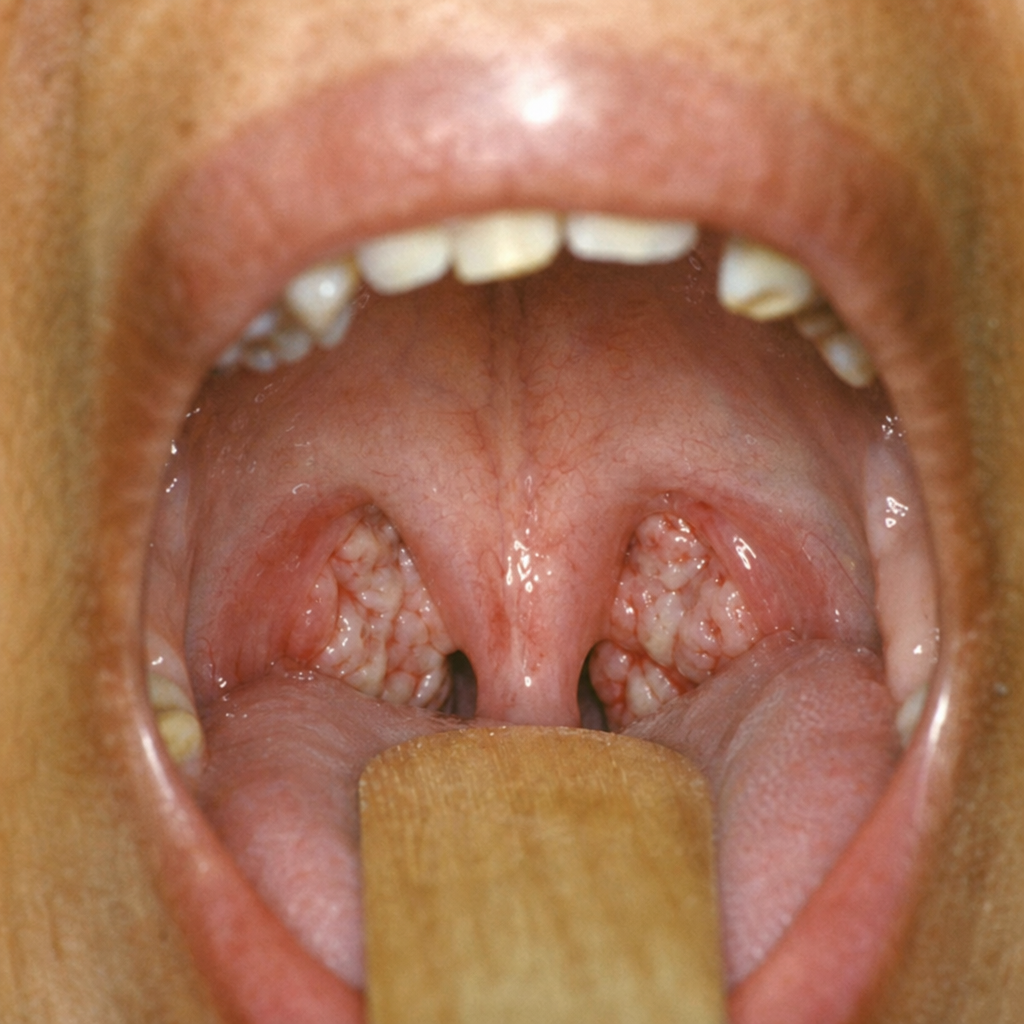
Auenbrugger's sign is seen in which of the following conditions?
Notching of the ribs is seen in which of the following conditions?
Right axis deviation is seen in all except?
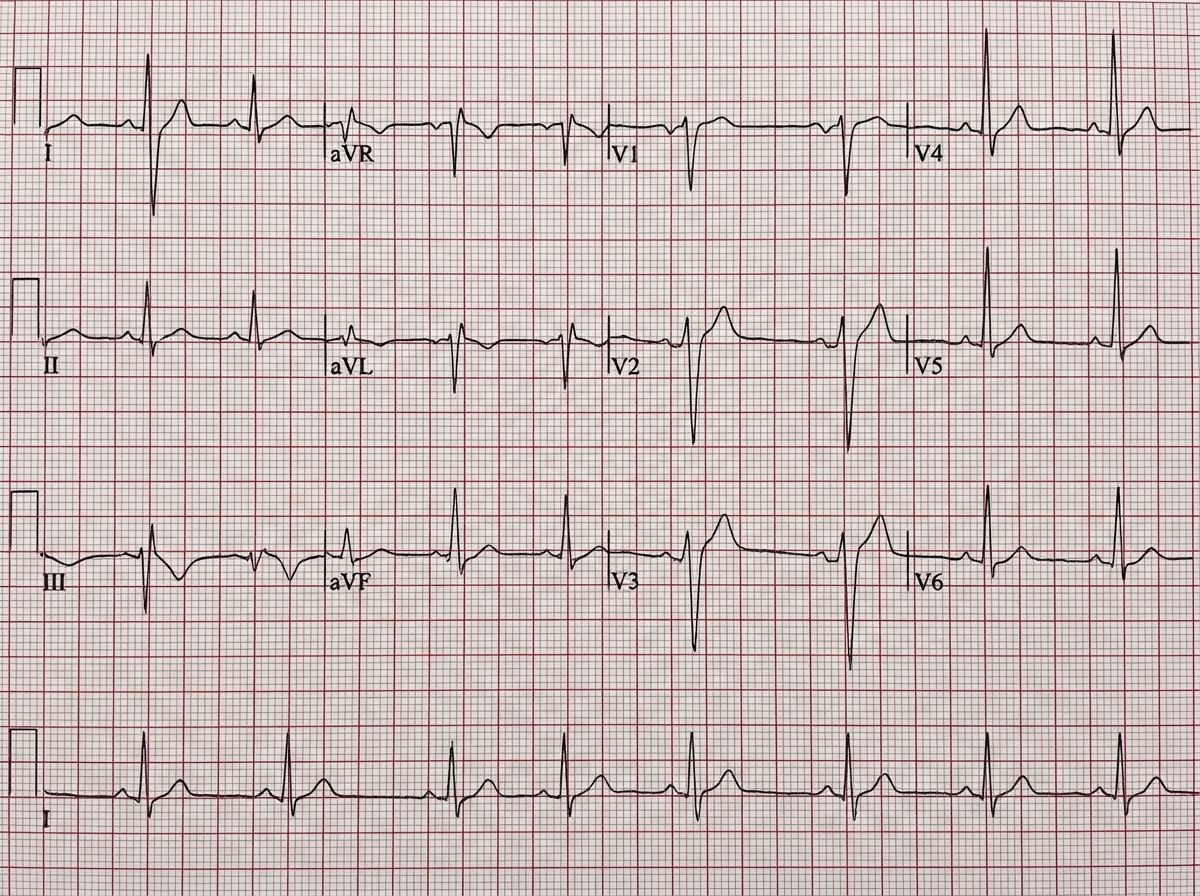
The given ECG shows which of the following conditions?
Which of the following parameters adds predictive information regarding cardiovascular risk stratification and the measurement of serum cholesterol?
A patient complains of retrosternal chest pain lasting for more than half an hour. What is the most likely diagnosis?
Which of the following is NOT considered a major criterion in the Framingham criteria for the diagnosis of congestive heart failure?
The ROSE questionnaire is used for what purpose?
A 50-year-old patient with a history of breast cancer presents with breathlessness. What would the ECG most likely show?
Broad complex tachycardia is suggested by which of the following?
Explanation: **Explanation:** **Auenbrugger's Sign** is a classic physical finding associated with large **pericardial effusions**. It refers to a localized bulge or prominence in the epigastrium (the upper central abdomen) caused by the downward displacement of the diaphragm and liver by a massive accumulation of fluid within the pericardial sac. **Why the Correct Answer is Right:** In massive pericardial effusion, the pericardial sac becomes tense and heavy [1]. This increased weight and volume push the diaphragm inferiorly. This mechanical displacement results in a visible or palpable fullness in the epigastric region, which Leopold Auenbrugger (the inventor of percussion) first described. **Why the Incorrect Options are Wrong:** * **Constrictive Pericarditis:** This involves a thickened, fibrotic, and often calcified pericardium that restricts cardiac filling [2]. It does not typically involve a large volume of fluid that would displace the diaphragm. * **Aortic Regurgitation:** This is characterized by peripheral signs of widened pulse pressure (e.g., Corrigan’s pulse, Quincke’s sign). It does not cause epigastric bulging. * **Mitral Stenosis:** This leads to left atrial enlargement and pulmonary congestion. While it can cause right heart failure and hepatomegaly, it does not present with Auenbrugger’s sign. **High-Yield Clinical Pearls for NEET-PG:** * **Ewart’s Sign:** Another key sign of large pericardial effusion; it is an area of dullness and bronchial breath sounds at the lower angle of the left scapula due to compression of the left lung base. * **Beck’s Triad (Cardiac Tamponade):** Hypotension, Jugular Venous Distension (JVD), and Muffled heart sounds. * **Electrical Alternans:** A pathognomonic ECG finding in large effusions/tamponade due to the "swinging heart" in the fluid-filled sac [1]. * **Pulsus Paradoxus:** A drop in systolic BP >10 mmHg during inspiration, commonly seen in tamponade.
Explanation: **Explanation:** **Coarctation of the Aorta (CoA)** is the classic cause of rib notching. In post-ductal coarctation, there is a narrowing of the aorta distal to the origin of the left subclavian artery. To bypass this obstruction, the body develops extensive **collateral circulation**. Blood flows from the subclavian arteries into the internal mammary arteries, then into the **intercostal arteries** to reach the descending aorta. The resulting high-pressure, turbulent flow causes these intercostal arteries to become dilated and tortuous. These enlarged vessels erode the inferior margins of the 3rd to 8th ribs, appearing as "notches" on a chest X-ray. **Analysis of Incorrect Options:** * **Tracheoesophageal fistula:** This is a neonatal surgical emergency presenting with drooling and choking; it does not involve the vascular remodeling required for rib notching. * **Tetralogy of Fallot (TOF):** Characterized by a "boot-shaped heart" (coeur en sabot) due to right ventricular hypertrophy [3], but it does not typically cause rib notching. * **Patent ductus arteriosus (PDA):** While it involves a left-to-right shunt [1], it does not necessitate the development of intercostal collaterals. **NEET-PG High-Yield Pearls:** * **Roesler’s Sign:** The specific term for rib notching in CoA. It usually spares the 1st and 2nd ribs (supplied by the costocervical trunk). * **"3" Sign:** Seen on X-ray, formed by the pre-stenotic dilation, the indentation (coarctation), and post-stenotic dilation. * **Clinical Presentation:** "Radio-femoral delay" [2] and a significant blood pressure gradient between the upper and lower limbs. * **Association:** Frequently associated with a **Bicuspid Aortic Valve** (most common) and **Turner Syndrome** [2].
Explanation: The correct answer is **Ostium primum ASD** because it is classically associated with **Left Axis Deviation (LAD)**, not Right Axis Deviation (RAD). [2] **1. Why Ostium Primum ASD is the correct answer:** In Ostium primum ASD (an endocardial cushion defect), there is a deficiency in the atrioventricular septum. This leads to an abnormal displacement of the AV node and the Bundle of His. The left bundle branch is displaced posteriorly, causing early activation of the posterior left ventricle and delayed activation of the anterior portion. This results in a characteristic **Left Axis Deviation** (usually between -30° and -90°) [2]. **2. Analysis of Incorrect Options (Causes of RAD):** * **Dextrocardia:** Since the heart is mirrored in the right hemithorax, the depolarization vector moves toward the right, causing a profound RAD and inverted P and T waves in Lead I. * **Pulmonary Hypertension:** This leads to Right Ventricular Hypertrophy (RVH). The increased muscle mass of the right ventricle shifts the mean electrical vector toward the right [1]. * **Ostium Secundum ASD:** Unlike the primum type, this is the most common ASD. It causes right ventricular volume overload and subsequent RVH, leading to **Right Axis Deviation** and an RSR' pattern in V1. **Clinical Pearls for NEET-PG:** * **The "ASD Axis" Rule:** If you see an ASD with **RAD**, think **Secundum** (Most common). If you see an ASD with **LAD**, think **Primum**. * **ECG in Primum ASD:** Look for the triad of RSR' in V1 (Right Bundle Branch Block), LAD, and first-degree AV block. * **Other causes of RAD:** Lateral MI, Right Bundle Branch Block (RBBB), and thin/tall body habitus.
Explanation: ***Pulmonary embolism*** - Classic **S1Q3T3 pattern** (prominent S wave in lead I, Q wave and inverted T wave in lead III) is pathognomonic for acute pulmonary embolism. - Associated findings include **sinus tachycardia**, **right axis deviation**, and **incomplete RBBB** indicating acute right heart strain. *Hypertrophic cardiomyopathy* - ECG typically shows **left ventricular hypertrophy** with deep Q waves in lateral leads (I, aVL, V5-V6). - May demonstrate **left axis deviation** and **ST-T wave abnormalities** in lateral leads, not the S1Q3T3 pattern. *Pericardial effusion* - Characteristic finding is **electrical alternans** (beat-to-beat variation in QRS amplitude). - Often shows **low voltage QRS complexes** in all leads due to fluid around the heart dampening electrical activity. *Anterior wall MI* - Shows **ST elevation** in anterior leads (V1-V4) with possible **reciprocal ST depression** in inferior leads. - May progress to show **pathological Q waves** in V1-V4, not the right heart strain pattern seen here.
Explanation: **Explanation:** The correct answer is **C-reactive protein (CRP)**, specifically the high-sensitivity assay (**hs-CRP**). **Why it is correct:** Atherosclerosis is now recognized as a chronic inflammatory process, not just a lipid-storage disease. While serum cholesterol (LDL) is a major risk factor, many cardiovascular events occur in individuals with normal lipid profiles. hs-CRP is an acute-phase reactant produced by the liver in response to IL-6. It serves as a stable biomarker of systemic inflammation. Large-scale clinical trials (e.g., the JUPITER trial) have demonstrated that hs-CRP provides **independent and additive predictive value** to cholesterol levels in assessing the risk of myocardial infarction, stroke, and peripheral arterial disease. **Why incorrect options are wrong:** * **Anti-chlamydia pneumoniae antibodies (A):** While chronic infections were once hypothesized to trigger atherosclerosis, clinical trials using antibiotics have failed to reduce cardiovascular events, and antibody titers are not used for routine risk stratification. * **Homocysteine (C):** Elevated levels (hyperhomocysteinemia) are associated with vascular injury. However, lowering homocysteine levels with B-vitamins has not consistently shown a reduction in major cardiovascular events, making it a less reliable predictor than hs-CRP. * **Plasminogen activator inhibitor 1 (D):** PAI-1 is a marker of impaired fibrinolysis and is often elevated in metabolic syndrome. While it correlates with risk, it is not a standardized tool for clinical risk stratification compared to the robust data supporting hs-CRP. **High-Yield Clinical Pearls for NEET-PG:** * **hs-CRP Levels:** <1 mg/L (Low risk), 1–3 mg/L (Average risk), >3 mg/L (High risk). * **JUPITER Trial:** Showed that statins benefit patients with low LDL but high hs-CRP. * **Metabolic Syndrome:** CRP is often elevated in these patients, reflecting "smoldering" inflammation. * **Note:** Always rule out acute infection/trauma if CRP is >10 mg/L before using it for cardiac risk assessment.
Explanation: The duration of chest pain is a critical diagnostic marker in cardiology. Retrosternal chest pain lasting **more than 20–30 minutes** is a classic hallmark of **Myocardial Infarction (MI)** [2]. This prolonged duration indicates irreversible myocardial ischemia leading to necrosis, distinguishing it from transient ischemic episodes. [1] **Why the other options are incorrect:** * **Angina:** Stable angina typically lasts for a short duration (**usually 2–15 minutes**) and is relieved by rest or nitroglycerin [4]. While Unstable Angina can last longer, any pain exceeding 20 minutes must be treated as an MI (specifically an Acute Coronary Syndrome) until proven otherwise by cardiac biomarkers and ECG. * **Congestive Heart Failure (CHF):** The primary symptom of CHF is dyspnea (shortness of breath), orthopnea, or edema [2], rather than acute retrosternal chest pain. * **Congenital Heart Problem:** These usually present in childhood with cyanosis, murmurs, or failure to thrive, rather than acute-onset retrosternal chest pain in an adult. **High-Yield Clinical Pearls for NEET-PG:** * **The "Golden Hour":** The first 60 minutes after the onset of MI symptoms are crucial; reperfusion therapy (primary PCI or thrombolysis) initiated during this time significantly reduces mortality. * **Levine’s Sign:** A clenched fist held over the chest to describe ischemic pain—highly suggestive of MI [1]. * **Silent MI:** Common in elderly patients and diabetics due to autonomic neuropathy; they may present with dyspnea or epigastric pain instead of classic chest pain [2]. * **ECG Changes:** Look for ST-segment elevation (STEMI) or T-wave inversion/ST-depression (NSTEMI) [3].
Explanation: To diagnose Congestive Heart Failure (CHF) using the **Framingham Criteria**, a patient must fulfill at least **two major criteria** or **one major and two minor criteria** [1]. ### **Why "Extremity Edema" is the Correct Answer** **Extremity edema** is classified as a **Minor Criterion**. While it is a common sign of right-sided heart failure, it is considered non-specific because it can also be caused by venous insufficiency, renal failure, or liver disease [1]. In the Framingham study, major criteria are those with higher specificity for cardiac dysfunction. ### **Explanation of Incorrect Options (Major Criteria)** The following are **Major Criteria** because they directly reflect significant pulmonary congestion or structural cardiac dysfunction: * **Acute Pulmonary Edema (Option B):** Indicates severe left ventricular failure leading to fluid extravasation into the alveoli [1]. * **Paroxysmal Nocturnal Dyspnea (Option C):** A highly specific symptom where the patient wakes up gasping for air due to the redistribution of fluid from the lower extremities to the lungs while supine [1]. * **S3 Gallop (Option D):** A hallmark sign of ventricular filling into a dilated, non-compliant left ventricle; it is highly specific for heart failure in adults. ### **High-Yield NEET-PG Clinical Pearls** * **Major Criteria Mnemonic (SAEPP):** **S**3 Gallop, **A**cute Pulmonary Edema, **E**levated JVP, **P**aroxysmal Nocturnal Dyspnea, **P**ardiomegaly (on X-ray). * **Weight Loss Rule:** Weight loss of >4.5 kg in 5 days in response to treatment can be either a major or minor criterion. * **Minor Criteria:** Extremity edema, Night cough, Dyspnea on exertion, Hepatomegaly, Pleural effusion, Tachycardia (>120 bpm). * **Gold Standard for Diagnosis:** While Framingham is used clinically, **Echocardiography** is the gold standard for assessing ejection fraction and structural abnormalities [1].
Explanation: **Explanation:** The **ROSE Questionnaire** (also known as the Rose Angina Questionnaire) is a standardized tool developed by Geoffrey Rose in 1962. It was specifically designed for epidemiological studies to identify the prevalence of **angina pectoris** and myocardial infarction in a population without the need for a clinical examination. **Why Option C is correct:** The questionnaire consists of a series of questions regarding the location, character, and duration of chest pain, as well as its relationship to exertion and rest [1]. It is highly specific for diagnosing "exertional chest pain" and remains a gold standard in cardiovascular epidemiology to ensure consistency across different global studies. **Why other options are incorrect:** * **Option A (Alcohol addiction):** Assessment is typically done using the **CAGE** questionnaire or the **AUDIT** (Alcohol Use Disorders Identification Test) scale. * **Option B (Sex addiction):** Assessment often utilizes the **PATHOS** questionnaire or the Sexual Addiction Screening Test (SAST). * **Option C (Deep vein thrombosis):** The clinical probability of DVT is assessed using the **Wells Criteria** or the Geneva score (for PE). **High-Yield Clinical Pearls for NEET-PG:** * **NYHA Classification:** Used to grade the *severity* of functional limitation in patients with heart failure/angina. * **CCS (Canadian Cardiovascular Society) Grading:** The standard for grading the *severity* of angina (Class I to IV). * **Rose Questionnaire Focus:** It is primarily a **screening/epidemiological tool** rather than a tool for acute clinical management. * **Sensitivity vs. Specificity:** While the Rose questionnaire has high specificity for ischemic heart disease, its sensitivity can be lower in certain populations (e.g., women or those with atypical presentations).
Explanation: ### Explanation **Correct Answer: C. Electrical Alternans** **Underlying Medical Concept:** The clinical presentation of a patient with a history of breast cancer presenting with breathlessness strongly suggests **Malignant Pericardial Effusion**, which can progress to **Cardiac Tamponade** [1]. Breast cancer is one of the most common malignancies to metastasize to the pericardium. In large pericardial effusions, the heart "swings" back and forth within the fluid-filled sac. This physical movement changes the heart's electrical axis relative to the ECG electrodes with every beat [1]. This results in **Electrical Alternans**, characterized by beat-to-beat variations in the amplitude (height) of the QRS complexes. **Analysis of Incorrect Options:** * **A. Normal tracing:** Highly unlikely in a symptomatic patient with a significant effusion; one would typically see sinus tachycardia and low-voltage QRS complexes. * **B. AV dissociation:** This is a hallmark of Ventricular Tachycardia or complete heart block, not typically associated with pericardial disease. * **D. Electromechanical dissociation (PEA):** This is a terminal rhythm where there is electrical activity but no palpable pulse. While tamponade can lead to PEA if untreated, Electrical Alternans is the classic diagnostic ECG finding for the effusion itself. **High-Yield NEET-PG Pearls:** * **Beck’s Triad (Cardiac Tamponade):** Hypotension, Jugular Venous Distension (JVD), and Muffled heart sounds. * **ECG Findings in Tamponade:** Sinus tachycardia (earliest sign), Low voltage QRS, and Electrical Alternans (pathognomonic) [1]. * **Pulsus Paradoxus:** A drop in systolic BP >10 mmHg during inspiration; a key clinical sign of tamponade. * **Chest X-ray:** Shows a "Water-bottle" or "Money-bag" shaped heart [1]. * **Treatment:** Immediate **Pericardiocentesis**.
Explanation: Broad complex tachycardia (BCT) is defined as a heart rate >100 bpm with a QRS duration >120 ms. In clinical practice, the most critical challenge is differentiating **Ventricular Tachycardia (VT)** from Supraventricular Tachycardia (SVT) with aberrancy [1]. The presence of AV dissociation, fusion beats, and capture beats are "pathognomonic" for VT [1]. ### Explanation of Options: * **AV Dissociation (Option B):** This occurs when the atria and ventricles beat independently. On an ECG, this is visualized as P waves "marching through" the QRS complexes without a fixed relationship. It is a hallmark sign of VT [1]. * **Capture Beats (Option C):** These occur when a sinoatrial impulse occasionally "captures" the ventricles amidst the tachycardia, resulting in a normal-looking, narrow QRS complex. * **Fusion Beats (Option A):** These occur when a supraventricular impulse and a ventricular impulse meet to activate the ventricles simultaneously. The resulting QRS complex is a hybrid (morphologically intermediate) between a normal sinus beat and a wide VT beat [1]. Since all three features are definitive indicators of a ventricular origin in BCT, **Option D (All of the above)** is the correct answer. ### High-Yield Clinical Pearls for NEET-PG: * **Brugada Criteria:** Used to differentiate VT from SVT. The first step is looking for the absence of an RS complex in all precordial leads (concordance). * **Josephson’s Sign:** Notching near the low point of the S wave; suggestive of VT. * **Rule of Thumb:** In a hemodynamically unstable patient with broad complex tachycardia, always treat as **VT** and perform immediate synchronized cardioversion. * **Northwest Axis:** An extreme right axis deviation (-90° to ±180°) in a BCT strongly favors VT.
Coronary Artery Disease and Angina
Practice Questions
Acute Coronary Syndromes
Practice Questions
Heart Failure
Practice Questions
Cardiac Arrhythmias
Practice Questions
Valvular Heart Diseases
Practice Questions
Cardiomyopathies
Practice Questions
Pericardial Diseases
Practice Questions
Congenital Heart Disease in Adults
Practice Questions
Hypertension and Hypertensive Emergencies
Practice Questions
Pulmonary Hypertension
Practice Questions
Non-invasive Cardiac Diagnostics
Practice Questions
Preventive Cardiology
Practice Questions
Get full access to all questions, explanations, and performance tracking.
Start For Free