All are synonyms for PM staining seen in dependent parts of the body during postmortem, except?
Autopsy is known by all names except?
What method of recording is mandated for post-mortem examinations in cases of death in police custody?
For exhumation, the order should be passed by which authority?
What is the Zasko phenomenon?
All are true about the mummification shown in the image except:
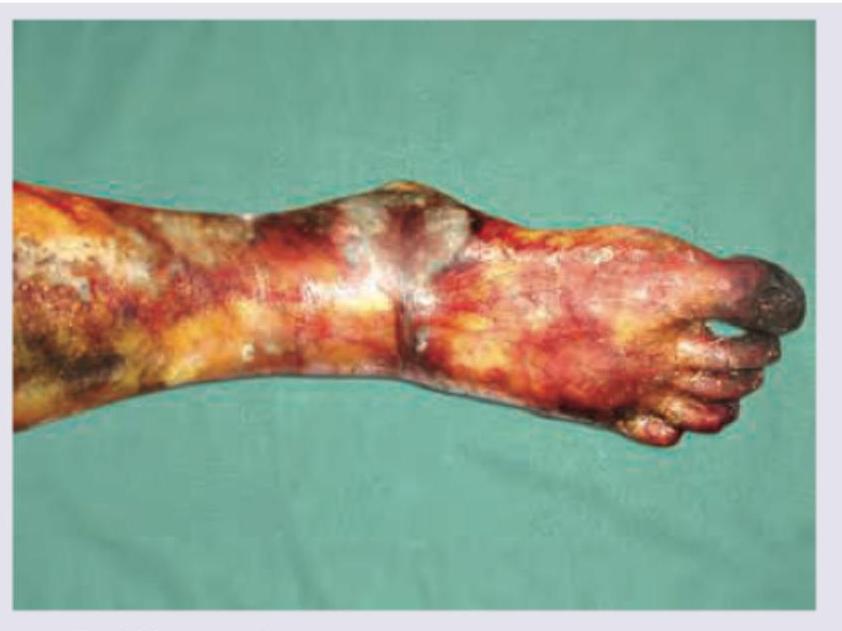
All are true about the condition shown in the image except:
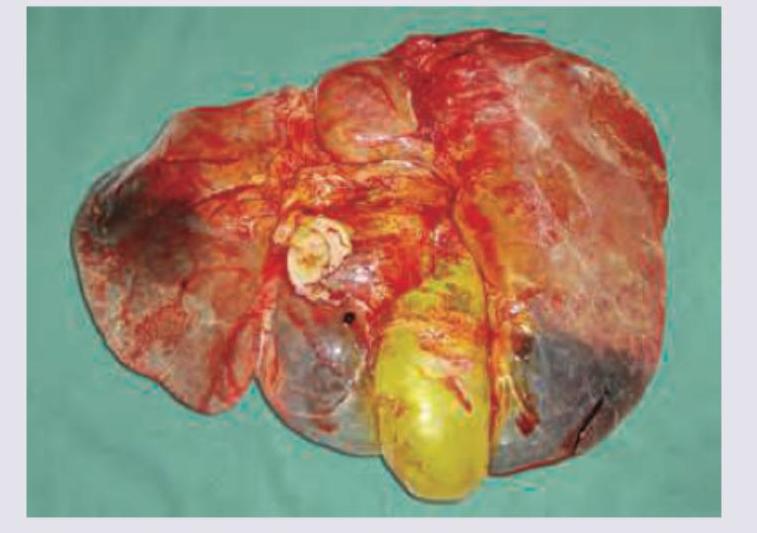
The image shows:
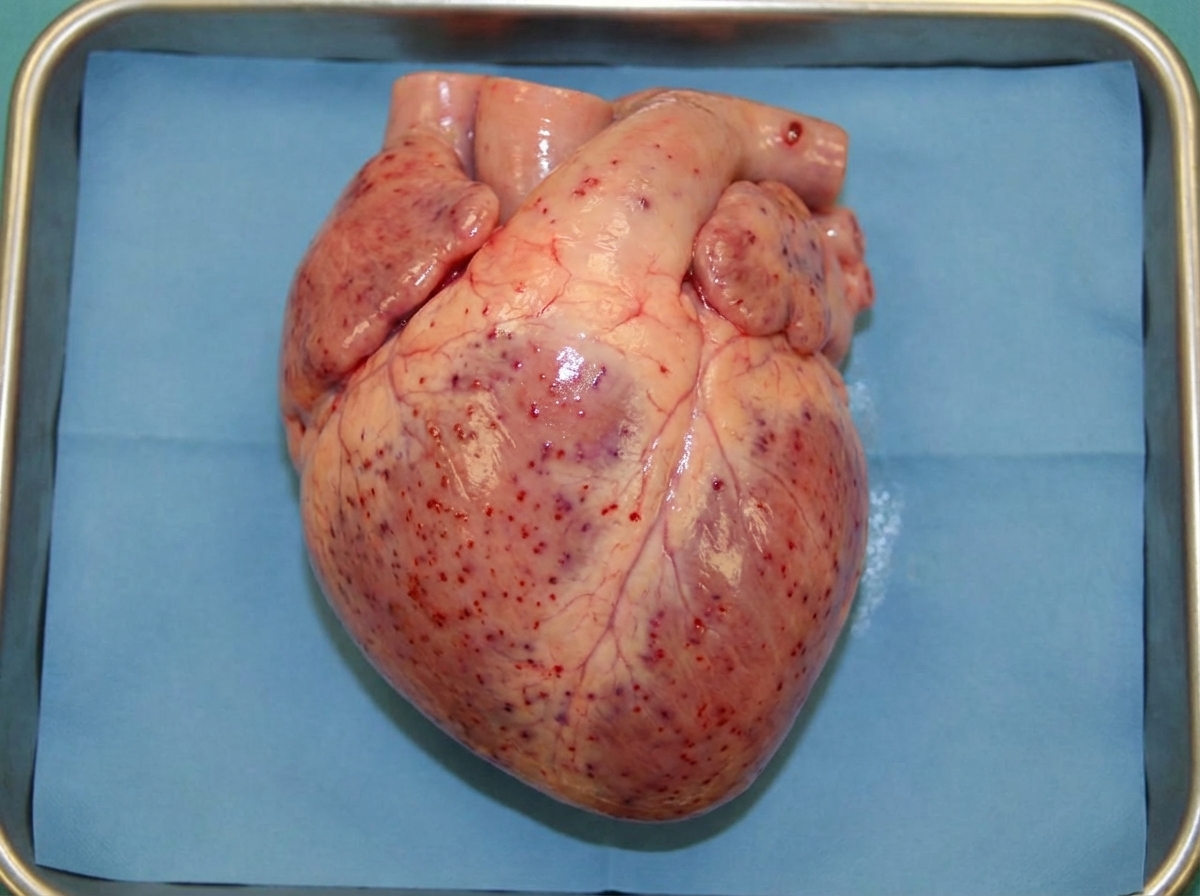
The following specimen of heart is from a 2-month-old infant who died suddenly. On physical examination of body no external evidence of any injury or abuse was present. The image shows:
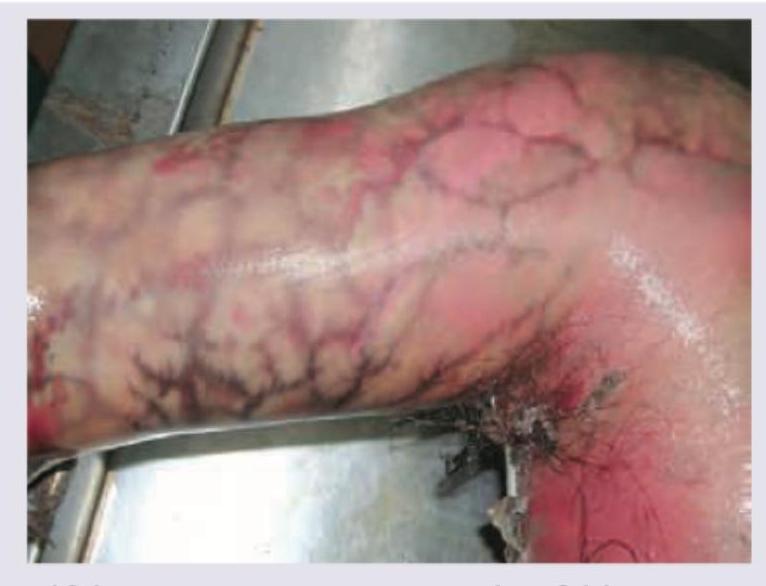
The following phenomenon is noticed in lightning strike victims and typically fades away after how much time?
Explanation: ### Explanation The question asks to identify the term that is **not** a synonym for postmortem (PM) staining. **1. Why Algor Mortis is the Correct Answer:** **Algor mortis** refers to the postmortem cooling of the body. It is the process by which the body temperature gradually declines until it reaches equilibrium with the ambient environmental temperature. This is a physical sign of death used to estimate the Time Since Death (TSD), but it is unrelated to the settling of blood. **2. Analysis of Incorrect Options (Synonyms for PM Staining):** Postmortem staining is the reddish-purple discoloration of the skin in the dependent parts of the body, caused by the gravitational settling of blood into the capillaries and venules after circulation stops. * **Livor mortis:** The standard medical term (Latin: *livor* - bluish color; *mortis* - of death). * **Cadaveric lividity:** A commonly used descriptive term for the same phenomenon. * **Suggilation:** An older medical term derived from the Latin *sugillatio*, referring to the bruise-like appearance of the staining. * *Note:* Other synonyms include **Hypostasis** and **Vibices** (small purpuric spots within the area of staining). **3. High-Yield Clinical Pearls for NEET-PG:** * **Appearance:** Usually starts within **1–3 hours** after death and becomes "fixed" (does not shift with change in body position) after **6–12 hours**. * **Fixation:** Occurs due to the hemolysis of RBCs and diffusion of hemoglobin into the surrounding tissues. * **Color Variations (High Yield):** * **Cherry Red:** Carbon Monoxide (CO) poisoning. * **Bright Pink:** Cyanide poisoning or exposure to cold (hypothermia). * **Chocolate Brown:** Nitrates, Aniline, or Chlorates (Methemoglobinemia). * **Black:** Sulfuric acid poisoning. * **Contact Pallor:** Areas of the body under direct pressure (e.g., shoulder blades, buttocks) do not show staining; this is known as "blanching" or "contact flattening."
Explanation: **Explanation:** The term **Autopsy** is derived from the Greek words *autos* (self) and *opsis* (view), literally meaning "to see for oneself." It refers to the scientific examination of a dead body to determine the cause, manner, and mechanism of death. **Why Biopsy is the Correct Answer:** A **Biopsy** is the removal and examination of a small piece of tissue from a **living body** for diagnostic purposes (e.g., checking for malignancy). Since an autopsy is strictly performed on a deceased individual, "biopsy" is the odd one out. **Analysis of Other Options:** * **Obduction:** This is a synonym for autopsy commonly used in European medical literature. It comes from the Latin *obducere*, meaning to draw over or cover (referring to the closing of the body). * **Necropsy:** Derived from *nekros* (dead) and *opsis* (view). While often used interchangeably with autopsy, in many contexts, "necropsy" is specifically used for the postmortem examination of animals. * **Postmortem Examination:** This is the most common descriptive term used in legal and medical settings to denote an examination performed after death. **High-Yield Clinical Pearls for NEET-PG:** * **Psychological Autopsy:** A retrospective process of investigating a person's mental state prior to death (common in suicide cases). * **Virtual Autopsy (Virtopsy):** Uses CT/MRI imaging to examine the body without invasive dissection. * **Negative Autopsy:** An autopsy where no gross or microscopic cause of death can be found (approx. 2-5% of cases). * **In India:** Only a **Police Officer** (not below the rank of Sub-inspector) or a **Magistrate** can authorize a medicolegal autopsy.
Explanation: ### Explanation **Correct Answer: B. Video recording** **Why it is correct:** In cases of custodial deaths (deaths occurring in police or judicial custody), the **National Human Rights Commission (NHRC)** guidelines mandate that the post-mortem examination must be **video-recorded**. The primary objective is to ensure transparency, prevent the suppression of evidence, and provide an objective record of the external and internal findings (such as subtle signs of torture or ante-mortem injuries) that can be reviewed by independent experts or judicial bodies if foul play is suspected. **Analysis of Incorrect Options:** * **A. Tape recording:** Audio recording alone is insufficient as it cannot document physical findings, injury patterns, or the actual conduct of the dissection. * **C. Photographic recording:** While still photography is a standard part of forensic documentation for all autopsies, it is not the *mandated* specific requirement for custodial deaths under NHRC guidelines. Video provides a continuous, tamper-evident narrative of the procedure. * **D. All of the above:** While photography is often done alongside video, the specific legal mandate focuses on video recording to capture the entire process dynamically. **High-Yield Facts for NEET-PG:** * **NHRC Guidelines:** Mandate that autopsies in custodial deaths be conducted by a **board of two doctors** (preferably forensic experts) and must be **video-filmed**. * **Inquest:** In custodial deaths, a **Magisterial Inquest** (under Section 176 CrPC) is mandatory, rather than a standard Police Inquest (Section 174 CrPC). * **Timeframe:** The NHRC requires the autopsy report and the video film to be sent to the Commission within **24 hours** of the procedure. * **Negative Autopsy:** Often seen in custodial deaths involving "vagal inhibition" due to sudden emotional shock or minor trauma to sensitive areas.
Explanation: **Explanation:** **1. Why Executive Magistrate is Correct:** Exhumation is the lawful disinterment of a buried body for medicolegal purposes (e.g., suspected foul play or poisoning). Under **Section 176(2) of the CrPC** (now Section 196 of the Bharatiya Nagarik Suraksha Sanhita - BNSS), the authority to order an exhumation in India rests solely with the **Executive Magistrate** (such as a District Magistrate or Sub-Divisional Magistrate). This is because exhumation is considered an administrative procedure related to the inquest process, which is the domain of the Executive Magistrate. **2. Why Other Options are Incorrect:** * **Chief Judicial Magistrate & Sessions Judge:** While these authorities preside over criminal trials and can issue various warrants, they do not typically initiate the exhumation process. The law specifically empowers the Executive Magistrate to handle the disinterment of bodies for investigation. * **Police Officer:** A police officer (Investigating Officer) can request an exhumation if they believe it is necessary for a case, but they do not have the legal power to *order* it. They must apply to the Executive Magistrate to obtain the necessary permission. **High-Yield Clinical Pearls for NEET-PG:** * **Time Limit:** In India, there is **no time limit** for exhumation. A body can be exhumed as long as any remains (bones, hair, teeth) are available for examination. * **Procedure:** Exhumation should ideally be performed in **daylight** (to avoid missing evidence) and under the supervision of a Medical Officer and the Executive Magistrate. * **Samples:** In cases of suspected poisoning where the body is decomposed, samples of the **surrounding soil** (above, below, and from all four sides of the coffin/body) and any **shroud material** must be collected as controls. * **Identification:** The body must be identified by witnesses or relatives before the autopsy begins.
Explanation: ***Tendon reflex occurring after death*** - The Zasko phenomenon refers to the finding where deep **tendon reflexes**, such as the patellar reflex, can be elicited for a short period (usually up to 1-2 hours) **after somatic death**. - This reflex is considered an **early post-mortem phenomenon** indicating residual excitability of the muscle and nervous system components. *Seeping of blood through wounds around the time of death* - This finding is related to **bleeding** or **haemorrhage** that occurred either immediately before or around the time of death, sometimes termed perimortem. - It is generally assessed to determine if the trauma occurred during life (**vital reaction**) or after death, and is not a neurological reflex. *Clotting of blood after death* - This refers to the formation of post-mortem clots within the blood vessels, resulting in the characteristic **current jelly** and **chicken fat** clots. - It is a widespread physiological change distinct from the specific local reflex defined by the Zasko phenomenon. *Gaping of wound along skin tension lines* - This phenomenon describes the tendency of wounds to gape when they run **perpendicular** to the **Langer's lines** (skin tension lines). - It is used in forensic pathology to assess the nature and direction of incised wounds, independent of post-mortem reflexes.
Explanation: ***Presence of moisture is required*** - This statement is **INCORRECT** and is the correct answer to this "except" question. - **Mummification** is a type of post-mortem change that occurs in **dry, well-ventilated conditions** with **absence of moisture**. - The tissues become desiccated, shrunken, and leather-like due to evaporation of body fluids. - Moisture would promote putrefaction rather than mummification. *Goldilocks phenomenon* - This refers to conditions that are "just right" for mummification to occur. - Requires **adequate air circulation** with **low humidity** - not too wet (which causes putrefaction) and not completely sealed (which prevents drying). - The balance of environmental factors must favor desiccation over decomposition. *Air movements increase the process* - **Air circulation is essential** for mummification as it promotes evaporation of tissue fluids. - Increased air movement accelerates the drying process and enhances mummification. - This is why bodies found in well-ventilated areas (deserts, attics) undergo mummification. *Intrinsic water is consumed* - During mummification, the **intrinsic water content of tissues evaporates**. - This leads to the characteristic **dry, shrunken, leather-like appearance** of mummified tissues. - Loss of water content prevents bacterial growth and decomposition, allowing for body preservation.
Explanation: ***Prostate is first to putrefy in males*** - This statement is **incorrect**. In males, the **prostate** is a dense, fibromuscular organ and is generally among the **last organs to undergo putrefaction** due to its relative resistance to bacterial action and lower moisture content. - The organs that first putrefy are typically the **intestines (especially cecum) and gallbladder**, followed by other hollow viscera, and later denser structures like the prostate. *The part of liver in contact with caecum shows greenish discoloration* - This statement is **true** and describes a postmortem change. - This discoloration is caused by **hydrogen sulfide-producing anaerobic bacteria** from the bowel (especially the cecum) that come into contact with the liver, reacting with hemoglobin and blood iron to form **sulfhemoglobin** and **iron sulfide**, producing a greenish-black appearance. *Occurs due to formation of sulfhemoglobin* - This statement is **true** and explains the greenish discoloration seen in putrefaction. - The postmortem discoloration occurs when **hemoglobin** reacts with **hydrogen sulfide** produced by putrefactive bacteria, forming **sulfhemoglobin** (greenish compound), and later **iron sulfide** is deposited, leading to characteristic green to black discoloration. *Most absolute sign of death* - This statement is **true**. **Putrefaction** (decomposition due to microbial action, characterized by greenish discoloration, gas formation, bloating, and liquefaction of tissues) is an **absolute/certain sign of death**. - Unlike early postmortem changes like rigor mortis or algor mortis (which can be mimicked in certain conditions), putrefaction is irreversible and unequivocally confirms death.
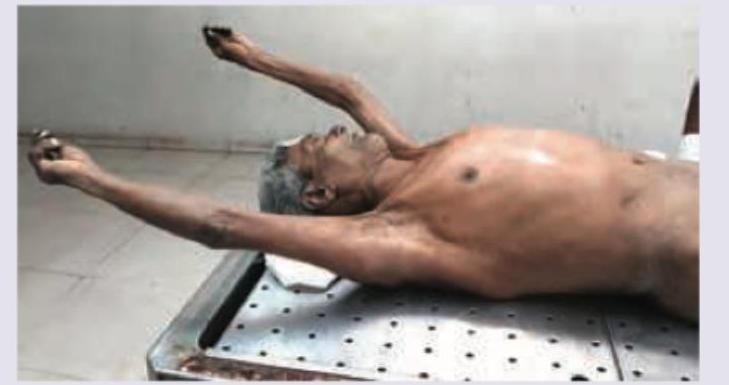
Explanation: ***Cadaveric spasm*** - This image demonstrates **cadaveric spasm**, or **instantaneous rigidity**, where a body stiffens immediately at the moment of death, often associated with a final, intense muscular effort, like grasping an object. - The deceased's arms are elevated and hands clenched, suggesting a sudden, forceful event at the time of death, which is characteristic of cadaveric spasm. *Rigor mortis* - **Rigor mortis** is a delayed postmortem change, developing several hours after death as ATP depletes, causing muscle contraction. - It usually starts 2-4 hours post-mortem, peaks around 12 hours, and resolves within 24-48 hours, unlike the immediate rigidity seen here. *Livor mortis* - **Livor mortis**, or lividity, refers to the discoloration of the skin due to the pooling of blood in capillaries in dependent areas after circulation ceases. - This phenomenon typically appears 30 minutes to 2 hours after death and is characterized by a purplish-red discoloration, not muscle rigidity. *Algor mortis* - **Algor mortis** refers to the postmortem cooling of the body as it equilibrates with the environmental temperature. - The body typically cools at a rate of approximately 1-1.5°F per hour, and this is a gradual process used to estimate time since death, not associated with muscle rigidity or positioning as seen in this image.
Explanation: ***Petechial hemorrhage*** - The image displays multiple small, pinpoint **red or purple spots** on the surface of the heart, consistent with **petechial hemorrhages**. - In an infant who died suddenly without external injury, petechiae on the heart can be a sign of **asphyxia** or **thoracic compression**, commonly seen in cases of **infant suffocation** or **sudden infant death syndrome (SIDS)**. - Petechiae result from **rupture of small capillaries** due to increased intravascular pressure, typically associated with **asphyxial deaths**. *Myocardial infarction* - Extremely rare in infants and would present with **pale, necrotic areas** in the myocardium, not pinpoint hemorrhages. - Associated with anomalous coronary arteries in pediatric cases, not sudden death without structural abnormalities. *Congenital heart disease* - Would show **structural cardiac abnormalities** such as septal defects, valvular malformations, or chamber hypertrophy. - Does not typically present as pinpoint surface hemorrhages on an otherwise normal heart. *Viral myocarditis* - Would show **inflammatory infiltrates** and myocyte necrosis on histopathology, not just surface petechiae. - May cause sudden death but presents with diffuse myocardial inflammation, not isolated petechial hemorrhages.
Explanation: ***24 hours*** - The image displays **Lichtenberg figures**, which are fern-like or tree-like patterns of skin reddening, typically observed in individuals struck by **lightning**. - These transient patterns usually appear within **minutes to a few hours** post-lightning strike and fade away within **24 hours**, resolving without permanent sequelae. *18 hours* - While Lichtenberg figures can develop within hours, 18 hours is not the typical **maximum duration** for their visibility. They tend to disappear faster. - This timeframe doesn't represent the established window for these characteristic skin markings. *36 hours* - Lichtenberg figures are **transient** skin markings that typically fade much sooner than 36 hours. - If skin discoloration persists beyond 24 hours, it might indicate **burns** or other underlying injuries, rather than solely Lichtenberg figures. *72 hours* - A duration of 72 hours is far too long for the characteristic presentation of Lichtenberg figures, which are known for their **rapid disappearance**. - Any marks visible at 72 hours would likely be due to other forms of **trauma** or injury from the lightning strike, such as burns or tissue damage.
Objectives of Medicolegal Autopsy
Practice Questions
Autopsy Procedures
Practice Questions
External Examination
Practice Questions
Internal Examination
Practice Questions
Special Autopsy Techniques
Practice Questions
Organ Retention and Disposal
Practice Questions
Collection of Toxicological Samples
Practice Questions
Autopsy Report Writing
Practice Questions
Histopathology in Autopsies
Practice Questions
Microbiology in Autopsies
Practice Questions
Radiology in Autopsies
Practice Questions
Limitations and Artifacts
Practice Questions
Get full access to all questions, explanations, and performance tracking.
Start For Free