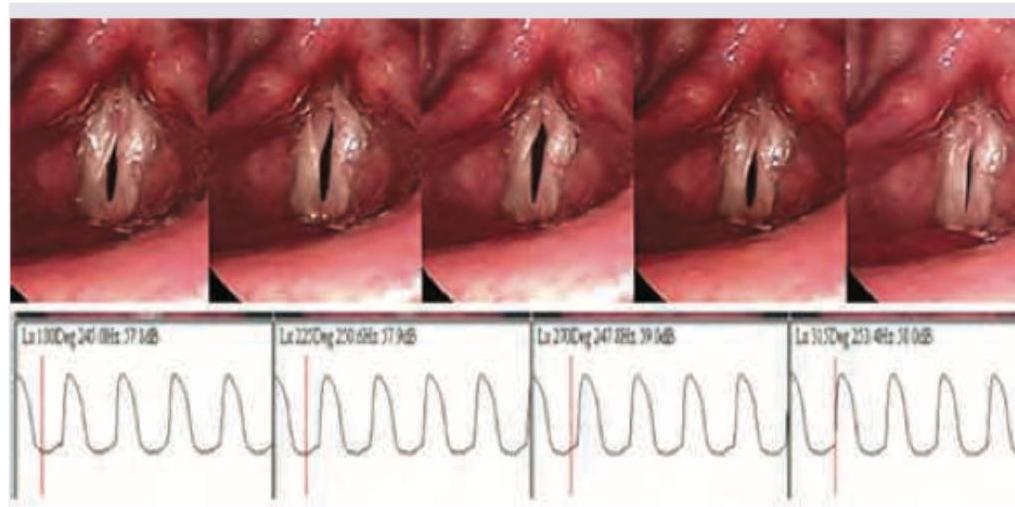
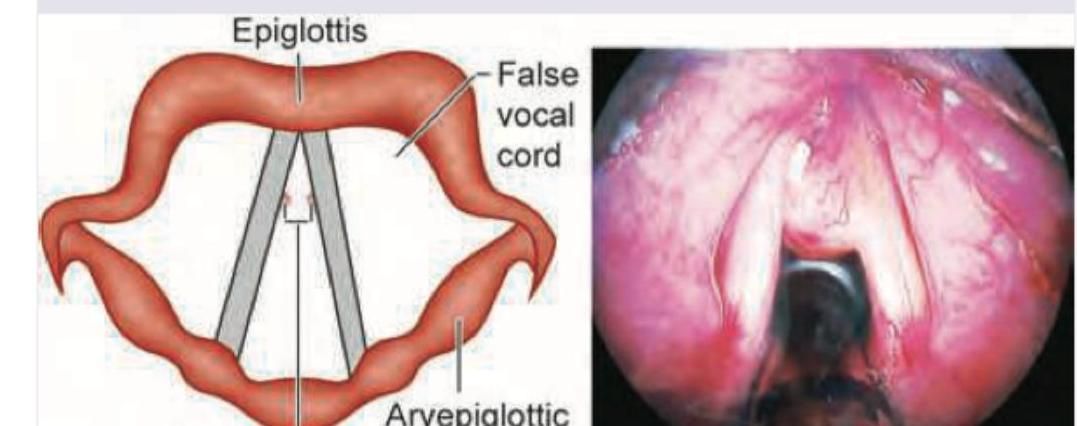
In thyroplasty type 2, what is the position of the vocal cord?
Androphonia is treated by which type of thyroplasty?
A male patient presents with a female-like voice. This condition is called:
A 26-year-old female presents with a scratchy, croaky voice. Which of the following statements is true?
Gutzmann pressure in puberphonia is described as?
Voice produced by false vocal cords due to non-functioning of true cords is seen in which condition?
What is the treatment for early vocal nodules?
Which materials are used for injection thyroplasty?
For a case of puberphonia, which type of thyroplasty is typically used?
Which of the following cancers can cause referred otalgia?
Explanation: **Explanation:** Thyroplasty, also known as **Isshiki’s framework surgery**, involves altering the position or tension of the vocal cords by manipulating the thyroid cartilage. **Thyroplasty Type 2 (Lateralization)** is indicated for **Adductor Spasmodic Dysphonia**. In this condition, the vocal cords close too tightly, causing a "strangled" or "strained" voice. To correct this, a vertical midline incision is made in the thyroid cartilage, and the two halves are pulled apart (lateralized) and held in place with spacers (e.g., titanium bridges). This moves the vocal cords away from the midline, preventing them from slamming together and resulting in a smoother, more breathy voice. **Analysis of Incorrect Options:** * **B. Medialized (Type 1):** This is the most common type, used for **Unilateral Vocal Cord Palsy**. A window is created in the thyroid cartilage to push the paralyzed cord toward the midline to improve closure. * **C. Shortened (Type 3):** Also called **Relaxation Thyroplasty**, it involves removing a vertical strip of cartilage to shorten the cords, thereby **lowering the pitch** (used in Androphonia). * **D. Lengthened (Type 4):** Also called **Tension Thyroplasty**, it involves cricothyroid approximation to stretch the cords, thereby **raising the pitch** (used in Puberphonia). **High-Yield Clinical Pearls for NEET-PG:** * **Type 1:** Medialization (for Paralysis) – *Think: "1 is for One-sided palsy"* * **Type 2:** Lateralization (for Spasmodic Dysphonia) * **Type 3:** Relaxation (Lowers pitch) * **Type 4:** Stretching/Tension (Raises pitch) – *Think: "4 is for High pitch/Puberphonia"*
Explanation: **Explanation:** **Androphonia** is a condition where a female possesses an abnormally low-pitched, masculine voice. The physiological goal of treatment is to **increase the pitch** of the voice. Pitch is directly proportional to the tension and length of the vocal cords. **Why Type 4 is Correct:** **Type 4 Thyroplasty (Cricothyroid Approximation)** is designed to increase pitch. It involves suturing the thyroid cartilage to the cricoid cartilage, mimicking the action of the cricothyroid muscle. This maneuver stretches and increases the tension of the vocal folds, thereby raising the fundamental frequency of the voice. It is the gold standard surgical treatment for androphonia and gender-affirming voice surgery (trans-female). **Analysis of Incorrect Options:** * **Type 1 (Medialization):** Used for unilateral vocal cord palsy. It pushes the vocal cord toward the midline to improve glottic closure. * **Type 2 (Lateralization):** Used for Adductor Spasmodic Dysphonia. It moves the vocal cords apart to prevent forceful spasms. * **Type 3 (Relaxation):** Used for **Puberphonia** (high-pitched male voice). It involves shortening/relaxing the vocal cords to lower the pitch—the exact opposite of the requirement for androphonia. **High-Yield Clinical Pearls for NEET-PG:** * **Isshiki Classification:** The standard classification for thyroplasty (Phonosurgery). * **Puberphonia:** First-line treatment is **Gutzmann’s Pressure Test** (Voice therapy); if it fails, Type 3 Thyroplasty is performed. * **Androphonia:** Often caused by virilization (hormonal) or chronic smoking (Reinke’s edema). * **Mnemonic for Pitch:** Type **3** (Lowering/Relaxing) vs. Type **4** (Raising/Tension).
Explanation: **Explanation:** **1. Why Puberphonia is Correct:** Puberphonia (also known as **mutational falsetto**) is a functional voice disorder where a post-pubescent male continues to use a high-pitched, feminine voice despite having a normal adult larynx. During puberty, the male larynx grows rapidly under the influence of testosterone, causing the vocal cords to lengthen and thicken, which normally drops the pitch by an octave. In puberphonia, the patient resists this change by habitually contracting the cricothyroid muscle, keeping the vocal cords tense and thin, resulting in a high-pitched voice. **2. Analysis of Incorrect Options:** * **Androphonia:** This is the opposite of puberphonia. It refers to a female patient possessing a low-pitched, masculine voice. It is often seen in conditions like Reinke’s edema or virilization due to hormonal imbalances. * **Rhinolalia Aperta (Hypernasality):** This is a resonance disorder where there is excessive escape of air through the nose during speech, often due to velopharyngeal insufficiency (e.g., cleft palate). * **Rhinolalia Clausa (Hyponasality):** This occurs when there is a lack of normal nasal resonance due to nasal obstruction (e.g., adenoid hypertrophy or nasal polyps), making the patient sound as if they have a "cold in the head." **3. NEET-PG High-Yield Pearls:** * **Treatment of Choice:** Voice therapy (specifically the **Gutzmann’s pressure test**, where downward pressure is applied to the thyroid cartilage to lower the pitch) is the primary treatment. * **Surgical Option:** If therapy fails, **Type III Thyroplasty** (Relaxation Thyroplasty) is performed to shorten and relax the vocal cords. * **Psychological Aspect:** It is often associated with difficulty in accepting the adult male role or an over-attachment to the mother.
Explanation: ### Explanation The clinical presentation of a **"scratchy, croaky, or strained-strangled"** voice in a young adult is characteristic of **Adductor Spasmodic Dysphonia (ADSD)**, the most common type of focal laryngeal dystonia. #### 1. Why Option C is Correct In Adductor Dysphonia, there are involuntary spasms of the **Adductor muscles** (primarily the Lateral Cricoarytenoid and Thyroarytenoid). This causes the vocal folds to slam together tightly during speech, resulting in a voice that sounds forced, "choked," or "strained-strangled" with frequent pitch breaks. #### 2. Why Other Options are Incorrect * **Option A:** While Botulinum toxin (Botox) is the gold standard treatment, it is injected into the **Thyroarytenoid (TA) muscle**, not the cricoarytenoid. Injecting the cricoarytenoid would not effectively address the adductor spasms. * **Option B:** **Type I Thyroplasty** (Medialization) is used for vocal cord palsy (to move a cord to the midline). For ADSD, **Type II Thyroplasty** (Lateralization) is sometimes used to prevent the cords from meeting too tightly. * **Option D:** **Abductor Dysphonia** presents with a **breathy, whispering voice** due to spasms of the Posterior Cricoarytenoid (PCA) muscle, which pull the vocal folds apart during phonation. #### Clinical Pearls for NEET-PG * **Gold Standard Treatment:** Botulinum toxin injection into the **Thyroarytenoid muscle** (for Adductor type) or **Posterior Cricoarytenoid** (for Abductor type). * **Key Distinction:** Adductor = Strained/Croaky voice; Abductor = Breathy/Whispery voice. * **Task Specificity:** Symptoms often disappear during singing, whispering, or laughing, which is a classic diagnostic clue for spasmodic dysphonia. * **Diagnosis:** Confirmed via fiberoptic laryngoscopy showing "spasmodic" closures during speech.
Explanation: **Explanation:** **Puberphonia** (Mutational Falsetto) is a functional voice disorder where a post-pubescent male continues to use a high-pitched pre-pubertal voice. This occurs because the larynx is held high in the neck, and the vocal folds are stretched thin and tense, preventing the transition to a lower pitch. **Why "Backwards and Downwards" is correct:** The **Gutzmann maneuver** is a diagnostic and therapeutic clinical test. The examiner applies manual pressure on the thyroid cartilage in a **backward and downward** direction. * **Downward pressure** lowers the high-positioned larynx. * **Backward (posterior) pressure** relaxes the overstretched vocal folds by shortening the distance between the thyroid and arytenoid cartilages. This maneuver results in an immediate drop in vocal pitch to a normal male range, confirming the diagnosis and demonstrating to the patient that they are capable of producing a deeper voice. **Analysis of Incorrect Options:** * **B & D (Backwards / Downwards alone):** While both components are part of the movement, neither alone is sufficient to both lower the laryngeal position and relax the vocal fold tension simultaneously. * **C (Backwards and Up):** Upward pressure would mimic the pathology of puberphonia (where the larynx is already elevated) and would further increase the pitch rather than lowering it. **High-Yield Clinical Pearls for NEET-PG:** * **Primary Treatment:** Voice therapy (Speech therapy) is the first-line treatment. * **Surgical Option:** If therapy fails, **Type III Thyroplasty** (Relaxation Thyroplasty) is performed to shorten the vocal folds. * **Differential Diagnosis:** Must rule out organic causes like laryngeal webs or hormonal imbalances (Kallmann syndrome). * **Psychology:** It is often associated with difficulty in accepting adult identity or over-attachment to the mother.
Explanation: ### Explanation **Correct Option: B. Dysphonia plica ventricularis** **Concept:** Dysphonia plica ventricularis (also known as **Ventricular Dysphonia**) is a condition where the **false vocal cords (ventricular folds)** take over the function of the true vocal cords for voice production. Normally, the false cords remain apart during phonation. However, if the true vocal cords are unable to vibrate effectively (due to paralysis, fixation, or severe scarring) or due to psychological factors, the false cords adduct and vibrate instead. The resulting voice is characteristically **hoarse, low-pitched, and "rough"** because the false cords are thick mucosal folds not designed for fine phonation. **Analysis of Incorrect Options:** * **A. Spasmodic dysphonia:** A focal laryngeal dystonia causing involuntary spasms of the laryngeal muscles. It results in a "strained-strangled" voice (adductor type) or breathy breaks (abductor type), but the primary source of sound remains the true vocal cords. * **C. Puberophonia:** Also called "Mutational Falsetto," this is the persistence of a high-pitched adolescent voice in a male after puberty. It is caused by the true vocal cords vibrating at a high frequency due to excessive tension, not the use of false cords. * **D. Habitual dysphonia:** A broad term for voice disorders arising from improper use of the vocal mechanism (vocal abuse/misuse). While it can lead to ventricular dysphonia, it is not a specific diagnosis defined by false cord phonation. **NEET-PG High-Yield Pearls:** * **Diagnosis:** On indirect laryngoscopy, the false vocal cords are seen to meet in the midline, obscuring the view of the true vocal cords during phonation. * **Types:** It can be **compensatory** (secondary to true cord pathology like paralysis) or **psychogenic/habitual** (primary). * **Treatment:** Voice therapy is the first line. In refractory cases, BoTox injection or surgical reduction of the ventricular folds may be considered. * **Key Sign:** "Rethinking" or "Double voice" (Diplophonia) can sometimes occur if both true and false cords vibrate simultaneously.
Explanation: **Explanation:** **Vocal nodules** (also known as Singer’s or Teacher’s nodules) are benign, bilateral, symmetrical swellings located at the junction of the anterior 1/3rd and posterior 2/3rds of the vocal folds. This is the site of maximum vibratory amplitude. 1. **Why Voice Therapy is Correct:** The primary pathophysiology of vocal nodules is **vocal abuse or misuse** (hyperfunctional voice disorder). In the **early stage**, nodules are soft, edematous, and reddish. Since the underlying cause is mechanical trauma from poor vocal hygiene, the first-line treatment is **conservative management via voice therapy**. This involves teaching the patient proper breathing techniques, vocal rest, and eliminating "glottal attacks." Most early-stage nodules are reversible with these behavioral changes. 2. **Why Other Options are Incorrect:** * **A & B (Excision/Laser ablation):** Surgical intervention (Microlaryngeal surgery or CO2 Laser) is reserved only for **chronic, fibrotic nodules** that have failed a trial of voice therapy (usually 3–6 months). Surgery in the early stage is contraindicated as it may lead to scarring without addressing the causative behavior. * **D (Tissue sampling):** Vocal nodules have a classic clinical appearance and history. Routine biopsy is not indicated unless there is a suspicion of malignancy (which is rare in bilateral, symmetrical lesions in professional voice users). **Clinical Pearls for NEET-PG:** * **Location:** Junction of anterior 1/3 and posterior 2/3 (Site of maximum vibration). * **Demographics:** Most common in male children and adult females. * **Stroboscopy:** Shows an "hourglass" glottic closure pattern. * **Management Rule:** Always "Voice Therapy first" for nodules; "Surgery first" for vocal polyps (which are usually unilateral and less responsive to therapy).
Explanation: **Explanation:** **Injection Thyroplasty** (also known as Injection Laryngoplasty) is a surgical procedure used to treat **unilateral vocal cord paralysis** or glottic insufficiency. The primary goal is to "bulk up" the paralyzed vocal fold, moving it toward the midline so the functioning fold can make contact, thereby improving voice quality and preventing aspiration. **Why "All the Above" is correct:** The choice of material depends on the desired duration of the effect (temporary vs. permanent) and biocompatibility. * **Collagen (Option A):** Bovine or human-derived collagen was one of the earliest materials used. It is typically used for temporary medialization as it eventually resorbs. * **Acellular Micronized Human Dermis (Option B):** Marketed under names like *Cymetra*, this is a processed human cadaveric tissue. It provides a scaffold for host cell ingrowth and lasts longer than simple collagen (approx. 6–12 months). * **Gelatin Powder/Sponge (Option C):** Often used in the form of *Gelfoam* paste, this is a short-acting, temporary material (lasting 4–6 weeks). It is ideal for patients where nerve recovery is expected or as a "trial" before permanent surgery. **High-Yield Clinical Pearls for NEET-PG:** * **Indications:** Unilateral vocal cord paralysis, vocal fold atrophy (presbyphonia), and vocal fold scarring. * **Other Materials:** **Teflon** (historical, now largely abandoned due to "Teflon granuloma"), **Hydroxyapatite** (Radiance/Radiesse - long-lasting), and **Autologous Fat** (requires a donor site). * **Type I Thyroplasty (Isshiki):** Unlike injection, this is a permanent "framework surgery" involving an external approach and a silastic/Gore-Tex implant. * **Key Contraindication:** Bilateral vocal cord paralysis (where the airway is the priority, not the voice).
Explanation: **Explanation:** **Puberphonia** (mutational falsetto) is a functional voice disorder where a post-pubescent male continues to use a high-pitched pre-pubertal voice. The physiological basis of this high pitch is excessive tension in the vocal folds and a high position of the larynx. **Why Type 3 is Correct:** The goal of treating puberphonia (when speech therapy fails) is to **lower the vocal pitch**. This is achieved through **Type 3 Thyroplasty (Relaxation Thyroplasty)**. In this procedure, a vertical strip of thyroid cartilage is removed or the anterior commissure is pushed backward. This shortens the anteroposterior length of the vocal folds, reducing their tension and effectively lowering the fundamental frequency of the voice. **Analysis of Incorrect Options:** * **Type 1 (Medialization):** Used for unilateral vocal cord palsy. It pushes the vocal cord toward the midline to improve glottic closure. * **Type 2 (Lateralization):** Used for Adductor Spasmodic Dysphonia. It moves the vocal cords apart to prevent forceful over-approximation. * **Type 4 (Cricothyroid Approximation):** Used to **increase pitch** (e.g., in androphonia or male-to-female transgender surgery). It stretches the vocal folds, the opposite of what is needed for puberphonia. **High-Yield Clinical Pearls for NEET-PG:** * **First-line treatment:** Voice therapy (specifically **Gutzmann’s pressure test** or digital manipulation) is the primary treatment for puberphonia. * **Isshiki Classification:** This is the standard classification for thyroplasty (Framework Surgery). * **Type 3 Mechanism:** Think of it as "detuning" a guitar string by loosening it to produce a deeper sound.
Explanation: **Explanation:** Referred otalgia is pain felt in the ear due to a disease process located elsewhere. This occurs because the ear has a complex sensory nerve supply that shares common nuclei with several cranial nerves (V, VII, IX, and X). **Why Option B is the Correct Answer:** While several head and neck cancers can cause referred ear pain, **Cancer of the Pharynx** (specifically the oropharynx and hypopharynx) is the most classic and frequent cause associated with this symptom in clinical exams. * **Glossopharyngeal Nerve (CN IX):** Supplies the oropharynx and the tonsillar fossa. Its **Jacobson’s nerve** branch provides sensation to the middle ear. * **Vagus Nerve (CN X):** Supplies the hypopharynx and laryngopharynx. Its **Arnold’s nerve** branch supplies the external auditory canal. Irritation of these nerves by a pharyngeal malignancy is perceived by the brain as pain originating from the ear. **Analysis of Other Options:** * **Option A & C:** While advanced cancers of the larynx (via CN X) and oral cavity (via CN V3/Lingual nerve) *can* technically cause referred otalgia, they are less frequently the primary "textbook" association compared to pharyngeal lesions. In the context of many standardized PG exams, if "All of the above" is not the intended answer, the **Pharynx** is the highest-yield site. * **Option D:** Though clinically plausible, the examiner often focuses on the pharynx due to the direct involvement of the Glossopharyngeal nerve, which is the most common mediator of this reflex. **High-Yield Clinical Pearls for NEET-PG:** * **Eagle’s Syndrome:** Elongated styloid process causing referred otalgia via CN IX. * **Trotter’s Triad:** Associated with Nasopharyngeal Carcinoma (NPC); includes conductive hearing loss, palatal paralysis, and temporofacial neuralgia (referred pain). * **Rule of Thumb:** In an elderly patient with a normal ear examination complaining of earache, always perform a fiberoptic laryngoscopy to rule out a silent malignancy of the base of the tongue or hypopharynx.
Vocal Fold Structure and Function
Practice Questions
Voice Assessment and Examination
Practice Questions
Stroboscopy and High-speed Imaging
Practice Questions
Nodules, Polyps, and Cysts
Practice Questions
Vocal Fold Paralysis
Practice Questions
Spasmodic Dysphonia
Practice Questions
Professional Voice Care
Practice Questions
Voice Therapy
Practice Questions
Phonosurgery Techniques
Practice Questions
Laryngeal Framework Surgery
Practice Questions
Gender-Affirming Voice Care
Practice Questions
Pediatric Voice Disorders
Practice Questions
Get full access to all questions, explanations, and performance tracking.
Start For Free