At what age do tonsils typically reach their maximum size?
Hot Potato voice is seen in which of the following conditions?
Hot potato voice is seen in all of the following conditions EXCEPT:
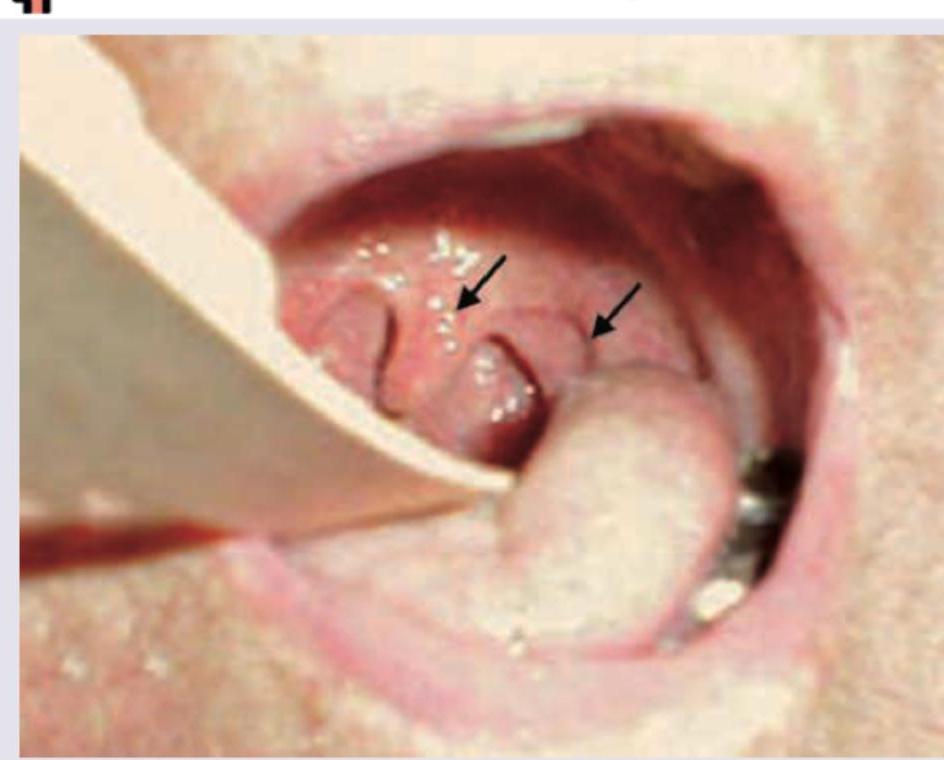
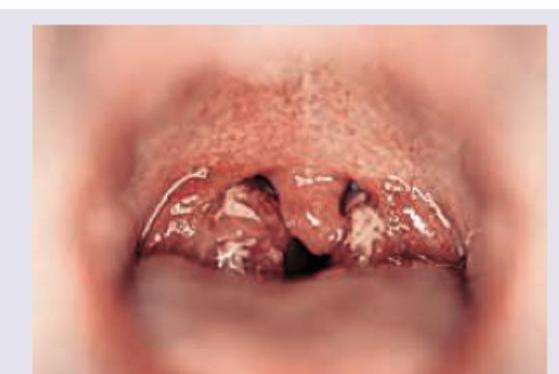
Which of the following is NOT a cause of a throat membrane?
What is a Thornwaldt cyst?
Which of the following statements is true regarding Plummer-Vinson syndrome?
Thornwaldt's cyst is described as which of the following?
The association of membranous tonsillitis with petechial eruption on the palate and generalized lymphadenopathy should suggest which diagnosis?
A 70-year-old man presents with regurgitation of food, dysphagia, halitosis, and a sensation of 'lump in the throat'. What is the most likely diagnosis?
Anti-gravity aspiration is done in which of the following conditions?
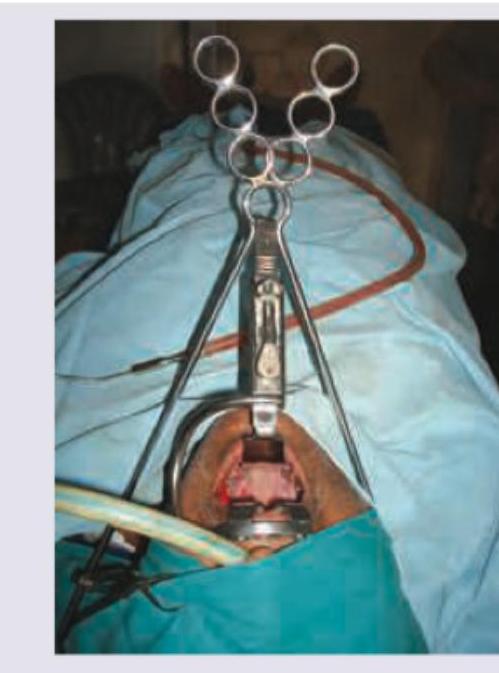
Explanation: **Explanation:** The palatine tonsils are part of **Waldeyer’s ring**, a collection of lymphoid tissue located at the entrance of the aerodigestive tract. The growth pattern of this lymphoid tissue follows the **Scammon’s growth curve**, which characterizes the development of various body systems. **1. Why 12 years is correct:** Lymphoid tissue (including tonsils and adenoids) undergoes rapid proliferation during childhood, significantly outpacing the growth of other body tissues. It reaches its **maximum peak size around puberty (approximately 12 years of age)**. At this stage, the lymphoid mass is often double its eventual adult size. Following puberty, the tonsils undergo physiological involution (atrophy) due to the influence of sex hormones. **2. Why other options are incorrect:** * **1 year (A):** At birth, tonsils are small and underdeveloped. They begin to enlarge only after 6 months as the infant is exposed to new environmental antigens. * **3 years (B) & 5 years (C):** While the tonsils are actively enlarging during these years (often leading to "physiological hypertrophy" that may cause snoring or mouth breathing in preschoolers), they have not yet reached their absolute peak volume. **Clinical Pearls for NEET-PG:** * **Adenoids:** Unlike palatine tonsils, adenoids typically reach maximum size earlier (around **5–7 years**) and begin to atrophy earlier. * **Quinsy (Peritonsillar Abscess):** The most common complication of acute tonsillitis, usually occurring in the space between the tonsillar capsule and the superior constrictor muscle. * **Blood Supply:** The main artery of the tonsil is the **tonsillar branch of the facial artery**. * **Innervation:** The sensory supply is primarily via the **glossopharyngeal nerve (CN IX)**; this explains referred ear pain (otalgia) during tonsillitis.
Explanation: **Explanation:** **Hot Potato Voice** (also known as thick, muffled voice) occurs when there is a significant inflammatory swelling or mass in the oropharynx or hypopharynx. This physical obstruction restricts the movement of the soft palate and tongue, preventing the clear resonance of speech—much like how a person would speak if they had a hot potato in their mouth. **Why "All of the Above" is Correct:** The underlying medical concept is **pharyngeal space obstruction**. * **Peritonsillar Abscess (Quinsy):** This is the most classic association. The abscess pushes the tonsil medially and the soft palate downwards, severely limiting oropharyngeal space and palatal mobility. * **Ludwig’s Angina:** This is a cellulitis of the submandibular and sublingual spaces. The resulting massive edema pushes the floor of the mouth and the tongue upward and backward, causing a muffled voice and potential airway compromise. * **Retropharyngeal Abscess:** The swelling in the posterior pharyngeal wall bulges forward into the oropharynx, creating a physical barrier that alters vocal resonance and causes "thick" speech. **Clinical Pearls for NEET-PG:** 1. **Differentiating Voices:** * **Hot Potato Voice:** Quinsy, Ludwig’s Angina, Retropharyngeal Abscess, Epiglottitis. * **Hoarseness:** Laryngeal pathology (e.g., Vocal nodules, Laryngeal CA). * **Nasally Twang (Rhinolalia Clausa):** Nasal polyps, Adenoids. 2. **Ludwig’s Angina Key Sign:** Look for "Woody hard" swelling of the neck and "Putrid halitosis." 3. **Quinsy Key Sign:** Look for "Trismus" (due to irritation of the medial pterygoid muscle) and uvular deviation to the opposite side.
Explanation: **Explanation:** **Hot Potato Voice (Dyslalia)** refers to a thick, muffled quality of speech, similar to how one would speak with a hot potato in the mouth. It occurs due to **mechanical obstruction or mass effect** in the oropharynx or supraglottic region, which interferes with the resonance of sound rather than the vibration of the vocal cords. **Why Glottic Cancer is the Correct Answer:** Glottic cancer involves the true vocal cords. Any pathology affecting the free edge or vibration of the vocal cords results in **Hoarseness of Voice** (dysphonia), not a muffled voice. Therefore, glottic cancer is the exception. **Analysis of Other Options:** * **Peritonsillar Abscess (Quinsy):** This is the most classic cause of hot potato voice. The inflammatory edema and medial displacement of the tonsil/soft palate restrict oropharyngeal space and limit palate movement. * **Tonsillar Malignancy:** Large tumors of the palatine tonsil create a bulky mass in the oropharynx, leading to muffled speech through altered resonance. * **Posterior Tongue Malignancy:** Tumors at the base of the tongue interfere with the movement of the tongue and narrow the oropharyngeal inlet, resulting in a thick, muffled voice. **High-Yield Clinical Pearls for NEET-PG:** 1. **Hoarseness:** Think **Glottic** lesions (Vocal nodules, Glottic CA, Laryngitis). 2. **Hot Potato Voice:** Think **Supraglottic/Oropharyngeal** lesions (Quinsy, Epiglottitis, Retropharyngeal abscess, Base of tongue tumors). 3. **Stridor:** High-pitched sound indicating airway narrowing (Inspiratory = Supraglottic; Biphasic = Subglottic; Expiratory = Bronchial). 4. **Acute Epiglottitis:** A life-threatening cause of hot potato voice in children, often associated with the "Thumb sign" on X-ray.
Explanation: The presence of a **pseudomembrane** in the throat is a classic clinical sign indicating localized tissue necrosis and inflammatory exudate. **Explanation of the Correct Answer:** **B. Staphylococci:** While *Staphylococcus aureus* is a common cause of skin infections and pneumonia, it typically causes a **follicular or exudative tonsillitis** (characterized by pus in the crypts) rather than a continuous, adherent pseudomembrane. It is not recognized as a primary cause of membranous pharyngitis. **Analysis of Incorrect Options:** * **A. Streptococcus:** *Streptococcus pyogenes* (Group A Beta-hemolytic Strep) is a leading cause of **Membranous Tonsillitis**. The exudate can coalesce to form a yellowish-white membrane that stays confined to the tonsils. * **C. Borrelia:** *Borrelia vincentii* (along with *Fusiform bacilli*) causes **Vincent’s Angina**. This is characterized by a greyish-slough/membrane over a necrotic ulcer on the tonsil, which bleeds easily on removal. * **D. Corynebacteria:** *Corynebacterium diphtheriae* is the classic cause of **Faucial Diphtheria**. It produces a thick, greyish-green, leathery membrane that is highly adherent and spreads beyond the tonsils to the pillars and soft palate. **High-Yield Clinical Pearls for NEET-PG:** * **Diphtheria Membrane:** "Tough and Adherent." Bleeds on stripping. Spreads to the soft palate (unlike Strep). * **Infectious Mononucleosis (EBV):** Another common cause of a thick white membrane; often associated with posterior cervical lymphadenopathy and splenomegaly. * **Candidiasis (Thrush):** Presents as multiple white "curdy" patches that can be easily scraped off, revealing an erythematous base. * **Agranulocytosis:** Can cause necrotic pharyngeal ulcers with a dirty grey membrane due to lack of neutrophils.
Explanation: **Explanation:** **Thornwaldt cyst** (also known as Tornwaldt’s cyst) is a benign, developmental midline cyst located in the **nasopharynx**. It arises from a persistent communication between the embryonic notochord and the pharyngeal endoderm. When the pharyngeal bursa (a small pouch in the midline of the nasopharynx) becomes occluded due to infection or inflammation, fluid accumulates, forming a cyst. * **Why Option B is correct:** The cyst is specifically located in the midline of the posterior wall of the nasopharynx, just above the superior constrictor muscle and deep to the adenoids. * **Why Options A and C are incorrect:** Thornwaldt cysts are strictly anatomical to the nasopharynx. Laryngeal cysts (Option A) usually present as vallecular or saccular cysts, while ear cysts (Option C) are typically preauricular or sebaceous in nature. **High-Yield Clinical Pearls for NEET-PG:** * **Location:** Midline of the nasopharynx (posterior wall). * **Clinical Presentation:** Most are asymptomatic and discovered incidentally on imaging or endoscopy. If infected (Thornwaldt’s disease), it can cause halitosis, post-nasal drip, occipital headache, or eustachian tube dysfunction. * **Diagnosis:** Nasopharyngoscopy shows a smooth, midline swelling. **MRI** is the investigation of choice (shows high signal intensity on both T1 and T2 due to proteinaceous fluid). * **Treatment:** Indicated only if symptomatic; involves surgical marsupialization or endoscopic excision.
Explanation: **Plummer-Vinson Syndrome (PVS)**, also known as **Paterson-Brown-Kelly Syndrome**, is characterized by a classic triad of iron-deficiency anemia, dysphagia, and esophageal webs. ### **Explanation of Options** * **Correct Answer (B):** While iron deficiency is the hallmark, PVS is frequently associated with other nutritional deficiencies. Studies and clinical observations have shown that **Vitamin B12 deficiency** and other B-complex vitamins (like riboflavin) may coexist, contributing to the mucosal changes (glossitis, cheilosis) seen in these patients. * **Option A:** This is incorrect. PVS has a strong **female predilection**, typically affecting middle-aged women (4th to 7th decade). * **Option C:** This is incorrect. Plummer-Vinson syndrome and **Paterson-Brown-Kelly syndrome** are synonymous terms for the same clinical entity. * **Option D:** This is incorrect. PVS is a well-known **premalignant condition**. It significantly increases the risk of squamous cell carcinoma of the **post-cricoid region** and upper esophagus. ### **Clinical Pearls for NEET-PG** * **The Triad:** 1. Iron deficiency anemia (Microcytic hypochromic), 2. Dysphagia (due to webs), 3. Esophageal webs (usually in the post-cricoid/cervical esophagus). * **Physical Findings:** Glossitis (smooth red tongue), Koilonychia (spoon-shaped nails), and angular stomatitis. * **Diagnosis:** **Barium swallow** is the investigation of choice to visualize the web (seen as a thin filling defect). * **Treatment:** Iron supplementation often resolves the dysphagia; however, persistent webs may require endoscopic dilation. * **High-Yield Association:** It is the most common cause of **post-cricoid carcinoma** in females.
Explanation: **Explanation:** **Thornwaldt’s cyst** (also known as a nasopharyngeal bursa) is a benign, midline mucosal cyst located in the **nasopharynx**. It is the correct answer because it arises from a developmental remnant of the **notochord**. During embryogenesis, as the notochord retreats from the cervical vertebrae toward the skull base, it can remain adherent to the pharyngeal ectoderm. This creates a potential space or "bursa" in the midline of the posterior nasopharyngeal wall, just above the superior constrictor muscle. If the opening of this bursa becomes obstructed (due to infection or inflammation), it forms a cyst. **Analysis of Incorrect Options:** * **Option A (Laryngeal cyst):** These are typically ductal (retention) cysts or saccular cysts located in the epiglottis or vallecula. Thornwaldt’s cyst is anatomically restricted to the nasopharynx. * **Option C (Ear cyst):** Cysts in the ear usually refer to preauricular cysts or sebaceous cysts of the canal. While a Thornwaldt’s cyst can cause Eustachian tube dysfunction leading to ear symptoms (like serous otitis media), the cyst itself is not located in the ear. **Clinical Pearls for NEET-PG:** * **Location:** It is always found in the **midline** of the posterior wall of the nasopharynx, deep to the adenoids. * **Clinical Presentation:** Most are asymptomatic and found incidentally on MRI/CT. If symptomatic, it presents with post-nasal drip, halitosis, a "musty" taste, or occipital headaches. * **Diagnosis:** MRI is the gold standard (shows a high-signal intensity lesion on T2). * **Treatment:** Only required if symptomatic; involves surgical marsupialization or endoscopic excision.
Explanation: ### Explanation The clinical triad of **membranous tonsillitis**, **palatal petechiae**, and **generalized lymphadenopathy** is a classic presentation of **Infectious Mononucleosis (IM)**, also known as Glandular Fever. **1. Why Infectious Mononucleosis is correct:** Caused by the **Epstein-Barr Virus (EBV)**, IM typically affects adolescents and young adults. The pharyngeal involvement presents as an exudative or membranous tonsillitis (often mimicking streptococcal sore throat). A key diagnostic clue is the presence of **petechiae at the junction of the hard and soft palate** (Holzel’s sign). The lymphadenopathy is characteristically generalized, involving the posterior cervical chain, and is often accompanied by splenomegaly and hepatomegaly. **2. Why other options are incorrect:** * **Cat Scratch Disease:** Caused by *Bartonella henselae*, it typically presents with **localized** lymphadenopathy (draining the site of a scratch) rather than generalized involvement or membranous tonsillitis. * **Measles:** While it features a prodromal cough, coryza, and conjunctivitis, the pathognomonic oral finding is **Koplik spots** (white spots on the buccal mucosa), not palatal petechiae or membranous tonsillitis. * **Scarlet Fever:** Caused by Group A Streptococcus, it presents with a "strawberry tongue" and a diffuse sandpaper-like rash. While it causes tonsillitis, it does not typically cause generalized lymphadenopathy or palatal petechiae. **Clinical Pearls for NEET-PG:** * **Paul-Bunnell Test:** Detects heterophile antibodies (diagnostic for EBV). * **Peripheral Smear:** Shows **atypical lymphocytes** (Downey cells). * **Treatment Warning:** Administration of **Ampicillin or Amoxicillin** in a patient with IM often triggers a characteristic maculopapular skin rash. * **Complication:** Splenic rupture is a rare but life-threatening complication; patients should avoid contact sports.
Explanation: **Explanation:** The clinical presentation of an elderly male with **regurgitation of undigested food**, **halitosis** (due to fermentation of food in the pouch), **dysphagia**, and a **"lump in the throat"** is a classic description of a **Pharyngeal Pouch (Zenker’s Diverticulum)**. **Why it is correct:** Zenker’s diverticulum is a pulsion diverticulum occurring through **Killian’s dehiscence**, a weak area between the thyropharyngeus and cricopharyngeus muscles (parts of the inferior constrictor). It is caused by neuromuscular incoordination. The "lump in the throat" and gurgling sounds in the neck (**Boyce’s sign**) are characteristic. Regurgitation often occurs while sleeping or bending over. **Why incorrect options are wrong:** * **Carcinoma Esophagus:** Usually presents with progressive dysphagia (solids then liquids) and significant weight loss. Regurgitation of undigested food and long-standing halitosis are less common than in Zenker’s. * **Diffuse Esophageal Spasm:** Characterized by intermittent chest pain (mimicking angina) and dysphagia. Barium swallow shows a "corkscrew esophagus," not a pouch. * **Esophageal Dysmotility (e.g., Achalasia):** Presents with dysphagia to both solids and liquids from the onset and nocturnal regurgitation, but typically lacks the specific "neck lump" sensation and the anatomical localization seen in Zenker’s. **NEET-PG High-Yield Pearls:** * **Investigation of Choice:** Barium Swallow (shows a pouch behind the esophagus). * **Treatment:** Small pouches are managed by **Dohlman’s Procedure** (Endoscopic staple diverticulotomy); large pouches may require external diverticulectomy with cricopharyngeal myotomy. * **Complication:** Aspiration pneumonia is the most common serious complication. * **Contraindication:** Rigid esophagoscopy should be done with extreme caution due to the high risk of pouch perforation.
Explanation: **Explanation:** The concept of **anti-gravity aspiration** is specifically associated with the management of a **Cold Abscess** (Tuberculous abscess) in the neck, most commonly seen in **Retropharyngeal TB**. 1. **Why TB Abscess is correct:** A cold abscess is caused by tuberculosis of the cervical spine (Pott’s spine). The pus collects behind the prevertebral fascia. If the abscess is drained through a dependent (lower) incision, gravity causes persistent tracking of pus, leading to the formation of a **persistent discharging sinus** and secondary pyogenic infection. To prevent this, aspiration is performed from a higher level (anti-gravity) or through healthy skin away from the most fluctuant point, ensuring the tract collapses and heals without sinus formation. 2. **Why other options are incorrect:** * **Quinsy (Peritonsillar Abscess):** This is an acute pyogenic infection. Management involves **Incision and Drainage (I&D)** at the point of maximum bulge (usually lateral to the anterior pillar) to allow gravity to assist drainage. * **Parapharyngeal Abscess:** This is a deep neck space infection managed via an external cervical approach (Mosher’s incision) to ensure dependent drainage of the multi-loculated pus. * **Ludwig’s Angina:** This is a submandibular space cellulitis. Treatment involves aggressive airway management and a wide horizontal incision for decompression, not anti-gravity aspiration. **Clinical Pearls for NEET-PG:** * **Retropharyngeal Abscess:** Acute (Pyogenic) is common in children; Chronic (TB) is common in adults. * **Treatment of choice for TB Retropharyngeal Abscess:** Systemic ATT + Aspiration through the **lateral side of the neck** (posterior to Sternocleidomastoid). * **Avoid:** Never drain a TB abscess trans-orally, as it leads to secondary infection and potential aspiration of pus.
Pharyngitis
Practice Questions
Tonsillitis
Practice Questions
Peritonsillar Abscess
Practice Questions
Retropharyngeal Abscess
Practice Questions
Adenoid Hypertrophy
Practice Questions
Sleep-Disordered Breathing
Practice Questions
Obstructive Sleep Apnea
Practice Questions
Nasopharyngeal Carcinoma
Practice Questions
Oropharyngeal Carcinoma
Practice Questions
Hypopharyngeal Carcinoma
Practice Questions
Dysphagia
Practice Questions
Globus Pharyngeus
Practice Questions
Get full access to all questions, explanations, and performance tracking.
Start For Free