What is the most common causative agent of acute tonsillitis?
Which of the following conditions is characterized by a frog-like facies?
A person presents to the emergency department with dyspnea, following a history of something getting stuck in their throat during dinner. What is the most probable diagnosis?
A membrane in the throat is caused by all of the following pathogens except:
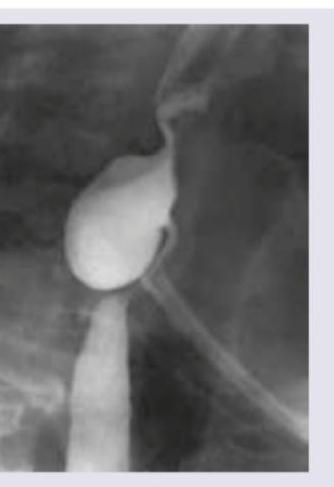
All of the following are true about Zenker's Diverticulum except?
Which of the following muscles is responsible for the formation of the posterior tonsillar pillar?
Which of the following is a true statement about chronic retropharyngeal abscess?
The Gerlach tonsil is also known as which of the following?
Which of the following is called the gateway of Tears?
Patterson-Brown-Kelly syndrome includes which of the following?
Explanation: **Explanation:** **Acute Tonsillitis** is an inflammation of the palatine tonsils, most commonly occurring in school-going children. **Why Beta-hemolytic streptococcus is correct:** While viruses (such as Adenovirus and Rhinovirus) are the most frequent cause of sore throats overall, **Group A Beta-hemolytic streptococcus (GABHS)**, also known as *Streptococcus pyogenes*, is the **most common bacterial cause** of acute tonsillitis. In the context of medical exams like NEET-PG, when asked for the "causative agent" among bacterial options, GABHS is the definitive answer. It is clinically significant because untreated GABHS infection can lead to non-suppurative complications like Rheumatic Fever and Post-streptococcal Glomerulonephritis. **Why the other options are incorrect:** * **A. Haemophilus influenzae:** While it can cause upper respiratory infections and epiglottitis, it is a less common primary cause of acute follicular tonsillitis compared to Streptococci. * **C. Staphylococcus aureus:** This is often a secondary invader or part of a polymicrobial infection (like in peritonsillar abscess), but it is rarely the primary initiator of acute tonsillitis. * **D. Pneumococcus (*S. pneumoniae*):** Though it causes pneumonia and otitis media, it is not the predominant pathogen for tonsillar inflammation. **Clinical Pearls for NEET-PG:** * **Most common viral cause:** Adenovirus. * **Most common bacterial cause:** Group A Beta-hemolytic streptococcus (GABHS). * **Centor Criteria:** Used to clinically differentiate bacterial from viral tonsillitis (Fever, Tonsillar exudates, Tender anterior cervical lymphadenopathy, and Absence of cough). * **Complication of choice:** The most common complication of acute tonsillitis is a **Peritonsillar abscess (Quinsy)**. * **Drug of Choice:** Penicillin remains the treatment of choice for GABHS tonsillitis.
Explanation: ### Explanation **Correct Answer: C. Juvenile nasopharyngeal angiofibroma (JNA)** **Why it is correct:** Juvenile Nasopharyngeal Angiofibroma is a benign but locally aggressive, highly vascular tumor occurring almost exclusively in adolescent males. As the tumor grows within the nasopharynx, it expands into adjacent structures. The characteristic **"frog-face deformity"** (or frog-like facies) occurs due to the tumor's lateral extension into the **pterygopalatine fossa** and the **cheek**, combined with the widening of the nasal bridge and proptosis (forward displacement of the eyeball). This results in a broadened nasal root and a flattened, widened facial appearance resembling a frog. **Why the other options are incorrect:** * **A. Nasopharyngeal carcinoma:** While it can cause facial nerve palsy or neck swellings (Trotter’s triad), it typically presents with cervical lymphadenopathy and otitis media with effusion rather than gross facial contour changes like frog-face. * **B. Vincent's angina:** This is an acute necrotizing ulcerative gingivitis/tonsillitis caused by fusiform bacilli and spirochetes. It presents with painful ulcers and pseudomembranes, not structural facial deformities. * **C. Acoustic neuroma:** This is a tumor of the 8th cranial nerve (vestibulocochlear). It presents with sensorineural hearing loss, tinnitus, and equilibrium issues, but does not affect the external facial architecture. **High-Yield Clinical Pearls for NEET-PG:** * **Classic Triad of JNA:** Adolescent male + Profuse recurrent epistaxis + Nasal obstruction. * **Holman-Miller Sign (Antral Sign):** Pathognomonic radiological finding showing anterior bowing of the posterior wall of the maxillary sinus. * **Investigation of Choice:** Contrast-enhanced CT (CECT) to see bony extent; Angiography to identify the feeding vessel (usually the **Internal Maxillary Artery**). * **Contraindication:** Biopsy is strictly contraindicated in the office setting due to the risk of torrential hemorrhage.
Explanation: ### **Explanation** **Correct Option: B. Choking** The clinical presentation of sudden-onset dyspnea immediately following a meal where the patient felt "something getting stuck in their throat" is a classic description of **Foreign Body Obstruction (FBO)** of the airway, commonly known as **Choking**. In ENT emergencies, this typically occurs when a food bolus (often meat) bypasses the esophagus and enters the laryngeal inlet or becomes impacted in the hypopharynx, causing mechanical obstruction of the airflow. The "Cafe Coronary" syndrome is a specific type of fatal choking often mistaken for a heart attack, where a large piece of food obstructs the airway completely. --- ### **Why Other Options are Incorrect:** * **A. Myocardial Infarction:** While it presents with dyspnea and chest pain, it is not typically preceded by a sensation of a foreign body stuck in the throat during deglutition. * **C. Pulmonary Embolism:** Presents with sudden dyspnea and pleuritic chest pain, but risk factors usually include prolonged immobilization or DVT, not an immediate post-prandial choking sensation. * **D. Aortic Dissection:** Characterized by sudden, "tearing" chest pain radiating to the back. It does not involve upper airway obstruction symptoms. --- ### **High-Yield NEET-PG Pearls:** 1. **Heimlich Maneuver (Abdominal Thrusts):** The gold standard emergency management for a conscious adult with complete airway obstruction. 2. **Magill Forceps:** Used for removing visible foreign bodies in the oropharynx/hypopharynx under direct laryngoscopy. 3. **Most Common Site:** In children, foreign bodies most commonly lodge in the **Right Main Bronchus** due to its more vertical orientation. 4. **Clinical Sign:** The **"Universal Sign of Choking"** is the patient clutching their neck with both hands. 5. **Stridor vs. Wheeze:** Inspiratory stridor suggests an upper airway (laryngeal/tracheal) obstruction, whereas expiratory wheeze suggests a lower bronchial obstruction.
Explanation: ### Explanation The presence of a **pseudomembrane** in the throat is a hallmark of specific inflammatory and infectious processes. The correct answer is **Staphylococcus aureus** because, while it commonly causes acute follicular or exudative tonsillitis (characterized by discrete pus spots), it does **not** typically form a continuous, adherent membrane. **Why the other options are incorrect (Pathogens that DO cause a membrane):** * **Corynebacterium diphtheriae (Option B):** The classic cause of "Diphtheritic membrane." It produces an exotoxin that causes epithelial necrosis and exudation, forming a greyish-white, tough, adherent membrane. Attempting to remove it results in bleeding. * **Streptococcus (Option A):** Specifically, *Streptococcus pyogenes* (Group A Beta-hemolytic Strep) can cause **Membranous Tonsillitis**, where a thin, yellowish-white membrane forms over the tonsils, often spreading from coalesced follicular exudates. * **Borrelia vincenti (Option D):** Along with *Fusobacterium necrophorum*, it causes **Vincent’s Angina**. This is characterized by a dirty-grey, friable membrane over the tonsil which, when sloughed off, reveals a deep, irregular ulcer. **Clinical Pearls for NEET-PG:** 1. **Differential Diagnosis of Pharyngeal Membrane:** * **Infectious Mononucleosis (EBV):** Thick, creamy white membrane spreading beyond the tonsils; associated with generalized lymphadenopathy and splenomegaly. * **Agranulocytosis:** Necrotic, gangrenous membrane due to lack of neutrophils. * **Candidiasis (Thrush):** White, "curdy" patches that can be easily scraped off. * **Aphthous Ulcers:** May have a yellowish-grey slough resembling a membrane. 2. **Key Distinction:** If the question mentions "bleeding on touch/removal," think **Diphtheria**. If it mentions "fetid breath and deep ulcer," think **Vincent’s Angina**.
Explanation: ### Explanation **Zenker’s Diverticulum (Pharyngeal Pouch)** is a pulsion diverticulum occurring through a structural weak point called **Killian’s Dehiscence**, located between the thyropharyngeus and cricopharyngeus muscles. **Why Option C is the Correct Answer (The False Statement):** While Zenker’s diverticulum originates on the posterior wall, it almost always protrudes **laterally**, most commonly to the **left side** (due to the potential space behind the esophagus and the position of the carotid sheath). Stating it is simply an "outpouching of the posterior pharyngeal wall" is technically the least accurate description in clinical exams compared to its lateral presentation. *Note: In some contexts, this question highlights that it is specifically a mucosal protrusion through the posterior wall, but the "Except" usually targets its lateralization or its classification.* **Analysis of Other Options:** * **A. Dohlman’s Procedure:** This is a classic endoscopic treatment involving the division of the "party wall" (the common wall between the pouch and the esophagus) using diathermy or laser. * **B. False Diverticulum:** It is a "false" diverticulum because it consists only of **mucosa and submucosa** herniating through the muscular layer, rather than involving all layers of the visceral wall. * **D. Boyce Sign:** This is a pathognomonic clinical sign where gurgling sounds are heard upon applying pressure over the neck (supraclavicular fossa) due to the displacement of air and fluid within the pouch. --- ### High-Yield Clinical Pearls for NEET-PG: * **Triad of Symptoms:** Dysphagia, Regurgitation of undigested food, and Halitosis (foul breath). * **Killian’s Dehiscence:** The site of origin; bounded superiorly by the thyropharyngeus and inferiorly by the cricopharyngeus. * **Investigation of Choice:** **Barium Swallow** (shows a "bird's nest" appearance). * **Risk:** Endoscopy/NG tube insertion is contraindicated if Zenker’s is suspected due to the high risk of **perforation**. * **Treatment:** Endoscopic Stapling (Dohlman’s) is now the preferred minimally invasive approach.
Explanation: The palatine tonsil is situated in the tonsillar fossa, which is defined by two mucosal folds known as the tonsillar pillars. ### **Explanation of the Correct Answer** * **D. Palatopharyngeus:** This muscle forms the **posterior pillar** (palatopharyngeal arch). It originates from the soft palate and inserts into the posterior border of the thyroid cartilage and the pharyngeal wall. During swallowing, it elevates the pharynx and closes the nasopharynx. ### **Analysis of Incorrect Options** * **A. Stylopharyngeus:** This is a longitudinal muscle of the pharynx that enters between the superior and middle constrictors. It is the only muscle supplied by the **Glossopharyngeal nerve (CN IX)**, but it does not form the tonsillar pillars. * **B. Tensor veli palatini:** This muscle tenses the soft palate and opens the Eustachian tube. It is unique because it is supplied by the **Mandibular nerve (V3)**, unlike most palatal muscles supplied by the pharyngeal plexus. * **C. Palatoglossus:** This muscle forms the **anterior pillar** (palatoglossal arch). It connects the soft palate to the side of the tongue. ### **High-Yield Clinical Pearls for NEET-PG** * **Tonsillar Bed:** The floor of the tonsillar fossa is formed primarily by the **Superior Constrictor** muscle and the pharyngobasilar fascia. * **Nerve Supply:** The tonsil is mainly supplied by the **Glossopharyngeal nerve** (CN IX). Referred otalgia (ear pain) during tonsillitis occurs via this nerve (Jacobson’s nerve). * **Vascularity:** The main arterial supply is the **tonsillar branch of the facial artery**. The "paratonsillar vein" (external palatine vein) is the most common source of bleeding during tonsillectomy. * **Killian’s Dehiscence:** A potential site for Zenker’s diverticulum, located between the thyropharyngeus and cricopharyngeus parts of the inferior constrictor.
Explanation: ### Explanation Retropharyngeal abscesses are classified into two types: **Acute** (common in children due to lymph node suppuration) and **Chronic** (common in adults due to tuberculosis). **1. Why Option A is Correct:** Chronic retropharyngeal abscess is almost always **tubercular** in origin. It typically arises from **tuberculosis of the cervical spine** (Pott’s spine). The infection tracks forward from the vertebral body, lifting the periosteum and the prevertebral fascia, and collects in the retropharyngeal space. Unlike the acute form, it is located **central (midline)** behind the prevertebral fascia. **2. Why the Other Options are Incorrect:** * **Option B (Psoas spasm):** This is a clinical sign associated with tuberculosis of the **lumbar spine** (Pott’s spine), where a cold abscess tracks down the psoas sheath. It is not a feature of cervical spine involvement. * **Option C (Suppuration of Rouvier's lymph node):** This is the pathophysiology of **Acute Retropharyngeal Abscess**, seen typically in children under 5 years of age following an upper respiratory tract infection. * **Option D (Treatment by surgery):** While incision and drainage are primary for acute abscesses, the mainstay of treatment for a chronic tubercular abscess is **Antitubercular Therapy (ATT)**. Surgical aspiration is reserved for large abscesses causing airway compromise, and it is usually done via a **lateral neck incision** rather than trans-orally to prevent secondary infection and sinus formation. ### High-Yield Clinical Pearls for NEET-PG: * **Acute Abscess:** Lateral position (Nodes of Rouvier), children, painful, requires urgent trans-oral incision. * **Chronic Abscess:** Midline position (Prevertebral space), adults, painless/cold abscess, associated with Pott's spine, treated primarily with ATT. * **Radiology:** Lateral X-ray neck shows widening of the prevertebral shadow (Normal: <7mm at C2; <21mm at C6).
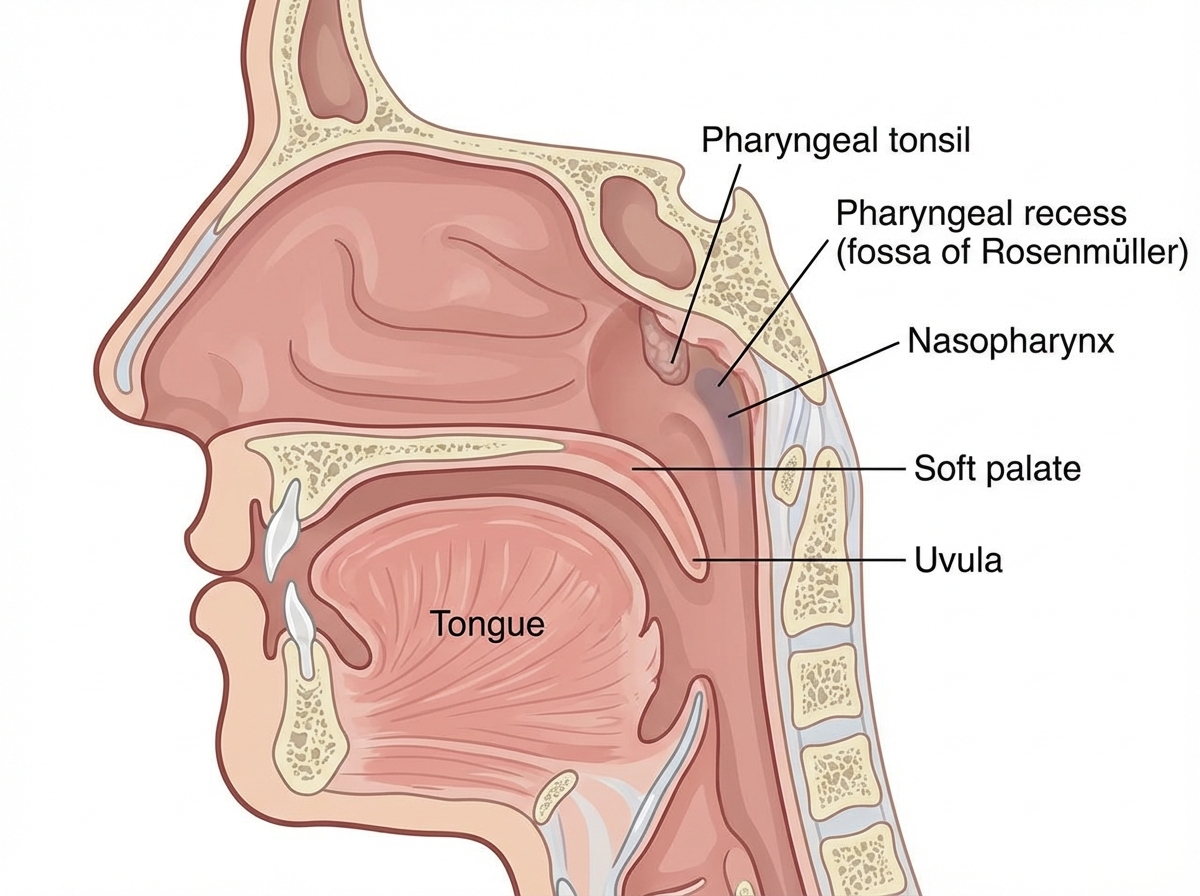
Explanation: **Explanation:** The **Gerlach tonsil** is another name for the **Tubal tonsil**. It is a collection of lymphoid tissue located in the submucosa of the nasopharynx, specifically situated at the **fossa of Rosenmüller** near the opening of the Eustachian tube. It forms the lateral part of the **Waldeyer’s ring**, a protective ring of lymphoid tissue at the entrance of the aerodigestive tract. **Why the other options are incorrect:** * **Palatine tonsil:** These are the "true" tonsils located in the oropharynx between the palatoglossal and palatopharyngeal arches. They are the most common site for tonsillitis. * **Lingual tonsil:** This is a collection of lymphoid tissue located on the posterior one-third (base) of the tongue. * **Nasopharyngeal tonsil:** Also known as the **Adenoid**, this is a single midline mass of lymphoid tissue located in the roof and posterior wall of the nasopharynx. When enlarged, it can cause mouth breathing and Eustachian tube obstruction. **High-Yield Clinical Pearls for NEET-PG:** * **Waldeyer’s Ring:** Composed of the Adenoids (superior), Tubal tonsils (lateral), Palatine tonsils (lateral), and Lingual tonsils (inferior). * **Fossa of Rosenmüller:** The most common site for **Nasopharyngeal Carcinoma**; it lies just posterior to the tubal tonsil. * **Hypertrophy:** Enlargement of the Gerlach tonsil can lead to Eustachian tube dysfunction, potentially causing **Otitis Media with Effusion (Glue Ear)**.
Explanation: **Explanation:** **Killian’s dehiscence** is a potential weak spot in the posterior wall of the lower pharynx. It is located between the two parts of the inferior constrictor muscle: the upper oblique fibers (**thyropharyngeus**) and the lower horizontal fibers (**cricopharyngeus**). It is called the **"Gateway of Tears"** because it is the most common site for accidental **iatrogenic perforation** during rigid esophagoscopy. Furthermore, increased intraluminal pressure here leads to the herniation of mucosa, forming a **Zenker’s diverticulum** (pulsion diverticulum). **Analysis of Incorrect Options:** * **Sinus of Morgagni:** This is the space between the base of the skull and the upper border of the superior constrictor muscle. It allows the passage of the Eustachian tube and levator veli palatini. * **Passavant’s Ridge:** A mucosal ridge on the posterior pharyngeal wall formed by the contraction of the palatopharyngeus muscle. It helps in velopharyngeal closure during speech and swallowing. * **Waldeyer’s Ring:** A ring of lymphoid tissue at the entrance of the aerodigestive tract (including palatine, lingual, pharyngeal, and tubal tonsils) that provides local immunity. **High-Yield Clinical Pearls for NEET-PG:** * **Zenker’s Diverticulum:** Always occurs through Killian’s dehiscence. It is a "false" diverticulum as it contains only mucosa and submucosa. * **Killian-Jamieson Area:** A separate weak area located *below* the cricopharyngeus, between the muscle and the esophagus. * **Management:** The gold standard for Zenker’s is endoscopic Dohlman’s procedure (stapling) or open diverticulectomy with cricopharyngeal myotomy.
Explanation: **Patterson-Brown-Kelly Syndrome** (also known as **Plummer-Vinson Syndrome**) is a classic clinical triad primarily seen in middle-aged women. The correct answer is **D (All of the above)** because the syndrome is defined by the coexistence of these three specific features: 1. **Iron Deficiency Anaemia (Option C):** This is the underlying systemic condition. Patients often present with microcytic hypochromic anaemia, spoon-shaped nails (koilonychia), and glossitis (smooth, red tongue). 2. **Post-cricoid Webs (Option B):** These are thin, mucosal folds that occur at the junction of the hypopharynx and the esophagus. They are best visualized via a Barium Swallow (appearing as a "notch") or direct esophagoscopy. 3. **Dysphagia (Option A):** The physical presence of the web leads to painless, progressive difficulty in swallowing, particularly for solids. **Why other options are incorrect:** Options A, B, and C are individual components of the syndrome. Since all three are hallmark features, selecting any single one would be incomplete. **High-Yield Clinical Pearls for NEET-PG:** * **Pre-malignant Condition:** It is a significant risk factor for **Squamous Cell Carcinoma** of the post-cricoid region and upper esophagus. * **Demographics:** Most common in females (90%) between 30–50 years of age. * **Treatment:** Management involves iron supplementation (which can sometimes resolve the web) and endoscopic dilatation if the dysphagia persists. * **Radiology:** The "Gold Standard" for diagnosis is a **Barium Swallow (Lateral view)**.
Pharyngitis
Practice Questions
Tonsillitis
Practice Questions
Peritonsillar Abscess
Practice Questions
Retropharyngeal Abscess
Practice Questions
Adenoid Hypertrophy
Practice Questions
Sleep-Disordered Breathing
Practice Questions
Obstructive Sleep Apnea
Practice Questions
Nasopharyngeal Carcinoma
Practice Questions
Oropharyngeal Carcinoma
Practice Questions
Hypopharyngeal Carcinoma
Practice Questions
Dysphagia
Practice Questions
Globus Pharyngeus
Practice Questions
Get full access to all questions, explanations, and performance tracking.
Start For Free