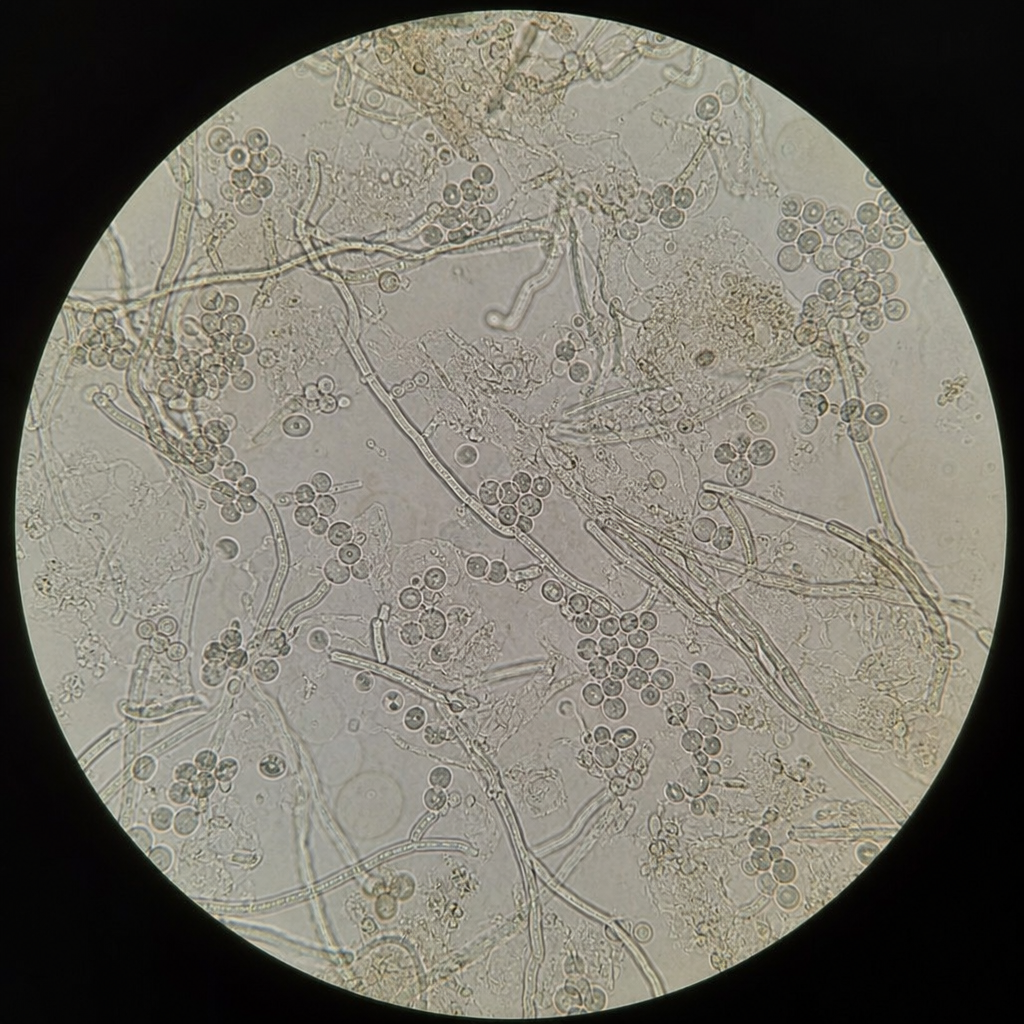
Pityriasis Versicolor is caused by which organism?
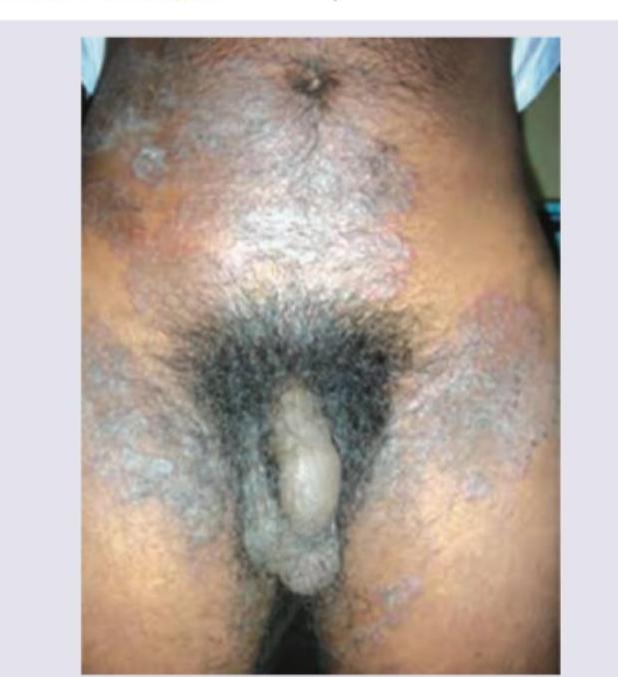
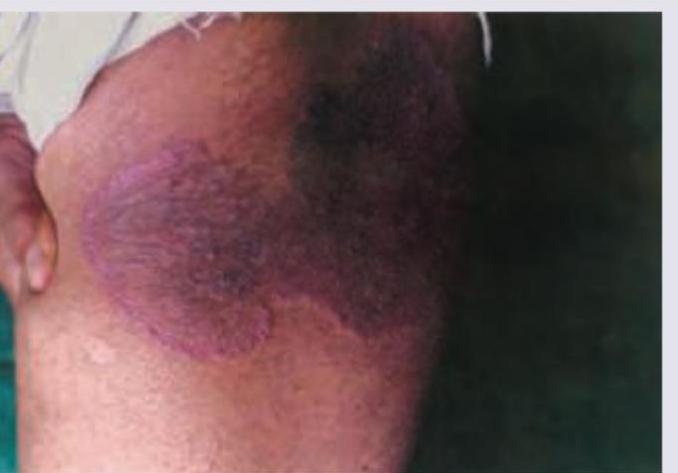
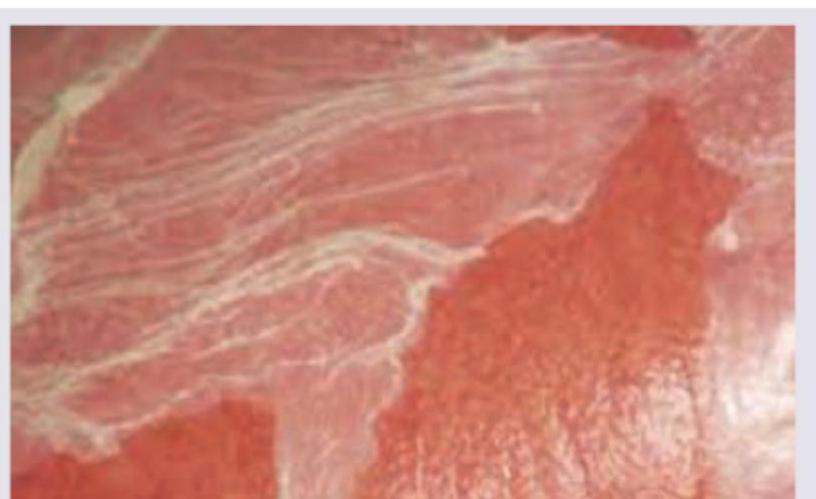
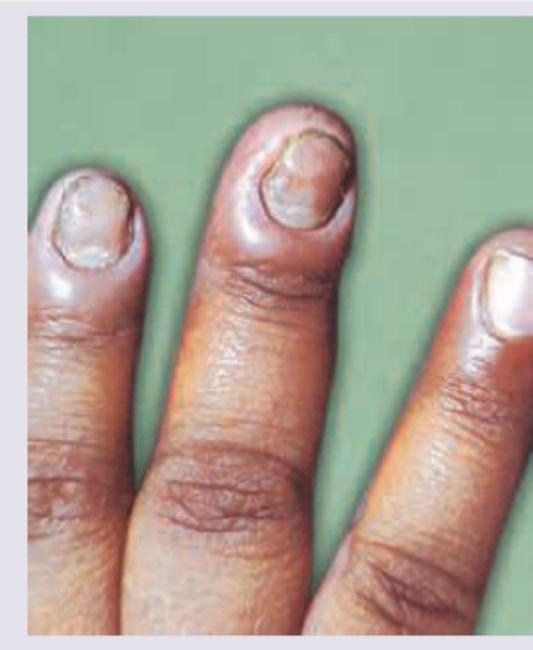
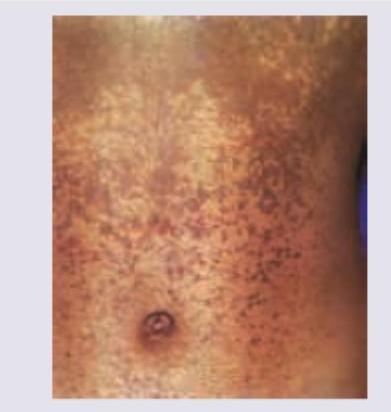
A 46-year-old male presented with abnormal pigmentation on the trunk, back, abdomen, and proximal extremities. Fine, dust-like scales covered the lesions. Dermoscopy shows a well-demarcated white area with patchy and diffuse scaling, predominantly in skin furrows. A skin biopsy was performed. What is the most likely causative organism?
Which of the following is the causative organism for kerion?
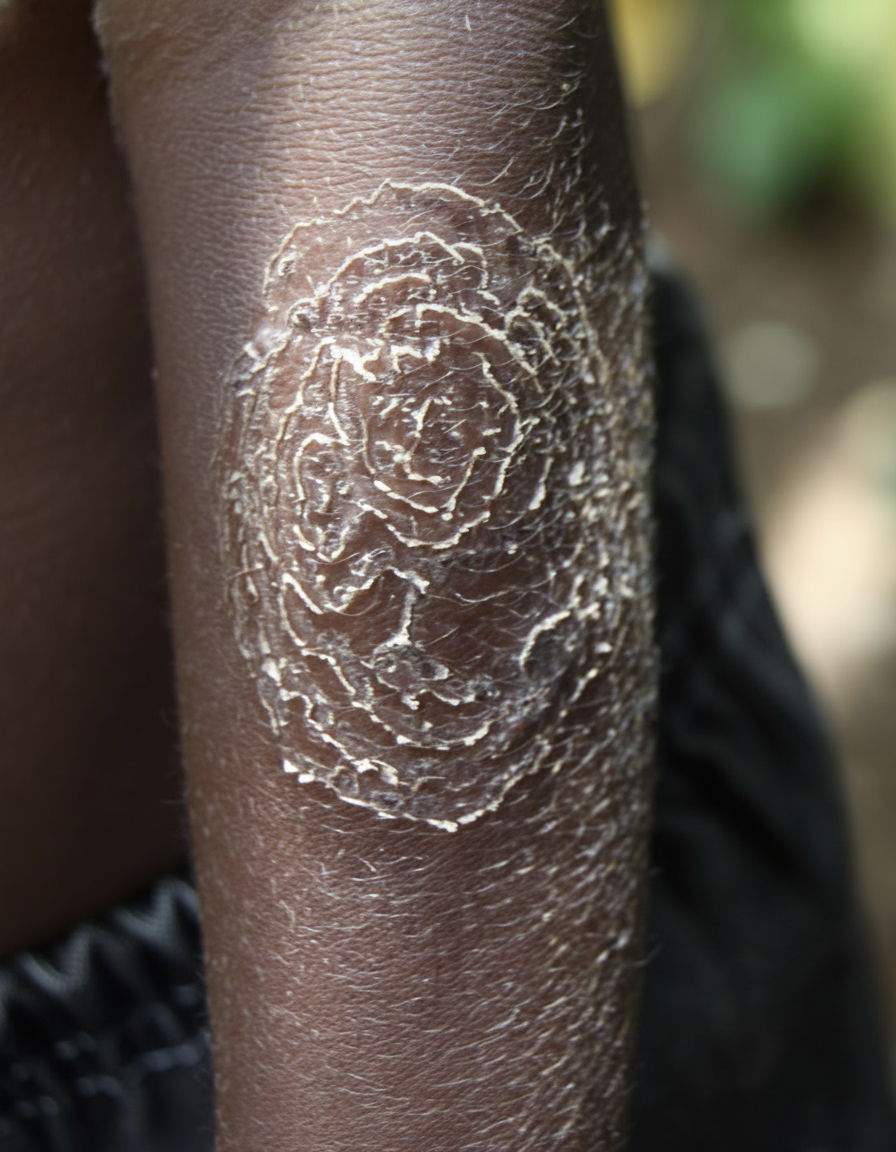
An adult presents with oval scaly hypopigmented macules over the chest and back. What is the most likely diagnosis?
Posterior Midline Atrophic Candidiasis is best described as:
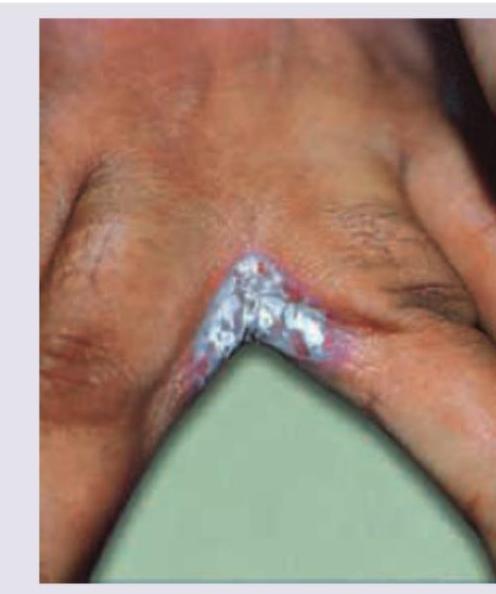
In a patient with HIV infection, oral ulcer is most commonly due to which of the following?
A 60-year-old woman complains to a physician because several of her toenails are discolored. Physical examination demonstrates crumbling, friable nails with distal-lateral separation from the nail bed. Hyperkeratotic debris is present under the affected part of the nail. Which of the following is the most likely pathogen?
Which agent is used in the treatment of oral thrush?
A 45-year-old woman presents with thick, yellow toenails. She is otherwise healthy and takes no medications. Examination reveals affected toenails on her right foot and the great toenail on her left foot. There is no periungual erythema, and her peripheral pulses are good. What is the best advice for this patient?
Dermatophytes primarily affect which component of the skin?
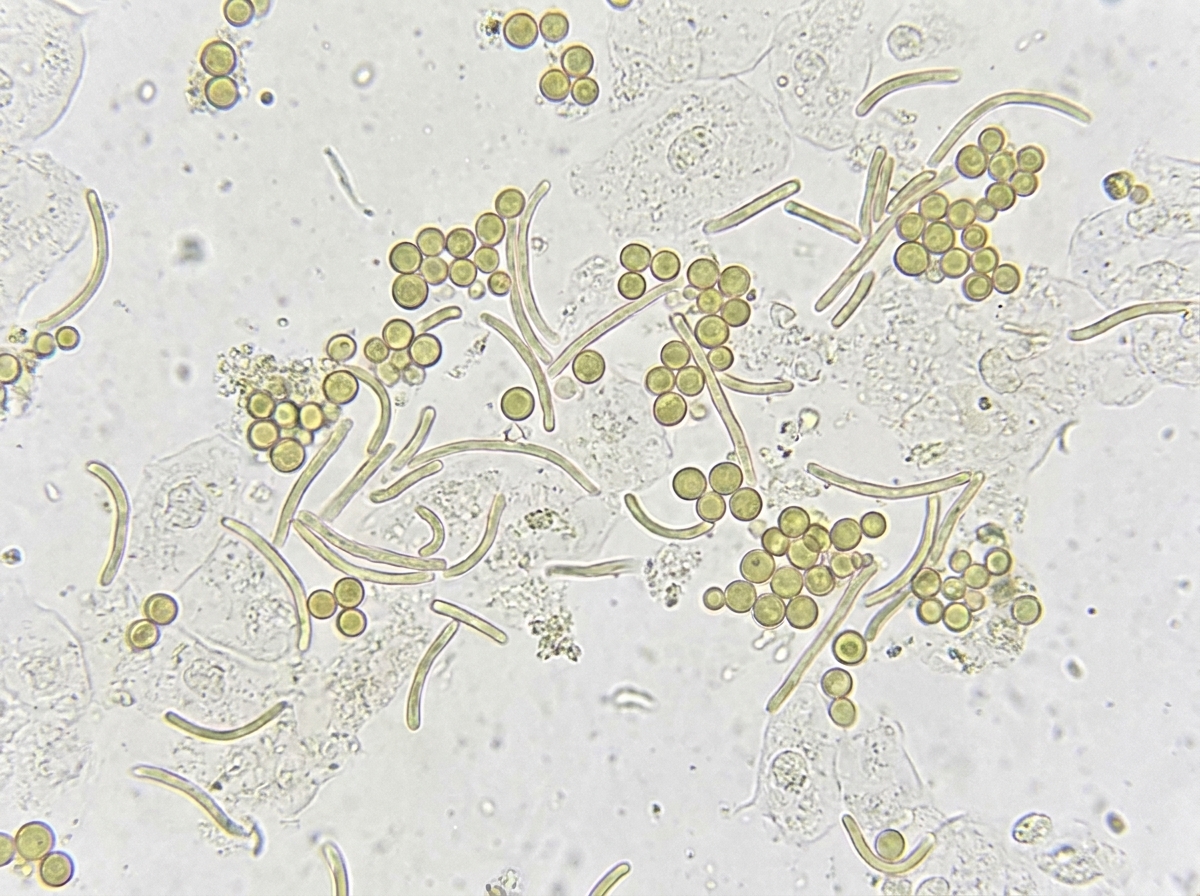
Explanation: **Explanation:** **Pityriasis Versicolor (Tinea Versicolor)** is a common superficial fungal infection caused by **Malassezia furfur** (formerly known as *Pityrosporum ovale*). This organism is a lipophilic yeast that is part of the normal skin flora. The disease occurs when the yeast converts from a saprophytic to a pathogenic mycelial form, often triggered by heat, humidity, or immunosuppression. **Why Malassezia furfur is correct:** Malassezia produces **azelaic acid**, which inhibits tyrosinase, leading to the characteristic hypopigmented macules. It can also present as hyperpigmented or erythematous lesions, hence the name "versicolor." **Analysis of Incorrect Options:** * **Tinea rubrum (Trichophyton rubrum):** This is a dermatophyte and the most common cause of Tinea corporis, Tinea cruris, and Tinea pedis. It typically presents with annular plaques with central clearing. * **Tinea capitis:** This is a clinical diagnosis (fungal infection of the scalp) rather than an organism. It is caused by dermatophytes like *Microsporum* or *Trichophyton*. * **Varicella:** This is caused by the Varicella-Zoster Virus (VZV), a DNA virus responsible for chickenpox and shingles, not a fungal infection. **High-Yield Clinical Pearls for NEET-PG:** * **Microscopy:** KOH mount shows the classic **"Spaghetti and Meatballs"** appearance (short, thick hyphae and clusters of spores). * **Wood’s Lamp:** Lesions show a characteristic **Golden-Yellow (Apple-green)** fluorescence. * **Clinical Sign:** **Besnier’s Sign** (or Scratch sign) – fine scaling produced when the lesion is scraped with a glass slide or fingernail. * **Treatment:** Topical antifungals like Ketoconazole or Selenium sulfide are first-line. Oral Fluconazole or Itraconazole is used for extensive cases.
Explanation: **Explanation:** The clinical presentation describes **Pityriasis versicolor** (Tinea versicolor), a common superficial fungal infection. The key diagnostic features in the vignette are the **abnormal pigmentation** (hypo- or hyperpigmented macules), **fine dust-like scales** (Branny or Furfuraceous desquamation), and the characteristic distribution on the trunk and proximal extremities. **Why Malassezia furfur is correct:** * **Causative Agent:** It is caused by the lipophilic yeast *Malassezia furfur* (and other *Malassezia* species). * **Dermoscopy:** The description of "patchy and diffuse scaling, predominantly in skin furrows" is a classic dermoscopic sign of Pityriasis versicolor, often referred to as the **"wire fence"** or **"step-ladder"** pattern of scaling. * **Mechanism:** The organism produces **azelaic acid**, which inhibits tyrosinase, leading to hypopigmentation. **Why other options are incorrect:** * **Epidermophyton, Trichophyton rubrum, and Microsporum canis** are **Dermatophytes**. These typically cause *Tinea corporis*, characterized by erythematous, itchy, annular (ring-shaped) lesions with central clearing and active borders. They do not typically present with the fine, diffuse, "dust-like" scaling or the specific dermoscopic furrow-scaling seen in Malassezia infections. **High-Yield Clinical Pearls for NEET-PG:** * **Wood’s Lamp:** Shows a characteristic **yellowish-gold** or apple-green fluorescence. * **KOH Mount:** Shows the classic **"Spaghetti and Meatballs"** appearance (short hyphae and round spores). * **Signs:** **Besnier’s sign** (or Scratch sign) – scaling becomes more apparent upon scratching the lesion. * **Treatment:** Topical ketoconazole or selenium sulfide; oral fluconazole/itraconazole for extensive cases.
Explanation: **Explanation:** **Kerion** is a severe, inflammatory form of **Tinea capitis** (fungal infection of the scalp). It represents a delayed-type hypersensitivity reaction to the dermatophyte infection. Clinically, it presents as a painful, boggy, inflammatory mass oozing pus, often associated with regional lymphadenopathy and scarring alopecia. * **Why Option A is Correct:** Tinea capitis is the primary infection. Kerion is specifically caused by zoophilic dermatophytes (e.g., *Trichophyton mentagrophytes* or *Microsporum canis*). The host's intense immune response to the fungal antigens results in the characteristic boggy swelling. * **Why Option B & C are Incorrect:** *Malassezia furfur* is the causative agent of **Tinea versicolor** (Pityriasis versicolor). This is a superficial fungal infection characterized by hypo- or hyperpigmented macules with fine scaling ("spaghetti and meatballs" appearance on KOH mount), and it does not cause inflammatory scalp masses. * **Why Option D is Incorrect:** *Staphylococcus aureus* is a bacterium. While it can cause **folliculitis decalvans** or secondary bacterial infection (impetiginization) of a kerion, it is not the primary causative organism of the kerion itself. **High-Yield Clinical Pearls for NEET-PG:** * **Management:** Oral Griseofulvin is the traditional gold standard; however, Terbinafine is frequently used for *Trichophyton* species. * **Differential Diagnosis:** Kerion is often mistaken for a bacterial abscess. **Crucial Point:** Incision and drainage (I&D) should be avoided; treatment must be antifungal. * **Favus:** Another variant of Tinea capitis caused by *T. schoenleinii*, characterized by **scutula** (cup-shaped yellow crusts) and a "mousy odor."
Explanation: ### Explanation **Correct Answer: C. Pityriasis Versicolor** **Reasoning:** Pityriasis Versicolor (Tinea Versicolor) is a common superficial fungal infection caused by the lipophilic yeast **_Malassezia furfur_**. The classic clinical presentation involves multiple, well-demarcated, **oval, scaly macules** that can be hypopigmented, hyperpigmented, or erythematous (hence "versicolor"). These lesions typically occur on the **seborrheic areas** of the body, such as the chest, back, and upper arms, where sebaceous glands are most active. The hypopigmentation occurs because the fungus produces **azelaic acid**, which inhibits tyrosinase, thereby interfering with melanin synthesis. **Why other options are incorrect:** * **Leprosy (A):** While it presents with hypopigmented patches, they are usually associated with **anesthesia** (loss of sensation) and thickened nerves. Scaling is typically absent in early lesions. * **Lupus Vulgaris (B):** This is a form of cutaneous tuberculosis characterized by "apple-jelly" nodules on diascopy, usually presenting as reddish-brown plaques, not scaly hypopigmented macules. * **Lichen Planus (D):** Characterized by the "6 Ps": Planar, Purple, Polygonal, Pruritic, Papules, and Plaques. It is not typically hypopigmented or oval-scaly in its classic form. **High-Yield Clinical Pearls for NEET-PG:** * **Diagnosis:** Confirmed by KOH mount showing the characteristic **"Spaghetti and Meatball"** appearance (hyphae and spores). * **Wood’s Lamp:** Shows a characteristic **Golden-yellow/Apple-green fluorescence**. * **Signs:** **Besnier’s sign** (or "scratch sign")—fine scaling becomes visible upon scratching the lesion. * **Treatment:** Topical antifungals like Ketoconazole or Selenium sulfide; systemic Fluconazole/Itraconazole for extensive cases.
Explanation: **Explanation:** **Median Rhomboid Glossitis (MRG)** is a clinical condition characterized by a well-demarcated, erythematous, depapillated (atrophic) area located in the midline of the posterior dorsal tongue, just anterior to the circumvallate papillae. While historically thought to be a developmental defect (failure of the tuberculum impar to retract), it is now widely accepted as a form of **chronic hyperplastic or atrophic candidiasis**. The term **"Posterior Midline Atrophic Candidiasis"** is used to reflect this fungal etiology, as *Candida albicans* is consistently isolated from these lesions. **Analysis of Options:** * **Option B (Correct):** MRG presents as a rhomboid-shaped, smooth, red patch. Its location in the posterior midline and its association with *Candida* make it the definitive match for the description. * **Option A (Incorrect):** **Migratory glossitis** (Geographic tongue) presents as multiple, migrating, circinate erythematous patches with white borders. It is not confined to the posterior midline and is not primarily a candidal infection. * **Option C (Incorrect):** **Hairy tongue** involves hypertrophy of the filiform papillae (giving a "hairy" appearance), often due to smoking or poor hygiene. It is not an atrophic condition. **High-Yield Clinical Pearls for NEET-PG:** * **Kissing Lesion:** MRG is often associated with a "kissing lesion" (erythematous candidiasis) on the hard palate directly opposite the tongue lesion. * **Risk Factors:** Commonly seen in diabetics, immunosuppressed patients, and those using inhaled corticosteroids. * **Treatment:** Usually asymptomatic and requires no treatment, but topical antifungals (Nystatin/Clotrimazole) can resolve the redness.
Explanation: **Explanation:** **1. Why Candida is Correct:** Oral Candidiasis (Thrush) is the **most common opportunistic fungal infection** in HIV-positive individuals. It often serves as an early clinical marker of HIV progression and typically occurs when the CD4 count falls below **200-300 cells/mm³**. The most common causative agent is *Candida albicans*. Clinically, it presents as pseudomembranous (white curd-like plaques that can be scraped off), erythematous (atrophic), or angular cheilitis. **2. Why the Other Options are Incorrect:** * **Cryptococcosis:** While *Cryptococcus neoformans* is a major cause of fungal meningitis in HIV patients (usually CD4 <100), it rarely presents with primary oral ulcers. Cutaneous/mucosal lesions are usually secondary to systemic dissemination. * **Histoplasma:** *Histoplasma capsulatum* can cause chronic, painful oral ulcers in HIV patients, but it is much less common than Candida. It typically occurs in the late stages of AIDS (CD4 <150) and represents disseminated disease. * **Trichophyton:** This is a dermatophyte responsible for superficial infections like Tinea corporis or Tinea pedis. It involves keratinized tissue (skin, hair, nails) and does not typically cause oral mucosal ulcers. **High-Yield Clinical Pearls for NEET-PG:** * **Most common oral manifestation of HIV:** Oral Candidiasis. * **Most common site for Oral Candidiasis:** Buccal mucosa and tongue. * **Treatment of choice:** Topical Nystatin or Clotrimazole for mild cases; Oral **Fluconazole** for moderate-to-severe or esophageal involvement. * **Esophageal Candidiasis:** An AIDS-defining illness (CD4 <100). * **Differential Diagnosis:** Oral Hairy Leukoplakia (caused by **EBV**), which presents as white corrugated patches on the lateral borders of the tongue that **cannot** be scraped off.
Explanation: **Explanation:** The clinical presentation described—discolored, crumbling, friable nails with distal-lateral separation (onycholysis) and subungual hyperkeratosis—is a classic description of **Onychomycosis**, specifically the **Distal Lateral Subungual Onychomycosis (DLSO)** variant. **1. Why Trichophyton is correct:** Dermatophytes are the most common cause of onychomycosis worldwide (responsible for ~90% of cases). Among these, **_Trichophyton rubrum_** is the most frequent pathogen, followed by _Trichophyton mentagrophytes_. These fungi possess keratinolytic enzymes that allow them to invade and thrive in the keratinized tissue of the nail plate and bed. **2. Why the other options are incorrect:** * **Candida:** While *Candida* can cause onychomycosis, it typically presents as **Chronic Mucocutaneous Candidiasis** or is associated with **Paronychia** (inflammation of the nail fold), which is absent here. It more commonly affects fingernails in patients with frequent water exposure. * **Aspergillus & Mucor:** These are non-dermatophytic molds. While *Aspergillus* can occasionally cause secondary nail infections, it is much less common than *Trichophyton*. *Mucor* is an opportunistic fungus that typically causes invasive rhino-cerebral or pulmonary infections in immunocompromised patients, not isolated nail dystrophy. **Clinical Pearls for NEET-PG:** * **Most common cause of Onychomycosis:** *Trichophyton rubrum*. * **Gold Standard Diagnosis:** KOH mount (shows fungal hyphae) and Fungal Culture (Sabouraud’s Dextrose Agar). * **Drug of Choice:** **Oral Terbinafine** (250mg/day) for 6 weeks (fingernails) or 12 weeks (toenails). * **White Superficial Onychomycosis:** Characterized by "powdery" white patches on the nail surface, often caused by *T. mentagrophytes*. * **Proximal Subungual Onychomycosis:** Often a clinical marker for **HIV/AIDS**.
Explanation: **Explanation:** **Oral Thrush (Pseudomembranous Candidiasis)** is a fungal infection caused by *Candida albicans*. It is characterized by white, "curd-like" plaques on the oral mucosa that can be scraped off to reveal an erythematous (red) base. **Why Clotrimazole is correct:** Clotrimazole is a broad-spectrum **imidazole** antifungal agent. It works by inhibiting the enzyme *14-alpha-demethylase*, which is essential for synthesizing ergosterol, a key component of the fungal cell membrane. For oral thrush, it is typically administered as a **troche (lozenge)** that dissolves slowly in the mouth, providing effective local (topical) antifungal action with minimal systemic absorption. **Analysis of Incorrect Options:** * **Miconazole (Option A):** While miconazole is an antifungal, it is more commonly used for cutaneous (skin) fungal infections or vulvovaginal candidiasis. While oral gels exist, Clotrimazole remains the more classic "textbook" first-line topical choice for uncomplicated oral thrush in many clinical guidelines. * **Clobetasol (Option B):** This is a **super-potent topical corticosteroid**. Using steroids on a fungal infection is contraindicated as they suppress local immunity, which would worsen the candidiasis (potentially leading to *Tinea incognito* if used on skin). * **Amoxycillin (Option C):** This is a broad-spectrum **antibiotic**. Antibiotics do not treat fungi; in fact, prolonged antibiotic use is a major **risk factor** for developing oral thrush because it destroys the normal protective bacterial flora. **High-Yield Clinical Pearls for NEET-PG:** 1. **First-line treatment:** Topical Nystatin (suspension) or Clotrimazole (troches). 2. **Systemic treatment:** Oral Fluconazole is used for refractory cases or in immunocompromised patients (e.g., HIV/AIDS). 3. **Risk Factors:** Diabetes mellitus, inhaled corticosteroid use (asthma patients), HIV (CD4 <200), and broad-spectrum antibiotics. 4. **Diagnosis:** Usually clinical, but KOH mount shows **pseudohyphae and budding yeast cells**.
Explanation: ### Explanation **Correct Option: C** The clinical presentation of thick, yellow toenails without periungual inflammation is characteristic of **Onychomycosis** (Tinea Unguium). Because the nail matrix is involved and the nail plate is thick, topical treatments have poor penetration and high failure rates. **Oral antifungal therapy** (typically Terbinafine or Itraconazole) is the gold standard. Toenails grow slowly (approx. 1 mm/month); therefore, treatment must be continued for **3 to 4 months**, and clinical clearance is only seen once the healthy nail has completely replaced the diseased one. **Why Incorrect Options are Wrong:** * **Option A:** Onychomycosis is a progressive fungal infection. It does **not resolve spontaneously** and can serve as a reservoir for recurrent tinea pedis or secondary bacterial cellulitis. * **Option B:** While some systemic diseases can cause nail changes, the described presentation is classic for a localized fungal infection. Ordering an abdominal CT or chest X-ray is **excessive and clinically unjustified** for isolated onychomycosis. * **Option D:** This is a common pitfall. Before starting long-term oral antifungals (which carry risks of hepatotoxicity), **confirmatory testing** (KOH mount, fungal culture, or PAS stain of nail clippings) is mandatory to differentiate it from non-fungal conditions like psoriasis or lichen planus. **NEET-PG High-Yield Pearls:** * **Drug of Choice:** Oral **Terbinafine** (250 mg/day) for 6 weeks (fingernails) or 12 weeks (toenails). * **Most Common Organism:** *Trichophyton rubrum* (Dermatophyte). * **Distinguishing Feature:** Unlike Paronychia, Onychomycosis usually lacks significant periungual erythema or pain. * **Monitoring:** Baseline Liver Function Tests (LFTs) are recommended before initiating oral Terbinafine.
Explanation: **Explanation:** **Dermatophytes** are a group of fungi (genera: *Trichophyton, Microsporum,* and *Epidermophyton*) that are uniquely **keratinophilic**. They possess the enzyme **keratinase**, which allows them to digest and metabolize keratin as their sole source of nutrients. Therefore, they primarily affect the **keratinized tissues** of the body, namely the stratum corneum of the epidermis, hair, and nails. **Analysis of Options:** * **A. Keratin (Correct):** This is the specific substrate required for dermatophyte survival. The infection remains confined to the non-living keratinous layer because these fungi cannot typically survive in deeper, living tissues due to host immune responses and the presence of serum inhibitory factors (like transferrin). * **B. Dermis of skin:** Dermatophytes do not typically invade the dermis. Deep dermal involvement (e.g., Majocchi’s granuloma) is rare and usually occurs only when a hair follicle ruptures. * **C. Stratum basale:** This is the deepest, living layer of the epidermis. Dermatophytes are restricted to the superficial, dead, cornified layers. * **D. Epidermis:** While dermatophytes are found within the epidermis, "Keratin" is the more specific and accurate answer. They only inhabit the **stratum corneum** (the keratinized layer) and do not involve the viable layers of the epidermis. **High-Yield Clinical Pearls for NEET-PG:** * **Wood’s Lamp:** Used for diagnosis; *Microsporum* species typically show a bright green fluorescence. * **KOH Mount:** The gold standard for rapid bedside diagnosis, showing branching hyphae. * **Tinea Incognito:** A modified clinical appearance of a dermatophyte infection caused by the inappropriate use of topical steroids. * **Most common dermatophyte worldwide:** *Trichophyton rubrum*.
Dermatophytoses
Practice Questions
Tinea Versicolor
Practice Questions
Candidiasis
Practice Questions
Onychomycosis
Practice Questions
Subcutaneous Mycoses
Practice Questions
Systemic Mycoses with Cutaneous Manifestations
Practice Questions
Opportunistic Fungal Infections
Practice Questions
Mycetoma
Practice Questions
Tropical Fungal Infections
Practice Questions
Diagnosis of Fungal Infections
Practice Questions
Antifungal Therapy
Practice Questions
Preventive Strategies
Practice Questions
Get full access to all questions, explanations, and performance tracking.
Start For Free