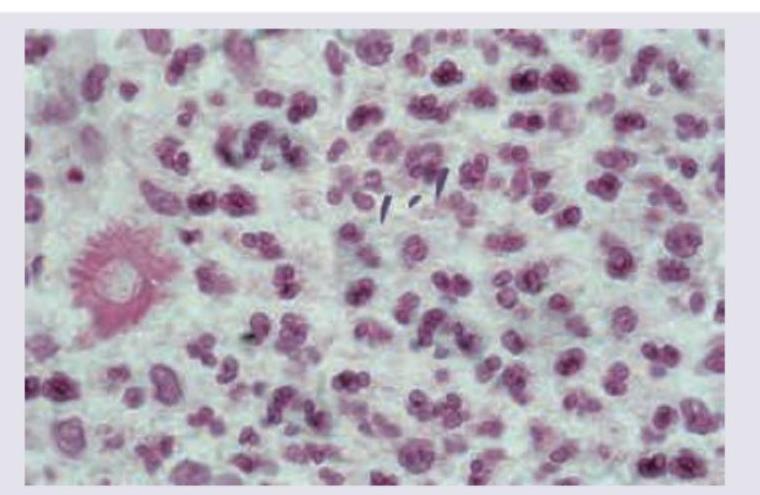
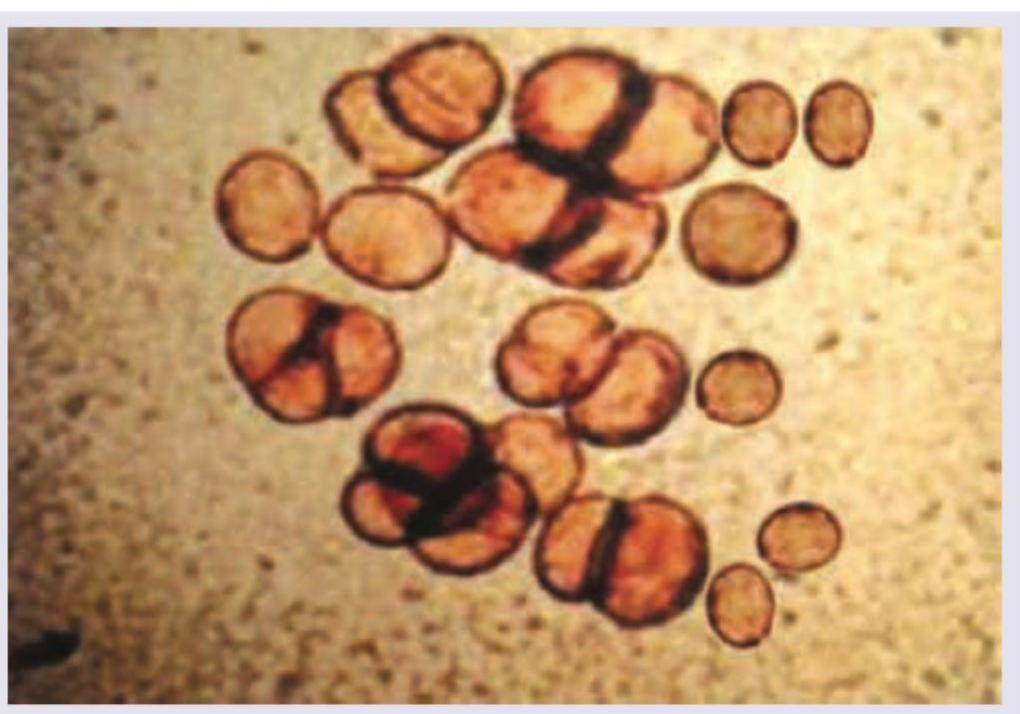
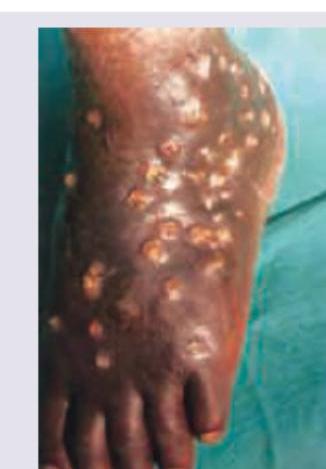
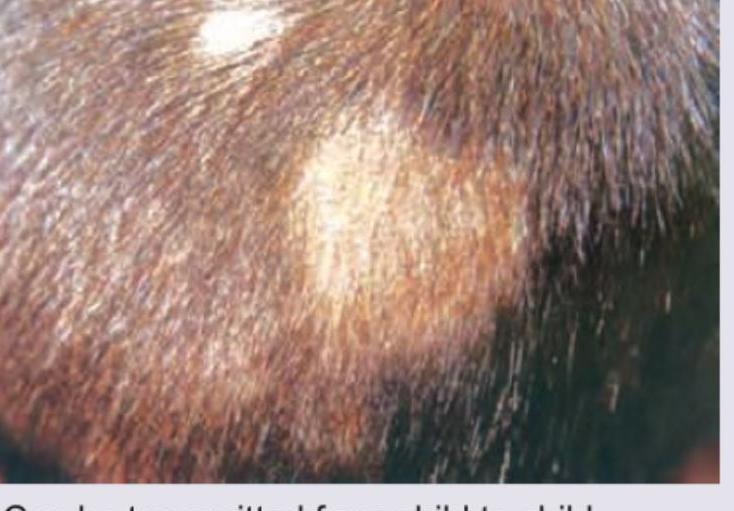
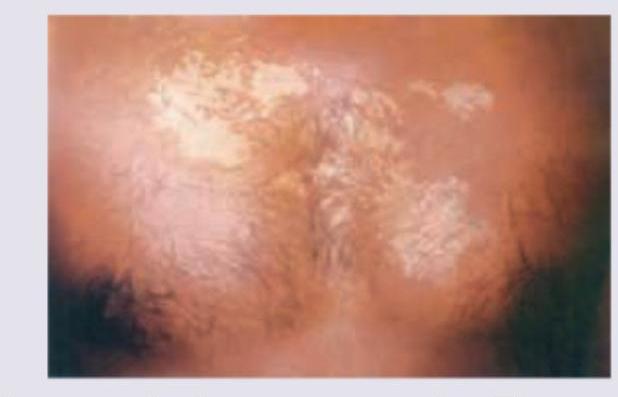
Which of the following fungal infections involves hair?
Tinea versicolor is caused by which of the following organisms?
What is the characteristic color of Streptomyces granules in mycetoma caused by Actinomadura pelletieri?
Potassium iodide is useful in the treatment of which of the following conditions?
An 8-year-old boy presents with boggy swelling and easily pluckable hair. What is the diagnosis?
Posterior atrophic candidiasis is also known as:
A vaginal smear from a patient with uncontrolled diabetes mellitus presenting with severe vulval itching shows budding yeast cells. What is the causative organism?
In dermatophytosis, which antifungal drug is not indicated?
Candida is most often implicated in causation of which of the following conditions?
Which drug is topically used in Tinea cruris infection?
Explanation: **Explanation:** The dermatophytes are a group of fungi that require keratin for growth. They are categorized into three genera based on the tissues they involve: **Trichophyton, Microsporum, and Epidermophyton.** **1. Why Trichophyton is correct:** * **Trichophyton** is the most versatile genus. It infects **skin, hair, and nails.** * It is responsible for various types of Tinea capitis (hair infection), where it can be endothrix (spores inside the hair shaft) or ectothrix (spores outside the hair shaft). **2. Why the other options are incorrect:** * **Epidermophyton:** This genus (specifically *E. floccosum*) infects only the **skin and nails**. It notably **never involves the hair**. * **Malassezia furfur:** This is a lipophilic yeast responsible for Pityriasis versicolor. While it lives on the skin surface (stratum corneum), it does not invade the hair shaft or cause hair-specific pathology like dermatophytes do. * **Microsporum (not listed but relevant):** This genus infects **skin and hair**, but rarely involves the nails. **Clinical Pearls for NEET-PG:** * **Mnemonic for Tissue Involvement:** * **T**richophyton: **T**hree (Skin, Hair, Nails) * **M**icrosporum: **M**inus nails (Skin, Hair) * **E**pidermophyton: **E**xcludes hair (Skin, Nails) * **Tinea Capitis:** The most common cause worldwide is *Trichophyton tonsurans* (Endothrix). * **Wood’s Lamp:** Hair infected by certain *Microsporum* species shows a brilliant green fluorescence, whereas most *Trichophyton* species (except *T. schoenleinii*) do not fluoresce.
Explanation: **Explanation:** **Tinea versicolor** (also known as Pityriasis versicolor) is a common superficial fungal infection caused by **Malassezia furfur** (and other species like *M. globosa*). Unlike dermatophytes, Malassezia is a lipophilic yeast that is part of the normal skin flora. The condition manifests when the yeast converts to its pathogenic mycelial form, often triggered by heat and humidity. It presents as hypopigmented or hyperpigmented scaly patches, typically on the trunk. **Analysis of Options:** * **Malassezia furfur (Correct):** It produces **azelaic acid**, which inhibits tyrosinase, leading to the characteristic hypopigmentation. On KOH mount, it shows the classic **"Spaghetti and Meatballs"** appearance (short hyphae and globular spores). * **Epidermophyton floccosum:** A dermatophyte that causes Tinea cruris and Tinea pedis. It is characterized by club-shaped macroconidia and lacks microconidia. * **Trichophyton rubrum:** The most common cause of dermatophytosis worldwide (Tinea corporis, Tinea unguium). It typically presents with annular lesions with central clearing. * **Trichophyton schoenleinii:** The primary causative agent of **Favus**, characterized by scutula (cup-shaped crusts) and permanent scarring alopecia. **NEET-PG High-Yield Pearls:** 1. **Wood’s Lamp:** Shows a characteristic **Golden-yellow** (apple-green) fluorescence. 2. **Culture:** Requires enrichment with lipids (e.g., olive oil) because Malassezia is lipophilic. 3. **Treatment:** Topical ketoconazole or selenium sulfide are first-line; oral fluconazole/itraconazole for extensive cases. 4. **Sign:** **Besnier’s sign** (or "scratch sign")—fine scaling becomes visible upon scratching the lesion.
Explanation: **Explanation:** Mycetoma is a chronic, granulomatous infection of the subcutaneous tissue characterized by a triad of localized swelling, underlying sinus tracts, and the discharge of grains (granules). It is classified into **Eumycetoma** (caused by fungi) and **Actinomycetoma** (caused by filamentous bacteria). **1. Why Red is correct:** The color of the granules is a crucial diagnostic clue in identifying the causative agent. **Actinomadura pelletieri** is specifically associated with **red granules**. These grains are typically small, firm, and have a characteristic "mulberry" shape under microscopy. **2. Why the other options are incorrect:** * **Yellow/White:** These are the most common colors for actinomycetoma. **Nocardia brasiliensis** and **Actinomadura madurae** typically produce white to yellowish-white granules. * **Black:** Black granules are a hallmark of **Eumycetoma** (fungal origin). Common causative agents include *Madurella mycetomatis* and *Exophiala jeanselmei*. * **Brown:** While some black grains may appear brownish-black, "brown" is not a standard diagnostic category for mycetoma granules in the NEET-PG context. **3. High-Yield Clinical Pearls for NEET-PG:** * **Most common cause of Mycetoma in India:** *Actinomadura madurae* (Actinomycetoma). * **Most common cause of Eumycetoma worldwide:** *Madurella mycetomatis*. * **Gaitonde’s Sign:** The presence of a "dot-in-a-circle" appearance on MRI, representing the granule within the granuloma. * **Treatment:** Actinomycetoma is treated with antibiotics (e.g., **Welsh Regime**: Amikacin + Cotrimoxazole), whereas Eumycetoma requires long-term antifungals (e.g., Itraconazole) and often surgical debridement.
Explanation: **Explanation:** **Sporotrichosis** (Rose Gardener’s disease) is a subcutaneous fungal infection caused by the dimorphic fungus *Sporothrix schenckii*. Historically, **Saturated Solution of Potassium Iodide (SSKI)** has been the traditional drug of choice for the lymphocutaneous and fixed cutaneous forms of this infection. While Itraconazole is now considered the first-line treatment due to better tolerability, SSKI remains a highly effective and high-yield alternative in dermatological therapeutics. Its exact mechanism of action is not fully understood, but it is believed to act by enhancing the host’s immune response and inhibiting the fungal granulomatous reaction rather than acting as a direct antifungal. **Analysis of Incorrect Options:** * **Impetigo:** This is a superficial bacterial infection (usually *S. aureus* or *S. pyogenes*) treated with topical (Mupirocin) or systemic antibiotics. * **Viral Warts:** Caused by Human Papillomavirus (HPV), these are managed with destructive methods (cryotherapy, salicylic acid) or immunomodulators (Imiquimod). * **Dermatitis Herpetiformis:** This is an autoimmune blistering disorder associated with Celiac disease. The drug of choice is **Dapsone**, along with a gluten-free diet. **High-Yield Clinical Pearls for NEET-PG:** * **SSKI Side Effects:** Watch for "Iodism" (metallic taste, increased salivation, coryza, and frontal headache) and hypothyroidism (Wolff-Chaikoff effect). * **Other uses of Potassium Iodide:** It is also used in Erythema Nodosum and Sweet Syndrome (Neutrophilic dermatosis). * **Sporotrichosis Presentation:** Look for a history of trauma (thorn prick) followed by linear nodules along the lymphatics (**Sporotrichoid spread**).
Explanation: **Explanation:** The clinical presentation of a **boggy swelling** (Kerion) associated with **easily pluckable hair** in a child is a classic hallmark of **Tinea capitis**. 1. **Why Tinea capitis is correct:** Tinea capitis is a fungal infection of the scalp, most common in children. It presents in various forms, but the "boggy" inflammatory variant is known as a **Kerion**. This is a delayed hypersensitivity reaction to the dermatophyte (usually *Trichophyton verrucosum* or *T. mentagrophytes*). The inflammation leads to follicular destruction, making the hair loose and easily pluckable. If left untreated, it can result in permanent scarring alopecia. 2. **Why other options are incorrect:** * **Alopecia areata:** Presents as well-demarcated, non-inflammatory patches of hair loss with "exclamation mark" hairs. There is no boggy swelling or crusting. * **Tuberculoid leprosy:** Characterized by hypopigmented, anesthetic patches with thickened nerves. While it can cause hair loss within the patch, it does not present as an acute inflammatory boggy mass. * **Pityriasis alba:** A common pediatric condition presenting as ill-defined, hypopigmented scaly patches, usually on the face. It does not cause hair loss or swelling. **High-Yield Clinical Pearls for NEET-PG:** * **Drug of Choice:** Oral **Griseofulvin** remains the gold standard for Tinea capitis (especially for *Microsporum* species). * **Black Dot Tinea:** Caused by *T. tonsurans*, where hair breaks at the surface. * **Favus:** Caused by *T. schoenleinii*, characterized by **scutula** (cup-shaped yellow crusts) and a "mousy odor." * **Wood’s Lamp:** *Microsporum* species show a bright green fluorescence.
Explanation: **Explanation:** **Median rhomboid glossitis (MRG)** is the correct answer. Historically thought to be a developmental defect (failure of the lateral lingual tubercles to fuse over the tuberculum impar), it is now recognized as a clinical form of **chronic atrophic oral candidiasis**. It presents as a well-demarcated, erythematous, depapillated (atrophic) rhomboid-shaped area in the midline of the posterior dorsal tongue, just anterior to the circumvallate papillae. The term **"posterior atrophic candidiasis"** reflects its fungal etiology, primarily involving *Candida albicans*. **Analysis of Incorrect Options:** * **A. Geographic tongue (Benign Migratory Glossitis):** Characterized by migratory, map-like erythematous patches with white circinate borders. It is an inflammatory condition, not primarily fungal. * **C. Black hairy tongue (Lingua Villosa Nigra):** Caused by hypertrophy of filiform papillae and accumulation of chromogenic bacteria/fungi, often due to poor hygiene or smoking. It presents as a dark, "hairy" carpet rather than an atrophic patch. * **D. Hemifacial atrophy (Parry-Romberg Syndrome):** A rare neurocutaneous syndrome involving progressive wasting of subcutaneous tissue, muscle, and bone on one side of the face; it has no relation to tongue candidiasis. **High-Yield Clinical Pearls for NEET-PG:** * **Kissing Lesion:** MRG is often associated with a "kissing" erythematous lesion on the hard palate (contact area), highly suggestive of *Candida* infection. * **Risk Factors:** More common in diabetics, smokers, and immunosuppressed patients (HIV/inhaled steroid users). * **Histopathology:** Shows microabscesses (Munro’s microabscesses) in the parakeratin layer and elongated rete ridges. * **Treatment:** Usually asymptomatic; if symptomatic, topical antifungals (Nystatin/Clotrimazole) are first-line.
Explanation: **Explanation:** The clinical presentation of severe vulval itching (pruritus vulvae) in a patient with **uncontrolled diabetes mellitus** is a classic scenario for **Vulvovaginal Candidiasis**. 1. **Why Candida is correct:** *Candida albicans* is a dimorphic fungus that exists as part of the normal flora but becomes pathogenic in immunocompromised states or altered physiological conditions (like high glycogen content in vaginal cells due to diabetes). The presence of **budding yeast cells** (and often pseudohyphae) on a smear is the definitive microscopic hallmark of Candida. 2. **Why other options are incorrect:** * **Gonococcus:** *Neisseria gonorrhoeae* is a Gram-negative diplococcus. It causes purulent cervicitis/urethritis, not fungal-like itching, and would appear as intracellular cocci, not yeast. * **Aspergillus:** While a fungus, it typically presents with septate hyphae branching at 45-degree angles. It is an opportunistic respiratory pathogen and does not cause primary vulvovaginitis. * **Tinea:** This refers to dermatophyte infections (e.g., *Trichophyton*). While it can cause Tinea Cruris (itchy groin), it affects the keratinized skin of the inguinal folds, not the vaginal mucosa, and appears as branching hyphae on KOH mount, not budding yeast. **High-Yield Clinical Pearls for NEET-PG:** * **Risk Factors for Candidiasis:** Pregnancy, Diabetes Mellitus, prolonged antibiotic use, and OCP use. * **Clinical Sign:** Characterized by a thick, white, **"curdy" or "cottage-cheese"** vaginal discharge. * **Diagnosis:** KOH mount shows pseudohyphae and budding yeast. Culture medium of choice is **Sabouraud Dextrose Agar (SDA)**. * **Treatment:** Topical clotrimazole or oral Fluconazole (150mg single dose).
Explanation: **Explanation:** The correct answer is **Amphotericin B**. Dermatophytosis (Tinea) is a superficial fungal infection caused by fungi that colonize keratinized tissues (skin, hair, and nails). **1. Why Amphotericin B is the correct answer:** Amphotericin B is a potent polyene antifungal reserved for **systemic, life-threatening deep mycoses** (e.g., Mucormycosis, Cryptococcosis, Aspergillosis) and Visceral Leishmaniasis. It is administered intravenously and carries a high risk of nephrotoxicity. Because dermatophytes are confined to the superficial keratin layers, the systemic toxicity of Amphotericin B far outweighs any benefit, making it inappropriate and unnecessary for these infections. **2. Analysis of incorrect options:** * **Terbinafine (Allylamine):** Currently the **drug of choice** for most dermatophytoses. It is fungicidal and works by inhibiting the enzyme squalene epoxidase. * **Griseofulvin:** A fungistatic drug that binds to polymerized microtubules, disrupting mitosis. It was historically the gold standard for Tinea capitis (especially *Microsporum* species). * **Fluconazole (Azole):** An oral triazole that inhibits 14-alpha-demethylase. While often second-line to Terbinafine, it is an effective and indicated treatment for various forms of Tinea. **NEET-PG High-Yield Pearls:** * **Mechanism of Action:** Terbinafine inhibits **Squalene Epoxidase**; Azoles inhibit **14-α-demethylase**. * **Tinea Capitis:** Griseofulvin is still highly effective, but Terbinafine is preferred for *Trichophyton* infections. * **Onychomycosis:** Oral Terbinafine is the first-line systemic treatment. * **Amphotericin B Side Effect:** Most common acute side effect is "shake and bake" (fever/chills); most serious long-term side effect is **nephrotoxicity** (renal tubular acidosis).
Explanation: **Explanation:** **Correct Answer: D. Thrush** *Candida albicans* is an opportunistic yeast that is a normal commensal of the gastrointestinal and genitourinary tracts. **Oral Thrush (Pseudomembranous Candidiasis)** is the most common clinical manifestation of *Candida*. It presents as creamy white, "curd-like" patches on the tongue and buccal mucosa that can be easily scraped off, leaving an erythematous, bleeding base. It is frequently seen in immunocompromised states (HIV/AIDS), diabetics, and patients using broad-spectrum antibiotics or inhaled corticosteroids. **Analysis of Incorrect Options:** * **A. Conjunctivitis:** Most commonly caused by viruses (Adenovirus) or bacteria (*Staphylococcus aureus*, *Haemophilus influenzae*). While fungal keratitis can occur (often due to *Aspergillus* or *Fusarium*), *Candida* is not a primary cause of routine conjunctivitis. * **B. Tinea capitis:** This is a fungal infection of the scalp caused by **Dermatophytes** (primarily *Trichophyton* and *Microsporum* species), not yeast. *Candida* does not typically infect hair shafts. * **C. Desert rheumatism:** This refers to the systemic manifestation (erythema nodosum and arthralgia) of **Coccidioidomycosis**, a deep mycosis caused by the dimorphic fungus *Coccidioides immitis*, endemic to the Southwestern United States. **High-Yield Clinical Pearls for NEET-PG:** * **Microscopy:** *Candida* shows budding yeast cells and **pseudohyphae** on KOH mount. * **Culture:** Grows on Sabouraud Dextrose Agar (SDA) as creamy white colonies. * **Specific Test:** The **Germ Tube Test** is the rapid diagnostic test for *Candida albicans*. * **Other common presentations:** Intertrigo (satellite lesions), Diaper dermatitis, and Chronic Mucocutaneous Candidiasis (associated with AIRE gene mutations).
Explanation: ### Explanation **Correct Option: C. Terbinafine** Terbinafine is an **allylamine** antifungal that acts by inhibiting the enzyme **squalene epoxidase**. This leads to a deficiency in ergosterol (a key component of the fungal cell membrane) and a toxic accumulation of squalene, making it **fungicidal**. For localized dermatophytosis like *Tinea cruris* (jock itch), topical terbinafine is the first-line treatment due to its high efficacy and shorter treatment duration compared to azoles. **Analysis of Incorrect Options:** * **A. Fluconazole:** While effective against dermatophytes, it is primarily administered **orally** for extensive or resistant infections. Topical formulations of fluconazole are not standard clinical practice for Tinea cruris. * **B. Griseofulvin:** This is a fungistatic drug that inhibits fungal mitosis by binding to microtubules. It is **only effective when taken orally**; there is no effective topical formulation for Griseofulvin. It is the drug of choice for *Tinea capitis* in children. * **C. Nystatin:** This polyene antifungal is effective **only against Candida** (yeast). It has no activity against dermatophytes (the causative agents of Tinea cruris). **NEET-PG High-Yield Pearls:** * **Drug of Choice (DOC):** Topical Terbinafine is preferred for localized Tinea (corporis/cruris). Oral Terbinafine is the DOC for **Onychomycosis** (nail infection). * **Mechanism Check:** Azoles (e.g., Clotrimazole) inhibit *14-alpha demethylase*, whereas Allylamines (Terbinafine) inhibit *Squalene epoxidase*. * **Clinical Tip:** If a patient presents with "Tinea incognito," it means the classic ringworm appearance has been masked by the prior application of topical steroids.
Dermatophytoses
Practice Questions
Tinea Versicolor
Practice Questions
Candidiasis
Practice Questions
Onychomycosis
Practice Questions
Subcutaneous Mycoses
Practice Questions
Systemic Mycoses with Cutaneous Manifestations
Practice Questions
Opportunistic Fungal Infections
Practice Questions
Mycetoma
Practice Questions
Tropical Fungal Infections
Practice Questions
Diagnosis of Fungal Infections
Practice Questions
Antifungal Therapy
Practice Questions
Preventive Strategies
Practice Questions
Get full access to all questions, explanations, and performance tracking.
Start For Free